.png)
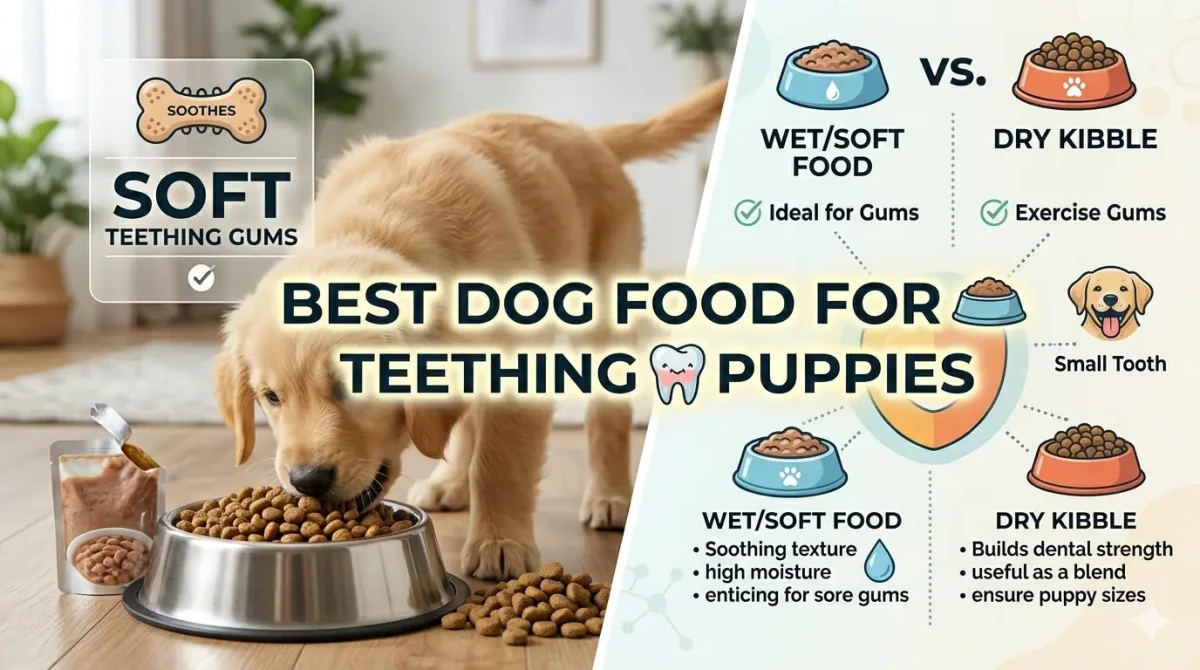
Quick Summary and Direct Answer
The best dog food for teething puppies combines soft texture options, complete nutrition, and gentle formulations that soothe sore gums while supporting rapid growth. Experts commonly recommend AAFCO approved puppy formulas with twenty two to thirty two percent protein fed three to four times daily in measured portions adjusted for comfort.
Most teething puppies between three and six months benefit from softened dry kibble, high quality wet food, or specially formulated soft puppy meals that reduce chewing discomfort. You should select foods based on your puppy breed size, gum sensitivity, and digestive tolerance. Small breeds may prefer moistened small kibble while large breeds often handle softened larger pieces. Always consult a veterinarian if your puppy refuses food, shows excessive drooling, or has bleeding gums beyond normal teething signs.
Investing in appropriate texture options during teething may help maintain nutrition intake while minimizing discomfort. Start with veterinarian recommended brands that publish ingredient sourcing and nutritional analysis. Monitor your puppy appetite daily and adjust food texture based on gum condition rather than age alone. Contact a veterinarian if your puppy shows signs of pain, weight loss, or unusual lethargy during the teething phase.
Key Data and Quick Reference Tables
The table below outlines food texture options, ideal usage during teething stages, and average cost ranges. This data helps you plan appropriate feeding strategies without guesswork.
| Food Texture Type | Best For Teething Stage | Preparation Time | Average Cost USD |
|---|---|---|---|
| Softened Dry Kibble | Early teething 3 to 4 months | 10 to 15 minutes soaking | 1 to 2 USD per cup |
| Commercial Wet Puppy Food | Moderate teething 4 to 5 months | Ready to serve | 2 to 4 USD per can |
| Semi Moist Puppy Formulas | Transition periods any stage | Ready to serve | 1.5 to 3 USD per pouch |
| Homemade Softened Meals | Severe gum sensitivity | 20 to 30 minutes prep | 2 to 5 USD per meal |
| Freeze Dried Rehydrated | Portable soothing option | 5 to 10 minutes rehydration | 3 to 6 USD per serving |
| Puppy Age Teething Phase | Recommended Texture | Feeding Frequency | Portion Adjustment |
|---|---|---|---|
| 3 to 4 months early teething | Softened kibble or wet food | 4 meals per day | Standard puppy portions |
| 4 to 5 months active tooth loss | Very soft wet or mashed meals | 3 to 4 meals per day | Increase by 10 percent if appetite drops |
| 5 to 6 months adult teeth emerging | Gradual transition to dry kibble | 3 meals per day | Return to standard portions as comfort improves |
Understanding Teething Puppy Nutrition Needs

Puppies between three and six months experience tooth eruption that commonly causes gum soreness, reduced appetite, and chewing discomfort. Widely accepted veterinary nutrition standards emphasize that maintaining adequate nutrition during this phase supports immune function and healthy development despite temporary feeding challenges.
Soft texture foods reduce mechanical pressure on inflamed gums while delivering essential protein, fat, and micronutrients required for growth. You should prioritize foods that maintain nutritional completeness even when modified for texture. Soaking kibble in warm water or low sodium broth preserves nutrient content while improving palatability.
Early intervention prevents nutritional gaps. A consistent routine with texture adjustments keeps your puppy comfortable during meals. You do not need expensive prescription diets to start. Simple moistening techniques combined with AAFCO approved puppy formulas create balanced feeding solutions that satisfy growth needs while respecting teething sensitivities.
Soft Food Options for Sore Gums and Easy Chewing

Commercial wet puppy foods provide pre softened textures that require no preparation and deliver complete nutrition in palatable formats. Widely accepted canine nutrition guidelines recommend selecting wet formulas specifically labeled for puppy growth with guaranteed DHA and calcium levels.
Softened dry kibble offers flexibility for owners who prefer dry food benefits with teething adaptations. Add warm water or low sodium chicken broth to kibble and allow ten to fifteen minutes for absorption. This technique maintains nutrient density while creating a mash consistency that reduces gum pressure.
Semi moist puppy formulas bridge the gap between dry and wet options with shelf stable soft textures. These products commonly feature added moisture and gentle preservatives for convenience. You should verify AAFCO growth statements on packaging before selecting semi moist options for regular feeding.
Homemade softened meals provide customization for highly sensitive puppies but require careful formulation to ensure nutritional balance. Mix veterinarian approved puppy food with plain pumpkin, cooked sweet potato, or low fat cottage cheese for soothing texture. You should consult your veterinarian before preparing homemade meals to avoid nutrient deficiencies.
Dry Kibble Strategies for Teething Puppies

High quality dry kibble delivers dental benefits through mechanical cleaning action and convenient portion control. During teething phases you should select small kibble sizes for toy and small breeds to minimize chewing effort while maintaining nutritional integrity.
Soaking techniques transform dry kibble into teething friendly textures without compromising nutrient content. Use warm water at one hundred ten degrees Fahrenheit maximum to avoid nutrient degradation. Allow fifteen minutes for full absorption then serve at room temperature to prevent mouth discomfort.
Gradual transition protocols help puppies adapt to dry food as adult teeth emerge. Start with fully softened kibble during peak teething discomfort then progressively reduce soaking time over two to three weeks. Monitor gum response and adjust pace based on individual comfort levels rather than calendar timelines.
Kibble selection criteria should prioritize named animal proteins, appropriate calcium phosphorus ratios, and added DHA for brain development. You should avoid formulas with artificial colors or hard large pieces that may aggravate sensitive gums during active tooth eruption phases.
Wet Food Benefits and Selection Guidelines

Wet puppy foods offer immediate soft texture that requires no preparation and commonly appeals to puppies with reduced appetite during teething. Widely accepted veterinary nutrition standards emphasize that high quality wet formulas provide complete nutrition with higher moisture content that supports hydration.
Ingredient quality significantly impacts nutritional value and palatability. Select wet foods listing named meat sources like chicken, lamb, or salmon as primary ingredients. Avoid products containing excessive fillers, artificial preservatives, or unverified by product meals that may reduce digestibility.
Portion management remains essential when feeding wet food due to higher calorie density per volume. Calculate daily calorie needs based on puppy weight and breed size then divide into age appropriate meals. You should adjust portions weekly based on body condition scoring rather than package guidelines alone.
Storage considerations affect wet food safety and nutrient preservation. Refrigerate opened cans within two hours and use within three days maximum. Discard any food showing discoloration, unusual odor, or mold growth to prevent gastrointestinal illness in developing immune systems.
Breed Size Specific Feeding Strategies During Teething

Small breed puppies under twenty pounds adult weight require calorie dense formulas with small particle sizes that accommodate tiny mouths and high metabolic rates. These puppies commonly experience more pronounced teething discomfort due to rapid tooth eruption relative to jaw size.
Feed small breed teething puppies four small meals daily using softened kibble or wet food formulated for toy breeds. Monitor for hypoglycemia signs like weakness or trembling between meals. You should keep emergency high value treats available to maintain blood sugar during appetite fluctuations.
Large breed puppies over fifty pounds adult weight need controlled growth formulas that limit calcium density while providing adequate protein for muscle development. Teething discomfort in large breeds may temporarily reduce food intake requiring texture adaptations to maintain nutrition.
Select large breed puppy formulas with balanced mineral profiles and soften kibble to comfortable consistency during peak teething weeks. You should avoid accelerating growth through excessive calories even if appetite temporarily increases after discomfort resolves. Consult your veterinarian about breed specific transition timelines.
Health Monitoring and Preventive Care Through Teething Nutrition

Proper nutrition during teething may help support immune function, healthy tooth eruption, and consistent growth patterns. You should observe your puppy daily for signs of nutritional adequacy including bright eyes, shiny coat, appropriate energy levels, and consistent stool quality despite texture changes.
Gum health indicators include pink tissue with minimal swelling and no persistent bleeding. Mild redness and occasional small blood spots on toys commonly occur during active tooth loss. You should contact your veterinarian if gums appear pale, severely swollen, or show pus discharge indicating infection.
Weight tracking provides objective data about growth progress during feeding transitions. Weigh your puppy weekly using the same scale and time of day. Document results in a simple journal to share with your veterinarian during wellness visits. This data driven approach commonly identifies nutritional concerns before they become significant health issues.
Transitioning Textures as Adult Teeth Emerge

Gradual texture transitions support dental development and chewing skill acquisition as adult teeth replace puppy teeth. Widely accepted veterinary guidelines recommend a two to three week adaptation schedule that slowly increases food firmness while monitoring comfort levels.
Follow this step by step transition routine. Week one maintain fully softened food during peak discomfort. Week two reduce soaking time by fifty percent to create semi soft texture. Week three offer dry kibble with small amounts of softened pieces mixed in. Week four transition to full dry kibble if gums tolerate firm texture.
Introduce dental chews and rubber teething toys alongside food transitions to support gum massage and jaw development. Select puppy safe chews that dissolve easily and avoid hard bones or antlers that may fracture emerging adult teeth. You should supervise all chewing activities to prevent accidental ingestion of large pieces.
Monitor acceptance and comfort during each transition phase. If your puppy shows resistance or discomfort revert to previous texture for three to five days before attempting advancement again. This flexible approach commonly reduces feeding stress and maintains nutrition intake during developmental changes.
Budget versus Premium Food Comparison for Teething Puppies

Entry level puppy foods priced under one dollar per cup provide basic nutrition meeting AAFCO minimum standards with standard texture options. These options commonly feature corn, wheat, or poultry by product meals as primary ingredients. They suit healthy puppies with no special dietary needs when texture adapted appropriately.
Mid range products between one and two dollars per cup offer enhanced ingredient quality with named meat meals, whole grains, and added functional nutrients like probiotics or omega fatty acids. These selections balance cost and quality for average household puppies with typical teething challenges.
Premium puppy foods exceeding two dollars per cup utilize human grade ingredients, novel protein sources, and advanced formulations for sensitive puppies. Puppies with severe teething discomfort, breed specific concerns, or owner preference for transparent sourcing commonly benefit from this tier. While initial costs remain higher, premium options may reduce long term veterinary expenses through preventive nutrition support during critical development phases.
Common Mistakes Owners Make When Feeding Teething Puppies

Many owners switch to adult dog food prematurely when puppies show temporary appetite changes during teething. Adult formulas lack elevated protein, fat, and micronutrients required for healthy growth. You should maintain puppy specific nutrition until your veterinarian confirms readiness for adult transition based on breed size and development.
Another frequent error involves over softening food beyond necessary comfort levels. Excessively mushy textures may delay development of appropriate chewing skills and dental strength. You should provide the firmest texture your puppy tolerates comfortably to support oral development while minimizing discomfort.
Supplementing balanced commercial puppy food with additional vitamins or minerals commonly creates nutritional imbalances. Excess calcium, vitamin D, or other nutrients may interfere with absorption of essential compounds. You should consult your veterinarian before adding any supplements to complete and balanced puppy diets during teething phases.
Expert Tips from Veterinary Nutrition and Developmental Standards
Based on common veterinary nutrition practices, you should schedule wellness exams at three, four, and five months to monitor teething progress and adjust feeding plans. Early detection of dental or nutritional deviations allows timely intervention that may help prevent lifelong oral health issues.
Combine appropriate food texture with gentle gum massage using clean finger or puppy safe dental cloth. This technique may help soothe discomfort while acclimating puppies to oral handling for future dental care. You should introduce gum massage gradually with positive reinforcement to build cooperative associations.
Document feeding observations in a simple nutrition journal. Note texture preferences, appetite changes, gum condition, and weight trends. Over time, this data reveals patterns that improve feeding decisions. Share findings with your veterinarian during routine visits for personalized optimization insights regarding teething nutrition strategies.
Frequently Asked Questions
How long does puppy teething typically last
Most puppies experience active teething between three and six months of age with adult teeth fully erupted by seven months. Small breeds may complete teething slightly earlier while large breeds sometimes continue minor tooth changes until eight months. You should maintain texture adaptations throughout the entire teething window based on individual comfort.
Can I freeze puppy food to soothe teething gums
Freezing small portions of wet puppy food or softened kibble may provide temporary gum soothing through cold therapy. You should offer frozen treats for five to ten minutes maximum under supervision to prevent choking or excessive cold exposure. Consult your veterinarian before introducing frozen foods if your puppy has sensitive digestion.
What if my teething puppy refuses to eat
Temporary appetite reduction commonly occurs during peak teething discomfort. You should offer softened food at room temperature, try hand feeding small amounts, and ensure fresh water availability. Contact your veterinarian if food refusal persists beyond twenty four hours or if your puppy shows lethargy, vomiting, or weight loss.
When should I stop softening my puppies food
Gradually reduce food softening as adult teeth emerge and gum discomfort decreases typically between five and six months. You should transition based on your puppy comfort level rather than strict age timelines. Monitor chewing ability and gum response during each texture adjustment to determine optimal progression pace.

0 Comments