.png)
Quick Summary and Direct Answer
The best dog food for puppies under 6 months provides complete and balanced nutrition with high quality protein, essential fatty acids, and appropriate calcium phosphorus ratios that support rapid growth and development. Experts commonly recommend AAFCO approved formulas with twenty two to thirty two percent protein content fed three to four times daily in measured portions.
Most puppies under six months require feeding schedules that match their developmental stage and breed size. Small breed puppies need calorie dense food fed four times daily to prevent hypoglycemia. Large breed puppies require controlled calcium levels and moderate calorie density to support proper bone development without accelerating growth too rapidly. Always consult a veterinarian before selecting food for puppies with special health needs or breed specific concerns.
Investing in quality puppy nutrition during the first six months may help establish lifelong health patterns. Start with veterinarian recommended brands that publish ingredient sourcing and nutritional analysis. Monitor your puppy weight weekly and adjust portions based on body condition scoring rather than package guidelines alone. Contact a veterinarian if your puppy shows signs of digestive upset, poor growth, or unusual lethargy after diet changes.
Key Data and Quick Reference Tables
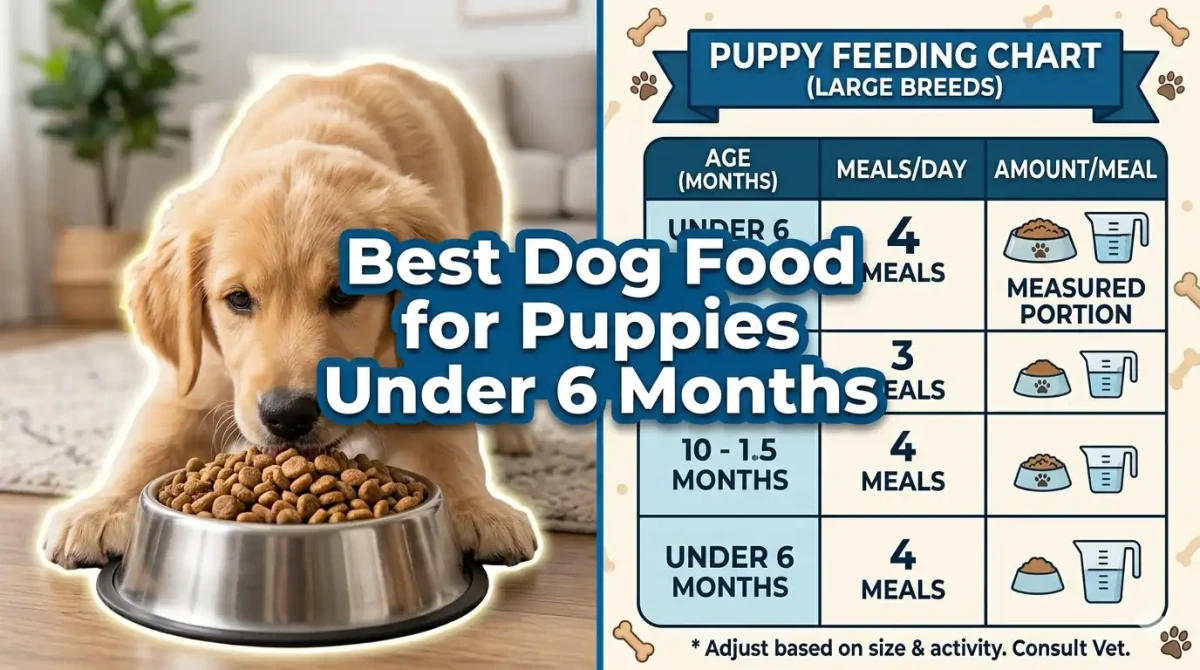
The table below outlines puppy feeding guidelines by age, weight, and breed size. This data helps you plan appropriate portions without guesswork.
| Puppy Age | Feeding Frequency | Portion Guidance by Weight | Calorie Range Daily |
|---|---|---|---|
| 8 to 12 weeks | 4 meals per day | 1/4 to 1/2 cup per meal for small breeds | 200 to 400 kcal |
| 3 to 4 months | 3 to 4 meals per day | 1/2 to 3/4 cup per meal for medium breeds | 400 to 700 kcal |
| 5 to 6 months | 3 meals per day | 3/4 to 1 cup per meal for large breeds | 700 to 1000 kcal |
| Breed Size Category | Protein Requirement | Calcium Phosphorus Ratio | Recommended Food Type |
|---|---|---|---|
| Small under 20 lbs adult | 28 to 32 percent | 1.2 to 1.4 to 1 | Calorie dense small kibble |
| Medium 20 to 50 lbs adult | 25 to 30 percent | 1.1 to 1.3 to 1 | Balanced all purpose puppy |
| Large over 50 lbs adult | 22 to 26 percent | 1.0 to 1.2 to 1 | Controlled growth large breed |
Understanding Puppy Nutritional Needs Under Six Months

Puppies under six months experience rapid physical and cognitive development that demands specialized nutrition. Widely accepted veterinary nutrition standards emphasize that growing dogs require higher protein, fat, and specific micronutrients compared to adult maintenance formulas.
Protein supports muscle development, immune function, and tissue repair during this critical growth window. Quality animal based proteins like chicken, lamb, or fish provide essential amino acids that plant proteins may not supply in adequate ratios. You should select foods listing named meat meals or fresh meats as primary ingredients.
Fat provides concentrated energy for active puppies and supports brain development through omega three fatty acids. DHA from fish oil commonly recommended for cognitive development may help support learning capacity during early training phases. You should verify DHA content on product labels when selecting puppy formulas.
Essential Nutrients and Ingredient Quality Guidelines

Ingredient safety and nutritional completeness remain the highest priorities when selecting puppy food. Widely accepted canine nutrition standards recommend avoiding products containing artificial colors, flavors, preservatives like BHA BHT, and unverified by product sources.
Look for foods meeting AAFCO nutrient profiles for growth or all life stages. This certification indicates the formula has been formulated or tested to support healthy puppy development. You should verify the AAFCO statement appears on packaging before purchasing.
Calcium and phosphorus balance critically impacts skeletal development especially in large breed puppies. Excess calcium may accelerate growth plates closure prematurely leading to orthopedic issues. You should select large breed puppy formulas with controlled mineral levels and consult your veterinarian about breed specific needs.
Feeding Schedule and Portion Control Protocol

Structured feeding schedules support digestive health, house training success, and weight management in young puppies. You should establish consistent meal times that align with your household routine while meeting your puppy developmental needs.
Follow this step by step feeding routine. Step one involves measuring portions using a standard measuring cup rather than estimating by eye. Step two divides daily calories into age appropriate meals four times daily for eight to twelve week puppies. Step three maintains consistent timing with fifteen to twenty minute meal windows to encourage routine eating habits.
Monitor body condition weekly using the rib check method. You should feel ribs easily with light pressure but not see prominent rib definition. Adjust portions up or down by ten percent increments based on visual and tactile assessment rather than package guidelines alone. This personalized approach commonly prevents under or over feeding during rapid growth phases.
Wet versus Dry Food Considerations for Young Puppies

Dry kibble offers convenience, dental benefits through mechanical cleaning action, and cost effectiveness for daily feeding. High quality puppy kibble maintains nutritional stability at room temperature and supports teething puppies with appropriate texture. You should select small kibble sizes for toy and small breed puppies to encourage proper chewing.
Wet food provides higher moisture content that supports hydration and may appeal to picky eaters or puppies transitioning from mother milk. You should use wet food as a topper or occasional meal rather than exclusive diet unless recommended by your veterinarian for medical reasons.
Combination feeding strategies balance benefits of both formats. Many owners feed dry kibble as primary nutrition with small wet food additions for palatability. You should calculate total daily calories when mixing formats to prevent overfeeding that commonly leads to rapid weight gain in young puppies.
Breed Size Specific Nutrition Strategies

Small breed puppies under twenty pounds adult weight require calorie dense formulas with small kibble size to meet high metabolic demands. These puppies commonly face hypoglycemia risk if meals are spaced too far apart. You should feed four small meals daily through sixteen weeks and monitor for weakness or trembling between meals.
Large breed puppies over fifty pounds adult weight need controlled growth formulas that limit calcium and calorie density. Rapid growth in large breeds commonly contributes to hip dysplasia and other orthopedic conditions. You should select foods specifically labeled for large breed puppies and avoid supplementing with additional calcium unless directed by your veterinarian.
Medium breed puppies benefit from balanced all purpose puppy formulas that support steady growth without extreme restrictions. You should still monitor weight gain weekly and adjust portions based on body condition rather than age alone. This proactive approach commonly prevents obesity that may persist into adulthood.
Health Monitoring and Preventive Care Through Nutrition

Proper nutrition during the first six months may help prevent developmental issues, support immune function, and establish healthy eating patterns. You should observe your puppy daily for signs of nutritional adequacy including bright eyes, shiny coat, appropriate energy levels, and consistent stool quality.
Digestive health indicators include firm formed stools one to three times daily. Loose stools, frequent diarrhea, or constipation may indicate food intolerance, overfeeding, or underlying health concerns. You should consult your veterinarian before making diet changes if digestive issues persist beyond forty eight hours.
Weight tracking provides objective data about growth patterns. Weigh your puppy weekly using the same scale and time of day. Document results in a simple journal to share with your veterinarian during wellness visits. This data driven approach commonly identifies growth concerns before they become significant health issues.
Transitioning Foods and Introducing New Ingredients Safely

Gradual food transitions prevent digestive upset when changing puppy diets. Widely accepted veterinary guidelines recommend a seven to ten day transition schedule that slowly increases new food proportion while decreasing previous formula.
Follow this step by step transition routine. Days one to three mix twenty five percent new food with seventy five percent current food. Days four to six use fifty percent each formula. Days seven to nine increase to seventy five percent new food. Day ten offer one hundred percent new formula. You should extend this timeline if your puppy shows sensitivity during transition.
Introduce novel ingredients one at a time when adding treats or toppers. Wait three to five days between new items to monitor for allergic reactions or intolerances. Common signs include itching, ear infections, digestive changes, or respiratory symptoms. You should discontinue any new ingredient causing adverse reactions and consult your veterinarian about appropriate alternatives.
Common Mistakes Puppy Owners Make With Nutrition

Many owners overfeed puppies based on package guidelines without adjusting for individual metabolism and activity levels. This commonly leads to rapid weight gain that stresses developing joints and may predispose to adult obesity. You should use body condition scoring rather than cup measurements alone to determine appropriate portions.
Another frequent error involves feeding adult dog food to puppies before twelve months of age. Adult formulas lack the elevated protein, fat, and micronutrients required for healthy growth. You should maintain puppy specific nutrition until your veterinarian confirms readiness for adult transition based on breed size and development.
Supplementing balanced commercial puppy food with additional vitamins or minerals commonly creates nutritional imbalances. Excess calcium, vitamin D, or other nutrients may interfere with absorption of essential minerals. You should consult your veterinarian before adding any supplements to a complete and balanced puppy diet.
Budget versus Premium Puppy Food Comparison

Entry level puppy foods priced under one dollar per cup provide basic nutrition that meets AAFCO minimum standards. These options commonly feature corn, wheat, or poultry by product meals as primary ingredients. They suit healthy puppies with no special dietary needs when fed according to veterinarian guidance.
Mid range products between one and two dollars per cup offer enhanced ingredient quality with named meat meals, whole grains, and added functional nutrients like probiotics or omega fatty acids. These selections balance cost and quality for average household puppies with standard growth patterns.
Premium puppy foods exceeding two dollars per cup utilize human grade ingredients, novel protein sources, and advanced formulations for specific breed needs. Puppies with sensitivities, large breed orthopedic concerns, or owner preference for transparent sourcing commonly benefit from this tier. While initial costs remain higher, premium options may reduce long term veterinary expenses through preventive nutrition support.
Expert Tips from Veterinary Nutrition and Wellness Standards

Based on common veterinary nutrition practices, you should schedule wellness exams at eight, twelve, and sixteen weeks to monitor growth progress and adjust feeding plans. Early detection of growth deviations allows timely intervention that may help prevent lifelong orthopedic or metabolic issues.
Combine proper nutrition with appropriate exercise for optimal development. A well nourished puppy with balanced activity learns faster and maintains healthy weight more effectively. Aim for short frequent play sessions that match your puppy age and breed energy patterns without stressing developing joints.
Document feeding observations in a simple nutrition journal. Note portion sizes, stool quality, energy levels, and weight trends. Over time, this data reveals patterns that improve feeding decisions. Share findings with your veterinarian during routine visits for personalized optimization insights.
Frequently Asked Questions

How much should I feed my puppy under 6 months
Feeding amounts vary by breed size, age, and individual metabolism. Small breed puppies typically need one quarter to one half cup per meal four times daily. Large breed puppies may require three quarters to one cup per meal three times daily. You should adjust portions based on weekly body condition scoring rather than package guidelines alone.
When can I switch my puppy to adult dog food
Most small breed puppies transition to adult food between nine and twelve months. Medium breeds commonly switch around twelve months. Large and giant breeds may require puppy nutrition until eighteen to twenty four months to support extended growth periods. You should consult your veterinarian about breed specific timing for your puppy.
Are grain free puppy foods better for young dogs
Grain free formulas are not inherently superior for puppies without specific grain sensitivities. Widely accepted veterinary nutrition standards emphasize that whole grains provide valuable nutrients and fiber for most growing dogs. You should select foods based on complete nutritional profile rather than marketing claims about grain content.
What signs indicate my puppy food is working well
Positive indicators include consistent energy levels, shiny coat, firm stools, appropriate weight gain, and healthy appetite. You should monitor these signs weekly and document changes. Contact your veterinarian if you notice lethargy, poor coat quality, digestive issues, or failure to gain weight appropriately.

0 Comments