.png)
Best Mechanical Filter Media and Complete Guide
Introduction to Mechanical Filter Media
Mechanical filter media serves as the foundation of effective aquarium and pond filtration systems, physically removing debris, particulate matter, and suspended solids from water to create crystal-clear conditions essential for aquatic life health and visual appeal. Understanding the best mechanical filter media options and how to utilize them properly is crucial for maintaining optimal water quality, protecting biological filtration, and ensuring the longevity of your filtration system.
Mechanical filtration represents the first line of defense in the three-stage filtration process, capturing uneaten food, fish waste, plant debris, and other particulate matter before water proceeds to biological and chemical filtration stages. The right mechanical filter media prevents clogging of biological media, maintains adequate water flow, and creates the clean water conditions that allow beneficial bacteria to thrive and chemical filtration to function effectively.
This comprehensive guide explores everything you need to know about selecting and using the best mechanical filter media, from understanding different material types and micron ratings to matching media with your specific filtration system and aquarium needs. Whether you maintain a small freshwater tank, a large reef aquarium, or an outdoor pond, choosing appropriate mechanical filtration ensures efficient debris removal, stable water parameters, and a healthy environment for your aquatic inhabitants.
Understanding Mechanical Filtration
Mechanical filtration works by physically trapping particles as water passes through porous media, with effectiveness determined by pore size, media density, and flow rate. Understanding how mechanical filtration functions helps you select appropriate media and optimize your filtration system performance.
How does mechanical filtration work?
Water flows through mechanical filter media containing pores or spaces of specific sizes, trapping particles larger than these openings while allowing clean water to pass through. The process resembles a sieve or strainer, capturing debris on the media surface and within its internal structure. As particles accumulate, the media becomes progressively more efficient at capturing smaller particles but also creates increased resistance to water flow.
Micron rating indicates the size of particles a filter media can effectively capture, with lower numbers representing finer filtration. A 50-micron pad captures particles 50 microns or larger, while a 10-micron filter floss traps much smaller particles down to 10 microns. Selecting appropriate micron ratings balances filtration efficiency with flow rate, as finer media provides clearer water but requires more frequent maintenance and creates greater flow resistance.
Surface area and depth affect both filtration capacity and longevity. Thicker media with greater surface area holds more debris before requiring cleaning or replacement, extending maintenance intervals. However, excessively thick or dense media may restrict flow prematurely. Layering media from coarse to fine creates progressive filtration that maximizes capacity while achieving excellent water clarity.
Types of Mechanical Filter Media

The mechanical filter media market offers diverse options designed for different applications, filtration stages, and maintenance preferences. Understanding the various types helps you select the most appropriate media for your specific filtration system and water quality goals.
What types of mechanical filter media are available?
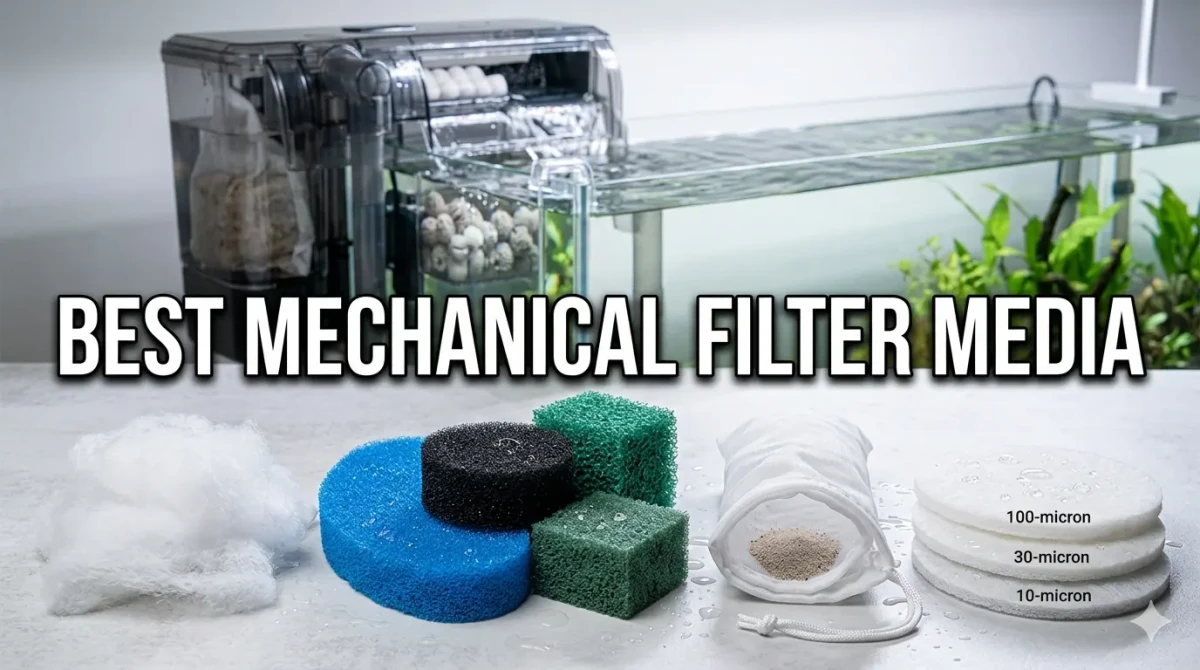
Filter floss or polyester fiberfill represents the most common mechanical filtration media, consisting of loose synthetic fibers that create a dense matrix for trapping fine particles. Filter floss provides excellent clarity by capturing particles as small as 10-20 microns when used properly. It is inexpensive, readily available, and can be layered to achieve desired filtration levels. However, filter floss requires frequent replacement as it clogs quickly and can restrict flow if not monitored regularly.
Foam pads and sponges offer reusable mechanical filtration with varying pore densities from coarse to fine. These porous foam materials trap debris within their cellular structure while maintaining good water flow. Foam pads can be rinsed and reused multiple times, making them economical and environmentally friendly. They work well as pre-filters to protect finer media or as primary mechanical filtration in systems with moderate bioloads. Foam comes in different densities, allowing customization of filtration levels.
Filter socks and filter bags provide convenient mechanical filtration by containing filter floss or other media in mesh containers that fit into sumps, canister filters, or hang-on-back filters. Filter socks typically use 100-200 micron mesh to capture larger debris while allowing water flow. They are easy to install, remove, and clean, making maintenance simple. Filter socks work particularly well in sump systems and canister filters where they provide excellent first-stage mechanical filtration.
Micron filter pads are engineered materials with specific pore sizes designed for precise filtration levels. These pads range from coarse 50-micron media to ultra-fine 5-micron pads for polishing water. Micron pads provide consistent, predictable filtration and are often used in multi-stage filtration systems where progressive particle removal achieves optimal clarity. They are more expensive than basic filter floss but offer superior performance and longer service life.
Filter cartridges combine mechanical media with housing designed for specific filter models, providing convenient replacement units. While convenient, cartridges often combine mechanical and chemical media, requiring complete replacement that can disrupt biological filtration. Many aquarists prefer separate mechanical media that can be maintained independently from biological and chemical filtration components.
Choosing the Right Mechanical Filter Media

Selecting appropriate mechanical filter media requires considering multiple factors including your filtration system type, aquarium size, bioload, desired water clarity, and maintenance preferences. Making informed choices ensures efficient filtration without excessive maintenance or flow restriction.
How do you choose the best mechanical filter media?
Filtration system compatibility determines which media types work effectively with your setup. Canister filters typically accommodate filter floss, foam pads, or filter baskets that hold various media types. Hang-on-back filters often use combination cartridges or custom media baskets. Sump systems offer the most flexibility, allowing filter socks, filter floss, foam blocks, or micron pads in various configurations. Match media to your filter design and available space.
Flow rate requirements influence media selection, as denser media creates more resistance. High-flow systems can handle finer media without excessive pressure drop, while low-flow systems may require coarser media to maintain adequate circulation. Calculate your turnover rate and ensure selected media does not reduce flow below minimum requirements for your aquarium size and stocking level.
Bioload and debris production affect media choice and maintenance frequency. Heavily stocked tanks, fish that produce significant waste, or aquariums with messy eaters require more robust mechanical filtration and frequent maintenance. Lightly stocked tanks with careful feeding can use finer media with less frequent cleaning. Match media capacity to your actual debris production rather than theoretical maximums.
Water clarity goals determine micron rating selection. Crystal-clear display tanks benefit from fine mechanical filtration using 10-20 micron media or progressive filtration ending with polishing pads. Quarantine tanks or systems where absolute clarity is less critical can use coarser 50-100 micron media that requires less maintenance. Balance aesthetic goals with practical maintenance capabilities.
Micron Ratings and Filtration Levels

Understanding micron ratings helps you select media that achieves your desired water clarity while maintaining appropriate flow rates and maintenance schedules.
What micron rating should you use?
Coarse mechanical filtration using 50-100 micron media serves as primary or pre-filtration, capturing large particles like uneaten food, fish waste chunks, and plant debris. This stage protects finer media from rapid clogging and extends maintenance intervals. Coarse filtration alone provides adequate water quality for many aquariums but may not achieve crystal clarity.
Medium mechanical filtration in the 20-50 micron range balances clarity and maintenance for most aquarium applications. This level captures fine particulate matter and suspended solids that cause cloudy water while maintaining reasonable flow rates. Medium filtration works well as standalone mechanical filtration or as intermediate stages in multi-layer systems.
Fine mechanical filtration using 5-20 micron media provides polishing filtration that achieves exceptional water clarity. Fine media captures microscopic particles that create haze and turbidity, producing aquarium water that appears invisible. However, fine media clogs quickly and requires frequent replacement or cleaning. Use fine filtration as a final polishing stage after coarser media removes larger particles.
Progressive or multi-stage filtration combines multiple micron ratings in sequence from coarse to fine, maximizing efficiency and capacity. Water first passes through 50-100 micron media removing large debris, then 20-50 micron media capturing medium particles, and finally 5-20 micron polishing media achieving crystal clarity. This approach extends maintenance intervals while providing superior filtration compared to single-stage systems.
Installation and Configuration

Proper installation and configuration of mechanical filter media maximizes filtration efficiency, maintains adequate flow, and simplifies maintenance.
How do you install mechanical filter media correctly?
Media placement order significantly impacts filtration performance. Always position mechanical filtration as the first stage, before biological and chemical media. This sequence ensures debris is removed before water reaches biological media where it could clog beneficial bacteria colonies or chemical media where it could reduce adsorption capacity.
Layering technique affects both filtration efficiency and maintenance. When using multiple media types, arrange them from coarsest to finest in the direction of water flow. This progressive filtration captures large particles first, preventing rapid clogging of finer media. For example, place coarse foam or filter socks first, followed by medium-density filter floss, and finish with fine polishing pads.
Avoiding channeling ensures all water passes through media rather than finding paths of least resistance. Pack media firmly enough to prevent gaps but not so tightly that flow is restricted. In canister filters and sumps, use baffles or dividers to force water through media rather than around it. Proper media arrangement eliminates dead zones and maximizes filtration capacity.
Flow direction matters for some media types. Filter floss and micron pads typically work best with water flowing from the loose side to the dense side, trapping particles throughout the media depth. Foam pads can work in either direction but perform better with consistent flow orientation. Follow manufacturer recommendations for optimal performance.
Maintenance and Replacement

Proper maintenance of mechanical filter media ensures consistent filtration performance, prevents flow restriction, and protects water quality. Understanding maintenance requirements helps you establish effective cleaning schedules.
How do you maintain mechanical filter media?
Regular inspection prevents problems by identifying clogging before it affects flow or water quality. Check mechanical media at least weekly, observing flow rate and visible debris accumulation. Reduced flow, water bypassing media, or visible saturation indicates cleaning or replacement is needed. Establish a maintenance schedule based on your aquarium bioload and adjust based on actual conditions.
Cleaning frequency varies by media type and aquarium conditions. Filter floss typically requires replacement every 1-2 weeks in moderate bioload systems, or as frequently as every few days in heavily stocked tanks. Foam pads can be rinsed and reused for 1-3 months before requiring replacement. Filter socks need cleaning or replacement every 2-7 days depending on debris load. Monitor actual conditions rather than following rigid schedules.
Cleaning technique affects media longevity and filtration performance. Rinse foam pads in removed aquarium water during water changes, never tap water which contains chlorine that can kill beneficial bacteria if the foam also provides biological filtration. Gently squeeze and agitate foam to release trapped debris without damaging the cellular structure. Replace foam when it loses resilience or begins breaking down.
Filter floss cannot be effectively cleaned and should be replaced rather than rinsed for reuse. Attempting to clean and reuse filter floss releases trapped debris back into the water column and damages the fiber structure, reducing filtration efficiency. Discard used filter floss and replace with fresh material for optimal performance.
Filter socks can be cleaned and reused multiple times before replacement becomes necessary. Rinse thoroughly with hot water to remove debris, turning inside-out to access all surfaces. For deep cleaning, soak in a bleach solution (1 part bleach to 20 parts water) for 15 minutes, then rinse extensively and dechlorinate before reuse. Replace filter socks when mesh becomes damaged or stretched.
Common Mistakes to Avoid

Even experienced aquarists can make errors when selecting or maintaining mechanical filter media. Avoiding these pitfalls ensures optimal filtration performance and water quality.
What mistakes should you avoid with mechanical filter media?
Over-filtration with excessively fine media creates unnecessary maintenance burden and flow restriction without proportional benefits. Using 5-micron media in a lightly stocked aquarium wastes money and requires constant replacement. Match media fineness to actual needs rather than assuming finer is always better. Start with medium filtration and only add fine polishing if clarity issues persist.
Under-filtration fails to adequately remove debris, allowing particulate matter to accumulate and degrade water quality. Using only coarse media in heavily stocked tanks or systems with high bioloads results in cloudy water and excessive nutrient accumulation. Ensure mechanical filtration capacity matches your aquarium actual debris production.
Neglecting maintenance allows mechanical media to become saturated, causing flow restriction, channeling, and release of trapped debris back into the water. Clogged mechanical media can actually worsen water quality by becoming a source of pollution rather than filtration. Establish and follow regular inspection and maintenance schedules.
Washing mechanical media in tap water chlorinates and destroys any beneficial bacteria that may have colonized the media, potentially disrupting biological filtration. While mechanical media primarily provides physical filtration, some bacterial colonization inevitably occurs. Always rinse reusable mechanical media in removed aquarium water to preserve beneficial bacteria.
Replacing all mechanical media simultaneously with biological media cleaning creates dangerous ammonia spikes by removing both mechanical filtration and beneficial bacteria colonies at once. Stage maintenance activities, cleaning or replacing mechanical media separately from biological media to maintain system stability.
Mechanical Media for Different Filter Types

Different filtration systems require specific mechanical media configurations to maximize efficiency and maintain proper flow dynamics.
What mechanical media works best for different filters?
Canister filters benefit from versatile media options including filter floss, foam pads, or filter baskets holding various materials. The pressurized design allows use of fine media without excessive flow restriction. Layer media in canister trays from coarse to fine, with mechanical filtration in the first tray water enters. Canister filters can accommodate substantial mechanical media volume, making them excellent for high-bioload systems.
Hang-on-back filters typically use combination cartridges or custom media baskets. While convenient, combination cartridges often mix mechanical and chemical media, requiring complete replacement that disrupts biological filtration. Consider using custom media baskets with separate mechanical media that can be maintained independently. Filter floss works well in HOB filters but requires frequent replacement due to limited capacity.
Sump systems offer maximum flexibility for mechanical filtration, accommodating filter socks, filter floss rollers, foam blocks, or micron pads in various configurations. Filter socks in the first chamber provide excellent mechanical filtration with easy maintenance. Filter floss rollers automate mechanical filtration by continuously advancing clean media. Sumps allow multi-stage mechanical filtration with coarse, medium, and fine media in separate chambers.
Sponge filters provide gentle mechanical and biological filtration ideal for quarantine tanks, breeding tanks, or fry rearing. The porous sponge structure traps debris while hosting beneficial bacteria. Sponge filters require regular rinsing to maintain flow but are gentle enough for delicate fish and invertebrates.
Advanced Mechanical Filtration Techniques

Advanced aquarists can employ sophisticated mechanical filtration strategies to achieve exceptional water clarity and system efficiency.
How can you optimize mechanical filtration?
Automated mechanical filtration using filter floss rollers or automatic filter sock cleaners reduces maintenance while providing consistent filtration. Filter floss rollers slowly advance fresh media, ensuring optimal filtration without manual intervention. These systems are particularly valuable for large aquariums or high-bioload systems requiring frequent mechanical media changes.
Pre-filtration strategies protect primary mechanical media and extend maintenance intervals. External pre-filters on canister filter intakes, sponge pre-filters on powerhead intakes, or internal pre-filter chambers capture large debris before it reaches main filtration. Pre-filtration is especially valuable in tanks with messy fish or heavy feeding regimes.
Polishing filtration as a final stage achieves crystal-clear water after primary mechanical filtration removes bulk debris. Use fine micron pads, filter floss, or polishing pads as the last mechanical stage before water returns to the aquarium. Polishing filtration is essential for reef tanks, show aquariums, and systems where maximum clarity is desired.
Environmental and Economic Considerations

Mechanical filter media selection impacts both environmental sustainability and long-term costs. Balancing performance with responsibility creates optimal outcomes.
How do you balance cost and sustainability?
Reusable media like foam pads and washable filter socks reduce waste and long-term costs despite higher initial investment. While filter floss is inexpensive per unit, frequent replacement creates ongoing expense and environmental waste. Calculate total cost of ownership including replacement frequency when comparing media options.
Bulk purchasing reduces per-unit costs for disposable media like filter floss. Buying filter floss in large rolls rather than pre-cut pads significantly reduces cost and allows customization of thickness and layering. Store bulk media in dry, clean conditions to prevent contamination or degradation.
Waste reduction through proper maintenance extends media life and reduces environmental impact. Rinse and reuse media as appropriate rather than replacing prematurely. Proper maintenance prevents excessive waste while maintaining filtration performance.
Frequently Asked Questions
How often should mechanical filter media be replaced?
Replacement frequency depends on media type, aquarium bioload, and desired water clarity. Filter floss typically requires replacement every 1-2 weeks in average aquariums, or every 2-4 days in heavily stocked systems. Foam pads can be rinsed and reused for 1-3 months before replacement becomes necessary. Filter socks need cleaning every 2-7 days and replacement every 1-2 months. Monitor flow rate and water clarity to determine actual replacement needs rather than following rigid schedules. When flow decreases significantly or water clarity declines, media replacement is needed regardless of time elapsed.
Can mechanical filter media be cleaned and reused?
Some mechanical media can be cleaned and reused while other types must be replaced. Foam pads and sponges are designed for multiple cleanings and can be rinsed in aquarium water and reused for months. Filter socks can be cleaned and reused 10-20 times before replacement. However, filter floss and micron pads cannot be effectively cleaned and should be replaced rather than reused. Attempting to clean disposable media damages the structure and releases trapped debris back into the water. Always rinse reusable media in removed aquarium water, never tap water, to preserve beneficial bacteria.
Does mechanical filtration remove dissolved wastes?
No, mechanical filtration only removes solid particulate matter and cannot remove dissolved wastes like ammonia, nitrite, nitrate, or dissolved organic compounds. Mechanical filtration physically traps particles larger than the media pore size but has no effect on dissolved substances. Removing dissolved wastes requires biological filtration for ammonia and nitrite conversion, chemical filtration like activated carbon for dissolved organics, and regular water changes for nitrate removal. Mechanical filtration supports these processes by keeping water clean and preventing media clogging, but does not directly address dissolved pollutants.
What is the best mechanical media for crystal clear water?
Achieving crystal clear water requires fine mechanical filtration using 5-20 micron media as a final polishing stage. Filter floss layered to appropriate density, micron filter pads rated at 10 microns or finer, or polishing pads specifically designed for clarity provide the best results. However, fine media should be used after coarser pre-filtration to prevent rapid clogging. A progressive filtration system starting with 50-100 micron media, progressing through 20-50 micron, and finishing with 5-20 micron polishing media achieves optimal clarity with reasonable maintenance. Additionally, crystal clear water requires adequate biological filtration, proper chemical filtration if needed, and regular maintenance beyond just mechanical media selection.
Can I use multiple types of mechanical media together?
Yes, combining multiple types of mechanical media often provides superior filtration compared to single-media systems. Layering different media types from coarse to fine creates progressive filtration that maximizes capacity and efficiency. For example, using filter socks for primary filtration, followed by medium-density foam, and finishing with fine filter floss achieves excellent results. Different media types complement each other, with coarse media protecting fine media from rapid clogging while fine media polishes water after bulk debris removal. Just ensure your filter has adequate capacity and flow rate to handle multiple media types without excessive restriction.
Will finer mechanical media always provide better filtration?
Not necessarily, as finer media creates trade-offs between clarity and practicality. While finer media captures smaller particles and produces clearer water, it also clogs more quickly, requires more frequent maintenance, and creates greater flow restriction. Using excessively fine media in systems that do not require crystal clarity wastes money and effort. Additionally, some particulate matter provides food for beneficial microorganisms and complete removal is unnecessary for fish health. Match media fineness to your actual goals, using medium filtration for general aquariums and reserving fine polishing media for systems where maximum clarity is specifically desired.
Conclusion
Selecting the best mechanical filter media requires understanding your specific aquarium needs, filtration system capabilities, and maintenance commitment. From filter floss and foam pads to filter socks and micron pads, each media type offers distinct advantages for different applications. The key to successful mechanical filtration lies not in finding a single perfect media, but in creating a balanced system that matches your aquarium bioload, achieves desired water clarity, and fits your maintenance schedule.
Remember that mechanical filtration is just one component of comprehensive aquarium filtration, working in concert with biological and chemical stages to maintain optimal water quality. Proper installation, regular maintenance, and timely replacement ensure mechanical media performs effectively without creating flow problems or becoming a source of pollution. By following the guidelines in this comprehensive guide, you can select and maintain mechanical filter media that provides reliable debris removal, supports beneficial bacteria, and creates the crystal-clear water that showcases your aquarium beauty while protecting your aquatic inhabitants health.
Invest time in understanding your filtration system and monitoring actual performance rather than simply following generic recommendations. Adjust media types, micron ratings, and maintenance frequency based on observed conditions, and do not hesitate to experiment with different configurations to find what works best for your unique aquarium. Quality mechanical filtration is an investment in your aquarium success, providing the foundation for stable water parameters, healthy fish, and stunning visual appeal.
🐱 আরও পড়ুন: Fish Accessories and Toys

0 Comments