.png)
How to Stop Ferrets from Chewing Items and Complete Behavior Guide
Introduction to Ferret Chewing Behavior
Learning how to stop ferrets from chewing items is one of the most common challenges new ferret owners face, as these curious, playful animals explore their world primarily through their mouths. Ferrets are natural chewers driven by instinct, teething needs, boredom, and investigative behavior, making it essential for owners to understand the root causes of chewing and implement effective, humane strategies to redirect this behavior. Understanding how to manage ferret chewing helps pet parents protect household items while ensuring their ferrets remain happy, healthy, and mentally stimulated.
Ferrets possess strong jaws, sharp teeth, and an insatiable curiosity that drives them to investigate objects by biting and chewing. This behavior is completely normal for the species but can become problematic when directed toward electrical cords, furniture, shoes, or other dangerous or valuable items. Without proper guidance, destructive chewing can lead to costly damage, injury to the ferret, or even life-threatening emergencies like intestinal blockages from ingested materials.
This comprehensive guide explores everything you need to know about how to stop ferrets from chewing items, from understanding the biological and behavioral reasons behind chewing to implementing practical prevention strategies, training techniques, and enrichment solutions. Whether you have a playful kit going through teething or an adult ferret with established chewing habits, this guide provides the knowledge and techniques to successfully manage this behavior while supporting your ferret natural instincts in safe, appropriate ways.
Why Ferrets Chew: Understanding the Behavior
Effective management of ferret chewing begins with understanding why ferrets chew in the first place. Addressing root causes rather than simply suppressing symptoms leads to more successful, lasting behavioral changes.
What causes ferrets to chew on inappropriate items?
Natural exploratory behavior drives much of ferret chewing, as these animals investigate their environment primarily through their mouths. In the wild, ferrets would chew on prey, dig through burrows, and manipulate objects to find food. Domestic ferrets retain these instincts, using chewing as a way to learn about textures, tastes, and properties of objects in their environment. This natural curiosity is healthy but requires redirection toward appropriate items.
Teething in young ferrets creates significant chewing urges as baby teeth fall out and adult teeth emerge. Kits between eight and sixteen weeks often experience gum discomfort that drives intense chewing behavior. Providing appropriate teething toys during this developmental stage helps satisfy these urges while protecting household items from damage.
Boredom and insufficient mental stimulation represent common causes of destructive chewing in ferrets. These intelligent, active animals require regular enrichment, playtime, and interaction to remain satisfied. Ferrets left alone for extended periods without adequate toys or activities often resort to chewing available items simply to occupy themselves and relieve pent-up energy.
Nutritional deficiencies or dietary imbalances may contribute to excessive chewing in some cases. Ferrets require high-protein, high-fat diets with minimal carbohydrates. Diets lacking adequate nutrition may drive ferrets to chew non-food items in attempts to obtain missing nutrients. Ensuring proper nutrition supports overall health and may reduce compulsive chewing behaviors.
Identifying Dangerous Chewing Targets

Not all chewing poses equal risks. Understanding which items present the greatest dangers to ferrets helps owners prioritize prevention efforts and respond appropriately to different situations.
What items are most dangerous for ferrets to chew?
Electrical cords and wires represent the most serious chewing hazard for ferrets. Biting through live wires can cause severe burns, electrocution, or death. Even unplugged cords pose risks if ferrets ingest rubber or plastic insulation, which can cause intestinal blockages requiring emergency surgery. Protecting all accessible cords should be the highest priority in ferret-proofing efforts.
Rubber and foam items including shoe insoles, remote control buttons, earbuds, and packing materials present significant ingestion risks. Ferrets who chew and swallow rubber or foam face high risks of intestinal obstruction, a life-threatening condition requiring immediate veterinary intervention. These materials do not digest and can become lodged anywhere along the digestive tract.
Small objects like coins, buttons, batteries, and toy parts can be swallowed during chewing episodes, causing choking hazards or internal blockages. Button batteries are especially dangerous as they can cause chemical burns to the esophagus if ingested. Keep small items secured and out of ferret reach at all times.
Plants and flowers may be toxic to ferrets if chewed and ingested. Many common houseplants including lilies, philodendron, and poinsettias contain compounds harmful to ferrets. Research plant safety before allowing ferret access to areas with vegetation, and remove any potentially toxic plants from ferret environments.
Ferret Proofing Your Home

Preventing access to inappropriate chewing targets through environmental management is the most reliable strategy for protecting both ferrets and household items.
How do you ferret proof your home effectively?
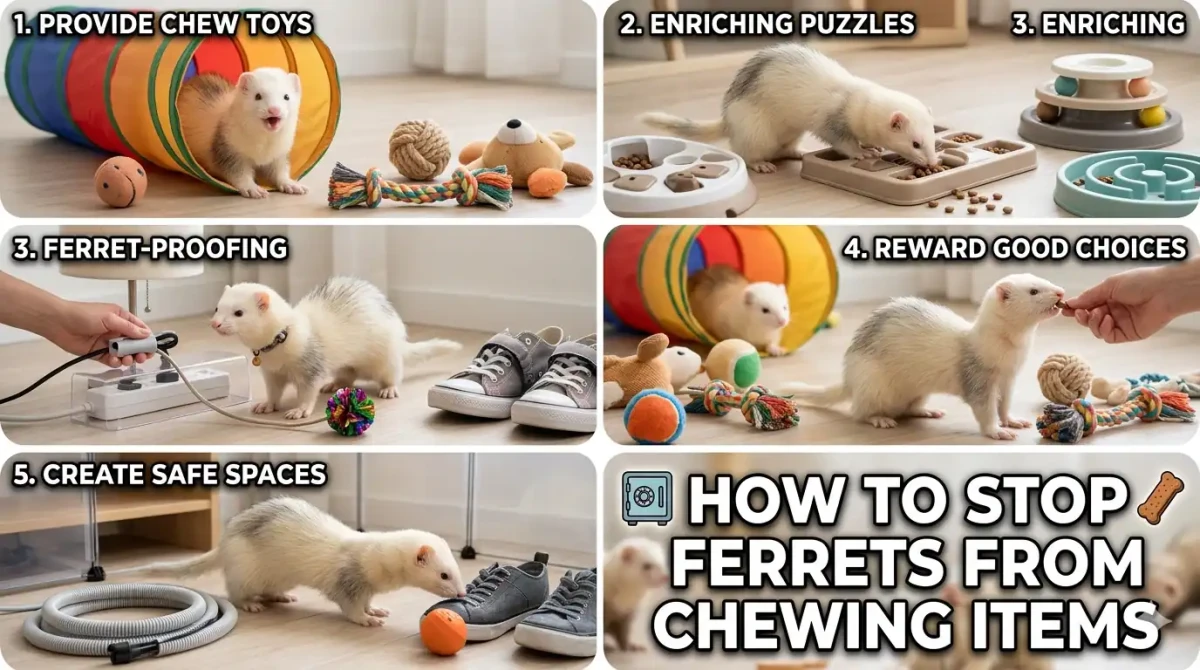
Secure electrical cords using cord protectors, conduit tubing, or cable management systems designed to resist chewing. Route cords behind furniture when possible, and use cord shorteners to minimize excess length ferrets could access. For areas where cords cannot be completely hidden, apply bitter-tasting deterrent sprays specifically formulated for pet safety to discourage chewing attempts.
Block access to dangerous areas using baby gates, playpens, or closed doors. Ferrets are skilled escape artists capable of squeezing through surprisingly small openings. Inspect potential escape routes and seal gaps around pipes, vents, and furniture. Create designated ferret-safe play zones where your pet can explore freely without supervision while you address proofing in other areas.
Remove or secure small objects that could be chewed and swallowed. Keep coins, jewelry, rubber bands, and similar items in closed containers. Store shoes in closets with doors, and keep remote controls, phones, and electronics out of ferret reach when not in active use. Develop habits of scanning floors and surfaces before allowing ferret access to new areas.
Protect furniture and household items using deterrents and barriers. Apply pet-safe bitter sprays to furniture legs, baseboards, or other chewed surfaces. Cover vulnerable areas with aluminum foil or double-sided tape, which many ferrets find unpleasant to chew. Provide attractive alternative chewing options nearby to redirect attention away from protected items.
Providing Appropriate Chewing Outlets

Redirecting chewing behavior toward safe, appropriate items satisfies ferret instincts while protecting household belongings. Offering varied, engaging chew toys reduces motivation to target inappropriate objects.
What chew toys are best for ferrets?
Durable rubber toys designed for small animals provide safe chewing outlets that withstand ferret teeth. Look for toys specifically labeled as ferret-safe or appropriate for small carnivores, avoiding items with small detachable parts that could be swallowed. Rotate toys regularly to maintain novelty and prevent boredom with the same items.
Natural fiber toys including willow balls, seagrass tunnels, and untreated wood chews offer texture variety that appeals to ferret chewing instincts. These materials are generally safe if small amounts are ingested and provide mental stimulation through manipulation and destruction. Avoid toys treated with chemicals, dyes, or preservatives that could harm ferrets.
Interactive puzzle toys and foraging devices engage ferret intelligence while satisfying chewing urges. Toys that dispense treats when manipulated encourage problem-solving and provide mental enrichment alongside physical chewing satisfaction. These items help tire ferrets mentally, reducing boredom-driven destructive behaviors.
Teething-specific toys for young ferrets feature softer textures designed to soothe gum discomfort. Frozen washcloths, chilled rubber teethers, or specially formulated teething toys provide relief for kits experiencing tooth emergence. Supervise teething ferrets closely to ensure they do not ingest fabric fibers or damaged toy pieces.
Training Techniques to Discourage Chewing

Positive reinforcement training helps ferrets learn which items are appropriate for chewing while building communication and trust between pets and owners.
How do you train ferrets to avoid inappropriate chewing?
Redirect chewing behavior immediately when you observe your ferret targeting inappropriate items. Gently remove your ferret from the forbidden object and offer an approved chew toy instead. When your ferret chews the appropriate item, immediately praise and reward with a small treat. This teaches ferrets that chewing approved items earns positive attention while inappropriate chewing results in redirection without reward.
Use consistent verbal cues to communicate expectations. Choose a short, distinct word like no or ah-ah to signal when chewing is inappropriate. Deliver the cue calmly but firmly the moment inappropriate chewing begins, then redirect to an approved toy. Consistency helps ferrets associate the cue with the behavior rather than with your emotional state.
Reinforce desired behaviors generously. When your ferret chooses appropriate chew toys independently, offer praise, pets, or small treats to strengthen the association. Positive reinforcement proves more effective than punishment for teaching ferrets, as these animals respond poorly to negative correction methods.
Avoid physical punishment or yelling, which can damage trust and increase stress-related behaviors. Ferrets do not understand punishment in the way humans intend, and harsh responses may cause fear, aggression, or increased secretive chewing. Focus on preventing access to inappropriate items and rewarding appropriate choices instead.
Using Deterrents Safely and Effectively

Behavioral deterrents can support training efforts when used appropriately, but require careful selection and application to ensure safety and effectiveness.
What deterrents work for ferret chewing?
Bitter-tasting sprays formulated for pet use can discourage chewing on specific items when applied according to manufacturer instructions. These products contain safe but unpleasant-tasting compounds that deter ferrets from returning to treated surfaces. Test sprays on small, inconspicuous areas first to ensure they do not damage finishes, and reapply as directed since effectiveness diminishes over time.
Texture deterrents including aluminum foil, double-sided tape, or plastic carpet runners with nubs facing up create unpleasant chewing experiences that many ferrets avoid. These physical barriers work well for protecting furniture legs, baseboards, or other stationary objects. Combine texture deterrents with approved chew toys placed nearby to provide attractive alternatives.
Scent deterrents using citrus, menthol, or other strong odors may discourage some ferrets from approaching treated areas. However, ferrets have sensitive respiratory systems, so use scent deterrents sparingly and in well-ventilated areas. Never apply essential oils directly to ferrets or in concentrations that could cause respiratory irritation.
Environmental modifications often prove more reliable than deterrents alone. Combining deterrents with physical barriers, supervised playtime, and appropriate chew toys creates multiple layers of protection that address chewing behavior comprehensively rather than relying on a single solution.
Addressing Boredom and Enrichment Needs

Many chewing problems stem from insufficient mental and physical stimulation. Providing adequate enrichment reduces boredom-driven destructive behaviors while supporting overall ferret wellbeing.
How do you enrich a ferret environment to reduce chewing?
Daily interactive playtime satisfies ferret exercise needs and strengthens bonds with owners. Engage ferrets in chasing games, tunnel exploration, or puzzle solving for at least thirty to sixty minutes daily, divided into multiple sessions. Active play tires ferrets physically and mentally, reducing motivation for destructive chewing during rest periods.
Rotate toys regularly to maintain novelty and interest. Ferrets quickly become bored with the same items, so keep a collection of toys and introduce different combinations every few days. This rotation mimics the variety ferrets would encounter in natural environments and keeps enrichment fresh and engaging.
Create complex play environments with tunnels, climbing structures, digging boxes, and hiding spots that encourage natural behaviors. Ferrets enjoy burrowing, climbing, and exploring confined spaces. Providing outlets for these instincts reduces frustration that might otherwise manifest as inappropriate chewing.
Consider adopting a second ferret if appropriate for your household. Ferrets are social animals who benefit from conspecific interaction. A compatible playmate can provide entertainment and companionship that reduces boredom-related behaviors. However, ensure proper introductions and adequate space before adding another ferret to your home.
Managing Teething in Young Ferrets

Kits experience intense chewing urges during teething that require special management strategies to protect both the young ferret and household items.
How do you help a teething ferret chew appropriately?
Provide multiple teething-specific toys with varied textures to soothe gum discomfort. Offer chilled items like frozen washcloths or rubber teethers that provide numbing relief for sore gums. Rotate teething toys frequently to maintain interest and ensure clean, safe options are always available.
Increase supervision during the teething period, which typically peaks between eight and sixteen weeks of age. Young ferrets may not yet understand boundaries, so proactive prevention through direct observation and redirection proves more effective than expecting kits to self-regulate chewing behavior.
Adjust expectations during teething, recognizing that increased chewing is developmentally normal rather than behavioral defiance. Focus on managing the environment and providing appropriate outlets rather than attempting to eliminate chewing entirely during this temporary phase.
Consult your veterinarian if teething appears unusually prolonged, painful, or accompanied by other concerning symptoms. While some chewing increase is normal, excessive drooling, refusal to eat, or bleeding gums may indicate dental problems requiring professional evaluation.
Recognizing When Chewing Indicates Health Issues

While most ferret chewing stems from normal behavior, certain patterns may signal underlying health problems requiring veterinary attention.
When should chewing concerns prompt veterinary consultation?
Sudden increases in chewing behavior, especially when accompanied by other changes like appetite loss, lethargy, or digestive issues, may indicate pain, nutritional deficiencies, or medical conditions. Ferrets cannot verbalize discomfort, so behavioral changes often represent the earliest signs of health problems.
Pica, the compulsive consumption of non-food items, may signal nutritional imbalances, gastrointestinal disorders, or behavioral conditions requiring professional evaluation. If your ferret consistently ingests rubber, fabric, or other inappropriate materials despite management efforts, consult an exotic veterinarian for assessment.
Dental problems including broken teeth, gum disease, or oral infections can drive abnormal chewing behaviors as ferrets attempt to relieve discomfort. Regular veterinary dental checks help identify and address oral health issues before they manifest as behavioral problems.
Common Mistakes to Avoid

Even well-intentioned ferret owners can make errors that worsen chewing problems or create new behavioral issues. Avoiding these pitfalls supports more effective management.
What mistakes should you avoid when managing ferret chewing?
Inconsistent responses confuse ferrets and undermine training effectiveness. Allowing chewing sometimes while punishing it other times sends mixed signals that prevent learning. Establish clear, consistent rules about appropriate chewing and apply them uniformly across all household members and situations.
Insufficient ferret proofing sets up both ferrets and owners for failure. Expecting ferrets to resist temptation without environmental management places unreasonable demands on young animals with strong instincts. Prioritize preventing access to dangerous items rather than relying solely on training to overcome powerful drives.
Punishment-based approaches damage trust and often increase problem behaviors. Yelling, spraying with water, or physical correction may temporarily interrupt chewing but do not teach appropriate alternatives. These methods can create fear, anxiety, or secretive behaviors that complicate long-term management.
Neglecting enrichment needs guarantees ongoing chewing problems. No amount of training or deterrents will succeed if ferrets lack adequate mental and physical stimulation. Address root causes through comprehensive enrichment rather than focusing exclusively on suppressing symptoms.
Creating a Ferret Safe Play Area

Designated play spaces allow ferrets to explore and chew safely while giving owners peace of mind during unsupervised periods.
How do you set up a ferret safe play area?
Select an enclosed space that can be thoroughly ferret-proofed, such as a bathroom, spare room, or large playpen. Remove or secure all hazardous items including cords, small objects, toxic plants, and accessible furniture with vulnerable components. Test the area from a ferret perspective by getting on floor level to identify potential escape routes or chew targets.
Fill the space with approved toys, tunnels, climbing structures, and digging opportunities that satisfy natural behaviors. Include multiple chew toys with varied textures to provide appropriate outlets for chewing instincts. Rotate items regularly to maintain novelty and engagement.
Ensure the play area includes comfortable resting spots, fresh water, and easy access to a litter pan if ferrets will spend extended time there. A well-designed play space meets physical, mental, and physiological needs while keeping ferrets safe during independent exploration.
Frequently Asked Questions

Why does my ferret chew on me?
Ferrets may chew on humans for several reasons including playful nipping, teething discomfort, attention-seeking, or exploration. Young ferrets often mouth hands during play as they learn bite inhibition, while teething kits may chew to relieve gum pain. If chewing becomes painful or frequent, redirect to appropriate toys immediately and avoid reinforcing the behavior with attention. Consistent redirection and providing adequate chew outlets typically resolve human-directed chewing. Consult a veterinarian if chewing seems compulsive or aggressive.
How long does ferret teething last?
Ferret teething typically begins around eight weeks of age and continues through approximately sixteen weeks, though individual variation exists. During this period, increased chewing behavior is normal and developmentally appropriate. Providing appropriate teething toys and increased supervision helps manage this temporary phase. Most ferrets show reduced chewing intensity once adult teeth fully emerge and gum discomfort subsides.
Can I use bitter apple spray on everything my ferret chews?
Bitter apple and similar deterrent sprays can be helpful tools when used appropriately, but they should not be applied universally. Test sprays on small areas first to ensure they do not damage surfaces, and avoid using them on items ferrets contact with their faces or paws to prevent accidental ingestion or irritation. Deterrents work best when combined with providing attractive approved alternatives rather than used as standalone solutions.
What should I do if my ferret swallows something dangerous?
If you suspect your ferret has ingested a hazardous item like rubber, foam, batteries, or small objects, contact an exotic veterinarian or emergency animal hospital immediately. Do not attempt to induce vomiting unless specifically instructed by a veterinary professional, as this can cause additional harm. Monitor for symptoms including vomiting, lethargy, loss of appetite, or abdominal pain, and be prepared to provide details about what was ingested and when. Prompt veterinary care significantly improves outcomes for ingestion emergencies.
How much playtime do ferrets need to reduce chewing?
Most ferrets benefit from at least two to four hours of supervised playtime and enrichment daily, divided into multiple sessions. Active play, exploration, and mental stimulation help satisfy natural instincts that might otherwise manifest as destructive chewing. Individual needs vary based on age, personality, and health status, so observe your ferret behavior and adjust activity levels accordingly. Ferrets who receive adequate engagement typically display reduced boredom-related chewing.
Will my ferret outgrow excessive chewing?
Many ferrets show reduced chewing intensity as they mature past the teething phase and learn household boundaries through consistent training. However, chewing remains a natural ferret behavior throughout life, so management rather than elimination represents the realistic goal. Providing appropriate outlets, maintaining enrichment, and continuing ferret-proofing efforts support long-term success regardless of age.
Conclusion

Learning how to stop ferrets from chewing items requires understanding the natural instincts driving this behavior, implementing comprehensive prevention strategies, and providing appropriate outlets for healthy chewing. By combining environmental management, positive reinforcement training, and enriching activities, owners can successfully redirect ferret chewing toward safe, appropriate items while protecting household belongings and ensuring ferret wellbeing.
Remember that chewing is a normal, healthy behavior for ferrets that serves important developmental and exploratory functions. The goal is not to eliminate chewing entirely but to guide it toward safe, acceptable targets that satisfy your ferret natural needs. Patience, consistency, and proactive management create the foundation for successful behavior modification.
By following the guidelines in this comprehensive guide, you can confidently manage ferret chewing using evidence-based methods that prioritize ferret welfare, respect natural instincts, and build positive behaviors. Your commitment to thoughtful, humane management demonstrates the love and responsibility that defines exceptional ferret ownership, ensuring your playful companion enjoys many years of safe exploration and joyful interaction by your side.
🐱 আরও পড়ুন: Other Pet Training and Behavior

0 Comments