.png)
Small pet food for picky eaters and nutritional success guide
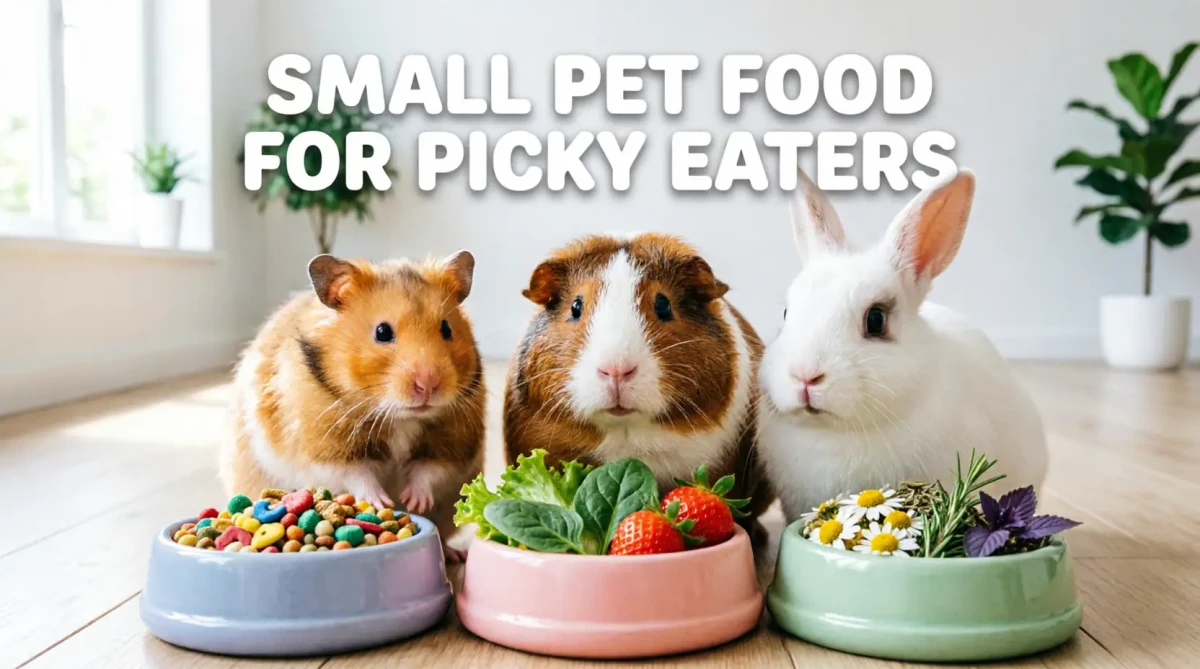
Finding the small pet food for picky eaters can be a frustrating challenge for owners of hamsters, guinea pigs, rabbits, and rats. Unlike larger animals, small mammals have incredibly high metabolic rates, meaning even a short period of refusing food can lead to significant health complications. Selective feeding—where a pet picks out the "tasty" fatty bits and leaves the nutritious parts—is a common behavior that leads to hidden malnutrition.
The primary goal of managing a fussy eater is to provide a diet that is both irresistible and nutritionally complete. Whether you are dealing with a guinea pig that refuses its hay or a hamster that only eats sunflower seeds, the solution lies in understanding their natural foraging instincts. Transitioning to a uniform pellet or a high-quality forage mix commonly recommended by exotic vets may help balance their intake and prevent dental issues.
Quick Summary of Small Pet Nutrition Strategies
To solve picky eating, owners must shift from "muesli-style" mixes to high-quality uniform pellets or enriched forage diets. Uniform pellets ensure that the pet cannot "sort" through the food, while forage toppers add the sensory variety they crave. Most small pets require a transition period of 7 to 14 days to accept a new, healthier diet without digestive upset.
| Pet Type | Primary Diet Component | Common Picky Behavior | Solution Strategy |
|---|---|---|---|
| Rabbit | 80% Timothy Hay | Refusing hay for pellets | Hay toppers and herbs |
| Guinea Pig | Hay and Vitamin C | Ignoring veggies | Daily fresh rotate |
| Hamster | Seed/Pellet Mix | Selective seed picking | Lab blocks/Uniform pellets |
| Rat/Mouse | Nutritionally Complete | Hiding specific bits | Scatter feeding |
Understanding Selective Feeding in Small Animals
Selective feeding occurs when a pet is offered a variety of food items in a loose mix and chooses to eat only the high-sugar or high-fat components. This behavior is dangerous because the "rejected" bits often contain essential vitamins like Vitamin C for guinea pigs or Vitamin D for rabbits. Over time, this leads to obesity, bone weakness, and overgrown teeth.
According to widely accepted pet care standards, the drive to eat high-calorie items is an evolutionary trait from the wild. In a home environment where food is plentiful, this instinct works against them. Recognizing that your pet isn't just "fussy" but is following a survival instinct helps you implement firmer feeding rules without feeling guilty.
Featured Snippet: What is the best food for a picky small pet?
The best small pet food for picky eaters is a uniform extruded pellet or a high-fiber forage mix. Uniform pellets prevent selective feeding by ensuring every bite contains equal nutrition. For pets that refuse hay, adding dried herbal toppers like dandelion or marigold can entice them to eat their required fiber intake.
Feeding Guide for Optimal Growth and Health

Establishing a routine is the first step in curbing picky behavior. The following chart outlines the daily requirements for adult small pets. If you have a puppy/junior pet, they typically require higher protein and calcium (often found in Alfalfa hay) until they reach six months of age.
| Pet Breed | Daily Pellet Amount | Fresh Food Amount | Hay/Fiber Requirement |
|---|---|---|---|
| Rabbits (Standard) | 1/4 to 1/2 cup | 1-2 cups leafy greens | Unlimited (Size of body) |
| Guinea Pigs | 1/8 cup (fortified) | 1 cup (high Vit C) | Unlimited |
| Hamsters (Syrian) | 1 - 2 tablespoons | Small piece (3x weekly) | Used for nesting/foraging |
| Rats (Adult) | 15 - 20 grams | 10-15 grams | Occasional for enrichment |
Top Strategies to Encourage Eating

If your pet is turning their nose up at healthy options, you can use "foraging enrichment" to stimulate their appetite. In the wild, these animals spend 70% of their waking hours searching for food. A bowl sitting in a corner is boring and doesn't trigger their natural drive.
- Scatter Feeding: Instead of using a bowl, sprinkle their daily pellet ration throughout their bedding. This turns mealtime into a game and prevents them from focusing on what they "don't" like.
- Hay Toppers: For rabbits and guinea pigs that hate hay, try mixing in dried rose petals, mint, or parsley. The aromatic scent often masks the "plainness" of the hay.
- The "Tough Love" Method: If your pet only eats the treats in a mix, stop refilling the bowl until the healthy parts are gone. Note: Only do this for a few hours with small mammals; never let them go 24 hours without eating.
Comparison: Budget vs Premium Small Pet Food

The price of small pet food is usually a reflection of the fiber source and the absence of cheap fillers like corn and syrup. While budget options are tempting, they are often the root cause of picky eating habits.
Premium Options ($$$): Brands like Oxbow, Science Selective, or Burgess Excel. These brands use high-quality Timothy hay as the first ingredient and avoid colorful "junk" pieces. They are scientifically formulated to prevent selective feeding. Expect to pay $15–$30 for a medium bag.
Mid-Range Options ($$): Brands like Versele-Laga or Higgins. These often provide a blend of pellets and natural forage. They are great for healthy pets but may still allow for some selective feeding in very stubborn animals. Prices range from $10–$18.
Budget Options ($): Generic grocery store "gourmet" mixes. These are often packed with sunflower seeds, dried fruit, and colorful dyed crackers. While cheap ($5–$8), they frequently lead to obesity and dental disease because pets ignore the healthy pellets.
Dental Health and Picky Eating

There is a strong link between picky eating and dental health. Small animals like rabbits and guinea pigs have "elodont" teeth, meaning they grow continuously throughout their lives. They MUST chew tough fiber (hay) to grind these teeth down.
If a picky eater refuses hay and only eats soft pellets or seeds, their teeth will overgrow, forming painful spikes (spurs) that cut into their tongue or cheeks. Once this happens, the pet will stop eating entirely because it hurts to chew. Regularly providing chew toys made of willow, apple wood, or seagrass is commonly recommended to keep their teeth in check.
Common Mistakes to Avoid

The biggest mistake owners make is over-treating. When a pet looks "sad" or begs, owners often give a yogurt drop or a piece of fruit. The pet quickly learns that if they refuse their healthy pellets, a sugary treat will eventually appear. This creates a cycle of pickiness that is hard to break.
Another mistake is sudden diet changes. Small animals have very sensitive gut flora. Switching from a high-seed diet to a high-fiber pellet overnight can cause "GI Stasis" (gastrointestinal stasis), which is a medical emergency. Always mix the old and new food gradually over a two-week period.
Health and Preventive Care Timelines

When transitioning a picky eater to a better diet, you should monitor their progress closely. Healthy changes don't happen overnight, but you should look for specific markers of improvement.
- Week 1-2: Transition period. You may see some weight fluctuation as they adjust to lower-calorie, higher-fiber food.
- Month 1: Improved stool quality. Droppings should be larger, lighter in color (for hay-eaters), and consistent.
- Month 3: Better coat quality. As vitamins are absorbed correctly, the fur should become shinier and softer.
- Month 6: Veterinary check-up. Ensure teeth are wearing down properly on the new diet.
Localized Advice: Bangladesh and Warm Climates

For small pet owners in Bangladesh, the heat and humidity can make food spoil much faster. Forage and hay can develop mold if not stored in a dry, ventilated area. Avoid plastic bags for hay storage; use cloth bags or cardboard boxes instead.
During the intense summer heat, picky eaters may lose their appetite further. Providing "cool" fresh veggies like cucumber (in moderation) can help with hydration. Ensure that any uniform pellets you buy are kept in an airtight container to prevent them from going soft or losing their Vitamin C potency, which is notoriously unstable in humid conditions.
Expert Tips for Long-Term Success

Success with a picky eater comes down to environmental enrichment. Try stuffing their pellets and hay into a toilet paper roll or a wicker ball. Making the pet "work" for their food increases its perceived value. Additionally, always weigh your small pet weekly on a kitchen scale. Small animals hide illness very well, and a sudden drop in weight is often the first sign that their "picky eating" has turned into a medical issue.
Frequently Asked Questions

Can I give my picky hamster only sunflower seeds if that's all he likes?
No. Sunflower seeds are very high in fat and low in calcium. Feeding only seeds will lead to obesity and "MBD" (Metabolic Bone Disease). You must transition to a balanced pellet or block.
My guinea pig refuses to eat Timothy hay, what can I do?
Try different "cuts" of hay. Second-cut Timothy is the standard, but some pigs prefer the softer third-cut or a different grass entirely, like Orchard Grass or Meadow Hay. Adding dried herbs can also help.
Is it okay for rabbits to eat colorful muesli mixes?
Most vets advise against it. The colorful bits are often high in sugar and starch, which can disrupt the delicate balance of a rabbit's cecum, leading to dangerous bloating or diarrhea.
How do I know if my pet is refusing food because of illness or pickiness?
Pickiness is usually selective—they eat the "good" stuff and leave the rest. Illness is usually total—they refuse everything, including their favorite treats. If they refuse a favorite treat, consult a veterinarian immediately.
Are "yogurt drops" a good treat for picky eaters?
No. Most small animals are lactose intolerant, and the high sugar content is bad for their teeth and gut health. Better treats include dried hibiscus flowers or a small slice of bell pepper.
🐱 আরও পড়ুন: Other Pet Food

0 Comments