.png)
High-Protein Food for Rabbits: Expert Guide to Safe, Age-Appropriate Nutrition
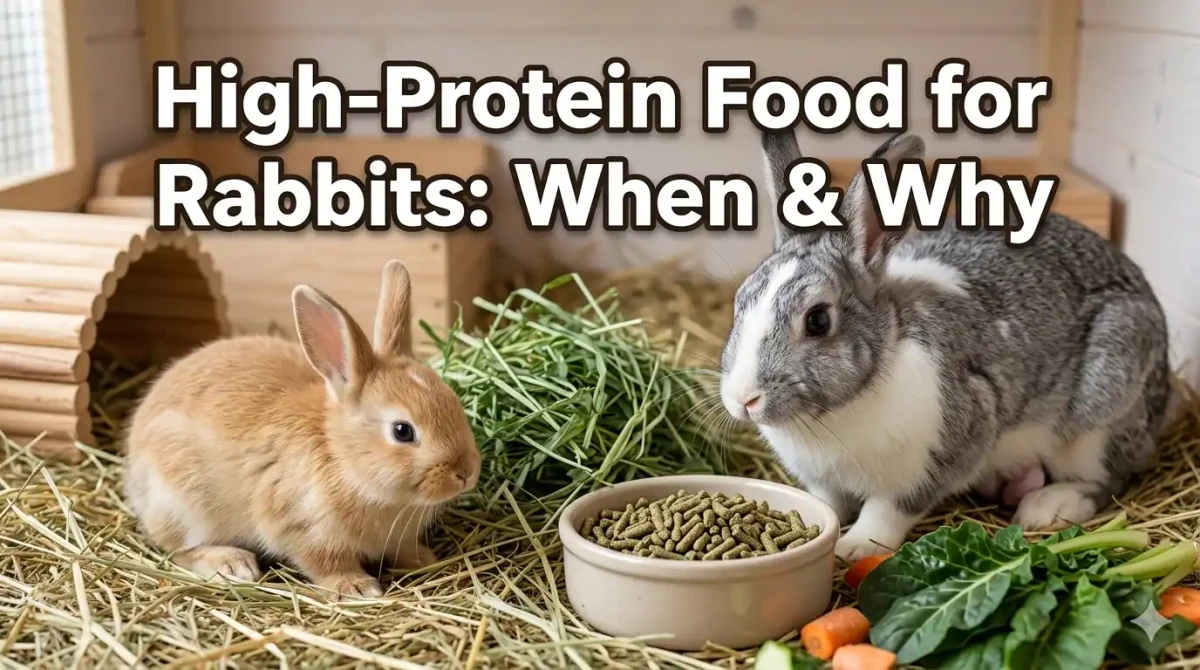
Understanding Rabbit Protein Needs: Why "High-Protein" Isn't Always Better
Rabbits have unique nutritional requirements that differ dramatically from cats, dogs, or even other small pets. As hindgut fermenters, rabbits require a diet built on high-fiber grass hay—not high protein. In fact, feeding adult rabbits "high-protein" food can lead to obesity, kidney strain, urinary issues, and life-threatening digestive problems like GI stasis.
Featured Snippet Answer: Adult rabbits need only 12-14% protein from timothy-based pellets and unlimited grass hay. Higher protein (16-18%) is appropriate ONLY for growing juveniles (under 6 months), pregnant/nursing does, or underweight rabbits under veterinary guidance. Never feed adult rabbits high-protein foods like alfalfa-based pellets, legume-heavy mixes, or animal proteins—these can cause obesity, urinary stones, and digestive disease. Always prioritize fiber (18-20%+) over protein for rabbit health.
This critical distinction matters: many rabbit owners mistakenly believe "more protein = better health," but rabbit physiology demands the opposite. Understanding when rabbits actually need increased protein—and when extra protein is harmful—empowers you to make informed choices that protect your rabbit's long-term health.
This comprehensive guide provides evidence-based, exotic-veterinarian-aligned strategies for providing appropriate protein levels for rabbits at every life stage. You'll learn about rabbit digestive physiology, protein requirements by age and condition, safe food selection, warning signs of protein-related health issues, and when higher protein is genuinely beneficial. Whether you have a growing juvenile, a nursing doe, or a senior rabbit, you'll find practical guidance to optimize their nutrition safely.
Rabbit Digestive Physiology: Why Fiber Trumps Protein
Before discussing protein, it's essential to understand why rabbits have such unique dietary needs.
Key Rabbit Digestive Characteristics:
- Hindgut fermenters: Like horses, rabbits ferment fiber in the cecum to extract nutrients; this requires constant high-fiber intake (18-20%+)
- Continuously growing teeth: Require constant abrasive wear from hay to prevent painful overgrowth and malocclusion
- Sensitive digestive tracts: Prone to GI stasis (slowed or stopped gut motility) from low-fiber, high-protein, or sudden diet changes
- Efficient protein recycling: Rabbits produce cecotropes (nutrient-rich night feces) they re-ingest to maximize protein/vitamin absorption—reducing need for high dietary protein
- Low-fat metabolism: Rabbits cannot efficiently process high-fat or high-protein diets; excess leads to obesity and organ strain
- 🐾 Best Food for Rabbits in USA: Complete 2026 Guide
- 🐾 Grain-Free Dog Food for Adult Dogs: Complete Guide
- 🐾 Wet vs Dry Cat Food: Which Is Better?
Why High Protein Harms Adult Rabbits:
- Kidney strain: Excess protein produces nitrogen waste that overworks kidneys, potentially causing damage over time
- Urinary issues: High protein + high calcium (common in alfalfa) increases risk of bladder sludge, stones, and infections
- Obesity: Protein-rich foods are calorie-dense; adult rabbits easily gain weight, leading to joint stress and metabolic disease
- Digestive disruption: Low-fiber, high-protein diets disrupt cecal fermentation, triggering GI stasis—a life-threatening emergency
- Behavioral issues: Inappropriate diets can cause boredom, stereotypic behaviors, or reduced hay consumption
- 🐾 Best Food for Rabbits in USA: Complete 2026 Guide
- 🐾 Grain-Free Dog Food for Adult Dogs: Complete Guide
- 🐾 Wet vs Dry Cat Food: Which Is Better?
Featured Snippet Answer: Rabbits are hindgut fermenters requiring 18-20%+ fiber from unlimited grass hay. Adult rabbits need only 12-14% protein; excess protein strains kidneys, increases urinary stone risk, promotes obesity, and disrupts digestion. Only juveniles, pregnant/nursing does, or underweight rabbits under veterinary care benefit from higher protein (16-18%).
When DO rabbits actually need higher protein?
Higher protein (16-18%) is appropriate ONLY for: (1) Growing juveniles under 6 months supporting rapid development; (2) Pregnant or nursing does with increased nutritional demands; (3) Underweight or recovering rabbits under veterinary supervision. Even in these cases, protein should come from quality timothy-based pellets with alfalfa supplementation ONLY if recommended by an exotic veterinarian. Never increase protein without veterinary guidance.
Protein Requirements by Life Stage: Safe Guidelines

Rabbit protein needs change dramatically with age and condition. Use these evidence-based guidelines.
Adult Rabbits (6 Months - 5 Years): Maintenance Phase
Protein Needs: 12-14% maximum
Dietary Foundation:
- Unlimited grass hay: Timothy, orchard grass, or meadow hay = 80-90% of diet; provides essential fiber AND appropriate protein
- Timothy-based pellets: 1/4 to 1/2 cup daily for average 5-lb rabbit; must be timothy-based, not alfalfa-based
- Fresh vegetables: 1-2 cups daily of rabbit-safe greens (romaine, cilantro, kale); minimal fruit
- Fresh water: Always available via bottle or bowl
- 🐾 Best Food for Rabbits in USA: Complete 2026 Guide
- 🐾 Grain-Free Dog Food for Adult Dogs: Complete Guide
- 🐾 Wet vs Dry Cat Food: Which Is Better?
Avoid for Adults:
- Alfalfa-based pellets or hay (too high in protein/calcium)
- Legume-heavy mixes (peas, beans, lentils)
- Animal proteins (eggs, meat, dairy—never appropriate for rabbits)
- High-protein "performance" or "breeding" formulas not prescribed by a vet
- 🐾 Best Food for Rabbits in USA: Complete 2026 Guide
- 🐾 Grain-Free Dog Food for Adult Dogs: Complete Guide
- 🐾 Wet vs Dry Cat Food: Which Is Better?
Growing Juveniles (Under 6 Months): Development Phase
Protein Needs: 16-18% to support rapid growth and development
Dietary Foundation:
- Unlimited grass hay: Still the foundation; introduce timothy gradually if starting with alfalfa
- Alfalfa hay + timothy transition: Alfalfa provides higher protein/calcium for growth; transition to timothy by 6-7 months
- Junior pellets: Alfalfa-based or higher-protein timothy pellets; free-choice until 6 months, then measure portions
- Introduce vegetables gradually: Start with small amounts of safe greens after 12 weeks
- 🐾 Best Food for Rabbits in USA: Complete 2026 Guide
- 🐾 Grain-Free Dog Food for Adult Dogs: Complete Guide
- 🐾 Wet vs Dry Cat Food: Which Is Better?
Transition Protocol:
- At 3-4 months: Begin mixing timothy hay with alfalfa (75% alfalfa / 25% timothy)
- At 5 months: 50/50 alfalfa-timothy mix
- At 6-7 months: Transition to 100% grass hay; switch to adult timothy-based pellets
- 🐾 Best Food for Rabbits in USA: Complete 2026 Guide
- 🐾 Grain-Free Dog Food for Adult Dogs: Complete Guide
- 🐾 Wet vs Dry Cat Food: Which Is Better?
Pregnant or Nursing Does: Reproductive Phase
Protein Needs: 16-18% during late pregnancy and lactation
Dietary Foundation:
- Unlimited grass hay: Continue as foundation; may supplement with limited alfalfa under veterinary guidance
- Increased pellets: Higher-protein pellets or measured increase in standard pellets; follow vet recommendations
- Enhanced calories: Slight increase in overall calories to support milk production
- Calcium monitoring: Ensure adequate but not excessive calcium; balance with phosphorus
- 🐾 Best Food for Rabbits in USA: Complete 2026 Guide
- 🐾 Grain-Free Dog Food for Adult Dogs: Complete Guide
- 🐾 Wet vs Dry Cat Food: Which Is Better?
Important: Always consult an exotic veterinarian before adjusting diet for pregnancy/lactation. Over-supplementation can cause urinary issues or metabolic imbalances.
Senior Rabbits (5+ Years): Aging Considerations
Protein Needs: 12-14% (same as adults), but focus on digestibility
Dietary Foundation:
- Unlimited grass hay: Continue as foundation; may offer softer hays (orchard grass) if dental issues develop
- High-quality pellets: Maintain 12-14% protein; ensure pellets are fresh and palatable for seniors with reduced appetite
- Easy-to-chew vegetables: Soften greens if dental issues present; monitor intake closely
- Weight monitoring: Seniors may lose muscle mass; adjust portions to maintain healthy weight without excess protein
- 🐾 Best Food for Rabbits in USA: Complete 2026 Guide
- 🐾 Grain-Free Dog Food for Adult Dogs: Complete Guide
- 🐾 Wet vs Dry Cat Food: Which Is Better?
Featured Snippet Answer: Adult rabbits need 12-14% protein from timothy-based pellets and unlimited grass hay. Juveniles under 6 months and pregnant/nursing does may need 16-18% protein temporarily. Seniors maintain adult protein levels but need highly digestible options. Never feed adult rabbits high-protein foods like alfalfa pellets or legume mixes without veterinary guidance.
Safe Protein Sources for Rabbits: What to Feed and What to Avoid

Not all protein sources are appropriate for rabbits. Understanding safe options prevents health complications.
Appropriate Protein Sources
Grass Hays (Primary Source):
- Timothy hay: ~8-11% protein; ideal protein level for adults with high fiber
- Orchard grass hay: ~7-10% protein; softer texture for seniors or picky eaters
- Meadow hay: ~8-12% protein; good variety option if grass-based
- 🐾 Best Food for Rabbits in USA: Complete 2026 Guide
- 🐾 Grain-Free Dog Food for Adult Dogs: Complete Guide
- 🐾 Wet vs Dry Cat Food: Which Is Better?
Timothy-Based Pellets:
- Adult formulas: 12-14% protein from timothy meal, grass meals
- Junior formulas: 16-18% protein; may include limited alfalfa for growth support
- Key criteria: Look for timothy as first ingredient; avoid alfalfa-based pellets for adults
- 🐾 Best Food for Rabbits in USA: Complete 2026 Guide
- 🐾 Grain-Free Dog Food for Adult Dogs: Complete Guide
- 🐾 Wet vs Dry Cat Food: Which Is Better?
Rabbit-Safe Vegetables (Supplemental):
- Leafy greens: Romaine, cilantro, parsley, dandelion greens (~2-4% protein but nutrient-dense)
- Herbs: Basil, mint, oregano (small amounts; ~2-3% protein)
- Note: Vegetables provide minimal protein but essential vitamins/minerals; never replace hay/pellets
- 🐾 Best Food for Rabbits in USA: Complete 2026 Guide
- 🐾 Grain-Free Dog Food for Adult Dogs: Complete Guide
- 🐾 Wet vs Dry Cat Food: Which Is Better?
Protein Sources to Avoid for Adult Rabbits
Alfalfa Hay and Pellets:
- Why avoid: Alfalfa contains 15-20% protein and very high calcium—appropriate only for juveniles or under veterinary guidance
- Risks for adults: Urinary stones, bladder sludge, obesity, kidney strain
- Exception: May be used short-term for underweight or recovering rabbits under veterinary supervision
- 🐾 Best Food for Rabbits in USA: Complete 2026 Guide
- 🐾 Grain-Free Dog Food for Adult Dogs: Complete Guide
- 🐾 Wet vs Dry Cat Food: Which Is Better?
Legumes and Beans:
- Examples: Peas, beans, lentils, chickpeas, soy
- Why avoid: Too high in protein and carbohydrates; disrupt cecal fermentation; cause gas and GI upset
- Risks: GI stasis, diarrhea, obesity
- 🐾 Best Food for Rabbits in USA: Complete 2026 Guide
- 🐾 Grain-Free Dog Food for Adult Dogs: Complete Guide
- 🐾 Wet vs Dry Cat Food: Which Is Better?
Animal Proteins:
- Examples: Eggs, meat, dairy, fish, insect-based proteins
- Why avoid: Rabbits are herbivores; animal proteins are indigestible and toxic
- Risks: Severe digestive upset, toxicity, organ damage
- 🐾 Best Food for Rabbits in USA: Complete 2026 Guide
- 🐾 Grain-Free Dog Food for Adult Dogs: Complete Guide
- 🐾 Wet vs Dry Cat Food: Which Is Better?
High-Protein "Performance" or "Breeding" Formulas:
- Why avoid: Formulated for livestock or specific breeding operations; inappropriate for pet rabbits
- Risks: Obesity, urinary issues, metabolic imbalances
- 🐾 Best Food for Rabbits in USA: Complete 2026 Guide
- 🐾 Grain-Free Dog Food for Adult Dogs: Complete Guide
- 🐾 Wet vs Dry Cat Food: Which Is Better?
Featured Snippet Answer:
Safe protein sources for rabbits: grass hays (timothy, orchard grass) at 8-12% protein; timothy-based pellets at 12-14% for adults. Avoid alfalfa hay/pellets for adults (too high in protein/calcium), legumes, animal proteins, and livestock "performance" formulas. Only use higher-protein options for juveniles, pregnant/nursing does, or under veterinary guidance.
Top Recommended Foods for Appropriate Rabbit Protein Levels

After extensive research and analysis of ingredient quality, nutritional analysis, and exotic veterinarian recommendations, these are the best foods for providing appropriate protein levels for rabbits.
1. Oxbow Adult Rabbit Food: Best Overall for Adult Rabbits
Key Features:
- 12-14% protein from timothy meal and grass meals—ideal for adult maintenance
- 25% fiber to support digestive health and dental wear
- Timothy hay as first ingredient; no alfalfa, legumes, or animal proteins
- Uniform pellets prevent selective eating
- Fortified with essential vitamins and minerals without excess calcium
- Natural preservatives (mixed tocopherols)
- 🐾 Best Food for Rabbits in USA: Complete 2026 Guide
- 🐾 Grain-Free Dog Food for Adult Dogs: Complete Guide
- 🐾 Wet vs Dry Cat Food: Which Is Better?
Best For: Adult rabbits 6 months to 5 years; rabbits needing weight management
Pros: Perfect protein/fiber balance for adults, no harmful fillers, vet-recommended, consistent quality, widely available
Cons: Not appropriate for juveniles under 6 months; premium price point
Price Range: $18-30 for 5-lb bag
Verdict: Oxbow Adult Rabbit Food sets the standard for appropriate adult rabbit nutrition. Its precise 12-14% protein and high fiber make it ideal for maintaining health without protein-related risks.
2. Oxbow Young Rabbit Food: Best for Growing Juveniles
Key Features:
- 16-18% protein to support rapid growth and development
- 22% fiber for digestive health while accommodating higher protein needs
- Alfalfa and timothy blend provides appropriate protein/calcium for growth
- Uniform pellets prevent selective eating
- Fortified with DHA for brain development and essential vitamins
- 🐾 Best Food for Rabbits in USA: Complete 2026 Guide
- 🐾 Grain-Free Dog Food for Adult Dogs: Complete Guide
- 🐾 Wet vs Dry Cat Food: Which Is Better?
Best For: Rabbits under 6 months; pregnant/nursing does under veterinary guidance
Pros: Age-appropriate protein level, supports healthy development, vet-recommended, consistent quality
Cons: Must transition to adult formula by 6-7 months; not for adult maintenance
Price Range: $20-32 for 5-lb bag
Verdict: Oxbow Young Rabbit Food delivers precisely calibrated nutrition for growing rabbits. Its 16-18% protein supports development without the risks of uncontrolled high-protein feeding.
3. Small Pet Select Timothy Pellets: Best Fresh, Small-Batch Option
Key Features:
- 13-14% protein from fresh timothy hay and grass meals
- 24% fiber for optimal digestive function
- No alfalfa, legumes, or artificial additives
- Small-batch production ensures freshness and nutrient integrity
- Transparent sourcing and eco-conscious practices
- 🐾 Best Food for Rabbits in USA: Complete 2026 Guide
- 🐾 Grain-Free Dog Food for Adult Dogs: Complete Guide
- 🐾 Wet vs Dry Cat Food: Which Is Better?
Best For: Adult rabbits; owners prioritizing freshness and transparency
Pros: Exceptional freshness, transparent sourcing, appropriate protein level, no fillers, eco-friendly
Cons: Subscription model may not suit all owners; higher price due to small-batch production
Price Range: $22-38 for 4-lb bag (plus shipping)
Verdict: Small Pet Select offers exceptional freshness and transparency for owners willing to invest in premium, small-batch rabbit nutrition with appropriate protein levels.
4. Kaytee Timothy Complete: Best Budget-Friendly Adult Option
Key Features:
- 12-14% protein from timothy meal
- 22% fiber for digestive support
- Timothy hay as primary ingredient; no alfalfa in adult formula
- Uniform pellets with essential vitamins and minerals
- Widely available at pet stores and online
- 🐾 Best Food for Rabbits in USA: Complete 2026 Guide
- 🐾 Grain-Free Dog Food for Adult Dogs: Complete Guide
- 🐾 Wet vs Dry Cat Food: Which Is Better?
Best For: Budget-conscious owners of adult rabbits seeking appropriate protein levels
Pros: Affordable price, appropriate protein/fiber balance, widely available, consistent quality
Cons: Contains more fillers than premium brands; ensure you select the "Adult" formula, not "Young Rabbit"
Price Range: $12-22 for 5-lb bag
Verdict: Kaytee Timothy Complete delivers reliable, species-appropriate nutrition at an accessible price, making quality rabbit care achievable for budget-conscious owners.
5. Premium Hay Options: Small Pet Select Timothy Hay & Oxbow Western Timothy
Key Features:
- Small Pet Select Timothy Hay: Fresh, second-cut timothy; ~8-11% protein, high fiber, highly palatable
- Oxbow Western Timothy Hay: Consistent quality, high fiber, appropriate protein for adults
- Both: Provide the essential fiber foundation with naturally appropriate protein levels
- 🐾 Best Food for Rabbits in USA: Complete 2026 Guide
- 🐾 Grain-Free Dog Food for Adult Dogs: Complete Guide
- 🐾 Wet vs Dry Cat Food: Which Is Better?
Best For: Providing the critical hay foundation of rabbit diets with naturally appropriate protein
Pros: High palatability encourages consumption; naturally appropriate protein/fiber balance; minimal dust protects respiratory health
Cons: Premium hay costs more; requires proper storage to maintain freshness
Price Range: $18-35 for 24-48 oz bales depending on brand and cut
Verdict: High-quality grass hay is non-negotiable for rabbit health; investing in fresh, palatable hay ensures your rabbit consumes the fiber essential for digestive and dental health—with naturally appropriate protein levels.
How to Evaluate Rabbit Food for Appropriate Protein Levels

Marketing claims can be misleading. Use these evidence-based criteria to evaluate rabbit food safety.
Guaranteed Analysis: Reading the Numbers Correctly
- Protein: 12-14% for adults; 16-18% ONLY for juveniles under 6 months or under veterinary guidance
- Fiber: Minimum 18-20% for all life stages; fiber is more critical than protein for rabbit health
- Fat: 1-3% maximum; rabbits cannot process high-fat diets
- Calcium: 0.5-1.0% for adults; higher levels (with appropriate phosphorus) only for growing juveniles
- Remember: Guaranteed analysis shows minimums/maximums; actual content may vary
- 🐾 Best Food for Rabbits in USA: Complete 2026 Guide
- 🐾 Grain-Free Dog Food for Adult Dogs: Complete Guide
- 🐾 Wet vs Dry Cat Food: Which Is Better?
Ingredient List Analysis
- First 3-5 ingredients: Should be grass hays (timothy, orchard) or grass meals for adults
- Avoid for adults: Alfalfa, legumes (peas, beans), animal proteins, or unspecified "plant proteins"
- Uniform pellets: Avoid muesli mixes that encourage selective eating and nutritional imbalance
- Preservatives: Prefer natural preservatives (mixed tocopherols) over artificial options
- 🐾 Best Food for Rabbits in USA: Complete 2026 Guide
- 🐾 Grain-Free Dog Food for Adult Dogs: Complete Guide
- 🐾 Wet vs Dry Cat Food: Which Is Better?
Life Stage Labeling
- Check labels carefully: "Young Rabbit," "Junior," or "Growth" formulas have higher protein for juveniles
- Adult formulas: Must specify "Adult" or "Maintenance" with 12-14% protein
- Avoid confusion: Never feed "Young Rabbit" food to adult rabbits—it contains inappropriate protein/calcium levels
- 🐾 Best Food for Rabbits in USA: Complete 2026 Guide
- 🐾 Grain-Free Dog Food for Adult Dogs: Complete Guide
- 🐾 Wet vs Dry Cat Food: Which Is Better?
Brand Reputation and Transparency
- Exotic animal expertise: Brands employing exotic animal nutritionists formulate more reliable rabbit foods
- Quality control: Look for brands conducting nutrient testing and contaminant screening
- Veterinary recommendations: Foods recommended by exotic veterinarians often meet higher safety standards
- Transparency: Brands disclosing ingredient sourcing enable informed choices
- 🐾 Best Food for Rabbits in USA: Complete 2026 Guide
- 🐾 Grain-Free Dog Food for Adult Dogs: Complete Guide
- 🐾 Wet vs Dry Cat Food: Which Is Better?
Featured Snippet Answer: Evaluate rabbit food by checking: 12-14% protein for adults (16-18% only for juveniles), minimum 18-20% fiber, grass hays as first ingredients for adults, and clear life stage labeling. Avoid alfalfa, legumes, or animal proteins in adult formulas. Prioritize brands with exotic animal expertise and veterinary recommendations.
Feeding Protocol: Portions, Timing, and Monitoring

Proper feeding practices are as important as food selection for rabbit health.
Portion Guidelines by Life Stage
Adult Rabbits (6+ Months):
- Hay: Unlimited, fresh grass hay available 24/7 (80-90% of diet)
- Pellets: 1/4 to 1/2 cup daily for average 5-lb rabbit; adjust based on body condition
- Vegetables: 1-2 cups daily of rabbit-safe greens; introduce new greens gradually
- Treats: Limit to

0 Comments