.png)
Bird Eye Care Tips for Healthy Vision Guide
Quick Summary and Direct Answer
Bird eye care tips focus on maintaining clean surroundings, recognizing early warning signs, and using safe cleaning methods that protect delicate avian vision. Experts commonly recommend daily visual checks, weekly gentle cleaning with sterile saline, and immediate veterinary consultation for discharge, swelling, or cloudiness.
Most companion birds benefit from brief eye inspections during daily interaction. You should examine both eyes for symmetry, clarity, and discharge while your bird is calm. Use only sterile saline or veterinarian approved solutions for cleaning. Never use human eye drops, hydrogen peroxide, or essential oils near avian eyes. Always consult an avian veterinarian if your bird shows signs of squinting, redness, or behavioral changes related to vision.
Investing in basic eye care supplies ensures preventive health without overspending. Start with sterile saline wipes and proper lighting before considering specialized equipment. Consult an avian veterinarian if eye issues persist beyond twenty four hours or if your bird shows signs of pain, appetite loss, or respiratory symptoms alongside eye concerns.
Key Data and Quick Reference Tables
The table below outlines eye care tasks, recommended frequency, and average cost ranges. This data helps you plan a sustainable preventive routine without guesswork.
| Eye Care Task | Recommended Frequency | Time Required | Average Cost USD |
|---|---|---|---|
| Daily Visual Inspection | Once daily during interaction | 30 to 60 seconds | 0 USD |
| Gentle Eye Cleaning | Weekly or as needed | 2 to 4 minutes | 5 to 15 USD for saline |
| Cage Hygiene Maintenance | Daily spot clean, weekly deep clean | 10 to 20 minutes | 10 to 40 USD for supplies |
| Avian Veterinary Eye Exam | Annually or when symptoms appear | 30 to 60 minute appointment | 50 to 150 USD per visit |
| Environmental Humidity Check | Weekly monitoring | 1 to 2 minutes | 15 to 45 USD for hygrometer |
| Bird Species Category | Common Eye Concerns | Preventive Focus | When to Seek Veterinary Care |
|---|---|---|---|
| Small birds budgies lovebirds | Conjunctivitis, mite irritation | Dust control and cage hygiene | Discharge lasting over 24 hours |
| Medium birds cockatiels conures | Respiratory linked eye issues | Air quality and nutrition support | Squinting with nasal discharge |
| Large birds African greys macaws | Trauma, age related changes | Safe environment and regular exams | Cloudiness or visible injury |
Understanding Avian Eye Anatomy and Health Basics

Bird eyes differ significantly from mammalian vision systems. Widely accepted avian veterinary standards emphasize that companion birds possess highly sensitive ocular structures with limited tear production and unique protective mechanisms that require specialized care approaches.
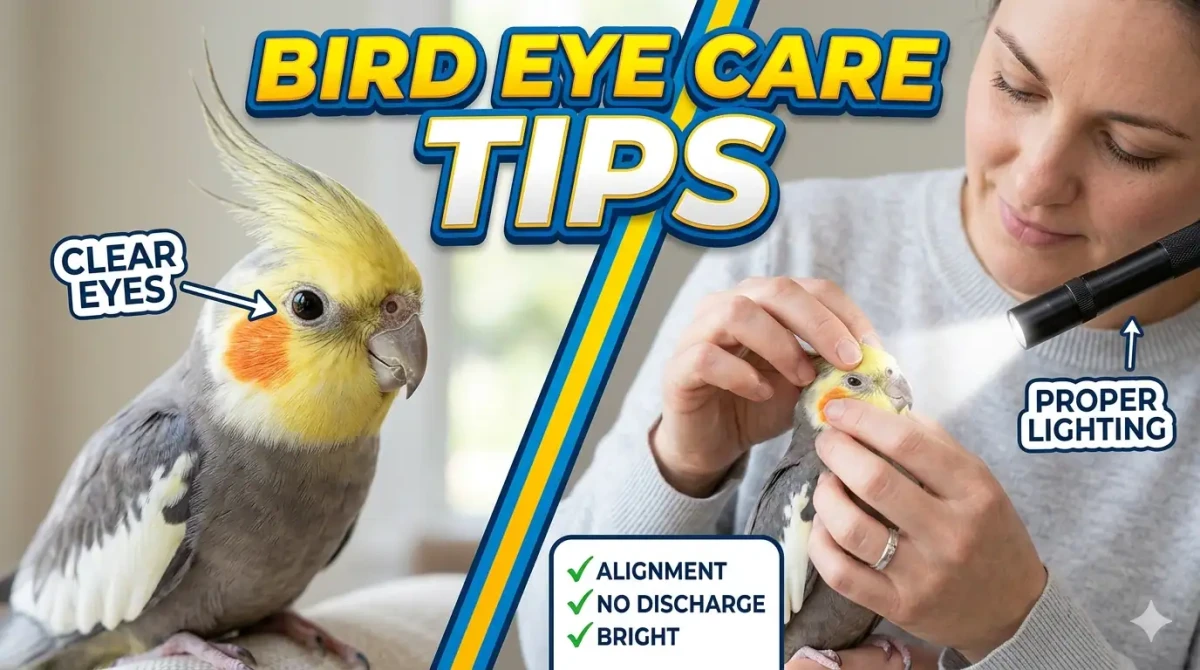
Healthy bird eyes appear bright, clear, and symmetrical with no discharge or swelling. The nictitating membrane, a translucent third eyelid, may occasionally sweep across the eye during blinking. You should observe your bird during calm moments to establish baseline appearance for future comparison.
Early detection prevents serious complications. A consistent routine with gentle observation keeps eye health optimal. You do not need expensive equipment to start. Simple proper lighting combined with daily attention creates a balanced monitoring environment that satisfies preventive care needs while respecting avian sensitivities.
Safe Cleaning Methods and Product Guidelines

Product safety remains the highest priority when selecting eye care supplies for birds. Widely accepted avian care standards recommend avoiding products containing alcohol, fragrances, preservatives, or unverified chemical additives. Sterile saline solution, veterinarian approved ocular wipes, and distilled water are commonly recommended for gentle avian eye cleaning.
Cleaning technique significantly impacts safety and effectiveness. Use a fresh cotton pad or gauze square for each eye to prevent cross contamination. Moisten with sterile saline only, never saturate. Gently wipe from inner eye corner outward using light pressure. You should discard materials after single use to maintain hygiene standards.
Look for products tested by independent veterinary organizations. Many reputable brands publish safety certifications on their official websites. When in doubt, consult an avian veterinarian about specific brand recommendations for your bird health profile, especially for birds with prior ocular conditions or respiratory sensitivities.
Recognizing Warning Signs and Symptom Assessment

Early symptom recognition enables timely intervention that may help prevent vision loss or systemic illness. Widely accepted avian veterinary guidelines emphasize that eye issues often reflect broader health concerns requiring comprehensive evaluation.
Common warning signs include persistent discharge that is yellow, green, or crusty. You should also monitor for swelling around the eye, cloudiness of the cornea, frequent squinting, or rubbing the eye against perches. Behavioral changes like head shaking, reduced activity, or appetite loss alongside eye symptoms warrant immediate attention.
Document observations systematically to support veterinary diagnosis. Note symptom onset time, appearance changes, and environmental factors. This data driven approach commonly accelerates accurate diagnosis and improves treatment outcomes for avian eye conditions.
Environmental Factors Supporting Eye Health

Cage environment directly impacts avian ocular wellness. Dust accumulation, poor ventilation, and inappropriate humidity levels commonly contribute to eye irritation and infection risk in companion birds. You should maintain cage cleanliness with daily spot cleaning and weekly deep sanitization using bird safe products.
Air quality management reduces respiratory linked eye issues. Position cages away from kitchens, smoking areas, and aerosol sprays. Use air purifiers with HEPA filters in rooms housing birds. You should monitor humidity levels between forty and sixty percent to support mucous membrane health without promoting mold growth.
Lighting considerations support both vision and overall wellness. Provide full spectrum avian lighting for ten to twelve hours daily. Avoid direct sunlight through glass that may cause overheating. You should observe your bird under consistent lighting conditions to detect subtle eye changes more reliably.
Nutrition and Systemic Support for Vision Health

Dietary nutrition significantly influences ocular health in companion birds. Widely accepted avian veterinary nutrition standards emphasize that vitamin A deficiency commonly manifests as eye and respiratory issues in pet birds fed seed only diets.
Recommended dietary support includes dark leafy greens, orange vegetables like carrots and sweet potatoes, and fortified pelleted diets formulated for your bird species. You should introduce new foods gradually over seven to ten days to prevent digestive upset. Always provide fresh water daily to support overall hydration and mucous membrane function.
Supplement considerations require veterinary guidance. Never add human vitamins or unverified supplements to bird food without professional consultation. You should discuss dietary optimization with an avian veterinarian during routine wellness exams to ensure appropriate nutritional support for eye and systemic health.
Species Specific Eye Care Considerations

Different bird species carry distinct eye care requirements based on anatomy and natural history. Small birds like budgies and lovebirds benefit from dust minimized environments due to their sensitive respiratory systems that commonly affect ocular health. You should avoid powdery substrates and use paper based cage liners.
Medium sized birds like cockatiels and conures often experience eye issues linked to upper respiratory infections. Preventive focus should include temperature stability, draft avoidance, and prompt attention to sneezing or nasal discharge. You should monitor these species closely during seasonal changes when respiratory challenges commonly increase.
Large parrots like African greys and macaws require protection from physical trauma due to their powerful beaks and active exploration styles. Ensure cage bars have appropriate spacing and remove sharp objects from play areas. You should schedule annual veterinary eye exams for senior birds to monitor age related changes.
Managing Common Eye Conditions at Home

Mild eye irritation may respond to conservative home care when properly implemented. For minor discharge without swelling or behavioral changes, gently clean with sterile saline twice daily for up to forty eight hours. You should isolate the bird from other pets during this period to prevent potential contagion.
Environmental adjustments support recovery during minor issues. Increase humidity slightly with a room humidifier placed away from the cage. Reduce airborne irritants by avoiding cleaning sprays, candles, or cooking fumes near the bird area. You should maintain consistent temperature between sixty five and eighty degrees Fahrenheit to reduce stress.
Know when home care is insufficient. Discontinue home treatment and contact an avian veterinarian if symptoms worsen, persist beyond forty eight hours, or if your bird shows appetite loss, lethargy, or respiratory signs. Early professional intervention commonly improves outcomes for avian ocular conditions.
Budget versus Premium Eye Care Product Comparison

Entry level eye care supplies priced under ten USD provide effective starting options for basic preventive care. These items commonly include sterile saline vials, basic cotton pads, and simple cage cleaning tools. They suit low risk environments or owners with prior bird care experience.
Mid range products between twelve and thirty five USD offer enhanced convenience and specialized formulations. These selections balance cost and quality for average household birds. Many include pre moistened veterinary wipes and air quality monitors that simplify preventive routines.
Premium eye care resources exceeding forty USD utilize veterinary grade materials and advanced monitoring features. Birds with chronic conditions or senior pets commonly benefit from this support tier. While initial costs remain higher, premium options often improve detection accuracy and reduce emergency veterinary expenses long term.
Common Mistakes Bird Owners Make Regarding Eye Care

Many owners delay veterinary consultation hoping eye issues will resolve independently. Avian species commonly mask illness until conditions become advanced. You should contact an avian veterinarian within twenty four hours of noticing persistent eye symptoms rather than waiting for worsening signs.
Another frequent error involves using human medications or home remedies near bird eyes. Products safe for people may cause severe reactions in avian patients. You should never apply human eye drops, essential oils, or herbal solutions without explicit veterinary direction for your specific bird.
Purchasing based solely on convenience leads to inconsistent care outcomes. Multi species products do not guarantee suitability for avian ocular needs. Read verified customer feedback and consult avian veterinary directories before finalizing purchases. Prioritize species specific recommendations and veterinary approval over general availability.
Expert Tips from Avian Veterinary and Husbandry Standards

Based on common avian veterinary practices, you should conduct weekly detailed eye inspections during calm handling sessions. Check for symmetry, clarity, and discharge using consistent lighting. Early detection of subtle changes allows timely intervention that may help preserve vision and overall health.
Combine preventive eye care with comprehensive wellness routines for optimal results. A healthy bird maintains better ocular function and tolerates minor irritants more effectively. Aim for balanced nutrition, appropriate housing, and regular veterinary exams alongside daily eye observations. This sequence aligns with natural avian physiology and preventive health principles.
Document eye health observations in a simple wellness journal. Note appearance changes, cleaning frequency, and environmental factors. Over time, this data reveals patterns that improve preventive care efficiency. Share findings with your avian veterinarian during routine visits for personalized optimization insights.
Frequently Asked Questions

How do I safely clean my birds eyes at home
Use sterile saline solution and fresh cotton pads for gentle cleaning. Moisten the pad lightly, then wipe from inner eye corner outward with minimal pressure. Use a new pad for each eye and each wipe. Never use tap water, human eye drops, or essential oils near avian eyes. Consult your veterinarian before starting any home cleaning routine.
What causes cloudy eyes in pet birds
Cloudiness may result from infection, injury, nutritional deficiency, or age related changes. Widely accepted veterinary standards emphasize that corneal cloudiness requires professional evaluation. You should contact an avian veterinarian promptly if you notice new cloudiness, especially with behavioral changes or discharge.
Can eye problems indicate broader health issues in birds
Yes, ocular symptoms commonly reflect respiratory infections, systemic illness, or nutritional deficiencies in avian patients. You should report eye concerns to your veterinarian along with any appetite changes, weight loss, or respiratory signs. Comprehensive evaluation commonly identifies underlying causes requiring targeted treatment.
When should I seek emergency care for bird eye issues
Seek immediate veterinary care for eye trauma, sudden blindness, severe swelling, or discharge accompanied by lethargy or breathing difficulty. These signs may indicate urgent conditions requiring prompt intervention. You should contact an emergency avian veterinarian even outside regular hours for these critical symptoms.

0 Comments