.png)
Annual Health Check for Pet Birds: Complete Guide
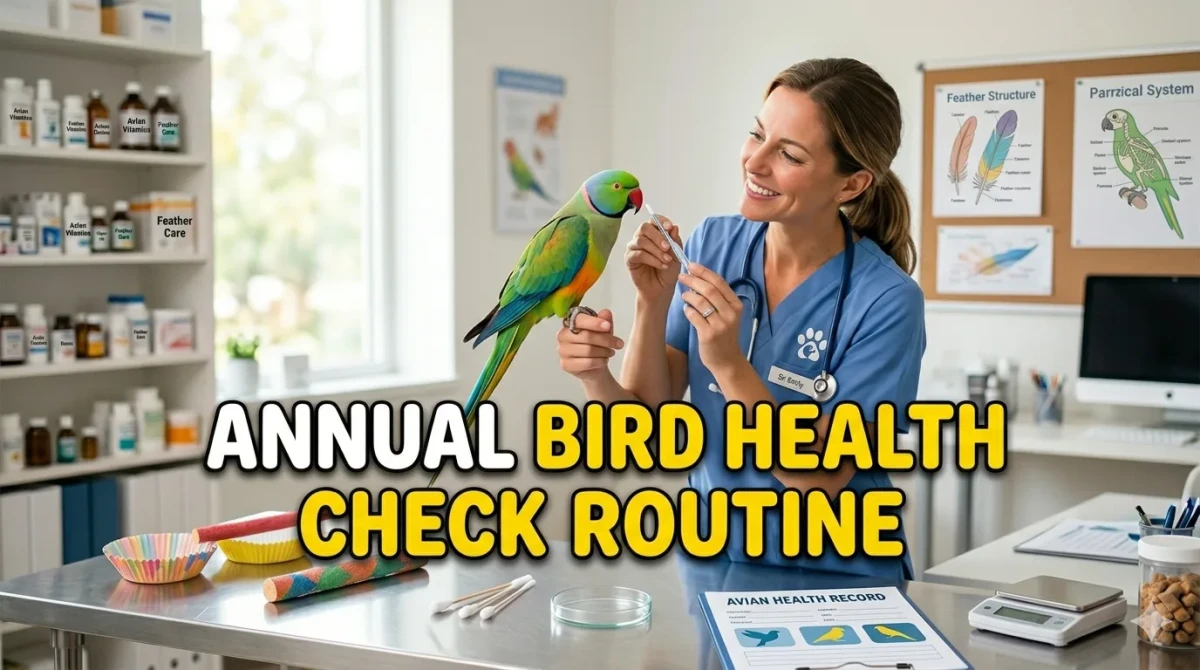
Why Annual Health Checks Are Essential for Your Bird's Longevity
Annual health checks are one of the most powerful tools you have to ensure your pet bird lives a long, healthy, and vibrant life. Birds are masters at hiding illness—a survival instinct from their wild ancestors as prey animals—and by the time obvious symptoms appear, many conditions are already advanced or critical. An annual wellness exam with an avian veterinarian isn't just a "vaccine visit" (most pet birds don't require routine vaccines); it's a comprehensive assessment of your bird's physical, nutritional, behavioral, and environmental health that can detect problems when they're most treatable.
Featured Snippet Answer: An annual bird health check includes a complete physical examination, weight monitoring, feather and skin assessment, beak and nail evaluation, crop and vent examination, preventive care review, and age-appropriate diagnostic screening (blood work, fecal testing, choanal/cloacal swabs). Chicks and senior birds may need checkups every 6 months. At-home monitoring between visits includes observing droppings, appetite, feather condition, behavior changes, and respiratory signs.
Many bird owners assume that if their bird "seems fine" and is eating well, veterinary visits aren't necessary. However, birds can lose up to 30% of their body weight before showing obvious signs of illness, and conditions like psittacosis, aspergillosis, heavy metal toxicity, or reproductive disease may show no external symptoms until they're severe. Annual checkups allow avian veterinarians to establish baseline health data, update preventive protocols, and partner with you to support your bird's wellbeing throughout their life—which can span 15-80 years depending on species.
This comprehensive guide provides evidence-based, avian-veterinarian-aligned strategies for establishing and maintaining an effective annual health check routine for your pet bird. You'll learn what to expect during wellness exams, how to prepare your bird, species-specific considerations, at-home monitoring techniques, preventive care recommendations, and how to partner with your veterinary team for lifelong health. Whether you have a playful cockatiel, a talkative African Grey, a colorful finch, or a wise senior parrot, you'll find practical guidance to support their wellbeing.
What Happens During an Avian Wellness Exam: The Complete Checklist
A thorough annual wellness exam for birds goes far beyond a quick look. Understanding each component helps you participate actively in your bird's care and understand the value of specialized avian medicine.
1. History Review and Owner Consultation
- Diet and nutrition: Detailed review of current diet (pellets, seeds, fresh foods, supplements), feeding practices, and any changes
- Droppings assessment: Discussion of frequency, consistency, color, and volume of feces and urates—critical indicators of avian health
- Behavior and cognition: Assessment of activity level, vocalization patterns, sleep habits, and age-related cognitive changes
- Environmental factors: Cage size and setup, air quality, social interaction, out-of-cage time, and potential toxin exposures
- Owner concerns: Dedicated time to address your questions or observations about your bird's health or behavior
- 🐾 Common Fish Diseases and Prevention for Aquarium Fish
- 🐾 Best Vitamins for Small Pets: Expert Exotic Veterinary Guide
- 🐾 Dog Vaccination Schedule for Puppies: Complete Guide
2. Vital Signs and Basic Measurements
- Weight: Precise measurement using a gram scale; even 5-10 gram changes can signal health issues in small birds
- Body Condition Score: Assessment of muscle mass over keel bone and fat coverage; critical for detecting subtle weight changes
- Temperature: Normal range 104-107°F (40-41.7°C); measured via cloacal probe if indicated
- Heart rate: Normal range varies by species: small birds 300-500 bpm, large parrots 150-300 bpm
- Respiratory rate: Normal 30-60 breaths per minute at rest; assessed visually without restraint when possible
- Mucous membrane color: Oral mucosa should be pink; pale, blue, or yellow indicates problems
- 🐾 Common Fish Diseases and Prevention for Aquarium Fish
- 🐾 Best Vitamins for Small Pets: Expert Exotic Veterinary Guide
- 🐾 Dog Vaccination Schedule for Puppies: Complete Guide
3. Comprehensive Physical Examination (Head-to-Tail)
- Head and eyes: Eye clarity, discharge, symmetry; nares (nostrils) for discharge or blockage; cere condition
- Beak and oral cavity: Beak alignment, texture, overgrowth; oral mucosa for lesions, plaques, or candidiasis; tongue mobility
- Ears: Ear openings for discharge, swelling, or mites (less commonly visible externally)
- Crop examination: Palpation for emptying time, impaction, sour crop, or masses
- Respiratory assessment: Listening for wheezes, clicks, or labored breathing; observing tail bobbing
- Cardiovascular: Heart sounds for murmurs or arrhythmias; pulse quality
- Abdominal palpation: Assessing organ size, masses, egg binding in females, or fluid accumulation
- Vent examination: Cleanliness, prolapse, staining from diarrhea, or reproductive issues
- Feathers and skin: Feather quality, molt pattern, evidence of plucking, parasites, lesions, or dermatitis
- Wings and legs: Range of motion, joint swelling, nail length, foot pad condition (bumblefoot screening)
- Neurological: Coordination, balance, head tilt, reflexes, mental status
- 🐾 Common Fish Diseases and Prevention for Aquarium Fish
- 🐾 Best Vitamins for Small Pets: Expert Exotic Veterinary Guide
- 🐾 Dog Vaccination Schedule for Puppies: Complete Guide
4. Preventive Care Review and Updates
- Vaccinations: Discussion of available vaccines (polyomavirus for breeding birds, avian pox in endemic areas); most pet birds don't require routine vaccines
- Parasite prevention: Review of mite/lice prevention, intestinal parasite screening protocols
- Beak and nail care: Assessment of trimming needs; demonstration of safe home maintenance techniques
- Nutritional counseling: Life-stage appropriate diet, addressing seed-only diets, fresh food variety, supplement evaluation
- 🐾 Common Fish Diseases and Prevention for Aquarium Fish
- 🐾 Best Vitamins for Small Pets: Expert Exotic Veterinary Guide
- 🐾 Dog Vaccination Schedule for Puppies: Complete Guide
5. Age-Appropriate Diagnostic Screening
- Chicks (under 1 year): Fecal testing for parasites, baseline blood work if indicated, growth assessment, polyomavirus/PBFD testing for at-risk species
- Adults (1-15 years, varies by species): Annual fecal exam, baseline blood panel every 2-3 years, choanal/cloacal swabs for infectious disease screening
- Seniors (15+ years for small parrots, 25+ for large parrots): Comprehensive blood panel, fecal testing, radiographs if indicated, organ function assessment
- 🐾 Common Fish Diseases and Prevention for Aquarium Fish
- 🐾 Best Vitamins for Small Pets: Expert Exotic Veterinary Guide
- 🐾 Dog Vaccination Schedule for Puppies: Complete Guide
Featured Snippet Answer: An avian wellness exam includes history review, precise weight measurement, comprehensive head-to-tail physical examination, feather/skin assessment, beak/nail evaluation, preventive care review, and age-appropriate diagnostics. Your avian veterinarian will also discuss nutrition, environment, and address your specific concerns.
How long does a bird annual checkup take?
A thorough avian wellness exam typically takes 45-60 minutes, allowing time for careful examination, discussion, and sample collection. Birds may need extra time to acclimate to the exam room and build trust with the veterinarian. Complex cases, senior birds requiring additional screening, or birds needing behavioral consultation may require longer appointments. Schedule extra time if you have multiple concerns to discuss.
Species-Specific Wellness Protocols: Tailoring Care to Your Bird

Different bird species have distinct anatomical, physiological, and behavioral needs. Annual checkups should be customized to address species-specific risks and priorities.
Psittacines (Parrots: Cockatiels, Conures, African Greys, Amazons, Cockatoos, Macaws)
- Key priorities:
- Beak health assessment (overgrowth, alignment, texture)
- Feather condition evaluation (plucking, stress bars, molt patterns)
- Behavioral assessment (screaming, aggression, feather destructive behavior)
- Nutritional counseling (preventing seed-only diets, vitamin A deficiency)
- Reproductive health discussion (egg binding risk in females, hormonal behaviors)
- 🐾 Common Fish Diseases and Prevention for Aquarium Fish
- 🐾 Best Vitamins for Small Pets: Expert Exotic Veterinary Guide
- 🐾 Dog Vaccination Schedule for Puppies: Complete Guide
- Diagnostic screening: Baseline blood work every 2-3 years for adults; annual for seniors; PBFD/polyomavirus testing for breeding birds or new acquisitions
- Special considerations: Large parrots may need sedation for thorough examination; African Greys prone to hypocalcemia; Cockatoos prone to behavioral issues
- 🐾 Common Fish Diseases and Prevention for Aquarium Fish
- 🐾 Best Vitamins for Small Pets: Expert Exotic Veterinary Guide
- 🐾 Dog Vaccination Schedule for Puppies: Complete Guide
Passerines (Finches, Canaries, Sparrows)
- Key priorities:
- Respiratory assessment (small birds prone to respiratory infections)
- Weight monitoring (small birds deteriorate rapidly with illness)
- Fecal testing (intestinal parasites common in aviary settings)
- Environmental assessment (cage size, flock dynamics, air quality)
- 🐾 Common Fish Diseases and Prevention for Aquarium Fish
- 🐾 Best Vitamins for Small Pets: Expert Exotic Veterinary Guide
- 🐾 Dog Vaccination Schedule for Puppies: Complete Guide
- Diagnostic screening: Fecal testing annually; blood work if clinical signs present; often examined as a flock rather than individually
- Special considerations: Very small size requires gentle handling; stress minimization critical; may need specialized equipment for examination
- 🐾 Common Fish Diseases and Prevention for Aquarium Fish
- 🐾 Best Vitamins for Small Pets: Expert Exotic Veterinary Guide
- 🐾 Dog Vaccination Schedule for Puppies: Complete Guide
Softbills (Mynahs, Toucans, Lorikeets)
- Key priorities:
- Iron storage disease screening (especially for mynahs and toucans)
- Specialized nutritional counseling (low-iron diets, nectar formulations)
- Beak and tongue assessment (specialized anatomy)
- Foot and leg health (perching species prone to bumblefoot)
- 🐾 Common Fish Diseases and Prevention for Aquarium Fish
- 🐾 Best Vitamins for Small Pets: Expert Exotic Veterinary Guide
- 🐾 Dog Vaccination Schedule for Puppies: Complete Guide
- Diagnostic screening: Serum iron studies annually for at-risk species; specialized blood panels for iron metabolism
- Special considerations: Require veterinarians experienced with softbill nutrition and medicine; dietary management critical
- 🐾 Common Fish Diseases and Prevention for Aquarium Fish
- 🐾 Best Vitamins for Small Pets: Expert Exotic Veterinary Guide
- 🐾 Dog Vaccination Schedule for Puppies: Complete Guide
Poultry and Backyard Birds (Chickens, Ducks, Quail)
- Key priorities:
- Flock health assessment rather than individual exams
- Parasite screening (internal and external)
- Reproductive health (egg binding, oviduct issues)
- Biosecurity and disease prevention protocols
- 🐾 Common Fish Diseases and Prevention for Aquarium Fish
- 🐾 Best Vitamins for Small Pets: Expert Exotic Veterinary Guide
- 🐾 Dog Vaccination Schedule for Puppies: Complete Guide
- Diagnostic screening: Fecal testing for flock; individual blood work if illness suspected; reportable disease monitoring as required by local regulations
- Special considerations: Zoonotic disease considerations; regulatory requirements vary by region
- 🐾 Common Fish Diseases and Prevention for Aquarium Fish
- 🐾 Best Vitamins for Small Pets: Expert Exotic Veterinary Guide
- 🐾 Dog Vaccination Schedule for Puppies: Complete Guide
Featured Snippet Answer: Tailor wellness care to species: psittacines need beak/feather assessment and behavioral evaluation; passerines need respiratory monitoring and stress minimization; softbills need iron screening and specialized nutrition; poultry need flock health assessment. Discuss species-specific risks with your avian veterinarian.
Age-Specific Wellness Protocols: From Chick to Senior

Birds' health needs evolve throughout their potentially long lifespans. Annual checkups should be customized to address age-specific risks and priorities.
Chick/Juvenile Wellness (Under 1 Year): Building a Healthy Foundation
- Frequency: Every 4-6 weeks until fully weaned and independent; then every 6 months until 1-2 years depending on species
- Key priorities:
- Growth monitoring (weight trends, skeletal development)
- Weaning assessment and nutritional transition guidance
- Socialization and behavioral baseline establishment
- Parasite screening and prevention initiation
- Infectious disease testing (polyomavirus, PBFD) for at-risk species or breeding situations
- Owner education on species-specific care, handling, and enrichment
- 🐾 Common Fish Diseases and Prevention for Aquarium Fish
- 🐾 Best Vitamins for Small Pets: Expert Exotic Veterinary Guide
- 🐾 Dog Vaccination Schedule for Puppies: Complete Guide
- Diagnostic screening: Fecal testing at each visit; baseline blood work if health concerns or breed predispositions exist
- 🐾 Common Fish Diseases and Prevention for Aquarium Fish
- 🐾 Best Vitamins for Small Pets: Expert Exotic Veterinary Guide
- 🐾 Dog Vaccination Schedule for Puppies: Complete Guide
Adult Bird Wellness (Species-Dependent: 1-15 Years for Small Parrots, 1-25+ for Large Parrots)
- Frequency: Annual wellness exams minimum; every 6 months for birds with chronic conditions or known health risks
- Key priorities:
- Weight and body condition monitoring to prevent obesity or wasting
- Feather and skin health assessment (early detection of plucking or dermatitis)
- Beak and nail maintenance evaluation
- Behavioral assessment (aggression, fear, feather destructive behavior)
- Reproductive health discussion (egg binding prevention, hormonal behavior management)
- Environmental enrichment and social needs assessment
- 🐾 Common Fish Diseases and Prevention for Aquarium Fish
- 🐾 Best Vitamins for Small Pets: Expert Exotic Veterinary Guide
- 🐾 Dog Vaccination Schedule for Puppies: Complete Guide
- Diagnostic screening: Annual fecal exam; baseline blood panel every 2-3 years or as indicated; choanal/cloacal swabs for infectious disease screening in multi-bird households
- 🐾 Common Fish Diseases and Prevention for Aquarium Fish
- 🐾 Best Vitamins for Small Pets: Expert Exotic Veterinary Guide
- 🐾 Dog Vaccination Schedule for Puppies: Complete Guide
Senior Bird Wellness (15+ Years for Small Parrots, 25+ for Large Parrots, 3+ for Finches/Canaries)
- Frequency: Every 6 months recommended; senior birds age faster and changes occur rapidly
- Key priorities:
- Comprehensive physical examination with emphasis on age-related changes
- Advanced diagnostic screening (blood panel, fecal testing, radiographs as indicated)
- Cognitive and behavioral assessment for signs of age-related changes
- Pain and mobility evaluation (arthritis, foot problems)
- Beak and nail care (may grow abnormally with age)
- Chronic disease monitoring (liver disease, kidney disease, tumors) and medication management
- Quality of life discussions and advance care planning
- 🐾 Common Fish Diseases and Prevention for Aquarium Fish
- 🐾 Best Vitamins for Small Pets: Expert Exotic Veterinary Guide
- 🐾 Dog Vaccination Schedule for Puppies: Complete Guide
- Diagnostic screening: Semi-annual blood work, fecal testing; imaging (radiographs, ultrasound) as indicated by findings; specialized testing based on clinical signs
- Supportive care: Dietary adjustments for aging metabolism, environmental modifications (perch variety, easier access), pain management strategies
- 🐾 Common Fish Diseases and Prevention for Aquarium Fish
- 🐾 Best Vitamins for Small Pets: Expert Exotic Veterinary Guide
- 🐾 Dog Vaccination Schedule for Puppies: Complete Guide
Species Longevity Considerations:
- Small parrots (cockatiels, lovebirds, budgies): Senior protocols may start at 10-15 years
- Medium parrots (conures, African Greys, Amazons): Senior protocols at 15-20 years
- Large parrots (macaws, cockatoos): Senior protocols at 25-30+ years
- Finches/canaries: Senior protocols at 3-5 years due to shorter lifespans
- 🐾 Common Fish Diseases and Prevention for Aquarium Fish
- 🐾 Best Vitamins for Small Pets: Expert Exotic Veterinary Guide
- 🐾 Dog Vaccination Schedule for Puppies: Complete Guide
Featured Snippet Answer: Tailor wellness frequency to life stage: chicks need frequent visits for growth monitoring; adult birds need annual exams; senior birds need checkups every 6 months. Senior screenings include blood work, fecal testing, and mobility assessment. Species longevity varies greatly—discuss senior onset timing with your avian vet.
At-Home Health Monitoring: What to Watch Between Vet Visits

Your daily observations are invaluable. Birds hide illness exceptionally well, so learning to monitor subtle changes helps catch problems early and provides critical information for your avian veterinarian.
Daily/Weekly Monitoring Checklist:
- Droppings: Monitor frequency, consistency, color, and volume of feces (brown/green) and urates (white); changes can signal digestive, liver, or kidney issues
- Appetite and water intake: Note changes in food consumption or thirst; sudden changes warrant attention
- Feather condition: Check for excessive fluffing, plucking, stress bars on feathers, or abnormal molt patterns
- Respiratory signs: Watch for tail bobbing with breathing, nasal discharge, sneezing, or open-mouth breathing
- Energy and activity: Monitor for lethargy, reluctance to fly or climb, or unusual restlessness
- Behavior changes: Note new aggression, fearfulness, vocalization changes, or withdrawal from interaction
- Sleep patterns: Changes in sleep duration or nighttime restlessness may indicate illness or stress
- 🐾 Common Fish Diseases and Prevention for Aquarium Fish
- 🐾 Best Vitamins for Small Pets: Expert Exotic Veterinary Guide
- 🐾 Dog Vaccination Schedule for Puppies: Complete Guide
Weekly Hands-On Checks (When Bird Is Calm and Trusting):
- Weight monitoring: Weigh weekly on a gram scale; track trends in a log
- Beak assessment: Check for overgrowth, cracks, or abnormal texture
- Nail inspection: Check length and condition; note if trimming is needed
- Foot and leg examination: Check for swelling, redness, scaly foot mites, or bumblefoot lesions
- Wing assessment: Check flight feathers for damage or abnormal molt
- Skin examination: Look for lumps, bumps, scabs, or areas of feather loss
- 🐾 Common Fish Diseases and Prevention for Aquarium Fish
- 🐾 Best Vitamins for Small Pets: Expert Exotic Veterinary Guide
- 🐾 Dog Vaccination Schedule for Puppies: Complete Guide
Recording and Tracking:
- Health journal: Keep a simple log of weight, droppings description, appetite notes, behavior observations, and medications
- Photo documentation: Photograph droppings, feather changes, lumps, or skin issues to show your vet
- Video documentation: Short videos of abnormal behaviors (head bobbing, tremors, breathing patterns) can help veterinarians diagnose
- Share with your vet: Bring your notes and media to appointments—they provide invaluable context for diagnosis
- 🐾 Common Fish Diseases and Prevention for Aquarium Fish
- 🐾 Best Vitamins for Small Pets: Expert Exotic Veterinary Guide
- 🐾 Dog Vaccination Schedule for Puppies: Complete Guide
Red Flags Requiring Prompt Veterinary Attention:
- Sitting fluffed for extended periods with lethargy
- Loss of appetite for >12-24 hours (smaller birds deteriorate faster)
- Changes in droppings: no feces, diarrhea, black/tarry feces, or blood
- Respiratory signs: tail bobbing, wheezing, nasal discharge, open-mouth breathing
- Vomiting or regurgitation not associated with courtship behavior
- Sudden weakness, inability to perch, or falling off perch
- Visible bleeding or trauma
- Seizures, head tilt, or loss of balance
- Rapid weight loss (5-10% in small birds is significant)
- Egg binding signs in females: straining, swelling around vent, weakness
- 🐾 Common Fish Diseases and Prevention for Aquarium Fish
- 🐾 Best Vitamins for Small Pets: Expert Exotic Veterinary Guide
- 🐾 Dog Vaccination Schedule for Puppies: Complete Guide
Featured Snippet Answer: Monitor your bird daily for changes in droppings, appetite, feather condition, respiratory signs, energy, and behavior. Weigh weekly on a gram scale. Seek veterinary care for fluffed lethargy, appetite loss >12-24 hours, dropping changes, respiratory signs, vomiting, weakness, bleeding, seizures, or rapid weight loss.
Preventive Care: Vaccines, Parasites, and Environmental Health

Preventive care is the cornerstone of avian wellness. While most pet birds don't require routine vaccines like dogs and cats, other preventive measures are critical.
Vaccinations for Pet Birds: Limited but Important
- Polyomavirus: Recommended for breeding birds, bird shows, or multi-bird households with exposure risk; not routinely needed for single pet birds with no exposure
- Avian Pox: Considered in endemic areas or for birds with outdoor/mosquito exposure
- Most pet birds: Do not require routine vaccinations; focus on biosecurity, quarantine of new birds, and environmental management instead
- 🐾 Common Fish Diseases and Prevention for Aquarium Fish
- 🐾 Best Vitamins for Small Pets: Expert Exotic Veterinary Guide
- 🐾 Dog Vaccination Schedule for Puppies: Complete Guide
Parasite Prevention and Screening
- External parasites: Mites (scaly face/leg mites, feather mites) and lice; prevention through quarantine of new birds, regular cage cleaning, and veterinary-approved treatments if infestation occurs
- Internal parasites: Intestinal worms, coccidia, giardia; annual fecal testing recommended; treatment based on identification
- Important: Never use over-the-counter "bird mite" treatments without veterinary guidance; many are toxic to birds
- 🐾 Common Fish Diseases and Prevention for Aquarium Fish
- 🐾 Best Vitamins for Small Pets: Expert Exotic Veterinary Guide
- 🐾 Dog Vaccination Schedule for Puppies: Complete Guide
Environmental Preventive Measures
- Air quality: Avoid Teflon/non-stick cookware fumes (fatal to birds), aerosols, cigarette smoke, strong fragrances, and ceiling fans
- Cage hygiene: Daily cleaning of food/water dishes; weekly deep cleaning with bird-safe disinfectants
- Quarantine protocol: Isolate new birds for 30-45 days with veterinary screening before introducing to existing birds
- Zoonotic disease awareness: Psittacosis (chlamydiosis) can infect humans; practice good hygiene when handling birds or cleaning cages
- 🐾 Common Fish Diseases and Prevention for Aquarium Fish
- 🐾 Best Vitamins for Small Pets: Expert Exotic Veterinary Guide
- 🐾 Dog Vaccination Schedule for Puppies: Complete Guide
Preventive Care Discussion Points for Your Annual Visit:
- Has your bird's environment changed (new birds, home renovations, new products)?
- Are you traveling with your bird or attending bird shows?
- Is your current diet and enrichment still appropriate for your bird's age and health?
- Would infectious disease testing be appropriate for your household situation?
- 🐾 Common Fish Diseases and Prevention for Aquarium Fish
- 🐾 Best Vitamins for Small Pets: Expert Exotic Veterinary Guide
- 🐾 Dog Vaccination Schedule for Puppies: Complete Guide
Featured Snippet Answer: Most pet birds don't require routine vaccines; focus on biosecurity, quarantine of new birds, and environmental management. Annual fecal testing screens for parasites. Prevent environmental toxins (Teflon fumes, aerosols), maintain cage hygiene, and practice good hygiene to prevent zoonotic diseases like psittacosis.
Nutritional Assessment: The Foundation of Avian Health

Nutrition profoundly impacts feather quality, immune function, behavior, and lifespan. Annual nutritional assessment is critical for preventing common deficiencies and imbalances.
Common Nutritional Issues in Pet Birds:
- Vitamin A deficiency: Common in seed-only diets; causes respiratory issues, poor feather quality, and immune suppression
- Calcium deficiency: Especially in egg-laying females; leads to egg binding, weak bones, and seizures
- Obesity: From high-fat seed diets and lack of exercise; contributes to fatty liver disease and reduced lifespan
- Protein imbalance: Too little impairs feather growth; too much stresses kidneys
- Essential fatty acid deficiency: Affects skin, feather quality, and inflammation control
- 🐾 Common Fish Diseases and Prevention for Aquarium Fish
- 🐾 Best Vitamins for Small Pets: Expert Exotic Veterinary Guide
- 🐾 Dog Vaccination Schedule for Puppies: Complete Guide
Annual Nutritional Assessment Components:
- Diet history: Detailed review of all foods offered (pellets, seeds, fresh foods, treats, supplements)
- Body condition evaluation: Assessing muscle mass over keel bone and fat coverage
- Feather quality assessment: Dull, brittle, or stress-barred feathers may indicate nutritional deficiencies
- Beak and nail condition: Overgrowth or abnormal texture may reflect nutritional or metabolic issues
- Supplement review: Evaluating necessity and safety of vitamins, minerals, or other supplements
- 🐾 Common Fish Diseases and Prevention for Aquarium Fish
- 🐾 Best Vitamins for Small Pets: Expert Exotic Veterinary Guide
- 🐾 Dog Vaccination Schedule for Puppies: Complete Guide
Species-Specific Nutritional Guidelines:
- Psittacines: 60-80% high-quality pellets, 20-40% fresh vegetables/limited fruit, minimal seeds as treats
- Finches/Canaries: High-quality small seed mix formulated for species, supplemented with fresh greens and egg food during molt/breeding
- Softbills: Specialized low-iron diets for mynahs/toucans; nectar formulations for lorikeets
- All birds: Unlimited fresh water daily; calcium source (cuttlebone, mineral block) for egg-laying females
- 🐾 Common Fish Diseases and Prevention for Aquarium Fish
- 🐾 Best Vitamins for Small Pets: Expert Exotic Veterinary Guide
- 🐾 Dog Vaccination Schedule for Puppies: Complete Guide
Red Flags in Avian Diets:
- Seed-only diets (high fat, low vitamins/minerals)
- Excessive treats or human foods
- Toxic foods: avocado, chocolate, caffeine, alcohol, onion, garlic, fruit pits, salty/sugary snacks
- Unbalanced supplementation (over-supplementation can cause toxicity)
- 🐾 Common Fish Diseases and Prevention for Aquarium Fish
- 🐾 Best Vitamins for Small Pets: Expert Exotic Veterinary Guide
- 🐾 Dog Vaccination Schedule for Puppies: Complete Guide
Featured Snippet Answer: Annual nutritional assessment reviews diet composition, body condition, feather quality, and supplement use. Most parrots need 60-80% pellets plus fresh vegetables; avoid seed-only diets. Watch for vitamin A deficiency, obesity, and toxic foods. Consult your avian vet for species-specific dietary guidance.
Behavioral and Cognitive Assessment: Mental Health Matters

Mental wellbeing is as important as physical health for birds. Annual behavioral assessment helps identify stress, anxiety, cognitive decline, or training needs.
Behavioral Screening Components:
- Temperament evaluation: Assessment of fear, aggression, or reactivity
- Feather-destructive behavior: Screening for plucking, chewing, or self-mutilation and underlying causes
- Vocalization patterns: Changes may signal stress, illness, or environmental triggers
- Social interaction: Assessment of bonding with humans or other birds; isolation effects
- Environmental enrichment: Evaluation of toys, foraging opportunities, and mental stimulation adequacy
- 🐾 Common Fish Diseases and Prevention for Aquarium Fish
- 🐾 Best Vitamins for Small Pets: Expert Exotic Veterinary Guide
- 🐾 Dog Vaccination Schedule for Puppies: Complete Guide
Cognitive Assessment for Senior Birds:
Age-related cognitive changes can affect birds, particularly long-lived parrots. Annual screening includes:
- Orientation assessment: Getting lost in familiar cage, confusion about perch locations
- Interaction changes: Less engagement with owners, increased irritability or clinginess
- Sleep-wake cycle changes: Nighttime restlessness, daytime sleeping
- Activity changes: Decreased exploration, repetitive behaviors, or loss of learned behaviors
- Rule-out medical causes: Pain, vision/hearing changes, or metabolic disease can mimic cognitive signs
- 🐾 Common Fish Diseases and Prevention for Aquarium Fish
- 🐾 Best Vitamins for Small Pets: Expert Exotic Veterinary Guide
- 🐾 Dog Vaccination Schedule for Puppies: Complete Guide
Intervention Strategies:
- Environmental management: Maintain routines, provide safe spaces, reduce stressors, ensure easy access to resources
- Enrichment enhancement: Foraging toys, training sessions, novel experiences to stimulate cognition
- Behavioral modification: Positive reinforcement training to address fear or aggression
- Medical support: Addressing pain, nutritional support, or medications for anxiety when appropriate
- Owner education: Understanding avian body language, stress signals, and humane training methods
- 🐾 Common Fish Diseases and Prevention for Aquarium Fish
- 🐾 Best Vitamins for Small Pets: Expert Exotic Veterinary Guide
- 🐾 Dog Vaccination Schedule for Puppies: Complete Guide
When to Seek Behavioral Specialist Help:
- Severe feather-destructive behavior not responding to environmental changes
- Aggression causing injury to people or other birds
- Cognitive decline signs interfering with daily function
- Behavioral issues not improving with primary care guidance
- 🐾 Common Fish Diseases and Prevention for Aquarium Fish
- 🐾 Best Vitamins for Small Pets: Expert Exotic Veterinary Guide
- 🐾 Dog Vaccination Schedule for Puppies: Complete Guide
Featured Snippet Answer: Annual behavioral assessment evaluates temperament, feather-destructive behavior, vocalization, and enrichment needs. Senior birds need cognitive screening for orientation, interaction, sleep, and activity changes. Interventions include environmental management, enrichment, training, and medical support when needed.
Diagnostic Screening: Blood Work, Fecal Testing, and Imaging

Diagnostic testing provides objective data about internal health that physical examination alone can't detect. Birds' small size requires specialized techniques and interpretation.
When to Recommend Diagnostic Screening:
- Chicks: Baseline blood work if health concerns or breed predispositions; fecal testing at each visit; infectious disease testing for at-risk species
- Healthy adults: Baseline blood panel every 2-3 years to establish reference values; annual fecal testing
- Seniors: Comprehensive blood panel, fecal testing, and imaging annually or semi-annually
- Any age with clinical signs: Targeted testing based on symptoms (e.g., liver testing for regurgitation, radiographs for respiratory signs)
- 🐾 Common Fish Diseases and Prevention for Aquarium Fish
- 🐾 Best Vitamins for Small Pets: Expert Exotic Veterinary Guide
- 🐾 Dog Vaccination Schedule for Puppies: Complete Guide
Common Diagnostic Tests and What They Reveal:
Complete Blood Count (CBC):
- Red blood cells: Anemia (blood loss, chronic disease), dehydration, infection response
- White blood cells: Infection, inflammation, immune disorders, stress response (heterophils vs lymphocytes)
- Thrombocytes: Clotting ability (avian equivalent of platelets)
- 🐾 Common Fish Diseases and Prevention for Aquarium Fish
- 🐾 Best Vitamins for Small Pets: Expert Exotic Veterinary Guide
- 🐾 Dog Vaccination Schedule for Puppies: Complete Guide
Biochemistry Panel:
- Liver enzymes (AST, LDH, bile acids): Liver function; AST is muscle-sensitive in birds, so interpretation requires expertise
- Kidney values (uric acid, urea): Uric acid is primary nitrogen waste in birds; elevated levels indicate kidney dysfunction
- Glucose: Diabetes screening, stress response
- Proteins (total protein, albumin, globulin): Nutrition status, inflammation, immune function, liver production
- Calcium/phosphorus: Bone health, egg-laying status, metabolic disorders
- 🐾 Common Fish Diseases and Prevention for Aquarium Fish
- 🐾 Best Vitamins for Small Pets: Expert Exotic Veterinary Guide
- 🐾 Dog Vaccination Schedule for Puppies: Complete Guide
Fecal Testing:
- Direct smear: Microscopic examination for parasites like worms, coccidia, or giardia
- Floatation: Concentrates parasite eggs for easier detection
- Bacterial culture: Identifies pathogenic bacteria and guides antibiotic selection
- Gram stain: Screens for bacterial overgrowth or yeast
- 🐾 Common Fish Diseases and Prevention for Aquarium Fish
- 🐾 Best Vitamins for Small Pets: Expert Exotic Veterinary Guide
- 🐾 Dog Vaccination Schedule for Puppies: Complete Guide
Infectious Disease Testing:
- PCR testing: Detects viral DNA/RNA for diseases like Psittacine Beak and Feather Disease (PBFD), polyomavirus, or avian bornavirus
- Serology: Measures antibody levels for diseases like chlamydiosis (psittacosis)
- Choanal/cloacal swabs: Collect samples from mouth or vent for pathogen screening
- 🐾 Common Fish Diseases and Prevention for Aquarium Fish
- 🐾 Best Vitamins for Small Pets: Expert Exotic Veterinary Guide
- 🐾 Dog Vaccination Schedule for Puppies: Complete Guide
Imaging:
- Radiographs (X-rays): Evaluate bones, organs, egg binding, foreign bodies, or masses
- Ultrasound: Assesses soft tissues, reproductive organs, and fluid-filled structures without radiation
- Endoscopy: Minimally invasive visualization of internal organs; can obtain biopsies
- 🐾 Common Fish Diseases and Prevention for Aquarium Fish
- 🐾 Best Vitamins for Small Pets: Expert Exotic Veterinary Guide
- 🐾 Dog Vaccination Schedule for Puppies: Complete Guide
Understanding Results and Next Steps:
- Species-specific reference ranges: Normal values vary dramatically between species; interpretation requires avian expertise
- Baseline values: Establishing your bird's normal ranges makes future changes easier to detect
- Trend monitoring: Single values matter less than trends over time
- Action plans: Abnormal results may warrant retesting, additional diagnostics, or treatment
- 🐾 Common Fish Diseases and Prevention for Aquarium Fish
- 🐾 Best Vitamins for Small Pets: Expert Exotic Veterinary Guide
- 🐾 Dog Vaccination Schedule for Puppies: Complete Guide
Featured Snippet Answer: Diagnostic screening includes blood work (CBC, biochemistry), fecal testing, and infectious disease PCR testing. Healthy adults need baseline blood work every 2-3 years; seniors need annual comprehensive panels. Testing detects liver disease, kidney dysfunction, infections, and other conditions before symptoms appear. Interpretation requires avian veterinary expertise due to species-specific reference ranges.
Preparing for the Annual Visit: Reducing Stress and Maximizing Value

Preparation reduces stress for your bird and ensures you get the most value from your annual wellness visit. Birds are highly sensitive to environmental changes and handling stress.
Before the Appointment:
- Compile health records: Bring vaccination history, previous test results, medication lists, and notes from other providers
- Document observations: Write down questions, behavior changes, dropping descriptions, or concerns to ensure nothing is forgotten
- Collect samples if requested: Fresh dropping sample on parchment paper; bring in sealed container
- Prepare your bird:
- Acclimate to carrier: Leave carrier out days before with familiar bedding and treats to reduce carrier anxiety
- Cover carrier partially during transport to reduce visual stress
- Maintain comfortable temperature: Avoid extreme heat or cold during transport
- Avoid feeding right before if blood work is planned (follow vet instructions)
- 🐾 Common Fish Diseases and Prevention for Aquarium Fish
- 🐾 Best Vitamins for Small Pets: Expert Exotic Veterinary Guide
- 🐾 Dog Vaccination Schedule for Puppies: Complete Guide
- Update contact information: Ensure clinic has current phone, email, and emergency contact details
- 🐾 Common Fish Diseases and Prevention for Aquarium Fish
- 🐾 Best Vitamins for Small Pets: Expert Exotic Veterinary Guide
- 🐾 Dog Vaccination Schedule for Puppies: Complete Guide
During the Appointment:
- Share your notes: Provide your observation log and question list to guide the discussion
- Allow acclimation time: Let your bird settle in the exam room before examination begins
- Request gentle handling: Ask the veterinary team to use minimal restraint and speak softly
- Ask for clarification: If you don't understand a recommendation, ask for explanation or written instructions
- Discuss priorities: If budget is a concern, work with your vet to prioritize essential vs. optional services
- Request demonstrations: Ask your vet or technician to show proper beak/nail trimming, medication administration, or enrichment ideas
- Take notes: Record recommendations, medication instructions, and follow-up plans
- 🐾 Common Fish Diseases and Prevention for Aquarium Fish
- 🐾 Best Vitamins for Small Pets: Expert Exotic Veterinary Guide
- 🐾 Dog Vaccination Schedule for Puppies: Complete Guide
After the Appointment:
- Implement recommendations: Start new preventives, medications, or home care routines promptly
- Schedule follow-ups: Book recommended rechecks, diagnostic tests, or specialist referrals
- Update your records: Add new test results, treatments, and care plans to your health log
- Monitor response: Watch for improvements or side effects from new treatments; report concerns to your vet
- Reduce post-visit stress: Provide a quiet space, familiar cage setup, and favorite treats when returning home
- 🐾 Common Fish Diseases and Prevention for Aquarium Fish
- 🐾 Best Vitamins for Small Pets: Expert Exotic Veterinary Guide
- 🐾 Dog Vaccination Schedule for Puppies: Complete Guide
Featured Snippet Answer: Prepare for annual visits by compiling health records, documenting observations, acclimating your bird to the carrier, and collecting requested samples. During the visit, allow acclimation time, share your notes, and request gentle handling. Afterward, implement care plans promptly and monitor your bird's response.
Finding and Working with an Avian Veterinarian

Not all veterinarians are trained in avian medicine. Finding the right professional is foundational to quality care.
What to Look For in an Avian Veterinarian:
- Specialized training: Seek veterinarians with additional certification in avian/exotic medicine (e.g., ABVP certification in Avian Practice)
- Experience with your species: Confirm they regularly treat your bird's type (psittacines, passerines, softbills)
- Appropriate equipment: Avian-specific tools like micro-surgical instruments, avian anesthesia equipment, and small-scale diagnostics
- Emergency availability: Ask about after-hours care or referral protocols for urgent situations
- Continuing education: Veterinarians who stay current with avian medicine advances provide the best care
- 🐾 Common Fish Diseases and Prevention for Aquarium Fish
- 🐾 Best Vitamins for Small Pets: Expert Exotic Veterinary Guide
- 🐾 Dog Vaccination Schedule for Puppies: Complete Guide
How to Find an Avian Vet:
- Ask your current veterinarian for referrals to avian specialists
- Contact local bird clubs, rescues, or breeders for recommendations
- Search directories from the Association of Avian Veterinarians (AAV) or ABVP
- Check with exotic pet stores or avian rehabilitation centers
- Verify credentials and read reviews from other bird owners
- 🐾 Common Fish Diseases and Prevention for Aquarium Fish
- 🐾 Best Vitamins for Small Pets: Expert Exotic Veterinary Guide
- 🐾 Dog Vaccination Schedule for Puppies: Complete Guide
Questions to Ask When Choosing a Vet:
- How many birds do you treat regularly?
- What percentage of your practice is avian medicine?
- Do you have experience with [your bird's species]?
- What diagnostic equipment do you have available for birds?
- What are your protocols for avian emergencies?
- Do you offer wellness plans or preventive care packages for birds?
- 🐾 Common Fish Diseases and Prevention for Aquarium Fish
- 🐾 Best Vitamins for Small Pets: Expert Exotic Veterinary Guide
- 🐾 Dog Vaccination Schedule for Puppies: Complete Guide
Building a Partnership with Your Avian Vet:
- Communicate openly: Share observations, concerns, and questions honestly
- Follow recommendations: Implement care plans consistently for best outcomes
- Ask for education: Request demonstrations or written instructions for home care
- Provide feedback: Let your vet know what's working or not working with your bird
- Plan ahead: Schedule annual visits in advance; don't wait for illness to seek care
- 🐾 Common Fish Diseases and Prevention for Aquarium Fish
- 🐾 Best Vitamins for Small Pets: Expert Exotic Veterinary Guide
- 🐾 Dog Vaccination Schedule for Puppies: Complete Guide
Featured Snippet Answer: Find an avian veterinarian through the Association of Avian Veterinarians directory, local bird clubs, or referrals. Look for specialized training, species experience, appropriate equipment, and emergency availability. Build a partnership through open communication, consistent follow-through, and proactive scheduling.
Cost Considerations and Wellness Planning for Bird Care

Understanding costs and planning ahead makes preventive care more accessible and less stressful.
Typical Annual Wellness Exam Costs (U.S. Estimates):
- Wellness exam fee: $60-120 depending on location, clinic type, and bird size
- Fecal testing: $30-60
- Blood work (basic panel): $80-150 for small birds; $120-250 for comprehensive panels
- Infectious disease testing: $40-100 per test (PBFD, polyomavirus, psittacosis)
- Radiographs: $100-250 depending on views and location
- Beak/nail trimming: $20-50 if performed during exam
- Total estimated range: $150-400 for healthy adult with basic screening; $400-900+ for seniors with comprehensive diagnostics
- 🐾 Common Fish Diseases and Prevention for Aquarium Fish
- 🐾 Best Vitamins for Small Pets: Expert Exotic Veterinary Guide
- 🐾 Dog Vaccination Schedule for Puppies: Complete Guide
Strategies for Managing Costs:
- Wellness plans: Some avian clinics offer bundled annual packages at discounted rates
- Pet insurance: Exotic pet insurance with wellness riders can cover preventive care; compare plans early
- Prioritize essentials: Work with your vet to focus on critical screening first; phase in additional tests
- Preventive investment: Spending on prevention now avoids costly emergency care later (avian emergency care is often expensive)
- Community resources: Some avian rescues or clubs offer low-cost wellness events
- 🐾 Common Fish Diseases and Prevention for Aquarium Fish
- 🐾 Best Vitamins for Small Pets: Expert Exotic Veterinary Guide
- 🐾 Dog Vaccination Schedule for Puppies: Complete Guide
Pet Insurance Considerations for Bird Owners:
- Exotic pet coverage: Not all pet insurance covers birds; verify species coverage before purchasing
- Wellness riders: Optional preventive care coverage for exams, testing, and routine care
- Enroll early: Pre-existing conditions aren't covered; enroll when your bird is young and healthy
- Review details: Understand coverage limits, waiting periods, reimbursement percentages, and exclusions
- 🐾 Common Fish Diseases and Prevention for Aquarium Fish
- 🐾 Best Vitamins for Small Pets: Expert Exotic Veterinary Guide
- 🐾 Dog Vaccination Schedule for Puppies: Complete Guide
Creating a Wellness Budget:
- Annual estimate: Calculate expected costs based on your bird's species, age, and health status
- Monthly savings: Set aside a small amount monthly to cover annual expenses
- Emergency fund: Maintain separate savings for unexpected illness or injury (avian emergencies can be costly)
- Review annually: Adjust budget as your bird ages and needs change
- 🐾 Common Fish Diseases and Prevention for Aquarium Fish
- 🐾 Best Vitamins for Small Pets: Expert Exotic Veterinary Guide
- 🐾 Dog Vaccination Schedule for Puppies: Complete Guide
Featured Snippet Answer: Annual avian wellness exams typically cost $150-400 for healthy adults with basic screening, $400-900+ for seniors with comprehensive diagnostics. Manage costs with wellness plans, exotic pet insurance, prioritizing essentials, and preventive investment. Enroll in insurance early; pre-existing conditions aren't covered.
Creating and Maintaining an Avian Health Record System

Organized records support continuity of care, simplify transitions between providers, and help you track your bird's health journey over potentially decades.
Essential Records to Maintain:
- Vaccination and testing history: Dates, test types, results, and interpretations
- Preventive care log: Parasite prevention dates, products used, and compliance
- Diagnostic results: Blood work, fecal tests, imaging reports with dates and interpretations
- Medication history: Current and past medications, doses, durations, and responses
- Weight trends: Weekly weights plotted over time to detect subtle changes
- Behavioral notes: Vocalization patterns, feather condition, social interactions, training progress
- Diet records: Foods offered, changes in diet, responses to nutritional adjustments
- 🐾 Common Fish Diseases and Prevention for Aquarium Fish
- 🐾 Best Vitamins for Small Pets: Expert Exotic Veterinary Guide
- 🐾 Dog Vaccination Schedule for Puppies: Complete Guide
Digital Tools for Record Management:
- Veterinary patient portals: Many avian clinics offer online access to records, test results, and appointment scheduling
- Bird health apps: Apps designed for exotic pets allow tracking of weights, medications, and observations
- Cloud storage: Scan and store important documents (test results, vaccination certificates) in secure cloud folders
- Photo/video documentation: Photograph droppings, feather changes, or abnormal behaviors to track progression or share with vets
- 🐾 Common Fish Diseases and Prevention for Aquarium Fish
- 🐾 Best Vitamins for Small Pets: Expert Exotic Veterinary Guide
- 🐾 Dog Vaccination Schedule for Puppies: Complete Guide
Sharing Records Effectively:
- Changing veterinarians: Request records be transferred directly between clinics to ensure completeness
- Emergency visits: Keep a printed summary of key health information (medications, chronic conditions, test results) accessible
- Boarding/grooming: Provide health notes and care instructions as required by facilities
- Travel: Carry health certificates and vaccination records for interstate or international travel
- 🐾 Common Fish Diseases and Prevention for Aquarium Fish
- 🐾 Best Vitamins for Small Pets: Expert Exotic Veterinary Guide
- 🐾 Dog Vaccination Schedule for Puppies: Complete Guide
Featured Snippet Answer: Maintain organized health records including weight trends, diagnostic results, medication lists, diet records, and behavioral notes. Use veterinary portals, bird health apps, or cloud storage for digital management. Keep a printed emergency summary with key health information for quick access.
When to Seek Care Between Annual Visits: Recognizing Urgent Needs

Annual exams are preventive; knowing when to seek care immediately protects your bird from emergencies. Birds deteriorate rapidly when ill.
Urgent Signs Requiring Same-Day Avian Veterinary Attention:
- Respiratory distress: Open-mouth breathing, tail bobbing with each breath, wheezing, or gasping
- Severe lethargy: Unable to perch, lying on cage bottom, unresponsive to stimuli
- Trauma: Bleeding, broken bones, suspected head injury, or attack by another animal
- Toxin exposure: Known or suspected ingestion of toxic substances (Teflon fumes, heavy metals, pesticides, human medications)
- Egg binding: Straining without producing eggs, swelling around vent, weakness (in laying females)
- Prolapse: Tissue protruding from vent (cloaca)
- Seizures or neurological signs: Head tilt, circling, loss of balance, tremors, or collapse
- Severe bleeding: Any uncontrolled bleeding requires immediate attention
- Not eating: Loss of appetite for >12-24 hours in small birds; >24 hours in larger birds
- 🐾 Common Fish Diseases and Prevention for Aquarium Fish
- 🐾 Best Vitamins for Small Pets: Expert Exotic Veterinary Guide
- 🐾 Dog Vaccination Schedule for Puppies: Complete Guide
Non-Urgent but Important: Schedule Prompt Appointment
- Changes in droppings lasting >24 hours
- New feather plucking or skin changes
- Behavioral changes (increased aggression, fearfulness, vocalization changes)
- Chronic sneezing, nasal discharge, or mild respiratory signs
- Limping, wing droop, or reluctance to fly
- Beak or nail overgrowth affecting function
- Eye redness, cloudiness, or discharge
- Weight loss or gain noted on home monitoring
- 🐾 Common Fish Diseases and Prevention for Aquarium Fish
- 🐾 Best Vitamins for Small Pets: Expert Exotic Veterinary Guide
- 🐾 Dog Vaccination Schedule for Puppies: Complete Guide
Preparing for Emergency or Urgent Visits:
- Know your resources: Save contact information for your avian vet, nearest emergency clinic, and animal poison control (ASPCA: (888) 426-4435)
- Transport safely: Use a secure, well-ventilated carrier; keep covered to reduce stress; maintain comfortable temperature
- Bring records: Have health history, medication list, and recent test results available
- Stay calm: Your bird senses your anxiety; speak calmly and handle gently during transport
- Minimize handling: Avoid unnecessary restraint; let veterinary staff handle examination
- 🐾 Common Fish Diseases and Prevention for Aquarium Fish
- 🐾 Best Vitamins for Small Pets: Expert Exotic Veterinary Guide
- 🐾 Dog Vaccination Schedule for Puppies: Complete Guide
Featured Snippet Answer: Seek immediate avian veterinary care for respiratory distress, severe lethargy, trauma, toxin exposure, egg binding, seizures, or not eating >12-24 hours. Schedule prompt appointments for dropping changes, feather plucking, behavioral changes, or mild respiratory signs. Save emergency contacts and keep health records accessible.
Common Mistakes to Avoid in Avian Preventive Care

Even well-intentioned bird owners make errors that compromise health. Avoid these pitfalls:
Mistake 1: Assuming "Seems Fine" Means Healthy
- Problem: Birds hide illness until critically unwell; waiting for obvious symptoms delays treatment
- Solution: Schedule annual wellness exams regardless of apparent health; monitor subtle changes at home
- 🐾 Common Fish Diseases and Prevention for Aquarium Fish
- 🐾 Best Vitamins for Small Pets: Expert Exotic Veterinary Guide
- 🐾 Dog Vaccination Schedule for Puppies: Complete Guide
Mistake 2: Using a Non-Avian Veterinarian
- Problem: General practice vets may lack training in avian anatomy, physiology, and medicine
- Solution: Seek veterinarians with avian specialization or certification; ask about their bird experience
- 🐾 Common Fish Diseases and Prevention for Aquarium Fish
- 🐾 Best Vitamins for Small Pets: Expert Exotic Veterinary Guide
- 🐾 Dog Vaccination Schedule for Puppies: Complete Guide
Mistake 3: Overlooking Environmental Factors
- Problem: Focusing only on the bird without addressing cage setup, air quality, or social needs
- Solution: Discuss environment thoroughly with your vet; conduct home audits for hazards
- 🐾 Common Fish Diseases and Prevention for Aquarium Fish
- 🐾 Best Vitamins for Small Pets: Expert Exotic Veterinary Guide
- 🐾 Dog Vaccination Schedule for Puppies: Complete Guide
Mistake 4: Feeding Inappropriate Diets
- Problem: Seed-only diets cause nutritional deficiencies; human foods can be toxic
- Solution: Follow species-appropriate dietary guidelines; consult your avian vet for nutritional counseling
- 🐾 Common Fish Diseases and Prevention for Aquarium Fish
- 🐾 Best Vitamins for Small Pets: Expert Exotic Veterinary Guide
- 🐾 Dog Vaccination Schedule for Puppies: Complete Guide
Mistake 5: Skipping Quarantine for New Birds
- Problem: Introducing new birds without quarantine spreads infectious diseases
- Solution: Isolate new birds for 30-45 days with veterinary screening before introducing to existing birds
- 🐾 Common Fish Diseases and Prevention for Aquarium Fish
- 🐾 Best Vitamins for Small Pets: Expert Exotic Veterinary Guide
- 🐾 Dog Vaccination Schedule for Puppies: Complete Guide
Mistake 6: Using Over-the-Counter Medications Without Guidance
- Problem: Many "bird medications" are ineffective or toxic; incorrect dosing causes harm
- Solution: Always consult your avian veterinarian before administering any medication
- 🐾 Common Fish Diseases and Prevention for Aquarium Fish
- 🐾 Best Vitamins for Small Pets: Expert Exotic Veterinary Guide
- 🐾 Dog Vaccination Schedule for Puppies: Complete Guide
Featured Snippet Answer: Avoid avian care mistakes: don't assume "seems fine" means healthy, use avian-specialized veterinarians, address environmental factors, feed species-appropriate diets, quarantine new birds, and never use medications without veterinary guidance. These practices prevent disease and ensure quality care.
Quick Recap: Key Takeaways for Annual Bird Health Checks

- Annual wellness exams include comprehensive physical assessment, weight monitoring, feather/beak evaluation, preventive care review, and age-appropriate diagnostics
- Chicks need frequent visits for growth monitoring; adult birds need annual exams; senior birds benefit from checkups every 6 months
- Monitor your bird at home for changes in droppings, appetite, feather condition, respiratory signs, and behavior
- Most pet birds don't require routine vaccines; focus on biosecurity, parasite screening, and environmental management
- Nutrition is foundational: most parrots need 60-80% pellets plus fresh vegetables; avoid seed-only diets
- Behavioral assessment is critical: feather plucking, aggression, or cognitive changes warrant evaluation
- Diagnostic screening detects silent diseases: blood work, fecal testing, and infectious disease testing as indicated
- Prepare for appointments by acclimating your bird to the carrier, documenting observations, and compiling records
- Find an avian-specialized veterinarian through professional directories and verify their experience with your species
- Seek immediate care for respiratory distress, trauma, toxin exposure, or not eating; schedule prompt visits for persistent changes
- 🐾 Common Fish Diseases and Prevention for Aquarium Fish
- 🐾 Best Vitamins for Small Pets: Expert Exotic Veterinary Guide
- 🐾 Dog Vaccination Schedule for Puppies: Complete Guide
Final Thoughts: Partnership, Prevention, and Lifelong Companionship

An annual health check routine isn't just a veterinary appointment—it's a commitment to your bird's lifelong wellbeing. By partnering with an avian veterinarian, staying observant at home, and prioritizing preventive care, you give your bird the best possible chance at a long, vibrant life that may span decades.
Remember that prevention is always easier, safer, and more affordable than treatment. The time and resources invested in annual wellness pay dividends in early disease detection, reduced emergency visits, and the joy of more healthy years with your feathered companion.
Stay curious and engaged: ask questions, learn about your bird's species-specific needs, and advocate for their care. Every bird is unique; your knowledge of their normal behavior, droppings, and personality makes you an invaluable member of their healthcare team.
Finally, celebrate the partnership: your annual checkup is more than a medical necessity—it's an opportunity to connect with your bird, celebrate their health, and plan for many more years of companionship. With consistent care, attentive monitoring, and veterinary partnership, you're not just extending your bird's life—you're enriching every moment of it with health, happiness, and trust.

0 Comments