.png)
Best Vitamins for Pet Birds: Expert Avian Veterinary Guide
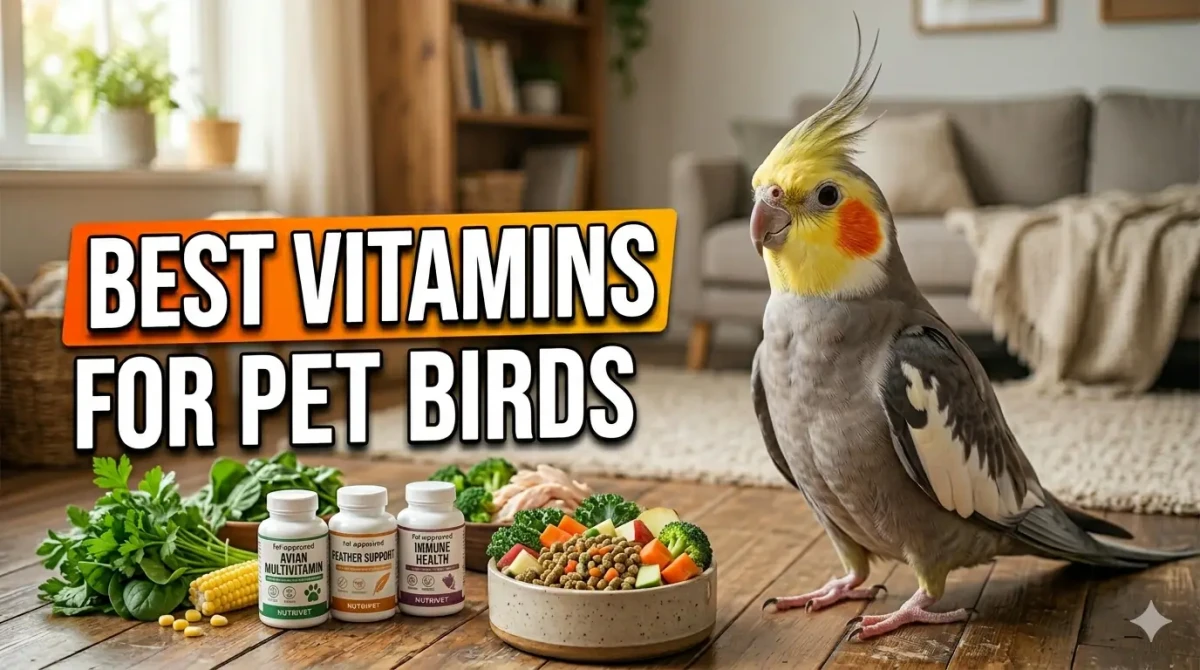
Understanding Avian Vitamin Needs: When Supplements Help and When They Harm
Vitamins are essential micronutrients that support every aspect of your bird's health—from feather quality and immune function to bone strength and reproductive health. However, the question isn't just "which vitamins are best?" but "does my bird actually need supplemental vitamins at all?" Most healthy birds receive complete nutrition from balanced pelleted diets, and unnecessary supplementation can cause serious harm. Understanding when vitamins truly benefit your bird—and when they pose risks—is essential for responsible avian care.
Featured Snippet Answer: Most healthy birds get adequate vitamins from high-quality pelleted diets and don't need supplements. Vitamins may benefit birds with specific needs: those on seed-only diets (vitamin A deficiency risk), breeding birds (calcium/vitamin D support), senior birds, or birds with health conditions under avian veterinary guidance. Always consult an avian veterinarian before adding vitamins—fat-soluble vitamins (A, D, E, K) can accumulate to toxic levels, birds cannot synthesize vitamin D3 from sunlight through glass, and human supplements contain unsafe dosages for birds.
This guide provides evidence-based, avian-veterinarian-aligned information about avian vitamin requirements, safe supplementation practices, and how to evaluate products if supplementation is warranted. You'll learn which vitamins matter most for different species and life stages, how to recognize signs of deficiency or excess, and when professional guidance is essential. Whether you have a playful Cockatiel, a brilliant African Grey, or a wise senior Macaw, you'll find practical guidance to support their health safely.
Avian Vitamin Fundamentals: What Birds Need and Why
Before considering supplements, it's essential to understand how birds obtain and use vitamins—and why their needs differ dramatically from mammals.
Two Categories of Vitamins:
- Fat-soluble vitamins (A, D, E, K): Stored in liver and fatty tissues; excess can accumulate to toxic levels over time—especially dangerous for birds with sensitive metabolisms
- Water-soluble vitamins (B-complex, C): Not stored significantly; excess is excreted, making toxicity less likely but not impossible with extreme over-supplementation
- 🐾 Annual Health Check for Pet Birds: Complete Guide
- 🐾 How to Boost Small Pet Immune System Naturally: Expert Exotic Veterinary Guide
- 🐾 Dog Vaccination Schedule for Puppies: Complete Guide
Key Vitamins and Their Unique Functions in Birds:
- Vitamin A: Critical for respiratory health, immune function, feather quality, and mucous membrane integrity; deficiency is extremely common in seed-only diets and causes respiratory infections, poor feathering, and eye issues
- Vitamin D3: Essential for calcium absorption and bone health; birds cannot synthesize vitamin D3 from sunlight through glass—must obtain from diet or UVB lighting
- Vitamin E: Powerful antioxidant that protects cell membranes, supports immune function, and works with selenium to prevent muscular degeneration
- B-Complex Vitamins: Support energy metabolism, nervous system function, feather development, and stress response; birds have high metabolic rates requiring adequate B-vitamins
- Calcium and Phosphorus: Critical for bone health, eggshell formation, and muscle function; must maintain ~2:1 calcium:phosphorus ratio
- Trace minerals (zinc, selenium, manganese): Support enzyme function, immune health, and feather pigmentation
- 🐾 Annual Health Check for Pet Birds: Complete Guide
- 🐾 How to Boost Small Pet Immune System Naturally: Expert Exotic Veterinary Guide
- 🐾 Dog Vaccination Schedule for Puppies: Complete Guide
Why Most Birds Don't Need Supplemental Vitamins:
- Quality pelleted diets: Reputable avian pellets are formulated to provide complete, balanced nutrition including appropriate vitamin levels
- Efficient nutrient utilization: Birds have evolved to extract and utilize vitamins efficiently from appropriate diets
- Risk of imbalance: Adding supplements to complete diets can create toxicities or disrupt critical nutrient ratios (e.g., calcium:phosphorus)
- Species variation: Needs vary dramatically by species (parrots vs. finches vs. softbills); generic supplements may not address specific needs and can cause harm
- 🐾 Annual Health Check for Pet Birds: Complete Guide
- 🐾 How to Boost Small Pet Immune System Naturally: Expert Exotic Veterinary Guide
- 🐾 Dog Vaccination Schedule for Puppies: Complete Guide
Featured Snippet Answer: Birds require vitamins A, D3, E, K, B-complex plus adequate calcium and trace minerals. Most healthy birds on quality pelleted diets obtain adequate vitamins without supplements. Critical avian considerations: vitamin A deficiency is common in seed-only diets; birds cannot synthesize vitamin D3 through glass; fat-soluble vitamins can accumulate to toxic levels. Always consult an avian veterinarian before adding vitamins to your bird's diet.
Can I give my bird human or dog vitamins?
No, never give human or mammal vitamins to birds without explicit avian veterinary guidance. Human/mammal supplements contain incorrect dosages, unsafe ingredients, or formulations not designed for avian metabolism. Birds have unique nutritional requirements and highly sensitive systems—what's safe for a dog can be toxic to a bird. Always choose veterinary-formulated products specifically designed for birds, and only under professional supervision.
When Vitamin Supplementation May Be Appropriate for Birds

While most birds on quality pellets don't need supplements, certain situations warrant targeted vitamin support under avian veterinary guidance.
Life Stage Considerations:
Baby Birds/Hand-Feeding:
- Typical needs: Commercial hand-feeding formulas provide complete nutrition when prepared correctly
- When supplements may help: Only under avian veterinary supervision for specific deficiencies or medical conditions
- Risks of over-supplementation: Excess vitamin A or D3 can cause developmental abnormalities; incorrect calcium:phosphorus ratios cause skeletal deformities
- 🐾 Annual Health Check for Pet Birds: Complete Guide
- 🐾 How to Boost Small Pet Immune System Naturally: Expert Exotic Veterinary Guide
- 🐾 Dog Vaccination Schedule for Puppies: Complete Guide
Adult Birds:
- Typical needs: Balanced pelleted diet meets vitamin requirements for healthy birds
- When supplements may help: Birds on seed-only diets (vitamin A support), birds with malabsorption issues, or those with diagnosed deficiencies under veterinary guidance
- Risks: Unnecessary supplementation can disrupt nutrient balance or cause toxicity—especially dangerous for fat-soluble vitamins
- 🐾 Annual Health Check for Pet Birds: Complete Guide
- 🐾 How to Boost Small Pet Immune System Naturally: Expert Exotic Veterinary Guide
- 🐾 Dog Vaccination Schedule for Puppies: Complete Guide
Senior Birds:
- Typical needs: Quality pellets with adjusted nutrient levels for aging metabolism
- When supplements may help: Birds with age-related conditions (liver support, immune support, joint health) may benefit from targeted nutrients under veterinary direction
- Considerations: Aging liver/kidneys may process vitamins differently; dosing requires professional oversight
- 🐾 Annual Health Check for Pet Birds: Complete Guide
- 🐾 How to Boost Small Pet Immune System Naturally: Expert Exotic Veterinary Guide
- 🐾 Dog Vaccination Schedule for Puppies: Complete Guide
Breeding Birds:
- Increased needs: Breeding females require extra calcium, vitamin D3, and protein for egg production
- Supplementation guidance: Provide cuttlebone/mineral block constantly; consider veterinary-recommended calcium/vitamin supplements during laying season
- Monitor closely: Watch for egg-binding or calcium deficiency signs; consult avian vet if concerns arise
- 🐾 Annual Health Check for Pet Birds: Complete Guide
- 🐾 How to Boost Small Pet Immune System Naturally: Expert Exotic Veterinary Guide
- 🐾 Dog Vaccination Schedule for Puppies: Complete Guide
Dietary Situation Considerations:
- Seed-only diets: Severely deficient in vitamin A, calcium, and other nutrients; transition to pellets is primary solution, not supplementation
- Homemade diets: Require avian nutritionist formulation to ensure complete vitamin/mineral balance; supplements are essential but must be precisely dosed
- Therapeutic diets: Prescription diets for specific conditions already include targeted nutrient levels; adding supplements can disrupt therapeutic balance
- 🐾 Annual Health Check for Pet Birds: Complete Guide
- 🐾 How to Boost Small Pet Immune System Naturally: Expert Exotic Veterinary Guide
- 🐾 Dog Vaccination Schedule for Puppies: Complete Guide
Featured Snippet Answer: Vitamin supplementation may be appropriate for: birds on seed-only diets needing vitamin A support, breeding females needing calcium/vitamin D3, birds with diagnosed deficiencies, or birds with specific health conditions under avian veterinary guidance. Most healthy birds on quality pelleted diets do not need supplemental vitamins. Always consult an avian veterinarian before adding any supplement.
Top Recommended Vitamin Supplements for Birds (When Medically Indicated)

If your avian veterinarian recommends vitamin supplementation, these veterinary-formulated products meet high standards for quality, safety, and avian-appropriate bioavailability.
1. Harrison's Bird Foods Supplements: Best Overall Quality
Key Features:
- Organic, non-GMO formulations developed by avian veterinarians
- Includes appropriate levels of vitamins A, D3, E, and B-complex for birds
- Available in powder form for easy mixing with moist foods
- Third-party tested for purity and potency
- Designed to complement Harrison's pelleted diets but can be used with other quality diets under guidance
- 🐾 Annual Health Check for Pet Birds: Complete Guide
- 🐾 How to Boost Small Pet Immune System Naturally: Expert Exotic Veterinary Guide
- 🐾 Dog Vaccination Schedule for Puppies: Complete Guide
Best For: Birds with veterinary-approved need for vitamin support; owners prioritizing organic, veterinary-developed formulations
Pros: Avian veterinary-developed, organic ingredients, appropriate avian dosing, third-party tested, high quality control
Cons: Premium price point; requires mixing with food; not appropriate for birds on complete diets without veterinary guidance
Price Range: $25-45 depending on size
Verdict: Harrison's supplements deliver veterinary-developed, organic nutrition for birds with supplementation needs. Their commitment to avian-specific formulations makes them a reliable choice when supplementation is warranted.
2. Roudybush Daily Vitamins for Birds: Best for Daily Support
Key Features:
- Water-soluble vitamin formula designed for daily use in drinking water or on food
- Includes vitamins A, D3, E, and B-complex in avian-appropriate ratios
- No artificial colors, flavors, or preservatives
- Developed by avian nutritionists with research backing
- Easy to administer—mix with water or sprinkle on moist food
- 🐾 Annual Health Check for Pet Birds: Complete Guide
- 🐾 How to Boost Small Pet Immune System Naturally: Expert Exotic Veterinary Guide
- 🐾 Dog Vaccination Schedule for Puppies: Complete Guide
Best For: Birds transitioning from seed to pellets, birds with mild vitamin A deficiency risk, or under veterinary guidance for daily support
Pros: Easy administration, water-soluble formula reduces overdose risk, avian nutritionist-developed, no artificial additives
Cons: Water-soluble vitamins degrade quickly—must prepare fresh daily; not appropriate for birds on complete diets without guidance
Price Range: $18-35 depending on size
Verdict: Roudybush Daily Vitamins offers convenient, research-backed daily support for birds with veterinary-approved needs. Its water-soluble format and avian-specific formulation make it practical for careful supplementation.
3. Nekton-S for Birds: Best for Stress/Recovery Support
Key Features:
- Comprehensive vitamin-mineral-amino acid formula for birds under stress or recovering from illness
- Includes vitamins A, D3, E, B-complex plus electrolytes and amino acids
- Water-soluble powder for easy administration
- Developed in Germany with avian research backing
- Used by avian veterinarians worldwide for therapeutic support
- 🐾 Annual Health Check for Pet Birds: Complete Guide
- 🐾 How to Boost Small Pet Immune System Naturally: Expert Exotic Veterinary Guide
- 🐾 Dog Vaccination Schedule for Puppies: Complete Guide
Best For: Birds recovering from illness, surgery, or stress; molting birds; or under veterinary guidance for short-term therapeutic support
Pros: Comprehensive formula for recovery/stress, avian veterinarian-used, research-backed, easy administration
Cons: Intended for short-term therapeutic use, not daily maintenance; requires veterinary guidance for appropriate use
Price Range: $25-50 depending on size
Verdict: Nekton-S provides comprehensive therapeutic support for birds under stress or recovering from illness. Its veterinary-use reputation and research backing make it ideal for short-term, guided supplementation.
4. Lafeber Emergency Support Formula: Best for Critical Care
Key Features:
- Complete nutritional support formula for ill, recovering, or hand-feeding birds
- Includes balanced vitamins, minerals, amino acids, and calories
- Easy-to-mix powder for syringe or spoon feeding
- Developed by avian veterinarians for critical care situations
- Palatable formula encourages intake in reluctant birds
- 🐾 Annual Health Check for Pet Birds: Complete Guide
- 🐾 How to Boost Small Pet Immune System Naturally: Expert Exotic Veterinary Guide
- 🐾 Dog Vaccination Schedule for Puppies: Complete Guide
Best For: Critically ill birds, hand-feeding babies, or birds refusing food under veterinary supervision
Pros: Complete nutritional support, avian veterinary-developed, palatable, easy to administer to sick birds
Cons: Intended for critical care/short-term use only, not routine supplementation; requires veterinary guidance
Price Range: $30-55 depending on size
Verdict: Lafeber Emergency Support Formula delivers complete nutritional support for critically ill or recovering birds. Its veterinary-developed formulation makes it invaluable for critical care situations under professional guidance.
5. Avian Science Ultra Vitamins: Best for Seed-Eating Birds Transitioning
Key Features:
- Water-soluble vitamin formula specifically designed for birds on seed-based diets
- Higher vitamin A levels to address common seed-diet deficiencies
- Includes vitamins D3, E, and B-complex in avian-appropriate ratios
- Easy to mix with drinking water or moisten seeds
- Developed with avian nutrition research
- 🐾 Annual Health Check for Pet Birds: Complete Guide
- 🐾 How to Boost Small Pet Immune System Naturally: Expert Exotic Veterinary Guide
- 🐾 Dog Vaccination Schedule for Puppies: Complete Guide
Best For: Birds transitioning from seed-only to pelleted diets; birds with veterinary-diagnosed vitamin A deficiency
Pros: Addresses common seed-diet deficiencies, water-soluble for easy use, avian-specific formulation, research-backed
Cons: Intended as transition support, not long-term solution; primary goal should be diet conversion to pellets
Price Range: $20-40 depending on size
Verdict: Avian Science Ultra Vitamins provides targeted support for birds transitioning from seed-only diets. Its focus on vitamin A deficiency correction makes it valuable for transition periods under veterinary guidance.
How to Evaluate Bird Vitamin Supplement Quality and Safety
If supplementation is recommended, use these criteria to select safe, effective products designed for avian physiology.
Certification and Quality Assurance
- Avian veterinary involvement: Products developed or endorsed by avian veterinarians are more likely to have appropriate dosing and formulations
- Third-party testing: Independent verification of potency, purity, and absence of contaminants
- Manufacturing standards: Produced in facilities following good manufacturing practices
- Transparency: Brands that disclose ingredient sources, testing results, and manufacturing practices
- 🐾 Annual Health Check for Pet Birds: Complete Guide
- 🐾 How to Boost Small Pet Immune System Naturally: Expert Exotic Veterinary Guide
- 🐾 Dog Vaccination Schedule for Puppies: Complete Guide
Ingredient Analysis for Avian Safety
- Avian-specific formulations: Products designed for birds, not repackaged mammal supplements
- Appropriate dosages: Vitamin levels should match avian requirements, not human or dog needs
- Vitamin D3 form: Ensure supplement contains vitamin D3 (cholecalciferol), not D2, for proper calcium absorption
- No unsafe additives: Avoid artificial colors, flavors, preservatives, or ingredients toxic to birds
- Clear labeling: Guaranteed analysis, ingredient list, species-specific dosage instructions should be complete and clear
- 🐾 Annual Health Check for Pet Birds: Complete Guide
- 🐾 How to Boost Small Pet Immune System Naturally: Expert Exotic Veterinary Guide
- 🐾 Dog Vaccination Schedule for Puppies: Complete Guide
Brand Reputation and Support
- Avian veterinarian recommendations: Brands recommended by avian vets often have stronger quality control
- Recall history: Research brand safety records; avoid brands with frequent recalls
- Customer support: Responsive companies that answer questions about avian formulations and testing
- Scientific backing: Products supported by avian research or clinical experience
- 🐾 Annual Health Check for Pet Birds: Complete Guide
- 🐾 How to Boost Small Pet Immune System Naturally: Expert Exotic Veterinary Guide
- 🐾 Dog Vaccination Schedule for Puppies: Complete Guide
Featured Snippet Answer:
Evaluate bird vitamin supplements by checking: avian veterinary involvement, third-party testing, avian-specific formulations, appropriate dosages, vitamin D3 form, and transparent labeling. Avoid products with artificial additives or repackaged mammal formulations. Choose brands with avian veterinarian recommendations and strong quality control records.
Administration Guidelines: Safe Dosing and Monitoring for Birds
Proper administration ensures supplements provide benefit without risk—especially critical for sensitive avian physiology.
Dosing Principles for Birds
- Follow avian veterinary guidance: Never exceed recommended dosages; birds are highly sensitive to vitamin imbalances
- Species-specific dosing: Adjust doses based on species, size, and weight—not all birds use the same dose
- Start low, go slow: Begin with lower doses to assess tolerance before increasing
- Consistency matters: Give supplements at consistent times for stable blood levels
- 🐾 Annual Health Check for Pet Birds: Complete Guide
- 🐾 How to Boost Small Pet Immune System Naturally: Expert Exotic Veterinary Guide
- 🐾 Dog Vaccination Schedule for Puppies: Complete Guide
Administration Tips for Reluctant Birds
- With food: Mix water-soluble vitamins with moist foods or drinking water; fat-soluble vitamins require dietary fat for absorption
- Palatability strategies: Mix powders with favorite moist foods (mashed sweet potato, cooked quinoa); try different vehicles to find what your bird accepts
- Avoid water contamination: If adding to drinking water, change water frequently (2-3x daily) to prevent bacterial growth and vitamin degradation
- Minimize stress: Never force supplements; if your bird resists, consult your avian vet for alternative administration methods
- 🐾 Annual Health Check for Pet Birds: Complete Guide
- 🐾 How to Boost Small Pet Immune System Naturally: Expert Exotic Veterinary Guide
- 🐾 Dog Vaccination Schedule for Puppies: Complete Guide
Monitoring for Safety and Efficacy
- Watch for toxicity signs: Lethargy, loss of appetite, changes in droppings, feather abnormalities, or unusual behavior may indicate over-supplementation
- Regular avian veterinary checkups: Blood work can monitor vitamin levels, liver/kidney function, and overall health during supplementation
- Document everything: Keep records of supplements, dosages, and your bird's response to share with your avian vet
- Reassess regularly: Vitamin needs change with age, health status, and diet; review supplementation needs with your avian vet every 6-12 months
- 🐾 Annual Health Check for Pet Birds: Complete Guide
- 🐾 How to Boost Small Pet Immune System Naturally: Expert Exotic Veterinary Guide
- 🐾 Dog Vaccination Schedule for Puppies: Complete Guide
Featured Snippet Answer:
Administer bird vitamins safely: follow avian veterinary dosing guidance, mix with moist foods or fresh water, start with low doses, and monitor for adverse reactions. Change vitamin-treated water frequently to prevent bacterial growth. Watch for toxicity signs (lethargy, appetite changes, feather abnormalities) and schedule regular avian veterinary checkups to monitor health during supplementation.
Recognizing Vitamin Deficiency and Toxicity in Birds: Warning Signs
Understanding symptoms helps you respond appropriately to potential vitamin issues—critical for sensitive avian physiology.
Signs of Potential Vitamin Deficiency in Birds
Vitamin A Deficiency (Most Common in Seed-Eating Birds): White plaques in mouth, respiratory infections, poor feather quality, eye discharge, sinus infections, poor appetite
Vitamin D3 Deficiency: Soft or deformed bones, egg-binding in females, poor calcium absorption, weakness, seizures in severe cases
Vitamin E Deficiency: Muscle weakness, reproductive issues, immune dysfunction, neurological signs, "crazy chick disease" in babies
B-Complex Deficiency: Poor feather development, neurological signs (tremors, seizures), poor growth in babies, lethargy
Calcium Deficiency: Egg-binding, soft-shelled eggs, bone fractures, muscle tremors, weakness
Signs of Vitamin Toxicity (Over-Supplementation) in Birds
Vitamin A Toxicity: Loss of appetite, lethargy, feather plucking, liver damage, bone abnormalities
Vitamin D3 Toxicity (Especially Dangerous): Excessive thirst/urination, calcium deposits in soft tissues, kidney failure, weakness, death (medical emergency)
Vitamin E Toxicity: Rare but may cause bleeding disorders or interfere with vitamin K function
Mineral Toxicity: Excess calcium can cause kidney damage; excess zinc or selenium can cause toxicity
When to Seek Immediate Avian Veterinary Care
- Suspected vitamin overdose (especially vitamins A or D3)
- Symptoms of toxicity: lethargy, loss of appetite, changes in droppings, weakness
- Sudden changes in behavior, feather quality, or mobility alongside supplementation
- Signs of deficiency: respiratory issues, poor feathering, egg-binding, neurological signs
- Any concerning symptoms after starting a new supplement
- 🐾 Annual Health Check for Pet Birds: Complete Guide
- 🐾 How to Boost Small Pet Immune System Naturally: Expert Exotic Veterinary Guide
- 🐾 Dog Vaccination Schedule for Puppies: Complete Guide
Featured Snippet Answer:
Recognize vitamin issues in birds: deficiency signs include respiratory issues (vitamin A), bone problems (vitamin D3/calcium), or poor feathering; toxicity signs (especially vitamins A/D3) include lethargy, appetite loss, or calcium deposits. Seek immediate avian veterinary care for suspected overdose or concerning symptoms. Never adjust supplement doses without avian veterinary guidance—birds are highly sensitive to vitamin imbalances.
Common Mistakes to Avoid with Bird Vitamins
Even well-intentioned owners make errors that can compromise bird health. Avoid these critical pitfalls:
Mistake 1: Supplementing Without Avian Veterinary Guidance
- Problem: Adding vitamins to complete pelleted diets can create toxicities or disrupt critical nutrient balances; birds are especially sensitive to vitamin A and D3 toxicity
- Solution: Consult an avian veterinarian before adding any supplement; most healthy birds on quality pellets don't need extra vitamins
- 🐾 Annual Health Check for Pet Birds: Complete Guide
- 🐾 How to Boost Small Pet Immune System Naturally: Expert Exotic Veterinary Guide
- 🐾 Dog Vaccination Schedule for Puppies: Complete Guide
Mistake 2: Using Human, Dog, or Cat Vitamins for Birds
- Problem: Mammal supplements contain incorrect dosages, unsafe ingredients, or formulations not designed for avian metabolism; birds process vitamins differently than mammals
- Solution: Only use avian-specific, veterinary-formulated supplements designed for birds with appropriate dosing
- 🐾 Annual Health Check for Pet Birds: Complete Guide
- 🐾 How to Boost Small Pet Immune System Naturally: Expert Exotic Veterinary Guide
- 🐾 Dog Vaccination Schedule for Puppies: Complete Guide
Mistake 3: Relying on Supplements Instead of Fixing Diet
- Problem: Adding vitamins to seed-only diets masks the real problem—seed diets are fundamentally unbalanced for most pet birds
- Solution: Prioritize transitioning to high-quality pelleted diets; use supplements only as temporary support during transition under veterinary guidance
- 🐾 Annual Health Check for Pet Birds: Complete Guide
- 🐾 How to Boost Small Pet Immune System Naturally: Expert Exotic Veterinary Guide
- 🐾 Dog Vaccination Schedule for Puppies: Complete Guide
Mistake 4: Ignoring UVB Lighting for Vitamin D3
- Problem: Assuming dietary vitamin D3 is sufficient without considering that birds need UVB exposure for proper calcium metabolism
- Solution: Provide appropriate UVB lighting for indoor birds; discuss lighting needs with your avian veterinarian
- 🐾 Annual Health Check for Pet Birds: Complete Guide
- 🐾 How to Boost Small Pet Immune System Naturally: Expert Exotic Veterinary Guide
- 🐾 Dog Vaccination Schedule for Puppies: Complete Guide
Mistake 5: Not Monitoring Water Quality with Water-Soluble Vitamins
- Problem: Adding vitamins to drinking water without changing water frequently leads to bacterial growth and vitamin degradation
- Solution: Change vitamin-treated water 2-3 times daily; clean water containers thoroughly to prevent biofilm
- 🐾 Annual Health Check for Pet Birds: Complete Guide
- 🐾 How to Boost Small Pet Immune System Naturally: Expert Exotic Veterinary Guide
- 🐾 Dog Vaccination Schedule for Puppies: Complete Guide
Mistake 6: Assuming "Natural" Means Safe
- Problem: Natural ingredients can still be toxic at wrong doses; "natural" doesn't guarantee safety or efficacy for birds
- Solution: Evaluate supplements by evidence, avian veterinary guidance, and quality certification—not marketing claims
- 🐾 Annual Health Check for Pet Birds: Complete Guide
- 🐾 How to Boost Small Pet Immune System Naturally: Expert Exotic Veterinary Guide
- 🐾 Dog Vaccination Schedule for Puppies: Complete Guide
Featured Snippet Answer:
Avoid bird vitamin mistakes: don't supplement without avian veterinary guidance, never use mammal vitamins for birds, fix diet fundamentals before supplementing, provide UVB lighting for vitamin D3 metabolism, change vitamin-treated water frequently, and don't assume "natural" means safe. These practices prevent toxicity and ensure supplements provide benefit without risk to sensitive avian physiology.
Food-First Approach: Getting Vitamins from Whole Foods for Birds
For birds who can benefit from extra nutrients, whole food sources are often safer and more enriching than isolated supplements—when used appropriately.
Vitamin-Rich Whole Foods for Birds (In Moderation)
Vitamin A Sources (Critical for Birds):
- Orange vegetables: cooked sweet potato, carrots, pumpkin, butternut squash (beta-carotene; birds convert some to vitamin A)
- Dark leafy greens: kale, collards, dandelion greens (offer variety)
- Important: While birds can convert some beta-carotene to vitamin A, the conversion is inefficient; birds on seed diets often still develop deficiency—pellets are the reliable solution
- 🐾 Annual Health Check for Pet Birds: Complete Guide
- 🐾 How to Boost Small Pet Immune System Naturally: Expert Exotic Veterinary Guide
- 🐾 Dog Vaccination Schedule for Puppies: Complete Guide
Vitamin D3 Sources:
- UVB lighting is primary source for most birds; dietary D3 from quality pellets
- Small amounts of cooked egg yolk or fatty fish (for species that eat these)
- Critical: Birds cannot synthesize vitamin D3 from sunlight through glass—provide avian-specific UVB lighting for indoor birds
- 🐾 Annual Health Check for Pet Birds: Complete Guide
- 🐾 How to Boost Small Pet Immune System Naturally: Expert Exotic Veterinary Guide
- 🐾 Dog Vaccination Schedule for Puppies: Complete Guide
Vitamin E Sources:
- Small amounts of nuts (almonds, walnuts—limit due to high fat)
- Leafy greens, broccoli, spinach (in moderation)
- High-quality pellets contain appropriate vitamin E levels
- 🐾 Annual Health Check for Pet Birds: Complete Guide
- 🐾 How to Boost Small Pet Immune System Naturally: Expert Exotic Veterinary Guide
- 🐾 Dog Vaccination Schedule for Puppies: Complete Guide
B-Complex Sources:
- Cooked legumes (chickpeas, lentils—offer variety)
- Whole grains (quinoa, brown rice, oats—in moderation)
- Leafy greens and vegetables
- 🐾 Annual Health Check for Pet Birds: Complete Guide
- 🐾 How to Boost Small Pet Immune System Naturally: Expert Exotic Veterinary Guide
- 🐾 Dog Vaccination Schedule for Puppies: Complete Guide
Calcium Sources:
- Cuttlebone or mineral block (always available)
- Dark leafy greens (kale, collards)
- Small amounts of plain yogurt (for species that tolerate dairy)
- 🐾 Annual Health Check for Pet Birds: Complete Guide
- 🐾 How to Boost Small Pet Immune System Naturally: Expert Exotic Veterinary Guide
- 🐾 Dog Vaccination Schedule for Puppies: Complete Guide
Safe Introduction of Whole Food Additions for Birds
- Start tiny: Introduce one new food at a time in pea-sized amounts
- Monitor tolerance: Watch for changes in droppings, appetite, or behavior
- Keep treats
- 👉 Bird Feather Grooming Tips for Healthy Plumage
🐱 আরও পড়ুন: Bird Health
🐾 How to Boost a Bird's Immune System Naturally: Expert Avian Veterinary Guide🐾 Healthy Diet Plan for Birds and Complete Nutrition Guide🐾 Prevent Obesity in Pet Birds Complete Health Guide🐾 Common Bird Diseases and Prevention for Pet Birds🐾 Bird Eye Care Tips for Healthy Vision Guide
0 Comments