.png)
Train Cockatiel to Step Up: Easy Step-by-Step
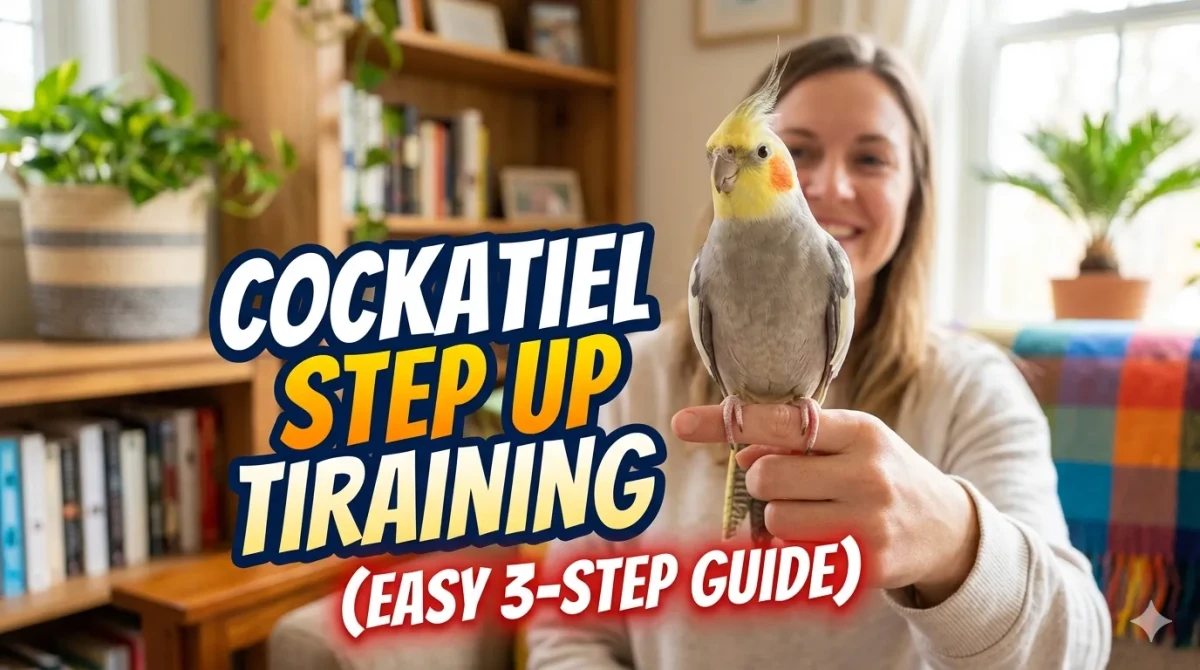
Why Teaching Your Cockatiel to Step Up Is Essential
Training your cockatiel to step up onto your finger or a perch is one of the most fundamental and valuable skills you can teach. This simple command forms the foundation for safe handling, veterinary care, grooming, and daily interaction. A reliable step-up response also strengthens the bond between you and your bird while reducing stress during necessary procedures.
Featured Snippet Answer: To train a cockatiel to step up, start by building trust through calm interactions. Gently press your finger against your bird's lower chest above the legs, use a consistent cue like "step up," and immediately reward with a favorite treat when they comply. Keep sessions short, positive, and consistent for best results.
Many new cockatiel owners struggle with this training because they rush the process or misunderstand their bird's body language. Cockatiels are prey animals by nature, so they approach new experiences with caution. Forcing a step-up before your bird is ready can create fear, biting, or avoidance behaviors that are difficult to reverse.
This comprehensive guide provides humane, science-backed methods to teach your cockatiel the step-up command with patience and positivity. You'll learn how to read your bird's signals, structure effective training sessions, troubleshoot common challenges, and build a relationship based on trust rather than coercion.
Understanding Cockatiel Behavior: The Foundation of Successful Training
Before beginning step-up training, it's crucial to understand how cockatiels communicate and learn. These intelligent birds rely heavily on body language to express comfort, fear, curiosity, or agitation. Recognizing these signals helps you time training sessions appropriately and avoid pushing your bird beyond their comfort zone.
Key Body Language Cues:
- Relaxed posture: Feathers slightly fluffed, one foot tucked up, gentle beak grinding = your bird is calm and receptive
- Curious interest: Head tilted, eyes bright, moving toward you = good time to introduce training
- Warning signs: Hissing, lunging, pinned eyes (rapid pupil dilation), crest flattened tightly = pause training and give space
- Fear signals: Fluffing all feathers, trembling, trying to flee = end session immediately and reassess approach
- 🐾 How to Stop Puppy Jumping Complete Training Guide
- 🐾 How to Train a Kitten to Use Litter Box: 2026 Guide
- 🐾 How to Train a Rabbit to Use Litter Box: 2026 Guide
- 🐾 Train Lovebird to Perch on Hand: Step-by-Step
Cockatiels learn best through positive reinforcement—rewarding desired behaviors to encourage repetition. Unlike dogs, they do not respond well to punishment or force. Negative experiences create lasting fear and undermine trust, making future training significantly harder.
What age is best to start step-up training with a cockatiel?
Begin basic step-up training once your cockatiel is settled into their new home, typically 2–4 weeks after adoption. Young birds (3–8 months) often learn faster, but cockatiels of any age can master the step-up with patience. Prioritize trust-building before formal training begins.
Why won't my cockatiel step up onto my finger?
Common reasons include fear of hands, past negative experiences, discomfort with the perch surface, or training that progressed too quickly. Start by letting your bird explore your stationary hand without pressure, use high-value rewards, and ensure your finger is positioned comfortably against their lower chest.
Step 1: Build Trust Before Introducing the Step-Up Cue

Trust is the non-negotiable foundation of all bird training. Spend 10–15 minutes daily interacting with your cockatiel without training goals: sit near the cage, speak softly, offer treats through the bars, and allow your bird to observe you at their own pace.
Hand-taming begins with passive presence. Place your hand calmly on or near the cage for short periods, withdrawing before your bird shows stress. Gradually progress to offering millet sprays or small seed treats from your open palm. Never grab, chase, or force interaction—this erodes trust and delays training progress.
Pro Tip: Schedule bonding time during your cockatiel's naturally active periods, typically early morning and late afternoon. Birds are most alert and receptive during these windows, making training more effective and enjoyable for both of you.
Step 2: Introduce the Perch or Finger Without Pressure

Once your cockatiel comfortably takes treats from your hand, begin introducing the step-up surface. You can use your finger (for smaller birds) or a wooden perch (for birds wary of hands). Hold the perch or finger steady near your bird's feet without touching them, allowing exploration.
Let your cockatiel investigate the perch with their beak, step near it, or even step on briefly. Reward any interest or interaction with immediate praise and a small treat. The goal is to create a positive association: "This object predicts good things!"
Positioning Matters: When ready to cue the step-up, gently press your finger or perch against your bird's lower chest, just above the legs. This natural pressure encourages them to lift a foot to balance, making the stepping motion intuitive rather than forced.
Step 3: Add the Verbal Cue and Reward Immediately

Once your cockatiel comfortably steps onto your finger or perch with gentle pressure, introduce a consistent verbal cue like "step up" or "up." Say the cue calmly just before applying the gentle chest pressure, then reward immediately when your bird complies.
Timing is critical: the reward must follow the desired behavior within 1–2 seconds for your cockatiel to make the connection. Use high-value treats like small millet pieces, a favorite seed, or tiny bits of safe fruit (apple, melon). Pair treats with enthusiastic but calm praise to reinforce success.
Featured Snippet Answer: Always reward your cockatiel immediately after they step up, using a high-value treat and calm praise. Consistent, timely reinforcement teaches your bird that stepping up predicts positive outcomes, building reliability and enthusiasm for the behavior over repeated sessions.
Keep training sessions extremely short—3 to 5 minutes maximum, 1–2 times daily. Cockatiels have limited attention spans; ending sessions while your bird is still engaged maintains motivation and prevents frustration.
Step 4: Practice in Different Locations and Contexts

Once your cockatiel reliably steps up in one location (e.g., near their cage), gradually practice in new settings: on a training stand, in a different room, or during out-of-cage time. This "proofing" process ensures the behavior generalizes beyond the original training context.
Start with minimal distractions in each new location. As your bird succeeds, slowly introduce mild challenges: slightly more distance, different perches, or the presence of familiar people. Always return to easier scenarios if your bird shows hesitation, rebuilding confidence before advancing again.
Safety First: When training outside the cage, ensure windows and doors are closed, ceiling fans are off, and other pets are secured. Cockatiels can startle and fly unexpectedly; a safe environment prevents accidents during learning.
Step 5: Fade Treats and Transition to Life Rewards

Once your cockatiel steps up reliably on cue, begin fading food rewards to prevent dependency. Start by rewarding every other successful step-up, then every third, while increasing praise, head scratches (if your bird enjoys them), or access to desired activities as the primary reward.
"Life rewards" are powerful motivators: stepping up leads to out-of-cage time, a favorite toy, or interaction with you. This teaches your bird that cooperation unlocks enjoyable experiences, building long-term willingness without constant food bribes.
Maintenance Tip: Occasionally "jackpot" reward with an extra-special treat to maintain motivation. Random, unpredictable rewards strengthen behavior long-term, similar to how variable reinforcement works in other animals.
Common Mistakes That Sabotage Step-Up Training

Even well-meaning owners make errors that delay progress or create behavioral issues. Avoid these pitfalls:
Mistake 1: Rushing the trust-building phase. Skipping bonding time to "get to training" often backfires. A fearful bird cannot learn effectively. Invest time in relationship-building first.
Mistake 2: Using force or frustration. Grabbing, chasing, or showing impatience creates fear and resistance. Cockatiels remember negative experiences; patience yields faster long-term results.
Mistake 3: Inconsistent cues or rewards. Changing verbal cues, hand positions, or reward timing confuses your bird. Consistency accelerates learning.
Mistake 4: Training when your bird is tired or stressed. Avoid sessions during molting, illness, or after environmental changes. Wait for calm, alert moments.
Mistake 5: Ignoring body language. Pushing past warning signs (hissing, lunging) teaches your bird that their communication doesn't matter. Respect their signals to maintain trust.
Troubleshooting: What If My Cockatiel Still Won't Step Up?

If progress stalls after 2–3 weeks of consistent training, reassess your approach with these targeted strategies:
Check Health First: Lethargy, fluffed feathers, changes in appetite, or labored breathing can indicate illness. A sick bird won't engage in training. Consult an avian veterinarian if you suspect health issues.
Reassess Reward Value: Is your treat truly high-value? Try rotating rewards: millet one day, small fruit bits another, a favorite toy as bonus. Some birds prefer verbal praise or head scratches over food.
Evaluate Perch Comfort: Your cockatiel may dislike the texture or diameter of your finger or perch. Try a wooden dowel, natural branch, or different grip surface to find their preference.
Consider Target Training First: If direct step-up attempts cause stress, teach target training (touching a stick with their beak) first. This builds confidence and can be shaped into step-up behavior gradually.
Rule Out Environmental Stressors: Recent changes (new pets, moves, loud noises) can suppress learning. Address stressors before resuming training.
How do I stop my cockatiel from biting when I ask them to step up?
Biting often signals fear or discomfort. Pause step-up training and return to trust-building exercises. Ensure you're not approaching from above (predator-like), use gentle chest pressure rather than grabbing, and reward calm interactions. If biting persists, consult an avian behavior specialist for personalized guidance.
Can I train an older or rescue cockatiel to step up?
Absolutely. While older or rescue birds may have established fears or habits, they can learn new behaviors with patience. Go slower, prioritize trust, and celebrate small wins. Many rescue cockatiels form deep bonds through gentle, consistent training and become remarkably responsive over time.
Health and Wellness: Supporting Training Success

A healthy cockatiel learns faster and engages more readily. Support training with proper nutrition: high-quality pellets as a base, fresh vegetables daily, limited seeds as treats, and clean water always. Avoid avocado, chocolate, caffeine, alcohol, and salty foods, which are toxic to birds.
Ensure your cockatiel gets 10–12 hours of uninterrupted sleep in a dark, quiet space. Sleep deprivation impairs learning, increases irritability, and weakens immune function. Cover the cage lightly if needed to block light and noise.
Wing Trimming Considerations: Some trainers recommend light wing trims to reduce flight during early handling training. If considering this, consult an avian veterinarian or experienced groomer. Never trim flight feathers so short that your bird cannot glide safely to the floor.
Enrichment Beyond Training: Provide foraging toys, safe chewable items, and opportunities for climbing. Mentally stimulated birds are more engaged learners. Rotate toys weekly to maintain novelty and prevent boredom-related behaviors.
Advanced Techniques: Building Reliability and Flexibility

Once your cockatiel masters the basic step-up, try these advanced methods to deepen skills and communication:
Two-Perch Training: Teach your bird to step up from one perch to another, or from your hand to a perch. This builds flexibility for vet visits, grooming, or travel.
Distance Cues: Gradually increase the distance between you and your bird before giving the step-up cue. This prepares for real-world scenarios where you can't always be right next to them.
Contextual Step-Up: Teach your cockatiel to step up in different contexts: from the cage, from a play stand, from another person's hand. Use consistent cues and rewards across scenarios to generalize the behavior.
Emergency Recall Integration: Pair the step-up with a distinct emergency cue for urgent situations. Practice rarely but reward heavily to maintain its power for critical moments.
Quick Recap: Key Takeaways for Success

- Build trust through calm, consistent interactions before formal training begins
- Read your cockatiel's body language to time sessions appropriately
- Use gentle chest pressure to encourage the stepping motion naturally
- Pair a consistent verbal cue with immediate high-value rewards
- Keep sessions short (3–5 minutes) and end on a positive note
- Practice in varied locations to proof the behavior for real-world use
- Gradually fade food rewards, replacing with praise and life rewards
- Avoid force, frustration, or ignoring warning signals
- Rule out health or stress issues if progress stalls
- Be patient—most cockatiels learn step-up in 2–6 weeks of consistent practice
- 🐾 How to Stop Puppy Jumping Complete Training Guide
- 🐾 How to Train a Kitten to Use Litter Box: 2026 Guide
- 🐾 How to Train a Rabbit to Use Litter Box: 2026 Guide
- 🐾 Train Lovebird to Perch on Hand: Step-by-Step
Final Thoughts: Partnership Over Control

Teaching your cockatiel to step up is not about dominance or obedience—it's about building a cooperative partnership based on trust and mutual respect. Every bird learns at their own pace, and success looks different for each individual. Some will step up eagerly within days; others may take weeks. Both journeys are valid.
Focus on the relationship, not just the behavior. The time you spend training strengthens your bond, provides mental enrichment, and honors your cockatiel's intelligence and sensitivity. Whether your bird becomes a confident handler or simply enjoys the interaction, the connection you build is the true reward.
Remember: consistency, positivity, and respect for your cockatiel's limits are the foundations of success. With these principles, you'll not only teach a step-up—you'll nurture a happy, confident companion for years to come.
🐱 আরও পড়ুন: Bird Training and Behavior

0 Comments