.png)
Train Lovebird to Perch on Hand: Step-by-Step
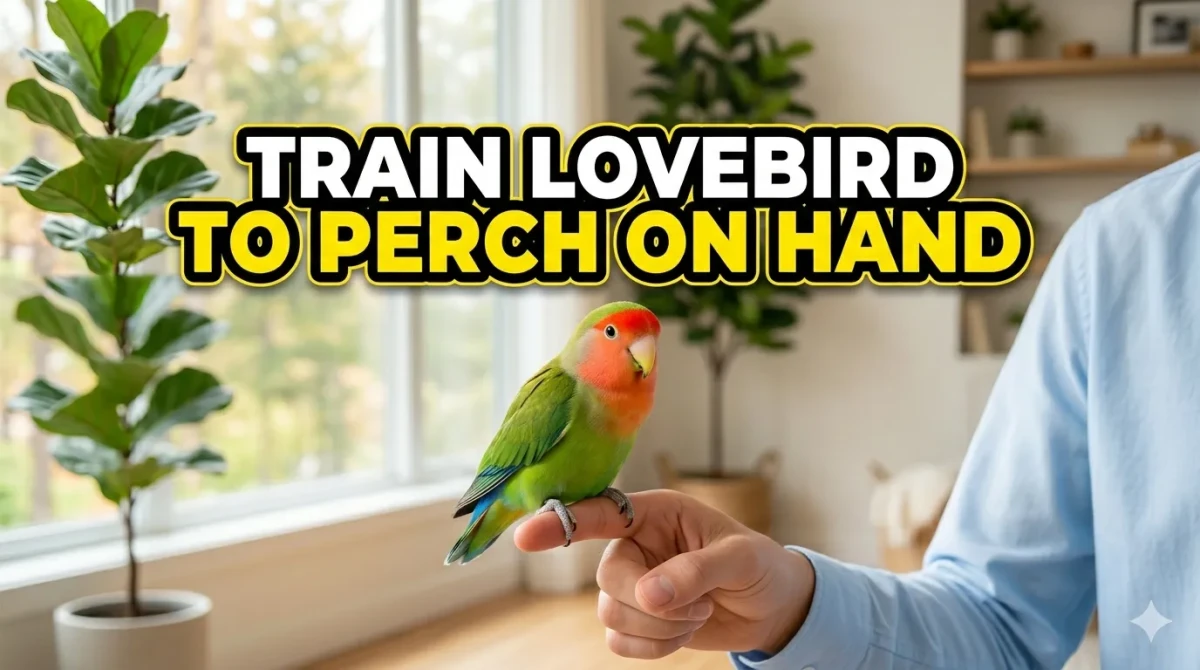
Why Training Your Lovebird to Perch on Hand Strengthens Your Bond
Training your lovebird to willingly perch on your hand is one of the most rewarding milestones in bird ownership. This simple behavior opens the door to deeper interaction, easier handling for health checks, and a trusting relationship built on positive experiences. Lovebirds are intelligent, social parrots capable of forming strong bonds with their human caregivers—but they require patience, consistency, and respect for their natural instincts to feel safe enough to step up voluntarily.
Featured Snippet Answer: To train a lovebird to perch on hand, start by building trust through calm interactions near the cage. Offer millet spray from your open palm, gradually moving treats closer to your fingers. Use a gentle "step up" cue with light chest pressure, reward immediately with treats and praise, and keep sessions short (5-10 minutes) and positive. Never force or punish—patience and consistency build lasting trust.
Many new lovebird owners become frustrated when their bird refuses to step up, bites, or flies away during handling attempts. These reactions aren't defiance—they're natural responses from a prey animal learning to trust a much larger creature. Understanding lovebird behavior, respecting their boundaries, and using science-based training methods transforms handling from a struggle into a joyful partnership.
This comprehensive guide provides humane, evidence-based strategies to train your lovebird to perch on hand with confidence. You'll learn how to read your bird's body language, structure effective training sessions, troubleshoot common challenges like biting or fear, and build a relationship where your lovebird chooses to step up because it's rewarding—not because it's forced. Whether you have a young lovebird just settling in or an older bird with handling fears, you'll find practical techniques to succeed.
Understanding Lovebird Behavior: The Foundation of Successful Training
Before beginning hand training, it's crucial to understand how lovebirds communicate and learn. These small parrots (genus Agapornis) are prey animals with strong flight instincts, making trust-building essential before any handling attempts.
Key Lovebird Body Language Cues:
- Relaxed posture: Soft eyes, slightly fluffed feathers, one foot tucked up = calm and receptive
- Curious interest: Head tilting, approaching the cage front, gentle beak clicking = good time to train
- Warning signs: Eye pinning (rapid pupil dilation), crest raised tightly, hissing = pause and give space
- Fear signals: Frantic wing flapping, trying to flee, screaming = end session immediately
- Aggression: Lunging, biting, raised feathers = back off and reassess approach
- 🐾 How to Teach a Bird to Shake Hands Complete Training Guide
- 🐾 How to Train a Cat to Use Litter Consistently: Complete 2026 Guide
- 🐾 How to Train a Gerbil to Use Litter Area: Expert Step-by-Step Guide
- 🐾 How to Stop Puppy Jumping Complete Training Guide
Lovebirds learn best through positive reinforcement—rewarding desired behaviors to encourage repetition. Unlike mammals, birds are highly sensitive to stress; negative experiences create lasting fear that undermines training. Patience, consistency, and respect for your bird's limits are non-negotiable for success.
How long does it take to train a lovebird to perch on hand?
Most lovebirds learn to step up reliably within 2-6 weeks of consistent daily training, though individual timelines vary based on personality, history, and trust level. Young birds (under 6 months) often learn faster; rescue or fearful birds may need months of patient work. Focus on progress, not speed—small wins build lasting confidence.
Phase 1: Building Trust Before Hand Training Begins

Attempting to handle a lovebird before establishing trust guarantees failure. Spend 1-2 weeks focused solely on building a positive relationship.
Step 1: Create a Calm Environment
- Place the cage in a quiet but social area—near family activity but away from loud noises, drafts, or direct sunlight
- Minimize sudden movements or loud voices near the cage
- Speak softly when near your lovebird to acclimate them to your voice
- Avoid staring directly at your bird (predator behavior); blink slowly and look slightly away
- 🐾 How to Teach a Bird to Shake Hands Complete Training Guide
- 🐾 How to Train a Cat to Use Litter Consistently: Complete 2026 Guide
- 🐾 How to Train a Gerbil to Use Litter Area: Expert Step-by-Step Guide
- 🐾 How to Stop Puppy Jumping Complete Training Guide
Step 2: Passive Presence
- Sit near the cage for 10-15 minutes daily without attempting interaction
- Read, talk softly, or simply be present while your bird observes
- Withdraw before your bird shows stress to build positive associations with your presence
- 🐾 How to Teach a Bird to Shake Hands Complete Training Guide
- 🐾 How to Train a Cat to Use Litter Consistently: Complete 2026 Guide
- 🐾 How to Train a Gerbil to Use Litter Area: Expert Step-by-Step Guide
- 🐾 How to Stop Puppy Jumping Complete Training Guide
Step 3: Hand Feeding Introduction
- Offer high-value treats (millet spray, small fruit pieces) through the cage bars
- Hold treats in your open palm, fingers flat and still
- Let your bird approach and take treats voluntarily—never force contact
- Gradually move your hand slightly inside the cage door as your bird becomes comfortable
- 🐾 How to Teach a Bird to Shake Hands Complete Training Guide
- 🐾 How to Train a Cat to Use Litter Consistently: Complete 2026 Guide
- 🐾 How to Train a Gerbil to Use Litter Area: Expert Step-by-Step Guide
- 🐾 How to Stop Puppy Jumping Complete Training Guide
Featured Snippet Answer: Build trust before hand training by sitting calmly near the cage, speaking softly, and offering treats through the bars. Let your lovebird approach your hand voluntarily to take millet spray. Never force interaction—patience during this phase prevents fear and accelerates later training success.
Phase 2: Introducing Your Hand as a Safe Perch

Once your lovebird comfortably takes treats from your hand, begin introducing your finger as a potential perch.
Step 1: Stationary Hand Practice
- Rest your hand calmly on the cage floor or a low perch, palm up, fingers still
- Place a small treat on your palm to encourage investigation
- Allow your bird to step onto your hand to reach the treat, then immediately reward with another treat
- Keep sessions brief (2-3 minutes) and end on a positive note
- 🐾 How to Teach a Bird to Shake Hands Complete Training Guide
- 🐾 How to Train a Cat to Use Litter Consistently: Complete 2026 Guide
- 🐾 How to Train a Gerbil to Use Litter Area: Expert Step-by-Step Guide
- 🐾 How to Stop Puppy Jumping Complete Training Guide
Step 2: Gentle Cue Introduction
- As your bird steps onto your hand for treats, add a soft verbal cue like "step up" or "up"
- Use the same cue consistently every time
- Apply very light pressure with your finger against your bird's lower chest (above the legs) to encourage stepping
- Never push or force—let your bird choose to step
- 🐾 How to Teach a Bird to Shake Hands Complete Training Guide
- 🐾 How to Train a Cat to Use Litter Consistently: Complete 2026 Guide
- 🐾 How to Train a Gerbil to Use Litter Area: Expert Step-by-Step Guide
- 🐾 How to Stop Puppy Jumping Complete Training Guide
Step 3: Reward Immediately
- The moment your bird's foot touches your finger, mark the behavior with a soft "yes!" or clicker sound
- Immediately offer a high-value treat and calm praise
- Timing is critical: reward within 1-2 seconds to create a clear association
- 🐾 How to Teach a Bird to Shake Hands Complete Training Guide
- 🐾 How to Train a Cat to Use Litter Consistently: Complete 2026 Guide
- 🐾 How to Train a Gerbil to Use Litter Area: Expert Step-by-Step Guide
- 🐾 How to Stop Puppy Jumping Complete Training Guide
Pro Tip: Use millet spray as your primary reward during early training—it's highly motivating and easy to offer in small amounts without overfeeding.
Phase 3: Practicing the Step-Up Command

With trust established and your hand introduced as a safe perch, begin formal step-up training.
Step 1: Consistent Cue and Positioning
- Always use the same verbal cue ("step up") in a calm, encouraging tone
- Position your finger gently against your bird's lower chest, just above the legs
- This natural pressure encourages your bird to lift a foot to balance, making the stepping motion intuitive
- Keep your hand steady—shaking or sudden movements trigger flight instincts
- 🐾 How to Teach a Bird to Shake Hands Complete Training Guide
- 🐾 How to Train a Cat to Use Litter Consistently: Complete 2026 Guide
- 🐾 How to Train a Gerbil to Use Litter Area: Expert Step-by-Step Guide
- 🐾 How to Stop Puppy Jumping Complete Training Guide
Step 2: Short, Frequent Sessions
- Train 2-3 times daily for 5-10 minutes maximum per session
- Lovebirds have short attention spans; end sessions while your bird is still engaged
- Always end on a success, even if you need to simplify the task for the final rep
- 🐾 How to Teach a Bird to Shake Hands Complete Training Guide
- 🐾 How to Train a Cat to Use Litter Consistently: Complete 2026 Guide
- 🐾 How to Train a Gerbil to Use Litter Area: Expert Step-by-Step Guide
- 🐾 How to Stop Puppy Jumping Complete Training Guide
Step 3: Gradual Progression
- Start with your bird stepping up from a low perch inside the cage
- Once reliable, practice stepping up from the cage door
- Then practice stepping up from outside the cage onto your finger
- Finally, practice stepping up from your finger to a perch (reverse step-up)
- 🐾 How to Teach a Bird to Shake Hands Complete Training Guide
- 🐾 How to Train a Cat to Use Litter Consistently: Complete 2026 Guide
- 🐾 How to Train a Gerbil to Use Litter Area: Expert Step-by-Step Guide
- 🐾 How to Stop Puppy Jumping Complete Training Guide
Featured Snippet Answer: Practice step-up training in short 5-10 minute sessions 2-3 times daily. Use a consistent verbal cue, gentle chest pressure to encourage stepping, and immediate rewards. Progress gradually: from cage perch → cage door → outside cage → reverse step-up. Always end sessions on a success.
Phase 4: Generalizing the Behavior to Different Contexts

Once your lovebird reliably steps up in one location, practice in varied settings to ensure the behavior is robust.
Practice in Different Locations:
- Train in different rooms of your home
- Practice on different perches (wooden dowel, rope perch, your shoulder)
- Train with different family members (once your bird is comfortable with you)
- 🐾 How to Teach a Bird to Shake Hands Complete Training Guide
- 🐾 How to Train a Cat to Use Litter Consistently: Complete 2026 Guide
- 🐾 How to Train a Gerbil to Use Litter Area: Expert Step-by-Step Guide
- 🐾 How to Stop Puppy Jumping Complete Training Guide
Add Mild Distractions Gradually:
- Practice with soft background music playing
- Train with another person quietly present in the room
- Gradually introduce normal household sounds (TV, conversation)
- If your bird becomes stressed, return to a quieter environment and rebuild confidence
- 🐾 How to Teach a Bird to Shake Hands Complete Training Guide
- 🐾 How to Train a Cat to Use Litter Consistently: Complete 2026 Guide
- 🐾 How to Train a Gerbil to Use Litter Area: Expert Step-by-Step Guide
- 🐾 How to Stop Puppy Jumping Complete Training Guide
Maintain Reward Value:
- Continue using high-value treats during generalization
- Gradually switch to intermittent reinforcement (rewarding randomly) once the behavior is solid
- Pair treats with praise and gentle petting (if your bird enjoys it) to build social rewards
- 🐾 How to Teach a Bird to Shake Hands Complete Training Guide
- 🐾 How to Train a Cat to Use Litter Consistently: Complete 2026 Guide
- 🐾 How to Train a Gerbil to Use Litter Area: Expert Step-by-Step Guide
- 🐾 How to Stop Puppy Jumping Complete Training Guide
Troubleshooting Common Training Challenges

Even with careful training, lovebirds may present challenges. Here's how to address them humanely and effectively.
My Lovebird Bites When I Ask Them to Step Up
Understand the cause: Biting usually signals fear, discomfort, or feeling trapped—not aggression.
Solutions:
- Go back a step: Return to hand-feeding without asking for step-up to rebuild trust
- Check your approach: Are you moving too fast, staring directly, or applying too much pressure?
- Respect warning signs: If your bird shows eye pinning or hissing, pause and give space
- Use a perch first: Practice stepping onto a wooden dowel held in your hand before transitioning to fingers
- Never punish: Yelling or jerking your hand away reinforces fear and worsens biting
- 🐾 How to Teach a Bird to Shake Hands Complete Training Guide
- 🐾 How to Train a Cat to Use Litter Consistently: Complete 2026 Guide
- 🐾 How to Train a Gerbil to Use Litter Area: Expert Step-by-Step Guide
- 🐾 How to Stop Puppy Jumping Complete Training Guide
My Lovebird Flies Away When I Offer My Hand
Understand the cause: Flight is a prey animal's primary defense; your bird doesn't yet feel safe.
Solutions:
- Trim flight feathers (consult avian vet): A light trim reduces flight ability while maintaining safety; never trim so short your bird can't glide
- Train in a small, secure room: Close windows/doors and remove hazards to reduce escape options
- Use target training first: Teach your bird to touch a stick with their beak, then gradually move the target to your hand
- Be patient: Trust takes time; celebrate small steps toward willingness
- 🐾 How to Teach a Bird to Shake Hands Complete Training Guide
- 🐾 How to Train a Cat to Use Litter Consistently: Complete 2026 Guide
- 🐾 How to Train a Gerbil to Use Litter Area: Expert Step-by-Step Guide
- 🐾 How to Stop Puppy Jumping Complete Training Guide
My Lovebird Steps Up Sometimes But Not Always
Understand the cause: Inconsistency usually means the environment is too distracting, rewards aren't valuable enough, or training progressed too quickly.
Solutions:
- Reduce distractions: Train in a quieter environment with fewer stimuli
- Increase reward value: Switch to higher-value treats (small fruit bits, nut pieces) for harder scenarios
- Shorten duration: Return to shorter sessions with easier criteria to rebuild confidence
- Check timing: Train during your bird's active periods (morning/evening), not when they're sleepy
- 🐾 How to Teach a Bird to Shake Hands Complete Training Guide
- 🐾 How to Train a Cat to Use Litter Consistently: Complete 2026 Guide
- 🐾 How to Train a Gerbil to Use Litter Area: Expert Step-by-Step Guide
- 🐾 How to Stop Puppy Jumping Complete Training Guide
My Lovebird Seems Stressed During Training
Signs of stress: Pacing, feather plucking, screaming, rapid breathing, or refusing treats.
Solutions:
- End the session immediately: Never push through stress
- Reassess your approach: Are sessions too long? Is the environment too stimulating?
- Return to earlier phases: Go back to passive presence or hand-feeding to rebuild comfort
- Consult an avian behaviorist: Persistent stress may require professional guidance
- 🐾 How to Teach a Bird to Shake Hands Complete Training Guide
- 🐾 How to Train a Cat to Use Litter Consistently: Complete 2026 Guide
- 🐾 How to Train a Gerbil to Use Litter Area: Expert Step-by-Step Guide
- 🐾 How to Stop Puppy Jumping Complete Training Guide
Advanced Techniques for Confident Lovebirds

Once your lovebird reliably steps up, these advanced techniques deepen your partnership and expand training possibilities.
Target Training:
- Teach your bird to touch a stick (target) with their beak
- Use the target to guide your bird onto your hand or to new locations
- Target training builds confidence and provides a non-threatening way to direct movement
- 🐾 How to Teach a Bird to Shake Hands Complete Training Guide
- 🐾 How to Train a Cat to Use Litter Consistently: Complete 2026 Guide
- 🐾 How to Train a Gerbil to Use Litter Area: Expert Step-by-Step Guide
- 🐾 How to Stop Puppy Jumping Complete Training Guide
Recall Training:
- Teach your bird to fly to your hand on cue in a safe, enclosed space
- Start with very short distances and high-value rewards
- Never call your bird for something unpleasant (like returning to cage)—always pair recall with positive outcomes
- 🐾 How to Teach a Bird to Shake Hands Complete Training Guide
- 🐾 How to Train a Cat to Use Litter Consistently: Complete 2026 Guide
- 🐾 How to Train a Gerbil to Use Litter Area: Expert Step-by-Step Guide
- 🐾 How to Stop Puppy Jumping Complete Training Guide
Station Training:
- Teach your bird to perch on a specific spot (your hand, a perch, a scale) on cue
- Useful for vet visits, grooming, or weight monitoring
- Builds impulse control and strengthens communication
- 🐾 How to Teach a Bird to Shake Hands Complete Training Guide
- 🐾 How to Train a Cat to Use Litter Consistently: Complete 2026 Guide
- 🐾 How to Train a Gerbil to Use Litter Area: Expert Step-by-Step Guide
- 🐾 How to Stop Puppy Jumping Complete Training Guide
Desensitization to Handling:
- Gradually introduce gentle touching of wings, feet, or body while your bird is perched on your hand
- Pair each touch with immediate rewards
- Essential for health checks, nail trims, or veterinary care
- 🐾 How to Teach a Bird to Shake Hands Complete Training Guide
- 🐾 How to Train a Cat to Use Litter Consistently: Complete 2026 Guide
- 🐾 How to Train a Gerbil to Use Litter Area: Expert Step-by-Step Guide
- 🐾 How to Stop Puppy Jumping Complete Training Guide
Health and Safety Considerations During Training

Training should never compromise your lovebird's physical or emotional wellbeing.
Wing Trimming Guidelines:
- Consult an avian veterinarian before trimming flight feathers
- Trim only enough to reduce lift, not eliminate flight entirely
- Ensure your bird can still glide safely to the floor
- Never trim both wings asymmetrically, which causes dangerous spinning
- 🐾 How to Teach a Bird to Shake Hands Complete Training Guide
- 🐾 How to Train a Cat to Use Litter Consistently: Complete 2026 Guide
- 🐾 How to Train a Gerbil to Use Litter Area: Expert Step-by-Step Guide
- 🐾 How to Stop Puppy Jumping Complete Training Guide
Recognizing Pain or Illness:
- Sudden reluctance to step up may signal pain (arthritis, injury) or illness
- Watch for fluffed feathers, lethargy, changes in droppings, or loss of appetite
- Consult an avian veterinarian if behavior changes persist
- 🐾 How to Teach a Bird to Shake Hands Complete Training Guide
- 🐾 How to Train a Cat to Use Litter Consistently: Complete 2026 Guide
- 🐾 How to Train a Gerbil to Use Litter Area: Expert Step-by-Step Guide
- 🐾 How to Stop Puppy Jumping Complete Training Guide
Hormonal Behavior Management:
- Lovebirds may become territorial or aggressive during breeding season
- Reduce triggers: limit dark, enclosed spaces; avoid petting below the neck
- Continue training with patience; hormonal phases are temporary
- 🐾 How to Teach a Bird to Shake Hands Complete Training Guide
- 🐾 How to Train a Cat to Use Litter Consistently: Complete 2026 Guide
- 🐾 How to Train a Gerbil to Use Litter Area: Expert Step-by-Step Guide
- 🐾 How to Stop Puppy Jumping Complete Training Guide
Safe Handling Practices:
- Always support your bird's feet when holding them
- Never grab or squeeze—use gentle guidance only
- Keep nails trimmed to prevent accidental scratches
- Wash hands before and after handling to protect both you and your bird
- 🐾 How to Teach a Bird to Shake Hands Complete Training Guide
- 🐾 How to Train a Cat to Use Litter Consistently: Complete 2026 Guide
- 🐾 How to Train a Gerbil to Use Litter Area: Expert Step-by-Step Guide
- 🐾 How to Stop Puppy Jumping Complete Training Guide
Creating a Training-Friendly Environment

Your home setup significantly impacts training success.
Cage Placement:
- Position the cage at eye level to reduce intimidation
- Place in a social area where your bird can observe family activities
- Avoid kitchens (fumes), bathrooms (humidity), or drafty windows
- 🐾 How to Teach a Bird to Shake Hands Complete Training Guide
- 🐾 How to Train a Cat to Use Litter Consistently: Complete 2026 Guide
- 🐾 How to Train a Gerbil to Use Litter Area: Expert Step-by-Step Guide
- 🐾 How to Stop Puppy Jumping Complete Training Guide
Training Space:
- Use a small, bird-proofed room for out-of-cage training
- Close windows and doors; cover mirrors to prevent collisions
- Remove hazards: ceiling fans, toxic plants, open water containers
- 🐾 How to Teach a Bird to Shake Hands Complete Training Guide
- 🐾 How to Train a Cat to Use Litter Consistently: Complete 2026 Guide
- 🐾 How to Train a Gerbil to Use Litter Area: Expert Step-by-Step Guide
- 🐾 How to Stop Puppy Jumping Complete Training Guide
Enrichment Beyond Training:
- Provide foraging toys, chewable items, and climbing opportunities
- Rotate toys weekly to maintain novelty and mental stimulation
- Enriched birds are calmer and more receptive to training
- 🐾 How to Teach a Bird to Shake Hands Complete Training Guide
- 🐾 How to Train a Cat to Use Litter Consistently: Complete 2026 Guide
- 🐾 How to Train a Gerbil to Use Litter Area: Expert Step-by-Step Guide
- 🐾 How to Stop Puppy Jumping Complete Training Guide
Quick Recap: Key Takeaways for Success

- Build trust first through calm presence and hand-feeding before asking for step-up
- Use high-value rewards (millet spray, small fruit) and reward immediately for desired behavior
- Keep training sessions short (5-10 minutes) and end on a positive note
- Use a consistent verbal cue and gentle chest pressure to encourage stepping
- Progress gradually: cage perch → cage door → outside cage → varied contexts
- Read your bird's body language; pause or retreat if stress signals appear
- Never punish biting or fear—address the underlying cause with patience
- Trim flight feathers only under avian vet guidance to support safe training
- Generalize the behavior by practicing in different locations with mild distractions
- Be patient: most lovebirds learn step-up in 2-6 weeks of consistent daily practice
- Consult an avian veterinarian or behaviorist if progress stalls or stress persists
- 🐾 How to Teach a Bird to Shake Hands Complete Training Guide
- 🐾 How to Train a Cat to Use Litter Consistently: Complete 2026 Guide
- 🐾 How to Train a Gerbil to Use Litter Area: Expert Step-by-Step Guide
- 🐾 How to Stop Puppy Jumping Complete Training Guide
Final Thoughts: Trust Is the Foundation of Partnership

Training your lovebird to perch on hand isn't about control—it's about building a relationship where your bird chooses to interact because it feels safe, respected, and rewarded. Every small step your lovebird takes toward trusting you is a victory worth celebrating.
Remember that lovebirds are individuals. Some will step up eagerly within days; others may need weeks or months of patient work. What matters isn't speed but consistency, compassion, and respect for your bird's boundaries.
Focus on the journey, not just the destination. The time you spend building trust through gentle training strengthens your bond far beyond the simple act of stepping up. Your patience today creates a confident, happy companion for years to come.
With knowledge, consistency, and heart, you can help your lovebird thrive—not just as a pet, but as a trusted partner in your daily life. Celebrate the small wins, learn from the challenges, and enjoy the unique joy of earning a small parrot's trust.
🐱 আরও পড়ুন: Bird Training and Behavior

0 Comments