.png)
How to Train a Parrot to Talk: Complete 2026 Guide
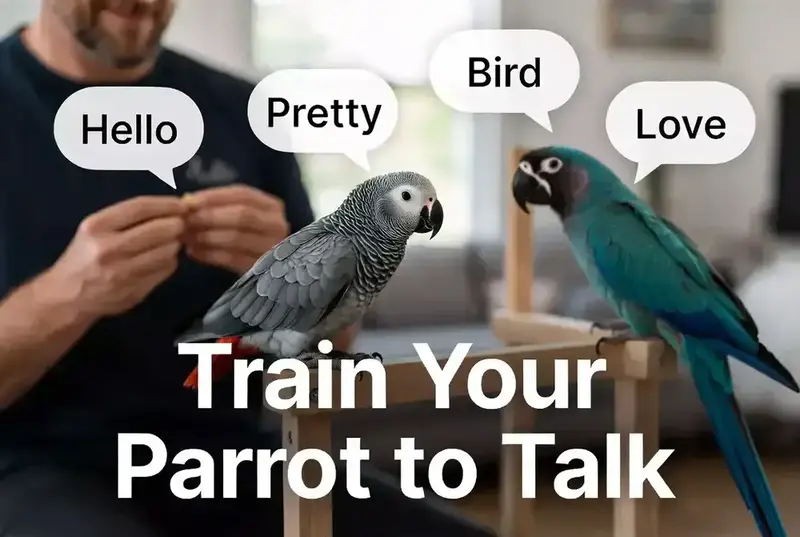
Learning how to train a parrot to talk is one of the most rewarding aspects of parrot ownership, offering a unique form of communication and bonding with your feathered companion. While not all parrot species possess the same vocal abilities, many can learn to mimic human speech, sounds, and even engage in contextual communication with proper training and patience. Success in teaching a parrot to talk requires understanding avian vocal learning, implementing consistent training techniques, and creating an environment that encourages vocalization. This comprehensive guide provides evidence-based methods for training parrots to talk, covering everything from species selection and optimal training ages to advanced techniques for developing clear speech and contextual communication. Whether you're working with an African Grey, Amazon, Budgie, or any other talking species in the USA, these proven strategies will help you unlock your parrot's vocal potential.
Understanding Parrot Vocal Learning Abilities
Before beginning training, it's essential to understand how parrots learn to talk and which species possess the strongest vocal abilities. This knowledge helps set realistic expectations and informs your training approach.
How Parrots Learn to Mimic Speech
Parrots are among the few animal groups capable of vocal learning—the ability to acquire new sounds through imitation rather than instinct. This remarkable capability stems from specialized brain structures:
- Vocal learning centers: Parrots have unique "song systems" in their brains, including shell regions not found in other birds, dedicated to learning and producing complex sounds
- Syrinx anatomy: The syrinx (bird vocal organ) allows parrots to produce a wide range of sounds by controlling airflow and membrane tension
- Social learning: In the wild, parrots learn flock calls from parents and flock mates; domestic parrots apply this same learning to human speech
- Auditory processing: Parrots have excellent hearing and can distinguish subtle differences in pitch, tone, and rhythm
- 🐾 How to Stop Puppy Biting: Expert Step-by-Step Training Guide
- 🐾 Train Chinchilla to Use Litter Box: Easy Guide
- 🐾 Train Lovebird to Perch on Hand: Step-by-Step
- 🐾 How to Stop Cats from Biting: Expert Behavior Guide
Best Parrot Species for Talking
While many parrot species can learn to talk, some excel at vocal mimicry:
Exceptional talkers:
- African Grey Parrots: Widely considered the best talkers, capable of extensive vocabularies (100-1000+ words) and contextual understanding
- Amazon Parrots: Excellent talkers with clear speech, particularly Yellow-naped, Double Yellow-headed, and Blue-fronted Amazons
- Eclectus Parrots: Clear speakers with good vocabularies, males typically talk better than females
- 🐾 How to Stop Puppy Biting: Expert Step-by-Step Training Guide
- 🐾 Train Chinchilla to Use Litter Box: Easy Guide
- 🐾 Train Lovebird to Perch on Hand: Step-by-Step
- 🐾 How to Stop Cats from Biting: Expert Behavior Guide
Good talkers:
- Budgies (Parakeets): Can learn 100-200+ words with exceptionally clear speech; males talk better than females
- Indian Ringneck Parakeets: Clear speakers with vocabularies of 100-250 words
- Quaker Parrots (Monk Parakeets): Good talkers with 100-200 word vocabularies
- Cockatiels: Can learn words and whistle tunes; males talk better than females
- 🐾 How to Stop Puppy Biting: Expert Step-by-Step Training Guide
- 🐾 Train Chinchilla to Use Litter Box: Easy Guide
- 🐾 Train Lovebird to Perch on Hand: Step-by-Step
- 🐾 How to Stop Cats from Biting: Expert Behavior Guide
Moderate talkers:
- Macaws: Can learn words but typically smaller vocabularies (10-50 words); better at loud sounds and screams
- Cockatoos: Variable talking ability; some individuals talk well while others rarely speak
- Conures: Generally limited talking ability; better at sounds and whistles
- 🐾 How to Stop Puppy Biting: Expert Step-by-Step Training Guide
- 🐾 Train Chinchilla to Use Litter Box: Easy Guide
- 🐾 Train Lovebird to Perch on Hand: Step-by-Step
- 🐾 How to Stop Cats from Biting: Expert Behavior Guide
Factors Affecting Talking Ability
Several factors influence a parrot's ability and willingness to talk:
- Age: Younger birds (3 months to 2 years) learn most easily, though older parrots can still learn
- Individual personality: Some birds are naturally more vocal and social
- Gender: In some species (Budgies, Cockatiels), males talk significantly better than females
- Hand-raising: Hand-raised parrots often bond more closely with humans and may be more motivated to communicate
- Environment: Quiet, stress-free environments with regular human interaction promote vocal learning
- Training consistency: Regular, patient training produces better results than sporadic efforts
- 🐾 How to Stop Puppy Biting: Expert Step-by-Step Training Guide
- 🐾 Train Chinchilla to Use Litter Box: Easy Guide
- 🐾 Train Lovebird to Perch on Hand: Step-by-Step
- 🐾 How to Stop Cats from Biting: Expert Behavior Guide
Optimal Age and Timing for Speech Training
Understanding when to begin training and how to structure sessions maximizes your parrot's learning potential.
Best Age to Start Training
Young parrots (3-6 months): This is the prime learning period. Young parrots are highly impressionable, eager to learn, and haven't yet developed strong behavioral patterns. They're most receptive to vocal learning during this window.
Juvenile parrots (6 months to 2 years): Still excellent candidates for training. While slightly less impressionable than very young birds, they remain highly capable of learning speech and often have better attention spans.
Adult parrots (2+ years): Can absolutely learn to talk, though it may take longer and require more patience. Adult parrots may have established behaviors or previous training that affects learning.
Senior parrots (10+ years): Capable of learning, but typically slower. Focus on maintaining cognitive function and providing mental stimulation.
Optimal Training Times
Timing training sessions strategically improves results:
- Morning sessions: Birds are typically most alert and vocal in the morning, making this ideal for training
- Evening sessions: Many parrots have a second active period in early evening
- Before meals: Slightly hungry birds are more motivated by food rewards
- When bird is alert: Avoid training when bird is sleepy, stressed, or distracted
- Consistent schedule: Train at the same times daily to establish routine
- 🐾 How to Stop Puppy Biting: Expert Step-by-Step Training Guide
- 🐾 Train Chinchilla to Use Litter Box: Easy Guide
- 🐾 Train Lovebird to Perch on Hand: Step-by-Step
- 🐾 How to Stop Cats from Biting: Expert Behavior Guide
Session Duration and Frequency
Session length: Keep training sessions short and engaging:
- Young parrots: 5-10 minutes per session
- Juvenile parrots: 10-15 minutes per session
- Adult parrots: 10-20 minutes per session
- 🐾 How to Stop Puppy Biting: Expert Step-by-Step Training Guide
- 🐾 Train Chinchilla to Use Litter Box: Easy Guide
- 🐾 Train Lovebird to Perch on Hand: Step-by-Step
- 🐾 How to Stop Cats from Biting: Expert Behavior Guide
Frequency: Multiple short sessions work better than one long session:
- Ideal: 2-3 sessions daily
- Minimum: 1 session daily
- Consistency matters more than duration
- 🐾 How to Stop Puppy Biting: Expert Step-by-Step Training Guide
- 🐾 Train Chinchilla to Use Litter Box: Easy Guide
- 🐾 Train Lovebird to Perch on Hand: Step-by-Step
- 🐾 How to Stop Cats from Biting: Expert Behavior Guide
Fundamental Training Techniques

Effective parrot speech training relies on proven methods that work with avian learning patterns.
Repetition and Consistency
Repetition is the foundation of parrot speech training:
- Use the same words: Repeat target words consistently rather than constantly introducing new words
- Clear enunciation: Speak clearly and distinctly, emphasizing consonants
- Consistent tone: Use the same tone and inflection each time
- Daily repetition: Repeat words hundreds of times daily across multiple sessions
- 🐾 How to Stop Puppy Biting: Expert Step-by-Step Training Guide
- 🐾 Train Chinchilla to Use Litter Box: Easy Guide
- 🐾 Train Lovebird to Perch on Hand: Step-by-Step
- 🐾 How to Stop Cats from Biting: Expert Behavior Guide
Example: To teach "hello," say "hello" clearly 20-30 times per session, with brief pauses between repetitions.
Positive Reinforcement
Rewarding desired behavior is crucial for successful training:
Immediate rewards: Provide treats, praise, or attention immediately when your parrot attempts to vocalize or mimic sounds. The closer the reward follows the behavior, the stronger the association.
High-value treats: Use your parrot's favorite treats (small pieces of nuts, seeds, or fruit) as rewards. Reserve special treats exclusively for speech training.
Enthusiastic praise: Parrots respond to excited, happy tones. When your parrot makes any vocal attempt, respond with enthusiasm: "Good bird! Yes!"
Attention as reward: For many parrots, your attention is the most powerful reward. Immediately engage with your parrot when they vocalize.
Target Training Integration
Combining target training with speech training enhances learning:
- Teach your parrot to touch a target stick
- Say the target word, then present the target
- When parrot touches target, provide reward and repeat word
- This creates a clear training structure and maintains focus
- 🐾 How to Stop Puppy Biting: Expert Step-by-Step Training Guide
- 🐾 Train Chinchilla to Use Litter Box: Easy Guide
- 🐾 Train Lovebird to Perch on Hand: Step-by-Step
- 🐾 How to Stop Cats from Biting: Expert Behavior Guide
Model-Rival Technique
Developed by Dr. Irene Pepperberg (famous for work with Alex the African Grey), this technique is highly effective:
- Have two people interact in front of the parrot
- Person A shows an object and says the word
- Person B repeats the word and receives praise/treat
- Person A corrects Person B if wrong, then rewards correct response
- The parrot observes this interaction and learns through social modeling
- 🐾 How to Stop Puppy Biting: Expert Step-by-Step Training Guide
- 🐾 Train Chinchilla to Use Litter Box: Easy Guide
- 🐾 Train Lovebird to Perch on Hand: Step-by-Step
- 🐾 How to Stop Cats from Biting: Expert Behavior Guide
This technique works because parrots are social learners who observe and learn from interactions between others.
Step-by-Step Training Process

Follow this systematic approach to teach your parrot to talk effectively.
Step 1: Build Trust and Bond
Before beginning speech training, establish a strong bond:
- Spend time daily interacting with your parrot
- Hand-feed treats to build positive associations
- Speak softly and calmly around your parrot
- Respect your parrot's boundaries and comfort level
- Ensure your parrot is comfortable with handling
- 🐾 How to Stop Puppy Biting: Expert Step-by-Step Training Guide
- 🐾 Train Chinchilla to Use Litter Box: Easy Guide
- 🐾 Train Lovebird to Perch on Hand: Step-by-Step
- 🐾 How to Stop Cats from Biting: Expert Behavior Guide
A parrot that trusts you will be more motivated to communicate with you.
Step 2: Start with Simple Words
Choose appropriate first words:
- Short words: 1-2 syllables are easiest (hello, hi, bye, yes, no)
- Clear consonants: Words with hard consonants (k, t, p, b) are easier to mimic
- Meaningful words: Words you'll use frequently in context
- Your parrot's name: Often a good first word
- 🐾 How to Stop Puppy Biting: Expert Step-by-Step Training Guide
- 🐾 Train Chinchilla to Use Litter Box: Easy Guide
- 🐾 Train Lovebird to Perch on Hand: Step-by-Step
- 🐾 How to Stop Cats from Biting: Expert Behavior Guide
Avoid starting with long, complex words or phrases.
Step 3: Create Training Sessions
Structure effective training sessions:
- Choose quiet environment: Minimize distractions and background noise
- Position yourself: Sit close to your parrot at eye level
- Get attention: Say your parrot's name or make eye contact
- Speak clearly: Say the target word slowly and distinctly
- Repeat: Repeat the word 20-30 times with brief pauses
- Reward attempts: Immediately reward any vocalization or attempt
- Keep it positive: End session on a positive note with praise and treat
- Limit duration: Stop before your parrot loses interest (5-15 minutes)
Step 4: Use Contextual Teaching
Teach words in relevant contexts to enhance understanding:
- Say "hello" when entering the room
- Say "goodbye" when leaving
- Say "want treat?" before offering food
- Say "up" when offering your hand to step up
- Say "night night" at bedtime
- 🐾 How to Stop Puppy Biting: Expert Step-by-Step Training Guide
- 🐾 Train Chinchilla to Use Litter Box: Easy Guide
- 🐾 Train Lovebird to Perch on Hand: Step-by-Step
- 🐾 How to Stop Cats from Biting: Expert Behavior Guide
Context helps parrots understand meaning and use words appropriately.
Step 5: Progress Gradually
Once your parrot consistently says the first word:
- Celebrate the achievement with enthusiasm
- Continue practicing the first word to reinforce it
- Introduce a second word using the same technique
- Practice both words in alternating sessions
- Gradually build vocabulary word by word
- 🐾 How to Stop Puppy Biting: Expert Step-by-Step Training Guide
- 🐾 Train Chinchilla to Use Litter Box: Easy Guide
- 🐾 Train Lovebird to Perch on Hand: Step-by-Step
- 🐾 How to Stop Cats from Biting: Expert Behavior Guide
Don't rush—master one word before adding another.
Step 6: Encourage Clear Speech
Improve speech clarity over time:
- Reward clearer attempts more enthusiastically
- Don't reward unclear vocalizations as much
- Model correct pronunciation consistently
- Be patient—clarity improves with practice
- Avoid correcting or showing frustration
- 🐾 How to Stop Puppy Biting: Expert Step-by-Step Training Guide
- 🐾 Train Chinchilla to Use Litter Box: Easy Guide
- 🐾 Train Lovebird to Perch on Hand: Step-by-Step
- 🐾 How to Stop Cats from Biting: Expert Behavior Guide
Advanced Training Techniques

Once your parrot has basic vocabulary, use these advanced methods to expand communication.
Teaching Phrases and Sentences
Progress from words to phrases:
- Start with two-word phrases: "Hello [name]," "Want treat," "Good morning"
- Speak phrases slowly and clearly
- Use consistent phrasing each time
- Reward attempts at multi-word vocalizations
- Gradually increase phrase length
- 🐾 How to Stop Puppy Biting: Expert Step-by-Step Training Guide
- 🐾 Train Chinchilla to Use Litter Box: Easy Guide
- 🐾 Train Lovebird to Perch on Hand: Step-by-Step
- 🐾 How to Stop Cats from Biting: Expert Behavior Guide
Contextual Communication
Teach your parrot to use words appropriately:
- Only say "hello" when greeting
- Only say "want treat" when offering food
- Parrot learns to associate words with specific situations
- Reinforce correct contextual use with rewards
- Ignore or minimally reward out-of-context use
- 🐾 How to Stop Puppy Biting: Expert Step-by-Step Training Guide
- 🐾 Train Chinchilla to Use Litter Box: Easy Guide
- 🐾 Train Lovebird to Perch on Hand: Step-by-Step
- 🐾 How to Stop Cats from Biting: Expert Behavior Guide
Question and Response Training
Teach interactive communication:
- Ask "What's your name?" then immediately say the answer
- Ask "Want treat?" then offer treat
- Parrot learns to respond to questions
- Use consistent questions and answers
- Reward correct responses enthusiastically
- 🐾 How to Stop Puppy Biting: Expert Step-by-Step Training Guide
- 🐾 Train Chinchilla to Use Litter Box: Easy Guide
- 🐾 Train Lovebird to Perch on Hand: Step-by-Step
- 🐾 How to Stop Cats from Biting: Expert Behavior Guide
Labeling Objects and Colors
Expand vocabulary through object association:
- Hold up an object and clearly state its name
- Repeat with various objects (toy, key, cup, etc.)
- For colors, show colored objects and name the color
- Use the model-rival technique for complex concepts
- Test understanding by asking "What's this?"
- 🐾 How to Stop Puppy Biting: Expert Step-by-Step Training Guide
- 🐾 Train Chinchilla to Use Litter Box: Easy Guide
- 🐾 Train Lovebird to Perch on Hand: Step-by-Step
- 🐾 How to Stop Cats from Biting: Expert Behavior Guide
Common Challenges and Solutions

Address typical obstacles in parrot speech training with these proven solutions.
Parrot Won't Talk
Possible causes:
- Bird is too young or too old
- Species has limited talking ability
- Insufficient training or inconsistency
- Environmental stress or fear
- Health issues affecting vocalization
- Female of species that has gender differences
- 🐾 How to Stop Puppy Biting: Expert Step-by-Step Training Guide
- 🐾 Train Chinchilla to Use Litter Box: Easy Guide
- 🐾 Train Lovebird to Perch on Hand: Step-by-Step
- 🐾 How to Stop Cats from Biting: Expert Behavior Guide
Solutions:
- Verify your parrot's species and typical abilities
- Increase training frequency and consistency
- Ensure quiet, stress-free training environment
- Check with avian veterinarian for health issues
- Try different training techniques or times of day
- Be patient—some parrots take months to begin talking
- Consider if your parrot communicates in other ways (whistling, sounds)
- 🐾 How to Stop Puppy Biting: Expert Step-by-Step Training Guide
- 🐾 Train Chinchilla to Use Litter Box: Easy Guide
- 🐾 Train Lovebird to Perch on Hand: Step-by-Step
- 🐾 How to Stop Cats from Biting: Expert Behavior Guide
Unclear Speech
Causes:
- Normal learning process—clarity improves with practice
- Speaking too quickly during training
- Inconsistent pronunciation
- 🐾 How to Stop Puppy Biting: Expert Step-by-Step Training Guide
- 🐾 Train Chinchilla to Use Litter Box: Easy Guide
- 🐾 Train Lovebird to Perch on Hand: Step-by-Step
- 🐾 How to Stop Cats from Biting: Expert Behavior Guide
Solutions:
- Speak more slowly and emphasize consonants
- Use exaggerated enunciation
- Be consistent with pronunciation
- Reward clearer attempts more enthusiastically
- Give it time—most parrots' speech clarity improves over months
- 🐾 How to Stop Puppy Biting: Expert Step-by-Step Training Guide
- 🐾 Train Chinchilla to Use Litter Box: Easy Guide
- 🐾 Train Lovebird to Perch on Hand: Step-by-Step
- 🐾 How to Stop Cats from Biting: Expert Behavior Guide
Parrot Only Says One Word
Causes:
- First word is strongly reinforced
- Not introducing new words systematically
- Parrot prefers one word
- 🐾 How to Stop Puppy Biting: Expert Step-by-Step Training Guide
- 🐾 Train Chinchilla to Use Litter Box: Easy Guide
- 🐾 Train Lovebird to Perch on Hand: Step-by-Step
- 🐾 How to Stop Cats from Biting: Expert Behavior Guide
Solutions:
- Continue practicing first word while introducing second
- Use higher-value rewards for new word attempts
- Practice new words at different times than established word
- Be patient—expanding vocabulary takes time
- Accept that some parrots have favorite words they use most
- 🐾 How to Stop Puppy Biting: Expert Step-by-Step Training Guide
- 🐾 Train Chinchilla to Use Litter Box: Easy Guide
- 🐾 Train Lovebird to Perch on Hand: Step-by-Step
- 🐾 How to Stop Cats from Biting: Expert Behavior Guide
Parrot Screams Instead of Talking
Causes:
- Screaming gets more attention than talking
- Boredom or lack of stimulation
- Natural species behavior
- 🐾 How to Stop Puppy Biting: Expert Step-by-Step Training Guide
- 🐾 Train Chinchilla to Use Litter Box: Easy Guide
- 🐾 Train Lovebird to Perch on Hand: Step-by-Step
- 🐾 How to Stop Cats from Biting: Expert Behavior Guide
Solutions:
- Never reward screaming with attention
- Immediately reward any talking attempts
- Increase mental stimulation and enrichment
- Ensure adequate sleep (10-12 hours)
- Ignore screaming completely (don't look, don't react)
- Identify and address triggers for screaming
- 🐾 How to Stop Puppy Biting: Expert Step-by-Step Training Guide
- 🐾 Train Chinchilla to Use Litter Box: Easy Guide
- 🐾 Train Lovebird to Perch on Hand: Step-by-Step
- 🐾 How to Stop Cats from Biting: Expert Behavior Guide
Parrot Talks but Only for Certain People
Causes:
- Stronger bond with specific person
- Only one person does training
- Parrot feels more comfortable with certain people
- 🐾 How to Stop Puppy Biting: Expert Step-by-Step Training Guide
- 🐾 Train Chinchilla to Use Litter Box: Easy Guide
- 🐾 Train Lovebird to Perch on Hand: Step-by-Step
- 🐾 How to Stop Cats from Biting: Expert Behavior Guide
Solutions:
- Have multiple family members participate in training
- Ensure all family members interact positively with parrot
- Use same words and techniques across all trainers
- Build trust between parrot and all household members
- Accept that some parrots have favorite people
- 🐾 How to Stop Puppy Biting: Expert Step-by-Step Training Guide
- 🐾 Train Chinchilla to Use Litter Box: Easy Guide
- 🐾 Train Lovebird to Perch on Hand: Step-by-Step
- 🐾 How to Stop Cats from Biting: Expert Behavior Guide
Creating an Optimal Learning Environment

Your parrot's environment significantly impacts their ability and motivation to learn speech.
Minimize Distractions
During training sessions:
- Turn off TV, radio, and other noise sources
- Close windows to reduce outside noise
- Train in a quiet room away from household activity
- Remove other pets from the area
- Ensure good lighting so parrot can see your face
- 🐾 How to Stop Puppy Biting: Expert Step-by-Step Training Guide
- 🐾 Train Chinchilla to Use Litter Box: Easy Guide
- 🐾 Train Lovebird to Perch on Hand: Step-by-Step
- 🐾 How to Stop Cats from Biting: Expert Behavior Guide
Maximize Exposure to Speech
Beyond formal training:
- Talk to your parrot throughout the day
- Narrate your activities: "I'm making coffee," "Time for bath"
- Use consistent phrases for routine activities
- Play recordings of yourself speaking target words (in moderation)
- Encourage family members to talk to the parrot
- 🐾 How to Stop Puppy Biting: Expert Step-by-Step Training Guide
- 🐾 Train Chinchilla to Use Litter Box: Easy Guide
- 🐾 Train Lovebird to Perch on Hand: Step-by-Step
- 🐾 How to Stop Cats from Biting: Expert Behavior Guide
Avoid leaving TV or radio on constantly as background noise—this can overwhelm rather than help learning.
Cage Placement
Strategic cage placement promotes vocalization:
- Place cage in a socially active area (living room, family room)
- Position at human eye level when possible
- Avoid placing in isolated areas like basements or spare rooms
- Ensure cage is against a wall for security
- Avoid high-traffic areas that cause stress
- Keep away from kitchen fumes and temperature extremes
- 🐾 How to Stop Puppy Biting: Expert Step-by-Step Training Guide
- 🐾 Train Chinchilla to Use Litter Box: Easy Guide
- 🐾 Train Lovebird to Perch on Hand: Step-by-Step
- 🐾 How to Stop Cats from Biting: Expert Behavior Guide
Social Interaction
Parrots learn to communicate through social interaction:
- Spend 2-4 hours daily interacting with your parrot
- Include parrot in family activities when appropriate
- Talk to your parrot even when not formally training
- Respond to your parrot's vocalizations
- Create a "flock" environment where communication is valued
- 🐾 How to Stop Puppy Biting: Expert Step-by-Step Training Guide
- 🐾 Train Chinchilla to Use Litter Box: Easy Guide
- 🐾 Train Lovebird to Perch on Hand: Step-by-Step
- 🐾 How to Stop Cats from Biting: Expert Behavior Guide
People Also Ask: Quick Answers

How long does it take to train a parrot to talk?
Timeline varies significantly by species, individual bird, and training consistency. Some parrots say their first word within 2-3 months of consistent training, while others take 6-12 months. African Greys and Amazons often learn faster than other species. Building a substantial vocabulary (20-50 words) typically takes 1-2 years of dedicated training. Patience and consistency are essential—every parrot learns at their own pace.
What age do parrots start talking?
Most parrots begin attempting words between 3-12 months of age, with the prime learning period being 3-6 months. However, parrots can learn to talk at any age, though younger birds generally learn more quickly. Some parrots don't begin talking until 2-3 years old, especially if training wasn't started early.
Which parrot is the best talker?
African Grey Parrots are widely considered the best talkers, with exceptional vocabularies and ability to use words contextually. Amazon Parrots are close seconds with clear, loud speech. Budgies can have surprisingly large vocabularies with exceptionally clear speech. The "best" talker depends on your priorities: vocabulary size (African Grey), clarity (Budgie), or enthusiasm (Amazon).
Can female parrots talk as well as males?
It depends on the species. In Budgies and Cockatiels, males talk significantly better than females. In African Greys, Amazons, and most larger parrots, both genders talk equally well. In Eclectus Parrots, males typically talk better than females. Research your specific species to understand gender differences.
Do parrots understand what they're saying?
This is debated, but research suggests some parrots, particularly African Greys, can learn to use words contextually and understand their meaning. Dr. Irene Pepperberg's work with Alex the African Grey demonstrated understanding of concepts like color, shape, and number. Most parrots likely learn through association rather than true linguistic understanding, but they can learn to use words appropriately in context.
Frequently Asked Questions

Should I teach my parrot to talk or whistle first?
Focus on talking first if speech is your goal. Whistling often comes more naturally to parrots and can sometimes compete with speech learning. However, if your parrot shows strong interest in whistling, you can incorporate both. Just ensure talking receives more reinforcement if speech is your priority.
Can I train multiple parrots to talk together?
Training multiple parrots together can work, but it's generally less effective than individual training. Parrots may distract each other or compete for attention. If you have multiple parrots, conduct separate training sessions with each bird. However, parrots can learn from hearing each other talk, so having a talking parrot can sometimes motivate a non-talking parrot.
Is it cruel to teach parrots to talk?
No, teaching parrots to talk is not cruel when done ethically. Parrots naturally learn vocalizations in the wild, and teaching them to mimic human speech provides mental stimulation and enrichment. However, it becomes problematic if you: expect all parrots to talk (not all species or individuals can), become frustrated or punish the bird for not talking, or neglect other aspects of care. Always respect your parrot's individual abilities and personality.
Can older parrots learn to talk?
Yes, older parrots can absolutely learn to talk, though it may take longer and require more patience than with young birds. Adult and even senior parrots retain the ability to learn new vocalizations. The key is consistency, patience, and using positive reinforcement. Don't assume an older parrot can't learn—many parrots begin talking at 5, 10, or even 15+ years old.
Should I use recordings to teach my parrot to talk?
Recordings can supplement but should not replace live interaction. Parrots learn best through social interaction with their human flock. Recordings can provide additional repetition when you're not home, but limit use to 15-30 minutes at a time to avoid overwhelming your parrot. Live, interactive training is far more effective than passive listening to recordings.
Recording Progress and Celebrating Milestones

Tracking your parrot's progress maintains motivation and helps you adjust training strategies.
Keep a Training Journal
Document your training journey:
- Date of each training session
- Words practiced
- Parrot's responses and attempts
- Duration of sessions
- What techniques worked well
- Challenges encountered
- 🐾 How to Stop Puppy Biting: Expert Step-by-Step Training Guide
- 🐾 Train Chinchilla to Use Litter Box: Easy Guide
- 🐾 Train Lovebird to Perch on Hand: Step-by-Step
- 🐾 How to Stop Cats from Biting: Expert Behavior Guide
Record Vocalizations
Audio or video record your parrot's attempts:
- Track improvement in clarity over time
- Capture first words and milestones
- Share progress with family and friends
- Identify patterns in vocalization
- 🐾 How to Stop Puppy Biting: Expert Step-by-Step Training Guide
- 🐾 Train Chinchilla to Use Litter Box: Easy Guide
- 🐾 Train Lovebird to Perch on Hand: Step-by-Step
- 🐾 How to Stop Cats from Biting: Expert Behavior Guide
Celebrate Milestones
Acknowledge achievements to maintain motivation:
- First word: Celebrate enthusiastically!
- First clear word: Mark the occasion
- Tenth word: Recognize vocabulary growth
- First phrase: Celebrate progression
- Contextual use: Acknowledge understanding
- 🐾 How to Stop Puppy Biting: Expert Step-by-Step Training Guide
- 🐾 Train Chinchilla to Use Litter Box: Easy Guide
- 🐾 Train Lovebird to Perch on Hand: Step-by-Step
- 🐾 How to Stop Cats from Biting: Expert Behavior Guide
Conclusion: Patience and Consistency Lead to Success

Training a parrot to talk is a rewarding journey that strengthens your bond while providing mental stimulation for your feathered companion. Success requires patience, consistency, and realistic expectations. Not every parrot will become a prolific talker, and that's perfectly okay. Some parrots excel at whistling, making sounds, or communicating in other ways.
Remember that the process is as valuable as the outcome. Daily training sessions provide quality time together, mental exercise for your parrot, and opportunities for deeper connection. Whether your parrot learns ten words or one hundred, the effort you invest demonstrates your commitment to their wellbeing and enrichment.
Start today with simple words, short sessions, and plenty of positive reinforcement. Speak clearly, reward enthusiastically, and maintain consistency. Create an environment that encourages vocalization and includes your parrot in daily life. Most importantly, enjoy the journey and celebrate every small victory along the way.
Your parrot may surprise you with their abilities, or they may communicate in unexpected ways. Either outcome is wonderful. What matters most is the bond you build through patient, positive training and the enriched life you provide for your intelligent, social companion. With dedication and love, you'll unlock your parrot's vocal potential while creating memories that last a lifetime.
🐱 আরও পড়ুন: Bird Training and Behavior

0 Comments