.png)
How to Stop Puppy Biting: Expert Step-by-Step Training Guide
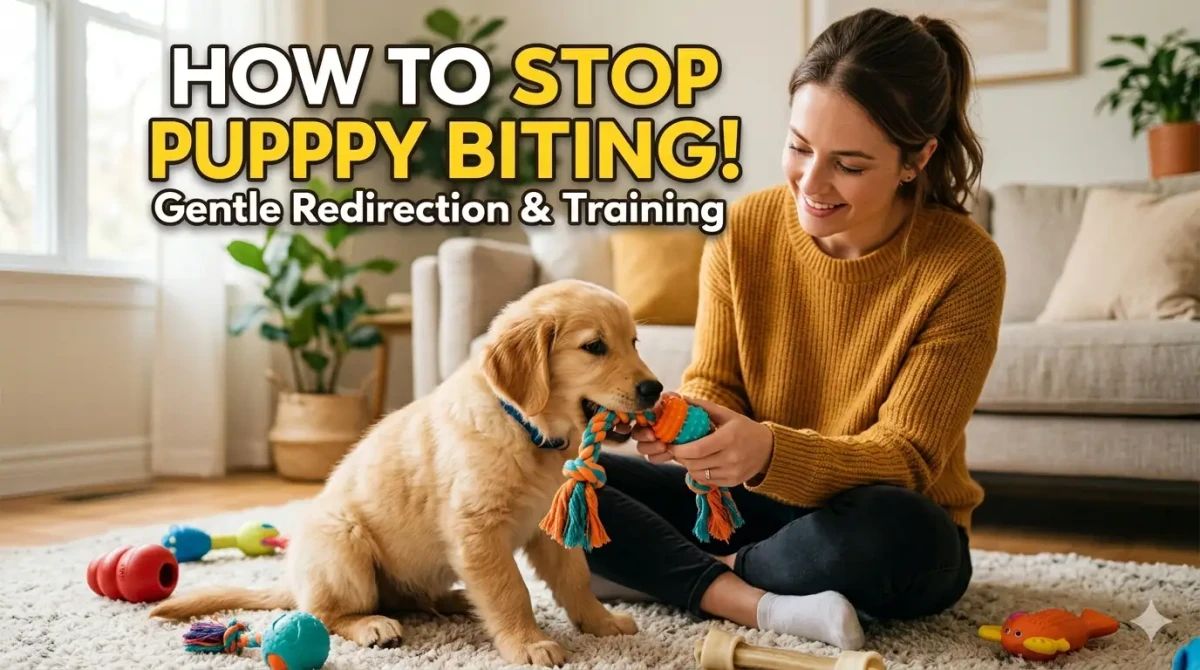
Understanding Puppy Biting: Why It Happens and Why It's Normal
Puppy biting isn't aggression—it's communication, exploration, and learning. Puppies use their mouths to investigate the world, play with littermates, relieve teething discomfort, and seek attention. While completely normal, unchecked biting can become problematic as puppies grow. The goal isn't to eliminate mouthing entirely but to teach bite inhibition: the ability to control bite force and understand that human skin is off-limits.
Featured Snippet Answer: To stop puppy biting: redirect bites to appropriate chew toys immediately, use a high-pitched "ouch" or yelp to signal pain, pause interaction for 10-15 seconds when biting occurs, reward gentle mouth behavior with treats and praise, and provide ample teething toys and mental stimulation. Consistency from all family members is essential. Most puppies develop bite inhibition by 4-6 months with patient, positive training.
Understanding the "why" behind puppy biting empowers you to respond effectively. This comprehensive guide provides evidence-based, veterinarian-aligned strategies to teach bite inhibition humanely, manage teething discomfort, and build a foundation of gentle mouth behavior that lasts a lifetime.
Why Puppies Bite: Normal Development vs. Concerning Behavior
Before addressing biting, it's essential to understand its causes and distinguish normal puppy behavior from potential red flags.
Normal Reasons Puppies Bite:
- Teething discomfort: Puppies lose baby teeth around 3-4 months; chewing relieves gum soreness
- Play behavior: Puppies learn social skills through mouthy play with littermates
- Exploration: Puppies investigate objects, people, and environments with their mouths
- Attention-seeking: Biting gets reactions (even negative ones), which puppies find reinforcing
- Overstimulation: Excited or tired puppies may mouth more frequently
- Hunger or thirst: Puppies may nip when seeking food or water
- 🐾 How to Train a Gerbil to Use Litter Area: Expert Step-by-Step Guide
- 🐾 Teach Parakeet to Whistle: Simple Training Guide
- 🐾 How to Train a Cat to Use Litter Consistently: Complete 2026 Guide
- 🐾 How to Potty Train a Puppy: Expert Step-by-Step Guide
When Biting May Signal Concerns:
- Aggressive posturing: Stiff body, growling, raised hackles, or fixed stare alongside biting
- Pain-related biting: Biting when touched in specific areas may indicate injury or illness
- Fear-based biting: Biting when cornered, startled, or in unfamiliar situations
- Resource guarding: Biting when approached near food, toys, or resting spots
- Persistent biting despite training: No improvement after 2-3 months of consistent, positive training
- 🐾 How to Train a Gerbil to Use Litter Area: Expert Step-by-Step Guide
- 🐾 Teach Parakeet to Whistle: Simple Training Guide
- 🐾 How to Train a Cat to Use Litter Consistently: Complete 2026 Guide
- 🐾 How to Potty Train a Puppy: Expert Step-by-Step Guide
Featured Snippet Answer: Normal puppy biting stems from teething, play, exploration, attention-seeking, or overstimulation. Concerning biting includes aggressive posturing, pain-related reactions, fear-based responses, or resource guarding. If biting persists despite consistent training or is accompanied by warning signs, consult a veterinarian or certified dog trainer.
When does puppy biting typically stop?
Most puppies develop reliable bite inhibition by 4-6 months with consistent training. Teething-related biting typically decreases after 6-7 months when adult teeth are fully in. However, mouthy behavior may persist in some breeds or individuals; ongoing training and management ensure gentle mouth habits into adulthood. Patience and consistency are key—progress may be gradual but is achievable with positive methods.
Foundational Strategies: Teaching Bite Inhibition

Bite inhibition—the ability to control bite force—is more important than eliminating mouthing entirely. These techniques teach puppies that human skin is sensitive and off-limits.
Strategy 1: The "Ouch" or Yelp Method
Why it works: Mimics how littermates communicate pain during play, teaching puppies to moderate bite force.
How to do it:
- When puppy bites skin, emit a high-pitched "ouch!" or yelp (startle but don't scare)
- Immediately pause interaction: stop moving, withdraw attention for 10-15 seconds
- Resume play only when puppy is calm; if biting resumes, repeat the process
- Gradually lower your reaction threshold: yelp at gentler bites as puppy learns
Pro tips:
- Keep yelps brief and high-pitched; avoid yelling or angry tones
- Be consistent: all family members should use the same technique
- Pair with redirection: after the pause, offer an appropriate chew toy
- 🐾 How to Train a Gerbil to Use Litter Area: Expert Step-by-Step Guide
- 🐾 Teach Parakeet to Whistle: Simple Training Guide
- 🐾 How to Train a Cat to Use Litter Consistently: Complete 2026 Guide
- 🐾 How to Potty Train a Puppy: Expert Step-by-Step Guide
Strategy 2: Redirection to Appropriate Chew Toys
Why it works: Teaches puppies what IS acceptable to bite while satisfying chewing needs.
How to do it:
- Keep appropriate chew toys readily accessible during interactions
- When puppy mouths skin, immediately offer a toy instead
- Praise enthusiastically when puppy chews the toy: "Yes! Good chew!"
- Rotate toys regularly to maintain novelty and interest
Best toys for redirection:
- Teething toys: Rubber toys designed for puppies (KONG Puppy, Nylabone Puppy)
- Freezable toys: Chill rubber toys or wet washcloths to soothe sore gums
- Interactive toys: Puzzle feeders or treat-dispensing toys for mental engagement
- Soft plush toys: For gentle puppies who prefer softer textures
- 🐾 How to Train a Gerbil to Use Litter Area: Expert Step-by-Step Guide
- 🐾 Teach Parakeet to Whistle: Simple Training Guide
- 🐾 How to Train a Cat to Use Litter Consistently: Complete 2026 Guide
- 🐾 How to Potty Train a Puppy: Expert Step-by-Step Guide
Strategy 3: Time-Outs for Overstimulation
Why it works: Teaches puppies that biting ends fun interactions, without punishment or fear.
How to do it:
- When biting persists after redirection/yelp, calmly say "too bad" or "time-out"
- Immediately withdraw attention: stand up, turn away, or step behind a baby gate for 15-30 seconds
- Return and resume interaction only when puppy is calm
- Keep time-outs brief and boring—no scolding or emotional reactions
Key principles:
- Time-outs are about removing reinforcement (your attention), not punishment
- Use a consistent cue word so puppy learns the association
- Always return to positive interaction to avoid creating anxiety
- 🐾 How to Train a Gerbil to Use Litter Area: Expert Step-by-Step Guide
- 🐾 Teach Parakeet to Whistle: Simple Training Guide
- 🐾 How to Train a Cat to Use Litter Consistently: Complete 2026 Guide
- 🐾 How to Potty Train a Puppy: Expert Step-by-Step Guide
Featured Snippet Answer:
Teach bite inhibition with three core strategies: (1) Yelp "ouch" to signal pain, then pause interaction; (2) Redirect bites immediately to appropriate chew toys and praise; (3) Use brief, calm time-outs when biting persists. Keep sessions positive, be consistent across all family members, and pair techniques with ample teething toys and mental stimulation.
Managing the Environment: Preventing Biting Before It Starts

Prevention is easier than correction. Strategic management reduces opportunities for unwanted biting.
Puppy-Proofing and Supervision
Constant Supervision:
- Keep puppy on a leash attached to you ("tethering") when indoors to prevent unsupervised biting
- Use baby gates or exercise pens to limit access to high-traffic areas when you can't actively supervise
- Watch for pre-biting signals: intense focus, stiffening, or mouthing movements
- 🐾 How to Train a Gerbil to Use Litter Area: Expert Step-by-Step Guide
- 🐾 Teach Parakeet to Whistle: Simple Training Guide
- 🐾 How to Train a Cat to Use Litter Consistently: Complete 2026 Guide
- 🐾 How to Potty Train a Puppy: Expert Step-by-Step Guide
Strategic Confinement:
- Use crate training for rest periods; puppies are less likely to bite when tired
- Provide a safe, quiet space where puppy can decompress without overstimulation
- Rotate between supervised play, training, and rest to prevent overtiredness
- 🐾 How to Train a Gerbil to Use Litter Area: Expert Step-by-Step Guide
- 🐾 Teach Parakeet to Whistle: Simple Training Guide
- 🐾 How to Train a Cat to Use Litter Consistently: Complete 2026 Guide
- 🐾 How to Potty Train a Puppy: Expert Step-by-Step Guide
Meeting Physical and Mental Needs
Adequate Exercise:
- Provide age-appropriate exercise: 5 minutes per month of age, twice daily (e.g., 10 minutes twice daily for a 2-month-old puppy)
- Include mental exercise: training sessions, puzzle toys, and scent games tire puppies more effectively than physical exercise alone
- End play sessions before puppy becomes overstimulated; watch for signs of fatigue
- 🐾 How to Train a Gerbil to Use Litter Area: Expert Step-by-Step Guide
- 🐾 Teach Parakeet to Whistle: Simple Training Guide
- 🐾 How to Train a Cat to Use Litter Consistently: Complete 2026 Guide
- 🐾 How to Potty Train a Puppy: Expert Step-by-Step Guide
Teething Support:
- Offer a variety of teething toys with different textures (rubber, rope, plush)
- Freeze wet washcloths or rubber toys to soothe sore gums
- Provide safe, edible chews (puppy-safe bully sticks, frozen carrots) under supervision
- Avoid hard chews that could damage developing teeth
- 🐾 How to Train a Gerbil to Use Litter Area: Expert Step-by-Step Guide
- 🐾 Teach Parakeet to Whistle: Simple Training Guide
- 🐾 How to Train a Cat to Use Litter Consistently: Complete 2026 Guide
- 🐾 How to Potty Train a Puppy: Expert Step-by-Step Guide
Featured Snippet Answer:
Prevent puppy biting by: supervising constantly or using tethering/baby gates; meeting physical needs with age-appropriate exercise; providing mental stimulation through training and puzzles; and supporting teething with appropriate chews. A tired, mentally engaged puppy is less likely to bite excessively.
Positive Reinforcement: Rewarding Gentle Behavior

Teaching what TO do is more effective than punishing what NOT to do. Reward gentle mouth behavior to reinforce desired habits.
Marking and Rewarding Gentle Mouths
How to do it:
- When puppy licks or mouths gently without pressure, immediately mark the behavior with "yes!" or a clicker
- Follow immediately with a small, high-value treat and calm praise
- Practice during calm moments: offer your hand and reward gentle investigation
- Gradually increase criteria: reward gentler and gentler mouth contact over time
Best rewards for bite inhibition training:
- High-value treats: Tiny pieces of chicken, cheese, or commercial training treats reserved for training
- Verbal praise: Calm, enthusiastic "good puppy!" paired with treats
- Life rewards: Access to play, walks, or attention contingent on gentle behavior
- 🐾 How to Train a Gerbil to Use Litter Area: Expert Step-by-Step Guide
- 🐾 Teach Parakeet to Whistle: Simple Training Guide
- 🐾 How to Train a Cat to Use Litter Consistently: Complete 2026 Guide
- 🐾 How to Potty Train a Puppy: Expert Step-by-Step Guide
Teaching "Leave It" and "Drop It"
"Leave It" for Prevention:
- Teach puppy to move away from hands/feet on cue
- Start with low-value items, reward heavily for compliance
- Gradually practice with higher-value distractions (your hands, moving feet)
- 🐾 How to Train a Gerbil to Use Litter Area: Expert Step-by-Step Guide
- 🐾 Teach Parakeet to Whistle: Simple Training Guide
- 🐾 How to Train a Cat to Use Litter Consistently: Complete 2026 Guide
- 🐾 How to Potty Train a Puppy: Expert Step-by-Step Guide
"Drop It" for Redirection:
- Teach puppy to release items on cue
- Trade bitten item for a high-value treat: "drop it" → treat appears
- Practice during play to build reliability before using during biting incidents
- 🐾 How to Train a Gerbil to Use Litter Area: Expert Step-by-Step Guide
- 🐾 Teach Parakeet to Whistle: Simple Training Guide
- 🐾 How to Train a Cat to Use Litter Consistently: Complete 2026 Guide
- 🐾 How to Potty Train a Puppy: Expert Step-by-Step Guide
Featured Snippet Answer:
Reward gentle mouth behavior immediately with treats and praise. Teach "leave it" to prevent biting and "drop it" to redirect. Use high-value rewards reserved for training, and practice during calm moments before applying techniques during biting incidents. Positive reinforcement builds lasting gentle habits.
Age-Specific Considerations: Tailoring Training to Development

Puppy biting changes with age and development. Adjust your approach accordingly.
8-12 Weeks: Foundation Building
Focus: Introducing bite inhibition, redirection, and gentle handling
- Keep sessions very short (2-3 minutes) to match attention span
- Use extra-soft toys for delicate baby teeth
- Prioritize socialization: expose puppy to varied people, surfaces, and experiences gently
- Expect frequent biting; consistency matters more than perfection
- 🐾 How to Train a Gerbil to Use Litter Area: Expert Step-by-Step Guide
- 🐾 Teach Parakeet to Whistle: Simple Training Guide
- 🐾 How to Train a Cat to Use Litter Consistently: Complete 2026 Guide
- 🐾 How to Potty Train a Puppy: Expert Step-by-Step Guide
3-4 Months: Teething Peak
Focus: Managing teething discomfort while reinforcing bite inhibition
- Increase teething toy variety and availability
- Use frozen toys to soothe sore gums
- Be extra patient: teething puppies may bite more frequently
- Continue redirection and yelp techniques consistently
- 🐾 How to Train a Gerbil to Use Litter Area: Expert Step-by-Step Guide
- 🐾 Teach Parakeet to Whistle: Simple Training Guide
- 🐾 How to Train a Cat to Use Litter Consistently: Complete 2026 Guide
- 🐾 How to Potty Train a Puppy: Expert Step-by-Step Guide
4-6 Months: Refinement and Reliability
Focus: Strengthening bite inhibition and generalizing to new situations
- Gradually increase expectations: reward only increasingly gentle mouth contact
- Practice in varied environments with mild distractions
- Introduce "leave it" and "drop it" cues more formally
- Most puppies show significant improvement by 6 months with consistent training
- 🐾 How to Train a Gerbil to Use Litter Area: Expert Step-by-Step Guide
- 🐾 Teach Parakeet to Whistle: Simple Training Guide
- 🐾 How to Train a Cat to Use Litter Consistently: Complete 2026 Guide
- 🐾 How to Potty Train a Puppy: Expert Step-by-Step Guide
6+ Months: Maintenance and Advanced Training
Focus: Maintaining gentle habits and addressing any persistent issues
- Continue rewarding gentle behavior intermittently to maintain reliability
- Address any regression with refresher training
- If biting persists despite consistent training, consult a professional
- 🐾 How to Train a Gerbil to Use Litter Area: Expert Step-by-Step Guide
- 🐾 Teach Parakeet to Whistle: Simple Training Guide
- 🐾 How to Train a Cat to Use Litter Consistently: Complete 2026 Guide
- 🐾 How to Potty Train a Puppy: Expert Step-by-Step Guide
Featured Snippet Answer:
Tailor biting training to age: 8-12 weeks focus on foundation and short sessions; 3-4 months prioritize teething support; 4-6 months refine bite inhibition and generalize to new situations; 6+ months maintain habits and address persistence. Most puppies develop reliable bite inhibition by 4-6 months with consistent, positive training.
Special Situations: Children, Multi-Pet Homes, and High-Energy Puppies

Certain situations require adapted strategies for safety and effectiveness.
Puppies and Children
Safety First:
- Always supervise interactions between puppies and young children
- Teach children to: avoid rough play, recognize puppy warning signs, and "be a tree" (stand still, arms crossed) if puppy bites
- Provide children with appropriate toys to redirect puppy biting
- Never allow children to punish or yell at puppies—this increases fear and biting
- 🐾 How to Train a Gerbil to Use Litter Area: Expert Step-by-Step Guide
- 🐾 Teach Parakeet to Whistle: Simple Training Guide
- 🐾 How to Train a Cat to Use Litter Consistently: Complete 2026 Guide
- 🐾 How to Potty Train a Puppy: Expert Step-by-Step Guide
Training Children to Help:
- Teach simple redirection: "If puppy bites, give him this toy instead"
- Practice calm interactions: petting gently, speaking softly
- Involve children in reward-based training to build positive associations
- 🐾 How to Train a Gerbil to Use Litter Area: Expert Step-by-Step Guide
- 🐾 Teach Parakeet to Whistle: Simple Training Guide
- 🐾 How to Train a Cat to Use Litter Consistently: Complete 2026 Guide
- 🐾 How to Potty Train a Puppy: Expert Step-by-Step Guide
Multi-Pet Households
Managing Dynamics:
- Supervise puppy interactions with resident pets; separate if play becomes too rough
- Ensure each pet has safe spaces to retreat from puppy energy
- Train puppy individually first before integrating with other pets
- Provide duplicate resources (toys, beds) to reduce competition
- 🐾 How to Train a Gerbil to Use Litter Area: Expert Step-by-Step Guide
- 🐾 Teach Parakeet to Whistle: Simple Training Guide
- 🐾 How to Train a Cat to Use Litter Consistently: Complete 2026 Guide
- 🐾 How to Potty Train a Puppy: Expert Step-by-Step Guide
High-Energy or Mouthy Breeds
Breed Considerations:
- Herding breeds (Border Collies, Aussies) may nip at heels; redirect to appropriate toys
- Retrievers may mouth hands while carrying items; teach "gentle" cue
- Terriers may have persistent mouthing; increase mental stimulation and exercise
- 🐾 How to Train a Gerbil to Use Litter Area: Expert Step-by-Step Guide
- 🐾 Teach Parakeet to Whistle: Simple Training Guide
- 🐾 How to Train a Cat to Use Litter Consistently: Complete 2026 Guide
- 🐾 How to Potty Train a Puppy: Expert Step-by-Step Guide
Adapted Strategies:
- Increase mental exercise: training sessions, puzzle toys, scent work
- Provide breed-appropriate outlets: fetch for retrievers, herding games for herding breeds
- Be extra consistent: mouthy breeds may need more repetition to learn bite inhibition
- 🐾 How to Train a Gerbil to Use Litter Area: Expert Step-by-Step Guide
- 🐾 Teach Parakeet to Whistle: Simple Training Guide
- 🐾 How to Train a Cat to Use Litter Consistently: Complete 2026 Guide
- 🐾 How to Potty Train a Puppy: Expert Step-by-Step Guide
Featured Snippet Answer:
For puppies with children: always supervise, teach children redirection techniques, and never allow punishment. In multi-pet homes: supervise interactions, provide safe retreats, and train individually first. For mouthy breeds: increase mental stimulation, provide breed-appropriate outlets, and maintain extra consistency. Safety and patience are paramount in all situations.
What NOT to Do: Common Mistakes That Worsen Biting

Well-intentioned responses can inadvertently reinforce biting or damage your relationship with your puppy.
Mistake 1: Punishing or Yelling at Biting
- Problem: Yelling, hitting, or alpha rolls create fear, increase anxiety, and may escalate biting
- Solution: Use calm, consistent redirection and positive reinforcement instead of punishment
- 🐾 How to Train a Gerbil to Use Litter Area: Expert Step-by-Step Guide
- 🐾 Teach Parakeet to Whistle: Simple Training Guide
- 🐾 How to Train a Cat to Use Litter Consistently: Complete 2026 Guide
- 🐾 How to Potty Train a Puppy: Expert Step-by-Step Guide
Mistake 2: Inconsistent Responses
- Problem: Allowing biting sometimes but not others confuses puppies and delays learning
- Solution: Ensure all family members respond to biting the same way every time
- 🐾 How to Train a Gerbil to Use Litter Area: Expert Step-by-Step Guide
- 🐾 Teach Parakeet to Whistle: Simple Training Guide
- 🐾 How to Train a Cat to Use Litter Consistently: Complete 2026 Guide
- 🐾 How to Potty Train a Puppy: Expert Step-by-Step Guide
Mistake 3: Using Hands as Toys
- Problem: Wrestling or playing with hands teaches puppies that biting skin is acceptable
- Solution: Always use toys for play; keep hands for petting and feeding only
- 🐾 How to Train a Gerbil to Use Litter Area: Expert Step-by-Step Guide
- 🐾 Teach Parakeet to Whistle: Simple Training Guide
- 🐾 How to Train a Cat to Use Litter Consistently: Complete 2026 Guide
- 🐾 How to Potty Train a Puppy: Expert Step-by-Step Guide
Mistake 4: Ignoring Overstimulation Signs
- Problem: Continuing play when puppy is overtired or overexcited leads to more biting
- Solution: Learn puppy's fatigue signals (yawning, lip licking, zoomies) and end sessions before biting escalates
- 🐾 How to Train a Gerbil to Use Litter Area: Expert Step-by-Step Guide
- 🐾 Teach Parakeet to Whistle: Simple Training Guide
- 🐾 How to Train a Cat to Use Litter Consistently: Complete 2026 Guide
- 🐾 How to Potty Train a Puppy: Expert Step-by-Step Guide
Mistake 5: Skipping Teething Support
- Problem: Not providing appropriate outlets for teething discomfort increases biting of inappropriate items
- Solution: Offer a variety of safe, soothing teething toys and rotate regularly
- 🐾 How to Train a Gerbil to Use Litter Area: Expert Step-by-Step Guide
- 🐾 Teach Parakeet to Whistle: Simple Training Guide
- 🐾 How to Train a Cat to Use Litter Consistently: Complete 2026 Guide
- 🐾 How to Potty Train a Puppy: Expert Step-by-Step Guide
Featured Snippet Answer:
Avoid biting training mistakes: never punish or yell at biting, maintain consistent responses across all family members, never use hands as toys, recognize and respect overstimulation signs, and provide ample teething support. These practices prevent confusion and accelerate learning.
When to Seek Professional Help

Most puppy biting resolves with consistent, positive training. However, certain situations warrant expert guidance.
Consult a Veterinarian First If:
- Biting is sudden, severe, or accompanied by other behavior changes
- Puppy shows signs of pain when touched (limping, vocalizing, avoiding handling)
- Biting occurs during handling that was previously tolerated
- You suspect dental issues, injury, or underlying illness
- 🐾 How to Train a Gerbil to Use Litter Area: Expert Step-by-Step Guide
- 🐾 Teach Parakeet to Whistle: Simple Training Guide
- 🐾 How to Train a Cat to Use Litter Consistently: Complete 2026 Guide
- 🐾 How to Potty Train a Puppy: Expert Step-by-Step Guide
Consult a Certified Dog Trainer or Behaviorist If:
- Biting persists after 2-3 months of consistent, positive training
- Biting is accompanied by aggressive posturing (growling, stiff body, raised hackles)
- Puppy shows fear, anxiety, or resource guarding alongside biting
- You feel unsafe or unsure how to proceed
- Biting is severe enough to break skin or cause injury
- 🐾 How to Train a Gerbil to Use Litter Area: Expert Step-by-Step Guide
- 🐾 Teach Parakeet to Whistle: Simple Training Guide
- 🐾 How to Train a Cat to Use Litter Consistently: Complete 2026 Guide
- 🐾 How to Potty Train a Puppy: Expert Step-by-Step Guide
What to Expect from Professional Help:
- Comprehensive assessment: Detailed history, observation of behavior, and environment evaluation
- Customized behavior plan: Tailored strategies for your puppy's specific triggers and personality
- Medical collaboration: Coordination with your veterinarian if pain or illness is suspected
- Ongoing support: Follow-up sessions to adjust strategies and track progress
- 🐾 How to Train a Gerbil to Use Litter Area: Expert Step-by-Step Guide
- 🐾 Teach Parakeet to Whistle: Simple Training Guide
- 🐾 How to Train a Cat to Use Litter Consistently: Complete 2026 Guide
- 🐾 How to Potty Train a Puppy: Expert Step-by-Step Guide
Featured Snippet Answer:
Seek veterinary help for sudden, painful, or severe biting, or if accompanied by other symptoms. Consult a certified trainer if biting persists after 2-3 months of consistent training, involves aggressive posturing, or causes injury. Professionals provide customized plans and may address underlying medical or behavioral causes.
Quick Recap: Key Takeaways for Stopping Puppy Biting

- Understand that biting is normal puppy behavior; focus on teaching bite inhibition, not elimination
- Use the "ouch" yelp method to signal pain, then pause interaction briefly
- Redirect bites immediately to appropriate chew toys and praise enthusiastically
- Use brief, calm time-outs when biting persists to remove attention reinforcement
- Reward gentle mouth behavior consistently with treats and praise
- Manage the environment: supervise constantly, meet exercise/mental needs, support teething
- Teach "leave it" and "drop it" cues for prevention and redirection
- Tailor training to your puppy's age: shorter sessions for young puppies, refinement for older pups
- Avoid punishment, inconsistency, using hands as toys, or ignoring overstimulation signs
- Consult a veterinarian or certified trainer if biting persists, is severe, or involves aggression
- 🐾 How to Train a Gerbil to Use Litter Area: Expert Step-by-Step Guide
- 🐾 Teach Parakeet to Whistle: Simple Training Guide
- 🐾 How to Train a Cat to Use Litter Consistently: Complete 2026 Guide
- 🐾 How to Potty Train a Puppy: Expert Step-by-Step Guide
Final Thoughts: Patience, Consistency, and Partnership

Stopping puppy biting isn't about dominance or control—it's about communication, trust, and teaching your puppy how to interact gently with the world. Every puppy learns at their own pace; some grasp bite inhibition quickly, while others need more time and repetition.
Remember that progress isn't always linear. Some days your puppy may respond beautifully; other days, teething or overstimulation may trigger setbacks. That's normal. Celebrate small victories: one gentle interaction, one successful redirection, one moment of calm. These build the foundation for lasting gentle habits.
Stay observant: your puppy's body language and behavior provide constant feedback about their comfort and learning. Stay flexible: be willing to adjust techniques based on what works for your unique puppy. Stay compassionate: biting is a developmental phase, not defiance.
With knowledge, patience, and partnership, you can guide your puppy to become a gentle, well-mannered companion who communicates needs clearly and respects boundaries. The time and care you invest in bite inhibition training today lays the foundation for a lifetime of safe, joyful interaction. Trust the process, celebrate progress, and enjoy the journey of raising your remarkable puppy.
When in doubt, consult a veterinarian or certified dog trainer. They know puppy development, can assess individual needs, and provide personalized guidance that generic advice cannot. Together, you can create a training plan that supports your puppy's growth into a confident, gentle adult dog.

0 Comments