.png)
How to Stop Puppy Jumping Complete Training Guide
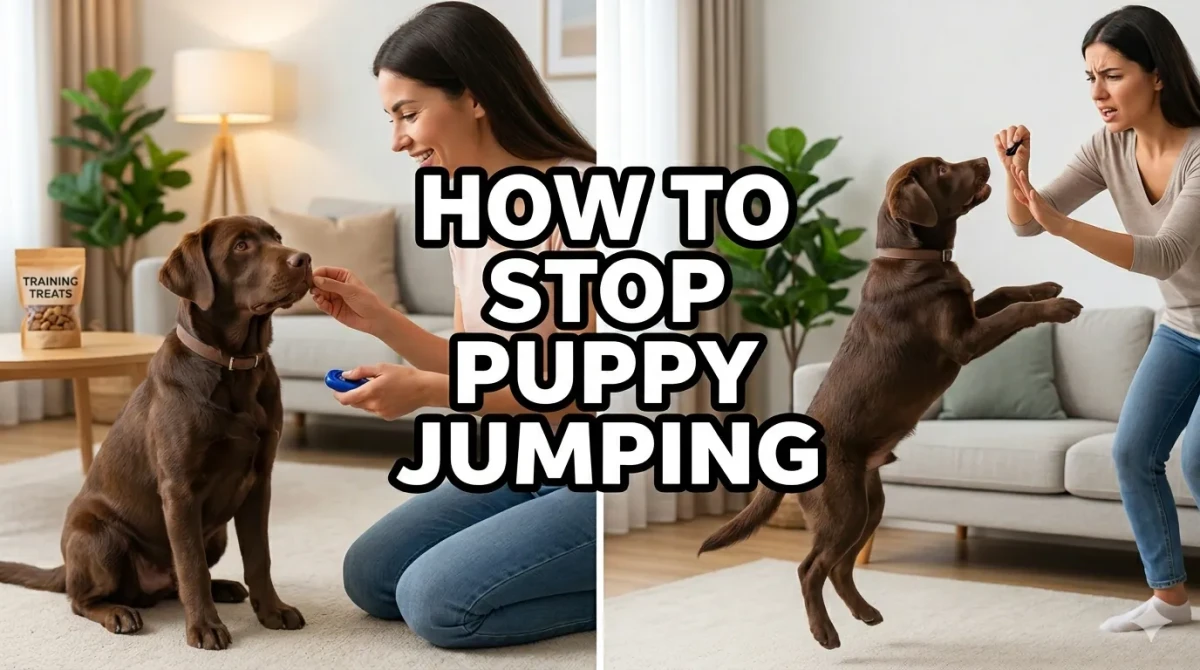
Understanding Puppy Jumping Behavior and Why It Happens
How to stop puppy jumping represents one of the most common training challenges facing new puppy parents, as jumping up is a natural, instinctive behavior that puppies use to greet people, seek attention, and show excitement. While this behavior may seem cute in a small puppy, it can become problematic and even dangerous as dogs grow larger and stronger. Understanding why puppies jump and implementing consistent, positive training methods early helps establish good greeting manners that last a lifetime.
Puppies jump for several natural reasons. In the wild, young dogs jump up to reach their mother's face for attention and food. Domestic puppies retain this instinct and jump to reach human faces for greeting and interaction. Additionally, puppies jump because it often works - people respond by petting, talking to, or pushing the puppy away, all of which provide the attention the puppy seeks. Even negative attention reinforces the behavior from the puppy's perspective.
This comprehensive guide covers everything you need to know about stopping puppy jumping, from understanding the underlying motivations to implementing effective training techniques that work. Whether you have a new puppy just starting to jump or an older puppy whose jumping has become a persistent problem, these expert strategies will help you teach polite greeting behaviors while maintaining a positive relationship with your puppy.
Why Puppies Jump and Why It Needs to Stop
Understanding why puppies jump is essential for addressing the behavior effectively. Jumping is not defiance or bad behavior - it's a natural canine greeting behavior that becomes problematic in human households.
Puppies jump to reach faces for greeting and attention. In dog language, face-to-face contact is a friendly greeting. Puppies naturally jump up to lick faces and show submission and affection. This behavior is reinforced when people respond with attention, even if that attention is negative like pushing the puppy away or saying "no."
Excitement and energy contribute to jumping behavior. Puppies have limited impulse control and become overwhelmed with excitement when greeting people. Without training, they express this excitement through jumping. As puppies grow, this behavior becomes more problematic - a 10-pound puppy jumping is manageable, but a 60-pound adult dog jumping can knock people over, scratch children, or damage clothing.
Jumping can become a safety issue. Large dogs jumping on elderly people, small children, or pregnant women can cause injuries. Dogs that jump may also jump on people carrying hot food, breakable items, or other hazards. Teaching polite greeting behavior early prevents these problems and ensures your dog remains welcome in all situations.
What Reinforces Jumping Behavior in Puppies?
Many well-meaning puppy owners inadvertently reinforce jumping behavior through their responses. Understanding what reinforces jumping helps you avoid common mistakes.
Any attention reinforces jumping, including petting, talking, eye contact, or pushing the puppy away. From the puppy's perspective, any response is better than being ignored. Even saying "no" or "down" while the puppy is jumping provides the attention they seek.
Inconsistent responses confuse puppies and make training harder. If sometimes jumping gets attention and sometimes it doesn't, puppies learn that jumping is a variable reward behavior - like a slot machine - which actually makes the behavior more persistent and harder to eliminate.
Excited greetings reinforce jumping. When you come home and your puppy jumps, responding with excitement, happy talk, or enthusiastic petting teaches the puppy that jumping is the correct way to greet you. This is particularly problematic because owners often give the most enthusiastic attention when first arriving home.
Effective Training Methods to Stop Puppy Jumping

Several proven training methods can effectively stop puppy jumping when implemented consistently. The key is choosing methods that are humane, clear, and consistently applied by everyone who interacts with your puppy.
The ignore and reward method is one of the most effective approaches. When your puppy jumps, immediately turn away, cross your arms, and avoid all eye contact and interaction. The moment all four paws are on the floor, immediately reward with attention, treats, and praise. This teaches the puppy that keeping four paws on the floor earns attention while jumping makes attention disappear.
The incompatible behavior method teaches puppies an alternative behavior that's incompatible with jumping, such as "sit." When greeting your puppy, ask for a sit before giving any attention. Reward the sit generously with treats, praise, and petting. A sitting puppy cannot jump, and this teaches polite greeting behavior.
Management and prevention involve controlling the environment to prevent rehearsal of jumping behavior. Use baby gates, leashes, or tethers to manage your puppy during greetings until they learn appropriate behavior. This prevents the behavior from being practiced and reinforced while training is underway.
How Do You Teach an Incompatible Behavior Like Sit?
Teaching "sit" as an alternative to jumping provides your puppy with a clear, positive behavior to perform instead of jumping. This method is highly effective when taught properly.
Start by teaching sit in calm, low-distraction environments. Hold a treat near your puppy's nose, then slowly move it up and back over their head. As their nose follows the treat, their bottom will naturally lower. The moment their bottom touches the floor, say "yes" or "good" and give them the treat. Practice this repeatedly until your puppy sits reliably when you give the cue.
Once your puppy understands sit in calm settings, practice during greeting situations. Before greeting your puppy, ask for a sit. If they sit, immediately reward with attention and treats. If they jump, turn away and ignore them, then ask for sit again when they're calm. Consistency is critical - every greeting should require a sit before attention is given.
Gradually increase difficulty by practicing with different people, in different locations, and with increasing excitement levels. Start with calm family members, then progress to more exciting greetings. Always set your puppy up for success by managing the difficulty level appropriately.
What Is the Ignore and Reward Method?
The ignore and reward method teaches puppies that jumping makes attention disappear while keeping four paws on the floor makes attention appear. This method requires consistency and patience but is highly effective.
When your puppy jumps, immediately become a tree - turn your body away, cross your arms, look at the ceiling, and provide zero attention. No talking, no eye contact, no touching, no pushing. Any response, even negative, can reinforce the behavior. Complete withdrawal of attention is essential.
The moment your puppy has all four paws on the floor, immediately turn back and reward enthusiastically with treats, praise, and petting. The timing is critical - reward the instant the behavior you want occurs. This creates a clear connection between four paws on the floor and getting attention.
If your puppy jumps again after being rewarded, immediately turn away again. You may need to repeat this cycle multiple times before your puppy understands. Consistency from everyone who interacts with your puppy is essential - if one person allows jumping while others don't, training will fail.
Common Mistakes That Make Jumping Worse

Many well-intentioned puppy owners make mistakes that inadvertently make jumping behavior worse or harder to eliminate. Understanding these mistakes helps you avoid them and train more effectively.
Pushing puppies away is one of the most common mistakes. When you push a jumping puppy away, you're giving them attention and physical contact, which reinforces the behavior. Additionally, some puppies interpret pushing as play and jump more excitedly. Never push, knee, or physically punish a jumping puppy.
Saying "no," "down," or "off" while the puppy is jumping provides attention that reinforces the behavior. Even though you're saying "no," you're still looking at, talking to, and engaging with the puppy. If you use verbal cues, say them before the puppy jumps as a prevention, not as a reaction to jumping.
Inconsistent responses from different family members confuse puppies and make training impossible. If mom ignores jumping but dad pets the jumping puppy, the puppy learns that jumping sometimes works. Everyone who interacts with the puppy must follow the same rules consistently.
Allowing jumping sometimes "because it's cute" undermines all your training. A 10-pound puppy jumping seems harmless, but this same behavior in a 60-pound adult dog is dangerous. Start training immediately and never allow jumping, regardless of how cute it seems.
Why Does Punishment Make Jumping Problems Worse?
Punishment-based methods for stopping jumping are ineffective and can damage your relationship with your puppy while creating additional behavioral problems.
Physical punishment like kneeing, pushing, or hitting creates fear and can lead to aggression. Puppies who are punished for jumping may become fearful of people, especially when being greeted, or may develop defensive aggression. This creates far more serious behavioral problems than the original jumping.
Punishment doesn't teach alternative behavior. Even if punishment temporarily stops jumping, it doesn't teach the puppy what TO do instead. Without an alternative behavior, the puppy will likely return to jumping or develop other problematic behaviors.
Punishment damages the human-animal bond. Puppies should view greetings as positive, happy interactions. Punishment during greetings creates negative associations with people approaching, which can lead to fear-based behaviors and a damaged relationship.
How Does Inconsistent Training Undermine Progress?
Consistency is the foundation of successful puppy training. Inconsistency confuses puppies and makes it impossible for them to learn what's expected.
When different people respond differently to jumping, puppies learn that jumping is sometimes acceptable. This is called intermittent reinforcement, which actually makes behaviors more resistant to extinction. A puppy who sometimes gets attention for jumping will continue jumping longer and more persistently than a puppy who never gets attention for jumping.
Inconsistent timing also undermines training. If you sometimes reward four paws on the floor immediately and other times delay the reward, your puppy won't make the connection between the behavior and the consequence. Immediate, consistent responses are essential for learning.
Family meetings ensure everyone understands the training plan and commits to consistency. Post training guidelines visibly, practice responses together, and hold each other accountable. If visitors are involved, brief them on your training methods before they meet your puppy.
Managing Jumping During the Training Process

While training is underway, management strategies prevent your puppy from practicing and being reinforced for jumping. Management is essential because every time jumping is reinforced, it sets training back.
Use baby gates or exercise pens to control access during greetings. When guests arrive, keep your puppy behind a gate until they're calm. This prevents jumping while allowing your puppy to observe and learn appropriate greeting behavior from a distance.
Leash management gives you control during greetings. Keep your puppy on a leash when guests arrive. If they jump, you can gently guide them back to four paws on the floor or ask for a sit. The leash prevents the puppy from successfully jumping while you manage the situation.
Tethering your puppy to you or a stationary object during greetings prevents jumping while allowing interaction. Use a short leash to keep your puppy close, and reward calm behavior. This is particularly useful when teaching children how to interact appropriately with the puppy.
Pre-emptive exercise before greetings can reduce excitement levels. A tired puppy is less likely to jump excessively. Take your puppy for a walk or engage in play before expected greeting situations to burn off excess energy.
How Do You Handle Jumping with Guests and Visitors?
Guests and visitors present unique challenges because they may not know your training methods or may inadvertently reinforce jumping. Managing these situations is critical for training success.
Brief guests before they arrive. Call or text visitors to explain your training methods and ask for their cooperation. Most people are happy to help if they understand what to do. Provide simple, clear instructions like "please ignore the puppy until all four paws are on the floor."
Manage the greeting environment. Keep your puppy on a leash or behind a gate when guests first arrive. Allow your puppy to greet only when calm and with four paws on the floor. This prevents rehearsal of jumping while guests are present.
Give guests specific instructions. Tell them exactly what to do: "If the puppy jumps, please turn away and ignore. When all four paws are on the floor, you can pet and say hello." Provide treats for guests to reward calm behavior. Make it easy for guests to participate in training.
Have a backup plan for guests who won't cooperate. If visitors insist on petting a jumping puppy or won't follow your instructions, keep your puppy separated from them. It's better to skip a greeting than to undermine your training.
What If Your Puppy Jumps on Children?
Puppies jumping on children requires special management because children are often excited, move quickly, and may inadvertently reinforce jumping. Safety and consistency are paramount.
Supervise all puppy-child interactions. Never leave puppies and young children together unsupervised. Children may scream, run, or react in ways that excite the puppy and trigger jumping. Adult supervision ensures safety and consistent training.
Teach children how to respond to jumping. Show children how to become "trees" - stand still, cross arms, look away - when the puppy jumps. Practice this together so children know what to do. Reward children for following the training protocol.
Manage greetings between puppies and children. Keep puppies on leash or behind gates when children come home or when children visit. Allow interaction only when the puppy is calm and has four paws on the floor. This prevents rehearsal of jumping while teaching appropriate behavior.
Teach children to ask for sits before petting. Children can be powerful training partners when taught correctly. Show children how to ask the puppy to sit before giving attention or treats. This gives children an active role in training while keeping interactions safe.
Advanced Training Techniques for Persistent Jumping

Some puppies require more advanced training techniques when basic methods aren't sufficient. These techniques address underlying excitement, provide additional structure, or offer alternative outlets for greeting energy.
Mat training teaches puppies to go to a specific mat or bed when people arrive. This gives puppies a clear job to do during greetings and keeps them in a controlled location. Train the mat behavior separately, then add it to greeting situations. Reward heavily for staying on the mat during greetings.
Impulse control exercises build self-control that transfers to greeting situations. Games like "it's yer choice" where puppies learn to wait for treats, or "leave it" training, build the impulse control needed to remain calm during exciting greetings.
Desensitization and counterconditioning address the emotional component of jumping. If your puppy becomes overly excited during greetings, systematically expose them to greeting triggers at low intensity while rewarding calm behavior. Gradually increase intensity as your puppy remains calm.
Alternative greeting behaviors give puppies something specific to do instead of jumping. Train behaviors like "go get your toy" or "find it" (scattering treats on the floor) that redirect greeting energy into appropriate behaviors.
How Do You Address Over-Excitement During Greetings?
Over-excitement makes it difficult for puppies to control jumping behavior. Addressing the underlying excitement is essential for long-term success.
Keep greetings calm and low-key. Avoid excited voices, rapid movements, or enthusiastic greetings that ramp up your puppy's excitement. Model the calm behavior you want to see. Speak softly and move slowly during greetings.
Increase exercise and mental stimulation overall. Puppies with adequate physical and mental exercise have less pent-up energy to express through jumping. Ensure your puppy receives adequate daily exercise, training, and enrichment.
Practice calm behaviors throughout the day, not just during greetings. Reward your puppy for calm behavior at random times. Teach "settle" or "relax" cues that you can use during greetings. The more your puppy practices calm behavior generally, the easier it will be during exciting greetings.
Manage your own energy. Puppies mirror our energy levels. If you're excited and frantic during greetings, your puppy will be too. Practice staying calm and composed, even when you're happy to see your puppy.
When Should You Seek Professional Help for Jumping?
While most jumping can be resolved with consistent training, some situations benefit from professional assistance.
Seek professional help if jumping persists despite months of consistent training. A certified professional dog trainer or behavior consultant can observe your training, identify what's not working, and provide customized solutions.
Get professional help if jumping is accompanied by other concerning behaviors like mouthing, nipping, or aggression. These behaviors require professional assessment and a comprehensive training plan.
Consult a professional if jumping is causing injuries or creating safety risks. If your puppy has knocked someone over, scratched a child, or created other safety issues, professional guidance can help resolve the problem quickly and safely.
Consider professional help if you have physical limitations that make training difficult. If you can't physically manage your puppy during training, a professional can provide strategies tailored to your situation.
Maintaining Good Greeting Behavior Long-Term

Once your puppy has learned not to jump, maintaining this behavior requires ongoing consistency and management. Long-term success depends on preventing relapse and reinforcing good habits.
Continue rewarding polite greetings intermittently throughout your dog's life. Even after the behavior is well-established, occasionally reward four paws on the floor during greetings with treats or extra attention. This maintains the behavior and prevents extinction.
Manage high-excitement situations carefully. Even well-trained dogs may revert to jumping during extremely exciting situations like when you return from a long trip. In these situations, use management tools like leashes or gates until your dog calms down.
Train all family members and regular visitors on appropriate greeting protocols. Consistency from everyone who interacts with your dog prevents confusion and relapse. Post reminders or periodically review training protocols with family members.
Address any relapse immediately. If your dog starts jumping again, don't ignore it hoping it will go away. Immediately return to consistent training, ignoring jumping and rewarding four paws on the floor. Early intervention prevents the behavior from becoming established again.
How Do You Prevent Jumping from Returning?
Preventing jumping from returning requires vigilance, consistency, and proactive management throughout your dog's life.
Maintain consistent expectations. Never allow jumping "just this once" or "because it's a special occasion." Consistency prevents confusion and maintains clear boundaries. Everyone who interacts with your dog must maintain the same standards.
Continue teaching and reinforcing alternative behaviors. Keep practicing "sit" for greetings, mat work, and other incompatible behaviors. The more your dog practices good behavior, the less likely they are to revert to jumping.
Manage your dog's environment and interactions. Don't put your dog in situations where jumping is likely to be reinforced. If you're visiting someone who will encourage jumping, keep your dog on a leash or use other management tools.
Address underlying needs. Ensure your dog receives adequate exercise, mental stimulation, and social interaction. Dogs whose needs are met are less likely to develop behavioral problems including jumping.
Frequently Asked Questions About Stopping Puppy Jumping

How Long Does It Take to Stop a Puppy from Jumping?
The timeline for stopping jumping varies based on the puppy's age, how long the behavior has been reinforced, consistency of training, and the puppy's individual temperament. With consistent training, most puppies show improvement within 1-2 weeks, but complete elimination of jumping typically takes 4-8 weeks of consistent training.
Puppies who have been allowed to jump for months or who receive inconsistent responses will take longer to train than puppies trained from the start. Older puppies and adult dogs may take longer than young puppies because the behavior is more established.
Consistency is the most important factor in training speed. Training that is consistent across all family members and all situations progresses faster than inconsistent training. Everyone must follow the same protocols every time.
Even after jumping is eliminated, ongoing management and occasional reinforcement of good behavior prevent relapse. Think of training as an ongoing process rather than a one-time fix.
Should You Use Knee or Push the Puppy When They Jump?
No, you should never knee, push, or physically punish a puppy for jumping. These methods are ineffective, can cause injury, damage your relationship with your puppy, and may create fear or aggression.
Kneeing or pushing provides attention that reinforces jumping. Even though you're trying to stop the behavior, any physical contact or interaction can reinforce jumping from the puppy's perspective.
Physical punishment can cause injury, especially to small puppies. Kneeing or pushing can hurt your puppy and create negative associations with greetings or with you.
Positive reinforcement methods are more effective and build a better relationship. Teaching incompatible behaviors like sit and rewarding four paws on the floor is more effective than punishment and creates a positive relationship with your puppy.
What If My Puppy Only Jumps on Certain People?
If your puppy jumps only on certain people, it usually means those people are inadvertently reinforcing the behavior. This is a consistency problem that requires addressing with the specific people involved.
Identify who is reinforcing the behavior. Observe interactions to see who pets, talks to, or otherwise responds to the puppy when jumping occurs. These people are unintentionally reinforcing the behavior.
Educate the specific people involved. Explain your training methods and ask for their cooperation. Provide clear, simple instructions on how to respond to jumping. Most people will cooperate if they understand the importance.
Manage interactions with people who won't cooperate. If someone refuses to follow your training protocol, keep your puppy separated from them or on a leash during interactions. It's better to limit interactions than to undermine your training.
Conclusion

Stopping puppy jumping requires understanding why puppies jump, implementing consistent training methods, managing the environment to prevent rehearsal of the behavior, and maintaining good habits long-term. While jumping is a natural canine behavior, it's one that must be modified for dogs to live successfully in human households.
Remember that training takes time, patience, and consistency. Puppies aren't born knowing human manners - they must be taught. Every interaction is a training opportunity, and consistency from everyone who interacts with your puppy is essential for success.
Your commitment to teaching polite greeting behavior demonstrates your dedication to raising a well-mannered dog who will be welcome in all situations. With the knowledge and strategies provided in this guide, you can confidently teach your puppy to greet people politely while maintaining a positive, loving relationship built on clear communication and mutual respect.
🐱 আরও পড়ুন: Dog Training and Behavior

0 Comments