.png)
How to Housetrain a Puppy: Expert Step-by-Step Guide
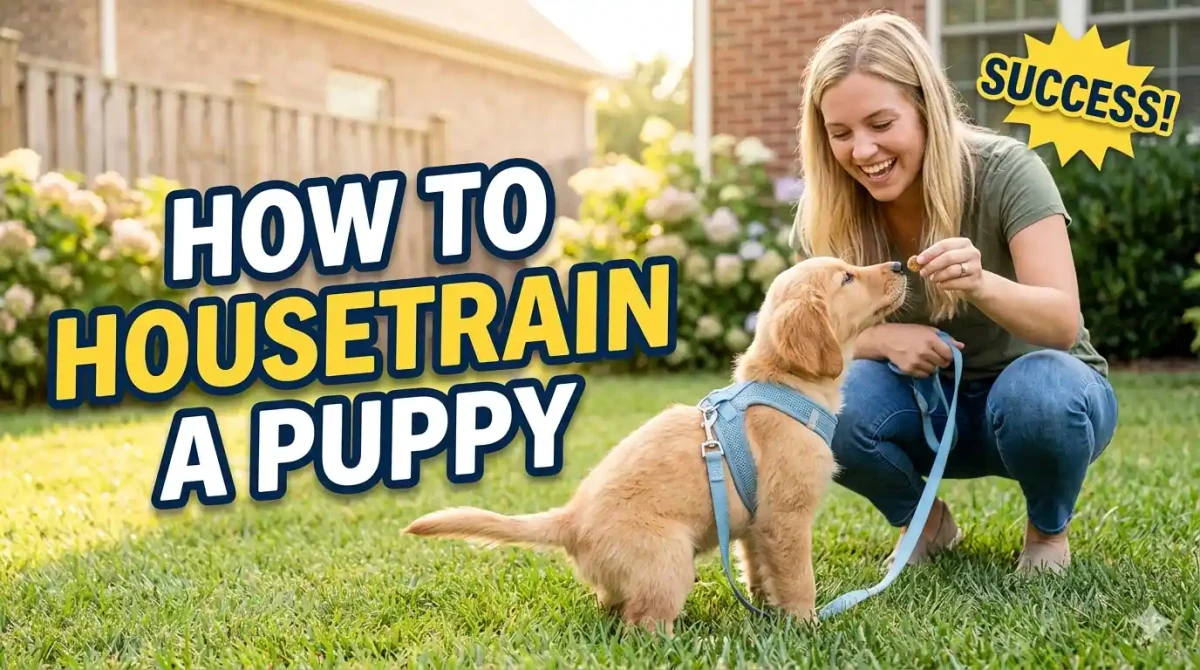
Why Proper Housetraining Sets the Foundation for a Well-Behaved Dog
Housetraining your puppy is one of the most important skills you'll teach—and one of the most rewarding when successful. A properly housetrained puppy grows into a confident, well-adjusted dog who understands boundaries and communicates their needs clearly. Conversely, inconsistent or punitive housetraining can lead to anxiety, confusion, and persistent elimination problems that strain your bond and your home.
Featured Snippet Answer: To housetrain a puppy, establish a consistent schedule for feeding, potty breaks, and sleep; take your puppy outside immediately after waking, eating, drinking, or playing; reward successful outdoor elimination immediately with treats and praise; supervise closely indoors or use crate training; and clean accidents thoroughly with enzymatic cleaner. Most puppies master basic housetraining in 4-6 months with consistent, positive methods.
Puppies aren't born knowing where to eliminate—they learn through repetition, routine, and positive reinforcement. Understanding your puppy's developmental timeline, physical limitations, and communication signals empowers you to guide them effectively. This comprehensive guide provides evidence-based, veterinarian-aligned strategies for housetraining your puppy humanely and successfully, whether you have a tiny toy breed or a large working dog, live in an apartment or a house with a yard, or work from home or have a busy schedule.
Understanding Puppy Elimination: Development, Biology, and Behavior
Before beginning housetraining, it's essential to understand how puppies develop bladder and bowel control and what's realistic to expect at different ages.
Puppy Bladder Control Timeline:
- 8-10 weeks: Can typically hold urine 1-2 hours; need frequent potty breaks
- 10-12 weeks: Can hold 2-3 hours; still need frequent opportunities
- 3-4 months: Can hold 3-4 hours; beginning to develop better control
- 4-6 months: Can hold 4-5 hours; most puppies master basic housetraining
- 6+ months: Can hold 6+ hours; continue reinforcing good habits
- 🐾 How to Train a Gerbil to Use Litter Area: Expert Step-by-Step Guide
- 🐾 How to Teach a Bird to Wave Complete Training Guide
- 🐾 How to Stop Cats from Aggressive Behavior: Expert Behavior Guide
- 🐾 How to Stop Puppy Jumping Complete Training Guide
Key Biological Factors:
- Small bladder capacity: Puppies physically cannot hold urine for long periods
- Fast metabolism: Puppies process food and water quickly, producing waste frequently
- Developing sphincter control: Muscle control for holding urine/bowel movements matures over months
- Sleep-wake cycles: Puppies often need to eliminate immediately after waking
- 🐾 How to Train a Gerbil to Use Litter Area: Expert Step-by-Step Guide
- 🐾 How to Teach a Bird to Wave Complete Training Guide
- 🐾 How to Stop Cats from Aggressive Behavior: Expert Behavior Guide
- 🐾 How to Stop Puppy Jumping Complete Training Guide
Why Puppies Have Accidents:
- Physical inability to hold it longer than their developmental stage allows
- Excitement or submission triggering involuntary elimination
- Not recognizing indoor vs. outdoor elimination surfaces
- Medical issues (UTI, parasites, digestive upset)
- Inconsistent routine or supervision
- 🐾 How to Train a Gerbil to Use Litter Area: Expert Step-by-Step Guide
- 🐾 How to Teach a Bird to Wave Complete Training Guide
- 🐾 How to Stop Cats from Aggressive Behavior: Expert Behavior Guide
- 🐾 How to Stop Puppy Jumping Complete Training Guide
Featured Snippet Answer: Puppies develop bladder control gradually: 8-10 weeks (1-2 hours), 3-4 months (3-4 hours), 6+ months (6+ hours). Accidents are normal during development and usually result from physical limitations, not defiance. Set realistic expectations based on your puppy's age and developmental stage.
How long does it take to fully housetrain a puppy?
Most puppies master basic housetraining in 4-6 months with consistent, positive methods. However, "fully" housetrained—meaning reliable elimination outdoors in all situations, including at night and when left alone—may take 6-12 months. Small breeds may take longer due to smaller bladders; large breeds may progress faster. Consistency, patience, and positive reinforcement are key to success.
Setting Up for Success: Preparation and Environment

Proper preparation prevents problems. Before bringing your puppy home, set up an environment that supports successful housetraining.
Essential Supplies:
- Enzymatic cleaner: Specifically formulated to break down pet urine/feces proteins (e.g., Nature's Miracle, Rocco & Roxie); regular cleaners leave residue that attracts repeat accidents
- Crate or exercise pen: Appropriately sized for confinement when unsupervised
- High-value treats: Small, soft treats reserved exclusively for potty rewards
- Leash and collar/harness: For controlled outdoor potty trips
- Potty bell (optional): For bell training to signal need to go out
- Poop bags and cleanup supplies: For responsible outdoor elimination
- 🐾 How to Train a Gerbil to Use Litter Area: Expert Step-by-Step Guide
- 🐾 How to Teach a Bird to Wave Complete Training Guide
- 🐾 How to Stop Cats from Aggressive Behavior: Expert Behavior Guide
- 🐾 How to Stop Puppy Jumping Complete Training Guide
Designate Potty Areas:
- Outdoor spot: Choose a consistent, easily accessible location; take puppy to same spot each time
- Indoor backup (if needed): For apartment living or extreme weather, designate a specific indoor area with puppy pads or grass patch; transition to outdoor-only as soon as possible
- Avoid confusion: Don't use indoor pads in same area where you want outdoor elimination; puppies generalize surfaces
- 🐾 How to Train a Gerbil to Use Litter Area: Expert Step-by-Step Guide
- 🐾 How to Teach a Bird to Wave Complete Training Guide
- 🐾 How to Stop Cats from Aggressive Behavior: Expert Behavior Guide
- 🐾 How to Stop Puppy Jumping Complete Training Guide
Manage the Environment:
- Puppy-proof zones: Use baby gates or exercise pens to limit access to entire house initially
- Remove temptations: Pick up rugs, cords, or items that might be mistaken for potty surfaces
- Easy cleanup: Keep enzymatic cleaner accessible for immediate accident response
- 🐾 How to Train a Gerbil to Use Litter Area: Expert Step-by-Step Guide
- 🐾 How to Teach a Bird to Wave Complete Training Guide
- 🐾 How to Stop Cats from Aggressive Behavior: Expert Behavior Guide
- 🐾 How to Stop Puppy Jumping Complete Training Guide
Featured Snippet Answer: Prepare for housetraining by gathering enzymatic cleaner, a properly sized crate, high-value treats, and a leash. Designate a consistent outdoor potty spot and limit your puppy's access to the house initially using gates or pens. Remove items that might be mistaken for potty surfaces.
Establishing a Consistent Routine: The Backbone of Housetraining

Puppies thrive on predictability. A consistent schedule for feeding, potty breaks, play, and sleep reduces accidents and accelerates learning.
Sample Daily Schedule for a 10-12 Week Puppy:
- 6:30 AM: Wake up, immediate potty break outside, reward success
- 7:00 AM: Breakfast, then potty break 10-15 minutes after eating
- 8:00 AM: Play/training session, then potty break
- 9:30 AM: Potty break, then crate/rest time
- 11:30 AM: Potty break, lunch, post-meal potty break
- 1:00 PM: Play/training, potty break
- 3:00 PM: Potty break, crate/rest
- 5:00 PM: Potty break, dinner, post-meal potty break
- 6:30 PM: Evening play/training, potty break
- 8:00 PM: Final potty break, then crate/bedtime routine
- 10:00 PM: Last potty break before owner bedtime
- Night: Set alarm for 2-3 AM potty break (adjust based on puppy's age)
- 🐾 How to Train a Gerbil to Use Litter Area: Expert Step-by-Step Guide
- 🐾 How to Teach a Bird to Wave Complete Training Guide
- 🐾 How to Stop Cats from Aggressive Behavior: Expert Behavior Guide
- 🐾 How to Stop Puppy Jumping Complete Training Guide
Key Timing Principles:
- After waking: Always take puppy out immediately after naps or overnight sleep
- After eating/drinking: Take out 10-20 minutes after meals or water
- After play/excitement: Excitement can trigger elimination; take out after active sessions
- Before confinement: Always take out before crating or leaving puppy alone
- Before bedtime: Final potty break right before settling for night
- 🐾 How to Train a Gerbil to Use Litter Area: Expert Step-by-Step Guide
- 🐾 How to Teach a Bird to Wave Complete Training Guide
- 🐾 How to Stop Cats from Aggressive Behavior: Expert Behavior Guide
- 🐾 How to Stop Puppy Jumping Complete Training Guide
Adjusting for Your Lifestyle:
- Working from home: Take advantage of flexibility for frequent potty breaks
- Full-time work: Arrange for midday potty break via dog walker, pet sitter, or coming home
- Apartment living: Plan extra time for elevator/stairs trips; have indoor backup ready for emergencies
- Cold/rainy weather: Dress appropriately, keep trips brief but consistent, reward heavily for outdoor elimination in adverse conditions
- 🐾 How to Train a Gerbil to Use Litter Area: Expert Step-by-Step Guide
- 🐾 How to Teach a Bird to Wave Complete Training Guide
- 🐾 How to Stop Cats from Aggressive Behavior: Expert Behavior Guide
- 🐾 How to Stop Puppy Jumping Complete Training Guide
Featured Snippet Answer: Establish a consistent schedule: take puppy out immediately after waking, eating, drinking, or playing; every 1-2 hours for young puppies; and before confinement or bedtime. Feed at consistent times to predict elimination needs. Adjust schedule for your lifestyle but maintain consistency in timing and routine.
Recognizing Potty Signals: Reading Your Puppy's Body Language

Puppies communicate their need to eliminate through specific behaviors. Learning to recognize these signals prevents accidents and builds communication.
Common Potty Signals:
- Sniffing intensely: Circling and sniffing floor, especially corners or previous accident sites
- Restlessness: Pacing, whining, or suddenly stopping play
- Going to door: Standing near exit, scratching, or looking at door
- Sudden stillness: Freezing mid-activity, often with focused expression
- Squatting posture: Beginning to lower hindquarters (act immediately if you see this)
- 🐾 How to Train a Gerbil to Use Litter Area: Expert Step-by-Step Guide
- 🐾 How to Teach a Bird to Wave Complete Training Guide
- 🐾 How to Stop Cats from Aggressive Behavior: Expert Behavior Guide
- 🐾 How to Stop Puppy Jumping Complete Training Guide
Proactive Prevention:
- Don't wait for signals—take puppy out on schedule, especially when young
- Watch puppy closely during free time; interrupt and redirect if you see pre-elimination behaviors
- Learn your individual puppy's unique signals; some are subtle
- 🐾 How to Train a Gerbil to Use Litter Area: Expert Step-by-Step Guide
- 🐾 How to Teach a Bird to Wave Complete Training Guide
- 🐾 How to Stop Cats from Aggressive Behavior: Expert Behavior Guide
- 🐾 How to Stop Puppy Jumping Complete Training Guide
Teaching a Potty Cue:
- Choose a consistent verbal cue like "go potty" or "do your business"
- Say cue softly as puppy begins to eliminate outdoors
- Reward immediately after elimination while still outside
- Over time, puppy will associate cue with action and may eliminate on command
- 🐾 How to Train a Gerbil to Use Litter Area: Expert Step-by-Step Guide
- 🐾 How to Teach a Bird to Wave Complete Training Guide
- 🐾 How to Stop Cats from Aggressive Behavior: Expert Behavior Guide
- 🐾 How to Stop Puppy Jumping Complete Training Guide
Featured Snippet Answer: Recognize puppy potty signals: intense sniffing, restlessness, going to door, sudden stillness, or squatting. Don't wait for signals—take puppy out on schedule. Teach a consistent verbal cue like "go potty" and reward immediately after outdoor elimination to build communication.
The Outdoor Elimination Process: Step-by-Step Success

How you handle outdoor potty trips directly impacts learning speed and reliability.
Step 1: Leash and Go Directly to Spot
- Use a leash even in fenced yards to keep puppy focused on elimination, not exploration
- Walk directly to designated potty spot; avoid play or distractions en route
- Stand quietly and give puppy 3-5 minutes to eliminate
- 🐾 How to Train a Gerbil to Use Litter Area: Expert Step-by-Step Guide
- 🐾 How to Teach a Bird to Wave Complete Training Guide
- 🐾 How to Stop Cats from Aggressive Behavior: Expert Behavior Guide
- 🐾 How to Stop Puppy Jumping Complete Training Guide
Step 2: Wait Patiently, Minimize Distractions
- Avoid talking, playing, or looking at puppy while they're eliminating
- If puppy doesn't go within 5 minutes, take back inside and confine briefly, then try again in 10-15 minutes
- Don't punish for not going—just try again later
- 🐾 How to Train a Gerbil to Use Litter Area: Expert Step-by-Step Guide
- 🐾 How to Teach a Bird to Wave Complete Training Guide
- 🐾 How to Stop Cats from Aggressive Behavior: Expert Behavior Guide
- 🐾 How to Stop Puppy Jumping Complete Training Guide
Step 3: Reward Immediately and Enthusiastically
- The moment puppy finishes eliminating, praise warmly and give a high-value treat
- Keep treats reserved exclusively for potty rewards to maintain high value
- Celebrate quietly to avoid startling puppy mid-elimination
- 🐾 How to Train a Gerbil to Use Litter Area: Expert Step-by-Step Guide
- 🐾 How to Teach a Bird to Wave Complete Training Guide
- 🐾 How to Stop Cats from Aggressive Behavior: Expert Behavior Guide
- 🐾 How to Stop Puppy Jumping Complete Training Guide
Step 4: Play or Return Inside
- After reward, allow brief play or exploration as additional reward
- Then return inside calmly; avoid exciting puppy immediately after elimination
- 🐾 How to Train a Gerbil to Use Litter Area: Expert Step-by-Step Guide
- 🐾 How to Teach a Bird to Wave Complete Training Guide
- 🐾 How to Stop Cats from Aggressive Behavior: Expert Behavior Guide
- 🐾 How to Stop Puppy Jumping Complete Training Guide
Troubleshooting Outdoor Elimination:
- Puppy won't go outside: Try different spot, wait longer, or take out more frequently; ensure puppy isn't distracted
- Puppy goes inside then wants to go outside: This is normal early on; continue rewarding outdoor elimination and don't punish indoor accidents
- Puppy eliminates on walk, not at spot: Keep walks separate from potty trips initially; focus on elimination first, then walk as reward
- 🐾 How to Train a Gerbil to Use Litter Area: Expert Step-by-Step Guide
- 🐾 How to Teach a Bird to Wave Complete Training Guide
- 🐾 How to Stop Cats from Aggressive Behavior: Expert Behavior Guide
- 🐾 How to Stop Puppy Jumping Complete Training Guide
Featured Snippet Answer: For successful outdoor elimination: leash puppy, go directly to designated spot, wait quietly 3-5 minutes, reward immediately with treat and praise after elimination, then allow brief play. If puppy doesn't go, return inside briefly and try again in 10-15 minutes. Keep potty trips focused and consistent.
Supervision and Confinement: Preventing Accidents Indoors

Preventing indoor accidents is easier than correcting them. Strategic supervision and confinement set your puppy up for success.
The "Tethering" Method:
- Keep puppy on a short leash attached to your belt or furniture when indoors and unsupervised
- Allows you to watch for potty signals and interrupt accidents immediately
- Prevents puppy from wandering off to eliminate unnoticed
- Builds connection and allows immediate redirection to outdoors
- 🐾 How to Train a Gerbil to Use Litter Area: Expert Step-by-Step Guide
- 🐾 How to Teach a Bird to Wave Complete Training Guide
- 🐾 How to Stop Cats from Aggressive Behavior: Expert Behavior Guide
- 🐾 How to Stop Puppy Jumping Complete Training Guide
Crate Training for Housetraining:
- Why it works: Puppies naturally avoid soiling their sleeping area; crate leverages this instinct
- Proper sizing: Crate should be just large enough for puppy to stand, turn, and lie down; use divider for growth
- Positive association: Feed meals in crate, provide treats, never use for punishment
- Duration limits: Follow age-appropriate crate times (see schedule above); never exceed puppy's physical capacity
- Always take out immediately after crate: Puppy will likely need to eliminate
- 🐾 How to Train a Gerbil to Use Litter Area: Expert Step-by-Step Guide
- 🐾 How to Teach a Bird to Wave Complete Training Guide
- 🐾 How to Stop Cats from Aggressive Behavior: Expert Behavior Guide
- 🐾 How to Stop Puppy Jumping Complete Training Guide
Exercise Pen (X-Pen) Setup:
- Use for longer confinement periods when you can't actively supervise
- Include bed, water, and potty area (puppy pad or grass patch) at opposite end from bed
- Gradually expand access as puppy demonstrates reliability
- 🐾 How to Train a Gerbil to Use Litter Area: Expert Step-by-Step Guide
- 🐾 How to Teach a Bird to Wave Complete Training Guide
- 🐾 How to Stop Cats from Aggressive Behavior: Expert Behavior Guide
- 🐾 How to Stop Puppy Jumping Complete Training Guide
Supervision Guidelines:
- Active supervision: Watch puppy constantly when loose indoors; no "quick" distractions
- Interrupt accidents calmly: If you catch puppy mid-accident, say "oops" or clap gently to interrupt, then immediately take outside
- Never punish: Rubbing nose in mess, yelling, or physical correction creates fear and confusion
- 🐾 How to Train a Gerbil to Use Litter Area: Expert Step-by-Step Guide
- 🐾 How to Teach a Bird to Wave Complete Training Guide
- 🐾 How to Stop Cats from Aggressive Behavior: Expert Behavior Guide
- 🐾 How to Stop Puppy Jumping Complete Training Guide
Featured Snippet Answer: Prevent indoor accidents by supervising puppy constantly when loose, using tethering or crate training for confinement, and taking puppy out immediately after waking, eating, or playing. Never punish accidents; interrupt calmly and redirect outdoors. Crate training leverages puppies' natural instinct to keep sleeping area clean.
Handling Accidents: The Right Way to Respond

Accidents are inevitable during housetraining. How you respond determines whether they become learning opportunities or sources of confusion.
If You Catch Puppy Mid-Accident:
- Interrupt calmly: Say "oops" or clap gently—just enough to stop the behavior, not scare puppy
- Take outside immediately: Carry or leash puppy to designated potty spot
- Reward if they finish outside: Praise and treat if puppy eliminates outdoors after interruption
- Don't punish: Never yell, rub nose in mess, or use physical correction
If You Find an Accident After the Fact:
- Clean thoroughly: Use enzymatic cleaner to break down proteins; follow product instructions
- Don't punish: Puppy cannot connect punishment to an action that happened minutes or hours ago
- Reflect on prevention: Ask: Was puppy unsupervised? Was schedule consistent? Were signals missed?
- Adjust management: Increase supervision, shorten time between potty breaks, or improve confinement
- 🐾 How to Train a Gerbil to Use Litter Area: Expert Step-by-Step Guide
- 🐾 How to Teach a Bird to Wave Complete Training Guide
- 🐾 How to Stop Cats from Aggressive Behavior: Expert Behavior Guide
- 🐾 How to Stop Puppy Jumping Complete Training Guide
Proper Cleaning Protocol:
- Blot up fresh accidents with paper towels; don't rub (spreads stain)
- Apply enzymatic cleaner generously; let sit per instructions (often 10-15 minutes)
- Blot again; repeat if odor persists
- Avoid ammonia-based cleaners—they smell like urine to dogs and attract repeat accidents
- For carpets: consider steam cleaning after enzymatic treatment for deep cleaning
- 🐾 How to Train a Gerbil to Use Litter Area: Expert Step-by-Step Guide
- 🐾 How to Teach a Bird to Wave Complete Training Guide
- 🐾 How to Stop Cats from Aggressive Behavior: Expert Behavior Guide
- 🐾 How to Stop Puppy Jumping Complete Training Guide
Featured Snippet Answer: If you catch puppy mid-accident, interrupt calmly and take outside immediately; reward if they finish outdoors. If you find an accident later, clean thoroughly with enzymatic cleaner and don't punish—puppy can't connect punishment to past actions. Focus on prevention through better supervision and schedule consistency.
Common Housetraining Challenges and Solutions

Even with perfect technique, challenges arise. Here's how to address common housetraining obstacles.
Challenge: Puppy Pees When Excited or Greeting
Causes: Submissive/excitement urination; common in young, sensitive, or timid puppies
Solutions:
- Keep greetings calm and low-key; avoid excited voices or looming over puppy
- Crouch down, avoid direct eye contact, and let puppy approach you
- Take puppy outside to eliminate before guests arrive or before exciting activities
- Never punish excitement urination—it's involuntary and punishment worsens anxiety
- Most puppies outgrow this by 6-12 months as confidence and bladder control improve
- 🐾 How to Train a Gerbil to Use Litter Area: Expert Step-by-Step Guide
- 🐾 How to Teach a Bird to Wave Complete Training Guide
- 🐾 How to Stop Cats from Aggressive Behavior: Expert Behavior Guide
- 🐾 How to Stop Puppy Jumping Complete Training Guide
Challenge: Puppy Has Accidents at Night
Causes: Bladder capacity not yet developed for overnight holding; schedule not adjusted
Solutions:
- Limit water 2 hours before bedtime; ensure final potty break right before sleep
- Set alarm for middle-of-night potty break (adjust frequency based on puppy's age)
- Keep nighttime trips boring: no play, minimal talking, straight to potty spot and back to bed
- Gradually extend time between night breaks as puppy matures
- 🐾 How to Train a Gerbil to Use Litter Area: Expert Step-by-Step Guide
- 🐾 How to Teach a Bird to Wave Complete Training Guide
- 🐾 How to Stop Cats from Aggressive Behavior: Expert Behavior Guide
- 🐾 How to Stop Puppy Jumping Complete Training Guide
Challenge: Puppy Was Trained, Now Regressing
Causes: Medical issues, schedule changes, stress, incomplete training, or adolescent testing
Solutions:
- Rule out medical causes first: consult veterinarian if regression is sudden or accompanied by other symptoms
- Return to basics: increase supervision, shorten time between potty breaks, reinforce routine
- Identify triggers: new pet, move, schedule change, or adolescent independence
- Stay consistent and patient; regression is temporary with consistent reinforcement
- 🐾 How to Train a Gerbil to Use Litter Area: Expert Step-by-Step Guide
- 🐾 How to Teach a Bird to Wave Complete Training Guide
- 🐾 How to Stop Cats from Aggressive Behavior: Expert Behavior Guide
- 🐾 How to Stop Puppy Jumping Complete Training Guide
Challenge: Puppy Only Goes Potty on Walks, Not at Home
Causes: Puppy associates elimination with movement/walking, not location
Solutions:
- Separate potty trips from walks initially: go to spot, wait for elimination, then walk as reward
- Use consistent potty cue and reward heavily for elimination at designated spot
- Keep potty trips brief and focused; save exploration/play for after elimination
- 🐾 How to Train a Gerbil to Use Litter Area: Expert Step-by-Step Guide
- 🐾 How to Teach a Bird to Wave Complete Training Guide
- 🐾 How to Stop Cats from Aggressive Behavior: Expert Behavior Guide
- 🐾 How to Stop Puppy Jumping Complete Training Guide
Featured Snippet Answer: For excitement urination: keep greetings calm and take puppy out before exciting events. For nighttime accidents: limit evening water, add middle-of-night potty breaks, keep trips boring. For regression: rule out medical issues, return to basics, and stay consistent. Most challenges resolve with patience and adjusted management.
Age-Specific Housetraining Considerations

Tailor your approach to your puppy's developmental stage for optimal success.
8-12 Weeks: Foundation Building
- Focus: Establishing routine, recognizing signals, preventing accidents
- Frequency: Potty breaks every 1-2 hours, plus after waking/eating/playing
- Expectations: Accidents are normal; focus on prevention and positive reinforcement
- Key strategy: Heavy supervision, crate training, immediate rewards for outdoor success
- 🐾 How to Train a Gerbil to Use Litter Area: Expert Step-by-Step Guide
- 🐾 How to Teach a Bird to Wave Complete Training Guide
- 🐾 How to Stop Cats from Aggressive Behavior: Expert Behavior Guide
- 🐾 How to Stop Puppy Jumping Complete Training Guide
3-4 Months: Skill Refinement
- Focus: Extending time between breaks, teaching potty cue, improving signal recognition
- Frequency: Potty breaks every 2-3 hours; puppy may start signaling needs
- Expectations: Fewer accidents with consistent routine; occasional setbacks normal
- Key strategy: Begin fading treats to intermittent rewards; reinforce verbal cue
- 🐾 How to Train a Gerbil to Use Litter Area: Expert Step-by-Step Guide
- 🐾 How to Teach a Bird to Wave Complete Training Guide
- 🐾 How to Stop Cats from Aggressive Behavior: Expert Behavior Guide
- 🐾 How to Stop Puppy Jumping Complete Training Guide
5-6 Months: Reliability Building
- Focus: Generalizing to different locations, handling distractions, building independence
- Frequency: Potty breaks every 3-4 hours; puppy may hold through short absences
- Expectations: Most puppies reliably eliminate outdoors; accidents usually due to management lapses
- Key strategy: Practice in varied environments; gradually increase freedom as reliability improves
- 🐾 How to Train a Gerbil to Use Litter Area: Expert Step-by-Step Guide
- 🐾 How to Teach a Bird to Wave Complete Training Guide
- 🐾 How to Stop Cats from Aggressive Behavior: Expert Behavior Guide
- 🐾 How to Stop Puppy Jumping Complete Training Guide
6+ Months: Maintenance and Advanced Training
- Focus: Maintaining reliability, teaching bell training or door signals, handling longer absences
- Frequency: Potty breaks every 4-6 hours; most can hold overnight
- Expectations: Housetraining should be solid; address any persistent issues with vet or trainer
- Key strategy: Continue reinforcing good habits; address adolescent testing with consistency
- 🐾 How to Train a Gerbil to Use Litter Area: Expert Step-by-Step Guide
- 🐾 How to Teach a Bird to Wave Complete Training Guide
- 🐾 How to Stop Cats from Aggressive Behavior: Expert Behavior Guide
- 🐾 How to Stop Puppy Jumping Complete Training Guide
Featured Snippet Answer: Tailor housetraining to age: 8-12 weeks need potty breaks every 1-2 hours with heavy supervision; 3-4 months can extend to 2-3 hours; 5-6 months build reliability with varied environments; 6+ months maintain habits and handle longer absences. Adjust expectations and frequency based on your puppy's developmental stage.
Special Situations: Apartment Living, Weather, and Multi-Dog Homes

Adapt housetraining strategies to your unique living situation for continued success.
Apartment or High-Rise Living:
- Plan for elevator/stairs: Allow extra time for potty trips; keep leash and supplies ready
- Indoor backup: Use puppy pads or grass patch temporarily if outdoor access is delayed; transition to outdoor-only ASAP
- Sound management: Use white noise or music to mask hallway sounds that might trigger elimination
- Consistency is critical: Stick to schedule despite logistical challenges
- 🐾 How to Train a Gerbil to Use Litter Area: Expert Step-by-Step Guide
- 🐾 How to Teach a Bird to Wave Complete Training Guide
- 🐾 How to Stop Cats from Aggressive Behavior: Expert Behavior Guide
- 🐾 How to Stop Puppy Jumping Complete Training Guide
Cold, Rainy, or Extreme Weather:
- Prepare gear: Dog coat, booties, or umbrella to keep puppy comfortable
- Keep trips brief but consistent: Go to potty spot, wait 3-5 minutes, reward success, return inside
- Reward heavily: Use extra-special treats for elimination in adverse conditions
- Indoor emergency option: Have puppy pads ready for true emergencies, but don't rely on them long-term
- 🐾 How to Train a Gerbil to Use Litter Area: Expert Step-by-Step Guide
- 🐾 How to Teach a Bird to Wave Complete Training Guide
- 🐾 How to Stop Cats from Aggressive Behavior: Expert Behavior Guide
- 🐾 How to Stop Puppy Jumping Complete Training Guide
Multi-Dog Households:
- Train individually first: Housetrain new puppy separately before integrating with resident dogs
- Separate potty trips initially: Prevent puppy from mimicking resident dog's habits (good or bad)
- Monitor interactions: Ensure resident dogs don't intimidate puppy during potty time
- Consistent rules for all: Apply same housetraining principles to all dogs to avoid confusion
- 🐾 How to Train a Gerbil to Use Litter Area: Expert Step-by-Step Guide
- 🐾 How to Teach a Bird to Wave Complete Training Guide
- 🐾 How to Stop Cats from Aggressive Behavior: Expert Behavior Guide
- 🐾 How to Stop Puppy Jumping Complete Training Guide
Working Owner Schedule:
- Maximize morning/evening: Use time at home for frequent potty breaks and training
- Midday solution: Hire dog walker, use pet sitter, or come home for lunch break
- Confinement strategy: Use crate or exercise pen with potty area for longer absences
- Weekend catch-up: Use days off for intensive training and bonding
- 🐾 How to Train a Gerbil to Use Litter Area: Expert Step-by-Step Guide
- 🐾 How to Teach a Bird to Wave Complete Training Guide
- 🐾 How to Stop Cats from Aggressive Behavior: Expert Behavior Guide
- 🐾 How to Stop Puppy Jumping Complete Training Guide
Featured Snippet Answer: Adapt housetraining to your situation: for apartments, plan extra time for elevator trips and have indoor backup ready; for bad weather, keep trips brief but consistent with heavy rewards; for multi-dog homes, train puppy individually first; for working schedules, maximize home time and arrange midday potty breaks.
Advanced Techniques: Bell Training, Cue Generalization, and Independence

Once basic housetraining is established, these advanced techniques build communication and reliability.
Bell Training for Potty Signals:
- Introduce the bell: Hang a bell on the door puppy uses to go out; let puppy investigate
- Pair bell with door opening: Each time you take puppy out, gently tap bell with paw or nose before opening door
- Encourage interaction: Reward any interaction with bell (sniffing, touching)
- Shape the behavior: Gradually require more deliberate bell-ringing before opening door
- Reinforce consistently: Always open door immediately after bell is rung for potty
- Prevent false alarms: If puppy rings bell for play, take out for potty only, then return inside without play
Generalizing to Different Locations:
- Practice elimination at different outdoor spots (front yard, park, friend's house)
- Use consistent potty cue across locations
- Reward heavily for elimination in new environments
- Start with low-distraction locations, gradually add complexity
- 🐾 How to Train a Gerbil to Use Litter Area: Expert Step-by-Step Guide
- 🐾 How to Teach a Bird to Wave Complete Training Guide
- 🐾 How to Stop Cats from Aggressive Behavior: Expert Behavior Guide
- 🐾 How to Stop Puppy Jumping Complete Training Guide
Building Independence:
- Gradually increase time puppy spends unsupervised in puppy-proofed areas
- Test reliability with short absences (5-10 minutes), then extend
- Continue rewarding outdoor elimination even after puppy seems reliable
- Maintain routine even when puppy seems "trained"—consistency prevents regression
- 🐾 How to Train a Gerbil to Use Litter Area: Expert Step-by-Step Guide
- 🐾 How to Teach a Bird to Wave Complete Training Guide
- 🐾 How to Stop Cats from Aggressive Behavior: Expert Behavior Guide
- 🐾 How to Stop Puppy Jumping Complete Training Guide
Featured Snippet Answer: Advance housetraining with bell training: hang bell on door, pair bell-ringing with door opening, reward interaction, and shape deliberate ringing. Generalize elimination to different locations using consistent cues. Build independence gradually by testing short absences and maintaining routine even after puppy seems reliable.
When to Seek Professional Help

Most housetraining challenges resolve with consistency and patience, but certain situations warrant professional guidance.
Consult a Veterinarian If:
- Sudden onset of accidents in a previously housetrained puppy
- Frequent urination, straining, blood in urine, or signs of pain
- Diarrhea, vomiting, or changes in appetite accompanying elimination issues
- Puppy seems unable to control elimination despite consistent training
- 🐾 How to Train a Gerbil to Use Litter Area: Expert Step-by-Step Guide
- 🐾 How to Teach a Bird to Wave Complete Training Guide
- 🐾 How to Stop Cats from Aggressive Behavior: Expert Behavior Guide
- 🐾 How to Stop Puppy Jumping Complete Training Guide
Consult a Certified Trainer or Behaviorist If:
- No improvement after 2-3 months of consistent, positive housetraining
- Puppy shows fear, anxiety, or aggression related to elimination
- Accidents are accompanied by other behavioral concerns (destruction, excessive vocalization)
- You need personalized guidance for complex situations (rescue puppy, multi-dog household, etc.)
- 🐾 How to Train a Gerbil to Use Litter Area: Expert Step-by-Step Guide
- 🐾 How to Teach a Bird to Wave Complete Training Guide
- 🐾 How to Stop Cats from Aggressive Behavior: Expert Behavior Guide
- 🐾 How to Stop Puppy Jumping Complete Training Guide
Red Flags Requiring Immediate Attention:
- Puppy seems in pain during elimination
- Accidents accompanied by lethargy, fever, or loss of appetite
- Puppy is drinking excessively or producing unusually large volumes of urine
- 🐾 How to Train a Gerbil to Use Litter Area: Expert Step-by-Step Guide
- 🐾 How to Teach a Bird to Wave Complete Training Guide
- 🐾 How to Stop Cats from Aggressive Behavior: Expert Behavior Guide
- 🐾 How to Stop Puppy Jumping Complete Training Guide
Featured Snippet Answer: Seek veterinary help for sudden accidents, pain during elimination, blood in urine, or other medical symptoms. Consult a certified trainer if no improvement after 2-3 months of consistent training, or if puppy shows fear/anxiety related to elimination. Rule out medical issues before assuming behavioral causes.
Common Housetraining Mistakes to Avoid

Even well-intentioned owners make errors that delay housetraining success. Avoid these pitfalls:
Mistake 1: Punishing Accidents
- Problem: Yelling, rubbing nose in mess, or physical correction creates fear and confusion; puppy learns to hide elimination, not where to go
- Solution: Interrupt calmly if caught mid-accident, take outside, reward success; clean accidents thoroughly without punishment
- 🐾 How to Train a Gerbil to Use Litter Area: Expert Step-by-Step Guide
- 🐾 How to Teach a Bird to Wave Complete Training Guide
- 🐾 How to Stop Cats from Aggressive Behavior: Expert Behavior Guide
- 🐾 How to Stop Puppy Jumping Complete Training Guide
Mistake 2: Inconsistent Schedule
- Problem: Irregular feeding or potty breaks confuse puppy about when/where to eliminate
- Solution: Establish and maintain consistent times for meals, potty breaks, and sleep
- 🐾 How to Train a Gerbil to Use Litter Area: Expert Step-by-Step Guide
- 🐾 How to Teach a Bird to Wave Complete Training Guide
- 🐾 How to Stop Cats from Aggressive Behavior: Expert Behavior Guide
- 🐾 How to Stop Puppy Jumping Complete Training Guide
Mistake 3: Too Much Freedom Too Soon
- Problem: Giving puppy run of house before reliability is established leads to accidents
- Solution: Use crate, pen, or tethering to limit access until puppy demonstrates consistent outdoor elimination
- 🐾 How to Train a Gerbil to Use Litter Area: Expert Step-by-Step Guide
- 🐾 How to Teach a Bird to Wave Complete Training Guide
- 🐾 How to Stop Cats from Aggressive Behavior: Expert Behavior Guide
- 🐾 How to Stop Puppy Jumping Complete Training Guide
Mistake 4: Using Wrong Cleaner
- Problem: Regular cleaners or ammonia-based products leave residue that attracts repeat accidents
- Solution: Always use enzymatic cleaner specifically formulated for pet urine/feces
- 🐾 How to Train a Gerbil to Use Litter Area: Expert Step-by-Step Guide
- 🐾 How to Teach a Bird to Wave Complete Training Guide
- 🐾 How to Stop Cats from Aggressive Behavior: Expert Behavior Guide
- 🐾 How to Stop Puppy Jumping Complete Training Guide
Mistake 5: Expecting Too Much Too Soon
- Problem: Unrealistic expectations lead to frustration and inconsistent training
- Solution: Set age-appropriate goals; celebrate small wins; remember housetraining is a process
- 🐾 How to Train a Gerbil to Use Litter Area: Expert Step-by-Step Guide
- 🐾 How to Teach a Bird to Wave Complete Training Guide
- 🐾 How to Stop Cats from Aggressive Behavior: Expert Behavior Guide
- 🐾 How to Stop Puppy Jumping Complete Training Guide
Featured Snippet Answer: Avoid housetraining mistakes: never punish accidents, maintain consistent schedule, limit freedom until reliable, use enzymatic cleaner for accidents, and set realistic expectations based on puppy's age. These practices prevent confusion and accelerate learning.
Quick Recap: Key Takeaways for Successful Puppy Housetraining

- Establish a consistent schedule for feeding, potty breaks, play, and sleep
- Take puppy outside immediately after waking, eating, drinking, or playing
- Reward successful outdoor elimination immediately with high-value treats and praise
- Supervise closely indoors or use crate/exercise pen for confinement when unsupervised
- Clean accidents thoroughly with enzymatic cleaner; never punish after the fact
- Recognize potty signals (sniffing, restlessness, door-seeking) and act immediately
- Adjust expectations and frequency based on puppy's age and developmental stage
- Use positive reinforcement only; punishment creates fear and delays learning
- Be patient and consistent—most puppies master basic housetraining in 4-6 months
- Consult veterinarian or trainer if accidents persist despite consistent training
- 🐾 How to Train a Gerbil to Use Litter Area: Expert Step-by-Step Guide
- 🐾 How to Teach a Bird to Wave Complete Training Guide
- 🐾 How to Stop Cats from Aggressive Behavior: Expert Behavior Guide
- 🐾 How to Stop Puppy Jumping Complete Training Guide
Final Thoughts: Patience, Consistency, and Partnership

Housetraining your puppy is more than teaching a behavior—it's building communication, trust, and partnership. Every successful outdoor elimination, every recognized signal, and every accident handled with patience strengthens your bond and your puppy's confidence.
Remember that housetraining is a journey, not a race. Some puppies learn quickly; others need more time. What matters most is your consistency, compassion, and commitment to positive methods. Celebrate progress, learn from setbacks, and trust the process.
Stay observant: your puppy's body language and behavior provide constant feedback. Stay adaptable: adjust your approach based on what works for your unique puppy. Stay positive: your enthusiasm and encouragement are powerful motivators.
With knowledge, patience, and partnership, you'll guide your puppy to become a reliable, well-mannered companion who communicates their needs clearly and respects your home. The time and care you invest in housetraining today lays the foundation for a lifetime of harmony and happiness together.
🐱 আরও পড়ুন: Dog Training and Behavior

0 Comments