.png)
How to Teach a Bird to Come When Called: Expert Avian Training Guide
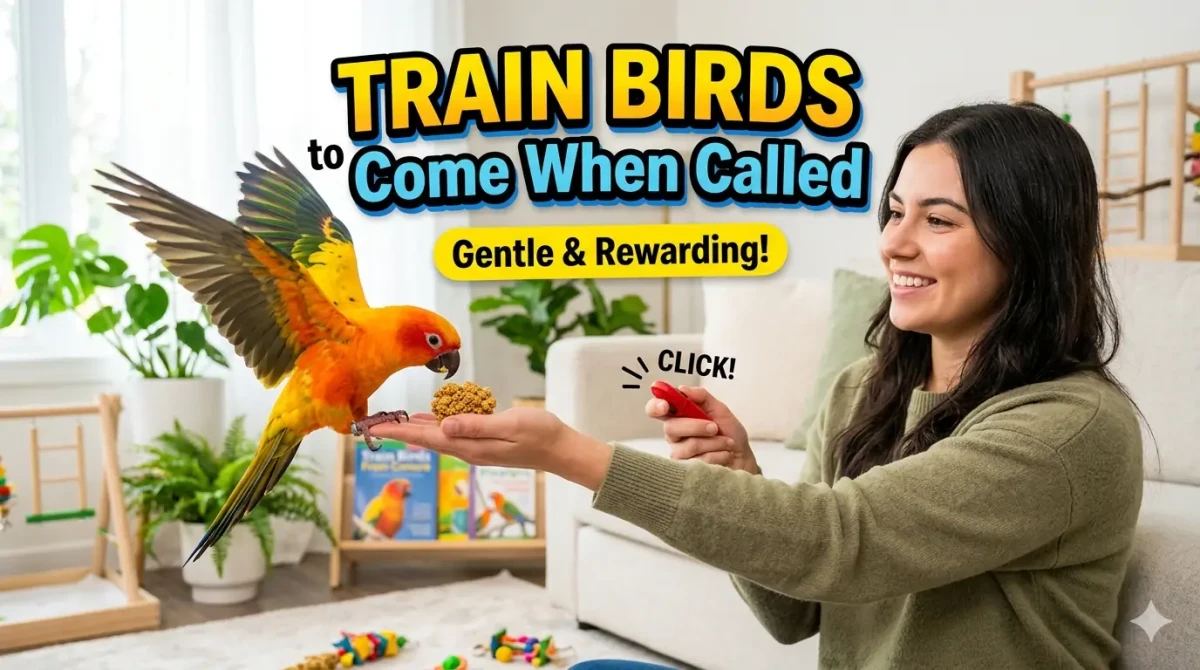
Why Teaching Your Bird to Come When Called Is Critical for Safety and Trust
Teaching your bird to come when called isn't just a clever trick—it's a vital safety skill that can prevent escapes, facilitate veterinary care, and deepen your bond. Unlike mammals, birds are prey animals with powerful flight instincts; recall training must honor their autonomy while building voluntary cooperation. With patient, positive methods, most birds can learn reliable recall that enhances their freedom and your peace of mind.
Featured Snippet Answer: To teach a bird to come when called: choose a consistent cue (name, whistle, or distinct sound), use ultra-high-value rewards reserved exclusively for recall, start training in a small, safe, enclosed space, reward immediately when the bird approaches, and gradually increase distance and distractions. Keep sessions short (2-5 minutes), end on success, and never punish non-response. Most birds develop basic recall in 2-8 weeks with daily practice; reliable flighted recall requires extensive proofing in safe environments.
This comprehensive guide provides evidence-based, avian-behaviorist-aligned strategies to teach recall humanely and effectively. You'll learn how to select motivating rewards, structure training sessions for flighted and non-flighted birds, troubleshoot common challenges, and generalize the behavior to real-world situations. Whether you have a playful Cockatiel, a brilliant African Grey, or a shy rescue Conure, you'll find practical guidance to build a reliable recall that enhances safety and connection.
Understanding Avian Learning: Why Recall Training Works with Birds
Before beginning training, it's essential to understand how birds learn and what motivates them—principles that differ significantly from mammal training.
Key Principles of Avian Learning:
- Birds are voluntary learners: As prey animals, birds choose whether to respond based on perceived safety and reward value; coercion creates fear and avoidance
- Immediate rewards are critical: Birds connect actions to consequences within 1-2 seconds; delayed rewards lose effectiveness
- High-value rewards drive behavior: Regular pellets won't motivate recall; reserve special treats exclusively for training
- Flight changes everything: Flighted birds can leave the training area; safety protocols are non-negotiable
- Trust is foundational: Birds remember negative experiences; recall must always predict positive outcomes
- 🐾 How to Train Cats to Come When Called: Expert Step-by-Step Guide
- 🐾 How to Teach a Bird to Wave Complete Training Guide
- 🐾 How to Train a Puppy to Stay: Complete 2026 Guide
- 🐾 How to Stop Rabbits from Chewing Furniture: Expert Training & Prevention Guide
Why Birds May Not Come When Called (Initially):
- Low motivation: The reward isn't valuable enough to compete with current activity or environment
- Poor cue association: Bird hasn't learned that the cue predicts something good
- Environmental distractions: Windows, other birds, toys, or sounds are more compelling
- Fear or stress: Unfamiliar environments, loud noises, or past negative experiences block learning
- Medical issues: Illness, injury, or vision/hearing changes can affect responsiveness
- Molting or hormonal phases: Temporary behavioral changes may affect training responsiveness
- 🐾 How to Train Cats to Come When Called: Expert Step-by-Step Guide
- 🐾 How to Teach a Bird to Wave Complete Training Guide
- 🐾 How to Train a Puppy to Stay: Complete 2026 Guide
- 🐾 How to Stop Rabbits from Chewing Furniture: Expert Training & Prevention Guide
Featured Snippet Answer: Birds learn through immediate, high-value rewards and consistent cue association. They may not come when called initially due to low motivation, poor cue association, distractions, fear, medical issues, or hormonal phases. Understanding avian learning principles—voluntary response, immediate rewards, flight considerations, and trust-building—guides effective, humane recall training.
How long does it take to train a bird to come when called?
Most birds develop basic recall in 2-8 weeks with daily 2-5 minute sessions. Reliable flighted recall in varied environments may take 2-4 months. Progress depends on the bird's species, personality, motivation, training consistency, and distraction levels. Shy or fearful birds may need longer; highly food-motivated species (Conures, Cockatiels) often learn faster. Patience and consistency matter more than speed—rushing creates setbacks.
Step 1: Preparation—Setting Up for Safe, Successful Recall Training

Proper preparation prevents frustration, ensures safety, and accelerates learning.
Choosing Your Recall Cue
Effective Cue Options:
- Your bird's name: Simple and practical, but ensure it's used positively (not just for scolding)
- Distinct word: "Come," "Here," or a unique word said in a consistent, happy tone
- Whistle or sound cue: Excellent for flighted birds; carries over distance and is distinct from speech
- Clicker + cue: Clicker marks desired behavior; pair with verbal cue for clarity
- 🐾 How to Train Cats to Come When Called: Expert Step-by-Step Guide
- 🐾 How to Teach a Bird to Wave Complete Training Guide
- 🐾 How to Train a Puppy to Stay: Complete 2026 Guide
- 🐾 How to Stop Rabbits from Chewing Furniture: Expert Training & Prevention Guide
Cue Selection Guidelines:
- Choose ONE cue and use it consistently—never alternate between multiple cues
- Avoid using the cue for negative experiences (vet trips, nail trims, confinement) during training
- Keep the cue short, clear, and easy to say in emergencies
- If using your bird's name, pair it with a distinct, happy tone for recall vs. casual use
- For flighted birds, choose a cue that carries well (whistle works better than soft speech)
- 🐾 How to Train Cats to Come When Called: Expert Step-by-Step Guide
- 🐾 How to Teach a Bird to Wave Complete Training Guide
- 🐾 How to Train a Puppy to Stay: Complete 2026 Guide
- 🐾 How to Stop Rabbits from Chewing Furniture: Expert Training & Prevention Guide
Selecting Ultra-High-Value Rewards
What Makes a Reward "High-Value" for Birds:
- Novelty: Treats your bird doesn't get daily
- Preference: Foods your bird actively seeks out or works for
- Exclusivity: Reserve these rewards exclusively for recall training
- Size: Tiny pieces allow multiple rewards per session without overfeeding
- 🐾 How to Train Cats to Come When Called: Expert Step-by-Step Guide
- 🐾 How to Teach a Bird to Wave Complete Training Guide
- 🐾 How to Train a Puppy to Stay: Complete 2026 Guide
- 🐾 How to Stop Rabbits from Chewing Furniture: Expert Training & Prevention Guide
Top Reward Options by Species:
- Parrots (Cockatiels, Conures, Greys): Pine nuts, safflower seeds, small pieces of walnut, spray millet (in moderation)
- Small birds (Budgies, Lovebirds): Millet sprays, small sunflower seeds, tiny fruit pieces
- Large parrots (Macaws, Cockatoos): Small pieces of almond, walnut, or specialized training treats
- All species: Tiny pieces of fresh fruit (apple, berry), cooked sweet potato, or commercial training treats
- 🐾 How to Train Cats to Come When Called: Expert Step-by-Step Guide
- 🐾 How to Teach a Bird to Wave Complete Training Guide
- 🐾 How to Train a Puppy to Stay: Complete 2026 Guide
- 🐾 How to Stop Rabbits from Chewing Furniture: Expert Training & Prevention Guide
Reward Preparation Tips:
- Break treats into tiny pea-sized or smaller pieces to allow multiple rewards per session
- Keep rewards in a dedicated pouch or container for quick, quiet access
- Store perishable rewards properly; use non-perishable options for portability
- Rotate rewards occasionally to maintain novelty and prevent boredom
- 🐾 How to Train Cats to Come When Called: Expert Step-by-Step Guide
- 🐾 How to Teach a Bird to Wave Complete Training Guide
- 🐾 How to Train a Puppy to Stay: Complete 2026 Guide
- 🐾 How to Stop Rabbits from Chewing Furniture: Expert Training & Prevention Guide
Creating a Safe Training Environment
For Non-Flighted or Wing-Clipped Birds:
- Choose a quiet room with minimal distractions
- Close windows and doors to prevent escapes
- Remove hazards: ceiling fans, open water, toxic plants, other pets
- Ensure your bird is calm and slightly hungry (train before meals)
- Keep sessions short: 2-5 minutes maximum to prevent fatigue
- 🐾 How to Train Cats to Come When Called: Expert Step-by-Step Guide
- 🐾 How to Teach a Bird to Wave Complete Training Guide
- 🐾 How to Train a Puppy to Stay: Complete 2026 Guide
- 🐾 How to Stop Rabbits from Chewing Furniture: Expert Training & Prevention Guide
For Flighted Birds (Critical Safety Protocols):
- Only train in secure, enclosed spaces: Small bathroom, walk-in closet, or bird-proofed room with no escape routes
- Close all windows, doors, and cover mirrors/windows to prevent collisions or escapes
- Remove hazards: Ceiling fans, open toilets, toxic plants, other pets, hot surfaces
- Consider a long-line leash (15-30 ft) for early flighted recall training as a safety backup
- Never practice recall near open doors, windows, or unsafe areas until recall is highly reliable
- Train when your bird is calm; avoid training when overstimulated or hormonal
- 🐾 How to Train Cats to Come When Called: Expert Step-by-Step Guide
- 🐾 How to Teach a Bird to Wave Complete Training Guide
- 🐾 How to Train a Puppy to Stay: Complete 2026 Guide
- 🐾 How to Stop Rabbits from Chewing Furniture: Expert Training & Prevention Guide
Featured Snippet Answer: Prepare for bird recall training by: choosing one consistent cue (name, whistle, or distinct sound), selecting ultra-high-value rewards reserved exclusively for training, and starting in a small, safe, enclosed space. For flighted birds: close all exits, remove hazards, and consider a long-line leash for safety. Keep sessions short (2-5 minutes) and train when your bird is calm and slightly hungry.
Step 2: Building the Cue-Reward Association (Foundation Phase)

The foundation of recall is teaching your bird that your cue predicts something wonderful—before asking for any behavior.
Phase 1: Classical Conditioning (Days 1-5)
Goal: Create a positive emotional response to the cue before asking your bird to move.
Protocol:
- Sit quietly with your bird in a calm, safe environment (on perch, your hand, or nearby)
- Say your recall cue clearly and calmly in a happy tone
- Immediately give a high-value treat (within 1 second)—don't wait for any movement
- Repeat 5-10 times per session, 2-3 sessions daily
- Keep sessions short (2-3 minutes); end while your bird is still engaged
Success indicators:
- Bird perks up, turns head, or shows alertness when hearing the cue
- Bird shows anticipation (pupils pinning, head bobbing, soft vocalizations) after cue
- Bird begins moving toward you voluntarily after several repetitions
- 🐾 How to Train Cats to Come When Called: Expert Step-by-Step Guide
- 🐾 How to Teach a Bird to Wave Complete Training Guide
- 🐾 How to Train a Puppy to Stay: Complete 2026 Guide
- 🐾 How to Stop Rabbits from Chewing Furniture: Expert Training & Prevention Guide
Pro tips:
- Keep your body language calm and non-threatening; avoid looming or sudden movements
- Use a consistent, happy tone—birds are sensitive to vocal pitch and emotion
- If your bird seems stressed, reduce session length or increase distance
- Never force interaction; let your bird choose to engage
- 🐾 How to Train Cats to Come When Called: Expert Step-by-Step Guide
- 🐾 How to Teach a Bird to Wave Complete Training Guide
- 🐾 How to Train a Puppy to Stay: Complete 2026 Guide
- 🐾 How to Stop Rabbits from Chewing Furniture: Expert Training & Prevention Guide
Phase 2: Adding Short-Distance Movement (Days 6-14)
Goal: Encourage your bird to move a short distance toward you after the cue.
Protocol:
- Start with your bird 1-2 feet away on a perch or your hand
- Say your cue in an encouraging, happy tone
- If bird moves toward you (even one step), mark with "yes!" or clicker and reward immediately
- If bird doesn't move, toss a tiny treat toward them to create positive association, then try again later
- Gradually increase distance by 6-12 inches per successful session
- Keep sessions short (3-5 minutes); end on a success
For Flighted Birds (Short Flights):
- Start with very short flights (1-2 feet) between perches or to your hand
- Use a target stick to guide initial flights if needed
- Reward heavily for any flight toward you, even if imperfect
- Never call your bird to fly to you if they seem hesitant—build confidence first
- 🐾 How to Train Cats to Come When Called: Expert Step-by-Step Guide
- 🐾 How to Teach a Bird to Wave Complete Training Guide
- 🐾 How to Train a Puppy to Stay: Complete 2026 Guide
- 🐾 How to Stop Rabbits from Chewing Furniture: Expert Training & Prevention Guide
Pro tips:
- Crouch down or sit to appear less intimidating
- Extend your hand or a perch as a clear landing target
- Use an enthusiastic but calm tone; avoid loud or startling cues
- If bird flies away, don't chase—end session positively and rebuild trust
- 🐾 How to Train Cats to Come When Called: Expert Step-by-Step Guide
- 🐾 How to Teach a Bird to Wave Complete Training Guide
- 🐾 How to Train a Puppy to Stay: Complete 2026 Guide
- 🐾 How to Stop Rabbits from Chewing Furniture: Expert Training & Prevention Guide
Featured Snippet Answer:
Build recall in phases: (1) Classical conditioning—say cue, immediately reward, repeat 5-10x/session for 3-5 days; (2) Add short-distance movement—start 1-2 feet away, reward any movement toward you, gradually increase distance. For flighted birds: start with very short flights, use target sticks if needed, reward heavily for any effort. Keep sessions short, use high-value rewards, and never force your bird.
Step 3: Proofing and Generalizing the Behavior

Once your bird responds reliably in the initial setting, practice in varied situations to ensure real-world reliability.
Increasing Difficulty Gradually
Distance Progression:
- Practice at increasing distances: 2 ft → 5 ft → 10 ft → across room → different rooms
- Always reward successful responses; if bird fails, reduce distance and rebuild confidence
- For flighted birds: practice short flights first, then gradually increase flight distance in secure spaces
- 🐾 How to Train Cats to Come When Called: Expert Step-by-Step Guide
- 🐾 How to Teach a Bird to Wave Complete Training Guide
- 🐾 How to Train a Puppy to Stay: Complete 2026 Guide
- 🐾 How to Stop Rabbits from Chewing Furniture: Expert Training & Prevention Guide
Distraction Progression:
- Start with low distractions (quiet room), then add: soft music, another person quietly present
- Progress to moderate distractions: other birds in separate cages, mild household noises, meal prep
- Advanced: practice with higher distractions only after mastering lower levels
- Never rush—birds need time to generalize behaviors to new contexts
- 🐾 How to Train Cats to Come When Called: Expert Step-by-Step Guide
- 🐾 How to Teach a Bird to Wave Complete Training Guide
- 🐾 How to Train a Puppy to Stay: Complete 2026 Guide
- 🐾 How to Stop Rabbits from Chewing Furniture: Expert Training & Prevention Guide
Location Generalization:
- Practice in different rooms of your home
- Practice near (but not at) doorways to build reliability near exits
- For flighted birds: practice in multiple secure, enclosed spaces before considering outdoor recall
- Always prioritize safety—never practice near open exits until recall is highly reliable
- 🐾 How to Train Cats to Come When Called: Expert Step-by-Step Guide
- 🐾 How to Teach a Bird to Wave Complete Training Guide
- 🐾 How to Train a Puppy to Stay: Complete 2026 Guide
- 🐾 How to Stop Rabbits from Chewing Furniture: Expert Training & Prevention Guide
Variable Reinforcement for Long-Term Reliability
Why Variable Rewards Work for Birds:
- Intermittent reinforcement creates stronger, more persistent behaviors
- Birds learn that responding might yield a reward, maintaining motivation even without guaranteed treats
- Prevents "reward dependency" where bird only responds when they see the treat
- 🐾 How to Train Cats to Come When Called: Expert Step-by-Step Guide
- 🐾 How to Teach a Bird to Wave Complete Training Guide
- 🐾 How to Train a Puppy to Stay: Complete 2026 Guide
- 🐾 How to Stop Rabbits from Chewing Furniture: Expert Training & Prevention Guide
How to Implement:
- Phase 1 (learning): Reward every successful response
- Phase 2 (strengthening): Reward 3 out of 4 responses (randomly); praise verbally for non-rewarded responses
- Phase 3 (maintenance): Reward 1 out of 2-3 responses, plus occasional "jackpot" rewards (extra-special treat)
- Always praise verbally or with gentle interaction even when not giving a treat
- 🐾 How to Train Cats to Come When Called: Expert Step-by-Step Guide
- 🐾 How to Teach a Bird to Wave Complete Training Guide
- 🐾 How to Train a Puppy to Stay: Complete 2026 Guide
- 🐾 How to Stop Rabbits from Chewing Furniture: Expert Training & Prevention Guide
Featured Snippet Answer:
Proof recall by gradually increasing distance, adding mild distractions, and practicing in varied locations. Use variable reinforcement: reward every response initially, then intermittently (3/4, then 1/2-1/3) to build long-term reliability. For flighted birds: only practice in secure, enclosed spaces until recall is highly reliable. Maintain occasional "jackpot" rewards to keep motivation high.
Advanced Techniques: Enhancing Recall Reliability and Safety

Once basic recall is established, these techniques strengthen response in challenging situations and enhance safety.
Emergency Recall Cue
What it is: A distinct, high-priority cue reserved exclusively for urgent situations (e.g., bird heading toward danger).
How to train:
- Choose a unique cue (e.g., special whistle, distinct word like "NOW") different from your regular recall cue
- Pair exclusively with ultra-high-value rewards (e.g., extra-special treat your bird loves most)
- Practice 1-2x weekly in low-distraction settings to maintain association
- Never use for routine calls or negative experiences—preserve its high-value status
When to use: Only for genuine emergencies (bird heading toward open door, window, or hazard)
Recall with Multiple Birds
Challenges: Competition, resource guarding, or one bird dominating rewards.
Solutions:
- Train birds individually first to build individual cue association
- Use separate, high-value rewards for each bird to prevent competition
- Call birds one at a time initially; reward each immediately upon arrival
- Gradually practice group recall once individuals are reliable
- Ensure each bird receives rewards—never let one bird steal another's reward
- Provide multiple landing spots to reduce competition
- 🐾 How to Train Cats to Come When Called: Expert Step-by-Step Guide
- 🐾 How to Teach a Bird to Wave Complete Training Guide
- 🐾 How to Train a Puppy to Stay: Complete 2026 Guide
- 🐾 How to Stop Rabbits from Chewing Furniture: Expert Training & Prevention Guide
Recall for Flighted Birds: Safety-First Protocols
Essential Safety Practices:
- Only practice in secure, enclosed areas: Small bathroom, walk-in closet, or fully bird-proofed room
- Use a long-line leash (15-30 ft) for early flighted recall training as a safety backup
- Choose a distinct cue (whistle works well outdoors) that carries over distance and ambient noise
- Practice at quiet times of day with minimal distractions
- Always reward generously for outdoor or flighted recall—higher stakes require higher motivation
- Never practice recall near: Open doors/windows, ceiling fans, other pets, or hazards
- 🐾 How to Train Cats to Come When Called: Expert Step-by-Step Guide
- 🐾 How to Teach a Bird to Wave Complete Training Guide
- 🐾 How to Train a Puppy to Stay: Complete 2026 Guide
- 🐾 How to Stop Rabbits from Chewing Furniture: Expert Training & Prevention Guide
Wing Clipping Considerations:
- Some owners choose conservative wing trims to limit flight height/distance while maintaining glide ability
- If clipping, consult an avian veterinarian for proper technique that maintains safety and dignity
- Recall training is still essential even with clipped wings—birds can still hop, climb, or escape
- Never clip wings so severely that birds cannot glide safely; this causes injury and stress
- 🐾 How to Train Cats to Come When Called: Expert Step-by-Step Guide
- 🐾 How to Teach a Bird to Wave Complete Training Guide
- 🐾 How to Train a Puppy to Stay: Complete 2026 Guide
- 🐾 How to Stop Rabbits from Chewing Furniture: Expert Training & Prevention Guide
Never:
- Call your bird to you for something unpleasant (confinement, nail trim) during training
- Practice recall near roads, open windows, or unsafe areas
- Assume recall is reliable outdoors until extensively proofed in safe, enclosed settings
- 🐾 How to Train Cats to Come When Called: Expert Step-by-Step Guide
- 🐾 How to Teach a Bird to Wave Complete Training Guide
- 🐾 How to Train a Puppy to Stay: Complete 2026 Guide
- 🐾 How to Stop Rabbits from Chewing Furniture: Expert Training & Prevention Guide
Featured Snippet Answer:
Enhance recall with: an emergency cue reserved for urgent situations; individual training for multi-bird households; and strict safety protocols for flighted birds (secure areas, long-line leash, distinct cue). Never use recall cues for negative experiences. Wing clipping (if chosen) should be conservative and performed by an avian vet; recall training remains essential regardless of flight ability.
Troubleshooting Common Recall Challenges

Even with good training, challenges arise. Here's how to address them humanely and effectively.
Problem: Bird Ignores the Cue
Possible Causes:
- Reward isn't valuable enough to compete with current activity
- Too many distractions in the environment
- Cue hasn't been sufficiently conditioned (bird doesn't associate it with reward)
- Bird is stressed, tired, molting, or not hungry
- Medical issue affecting hearing, vision, or motivation
- 🐾 How to Train Cats to Come When Called: Expert Step-by-Step Guide
- 🐾 How to Teach a Bird to Wave Complete Training Guide
- 🐾 How to Train a Puppy to Stay: Complete 2026 Guide
- 🐾 How to Stop Rabbits from Chewing Furniture: Expert Training & Prevention Guide
Solutions:
- Upgrade to higher-value rewards (try pine nuts, spray millet, or favorite fruit)
- Reduce distractions; return to quieter, simpler environment
- Rebuild cue association with classical conditioning phase (cue → immediate reward)
- Train when bird is calm and slightly hungry; avoid post-meal, molting, or overstimulated times
- Consult an avian veterinarian if ignoring cue is sudden or accompanied by other changes
- 🐾 How to Train Cats to Come When Called: Expert Step-by-Step Guide
- 🐾 How to Teach a Bird to Wave Complete Training Guide
- 🐾 How to Train a Puppy to Stay: Complete 2026 Guide
- 🐾 How to Stop Rabbits from Chewing Furniture: Expert Training & Prevention Guide
Problem: Bird Comes but Won't Land or Stay
Possible Causes:
- Bird associates coming with unpleasant outcomes (being grabbed, confined, or handled roughly)
- Insufficient reward for the "land and stay" component
- Landing surface is unclear or unappealing
- 🐾 How to Train Cats to Come When Called: Expert Step-by-Step Guide
- 🐾 How to Teach a Bird to Wave Complete Training Guide
- 🐾 How to Train a Puppy to Stay: Complete 2026 Guide
- 🐾 How to Stop Rabbits from Chewing Furniture: Expert Training & Prevention Guide
Solutions:
- Never call your bird to do something unpleasant during training; go get them instead
- Reward bird generously for landing near you: multiple treats, gentle interaction if enjoyed
- Provide a clear, comfortable landing target (your hand, a familiar perch)
- Practice "come and stay" separately: reward for approaching, then reward for remaining
- Gradually add gentle handling: touch lightly while rewarding, build tolerance slowly
- 🐾 How to Train Cats to Come When Called: Expert Step-by-Step Guide
- 🐾 How to Teach a Bird to Wave Complete Training Guide
- 🐾 How to Train a Puppy to Stay: Complete 2026 Guide
- 🐾 How to Stop Rabbits from Chewing Furniture: Expert Training & Prevention Guide
Problem: Bird Only Comes When They See the Treat
Possible Causes:
- Bird is responding to visual cue (treat in hand) rather than auditory cue
- Insufficient cue-reward association
- 🐾 How to Train Cats to Come When Called: Expert Step-by-Step Guide
- 🐾 How to Teach a Bird to Wave Complete Training Guide
- 🐾 How to Train a Puppy to Stay: Complete 2026 Guide
- 🐾 How to Stop Rabbits from Chewing Furniture: Expert Training & Prevention Guide
Solutions:
- Hide treats in your pocket or pouch; don't show them before calling
- Practice cue without visible reward; reward from hidden source after bird approaches
- Reinforce classical conditioning: say cue, then produce treat from hidden location
- Gradually fade the visible treat over multiple sessions
- 🐾 How to Train Cats to Come When Called: Expert Step-by-Step Guide
- 🐾 How to Teach a Bird to Wave Complete Training Guide
- 🐾 How to Train a Puppy to Stay: Complete 2026 Guide
- 🐾 How to Stop Rabbits from Chewing Furniture: Expert Training & Prevention Guide
Problem: Bird Flies Away When Called
Possible Causes:
- Bird is fearful or stressed by the training context
- Cue has been associated with negative experiences
- Bird is practicing natural flight behavior; recall isn't yet motivating enough
- 🐾 How to Train Cats to Come When Called: Expert Step-by-Step Guide
- 🐾 How to Teach a Bird to Wave Complete Training Guide
- 🐾 How to Train a Puppy to Stay: Complete 2026 Guide
- 🐾 How to Stop Rabbits from Chewing Furniture: Expert Training & Prevention Guide
Solutions:
- Return to classical conditioning in a very safe, calm environment
- Ensure the cue has never been paired with negative experiences
- Use higher-value rewards and shorter distances to rebuild confidence
- Never chase or punish—this reinforces fear and avoidance
- If bird flies away in a safe space, let them land calmly, then try again later with easier criteria
- 🐾 How to Train Cats to Come When Called: Expert Step-by-Step Guide
- 🐾 How to Teach a Bird to Wave Complete Training Guide
- 🐾 How to Train a Puppy to Stay: Complete 2026 Guide
- 🐾 How to Stop Rabbits from Chewing Furniture: Expert Training & Prevention Guide
Problem: Regression After Initial Success
Possible Causes:
- Inconsistent training or reward schedule
- Environmental changes (new pet, move, routine disruption)
- Molting, hormonal phases, or minor illness affecting motivation
- Medical issues affecting hearing, vision, or comfort
- 🐾 How to Train Cats to Come When Called: Expert Step-by-Step Guide
- 🐾 How to Teach a Bird to Wave Complete Training Guide
- 🐾 How to Train a Puppy to Stay: Complete 2026 Guide
- 🐾 How to Stop Rabbits from Chewing Furniture: Expert Training & Prevention Guide
Solutions:
- Return to earlier training phase; rebuild with high-value rewards
- Re-establish consistency: same cue, same reward pattern, same timing
- Rule out medical causes with avian veterinary checkup if regression is sudden or severe
- Be patient—regression is normal; rebuilding is usually faster than initial training
- 🐾 How to Train Cats to Come When Called: Expert Step-by-Step Guide
- 🐾 How to Teach a Bird to Wave Complete Training Guide
- 🐾 How to Train a Puppy to Stay: Complete 2026 Guide
- 🐾 How to Stop Rabbits from Chewing Furniture: Expert Training & Prevention Guide
Featured Snippet Answer:
Troubleshoot recall issues by: upgrading rewards if bird ignores cue; ensuring coming predicts positive outcomes if bird won't land; hiding treats to prevent visual cue dependency; returning to safe spaces if bird flies away; and rebuilding consistency if regression occurs. Rule out medical issues for sudden changes. Most challenges resolve with adjusted motivation, reduced distractions, or refresher training.
Common Mistakes That Undermine Bird Recall Training

Avoid these pitfalls that delay progress, damage trust, or create safety risks.
Mistake 1: Using the Recall Cue for Negative Experiences
- Problem: Calling bird for confinement, nail trims, or vet trips creates negative associations
- Solution: Never use recall cue for unpleasant activities during training; go get your bird instead. Maintain a 10:1 ratio of positive to neutral/negative experiences associated with the cue.
- 🐾 How to Train Cats to Come When Called: Expert Step-by-Step Guide
- 🐾 How to Teach a Bird to Wave Complete Training Guide
- 🐾 How to Train a Puppy to Stay: Complete 2026 Guide
- 🐾 How to Stop Rabbits from Chewing Furniture: Expert Training & Prevention Guide
Mistake 2: Punishing or Chasing Non-Response
- Problem: Yelling, chasing, or punishing when bird doesn't come creates fear and avoidance
- Solution: If bird doesn't respond, end session positively and try again later with higher-value rewards, shorter distance, or fewer distractions
- 🐾 How to Train Cats to Come When Called: Expert Step-by-Step Guide
- 🐾 How to Teach a Bird to Wave Complete Training Guide
- 🐾 How to Train a Puppy to Stay: Complete 2026 Guide
- 🐾 How to Stop Rabbits from Chewing Furniture: Expert Training & Prevention Guide
Mistake 3: Inconsistent Cue or Rewards
- Problem: Using multiple cues or varying rewards confuses birds and slows learning
- Solution: Choose one cue and stick with it; use the same high-value rewards consistently during training
- 🐾 How to Train Cats to Come When Called: Expert Step-by-Step Guide
- 🐾 How to Teach a Bird to Wave Complete Training Guide
- 🐾 How to Train a Puppy to Stay: Complete 2026 Guide
- 🐾 How to Stop Rabbits from Chewing Furniture: Expert Training & Prevention Guide
Mistake 4: Asking for Too Much Too Soon
- Problem: Expecting reliable recall in high-distraction or unsafe environments before mastering basics
- Solution: Progress gradually: quiet room → mild distractions → varied locations → higher distractions. For flighted birds: master recall in small enclosed spaces before attempting larger areas.
- 🐾 How to Train Cats to Come When Called: Expert Step-by-Step Guide
- 🐾 How to Teach a Bird to Wave Complete Training Guide
- 🐾 How to Train a Puppy to Stay: Complete 2026 Guide
- 🐾 How to Stop Rabbits from Chewing Furniture: Expert Training & Prevention Guide
Mistake 5: Not Making Rewards Worthwhile
- Problem: Using regular pellets or low-value treats won't compete with distractions or flight instincts
- Solution: Reserve ultra-high-value, species-appropriate rewards exclusively for recall training
- 🐾 How to Train Cats to Come When Called: Expert Step-by-Step Guide
- 🐾 How to Teach a Bird to Wave Complete Training Guide
- 🐾 How to Train a Puppy to Stay: Complete 2026 Guide
- 🐾 How to Stop Rabbits from Chewing Furniture: Expert Training & Prevention Guide
Mistake 6: Practicing Recall in Unsafe Environments
- Problem: Training flighted recall near open windows, doors, or hazards risks escape or injury
- Solution: Only practice flighted recall in fully secure, enclosed spaces until reliability is proven. Use long-line leashes as backup during early outdoor training.
- 🐾 How to Train Cats to Come When Called: Expert Step-by-Step Guide
- 🐾 How to Teach a Bird to Wave Complete Training Guide
- 🐾 How to Train a Puppy to Stay: Complete 2026 Guide
- 🐾 How to Stop Rabbits from Chewing Furniture: Expert Training & Prevention Guide
Featured Snippet Answer:
Avoid recall training mistakes: never use recall cue for negative experiences, never punish or chase non-response, maintain consistent cues and rewards, progress gradually through difficulty levels, use ultra-high-value rewards, and never practice in unsafe environments. These practices build trust, accelerate learning, and prioritize your bird's safety.
Species-Specific Considerations for Recall Training

Different bird species have unique personalities, motivations, and safety considerations. Tailor your approach accordingly.
Small Parrots (Cockatiels, Budgies, Lovebirds)
Characteristics: Often highly food-motivated, quick learners, but can be flighty or easily startled
Training Tips:
- Use tiny, high-value rewards (millet sprays, small seeds)
- Keep sessions very short (2-3 minutes) to match attention span
- Start with perch-to-perch recall before progressing to flight
- Be extra gentle with cues; loud sounds may startle small birds
- 🐾 How to Train Cats to Come When Called: Expert Step-by-Step Guide
- 🐾 How to Teach a Bird to Wave Complete Training Guide
- 🐾 How to Train a Puppy to Stay: Complete 2026 Guide
- 🐾 How to Stop Rabbits from Chewing Furniture: Expert Training & Prevention Guide
Medium Parrots (Conures, African Greys, Amazons)
Characteristics: Intelligent, social, often highly trainable; may test boundaries
Training Tips:
- Leverage intelligence with target training as a foundation for recall
- Use varied, high-value rewards to maintain interest (nuts, fruit, spray millet)
- Be consistent with cues and boundaries; these birds notice inconsistency
- Provide mental stimulation alongside recall training to prevent boredom
- 🐾 How to Train Cats to Come When Called: Expert Step-by-Step Guide
- 🐾 How to Teach a Bird to Wave Complete Training Guide
- 🐾 How to Train a Puppy to Stay: Complete 2026 Guide
- 🐾 How to Stop Rabbits from Chewing Furniture: Expert Training & Prevention Guide
Large Parrots (Macaws, Cockatoos, Large Cockatoos)
Characteristics: Powerful, intelligent, strong-willed; recall training is critical for safety
Training Tips:
- Start training early; large birds are stronger and harder to manage if recall fails
- Use extremely high-value rewards (large nuts, favorite fruits) to motivate
- Be patient and consistent; these birds may test limits
- Prioritize safety: always train in secure spaces; never assume reliability near hazards
- 🐾 How to Train Cats to Come When Called: Expert Step-by-Step Guide
- 🐾 How to Teach a Bird to Wave Complete Training Guide
- 🐾 How to Train a Puppy to Stay: Complete 2026 Guide
- 🐾 How to Stop Rabbits from Chewing Furniture: Expert Training & Prevention Guide
Shy or Rescue Birds
Special Approach:
- Start with classical conditioning at a distance; don't expect approach initially
- Let bird set the pace; never force interaction or movement
- Use extra-high-value rewards and calm, quiet cues
- Celebrate tiny progress: a glance, a step forward, any voluntary movement
- Consult an avian behaviorist if fear is severe or progress stalls
- 🐾 How to Train Cats to Come When Called: Expert Step-by-Step Guide
- 🐾 How to Teach a Bird to Wave Complete Training Guide
- 🐾 How to Train a Puppy to Stay: Complete 2026 Guide
- 🐾 How to Stop Rabbits from Chewing Furniture: Expert Training & Prevention Guide
Featured Snippet Answer:
Tailor recall training to species: small parrots need tiny rewards and short sessions; medium parrots benefit from target training foundations; large parrots require early training and extreme safety protocols; shy birds need extra patience and high-value rewards. Always respect your bird's pace and consult a professional for severe fear or lack of progress.
Safety and Ethical Considerations in Bird Recall Training

Recall training should enhance your bird's wellbeing, freedom, and trust—not create stress or risk.
Never Use Recall for Negative Experiences During Training
- If you need to do something unpleasant (vet visit, nail trim, confinement), go get your bird instead of calling them
- Once recall is highly reliable, you can occasionally pair with neutral/positive experiences, but maintain a 10:1 ratio of positive to neutral/negative
- Never call your bird to you and then do something they dislike—this destroys trust
- 🐾 How to Train Cats to Come When Called: Expert Step-by-Step Guide
- 🐾 How to Teach a Bird to Wave Complete Training Guide
- 🐾 How to Train a Puppy to Stay: Complete 2026 Guide
- 🐾 How to Stop Rabbits from Chewing Furniture: Expert Training & Prevention Guide
Respect Your Bird's Autonomy and Flight Instincts
- Never chase, grab, or force your bird to come—this creates fear and avoidance
- If bird flies away in a safe space, let them land calmly, then try again later with easier criteria
- Training should feel like a rewarding game, not a demand or test
- Honor your bird's choice to not respond; rebuild motivation rather than forcing compliance
- 🐾 How to Train Cats to Come When Called: Expert Step-by-Step Guide
- 🐾 How to Teach a Bird to Wave Complete Training Guide
- 🐾 How to Train a Puppy to Stay: Complete 2026 Guide
- 🐾 How to Stop Rabbits from Chewing Furniture: Expert Training & Prevention Guide
Flighted Bird Safety: Non-Negotiable Protocols
- Never rely on recall alone for outdoor safety; use enclosed aviaries, harnesses, or supervised flight time
- Practice flighted recall only in fully secure, enclosed spaces until extensively proofed
- Use a long-line leash (15-30 ft) as a safety backup during early flighted training
- Close all windows, doors, and cover mirrors during indoor flighted recall practice
- Remove hazards: ceiling fans, open water, toxic plants, other pets
- Have a backup plan for if recall fails (another trained cue, target stick, or gentle guidance)
- 🐾 How to Train Cats to Come When Called: Expert Step-by-Step Guide
- 🐾 How to Teach a Bird to Wave Complete Training Guide
- 🐾 How to Train a Puppy to Stay: Complete 2026 Guide
- 🐾 How to Stop Rabbits from Chewing Furniture: Expert Training & Prevention Guide
Wing Clipping: Considerations and Ethics
- Some owners choose conservative wing trims to limit flight height/distance while maintaining glide ability for safety
- If considering clipping, consult an avian veterinarian for proper technique that maintains safety, dignity, and exercise ability
- Recall training is still essential even with clipped wings—birds can still hop, climb, or escape
- Never clip wings so severely that birds cannot glide safely; this causes injury, stress, and loss of exercise
- Respect that flight is a natural behavior; weigh safety needs against behavioral enrichment
- 🐾 How to Train Cats to Come When Called: Expert Step-by-Step Guide
- 🐾 How to Teach a Bird to Wave Complete Training Guide
- 🐾 How to Train a Puppy to Stay: Complete 2026 Guide
- 🐾 How to Stop Rabbits from Chewing Furniture: Expert Training & Prevention Guide
When to Consult a Professional
- If recall training causes increased fear, anxiety, or avoidance behaviors
- If your bird shows signs of pain, illness, hearing/vision changes, or other medical issues
- If biting, aggression, or extreme fear accompanies recall attempts
- If no progress after 4-8 weeks of consistent, positive training
- For flighted bird recall in complex environments or safety-critical situations
- 🐾 How to Train Cats to Come When Called: Expert Step-by-Step Guide
- 🐾 How to Teach a Bird to Wave Complete Training Guide
- 🐾 How to Train a Puppy to Stay: Complete 2026 Guide
- 🐾 How to Stop Rabbits from Chewing Furniture: Expert Training & Prevention Guide
Featured Snippet Answer:
Train recall ethically and safely: never use recall cue for negative experiences, respect your bird's choice to not respond, and prioritize flighted bird safety (secure spaces, long-line leash, hazard removal). Wing clipping (if chosen) should be conservative and vet-performed; recall training remains essential. Consult an avian veterinarian or behaviorist if training causes fear, if medical issues are suspected, or if no progress after 4-8 weeks.
Quick Recap: Key Takeaways for Teaching Birds to Come When Called

- Choose one consistent cue (name, whistle, or distinct sound) and use it exclusively for positive recall
- Use ultra-high-value, species-appropriate rewards reserved exclusively for training
- Start with classical conditioning: say cue, immediately reward, repeat 5-10x/session in a calm setting
- Gradually add short-distance movement, then increase distance, distractions, and locations
- Keep sessions short (2-5 minutes), end on success, and train when bird is calm and slightly hungry
- Use variable reinforcement once behavior is established to maintain long-term reliability
- Never punish non-response, chase your bird, or use recall cue for negative experiences during training
- For flighted birds: only practice in fully secure, enclosed spaces; use long-line leashes as backup; never train near hazards
- Tailor approach to your bird's species, personality, age, and motivation style
- Consult an avian veterinarian or certified bird behaviorist if progress stalls, fear increases, or safety concerns arise
- 🐾 How to Train Cats to Come When Called: Expert Step-by-Step Guide
- 🐾 How to Teach a Bird to Wave Complete Training Guide
- 🐾 How to Train a Puppy to Stay: Complete 2026 Guide
- 🐾 How to Stop Rabbits from Chewing Furniture: Expert Training & Prevention Guide
Final Thoughts: Patience, Partnership, and the Joy of Voluntary Connection

Teaching your bird to come when called is a journey of communication, trust, and mutual respect. Unlike obedience training with mammals, bird recall is a voluntary partnership—your bird chooses to respond because you've made it worthwhile, safe, and rewarding. This voluntary nature is not a limitation but a profound strength: when your bird comes when called, it's a genuine expression of trust, connection, and shared understanding.
Remember that every bird is unique. Some will learn recall in days; others may take months. What matters isn't speed but consistency, compassion, and celebrating progress. Stay observant: your bird's body language—pupil pinning, head bobbing, feather position, vocalizations—tells you when they're engaged, stressed, or ready for the next step. Stay flexible: be willing to adjust rewards, cues, pacing, or environment based on what works for your individual bird. Stay patient: building reliable recall is an investment in your bird's safety, freedom, and your relationship.
With knowledge, positive methods, and partnership, you can teach your bird a recall that enhances safety, facilitates care, and deepens your bond. Every successful response, every willing flight or step toward you, and every moment of connection is a testament to your care and your bird's trust. Trust the process, celebrate small wins, and enjoy the journey of communicating with your remarkable avian companion.
When in doubt, consult an avian veterinarian or certified bird behaviorist. They understand avian behavior, physiology, and training; can assess individual needs; and provide personalized guidance that generic advice cannot. Together, you can create a training plan that supports your bird's wellbeing, honors their natural instincts, and strengthens your lifelong partnership.
🐱 আরও পড়ুন: Bird Training and Behavior

0 Comments