.png)
Train Puppy to Come When Called: Easy Steps
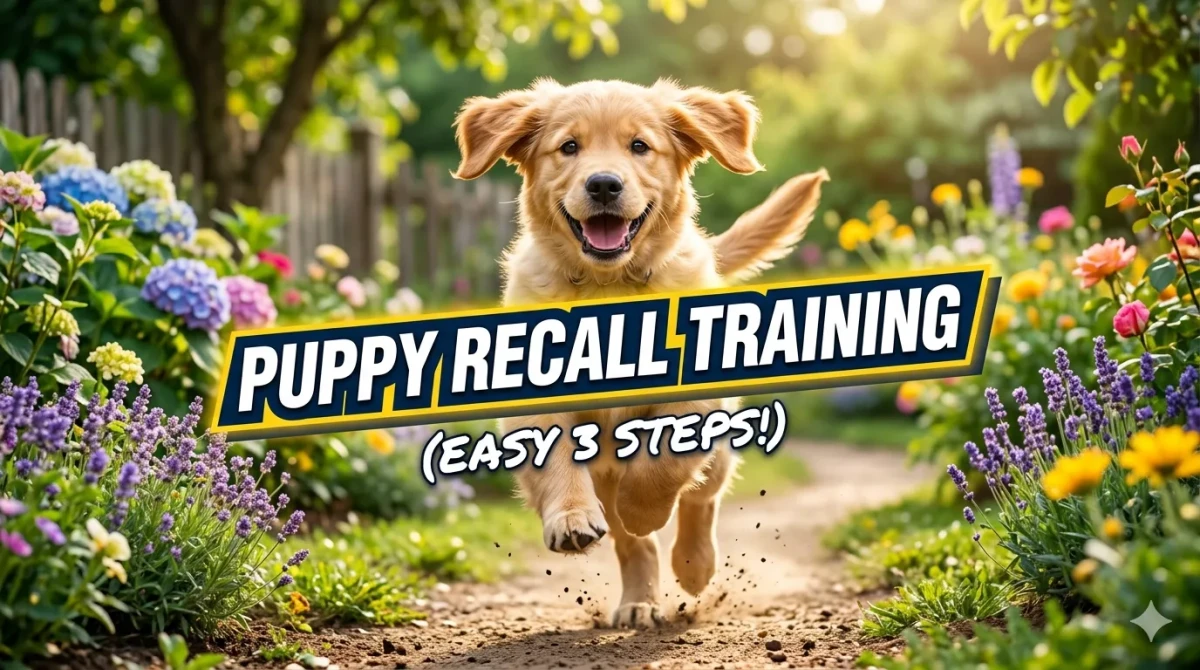
Why Teaching Your Puppy to Come Is Essential for Safety and Bonding
Training your puppy to come when called is one of the most critical skills you can teach. A reliable recall command doesn't just make walks easier—it can literally save your dog's life. Imagine your puppy darting toward a busy street, approaching an unfamiliar dog, or sniffing something potentially toxic. A strong "come" cue gives you the power to intervene instantly and keep your furry friend safe.
Featured Snippet Answer: To train a puppy to come when called, start indoors with minimal distractions. Use a happy tone, say your chosen cue like "come" or their name, reward immediately with high-value treats when they arrive, and gradually increase distance and distractions over multiple short sessions.
Beyond safety, recall training strengthens the bond between you and your puppy. When coming to you consistently leads to rewards, praise, and fun, your puppy learns that you are the source of good things. This builds trust, confidence, and a willingness to cooperate—even in challenging situations.
Many pet owners make the mistake of only practicing recall in easy environments. But real life is full of distractions: squirrels, other dogs, children playing, interesting smells. That's why effective recall training must progress systematically from simple to complex scenarios. This guide walks you through every stage, with practical tips, troubleshooting advice, and science-backed methods to help your puppy master this life-saving skill.
When to Start Recall Training: Age, Readiness, and Puppy Development
You can begin basic recall training as early as 8 weeks old, once your puppy knows their name and shows interest in interacting with you. At this age, puppies are highly impressionable and eager to learn through play and positive experiences. However, keep sessions extremely short—just 2 to 5 minutes—and always end on a high note.
Young puppies have limited attention spans and physical stamina. Forcing long training sessions can lead to frustration for both of you. Instead, weave recall practice into daily routines: call your puppy before mealtime, before play sessions, or when offering a favorite toy. This natural integration helps them associate the cue with positive outcomes without feeling pressured.
What age is best to start training a puppy to come?
Start recall training at 8–10 weeks with short, positive sessions. Focus on building a strong association between the cue, coming to you, and receiving rewards. Avoid using the command for negative experiences like baths or nail trims early on, as this can create avoidance behaviors that are hard to reverse later.
Can I train recall if my puppy is already 6 months or older?
Absolutely. While starting early is ideal, puppies and even adult dogs can learn reliable recall at any age. Older puppies may have developed bad habits, so patience and consistency are even more important. Go back to basics: start indoors, use high-value rewards, and rebuild the behavior step by step without punishment.
Step-by-Step Guide to Train Your Puppy to Come When Called

Step 1: Choose a Clear, Consistent Cue Word
Select one word or short phrase as your recall cue: "come," "here," or your puppy's name followed by "come." Use the exact same cue every single time. Avoid mixing phrases like "come here," "come on," "let's go," or "over here," which can confuse your puppy and slow learning.
Say your cue in a bright, happy, encouraging tone—never angry or demanding. Your voice should sound like an invitation to something wonderful, not a command to obey. Puppies respond to tone and emotion far more than the specific word itself.
Pro Tip: Practice saying your cue word in different pitches and volumes while keeping the tone positive. This helps your puppy recognize the command even if you're whispering or calling from a distance.
Step 2: Start Indoors With Zero Distractions
Begin training in a quiet room with no other people, pets, or tempting objects nearby. Sit or kneel on the floor a few feet away from your puppy. Show them a high-value treat, say your cue in a cheerful voice, and gently pat your legs or clap softly to encourage movement toward you.
The moment your puppy reaches you, immediately mark the behavior with a "yes!" or a clicker sound, then give the treat, enthusiastic praise, and a quick play session. This immediate reward reinforces the connection: "When I hear that word and go to my person, amazing things happen!"
Repeat this 5–10 times per session, 2–3 times daily. Keep sessions short and fun. If your puppy loses interest, end the session anyway—always finish on a success to maintain motivation.
Step 3: Add Distance and Mild Distractions Gradually
Once your puppy responds reliably from a few feet away, slowly increase the distance. Practice across the room, then in different rooms of your home. Introduce mild distractions one at a time: a toy on the floor, a family member walking nearby, or soft background music.
If your puppy fails to respond, don't repeat the cue multiple times—that teaches them to ignore you. Instead, reduce the difficulty: move closer, remove the distraction, or use a higher-value reward. Success builds confidence; failure builds confusion.
Key Principle: Only increase difficulty when your puppy succeeds at the current level 8 out of 10 times. This "80% rule" ensures steady progress without overwhelming your learner.
Step 4: Practice in Controlled Outdoor Settings With a Long Leash
Move training to a fenced yard or quiet park using a long training leash (15–30 feet). The long leash gives your puppy freedom to explore while ensuring you can gently guide them back if needed—no chasing, no pulling, no punishment.
Let your puppy sniff and wander. When they're not overly focused on something, say your cue in an excited voice. If they come, reward heavily with treats, praise, and play. If they don't respond, avoid repeating the cue. Instead, gently reel them in with the leash, then reward when they reach you. This teaches that the cue is non-optional, but still leads to good things.
Never use the long leash to jerk or punish your puppy. It's a safety tool, not a correction device. The goal is to build willingness, not compliance through force.
Step 5: Proof the Behavior in Real-World, High-Distraction Environments
Once your puppy responds reliably on a long leash, begin practicing in more challenging settings: busier parks, around other dogs (at a safe distance), or near interesting smells. Always start with lower distractions and gradually work up.
Use higher-value rewards for harder scenarios: small pieces of cooked chicken, cheese, freeze-dried liver, or a favorite squeaky toy. Rotate rewards to keep your puppy engaged and prevent boredom.
Keep sessions short—5 to 10 minutes max—and end on a successful recall. If your puppy struggles, go back to an easier environment for a few sessions to rebuild confidence before trying again.
Understanding Puppy Psychology: Why Recall Training Works

Puppies learn through association and consequence. When coming to you consistently predicts something wonderful (treats, play, affection), they're motivated to repeat the behavior. This is the core of positive reinforcement training.
Conversely, if coming to you sometimes leads to something unpleasant (being leashed to go home, ending playtime, getting a bath), your puppy may start to hesitate or avoid the cue. This isn't stubbornness—it's smart decision-making from their perspective.
Featured Snippet Answer: Puppies ignore recall cues when distractions are more rewarding than the offered reward, when the cue has been paired with negative outcomes, or when training progressed too quickly. Always make coming to you the most rewarding choice available.
To build a rock-solid recall, ensure that responding to your cue always leads to a positive outcome—even if you need to do something your puppy dislikes afterward. For example, if you call your puppy to come inside, reward them generously first, then calmly put on the leash. Over time, they'll learn that "come" predicts good things, even if the next step isn't their favorite.
Best Rewards and Tools for Recall Success

Choosing the right rewards is critical. Use high-value treats your puppy loves but rarely gets: small pieces of cooked chicken, turkey, cheese, hot dog, freeze-dried liver, or commercial training treats designed for high motivation. The treat should be tiny (pea-sized) so your puppy can eat it quickly and stay focused on training.
Rotate rewards to maintain novelty and prevent your puppy from getting bored. Pair treats with enthusiastic praise, petting, or a quick game of tug. For some puppies, the chance to chase a ball or squeaky toy is more motivating than food—know your individual dog.
Recommended Tools for Recall Training:
- Long training leash (15–30 feet) for safe outdoor practice without restricting freedom
- Treat pouch or waist bag for quick, hands-free reward access
- Clicker for precisely marking desired behavior (optional but highly effective)
- High-value treat variety pack to prevent reward fatigue
- Lightweight harness (not a collar) for attaching the long leash safely
- 🐾 Train Guinea Pig to Use Litter Box: Easy Guide
- 🐾 Stop Cats from Scratching Furniture: Pro Tips
- 🐾 How to Train a Puppy to Stay: Complete 2026 Guide
- 🐾 How to Teach a Bird to Shake Hands Complete Training Guide
Avoid using your puppy's regular kibble for recall training in distracting environments—it's often not motivating enough. Save kibble for mealtime or very low-distraction indoor practice.
Advanced Recall Techniques for Reliable Off-Leash Control

What is an emergency recall and how do I train it?
An emergency recall is a special, ultra-high-value cue reserved only for critical, potentially dangerous situations. Choose a unique word you never use otherwise, like "now!" "here!" or "touch!" Pair this cue exclusively with an extraordinary reward: a jackpot of multiple high-value treats, a favorite toy, or an exciting game.
Practice the emergency recall randomly 1–2 times per week in low-distraction settings to keep it powerful. Never use it for routine calls, and never follow it with something unpleasant. This cue must always predict the best thing that ever happens to your puppy.
How do I maintain recall as my puppy grows into adolescence?
Adolescence (roughly 6–18 months) is when dogs test boundaries and may "forget" previously learned skills. This is normal developmental behavior, not failure. Continue practicing recall throughout this stage, keeping sessions fun and rewarding.
Use variable reinforcement: sometimes reward with one treat, sometimes with a jackpot, sometimes with play. This unpredictability actually strengthens behavior long-term, similar to how slot machines keep people engaged. Always end training on a success, even if you need to reduce difficulty for the final repetition.
Can I train recall for multiple dogs or in multi-pet households?
Yes, but train each dog individually first. Once each puppy has a solid individual recall, practice with both dogs present but at a distance. Use distinct cues if needed (e.g., "Buddy, come!" vs. "Luna, come!"), or train them to respond to their name + "come" as a combined cue. Reward each dog separately to avoid resource guarding or competition.
Troubleshooting: What If Training Isn't Working?

My puppy comes sometimes but not always. What should I do?
Inconsistent response usually means the environment is too distracting, rewards aren't valuable enough, or training progressed too quickly. Go back a step: reduce distractions, increase reward value, and shorten distance. Practice in easier settings until reliability returns, then gradually advance again. Patience and consistency are key—recall is a skill built over months, not days.
My puppy runs away when I call them. How do I fix this?
If your puppy has learned that "come" means fun ends, they may actively avoid you. Stop using the cue for anything negative. Instead, practice "come" only when you can reward heavily, and never call your puppy to end playtime or go inside without first giving a reward. Rebuild the positive association from scratch if needed.
If your puppy runs away, avoid chasing—they'll see it as a game. Instead, run in the opposite direction while using an excited voice. Most puppies will instinctively chase you. When they catch up, reward generously. This flips the script: now coming to you is part of the fun.
Should I use punishment or correction if my puppy ignores the recall?
No. Punishment-based methods damage trust and create fear, making recall less reliable. Puppies associate coming to you with negative outcomes, so they'll hesitate or avoid the cue in the future. Positive reinforcement builds a willing, happy response. If you're struggling, consult a certified force-free dog trainer for personalized, humane support.
Safety First: Preventing Dangerous Situations During Training

Never practice off-leash recall in unfenced areas, near roads, or around wildlife until your puppy is 100% reliable in controlled settings. Even then, always assess the environment first. A moment of distraction can have serious consequences.
Always use a long leash in new or unpredictable environments. Teach children and visitors not to call your puppy for play without your supervision—unrewarded or inconsistently rewarded calls can weaken training progress.
Remember: a solid recall is a life-saving skill. It's worth investing time, patience, and high-value rewards to get it right. Your puppy's safety depends on it.
How Long Does It Take to Train a Reliable Recall?

Most puppies show basic understanding of the recall cue within 2–4 weeks of consistent daily practice. However, a fully proofed, distraction-proof recall that works in any environment can take 6–12 months of ongoing reinforcement.
Adolescence (6–18 months) often brings temporary setbacks as puppies test boundaries and become more independent. Stay consistent, keep training fun, and remember that maintenance is part of the process. Recall isn't a one-time fix—it's a lifelong skill that requires occasional refreshers, just like any other important behavior.
Realistic Timeline Expectations:
- Weeks 1–2: Basic indoor response with high-value rewards
- Weeks 3–4: Increased distance and mild distractions indoors
- Weeks 5–8: Controlled outdoor practice with long leash
- Months 3–6: Proofing in varied environments with moderate distractions
- Months 6–12: Maintenance, advanced distraction proofing, emergency recall training
- 🐾 Train Guinea Pig to Use Litter Box: Easy Guide
- 🐾 Stop Cats from Scratching Furniture: Pro Tips
- 🐾 How to Train a Puppy to Stay: Complete 2026 Guide
- 🐾 How to Teach a Bird to Shake Hands Complete Training Guide
Breed Considerations: Does My Puppy's Breed Affect Recall Training?

All puppies can learn reliable recall, but breed traits can influence motivation and distraction sensitivity. High-drive breeds (Border Collies, Australian Shepherds) may need more mental stimulation and challenging rewards. Scent hounds (Beagles, Bloodhounds) may be more easily distracted by smells. Independent breeds (Shiba Inus, Akitas) may require extra patience and higher-value incentives.
Regardless of breed, the principles remain the same: start simple, use high-value rewards, progress gradually, and never punish. Tailor your approach to your individual puppy's personality, energy level, and motivations—not just their breed label.
Quick Recap: Key Takeaways for Success

- Start early with short, positive sessions indoors using one clear cue
- Use high-value, varied rewards every single time your puppy responds
- Gradually increase distance and distractions only after mastering the current level
- Never punish slow responses—always reward effort to build trust
- Practice in varied environments with a long leash for safety before going off-leash
- Maintain training through adolescence with random, unpredictable rewards
- Make coming to you the most rewarding choice your puppy can make
- Train an emergency recall cue reserved for critical situations only
- Be patient: reliable recall takes months of consistent practice, not days
- 🐾 Train Guinea Pig to Use Litter Box: Easy Guide
- 🐾 Stop Cats from Scratching Furniture: Pro Tips
- 🐾 How to Train a Puppy to Stay: Complete 2026 Guide
- 🐾 How to Teach a Bird to Shake Hands Complete Training Guide
Final Thoughts: Build Trust, Not Just Obedience

Recall training isn't just about commands or control—it's about building a relationship where your puppy chooses to return to you because it's rewarding, safe, and fun. Focus on positivity, patience, and consistency. Celebrate small wins. Understand that setbacks are normal, especially during adolescence.
With time, the right approach, and plenty of high-value rewards, your puppy will develop a reliable, life-saving recall that strengthens your bond for years to come. Remember: every time your puppy comes when called, they're not just obeying—they're choosing you. Make that choice worth their while, and you'll have a partner for life.

0 Comments