.png)
How to Teach a Bird to Shake Hands Complete Training Guide
Understanding the Shake Hands Trick and Its Benefits for Pet Birds
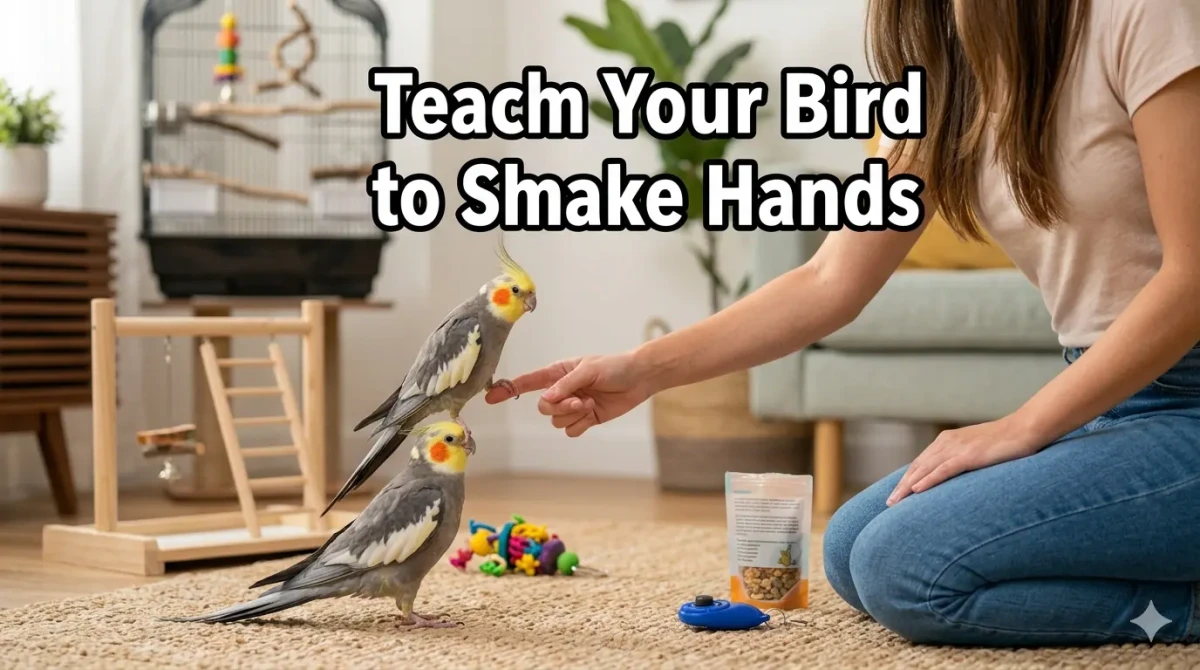
How to teach a bird to shake hands represents one of the most charming and interactive tricks you can train your feathered companion to perform. This behavior, where a bird lifts one foot to place it on your finger or hand in a "handshake" motion, demonstrates the remarkable intelligence and trainability of parrots, cockatiels, budgies, conures, and other pet bird species. Teaching birds to shake hands not only provides entertaining interactions but also strengthens the bond between you and your bird, provides mental stimulation that prevents boredom, and showcases the sophisticated learning capabilities of avian companions.
Birds are highly intelligent creatures capable of complex learning, problem solving, and social interaction. In the wild, parrots and related species learn behaviors through observation, trial and error, and social reinforcement from flock members. When teaching pet birds tricks like shaking hands, we tap into these natural learning abilities using positive reinforcement techniques that reward desired behaviors with treats, praise, or attention. Understanding how birds learn and what motivates them is essential for successful trick training.
This comprehensive guide covers everything you need to know about teaching your bird to shake hands, from foundational training principles and prerequisite skills to step by step instructions, troubleshooting common challenges, and advancing to more complex variations. Whether you have a young parrot eager to learn or an older bird ready for new challenges, these expert strategies will help you successfully train the shake hands trick while building a stronger, more communicative relationship with your avian companion.
Why Teaching Birds to Shake Hands Is Beneficial
Teaching birds to shake hands and other tricks provides benefits that extend far beyond simple entertainment. Trick training serves as powerful mental enrichment that prevents boredom, a common cause of behavioral problems in pet birds including feather plucking, screaming, and aggression. Birds are intelligent animals requiring regular cognitive challenges to remain happy and healthy, and trick training provides exactly this type of stimulation.
Training sessions strengthen the bond between you and your bird through positive, cooperative interaction. When birds learn that working with you results in rewards and enjoyable experiences, they become more engaged, trusting, and eager to interact. This improved relationship makes daily care, handling, and veterinary visits easier and less stressful for both bird and owner.
Trick training also builds confidence in shy or fearful birds by providing structured opportunities for success and positive reinforcement. Birds who master tricks often show increased willingness to try new behaviors, greater comfort with handling, and improved overall temperament. The shake hands trick specifically teaches birds to lift and place one foot on cue, a skill that can facilitate nail trimming, foot examinations, and other health related handling.
What Makes Birds Good Candidates for Trick Training?
Birds possess several characteristics that make them excellent candidates for trick training including the shake hands behavior. Understanding these traits helps you appreciate your bird's learning potential and approach training with appropriate expectations.
High intelligence characterizes most pet bird species, particularly parrots, cockatoos, macaws, African greys, and conures. These birds have large brains relative to body size and demonstrate problem solving abilities, memory, and social learning capabilities comparable to young children. This intelligence enables them to learn complex behaviors, understand cause and effect relationships, and generalize training across situations.
Social nature drives birds' motivation to interact with their human caregivers. In the wild, parrots live in complex social groups where cooperation and communication are essential for survival. Pet birds view their human families as flock members and are naturally motivated to engage in social interactions including training sessions that provide attention and reinforcement.
Food motivation makes most birds highly responsive to treat based training. Birds have fast metabolisms requiring frequent feeding, making food rewards particularly effective for shaping behavior. When combined with praise and attention, food treats create powerful reinforcement that accelerates learning and maintains enthusiasm for training.
Which Bird Species Learn to Shake Hands Most Easily?
While many bird species can learn to shake hands with proper training, some species demonstrate greater aptitude for trick training based on intelligence, trainability, and food motivation.
Cockatiels rank among the easiest species to teach tricks including shaking hands. These friendly, food motivated birds typically enjoy training sessions and learn quickly with positive reinforcement. Their moderate size and calm temperament make them ideal candidates for beginner bird trainers.
Budgies (parakeets) are surprisingly intelligent and capable of learning numerous tricks despite their small size. Budgies are often highly food motivated and eager to please, making them excellent students for shake hands training and other behaviors. Their small size requires patience but does not limit their learning capacity.
Conures including green cheeked conures, sun conures, and jenday conures are intelligent, playful birds who typically enjoy trick training. These energetic parrots often learn quickly and perform tricks enthusiastically, though their high energy requires patient, consistent training.
Larger parrots including African greys, Amazon parrots, macaws, and cockatoos are highly intelligent and capable of advanced trick training. These species often learn complex behaviors quickly but require experienced handling due to their size, strength, and sometimes strong personalities.
Prerequisites for Teaching Birds to Shake Hands

Successfully teaching birds to shake hands requires establishing foundational skills and conditions that support effective learning. These prerequisites create the framework for successful trick training and prevent frustration for both bird and trainer.
Target training provides essential foundation for shake hands training by teaching birds to touch a specific object (typically a chopstick or target stick) with their beak. This skill builds focus, willingness to follow guidance, and understanding of the training process. Birds who understand targeting typically learn shake hands and other tricks more quickly and reliably.
Step up training, teaching birds to step onto your hand or a perch on cue, establishes basic communication and handling skills necessary for trick training. Birds who reliably step up demonstrate the focus and cooperation needed for more advanced behaviors like shaking hands.
Clicker training or marker word training provides precise communication that accelerates learning. A clicker or consistent marker word like "yes" marks the exact moment your bird performs the desired behavior, bridging the gap between action and reward. This precise feedback helps birds understand exactly what behavior earns reinforcement.
What Equipment Do You Need for Shake Hands Training?
Having appropriate equipment simplifies shake hands training and sets you up for success. Gathering supplies before beginning sessions prevents interruptions and maintains your bird's focus.
High value treats form the foundation of effective bird training. Small, soft treats that your bird loves and can consume quickly work best. Options include small pieces of millet spray, pine nuts, sunflower seeds, commercial bird treats, or tiny pieces of healthy human foods like cooked sweet potato or unsalted nuts. Choose treats your bird receives only during training to maintain their special value.
A clicker or consistent marker word provides precise communication during training. Clickers offer consistent sound that birds easily distinguish, while marker words like "yes" work well if delivered with consistent tone and timing. Choose whichever method feels most comfortable and practice timing before training your bird.
A training perch or stable surface provides a consistent location for shake hands training sessions. Birds often learn behaviors contextually, so training in the same location initially helps them understand expectations. A tabletop perch, training stand, or cage top perch works well for shake hands training.
Your hand serves as the target for the shake behavior. Keep your hand steady and present it consistently to help your bird understand what is expected. Some trainers use a specific finger or hand position as a visual cue for the shake behavior.
How Do You Prepare Your Bird for Training?
Proper preparation maximizes training effectiveness and respects your bird's physical and emotional needs. Thoughtful preparation prevents frustration and builds positive associations with training.
Schedule training sessions when your bird is alert and motivated. Many birds respond best to training before meals when they are hungry and food rewards have maximum value. Avoid training when your bird is sleepy, stressed, molting heavily, or otherwise uncomfortable.
Choose a quiet, low distraction environment for initial shake hands training. Birds learn best when they can focus on you and the task without competing stimuli. Select a familiar location with minimal noise, foot traffic, or other pets that might interrupt concentration.
Keep training sessions short, typically 5 to 10 minutes maximum, to maintain your bird's attention and enthusiasm. Multiple brief sessions daily prove more effective than one long session. Always end on a positive note with a successful behavior and reward, even if you need to return to an easier trick.
Ensure your bird is healthy and comfortable before training. Pain, illness, or discomfort can prevent learning and create negative associations with training. If your bird suddenly refuses to participate or seems uncomfortable, consult an avian veterinarian to rule out health issues.
Step by Step Guide to Teaching the Shake Hands Trick

Teaching birds to shake hands requires systematic progression through clearly defined steps that build the behavior gradually. This methodical approach prevents overwhelming your bird while establishing reliable shaking on cue.
Begin by ensuring your bird is comfortable stepping up and targeting reliably. These foundational skills provide the focus and cooperation necessary for shake hands training. If your bird has not mastered these basics, spend time developing them before attempting shake hands training.
Position your bird on a stable perch where they feel secure and balanced. Birds are more likely to lift a foot when they feel stable, so ensure the perch is appropriate for your bird's size and provides good footing. Stand or sit facing your bird at a comfortable distance.
Gently touch or lightly press against the back of your bird's leg just above the foot. Many birds will naturally lift their foot when touched in this area. The instant your bird lifts their foot, even slightly, click or say your marker word and immediately offer a treat. This captures the natural behavior and begins building the association between foot lifting and rewards.
Repeat this capturing process multiple times per session, marking and rewarding each instance of foot lifting. Your bird will begin lifting their foot more frequently as they learn this behavior earns rewards. Be patient, as some birds take longer than others to offer the behavior naturally.
Once your bird is lifting their foot reliably when you touch their leg, begin presenting your finger or hand as a target for the foot. Hold your finger near the lifted foot and wait for your bird to place their foot on your finger. The instant contact is made, mark and reward immediately.
How Do You Add a Cue to the Shake Behavior?
Once your bird reliably lifts their foot and places it on your finger in anticipation of rewards, add a verbal or visual cue that signals the shake behavior. This transforms the captured behavior into a trained trick performed on command.
Choose a clear, consistent cue word like "shake" or "hello" or a hand signal such as presenting your hand palm up. Use the same cue every time to prevent confusion. Say the cue word clearly or present the hand signal just before you touch your bird's leg to prompt the foot lift.
Initially, you may need to say the cue and then prompt the foot lift by touching the leg. Mark and reward immediately when they place their foot on your finger after hearing the cue. With repetition, your bird will associate the cue with the behavior and begin lifting their foot in response to the command.
Gradually fade the physical prompt by touching the leg more lightly, then just presenting your finger without touching, until your bird lifts their foot and places it on your finger in response to just the cue. This shaping process refines the behavior into a clear shake response to your command.
Practice the cued shake behavior multiple times per session, always marking and rewarding successful responses. Consistency builds reliability, so practice daily in short sessions until your bird shakes reliably on cue.
How Do You Shape a Better Shake Response?
Shaping refines the shake behavior from simple foot lifting to a clear, deliberate handshake motion. This process requires patience and progressive criteria that gradually build the desired behavior.
Begin by rewarding any foot lift, then gradually raise your criteria to require the foot to touch your finger before marking and rewarding. If your bird initially lifts their foot near your finger, wait until they make contact before clicking and treating. This progressive shaping builds a more deliberate shake.
Encourage your bird to hold their foot on your finger briefly before rewarding. Initially mark and reward immediately upon contact, then gradually delay the mark by a fraction of a second, requiring your bird to hold the shake position momentarily. This builds a clearer, more deliberate shake behavior.
Use gentle guidance to help your bird understand the desired motion. If your bird is hesitant to place their foot on your finger, you can gently guide their foot with your other hand or use a target stick to encourage the movement. Mark and reward when they lift in the direction of your finger.
Be patient with the shaping process, as some birds develop clear shakes quickly while others require weeks of progressive training. Always reward approximations of the desired behavior and avoid raising criteria too quickly, which can frustrate your bird and slow learning.
Troubleshooting Common Shake Training Challenges

Even with careful training, birds may encounter challenges when learning to shake hands. Understanding common obstacles and their solutions helps you maintain progress without frustration for you or your bird.
If your bird does not lift their foot when you touch their leg, try training when they are more active or alert. Birds are more likely to shift weight and lift feet when engaged and interested. You can also gently encourage foot lifting by presenting a treat slightly to the side, prompting your bird to shift weight to reach it. Mark and reward any weight shift or foot movement.
If your bird lifts the wrong foot or seems confused, remain patient and reward any foot lifting initially. Birds may need time to understand which foot you prefer. Once they offer consistent lifting, you can shape preference for one foot by only rewarding lifts of that foot. However, many owners find birds shaking with either foot equally charming and do not worry about foot preference.
If your bird loses interest or becomes frustrated, shorten training sessions, increase reward value, or return to easier behaviors your bird enjoys performing. Training should remain fun and positive for both you and your bird. Never force training when your bird is clearly disengaged or stressed.
What If Your Bird Bites Instead of Shaking?
Biting during training sessions indicates your bird is uncomfortable, frustrated, or misunderstanding expectations. Addressing biting requires identifying the cause and adjusting your training approach accordingly.
Assess whether your bird is physically comfortable. Pain, illness, or discomfort can cause irritability and biting. Ensure your bird is healthy, the perch is comfortable, and training sessions are not too long or demanding. Consult an avian veterinarian if you suspect physical issues.
Evaluate whether training criteria are too advanced. If your bird is frustrated by expectations they cannot meet, they may bite to communicate discomfort. Return to easier behaviors your bird performs successfully, then progress more slowly through shaping steps. Set your bird up to succeed rather than pushing beyond their current abilities.
Check your timing and reinforcement. If your bird is not receiving clear feedback or adequate rewards, they may become frustrated. Ensure you are marking desired behaviors immediately and providing high value treats consistently. Clear communication and generous reinforcement prevent frustration.
Never punish biting, as this damages trust and can worsen behavioral problems. Instead, calmly end the training session if biting occurs, giving your bird a brief break. Resume training later with adjusted criteria or approach that prevents biting.
How Do You Handle Distractions During Training?
Distractions challenge training by competing for your bird's attention, but systematic exposure builds reliability in real world conditions. Teaching birds to shake despite distractions requires gradual progression and strategic management.
Begin training in quiet, low distraction environments until your bird reliably shakes on cue. Once the behavior is solid in calm conditions, gradually introduce mild distractions such as quiet background noise or movement at a distance. Ask for shake behaviors your bird can already perform reliably, then add the mild distraction. Reward successful shakes generously.
Increase distraction intensity gradually as your bird succeeds. Progress from quiet environments to rooms with moderate activity, then to more challenging scenarios with other pets, visitors, or interesting sounds. Always advance at your bird's pace, returning to easier levels if distractions prove overwhelming.
Use higher value rewards when training with distractions to maintain motivation despite competing interests. A bird who finds shake rewards more valuable than the distraction will choose to perform the behavior. Adjust reward value based on distraction level to ensure continued success.
Advancing Shake Behavior and Variations

Once your bird reliably shakes on cue in controlled environments, you can advance the behavior for greater reliability, duration, and practical applications. Advanced shake training builds on foundational skills while adding complexity and usefulness.
Practice shake commands in varied locations throughout your home to build generalization. Train in different rooms, on different perches, and in areas with varying levels of activity. Each new location requires initial practice at easier criteria before advancing to previous performance levels. This generalization ensures your bird shakes reliably regardless of environment.
Increase duration by requiring your bird to hold their foot on your finger longer before marking and rewarding. Start with brief holds of one second, then gradually extend to two seconds, five seconds, or longer. Duration training builds impulse control and creates more impressive shake performances.
Add distance by asking your bird to shake while you step back from the perch. Start with minimal distance and gradually increase how far you stand from your bird while giving the shake cue. Distance training builds reliability and allows you to request shakes from across the room.
How Do You Teach Shake with Both Feet?
Teaching birds to shake with both feet alternately creates an impressive variation that demonstrates advanced training skills. This behavior requires shaping each foot separately before combining them.
First, ensure your bird shakes reliably with one foot on cue. Then begin capturing and rewarding lifts of the other foot using the same techniques you used for the first foot. Your bird may naturally offer the other foot, or you may need to use gentle guidance to encourage lifting.
Once your bird lifts both feet reliably, begin cueing them separately. Use the same shake cue for both feet, or develop distinct cues like "shake left" and "shake right" if you want to specify which foot. Mark and reward each successful lift.
To teach alternating shakes, cue one foot, mark and reward, then immediately cue the other foot, mark and reward. Gradually reduce the time between cues until your bird waves alternately in sequence. This advanced behavior requires patience and consistent practice but creates an impressive trick.
What Other Tricks Build on Shake Training?
The shake trick provides foundation skills that facilitate teaching additional behaviors. Birds who master shaking often learn related tricks more quickly due to developed focus, understanding of training processes, and strengthened bond with their trainer.
Turn around tricks teach birds to spin in circles on cue, building on the balance and foot lifting skills developed through shake training. This trick uses similar shaping techniques and reinforces your bird's understanding of following cues for rewards.
Wave tricks teach birds to lift a foot and move it in a waving motion without contact. This builds on the foot lifting skills from shake training while adding a new movement pattern. Wave tricks work well for birds who enjoy performing for attention.
Fetch training teaches birds to retrieve small objects and return them to you, combining targeting, object interaction, and recall skills. Birds who understand shake training typically grasp fetch concepts quickly due to established training foundations.
Speaking or mimicry training can be combined with shake tricks to create impressive performances where birds shake and speak on cue. While not all birds are vocal learners, those who are often enjoy combining multiple trained behaviors.
Maintaining and Proofing Shake Behavior Long Term

Reliable shake behavior requires ongoing maintenance to prevent regression and ensure continued performance. Understanding how to maintain and proof shake tricks helps you preserve training investments over your bird's lifetime.
Practice shake commands regularly even after initial training is complete. Brief weekly reviews maintain behavior without requiring extensive time investment. Incorporate shake into daily interactions to provide natural reinforcement without formal training sessions.
Vary reinforcement schedules to build resistance to extinction. Once shake behavior is reliable, occasionally reward with high value treats, sometimes with lower value rewards, and sometimes with praise alone. Variable reinforcement creates behaviors that persist even when rewards are not guaranteed every time.
Continue proofing shake behavior by periodically testing in new environments, with novel distractions, or under slightly challenging conditions. These occasional challenges maintain reliability while identifying areas needing refreshers before problems develop.
How Often Should You Practice Shake Commands?
Maintenance frequency balances behavior preservation with avoiding overtraining that might reduce your bird's enthusiasm. Understanding optimal practice schedules helps you maintain reliable shaking without burdening you or your bird.
During initial learning, practice shake commands daily in short sessions of 5 to 10 minutes. Frequent brief practice builds neural pathways more effectively than infrequent long sessions, while respecting birds' attention spans and motivation levels.
Once shake behavior is reliable, reduce formal practice to 2 to 3 times weekly while incorporating shake into daily interactions naturally. Ask your bird to shake before treats, during play time, or when visitors arrive to provide practical reinforcement without dedicated training time.
For long term maintenance, practice shake commands at least weekly, varying location, duration, and distractions to maintain generalization. Occasional refresher sessions at easier criteria rebuild confidence if performance declines, preventing small issues from becoming significant problems.
What If Shake Behavior Regresses Over Time?
Behavioral regression occurs naturally and does not indicate training failure. Understanding normal fluctuations helps you respond appropriately without frustration when shake performance temporarily declines.
Identify potential causes of regression including environmental changes, health issues, or reduced practice. Address underlying factors first, as training cannot overcome physical discomfort, significant stress, or insufficient reinforcement.
Return to easier criteria temporarily when regression occurs. Practice shorter duration shakes, closer distances, or simpler environments to rebuild success and confidence. Gradually advance criteria again as your bird regains reliability, progressing at their current pace rather than previous performance levels.
Increase reward value temporarily during regression recovery to rebuild motivation. Higher value incentives encourage participation while reestablishing the behavior, then can be reduced once reliability returns.
Frequently Asked Questions About Teaching Birds to Shake Hands

How Long Does It Take to Teach a Bird to Shake Hands?
Training duration varies significantly based on individual bird factors including species, age, temperament, prior training experience, and consistency of practice. Most birds learn basic shake behavior within 2 to 6 weeks of daily short sessions, though reliable performance in varied situations may require 2 to 3 months of consistent practice.
Younger birds often learn more quickly due to greater neuroplasticity and fewer established habits, while older birds may require more patience but can absolutely learn to shake with appropriate methods. Birds with prior positive training experience typically progress faster than those new to structured learning.
Focus on progress rather than timelines, advancing criteria only when your bird succeeds consistently at current levels. Rushing progression creates confusion and setbacks, while patient, systematic training builds reliable behavior that lasts.
Can Older Birds Learn to Shake Hands?
Absolutely, older birds can learn to shake hands and often benefit significantly from mental stimulation that training provides. Age affects learning speed but not capacity, and many senior birds enjoy the engagement and positive interaction that training offers.
Adapt training methods for older birds by keeping sessions shorter, using higher value rewards, and accommodating any physical limitations. Birds with arthritis or balance issues may need modifications, but most older birds can learn shake with patience and appropriate techniques.
Senior birds may progress more slowly but often show excellent focus and motivation when training respects their pace and preferences. The bond strengthening and mental enrichment benefits of training make it worthwhile for birds of any age.
Should You Use Punishment If Your Bird Does Not Shake?
Never use punishment when birds do not perform shake commands, as punishment creates fear, damages trust, and does not teach desired behavior. Birds who experience punishment may avoid training entirely, become anxious around handlers, or develop additional behavioral problems.
Instead of punishment, simply reduce criteria and make the behavior easier when your bird does not shake. If your bird cannot shake on cue, return to capturing natural foot lifts or use gentle guidance to prompt the behavior. Success builds learning while failure creates frustration.
Focus on preventing errors through appropriate criteria setting rather than correcting mistakes after they occur. Setting your bird up to succeed through thoughtful progression proves far more effective than attempting to punish unwanted behavior.
Conclusion

Teaching birds to shake hands represents a rewarding journey that strengthens your bond with your avian companion while providing mental enrichment and entertainment. While trick training requires patience, consistency, and understanding of avian learning, the results demonstrate the remarkable intelligence and capabilities of pet birds.
Remember that successful bird training respects individual differences, uses positive reinforcement exclusively, maintains short engaging sessions, and progresses at your bird's pace. Setbacks and variations in performance are normal parts of the learning process, not indications of failure. Consistency, patience, and positive reinforcement build reliable shake behavior that enhances your relationship with your bird.
Your commitment to humane, effective training demonstrates your dedication to providing the best possible care and enrichment for your feathered friend. With the strategies and knowledge provided in this guide, you can confidently teach your bird to shake hands, creating a fun, impressive trick that showcases your bird's intelligence while deepening the connection between you.
🐱 আরও পড়ুন: Bird Training and Behavior

0 Comments