.png)
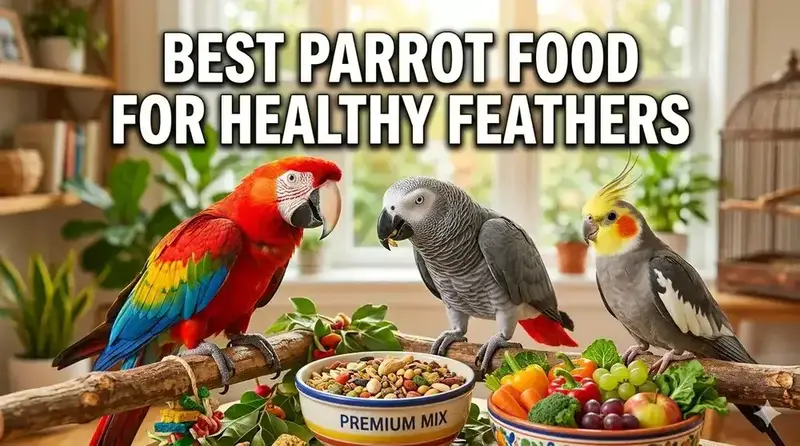
Choosing the best parrot food in USA for healthy feathers is essential for maintaining your feathered companion's vibrant plumage, overall health, and wellbeing. A parrot's feathers are one of the most visible indicators of their nutritional status and general health. Dull, brittle, or poorly maintained feathers often signal dietary deficiencies, while lustrous, colorful, and well-preened feathers reflect optimal nutrition. This comprehensive guide explores the best parrot foods available in the American market, focusing on formulations that promote exceptional feather health, vibrant coloration, and strong feather structure through complete and balanced nutrition.
Why Feather Health Matters for Parrots
Feathers serve multiple critical functions in a parrot's life beyond just appearance. Understanding the importance of feather health helps owners appreciate why nutrition deserves such careful attention.
Functions of Healthy Feathers
Flight capability: Strong, well-structured flight feathers enable safe, controlled flight and exercise. Weak or damaged feathers compromise mobility and can lead to injuries.
Temperature regulation: Feathers provide insulation, helping parrots maintain body temperature in varying climates. Healthy feathers trap air effectively for warmth and can be adjusted for cooling.
Protection: Feathers shield delicate skin from sun damage, minor injuries, and environmental hazards. Compromised feathers leave skin vulnerable.
Communication and mating: Vibrant, healthy feathers play crucial roles in social signaling, mate attraction, and species recognition. Dull plumage can affect social standing.
Waterproofing: Properly preened feathers with healthy oil distribution repel water, keeping skin dry and preventing infections.
Nutritional Impact on Feather Quality
Feathers consist of approximately 85-90% protein (primarily keratin), making protein quality and quantity fundamental to feather development. However, feathers also require:
- Amino acids: Methionine, lysine, and cysteine are critical for keratin synthesis
- Vitamins: A, D3, E, and B-complex vitamins support feather growth and pigmentation
- Minerals: Calcium, zinc, selenium, and manganese contribute to feather structure
- Fatty acids: Omega-3 and omega-6 fatty acids create feather sheen and flexibility
- Pigments: Carotenoids and other compounds create vibrant colors in many species
- 🐾 Senior Dog Food for Joint Health Complete Nutrition Guide
- 🐾 Fish Food for Growing Fry: Expert Nutrition & Feeding Guide
- 🐾 Organic Guinea Pig Food Options Complete Care Guide
During molting, nutritional demands increase dramatically as parrots grow entirely new feather coats. Inadequate nutrition during this period results in poor feather quality, stress bars (horizontal lines indicating growth interruption), and prolonged molting periods.
Essential Nutrients for Vibrant Feathers
Understanding which nutrients specifically support feather health helps you evaluate parrot foods and supplements effectively.
High-Quality Proteins
Protein forms the structural foundation of feathers. Parrots require complete proteins containing all essential amino acids:
- Methionine: A sulfur-containing amino acid essential for feather keratin production. Deficiency causes poor feather growth and dull plumage.
- Lysine: Supports protein synthesis and feather development. Often limited in seed-based diets.
- Cysteine: Another sulfur amino acid critical for strong feather shafts and barbs.
- 🐾 Senior Dog Food for Joint Health Complete Nutrition Guide
- 🐾 Fish Food for Growing Fry: Expert Nutrition & Feeding Guide
- 🐾 Organic Guinea Pig Food Options Complete Care Guide
Quality protein sources in parrot foods include legumes, eggs, soy, and various grains. Pelleted diets typically provide more balanced protein than seed mixes.
Vitamins for Feather Health
Vitamin A: Perhaps the most critical vitamin for feather quality. Maintains healthy skin and mucous membranes where feathers emerge. Deficiency causes dry, flaky skin, poor feather condition, and reduced color intensity. Found in orange and dark green vegetables, fortified pellets, and supplements.
Vitamin D3: Essential for calcium absorption, which affects feather follicle health. Parrots synthesize D3 from sunlight exposure, but indoor birds often need dietary sources. Deficiency leads to poor feather quality and excessive preening.
Vitamin E: A powerful antioxidant that protects feather cells from oxidative damage. Works with selenium to maintain feather integrity and prevent degradation. Supports skin health underlying feathers.
B-Complex Vitamins: Biotin (B7), riboflavin (B2), and other B vitamins support keratin production and feather pigmentation. Deficiencies cause brittle feathers and color fading.
Essential Fatty Acids
Omega-3 fatty acids: Found in flaxseed, chia seeds, walnuts, and fish oil (for some species). Reduce inflammation, support skin health, and create feather sheen.
Omega-6 fatty acids: Present in many seeds and vegetable oils. Necessary for feather structure but should be balanced with omega-3s. Excessive omega-6 without adequate omega-3 can cause inflammatory skin conditions.
The ideal omega-6 to omega-3 ratio for parrots is approximately 4:1 to 10:1, though exact requirements vary by species.
Minerals for Strong Feathers
Calcium: Critical for feather follicle function and overall bone health. Works with vitamin D3. Deficiency causes poor feather quality and excessive preening.
Zinc: Essential for protein synthesis and feather development. Deficiency causes feather abnormalities, delayed molting, and poor feather quality.
Selenium: Works with vitamin E as an antioxidant. Protects feather cells from damage. Deficiency rare but causes feather problems.
Manganese: Supports keratin formation and feather structure.
Carotenoids and Pigments
Many parrot species, particularly those with red, orange, and yellow plumage (like Macaws, Cockatiels, and some Conures), require dietary carotenoids to maintain vibrant colors. These pigments cannot be synthesized and must come from food sources like:
- Red and orange peppers
- Carrots and sweet potatoes
- Dark leafy greens
- Palm oil (in some commercial foods)
- 🐾 Senior Dog Food for Joint Health Complete Nutrition Guide
- 🐾 Fish Food for Growing Fry: Expert Nutrition & Feeding Guide
- 🐾 Organic Guinea Pig Food Options Complete Care Guide
Inadequate carotenoid intake causes color fading, particularly noticeable in red and yellow feathers.
Best Parrot Foods for Feather Health in 2026

Based on nutritional analysis, avian veterinarian recommendations, and feedback from thousands of USA parrot owners, these foods consistently deliver exceptional results for feather health.
Harrison's High Potency Formula
Harrison's remains the gold standard for parrot nutrition, with their High Potency formula particularly beneficial during molting and for birds needing enhanced nutrition.
Key features:
- 100% organic ingredients with no artificial additives
- High protein content (18-20%) from quality sources
- Enhanced vitamin and mineral levels for molting birds
- Optimal omega-3 to omega-6 fatty acid ratio
- No added sugars, colors, or preservatives
- USDA certified organic
- Available in coarse, super-fine, and fine textures
- 🐾 Senior Dog Food for Joint Health Complete Nutrition Guide
- 🐾 Fish Food for Growing Fry: Expert Nutrition & Feeding Guide
- 🐾 Organic Guinea Pig Food Options Complete Care Guide
Best for: Molting parrots, birds with poor feather quality, breeding birds, and those transitioning from seed diets
Price range: $25-$45 for 2-4 lb bags
Real-world performance: Most parrots show noticeable feather improvement within 4-8 weeks. Feathers become shinier, colors more vibrant, and molting completes more efficiently.
Roudybush Daily Maintenance
Roudybush offers scientifically-formulated pellets designed by avian nutritionist Dr. Tom Roudybush, with excellent amino acid profiles for feather development.
Key features:
- Complete and balanced nutrition
- High bioavailability ingredients
- No artificial colors or flavors
- Appropriate protein levels (14-16%)
- Enhanced with vitamins and minerals
- Low iron formula suitable for most species
- Available in multiple sizes for different parrot species
- 🐾 Senior Dog Food for Joint Health Complete Nutrition Guide
- 🐾 Fish Food for Growing Fry: Expert Nutrition & Feeding Guide
- 🐾 Organic Guinea Pig Food Options Complete Care Guide
Best for: Daily maintenance, feather quality improvement, and long-term health
Price range: $20-$40 for 2.25-4.4 lb bags
Real-world performance: Consistent feather quality improvement over 2-3 months. Particularly effective for maintaining feather condition between molts.
Zupreem Natural Pellets
Zupreem's Natural line provides balanced nutrition with natural ingredients and no artificial colors, making it excellent for feather health.
Key features:
- Natural ingredients without artificial colors
- Fortified with vitamins and minerals
- Appropriate protein and fat levels
- Multiple flavors from natural sources
- Species-specific formulations
- Widely available in USA pet stores
- 🐾 Senior Dog Food for Joint Health Complete Nutrition Guide
- 🐾 Fish Food for Growing Fry: Expert Nutrition & Feeding Guide
- 🐾 Organic Guinea Pig Food Options Complete Care Guide
Best for: Picky eaters transitioning from seeds, maintaining feather health, and budget-conscious owners
Price range: $15-$30 for 2-5 lb bags
Real-world performance: Good feather maintenance with gradual improvement. Natural colors appeal to owners concerned about artificial additives.
Pretty Bird Life Daily Formula
Pretty Bird offers high-quality pellets with enhanced nutrition for optimal feather development and maintenance.
Key features:
- High protein content for feather growth
- Enhanced vitamin and mineral profile
- Multiple sizes for different species
- Palatable formulation
- No artificial preservatives
- Includes essential fatty acids
- 🐾 Senior Dog Food for Joint Health Complete Nutrition Guide
- 🐾 Fish Food for Growing Fry: Expert Nutrition & Feeding Guide
- 🐾 Organic Guinea Pig Food Options Complete Care Guide
Best for: Active parrots, breeding birds, and those requiring enhanced nutrition
Price range: $18-$35 for 2-5 lb bags
Real-world performance: Noticeable feather improvement in 6-8 weeks. Good acceptance rate among various parrot species.
Mazuri Parrot Maintenance
Mazuri's research-backed formulations provide complete nutrition with specific attention to feather health and skin condition.
Key features:
- Scientifically formulated by avian nutritionists
- High-quality protein sources
- Balanced amino acid profile
- Enhanced with omega fatty acids
- No artificial colors or flavors
- Species-specific options
- 🐾 Senior Dog Food for Joint Health Complete Nutrition Guide
- 🐾 Fish Food for Growing Fry: Expert Nutrition & Feeding Guide
- 🐾 Organic Guinea Pig Food Options Complete Care Guide
Best for: Long-term feather maintenance, zoos and breeders, and evidence-based nutrition
Price range: $20-$38 for 2-5 lb bags
Real-world performance: Consistent results for feather quality. Professional-grade nutrition trusted by avian facilities.
Top's Parrot Food (Pellet and Seed Blend)
For parrots resistant to pellets alone, Top's offers high-quality blends combining pellets with seeds, nuts, and dried fruits.
Key features:
- Combination of pellets and natural ingredients
- Includes nuts and seeds for fatty acids
- Dried fruits for variety and nutrients
- More palatable for seed-addicted birds
- Better nutrition than seed-only diets
- 🐾 Senior Dog Food for Joint Health Complete Nutrition Guide
- 🐾 Fish Food for Growing Fry: Expert Nutrition & Feeding Guide
- 🐾 Organic Guinea Pig Food Options Complete Care Guide
Best for: Transitioning birds, picky eaters, and owners seeking compromise between nutrition and acceptance
Price range: $15-$28 for 2-5 lb bags
Real-world performance: Better feather quality than seed-only diets while maintaining high acceptance. Good transitional food.
Pellets vs. Seeds: The Feather Health Debate

One of the most contentious topics in parrot nutrition is whether pellets or seeds provide better nutrition for feather health. Understanding the advantages and limitations of each helps you make informed decisions.
Why Pellets Are Superior for Feather Health
Complete nutrition: Quality pellets are formulated to provide balanced protein, vitamins, minerals, and fatty acids in every bite. This prevents selective feeding and nutritional gaps that cause poor feather quality.
Consistent amino acid profile: Pellets contain measured levels of methionine, lysine, and cysteine essential for keratin production. Seed diets often lack adequate methionine.
Fortified vitamins and minerals: Pellets include optimal levels of vitamins A, D3, E, and B-complex, plus minerals like zinc and selenium that seeds lack.
Controlled fat content: Pellets prevent obesity while providing essential fatty acids. Seed diets, particularly those high in sunflower seeds, often contain excessive fat.
No selective feeding: Parrots cannot pick out favorite items and leave nutritionally important components, ensuring they receive complete nutrition.
Limitations of Seed-Only Diets
Nutritional deficiencies: Seeds are high in fat but deficient in vitamins A, D, calcium, and several amino acids. This leads to:
- Dull, brittle feathers
- Poor color intensity
- Delayed or incomplete molting
- Stress bars in feathers
- Excessive preening and feather picking
- Fatty liver disease affecting overall health
- 🐾 Senior Dog Food for Joint Health Complete Nutrition Guide
- 🐾 Fish Food for Growing Fry: Expert Nutrition & Feeding Guide
- 🐾 Organic Guinea Pig Food Options Complete Care Guide
Selective feeding: Parrots offered seed mixes typically choose high-fat seeds (sunflower, safflower) and ignore nutritionally superior but less tasty seeds, creating severe nutritional imbalances.
Obesity: High-fat seed diets cause weight gain, which stresses feather follicles and impairs feather quality.
Best Approach: Pellets as Foundation
Most avian veterinarians and nutritionists recommend:
- 75-80% high-quality pellets: Provides complete, balanced nutrition
- 15-20% fresh vegetables and fruits: Adds variety, moisture, and phytonutrients
- 5-10% seeds and nuts as treats: Provides enrichment and essential fatty acids without excess
- 🐾 Senior Dog Food for Joint Health Complete Nutrition Guide
- 🐾 Fish Food for Growing Fry: Expert Nutrition & Feeding Guide
- 🐾 Organic Guinea Pig Food Options Complete Care Guide
This approach maximizes feather health while maintaining dietary variety and enrichment.
Fresh Foods That Enhance Feather Health

While pellets provide complete nutrition, fresh foods add variety, moisture, and additional nutrients that support feather quality.
Best Vegetables for Feathers
Sweet potatoes and carrots: Rich in beta-carotene (converts to vitamin A) and carotenoids for vibrant feather colors, especially reds and yellows.
Dark leafy greens: Kale, collard greens, Swiss chard, and spinach provide vitamins A, E, K, and minerals essential for feather development.
Broccoli and cauliflower: High in vitamins C and K, plus sulfur compounds supporting keratin production.
Bell peppers: All colors, especially red, provide vitamin A, C, and carotenoids. Many parrots love the crunchy texture.
Sprouted seeds: Sprouted mung beans, lentils, and other legumes increase protein bioavailability and provide enzymes aiding nutrient absorption.
Fruits for Feather Quality
Papaya and mango: High in vitamins A and C, plus enzymes aiding digestion and nutrient absorption.
Berries: Blueberries, strawberries, and raspberries provide antioxidants protecting feather cells from damage.
Oranges and citrus: Vitamin C supports collagen formation for strong feather follicles (feed in moderation).
Protein-Rich Fresh Foods
Cooked legumes: Beans, lentils, and peas provide plant-based protein and amino acids.
Cooked eggs: Occasionally offer hard-boiled eggs (with shell crushed) for high-quality protein and calcium. Excellent during molting.
Sprouted seeds: Provide complete protein with all essential amino acids in highly digestible form.
Supplements for Enhanced Feather Health

While quality pellets provide complete nutrition, certain supplements can enhance feather health, particularly during molting or for birds with deficiencies.
When Supplements Are Necessary
- During molting periods (increased nutritional demands)
- Birds transitioning from seed to pellet diets
- Parrots with poor feather quality despite good diet
- Breeding or growing birds
- Birds recovering from illness or stress
- Indoor birds with limited sunlight exposure
- 🐾 Senior Dog Food for Joint Health Complete Nutrition Guide
- 🐾 Fish Food for Growing Fry: Expert Nutrition & Feeding Guide
- 🐾 Organic Guinea Pig Food Options Complete Care Guide
Recommended Supplements
Multivitamin supplements: Products like Nekton-S or VetaSol provide concentrated vitamins and amino acids. Use during molting or stress, not continuously (can cause vitamin toxicity).
Omega-3 fatty acids: Flaxseed oil or fish oil supplements (species-appropriate) enhance feather sheen and reduce inflammation. Add to food 2-3 times weekly.
Calcium supplements: Cuttlebone, mineral blocks, or liquid calcium for birds with deficiencies or breeding hens.
Probiotics: Support digestive health and nutrient absorption, indirectly improving feather quality.
Amino acid supplements: Products containing methionine and lysine can help birds with severe feather problems, though quality pellets should provide adequate amounts.
Supplement Safety
- Never exceed recommended doses
- Don't use multiple supplements simultaneously without veterinary guidance
- Choose products specifically formulated for birds
- Consult avian veterinarian before starting supplements
- Discontinue if adverse reactions occur
- 🐾 Senior Dog Food for Joint Health Complete Nutrition Guide
- 🐾 Fish Food for Growing Fry: Expert Nutrition & Feeding Guide
- 🐾 Organic Guinea Pig Food Options Complete Care Guide
Feeding Guidelines for Optimal Feather Health

Proper feeding practices maximize the nutritional benefits of quality food.
Daily Feeding Schedule
Morning: Offer fresh pellets and remove uneaten food from previous day. Provide fresh water.
Midday: Offer fresh vegetables and fruits. Remove after 2-4 hours to prevent spoilage.
Evening: Top up pellets if needed. Remove perishable foods.
Portion Sizes
General guidelines (adjust for individual bird):
- Small parrots (Budgies, Lovebirds): 1.5-2 tablespoons pellets daily
- Medium parrots (Cockatiels, Conures): 2-4 tablespoons pellets daily
- Large parrots (African Greys, Amazons): 1/4 to 1/2 cup pellets daily
- Very large parrots (Macaws, Cockatoos): 1/2 to 3/4 cup pellets daily
- 🐾 Senior Dog Food for Joint Health Complete Nutrition Guide
- 🐾 Fish Food for Growing Fry: Expert Nutrition & Feeding Guide
- 🐾 Organic Guinea Pig Food Options Complete Care Guide
Monitor body condition and adjust portions to maintain ideal weight. Obesity impairs feather quality.
Transitioning to Better Food
Switching from seed to pellet diets requires patience:
- Week 1-2: 75% old diet, 25% new pellets
- Week 3-4: 50% old diet, 50% new pellets
- Week 5-6: 25% old diet, 75% new pellets
- Week 7+: 100% pellets (with fresh foods)
- 🐾 Senior Dog Food for Joint Health Complete Nutrition Guide
- 🐾 Fish Food for Growing Fry: Expert Nutrition & Feeding Guide
- 🐾 Organic Guinea Pig Food Options Complete Care Guide
Make transition gradually to avoid stress and ensure acceptance. Never starve a bird into accepting new food.
Common Feather Problems and Nutritional Solutions

Understanding how nutrition affects specific feather problems helps you address issues effectively.
Dull, Lackluster Feathers
Causes: Vitamin A deficiency, inadequate protein, essential fatty acid deficiency
Solutions:
- Increase vitamin A through orange/dark green vegetables
- Ensure adequate protein from quality pellets
- Add omega-3 sources (flaxseed, walnuts in moderation)
- Consider multivitamin supplement during transition
- 🐾 Senior Dog Food for Joint Health Complete Nutrition Guide
- 🐾 Fish Food for Growing Fry: Expert Nutrition & Feeding Guide
- 🐾 Organic Guinea Pig Food Options Complete Care Guide
Brittle or Breaking Feathers
Causes: Protein deficiency, inadequate amino acids (especially methionine), mineral deficiencies
Solutions:
- Switch to high-quality pellet diet
- Ensure adequate protein (16-20% for most species)
- Add sprouted seeds or cooked legumes
- Provide mineral block or cuttlebone
- Consider amino acid supplement
- 🐾 Senior Dog Food for Joint Health Complete Nutrition Guide
- 🐾 Fish Food for Growing Fry: Expert Nutrition & Feeding Guide
- 🐾 Organic Guinea Pig Food Options Complete Care Guide
Faded or Loss of Color
Causes: Carotenoid deficiency, general malnutrition, liver disease from fatty diet
Solutions:
- Feed carotenoid-rich foods (red peppers, carrots, sweet potato)
- Reduce high-fat seeds
- Transition to balanced pellet diet
- Add palm oil or specialized color-enhancing foods (in moderation)
- Address underlying liver issues with veterinary care
- 🐾 Senior Dog Food for Joint Health Complete Nutrition Guide
- 🐾 Fish Food for Growing Fry: Expert Nutrition & Feeding Guide
- 🐾 Organic Guinea Pig Food Options Complete Care Guide
Stress Bars in Feathers
Causes: Nutritional interruption during feather growth, illness, stress, inadequate protein
Solutions:
- Ensure consistent, high-quality nutrition during molting
- Increase protein and calories during molt
- Reduce stressors in environment
- Add multivitamin during molting periods
- Provide adequate rest and sleep
- 🐾 Senior Dog Food for Joint Health Complete Nutrition Guide
- 🐾 Fish Food for Growing Fry: Expert Nutrition & Feeding Guide
- 🐾 Organic Guinea Pig Food Options Complete Care Guide
Excessive Preening or Feather Picking
Causes: Can be nutritional (vitamin/mineral deficiencies) or behavioral (boredom, stress)
Solutions:
- Rule out medical causes with avian veterinarian
- Ensure complete nutrition from quality pellets
- Add variety through fresh foods
- Check for skin parasites or infections
- Address behavioral causes (enrichment, social interaction)
- 🐾 Senior Dog Food for Joint Health Complete Nutrition Guide
- 🐾 Fish Food for Growing Fry: Expert Nutrition & Feeding Guide
- 🐾 Organic Guinea Pig Food Options Complete Care Guide
People Also Ask: Quick Answers

What is the best food for parrot feather growth?
High-quality pelleted diets like Harrison's High Potency or Roudybush provide the best nutrition for feather growth. These contain complete proteins, essential amino acids (methionine, lysine), vitamins A, D3, E, and minerals necessary for keratin production. Supplement with fresh vegetables rich in vitamin A and carotenoids for optimal results.
How long does it take to see feather improvement with better diet?
You'll typically see initial improvements in feather sheen and condition within 4-6 weeks of dietary changes. However, complete feather quality improvement requires a full molt cycle, which takes 2-3 months for most parrots. Patience is essential—feathers can only improve as new ones grow in.
Can seeds alone provide adequate nutrition for parrot feathers?
No, seed-only diets cannot provide adequate nutrition for healthy feathers. Seeds are deficient in vitamins A, D, calcium, and essential amino acids while being excessively high in fat. This leads to dull, brittle feathers, poor coloration, and health problems. Pellets should comprise 75-80% of diet for optimal feather health.
What vitamins are most important for parrot feathers?
Vitamin A is most critical for feather quality, followed by vitamins D3, E, and B-complex (especially biotin). Vitamin A maintains healthy skin and feather follicles, D3 supports calcium absorption, E protects feather cells from damage, and B vitamins support keratin production and pigmentation.
Should I give my parrot supplements for feather health?
If feeding a high-quality pelleted diet with fresh vegetables, supplements are usually unnecessary. However, during molting, stress, or transition from seeds, multivitamin supplements like Nekton-S can help. Always consult an avian veterinarian before adding supplements, as over-supplementation can cause toxicity.
Budget Considerations and Value

Quality parrot food is an investment in your bird's health, but costs vary significantly.
Price Ranges
- Budget ($10-$20 for 2-4 lbs): Basic pellet brands, seed mixes (not recommended as primary diet)
- Mid-range ($20-$35 for 2-4 lbs): Quality brands like Zupreem Natural, Pretty Bird, Mazuri
- Premium ($35-$50+ for 2-4 lbs): Top-tier brands like Harrison's Organic, Roudybush
- 🐾 Senior Dog Food for Joint Health Complete Nutrition Guide
- 🐾 Fish Food for Growing Fry: Expert Nutrition & Feeding Guide
- 🐾 Organic Guinea Pig Food Options Complete Care Guide
Cost-Per-Day Analysis
While premium foods cost more upfront, they prevent expensive veterinary bills from nutritional diseases. A parrot eating 1/4 cup daily uses approximately 2 lbs monthly. Premium food at $40/4 lbs costs about $0.33/day—less than most coffee purchases.
Where to Buy Parrot Food in USA
- Pet specialty stores: Petco, Petsmart, independent bird shops
- Online retailers: Chewy.com, Amazon, manufacturer websites
- Avian veterinarians: Often carry premium brands like Harrison's and Roudybush
- Subscription services: Auto-ship discounts of 5-10%
- 🐾 Senior Dog Food for Joint Health Complete Nutrition Guide
- 🐾 Fish Food for Growing Fry: Expert Nutrition & Feeding Guide
- 🐾 Organic Guinea Pig Food Options Complete Care Guide
Frequently Asked Questions

Can I mix different pellet brands?
Yes, you can mix different high-quality pellet brands, though it's not necessary. Some owners mix to provide variety or transition between brands. Ensure both brands are nutritionally complete and appropriate for your parrot's species.
Do organic parrot foods provide better feather health?
Organic foods like Harrison's eliminate pesticide exposure and artificial additives, which may benefit overall health. However, nutritional content for feather health is similar between organic and conventional quality pellets. Choose based on your preferences and budget.
How much fresh food should I offer daily?
Offer 1-2 tablespoons of fresh vegetables and fruits daily for small to medium parrots, 2-4 tablespoons for large parrots. Fresh foods should comprise 15-20% of total diet. Always remove uneaten fresh food after 2-4 hours.
Can I feed my parrot human food?
Many human foods are safe and healthy for parrots, including cooked vegetables, fruits, whole grains, and legumes. However, avoid toxic foods like avocado, chocolate, caffeine, alcohol, onions, garlic, and salty or sugary processed foods.
What if my parrot refuses pellets?
Transition gradually by mixing increasing amounts of pellets with seeds over 6-8 weeks. Try different brands, textures, and flavors. Make pellets more appealing by crushing and sprinkling on favorite foods. Never starve a bird into acceptance—work with an avian veterinarian if refusal persists.
Conclusion: Investing in Feather Health

Providing the best parrot food in USA for healthy feathers is one of the most important investments you can make in your feathered companion's health and happiness. Quality nutrition doesn't just create beautiful plumage—it supports immune function, organ health, longevity, and overall quality of life.
Remember that feather health reflects overall nutritional status. Dull, brittle, or poorly maintained feathers signal dietary deficiencies that affect more than appearance. By choosing high-quality pelleted diets as the foundation, supplementing with fresh vegetables and fruits, and avoiding excessive seeds, you provide the complete nutrition your parrot needs for exceptional feather quality.
Be patient during dietary transitions and molting periods. Feather improvement takes time—typically 2-3 months for visible results. Consistency matters more than perfection. Maintain regular feeding schedules, monitor your parrot's response to different foods, and adjust as needed based on feather quality, energy levels, and overall health.
Partner with an avian veterinarian for personalized nutrition advice, especially if your parrot has specific health concerns or persistent feather problems. Regular checkups help catch nutritional issues before they become severe.
Start today by evaluating your current parrot food, identifying gaps in nutrition, and making one positive change—whether switching to a quality pellet, adding vitamin-rich vegetables, or reducing high-fat seeds. Your parrot's feathers, and overall health, will reward your commitment to optimal nutrition with vibrant plumage, strong feathers, and years of companionship.

0 Comments