.png)
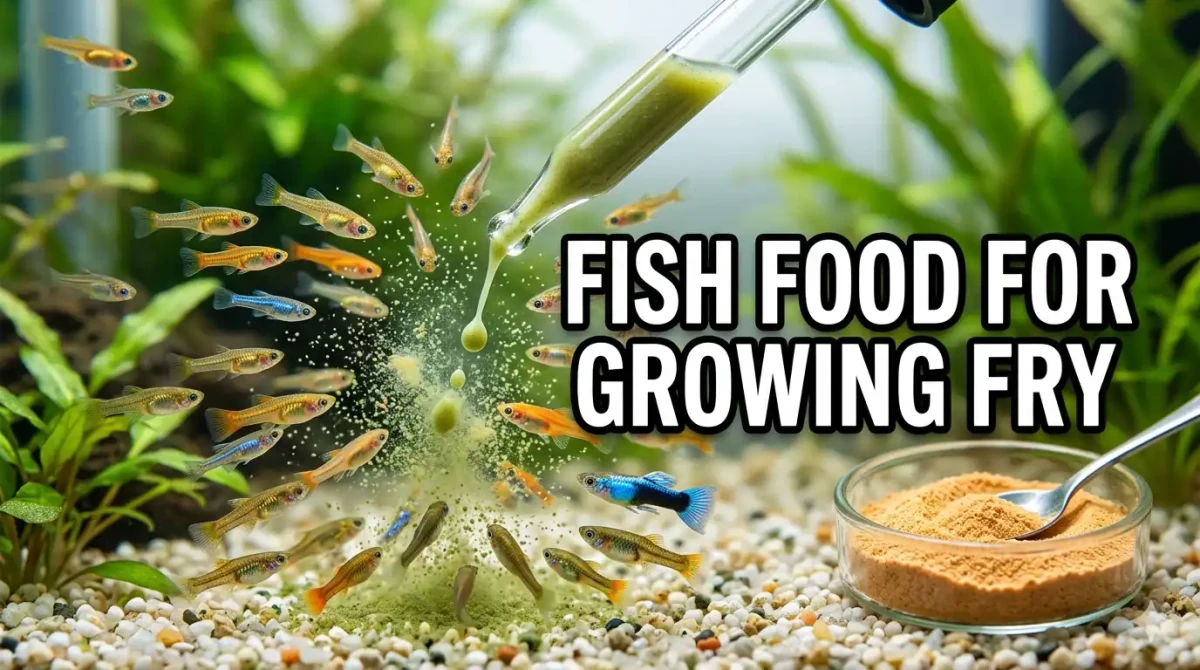
Why Fry Have Unique Nutritional Needs for Optimal Growth
Fish fry—the newly hatched, juvenile stage of fish development—have dramatically different nutritional requirements than adult fish. Their rapidly developing bodies, immature digestive systems, and high metabolic rates demand specialized nutrition to support healthy growth, strong immune function, proper coloration, and survival through the critical first weeks of life. Choosing the right fish food for growing fry isn't just about keeping them alive—it's about setting the foundation for lifelong health, vibrant coloration, and robust development.
Featured Snippet Answer: Growing fry need high-protein food (45-60% protein) with tiny particle sizes they can consume, highly digestible ingredients, and frequent feedings (4-6 times daily). Best options include live foods (baby brine shrimp, microworms), powdered fry foods, liquid fry foods, and micro pellets sized for tiny mouths. Feed small amounts frequently, maintain pristine water quality, and transition gradually to adult food as fry grow.
Fry are exceptionally vulnerable: their tiny mouths can only consume microscopic food particles, their digestive systems lack fully developed enzymes, and they have minimal energy reserves. Poor nutrition during this critical window can lead to stunted growth, weakened immunity, poor coloration, or high mortality. Understanding fry physiology and nutritional science empowers you to make informed choices that maximize survival and thriving development.
This comprehensive guide provides evidence-based, aquaculture-aligned strategies for selecting and feeding the best food for growing fry. You'll learn about fry developmental stages, protein and particle size requirements, live vs. commercial food options, species-specific recommendations, feeding techniques, and expert protocols for transitioning to adult diets. Whether you're raising betta fry, cichlid babies, livebearer young, or marine fish larvae, you'll find practical guidance to optimize their nutrition and survival.
Understanding Fry Development: Why Nutrition Is Critical
Before selecting food, it's essential to understand how fry develop and why their nutritional needs differ so dramatically from adults.
Key Fry Developmental Stages:
- Yolk-sac stage (0-3 days): Fry absorb nutrients from attached yolk sac; no external feeding required
- Free-swimming stage (3-7 days): Yolk absorbed; fry must begin external feeding; mouth gape extremely small (50-200 microns)
- Early juvenile stage (1-4 weeks): Rapid growth phase; digestive enzymes developing; can handle slightly larger particles
- Late juvenile stage (4-8 weeks): Digestive system maturing; can transition to small adult foods
- 🐾 Organic Dog Food Brands with Low Allergens Complete Guide
- 🐾 Bird Food for Improving Beak Health Complete Nutrition Guide
- 🐾 Best Fish Food for Tropical Aquarium Fish: Complete 2026 Guide
Why Fry Have Unique Nutritional Demands:
- High metabolic rate: Fry burn energy 3-5x faster than adults; require frequent, energy-dense nutrition
- Rapid growth: Fry can double in size weekly; need 45-60% protein for muscle and tissue development
- Immature digestive system: Lack fully developed enzymes; require highly digestible, pre-digested, or live foods
- Tiny mouth gape: Can only consume particles 50-200 microns initially; food size must match developmental stage
- Developing immune system: Vulnerable to disease; nutrition supports immune function and survival
- Coloration development: Early nutrition impacts pigment cell development and adult coloration
- 🐾 Organic Dog Food Brands with Low Allergens Complete Guide
- 🐾 Bird Food for Improving Beak Health Complete Nutrition Guide
- 🐾 Best Fish Food for Tropical Aquarium Fish: Complete 2026 Guide
Featured Snippet Answer: Fry have high metabolic rates, rapid growth demands, immature digestive systems, tiny mouths, and developing immunity. Their food must provide 45-60% highly digestible protein in particle sizes they can consume (50-200 microns initially), fed frequently (4-6x daily) to support survival and development.
When should I start feeding my fish fry?
Begin feeding when fry become free-swimming and have absorbed their yolk sac—typically 3-7 days post-hatch depending on species. Signs they're ready: horizontal swimming, actively searching for food, and visible empty yolk sac. Start with microscopic foods (infusoria, liquid fry food, powdered food) and gradually increase particle size as fry grow. Never feed before yolk absorption is complete; fry cannot digest external food while still utilizing yolk reserves.
Key Factors in Choosing Food for Growing Fry

Selecting appropriate fry food requires evaluating multiple critical factors beyond basic nutrition labels.
1. Particle Size and Mouth Gape Compatibility
The most critical factor: fry can only eat what fits in their tiny mouths.
- Yolk-sac to free-swimming (0-7 days): Particles 50-100 microns (infusoria, liquid food, powdered food)
- Early juvenile (1-2 weeks): Particles 100-300 microns (newly hatched brine shrimp, microworms, fine powder)
- Late juvenile (2-4 weeks): Particles 300-500 microns (larger brine shrimp, micro pellets, chopped foods)
- Transition stage (4-8 weeks): Particles 500+ microns (small adult foods, crushed flakes)
- Rule of thumb: Food particle should be no larger than the space between fry's eyes
- 🐾 Organic Dog Food Brands with Low Allergens Complete Guide
- 🐾 Bird Food for Improving Beak Health Complete Nutrition Guide
- 🐾 Best Fish Food for Tropical Aquarium Fish: Complete 2026 Guide
2. Protein Content and Quality
Protein drives growth, but quality and digestibility matter more than percentage alone.
- Protein percentage: 45-60% for optimal fry growth; lower percentages may cause stunting
- Protein source: Animal-based proteins (brine shrimp, egg, fish meal) are more bioavailable than plant proteins
- Digestibility: Look for >85% digestibility; live foods and hydrolyzed proteins are most digestible
- Amino acid profile: Ensure adequate lysine, methionine, and arginine for tissue development
- 🐾 Organic Dog Food Brands with Low Allergens Complete Guide
- 🐾 Bird Food for Improving Beak Health Complete Nutrition Guide
- 🐾 Best Fish Food for Tropical Aquarium Fish: Complete 2026 Guide
3. Fat Content for Energy
Fat provides concentrated energy for rapid growth and development.
- Optimal range: 12-20% fat for most fry species
- Quality sources: Fish oil, krill oil, or egg lipids provide essential omega-3s (DHA/EPA)
- Balance: Too little fat slows growth; too much can cause digestive issues or water quality problems
- 🐾 Organic Dog Food Brands with Low Allergens Complete Guide
- 🐾 Bird Food for Improving Beak Health Complete Nutrition Guide
- 🐾 Best Fish Food for Tropical Aquarium Fish: Complete 2026 Guide
4. Essential Nutrients for Development
Beyond protein and fat, specific nutrients support critical developmental processes.
- DHA/EPA (omega-3s): Critical for brain, eye, and nervous system development
- Vitamins A, D3, E, C: Support immune function, bone development, and antioxidant protection
- Calcium and phosphorus: Essential for skeletal development; maintain ~1.5:1 ratio
- Carotenoids: Support pigment cell development and adult coloration
- Probiotics/prebiotics: Support developing gut microbiome and digestive health
- 🐾 Organic Dog Food Brands with Low Allergens Complete Guide
- 🐾 Bird Food for Improving Beak Health Complete Nutrition Guide
- 🐾 Best Fish Food for Tropical Aquarium Fish: Complete 2026 Guide
5. Water Quality Impact
Fry food choices directly affect the delicate water quality fry require.
- Low waste production: Choose highly digestible foods that minimize ammonia/nitrite spikes
- Minimal clouding: Powdered/liquid foods should dissolve cleanly without fouling water
- Easy removal of uneaten food: Prevents decomposition and water quality crashes
- Compatibility with fry tank setup: Consider filtration, water changes, and tank size
- 🐾 Organic Dog Food Brands with Low Allergens Complete Guide
- 🐾 Bird Food for Improving Beak Health Complete Nutrition Guide
- 🐾 Best Fish Food for Tropical Aquarium Fish: Complete 2026 Guide
Featured Snippet Answer:
Choose fry food with: particle size matching mouth gape (50-500 microns based on age), 45-60% highly digestible animal protein, 12-20% quality fat, essential nutrients (DHA, vitamins, carotenoids), and minimal water quality impact. Match food type to fry developmental stage and species-specific needs.
Types of Fry Food: Options, Pros, and Cons

Multiple food types suit different fry species, ages, and keeper capabilities.
1. Live Foods: The Gold Standard for Fry Nutrition
Live foods provide optimal nutrition, stimulate natural feeding behaviors, and are highly digestible.
Infusoria (for newly free-swimming fry):
- What it is: Microscopic organisms (paramecia, rotifers) cultured from plant matter
- Best for: Egg-layer fry with tiny mouths (bettas, gouramis, killifish) in first 3-7 days
- Pros: Perfect particle size (50-100 microns), highly digestible, stimulates natural hunting
- Cons: Requires culturing (2-3 days lead time), short shelf life, variable nutrient content
- Culturing tip: Steep organic plant matter (lettuce, grass) in dechlorinated water; harvest when water turns cloudy
- 🐾 Organic Dog Food Brands with Low Allergens Complete Guide
- 🐾 Bird Food for Improving Beak Health Complete Nutrition Guide
- 🐾 Best Fish Food for Tropical Aquarium Fish: Complete 2026 Guide
Baby Brine Shrimp (BBS):
- What it is: Newly hatched Artemia nauplii (24-hour old brine shrimp)
- Best for: Most fry species from day 3-4 onward; ideal for cichlids, livebearers, larger egg-layers
- Pros: High protein (50%+), excellent amino acid profile, highly digestible, stimulates feeding response
- Cons: Requires hatching setup (24-hour incubation), short viability (8-12 hours post-hatch), moderate cost
- Hatching tip: Use marine salt, air stone, and 80°F water; harvest nauplii before they develop shells
- 🐾 Organic Dog Food Brands with Low Allergens Complete Guide
- 🐾 Bird Food for Improving Beak Health Complete Nutrition Guide
- 🐾 Best Fish Food for Tropical Aquarium Fish: Complete 2026 Guide
Microworms and Walter Worms:
- What it is: Tiny nematodes (0.5-2mm) cultured on oatmeal or other media
- Best for: Fry that have outgrown infusoria but aren't ready for BBS (days 5-14)
- Pros: Easy to culture at home, highly digestible, crawls (stimulates bottom-feeding fry)
- Cons: Lower protein than BBS (~35%), can foul water if overfed, requires culture maintenance
- 🐾 Organic Dog Food Brands with Low Allergens Complete Guide
- 🐾 Bird Food for Improving Beak Health Complete Nutrition Guide
- 🐾 Best Fish Food for Tropical Aquarium Fish: Complete 2026 Guide
Vinegar Eels:
- What it is: Tiny nematodes (Turbatrix aceti) cultured in vinegar
- Best for: Surface-feeding fry with tiny mouths; alternative to infusoria
- Pros: Easy culture, swims actively (stimulates feeding), highly digestible
- Cons: Lower nutritional density than BBS, vinegar residue may affect water pH if overfed
- 🐾 Organic Dog Food Brands with Low Allergens Complete Guide
- 🐾 Bird Food for Improving Beak Health Complete Nutrition Guide
- 🐾 Best Fish Food for Tropical Aquarium Fish: Complete 2026 Guide
2. Powdered Fry Foods: Convenient Commercial Options
Commercial powdered foods offer convenience and consistent nutrition without culturing.
Characteristics:
- Particle size: 50-300 microns; choose based on fry age/species
- Composition: Typically fish meal, egg, spirulina, vitamins, minerals
- Application: Sprinkle tiny amounts on water surface; sinks slowly for mid-water feeders
- 🐾 Organic Dog Food Brands with Low Allergens Complete Guide
- 🐾 Bird Food for Improving Beak Health Complete Nutrition Guide
- 🐾 Best Fish Food for Tropical Aquarium Fish: Complete 2026 Guide
Pros:
- Convenient: no culturing or preparation required
- Consistent nutrition: standardized protein, vitamin, and mineral levels
- Long shelf life: store dry for months
- Species-specific formulas: options for different fry types
- 🐾 Organic Dog Food Brands with Low Allergens Complete Guide
- 🐾 Bird Food for Improving Beak Health Complete Nutrition Guide
- 🐾 Best Fish Food for Tropical Aquarium Fish: Complete 2026 Guide
Cons:
- Water quality impact: can cloud water if overfed; requires careful portion control
- Lower palatability: some fry prefer live movement; may require training to accept
- Digestibility: generally lower than live foods; choose highly digestible formulations
- 🐾 Organic Dog Food Brands with Low Allergens Complete Guide
- 🐾 Bird Food for Improving Beak Health Complete Nutrition Guide
- 🐾 Best Fish Food for Tropical Aquarium Fish: Complete 2026 Guide
Top Picks:
- Hikari First Bites: Micro-pellets that soften in water; high protein, vitamins, easy to use
- Sera Micron: Ultra-fine powder with spirulina; excellent for tiny mouths
- NorthFin Fry Starter: High-protein powder with probiotics; minimal water clouding
- 🐾 Organic Dog Food Brands with Low Allergens Complete Guide
- 🐾 Bird Food for Improving Beak Health Complete Nutrition Guide
- 🐾 Best Fish Food for Tropical Aquarium Fish: Complete 2026 Guide
3. Liquid Fry Foods: Easy Application for Tiny Fry
Liquid foods provide microscopic nutrition in easy-to-dispense form.
Characteristics:
- Composition: Suspended microscopic particles (egg, plankton, vitamins) in liquid base
- Application: Drop tiny amounts directly into water; disperses evenly
- Particle size: 50-150 microns; ideal for newly free-swimming fry
- 🐾 Organic Dog Food Brands with Low Allergens Complete Guide
- 🐾 Bird Food for Improving Beak Health Complete Nutrition Guide
- 🐾 Best Fish Food for Tropical Aquarium Fish: Complete 2026 Guide
Pros:
- Extremely easy to use: no preparation, precise dosing
- Perfect for tiny mouths: particles remain suspended for surface/mid-water feeders
- Good nutrient profile: often fortified with vitamins and fatty acids
- 🐾 Organic Dog Food Brands with Low Allergens Complete Guide
- 🐾 Bird Food for Improving Beak Health Complete Nutrition Guide
- 🐾 Best Fish Food for Tropical Aquarium Fish: Complete 2026 Guide
Cons:
- Water quality: can foul water quickly if overfed; requires excellent filtration/water changes
- Cost: typically more expensive per feeding than powdered or live options
- Shelf life: shorter than dry foods once opened; refrigeration required
- 🐾 Organic Dog Food Brands with Low Allergens Complete Guide
- 🐾 Bird Food for Improving Beak Health Complete Nutrition Guide
- 🐾 Best Fish Food for Tropical Aquarium Fish: Complete 2026 Guide
Top Picks:
- API Fry Food: Liquid suspension with egg and plankton; easy to dose
- Tetra Liquifry No. 1: Specifically for egg-layer fry; fine particles, vitamin-fortified
- Hagen Exo-Terra Liquid Fry Food: Natural ingredients, minimal clouding
- 🐾 Organic Dog Food Brands with Low Allergens Complete Guide
- 🐾 Bird Food for Improving Beak Health Complete Nutrition Guide
- 🐾 Best Fish Food for Tropical Aquarium Fish: Complete 2026 Guide
4. Micro Pellets: Transition Foods for Growing Fry
Micro pellets bridge the gap between powdered foods and adult diets.
Characteristics:
- Particle size: 200-500 microns; suitable for 2-4 week old fry
- Composition: Compressed high-protein ingredients that soften in water
- Application: Sprinkle small amounts; sinks slowly or floats depending on formulation
- 🐾 Organic Dog Food Brands with Low Allergens Complete Guide
- 🐾 Bird Food for Improving Beak Health Complete Nutrition Guide
- 🐾 Best Fish Food for Tropical Aquarium Fish: Complete 2026 Guide
Pros:
- Convenient transition: helps fry accept adult food formats
- Reduced water fouling: pellets dissolve more cleanly than powders
- Nutrient density: concentrated nutrition in small particles
- 🐾 Organic Dog Food Brands with Low Allergens Complete Guide
- 🐾 Bird Food for Improving Beak Health Complete Nutrition Guide
- 🐾 Best Fish Food for Tropical Aquarium Fish: Complete 2026 Guide
Cons:
- Size limitations: too large for very young fry; must match developmental stage
- Palatability: some fry prefer live movement; may require gradual introduction
- 🐾 Organic Dog Food Brands with Low Allergens Complete Guide
- 🐾 Bird Food for Improving Beak Health Complete Nutrition Guide
- 🐾 Best Fish Food for Tropical Aquarium Fish: Complete 2026 Guide
Top Picks:
- Hikari Micro Pellets: High protein, softens quickly, minimal clouding
- Omega One Small Pellets: Natural ingredients, high digestibility
- New Life Spectrum Small Fish Formula: High protein, carotenoids for color
- 🐾 Organic Dog Food Brands with Low Allergens Complete Guide
- 🐾 Bird Food for Improving Beak Health Complete Nutrition Guide
- 🐾 Best Fish Food for Tropical Aquarium Fish: Complete 2026 Guide
5. Homemade/Alternative Options
For experienced keepers, homemade options can provide excellent nutrition.
Egg Yolk Slurry:
- Preparation: Hard-boil egg, mash yolk with water to create fine suspension
- Best for: Emergency feeding or supplementing other foods
- Pros: Readily available, high protein/fat, inexpensive
- Cons: Fouls water extremely quickly; use sparingly and remove uneaten portions immediately
- 🐾 Organic Dog Food Brands with Low Allergens Complete Guide
- 🐾 Bird Food for Improving Beak Health Complete Nutrition Guide
- 🐾 Best Fish Food for Tropical Aquarium Fish: Complete 2026 Guide
Chopped Live Foods:
- Preparation: Finely chop adult brine shrimp, daphnia, or bloodworms
- Best for: Larger fry (2+ weeks) that can handle small pieces
- Pros: High nutrition, stimulates feeding response
- Cons: Labor-intensive, inconsistent particle size, can foul water
- 🐾 Organic Dog Food Brands with Low Allergens Complete Guide
- 🐾 Bird Food for Improving Beak Health Complete Nutrition Guide
- 🐾 Best Fish Food for Tropical Aquarium Fish: Complete 2026 Guide
Species-Specific Fry Food Recommendations

Different fish species have unique fry requirements. Tailor food selection to your fry's biology.
Livebearer Fry (Guppies, Platies, Mollies, Swordtails)
Characteristics: Born free-swimming, relatively large (3-5mm), hardy, omnivorous
Recommended Foods:
- Days 0-3: Powdered fry food or liquid food; baby brine shrimp if large enough
- Days 4-14: Baby brine shrimp (primary), microworms, high-protein powdered food
- Weeks 2-4: BBS + micro pellets; introduce crushed adult flakes gradually
- Weeks 4-8: Transition to small adult foods; continue protein-rich diet for growth
- 🐾 Organic Dog Food Brands with Low Allergens Complete Guide
- 🐾 Bird Food for Improving Beak Health Complete Nutrition Guide
- 🐾 Best Fish Food for Tropical Aquarium Fish: Complete 2026 Guide
Feeding Tips:
- Livebearers are robust eaters; focus on high-protein foods for rapid growth
- Feed 4-5 times daily in small amounts; they have high metabolisms
- Separate by size if possible to prevent larger fry from outcompeting smaller siblings
- 🐾 Organic Dog Food Brands with Low Allergens Complete Guide
- 🐾 Bird Food for Improving Beak Health Complete Nutrition Guide
- 🐾 Best Fish Food for Tropical Aquarium Fish: Complete 2026 Guide
Betta and Gourami Fry (Bubble-Nest Builders)
Characteristics: Extremely tiny at hatch (2-3mm), delicate, require microscopic food initially
Recommended Foods:
- Days 0-3: Infusoria or liquid fry food exclusively; mouths too small for most commercial foods
- Days 4-7: Continue infusoria; introduce vinegar eels or finely powdered food
- Days 8-14: Baby brine shrimp (newly hatched), microworms, fine powdered food
- Weeks 2-4: BBS + micro pellets; gradually increase particle size
- Weeks 4-8: Transition to small adult foods; maintain high protein for color development
- 🐾 Organic Dog Food Brands with Low Allergens Complete Guide
- 🐾 Bird Food for Improving Beak Health Complete Nutrition Guide
- 🐾 Best Fish Food for Tropical Aquarium Fish: Complete 2026 Guide
Feeding Tips:
- Betta fry are surface-feeders initially; choose foods that remain suspended
- Extreme care with water quality: tiny fry are highly sensitive to ammonia
- Patience is critical: betta fry grow slowly; don't rush food transitions
- 🐾 Organic Dog Food Brands with Low Allergens Complete Guide
- 🐾 Bird Food for Improving Beak Health Complete Nutrition Guide
- 🐾 Best Fish Food for Tropical Aquarium Fish: Complete 2026 Guide
Cichlid Fry (African, South American, Dwarf)
Characteristics: Vary widely by species; many are mouthbrooded or guarded; often larger at hatch
Recommended Foods:
- Days 0-5: Depending on species: infusoria (small cichlids) or BBS (larger species)
- Days 6-14: Baby brine shrimp (primary food for most cichlid fry)
- Weeks 2-4: BBS + high-protein powdered food or micro pellets
- Weeks 4-8: Transition to small cichlid pellets; maintain high protein for growth
- 🐾 Organic Dog Food Brands with Low Allergens Complete Guide
- 🐾 Bird Food for Improving Beak Health Complete Nutrition Guide
- 🐾 Best Fish Food for Tropical Aquarium Fish: Complete 2026 Guide
Feeding Tips:
- Cichlid fry are often aggressive feeders; ensure all fry get access to food
- High protein (50%+) supports rapid growth characteristic of many cichlids
- Monitor for cannibalism; separate by size if aggression occurs
- 🐾 Organic Dog Food Brands with Low Allergens Complete Guide
- 🐾 Bird Food for Improving Beak Health Complete Nutrition Guide
- 🐾 Best Fish Food for Tropical Aquarium Fish: Complete 2026 Guide
Goldfish and Koi Fry
Characteristics: Small at hatch, omnivorous, produce significant waste
Recommended Foods:
- Days 0-3: Infusoria or liquid food; powdered fry food
- Days 4-14: Baby brine shrimp, microworms, high-protein powdered food
- Weeks 2-4: BBS + micro pellets; introduce spirulina-based foods for omnivorous needs
- Weeks 4-8: Transition to small goldfish pellets; balance protein with plant matter
- 🐾 Organic Dog Food Brands with Low Allergens Complete Guide
- 🐾 Bird Food for Improving Beak Health Complete Nutrition Guide
- 🐾 Best Fish Food for Tropical Aquarium Fish: Complete 2026 Guide
Feeding Tips:
- Goldfish fry produce significant waste; prioritize water quality with frequent small water changes
- Omnivorous needs: include some plant-based nutrition (spirulina) as they grow
- Growth is rapid; adjust food size frequently to match mouth development
- 🐾 Organic Dog Food Brands with Low Allergens Complete Guide
- 🐾 Bird Food for Improving Beak Health Complete Nutrition Guide
- 🐾 Best Fish Food for Tropical Aquarium Fish: Complete 2026 Guide
Marine Fish Fry (Clownfish, Gobies, etc.)
Characteristics: Often extremely tiny, require specialized marine nutrition, sensitive to water parameters
Recommended Foods:
- Days 0-5: Rotifers (enriched with phytoplankton) for most marine fry
- Days 6-14: Rotifers + newly hatched brine shrimp (enriched with marine oils)
- Weeks 2-4: BBS (enriched) + marine micro pellets
- Weeks 4-8: Transition to small marine adult foods
- 🐾 Organic Dog Food Brands with Low Allergens Complete Guide
- 🐾 Bird Food for Improving Beak Health Complete Nutrition Guide
- 🐾 Best Fish Food for Tropical Aquarium Fish: Complete 2026 Guide
Feeding Tips:
- Marine fry often require live foods exclusively in early stages
- Enrich live foods with marine phytoplankton and DHA/EPA supplements
- Water quality is paramount: marine systems are less forgiving of waste
- 🐾 Organic Dog Food Brands with Low Allergens Complete Guide
- 🐾 Bird Food for Improving Beak Health Complete Nutrition Guide
- 🐾 Best Fish Food for Tropical Aquarium Fish: Complete 2026 Guide
Feeding Techniques and Schedules for Optimal Fry Growth

How you feed matters as much as what you feed. Proper technique maximizes nutrition and minimizes risks.
Feeding Frequency by Age
Days 0-7 (Newly free-swimming):
- Feed 6-8 times daily in tiny amounts
- Fry have tiny stomachs and fast metabolisms; frequent small meals prevent starvation and water fouling
- Focus on survival: ensure food is always available but remove uneaten portions after 15-30 minutes
- 🐾 Organic Dog Food Brands with Low Allergens Complete Guide
- 🐾 Bird Food for Improving Beak Health Complete Nutrition Guide
- 🐾 Best Fish Food for Tropical Aquarium Fish: Complete 2026 Guide
Days 8-21 (Early juvenile):
- Feed 4-6 times daily
- Increase portion sizes slightly as fry grow
- Begin introducing variety: rotate between live, powdered, and liquid foods
- 🐾 Organic Dog Food Brands with Low Allergens Complete Guide
- 🐾 Bird Food for Improving Beak Health Complete Nutrition Guide
- 🐾 Best Fish Food for Tropical Aquarium Fish: Complete 2026 Guide
Weeks 3-8 (Late juvenile):
- Feed 3-4 times daily
- Gradually increase particle size and transition toward adult foods
- Monitor growth rates; adjust portions to support healthy development without obesity
- 🐾 Organic Dog Food Brands with Low Allergens Complete Guide
- 🐾 Bird Food for Improving Beak Health Complete Nutrition Guide
- 🐾 Best Fish Food for Tropical Aquarium Fish: Complete 2026 Guide
Proper Feeding Technique
Portion Control:
- Feed only what fry can consume in 2-5 minutes
- Start with tiny amounts; you can always add more, but uneaten food fouls water
- Observe feeding: if food remains after 5 minutes, reduce next portion
- 🐾 Organic Dog Food Brands with Low Allergens Complete Guide
- 🐾 Bird Food for Improving Beak Health Complete Nutrition Guide
- 🐾 Best Fish Food for Tropical Aquarium Fish: Complete 2026 Guide
Distribution:
- Disperse food evenly across water surface or target areas where fry congregate
- For powdered/liquid foods: pre-dilute in tank water to prevent clumping
- For live foods: rinse before adding to remove culture media that could foul water
- 🐾 Organic Dog Food Brands with Low Allergens Complete Guide
- 🐾 Bird Food for Improving Beak Health Complete Nutrition Guide
- 🐾 Best Fish Food for Tropical Aquarium Fish: Complete 2026 Guide
Water Quality Management:
- Remove uneaten food after 15-30 minutes using turkey baster or fine net
- Perform small (10-20%) daily water changes to maintain pristine conditions
- Use gentle filtration (sponge filter) that won't suck up fry or food particles
- 🐾 Organic Dog Food Brands with Low Allergens Complete Guide
- 🐾 Bird Food for Improving Beak Health Complete Nutrition Guide
- 🐾 Best Fish Food for Tropical Aquarium Fish: Complete 2026 Guide
Featured Snippet Answer:
Feed fry frequently: 6-8x daily for newly free-swimming, 4-6x for early juvenile, 3-4x for late juvenile. Feed only what they consume in 2-5 minutes; remove uneaten food after 15-30 minutes. Perform small daily water changes and use gentle filtration to maintain pristine water quality.
Top Recommended Foods for Growing Fry

After extensive research and analysis of nutrition, particle size, digestibility, and user feedback, these are the best foods for growing fry.
1. Baby Brine Shrimp (Live): Best Overall for Most Fry
Key Features:
- 50-60% protein with excellent amino acid profile
- Particle size: 400-500 microns when newly hatched; ideal for most fry after day 3-4
- Highly digestible; stimulates natural hunting behavior
- Rich in DHA/EPA when enriched with marine oils
- 🐾 Organic Dog Food Brands with Low Allergens Complete Guide
- 🐾 Bird Food for Improving Beak Health Complete Nutrition Guide
- 🐾 Best Fish Food for Tropical Aquarium Fish: Complete 2026 Guide
Best For: Most fry species from day 3-4 onward; cichlids, livebearers, larger egg-layers
Pros: Exceptional nutrition, stimulates feeding response, highly digestible, supports rapid growth
Cons: Requires hatching setup (24-hour incubation), short viability (8-12 hours post-hatch), moderate cost
Price Range: $15-30 for hatching kit + $10-20 for eggs
Verdict: Baby brine shrimp remain the gold standard for fry nutrition. The investment in hatching equipment pays off in superior growth rates and survival.
2. Hikari First Bites: Best Powdered Fry Food
Key Features:
- 50% protein from fish meal and egg
- Micro-pellets that soften in water; particle size ~200 microns
- Fortified with vitamins, minerals, and DHA for development
- Minimal water clouding compared to traditional powders
- 🐾 Organic Dog Food Brands with Low Allergens Complete Guide
- 🐾 Bird Food for Improving Beak Health Complete Nutrition Guide
- 🐾 Best Fish Food for Tropical Aquarium Fish: Complete 2026 Guide
Best For: Fry that have outgrown infusoria; convenient alternative to live foods
Pros: Convenient, consistent nutrition, minimal water fouling, widely available, good value
Cons: Less palatable than live foods for some fry; requires careful portion control
Price Range: $8-15 for 0.35oz container
Verdict: Hikari First Bites offers excellent convenience and nutrition for fry keepers who can't culture live foods. Its micro-pellet format reduces water quality issues common with traditional powders.
3. Sera Micron: Best for Tiny-Mouthed Fry
Key Features:
- Ultra-fine powder with particle size 50-100 microns
- 45% protein with spirulina, egg, and fish meal
- Fortified with vitamins and carotenoids for color development
- Designed specifically for newly free-swimming fry
- 🐾 Organic Dog Food Brands with Low Allergens Complete Guide
- 🐾 Bird Food for Improving Beak Health Complete Nutrition Guide
- 🐾 Best Fish Food for Tropical Aquarium Fish: Complete 2026 Guide
Best For: Betta, gourami, and other tiny-mouthed fry in first 1-2 weeks
Pros: Perfect particle size for tiny mouths, good nutrient profile, includes color-enhancing carotenoids
Cons: Can cloud water if overfed; requires very careful portion control
Price Range: $10-18 for 0.35oz container
Verdict: Sera Micron is ideal for the most delicate fry with microscopic mouths. Its ultra-fine particles ensure even the tiniest fry can feed successfully.
4. API Fry Food: Best Liquid Option
Key Features:
- Liquid suspension with egg, plankton, and vitamins
- Particle size 50-150 microns; remains suspended for surface/mid-water feeders
- Easy to dose with dropper; no preparation required
- Fortified with essential vitamins for development
- 🐾 Organic Dog Food Brands with Low Allergens Complete Guide
- 🐾 Bird Food for Improving Beak Health Complete Nutrition Guide
- 🐾 Best Fish Food for Tropical Aquarium Fish: Complete 2026 Guide
Best For: Newly free-swimming fry; surface-feeding species; keepers wanting maximum convenience
Pros: Extremely easy to use, perfect for tiny mouths, no preparation, good nutrient profile
Cons: Can foul water quickly if overfed; more expensive per feeding than dry options
Price Range: $6-12 for 0.5oz bottle
Verdict: API Fry Food offers unmatched convenience for feeding the tiniest fry. Ideal for beginners or as a supplement to live foods.
5. NorthFin Fry Starter: Best Premium Powdered Option
Key Features:
- 52% protein from fish meal and egg
- Ultra-fine powder with probiotics for digestive health
- Minimal water clouding formula
- No artificial colors, flavors, or fillers
- 🐾 Organic Dog Food Brands with Low Allergens Complete Guide
- 🐾 Bird Food for Improving Beak Health Complete Nutrition Guide
- 🐾 Best Fish Food for Tropical Aquarium Fish: Complete 2026 Guide
Best For: Fry keepers prioritizing premium ingredients and digestive health
Pros: High protein, probiotic support, minimal water impact, clean ingredient list
Cons: Premium price; may be overkill for hardy fry species
Price Range: $12-20 for 0.5oz container
Verdict: NorthFin Fry Starter delivers premium nutrition with digestive support. Ideal for valuable or sensitive fry where maximum nutrition is prioritized.
6. Cultured Infusoria: Best Natural Starter Food
Key Features:
- Naturally occurring microscopic organisms (50-100 microns)
- Perfect for newly free-swimming fry with tiny mouths
- Free to culture at home with simple materials
- Stimulates natural hunting behaviors
- 🐾 Organic Dog Food Brands with Low Allergens Complete Guide
- 🐾 Bird Food for Improving Beak Health Complete Nutrition Guide
- 🐾 Best Fish Food for Tropical Aquarium Fish: Complete 2026 Guide
Best For: Betta, gourami, killifish, and other tiny-mouthed fry in first 3-7 days
Pros: Perfect particle size, free to produce, highly digestible, natural stimulation
Cons: Requires 2-3 day culturing time, variable nutrient content, short harvest window
Price Range: Free (DIY) or $10-20 for starter cultures
Verdict: Cultured infusoria is the ideal natural starter food for the most delicate fry. The minimal effort to culture pays off in superior early survival rates.
Feeding Schedule Protocol: From Hatch to Juvenile

A structured feeding protocol ensures fry receive appropriate nutrition at each developmental stage.
Phase 1: Yolk-Sac Absorption (Days 0-3)
- Nutrition: None required; fry absorb yolk sac nutrients
- Action: Do not feed; maintain pristine water quality
- Signs of readiness: Horizontal swimming, active searching, empty yolk sac
- 🐾 Organic Dog Food Brands with Low Allergens Complete Guide
- 🐾 Bird Food for Improving Beak Health Complete Nutrition Guide
- 🐾 Best Fish Food for Tropical Aquarium Fish: Complete 2026 Guide
Phase 2: First Foods (Days 3-7)
- Food types: Infusoria, liquid fry food, or ultra-fine powder (50-100 microns)
- Frequency: 6-8 tiny feedings daily
- Portion: Pinch-sized amounts; remove uneaten food after 15 minutes
- Water quality: 10-20% daily water changes; gentle sponge filtration
- 🐾 Organic Dog Food Brands with Low Allergens Complete Guide
- 🐾 Bird Food for Improving Beak Health Complete Nutrition Guide
- 🐾 Best Fish Food for Tropical Aquarium Fish: Complete 2026 Guide
Phase 3: Growth Phase (Days 8-21)
- Food types: Baby brine shrimp (primary), microworms, fine powdered food
- Frequency: 4-6 feedings daily
- Portion: Small amounts fry consume in 3-5 minutes
- Transition: Gradually introduce slightly larger particles as mouths grow
- 🐾 Organic Dog Food Brands with Low Allergens Complete Guide
- 🐾 Bird Food for Improving Beak Health Complete Nutrition Guide
- 🐾 Best Fish Food for Tropical Aquarium Fish: Complete 2026 Guide
Phase 4: Juvenile Transition (Weeks 3-8)
- Food types: BBS + micro pellets; begin introducing crushed adult foods
- Frequency: 3-4 feedings daily
- Portion: Increase gradually to support growth without overfeeding
- Transition: Gradually increase particle size; monitor acceptance
- 🐾 Organic Dog Food Brands with Low Allergens Complete Guide
- 🐾 Bird Food for Improving Beak Health Complete Nutrition Guide
- 🐾 Best Fish Food for Tropical Aquarium Fish: Complete 2026 Guide
Phase 5: Pre-Adult (Weeks 8-12)
- Food types: Small adult foods; phase out specialized fry foods
- Frequency: 2-3 feedings daily
- Portion: Adjust to maintain healthy growth rate
- Monitoring: Assess body condition; adjust portions to prevent obesity
- 🐾 Organic Dog Food Brands with Low Allergens Complete Guide
- 🐾 Bird Food for Improving Beak Health Complete Nutrition Guide
- 🐾 Best Fish Food for Tropical Aquarium Fish: Complete 2026 Guide
Water Quality Management During Fry Feeding

Fry are exceptionally sensitive to water quality; feeding practices directly impact their environment.
Preventing Water Fouling
- Portion control: Feed tiny amounts frequently rather than large meals
- Remove uneaten food: Use turkey baster or fine net after 15-30 minutes
- Choose low-waste foods: Highly digestible foods produce less ammonia
- Avoid overfeeding powdered foods: They cloud water and decompose rapidly
- 🐾 Organic Dog Food Brands with Low Allergens Complete Guide
- 🐾 Bird Food for Improving Beak Health Complete Nutrition Guide
- 🐾 Best Fish Food for Tropical Aquarium Fish: Complete 2026 Guide
Filtration for Fry Tanks
- Sponge filters: Ideal for fry tanks; gentle flow won't suck up fry or food
- Air-driven filtration: Provides gentle circulation without strong currents
- Avoid strong filters: Power filters can suck up fry or create stressful currents
- Pre-filter intakes: If using power filters, cover intakes with sponge to protect fry
- 🐾 Organic Dog Food Brands with Low Allergens Complete Guide
- 🐾 Bird Food for Improving Beak Health Complete Nutrition Guide
- 🐾 Best Fish Food for Tropical Aquarium Fish: Complete 2026 Guide
Water Change Protocol
- Frequency: 10-20% daily changes during intensive feeding phases
- Temperature matching: Ensure new water matches tank temperature within ±1°F
- Dechlorination: Always treat new water with dechlorinator
- Gentle addition: Add new water slowly to avoid stressing fry
- 🐾 Organic Dog Food Brands with Low Allergens Complete Guide
- 🐾 Bird Food for Improving Beak Health Complete Nutrition Guide
- 🐾 Best Fish Food for Tropical Aquarium Fish: Complete 2026 Guide
Featured Snippet Answer:
Maintain fry water quality by feeding tiny portions frequently, removing uneaten food after 15-30 minutes, using sponge filtration, and performing 10-20% daily water changes. Match new water temperature and always dechlorinate. Pristine water is non-negotiable for fry survival.
Common Mistakes to Avoid When Feeding Fry

Even experienced aquarists make errors that compromise fry health. Avoid these pitfalls:
Mistake 1: Feeding Too Early
- Problem: Feeding before yolk sac absorption wastes food and fouls water; fry cannot digest external food yet
- Solution: Wait until fry are free-swimming horizontally with empty yolk sacs before offering food
- 🐾 Organic Dog Food Brands with Low Allergens Complete Guide
- 🐾 Bird Food for Improving Beak Health Complete Nutrition Guide
- 🐾 Best Fish Food for Tropical Aquarium Fish: Complete 2026 Guide
Mistake 2: Incorrect Particle Size
- Problem: Food too large won't be eaten; food too small may not provide adequate nutrition for growing fry
- Solution: Match particle size to fry mouth gape; start microscopic and gradually increase size as fry grow
- 🐾 Organic Dog Food Brands with Low Allergens Complete Guide
- 🐾 Bird Food for Improving Beak Health Complete Nutrition Guide
- 🐾 Best Fish Food for Tropical Aquarium Fish: Complete 2026 Guide
Mistake 3: Overfeeding
- Problem: Uneaten food decomposes rapidly, causing ammonia spikes that kill fry
- Solution: Feed tiny amounts frequently; remove uneaten food after 15-30 minutes; prioritize water quality
- 🐾 Organic Dog Food Brands with Low Allergens Complete Guide
- 🐾 Bird Food for Improving Beak Health Complete Nutrition Guide
- 🐾 Best Fish Food for Tropical Aquarium Fish: Complete 2026 Guide
Mistake 4: Poor Water Quality Management
- Problem: Fry are 10x more sensitive to ammonia/nitrite than adults; poor water quality causes mass mortality
- Solution: Perform daily small water changes; use gentle filtration; test water parameters daily
- 🐾 Organic Dog Food Brands with Low Allergens Complete Guide
- 🐾 Bird Food for Improving Beak Health Complete Nutrition Guide
- 🐾 Best Fish Food for Tropical Aquarium Fish: Complete 2026 Guide
Mistake 5: Rushing Food Transitions
- Problem: Moving to larger foods too quickly causes starvation if fry cannot consume new particle sizes
- Solution: Transition gradually over 3-5 days; offer both old and new foods during transition
- 🐾 Organic Dog Food Brands with Low Allergens Complete Guide
- 🐾 Bird Food for Improving Beak Health Complete Nutrition Guide
- 🐾 Best Fish Food for Tropical Aquarium Fish: Complete 2026 Guide
Mistake 6: Ignoring Species-Specific Needs
- Problem: Feeding cichlid fry food to betta fry (or vice versa) provides inappropriate nutrition or particle sizes
- Solution: Research your specific species' fry requirements; tailor food selection accordingly
- 🐾 Organic Dog Food Brands with Low Allergens Complete Guide
- 🐾 Bird Food for Improving Beak Health Complete Nutrition Guide
- 🐾 Best Fish Food for Tropical Aquarium Fish: Complete 2026 Guide
Featured Snippet Answer: Avoid fry feeding mistakes: don't feed before yolk absorption, match particle size to mouth gape, avoid overfeeding, maintain pristine water quality, transition foods gradually, and respect species-specific needs. These practices maximize survival and healthy development.
Troubleshooting Common Fry Feeding Problems

Even with careful planning, challenges arise. Here's how to address common fry feeding issues.
Problem: Fry Not Eating
Possible Causes:
- Food particle size too large
- Water parameters outside optimal range
- Stress from handling or environment
- Health issues or genetic weakness
- 🐾 Organic Dog Food Brands with Low Allergens Complete Guide
- 🐾 Bird Food for Improving Beak Health Complete Nutrition Guide
- 🐾 Best Fish Food for Tropical Aquarium Fish: Complete 2026 Guide
Solutions:
- Verify food particle size matches fry mouth gape
- Test water parameters; correct ammonia, nitrite, pH, or temperature issues
- Minimize disturbances; provide hiding places if appropriate for species
- Try alternative food types (live vs. powdered) to stimulate feeding
- Remove weak or non-feeding fry to prevent disease spread
- 🐾 Organic Dog Food Brands with Low Allergens Complete Guide
- 🐾 Bird Food for Improving Beak Health Complete Nutrition Guide
- 🐾 Best Fish Food for Tropical Aquarium Fish: Complete 2026 Guide
Problem: High Mortality Despite Feeding
Possible Causes:
- Water quality issues (ammonia, nitrite, poor oxygen)
- Inappropriate food type or particle size
- Overfeeding causing water fouling
- Disease or genetic issues
- 🐾 Organic Dog Food Brands with Low Allergens Complete Guide
- 🐾 Bird Food for Improving Beak Health Complete Nutrition Guide
- 🐾 Best Fish Food for Tropical Aquarium Fish: Complete 2026 Guide
Solutions:
- Test water parameters immediately; perform water change if needed
- Reassess food type and particle size for fry developmental stage
- Reduce feeding amounts; increase water change frequency
- Isolate sick fry; consult aquaculture resources for disease identification
- 🐾 Organic Dog Food Brands with Low Allergens Complete Guide
- 🐾 Bird Food for Improving Beak Health Complete Nutrition Guide
- 🐾 Best Fish Food for Tropical Aquarium Fish: Complete 2026 Guide
Problem: Stunted Growth
Possible Causes:
- Inadequate protein or nutrient levels
- Insufficient feeding frequency
- Competition from larger fry
- Genetic factors or poor broodstock nutrition
- 🐾 Organic Dog Food Brands with Low Allergens Complete Guide
- 🐾 Bird Food for Improving Beak Health Complete Nutrition Guide
- 🐾 Best Fish Food for Tropical Aquarium Fish: Complete 2026 Guide
Solutions:
- Increase protein content; switch to higher-quality food
- Increase feeding frequency to 5-6 times daily
- Separate fry by size to reduce competition
- Accept that some stunting may be genetic; focus on optimizing conditions for future spawns
- 🐾 Organic Dog Food Brands with Low Allergens Complete Guide
- 🐾 Bird Food for Improving Beak Health Complete Nutrition Guide
- 🐾 Best Fish Food for Tropical Aquarium Fish: Complete 2026 Guide
Problem: Poor Coloration Development
Possible Causes:
- Inadequate carotenoids or pigment precursors in diet
- Insufficient light spectrum for color development
- Genetic factors or poor broodstock nutrition
- 🐾 Organic Dog Food Brands with Low Allergens Complete Guide
- 🐾 Bird Food for Improving Beak Health Complete Nutrition Guide
- 🐾 Best Fish Food for Tropical Aquarium Fish: Complete 2026 Guide
Solutions:
- Supplement with carotenoid-rich foods (spirulina, krill, specialized color-enhancing foods)
- Ensure appropriate lighting spectrum (full-spectrum LED) for color development
- Optimize broodstock nutrition for future spawns
- 🐾 Organic Dog Food Brands with Low Allergens Complete Guide
- 🐾 Bird Food for Improving Beak Health Complete Nutrition Guide
- 🐾 Best Fish Food for Tropical Aquarium Fish: Complete 2026 Guide
Transitioning Fry to Adult Food: A Gradual Protocol

Proper transition prevents digestive upset and ensures continued growth.
Signs Fry Are Ready for Transition
- Mouth gape has increased significantly (can consume 500+ micron particles)
- Fry readily accept current food without competition issues
- Growth rate has stabilized; no longer doubling in size weekly
- Age: typically 4-8 weeks depending on species
- 🐾 Organic Dog Food Brands with Low Allergens Complete Guide
- 🐾 Bird Food for Improving Beak Health Complete Nutrition Guide
- 🐾 Best Fish Food for Tropical Aquarium Fish: Complete 2026 Guide
7-10 Day Transition Protocol
- Days 1-3: 75% current fry food + 25% small adult food (crushed flakes or micro pellets)
- Days 4-6: 50% fry food + 50% adult food
- Days 7-9: 25% fry food + 75% adult food
- Day 10: 100% small adult food
Monitoring During Transition:
- Observe feeding: ensure fry are consuming new food format
- Watch for digestive issues: cloudy bellies, stringy feces, or reduced appetite
- If problems occur, slow transition: spend more days at current ratio
- Maintain water quality: transition periods can increase waste production
- 🐾 Organic Dog Food Brands with Low Allergens Complete Guide
- 🐾 Bird Food for Improving Beak Health Complete Nutrition Guide
- 🐾 Best Fish Food for Tropical Aquarium Fish: Complete 2026 Guide
Post-Transition Care
- Continue feeding 3-4 times daily for growing juveniles
- Monitor growth rate and body condition; adjust portions accordingly
- Gradually reduce feeding frequency to adult schedule (2x daily) as fish mature
- Maintain high-quality nutrition; juvenile growth impacts adult size and health
- 🐾 Organic Dog Food Brands with Low Allergens Complete Guide
- 🐾 Bird Food for Improving Beak Health Complete Nutrition Guide
- 🐾 Best Fish Food for Tropical Aquarium Fish: Complete 2026 Guide
Quick Recap: Key Takeaways for Feeding Growing Fry

- Start feeding when fry are free-swimming with absorbed yolk sacs (typically days 3-7)
- Match food particle size to fry mouth gape: start microscopic (50-100 microns), gradually increase
- Prioritize high-protein (45-60%), highly digestible foods from animal sources
- Feed frequently: 6-8x daily for newborns, decreasing to 3-4x as fry grow
- Maintain pristine water quality: daily small water changes, gentle filtration, remove uneaten food
- Choose food type based on species: live foods for best nutrition, commercial for convenience
- Transition gradually to adult foods over 7-10 days when fry are 4-8 weeks old
- Monitor growth, coloration, and behavior; adjust nutrition based on observations
- Consult species-specific resources; fry needs vary dramatically by species
- When in doubt, prioritize water quality and start with smaller particle sizes
- 🐾 Organic Dog Food Brands with Low Allergens Complete Guide
- 🐾 Bird Food for Improving Beak Health Complete Nutrition Guide
- 🐾 Best Fish Food for Tropical Aquarium Fish: Complete 2026 Guide
Final Thoughts: Investing in the Next Generation

Feeding growing fry is one of the most rewarding—and challenging—aspects of fish keeping. Success requires attention to detail, patience, and a commitment to providing optimal nutrition during this critical developmental window.
Remember that every species is unique. What works for guppy fry may not suit betta fry. Stay observant: fry behavior, growth rates, and coloration provide constant feedback about nutritional adequacy. Stay flexible: be willing to adjust food types, frequencies, or techniques based on what you learn. Stay informed: aquaculture science continues to evolve; partner with experienced breeders and resources to stay current.
With knowledge, care, and the right nutrition, you can help your fry thrive—developing into vibrant, healthy adults that bring joy for years to come. Every successful feeding, every healthy growth spurt, every vibrant color developing is a testament to your dedication. Celebrate the small wins, learn from challenges, and enjoy the remarkable journey of raising the next generation of aquatic life.

0 Comments