.png)
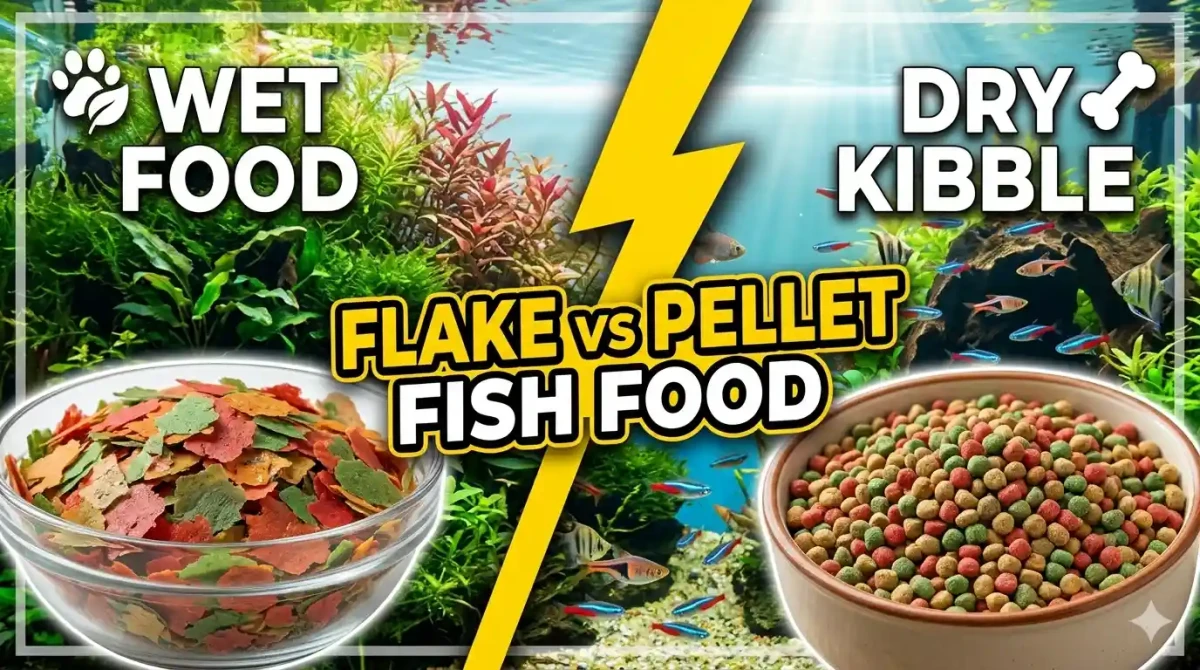
Understanding Flake vs Pellet Fish Food: What Aquarium Owners Need to Know
Choosing between flake and pellet fish food is one of the most common questions aquarium enthusiasts face. Both formats can provide complete nutrition for your fish when properly formulated—but they differ significantly in feeding behavior compatibility, water quality impact, nutrient retention, and species suitability. Understanding these differences helps you make an informed choice that supports your fish's health, reduces tank maintenance, and optimizes feeding efficiency.
Featured Snippet Answer: Flake fish food floats initially and disperses slowly, ideal for surface and mid-water feeders but can pollute water if uneaten. Pellet fish food sinks or floats depending on formulation, offers better nutrient density, reduces waste, and suits bottom feeders. For most community tanks, a combination of both formats—matched to your fish species' feeding zones—optimizes nutrition while minimizing water quality issues.
This comprehensive guide examines evidence-based pros and cons of flake versus pellet fish food across critical categories: nutritional composition, feeding behavior compatibility, water quality impact, cost and convenience, and species-specific considerations. You'll learn how to evaluate quality regardless of format, when to prioritize one option, and how combining both can create an optimal feeding strategy. Whether you keep tropical community fish, goldfish, bettas, or cichlids, you'll find practical, aquarium-expert-aligned guidance to make the right choice.
Fish Nutrition Fundamentals: Why Format Matters for Aquarium Fish
Fish have diverse feeding behaviors and nutritional needs shaped by their natural habitats. Understanding these fundamentals shapes how we evaluate flake versus pellet food options.
Key Feeding Zone Categories:
- Surface feeders: Fish like hatchetfish, guppies, and bettas that feed at the water's surface
- Mid-water feeders: Tetras, rasboras, and angelfish that feed in the water column
- Bottom dwellers: Corydoras, plecos, and loaches that forage on the substrate
- 🐾 Best Food for Cichlids: Expert Nutrition Guide by Species
- 🐾 Grain-Free Dog Food for Adult Dogs: Complete Guide
- 🐾 Best Cat Food for Indoor Cats: Complete 2026 Guide
How Format Affects Nutrient Delivery:
- Flake food: Lightweight, floats initially then slowly sinks; nutrients can leach into water within minutes
- Pellet food: Dense, compressed formulation; available in floating, slow-sinking, or sinking varieties; nutrients remain stable longer
- Nutrient density: Pellets typically contain higher protein and nutrient concentrations per gram due to compression
- 🐾 Best Food for Cichlids: Expert Nutrition Guide by Species
- 🐾 Grain-Free Dog Food for Adult Dogs: Complete Guide
- 🐾 Best Cat Food for Indoor Cats: Complete 2026 Guide
Water Quality Considerations:
Uneaten food is a primary source of ammonia and nitrate buildup in aquariums. Flakes disperse quickly and can be difficult to remove if uneaten, while pellets maintain their structure longer, making removal easier and reducing water pollution risk.
Featured Snippet Answer: Fish have distinct feeding zones: surface, mid-water, and bottom. Flake food floats then disperses, suiting surface/mid-water feeders but risking water pollution. Pellets offer targeted sinking/floating options, better nutrient retention, and easier waste management. Match food format to your fish species' natural feeding behavior.
Do fish prefer flakes or pellets?
Fish don't have format preferences—they respond to food that matches their natural feeding zone and is palatable. Surface feeders readily accept floating flakes or pellets; bottom dwellers prefer sinking pellets. Palatability depends more on ingredients (protein sources, flavor enhancers) than format. Observe your fish's response and adjust accordingly.
Flake Fish Food: Benefits and Limitations

Flake food has been the traditional staple for aquarium fish for decades. Understanding its strengths and weaknesses helps determine when it's the right choice.
Nutritional Benefits of Flake Food:
- Wide species acceptance: Most tropical fish readily accept flakes due to familiar texture and slow dispersal
- Variety formulations: Available in tropical, goldfish, betta, cichlid, and color-enhancing formulas
- Easy portion control: Pinch-sized servings allow precise feeding amounts
- Surface feeding support: Floats initially, ideal for surface and mid-water feeders
- 🐾 Best Food for Cichlids: Expert Nutrition Guide by Species
- 🐾 Grain-Free Dog Food for Adult Dogs: Complete Guide
- 🐾 Best Cat Food for Indoor Cats: Complete 2026 Guide
Practical Advantages:
- Convenience: Easy to store, measure, and serve; no special equipment needed
- Cost-effective: Generally less expensive per serving than premium pellets
- Wide availability: Found in virtually all pet stores and online retailers
- 🐾 Best Food for Cichlids: Expert Nutrition Guide by Species
- 🐾 Grain-Free Dog Food for Adult Dogs: Complete Guide
- 🐾 Best Cat Food for Indoor Cats: Complete 2026 Guide
Limitations and Risks:
- Nutrient leaching: Vitamins and minerals can dissolve into water within 1-2 minutes of contact, reducing nutritional value
- Water pollution risk: Uneaten flakes break down quickly, increasing ammonia and nitrate levels
- Overfeeding temptation: Easy to sprinkle too much; uneaten flakes are hard to remove completely
- Not ideal for bottom feeders: Flakes may not reach bottom-dwelling species before disintegrating
- Storage sensitivity: Exposure to humidity can cause clumping and nutrient degradation
- 🐾 Best Food for Cichlids: Expert Nutrition Guide by Species
- 🐾 Grain-Free Dog Food for Adult Dogs: Complete Guide
- 🐾 Best Cat Food for Indoor Cats: Complete 2026 Guide
Best Use Cases for Flake Food:
- Community tanks with primarily surface and mid-water feeding species
- Betta fish and other labyrinth fish that feed at the surface
- Beginner aquariums where convenience is prioritized
- Supplemental feeding alongside pellets for variety
- 🐾 Best Food for Cichlids: Expert Nutrition Guide by Species
- 🐾 Grain-Free Dog Food for Adult Dogs: Complete Guide
- 🐾 Best Cat Food for Indoor Cats: Complete 2026 Guide
Featured Snippet Answer: Flake fish food offers convenience, wide acceptance, and cost-effectiveness but risks nutrient leaching and water pollution if uneaten. Best for surface/mid-water feeders in community tanks. Always feed small amounts fish can consume within 2-3 minutes, and remove uneaten flakes promptly.
Pellet Fish Food: Benefits and Limitations

Pellet food represents a more modern approach to aquarium nutrition, offering targeted formulations and improved stability.
Nutritional Benefits of Pellet Food:
- Higher nutrient density: Compression allows more protein, vitamins, and minerals per gram
- Reduced nutrient leaching: Dense structure retains nutrients longer in water (10-30 minutes vs. 1-2 for flakes)
- Targeted formulations: Available in floating, slow-sinking, and sinking varieties to match feeding zones
- Species-specific options: Formulas designed for cichlids, goldfish, bottom feeders, and marine species
- 🐾 Best Food for Cichlids: Expert Nutrition Guide by Species
- 🐾 Grain-Free Dog Food for Adult Dogs: Complete Guide
- 🐾 Best Cat Food for Indoor Cats: Complete 2026 Guide
Water Quality Advantages:
- Less waste pollution: Pellets maintain structure longer, making uneaten portions easier to remove
- Controlled feeding: Sinking pellets reach intended species without dispersing throughout the tank
- Reduced overfeeding risk: Easier to count and control portions
- 🐾 Best Food for Cichlids: Expert Nutrition Guide by Species
- 🐾 Grain-Free Dog Food for Adult Dogs: Complete Guide
- 🐾 Best Cat Food for Indoor Cats: Complete 2026 Guide
Practical Considerations:
- Storage stability: Less sensitive to humidity; maintains quality longer in proper storage
- Cost efficiency: Higher nutrient density means smaller portions provide equivalent nutrition
- Versatility: Can be crushed for small fish or fed whole to larger species
- 🐾 Best Food for Cichlids: Expert Nutrition Guide by Species
- 🐾 Grain-Free Dog Food for Adult Dogs: Complete Guide
- 🐾 Best Cat Food for Indoor Cats: Complete 2026 Guide
Limitations and Challenges:
- Acceptance period: Some fish may need time to recognize pellets as food
- Size considerations: Must match pellet size to fish mouth size; too large pellets go uneaten
- Higher upfront cost: Premium pellets often cost more per container than flakes
- Less intuitive portioning: New users may overestimate appropriate pellet quantities
- 🐾 Best Food for Cichlids: Expert Nutrition Guide by Species
- 🐾 Grain-Free Dog Food for Adult Dogs: Complete Guide
- 🐾 Best Cat Food for Indoor Cats: Complete 2026 Guide
Best Use Cases for Pellet Food:
- Tanks with bottom-dwelling species (corydoras, plecos, loaches)
- Cichlid aquariums where targeted feeding reduces aggression
- Goldfish tanks where sinking pellets reduce swim bladder issues
- Advanced aquarists prioritizing water quality and precise nutrition
- 🐾 Best Food for Cichlids: Expert Nutrition Guide by Species
- 🐾 Grain-Free Dog Food for Adult Dogs: Complete Guide
- 🐾 Best Cat Food for Indoor Cats: Complete 2026 Guide
Featured Snippet Answer: Pellet fish food offers higher nutrient density, reduced leaching, and targeted sinking/floating options for different feeding zones. Best for bottom feeders, cichlids, and aquarists prioritizing water quality. May require transition period for fish accustomed to flakes.
Feeding Behavior Compatibility: Matching Food to Fish

The most critical factor in choosing flake versus pellet food is matching the format to your fish species' natural feeding behavior.
Surface Feeders:
- Species examples: Bettas, guppies, hatchetfish, halfbeaks
- Best formats: Floating flakes or floating pellets
- Feeding tip: Feed small amounts at the surface; remove uneaten food within 2-3 minutes
- 🐾 Best Food for Cichlids: Expert Nutrition Guide by Species
- 🐾 Grain-Free Dog Food for Adult Dogs: Complete Guide
- 🐾 Best Cat Food for Indoor Cats: Complete 2026 Guide
Mid-Water Feeders:
- Species examples: Tetras, rasboras, angelfish, danios
- Best formats: Slow-sinking flakes or slow-sinking pellets
- Feeding tip: Sprinkle food across the water column to allow natural foraging behavior
- 🐾 Best Food for Cichlids: Expert Nutrition Guide by Species
- 🐾 Grain-Free Dog Food for Adult Dogs: Complete Guide
- 🐾 Best Cat Food for Indoor Cats: Complete 2026 Guide
Bottom Dwellers:
- Species examples: Corydoras, plecos, loaches, catfish
- Best formats: Sinking pellets or algae wafers; flakes rarely reach bottom intact
- Feeding tip: Feed bottom feeders after lights-out or use feeding rings to direct food downward
- 🐾 Best Food for Cichlids: Expert Nutrition Guide by Species
- 🐾 Grain-Free Dog Food for Adult Dogs: Complete Guide
- 🐾 Best Cat Food for Indoor Cats: Complete 2026 Guide
Community Tank Strategies:
- Mixed formats: Use floating flakes for surface/mid-water fish plus sinking pellets for bottom dwellers
- Staggered feeding: Feed surface feeders first, then add sinking pellets for bottom species after 1-2 minutes
- Targeted feeding tools: Use feeding rings or turkey basters to direct food to specific zones
- 🐾 Best Food for Cichlids: Expert Nutrition Guide by Species
- 🐾 Grain-Free Dog Food for Adult Dogs: Complete Guide
- 🐾 Best Cat Food for Indoor Cats: Complete 2026 Guide
Featured Snippet Answer: Match food format to feeding zone: floating flakes/pellets for surface feeders (bettas, guppies), slow-sinking for mid-water fish (tetras, angelfish), and sinking pellets for bottom dwellers (corydoras, plecos). In community tanks, use mixed formats and staggered feeding to ensure all species receive adequate nutrition.
Water Quality Impact: How Food Format Affects Your Aquarium

Uneaten food is a leading cause of poor water quality in home aquariums. Understanding how flake and pellet foods affect water parameters helps maintain a healthy environment.
Flake Food and Water Quality:
- Rapid breakdown: Flakes begin disintegrating within minutes, releasing nutrients into the water column
- Ammonia contribution: Uneaten flakes decompose quickly, increasing ammonia levels that stress fish
- Filtration burden: Fine flake particles can clog filter media, reducing efficiency
- Removal difficulty: Dispersed flakes are hard to siphon out completely during water changes
- 🐾 Best Food for Cichlids: Expert Nutrition Guide by Species
- 🐾 Grain-Free Dog Food for Adult Dogs: Complete Guide
- 🐾 Best Cat Food for Indoor Cats: Complete 2026 Guide
Pellet Food and Water Quality:
- Structural integrity: Pellets maintain form longer (10-30 minutes), allowing time for fish to consume or owner to remove
- Targeted feeding: Sinking pellets reach intended species without dispersing throughout the tank
- Easier waste management: Uneaten pellets are visible and easily removed with a net or siphon
- Reduced nutrient leaching: Dense formulation minimizes vitamin/mineral loss to water
- 🐾 Best Food for Cichlids: Expert Nutrition Guide by Species
- 🐾 Grain-Free Dog Food for Adult Dogs: Complete Guide
- 🐾 Best Cat Food for Indoor Cats: Complete 2026 Guide
Best Practices for Minimizing Water Quality Impact:
- Feed small amounts: Only what fish can consume within 2-3 minutes
- Observe feeding: Watch fish during feeding to adjust portions appropriately
- Remove uneaten food: Siphon or net out leftovers within 5 minutes
- Regular maintenance: Perform weekly 25-30% water changes regardless of food type
- Monitor parameters: Test ammonia, nitrite, and nitrate weekly to catch issues early
- 🐾 Best Food for Cichlids: Expert Nutrition Guide by Species
- 🐾 Grain-Free Dog Food for Adult Dogs: Complete Guide
- 🐾 Best Cat Food for Indoor Cats: Complete 2026 Guide
Featured Snippet Answer: Pellet fish food generally impacts water quality less than flakes due to slower breakdown and easier removal of uneaten portions. Regardless of format, feed only what fish consume in 2-3 minutes, remove uneaten food promptly, and maintain regular water changes to ensure optimal water quality.
Nutritional Comparison: What's Inside the Flake or Pellet?

Both flake and pellet foods can provide complete nutrition when formulated to meet industry standards. The format itself doesn't determine nutritional quality—ingredient quality, formulation expertise, and manufacturing standards do.
Macronutrient Differences:
- Protein content: Pellets often contain 35-50% protein due to compression; flakes typically range 30-45%
- Fat levels: Both formats can provide appropriate fat levels (5-10%); pellets may retain fats better during storage
- Carbohydrates: Flakes may contain more binders/fillers for structure; pellets use compression for form
- Fiber: Both can include appropriate fiber for digestive health; pellets may offer more consistent levels
- 🐾 Best Food for Cichlids: Expert Nutrition Guide by Species
- 🐾 Grain-Free Dog Food for Adult Dogs: Complete Guide
- 🐾 Best Cat Food for Indoor Cats: Complete 2026 Guide
Vitamin and Mineral Retention:
- Flake food: Water-soluble vitamins (B-complex, C) can leach into water within 1-2 minutes of contact
- Pellet food: Dense structure slows nutrient leaching; vitamins remain bioavailable longer (10-30 minutes)
- Storage impact: Both formats lose nutrient potency over time; store in cool, dry, dark places
- 🐾 Best Food for Cichlids: Expert Nutrition Guide by Species
- 🐾 Grain-Free Dog Food for Adult Dogs: Complete Guide
- 🐾 Best Cat Food for Indoor Cats: Complete 2026 Guide
Ingredient Quality Indicators:
- First ingredients: Should be named protein sources (fish meal, shrimp meal) not generic "fish products"
- Avoid excessive fillers: Limit wheat, soy, or corn as primary ingredients
- Preservatives: Look for natural preservatives (mixed tocopherols) over BHA/BHT
- Color enhancers: Natural sources (spirulina, astaxanthin) preferred over artificial dyes
- 🐾 Best Food for Cichlids: Expert Nutrition Guide by Species
- 🐾 Grain-Free Dog Food for Adult Dogs: Complete Guide
- 🐾 Best Cat Food for Indoor Cats: Complete 2026 Guide
AAFCO and Industry Standards:
While aquarium fish food isn't regulated like pet food, reputable manufacturers follow guidelines from organizations like the American Feed Control Officials (AAFCO) or employ aquatic nutritionists. Look for brands that disclose testing protocols and employ veterinary or aquatic nutrition expertise.
Featured Snippet Answer: Both flake and pellet foods can provide complete nutrition when made with quality ingredients. Pellets often have higher protein density and better nutrient retention due to compression. Evaluate quality by ingredient lists (named proteins first), minimal fillers, and natural preservatives—not format alone.
Are pellets more nutritious than flakes?
Not inherently. Nutritional quality depends on ingredient sourcing, formulation balance, and manufacturing standards—not whether food is flake or pellet. Pellets may retain nutrients longer in water and offer higher protein density, but high-quality flakes from reputable brands can be equally nutritious. Always evaluate the specific product's ingredient list and brand reputation.
Cost and Convenience: Practical Considerations for Aquarium Owners

Beyond nutrition, real-world factors like cost, storage, and feeding logistics influence the flake vs pellet decision.
Cost Comparison:
- Per serving: Flakes are typically less expensive upfront but may require larger portions due to lower nutrient density
- Pellets: Higher cost per container but more nutrient-dense; smaller portions provide equivalent nutrition
- Long-term value: Factor in water quality maintenance costs—pellets may reduce filter maintenance and water change frequency
- Brand variation: Premium brands of either format cost more but often provide superior nutrition and stability
- 🐾 Best Food for Cichlids: Expert Nutrition Guide by Species
- 🐾 Grain-Free Dog Food for Adult Dogs: Complete Guide
- 🐾 Best Cat Food for Indoor Cats: Complete 2026 Guide
Storage and Shelf Life:
- Flake food: Sensitive to humidity; store in original container inside airtight jar in cool, dark place; use within 3-6 months of opening
- Pellet food: More stable due to compression; same storage guidelines but may maintain quality slightly longer
- Avoid bulk buying: Purchase quantities your fish will consume within recommended timeframes to maintain freshness
- 🐾 Best Food for Cichlids: Expert Nutrition Guide by Species
- 🐾 Grain-Free Dog Food for Adult Dogs: Complete Guide
- 🐾 Best Cat Food for Indoor Cats: Complete 2026 Guide
Feeding Logistics:
- Portion control: Pellets are easier to count precisely; flakes require estimation by pinch
- Multi-species tanks: Mixed formats may be needed to accommodate different feeding zones
- Travel considerations: Both formats are portable; pellets may be less messy for travel feeding
- Automatic feeders: Most compatible with pellets; flakes can clog mechanisms due to irregular shape
- 🐾 Best Food for Cichlids: Expert Nutrition Guide by Species
- 🐾 Grain-Free Dog Food for Adult Dogs: Complete Guide
- 🐾 Best Cat Food for Indoor Cats: Complete 2026 Guide
Environmental Considerations:
- Packaging: Both formats typically use plastic containers; choose brands with recyclable packaging
- Food waste: Pellets' easier removal may reduce organic waste in aquarium systems
- Sustainability: Look for brands using sustainable fish sources and eco-friendly manufacturing
- 🐾 Best Food for Cichlids: Expert Nutrition Guide by Species
- 🐾 Grain-Free Dog Food for Adult Dogs: Complete Guide
- 🐾 Best Cat Food for Indoor Cats: Complete 2026 Guide
Featured Snippet Answer: Flakes are typically less expensive upfront but may require larger portions; pellets cost more per container but offer higher nutrient density. Store both in cool, dry places in airtight containers. Consider long-term value: pellets may reduce water quality maintenance costs despite higher initial price.
Special Considerations: Species-Specific Recommendations

Different fish species have distinct nutritional needs and feeding behaviors. Tailor your food choice to your specific fish.
Betta Fish:
- Natural behavior: Surface feeders with labyrinth organs for atmospheric air breathing
- Best formats: Floating pellets or flakes specifically formulated for bettas
- Key nutrients: High protein (40%+), limited fillers, color enhancers
- Feeding tip: Betta pellets reduce water pollution compared to flakes; feed 2-3 pellets twice daily
- 🐾 Best Food for Cichlids: Expert Nutrition Guide by Species
- 🐾 Grain-Free Dog Food for Adult Dogs: Complete Guide
- 🐾 Best Cat Food for Indoor Cats: Complete 2026 Guide
Goldfish:
- Natural behavior: Bottom foragers prone to swim bladder issues from air ingestion
- Best formats: Sinking pellets to reduce air swallowing; avoid floating flakes
- Key nutrients: Lower protein (30-35%), higher carbohydrates, added spirulina
- Feeding tip: Soak sinking pellets briefly before feeding to prevent expansion in digestive tract
- 🐾 Best Food for Cichlids: Expert Nutrition Guide by Species
- 🐾 Grain-Free Dog Food for Adult Dogs: Complete Guide
- 🐾 Best Cat Food for Indoor Cats: Complete 2026 Guide
Cichlids (African and South American):
- Natural behavior: Aggressive feeders; some species are mid-water, others bottom-oriented
- Best formats: Sinking pellets to reduce aggression during feeding; species-specific formulations
- Key nutrients: High protein (40-50%), spirulina for African cichlids, varied ingredients
- Feeding tip: Use feeding rings or target feeding to ensure all fish receive food
- 🐾 Best Food for Cichlids: Expert Nutrition Guide by Species
- 🐾 Grain-Free Dog Food for Adult Dogs: Complete Guide
- 🐾 Best Cat Food for Indoor Cats: Complete 2026 Guide
Bottom Feeders (Corydoras, Plecos, Loaches):
- Natural behavior: Forage on substrate; often nocturnal
- Best formats: Sinking pellets, algae wafers, or specialized bottom-feeder formulations
- Key nutrients: Higher fiber, spirulina, vegetable matter for herbivorous species
- Feeding tip: Feed after lights-out or use feeding dishes to ensure bottom feeders access food
- 🐾 Best Food for Cichlids: Expert Nutrition Guide by Species
- 🐾 Grain-Free Dog Food for Adult Dogs: Complete Guide
- 🐾 Best Cat Food for Indoor Cats: Complete 2026 Guide
Small Community Fish (Tetras, Rasboras, Danios):
- Natural behavior: Mid-water feeders that school and forage actively
- Best formats: Micro-pellets or small flakes that disperse slowly in water column
- Key nutrients: Balanced protein (35-40%), color enhancers, small particle size
- Feeding tip: Sprinkle food across tank to encourage natural foraging behavior
- 🐾 Best Food for Cichlids: Expert Nutrition Guide by Species
- 🐾 Grain-Free Dog Food for Adult Dogs: Complete Guide
- 🐾 Best Cat Food for Indoor Cats: Complete 2026 Guide
Featured Snippet Answer: Match food to species: floating pellets/flakes for bettas, sinking pellets for goldfish and bottom feeders, species-specific pellets for cichlids, and micro-pellets for small community fish. Always prioritize formulations designed for your fish's natural diet and feeding behavior.
Transitioning Between Formats: Avoiding Feeding Problems

Switching from flakes to pellets (or vice versa) requires patience and strategy to ensure fish accept the new format.
Why Transition?
- Improving water quality by switching to pellets
- Accommodating new fish with different feeding preferences
- Upgrading to higher-quality nutrition
- Addressing specific health needs (e.g., sinking food for swim bladder issues)
- 🐾 Best Food for Cichlids: Expert Nutrition Guide by Species
- 🐾 Grain-Free Dog Food for Adult Dogs: Complete Guide
- 🐾 Best Cat Food for Indoor Cats: Complete 2026 Guide
Step-by-Step Transition Protocol:
- Start with mixing: Add a small amount of new format to familiar food (10% new, 90% old)
- Observe acceptance: Watch which fish eat the new format; adjust ratios based on response
- Gradually increase: Over 7-14 days, gradually increase proportion of new format
- Be patient: Some fish may take weeks to accept new formats; don't force the transition
- Maintain nutrition: Ensure fish are eating adequately throughout transition; don't withhold food
Tips for Encouraging Pellet Acceptance:
- Soak pellets: Briefly soak sinking pellets in tank water to release aroma and soften texture
- Crush for small fish: Crush pellets into smaller pieces for tiny-mouthed species
- Feed at optimal times: Offer new format when fish are most active and hungry
- Use hunger strategically: Skip one feeding to increase motivation (never starve fish)
- Try different brands: If fish reject one pellet brand, try another with different ingredients or texture
- 🐾 Best Food for Cichlids: Expert Nutrition Guide by Species
- 🐾 Grain-Free Dog Food for Adult Dogs: Complete Guide
- 🐾 Best Cat Food for Indoor Cats: Complete 2026 Guide
Monitoring During Transition:
- Watch for adequate food consumption by all fish
- Monitor water parameters for any changes due to feeding adjustments
- Observe fish behavior and body condition for signs of stress or malnutrition
- Adjust transition speed based on fish response—slow down if acceptance is low
- 🐾 Best Food for Cichlids: Expert Nutrition Guide by Species
- 🐾 Grain-Free Dog Food for Adult Dogs: Complete Guide
- 🐾 Best Cat Food for Indoor Cats: Complete 2026 Guide
Featured Snippet Answer: Transition between flake and pellet food gradually over 7-14 days by mixing formats, starting with 10% new food. Soak pellets to enhance appeal, crush for small fish, and feed when fish are most active. Never withhold food to force acceptance; patience ensures successful transition without stress.
How to Evaluate Quality Regardless of Format

Format matters less than quality. Use these criteria to assess any fish food, flake or pellet.
Ingredient Quality:
- First ingredients: Should be named protein sources (fish meal, shrimp meal, krill) not generic "marine protein"
- Avoid excessive fillers: Limit wheat, soy, corn, or potato as primary ingredients
- Whole foods: Look for recognizable ingredients: spirulina, garlic, astaxanthin—not just chemical names
- Species-appropriate: Formulations should match your fish's natural diet (herbivore, carnivore, omnivore)
- 🐾 Best Food for Cichlids: Expert Nutrition Guide by Species
- 🐾 Grain-Free Dog Food for Adult Dogs: Complete Guide
- 🐾 Best Cat Food for Indoor Cats: Complete 2026 Guide
Manufacturing Standards:
- Brand transparency: Reputable companies disclose sourcing, testing protocols, and employ aquatic nutritionists
- Quality control: Look for brands conducting nutrient testing, contaminant screening, and stability testing
- Recall history: Research brand recall patterns; frequent issues signal quality concerns
- 🐾 Best Food for Cichlids: Expert Nutrition Guide by Species
- 🐾 Grain-Free Dog Food for Adult Dogs: Complete Guide
- 🐾 Best Cat Food for Indoor Cats: Complete 2026 Guide
Nutritional Adequacy:
- Protein levels: 35-50% for most tropical fish; adjust for herbivores (lower) or carnivores (higher)
- Fat content: 5-10% for most species; higher for cold-water fish
- Vitamin/mineral profile: Should include essential vitamins (A, C, E, B-complex) and minerals (calcium, phosphorus)
- Color enhancers: Natural sources like spirulina and astaxanthin preferred over artificial dyes
- 🐾 Best Food for Cichlids: Expert Nutrition Guide by Species
- 🐾 Grain-Free Dog Food for Adult Dogs: Complete Guide
- 🐾 Best Cat Food for Indoor Cats: Complete 2026 Guide
Storage and Freshness Indicators:
- Packaging: Resealable, light-blocking containers preserve nutrient quality
- Expiration dates: Always check and rotate stock to use oldest first
- Sensory checks: Fresh food should smell clean and fishy, not rancid or musty
- 🐾 Best Food for Cichlids: Expert Nutrition Guide by Species
- 🐾 Grain-Free Dog Food for Adult Dogs: Complete Guide
- 🐾 Best Cat Food for Indoor Cats: Complete 2026 Guide
Featured Snippet Answer: Evaluate fish food quality by checking for named protein sources as first ingredients, minimal fillers, species-appropriate formulations, and brand transparency about testing. Avoid artificial colors and excessive fillers. Store in cool, dark places and use before expiration dates to maintain nutrient quality.
Common Feeding Mistakes to Avoid

Even with high-quality food, feeding errors can compromise fish health and water quality.
Mistake 1: Overfeeding
- Problem: Most common aquarium error; leads to water pollution, obesity, and health issues
- Solution: Feed only what fish consume within 2-3 minutes; when in doubt, feed less
- 🐾 Best Food for Cichlids: Expert Nutrition Guide by Species
- 🐾 Grain-Free Dog Food for Adult Dogs: Complete Guide
- 🐾 Best Cat Food for Indoor Cats: Complete 2026 Guide
Mistake 2: Ignoring Feeding Zones
- Problem: Using only floating food in tanks with bottom feeders leaves some fish undernourished
- Solution: Match food format to species' natural feeding zones; use mixed formats in community tanks
- 🐾 Best Food for Cichlids: Expert Nutrition Guide by Species
- 🐾 Grain-Free Dog Food for Adult Dogs: Complete Guide
- 🐾 Best Cat Food for Indoor Cats: Complete 2026 Guide
Mistake 3: Poor Storage Practices
- Problem: Exposure to heat, light, or humidity degrades nutrients and promotes rancidity
- Solution: Store food in original container inside airtight jar in cool, dark place; buy quantities you'll use within 3-6 months
- 🐾 Best Food for Cichlids: Expert Nutrition Guide by Species
- 🐾 Grain-Free Dog Food for Adult Dogs: Complete Guide
- 🐾 Best Cat Food for Indoor Cats: Complete 2026 Guide
Mistake 4: Not Removing Uneaten Food
- Problem: Decomposing food increases ammonia and nitrate levels, stressing fish
- Solution: Siphon or net out uneaten food within 5 minutes of feeding; use feeding rings to contain food
- 🐾 Best Food for Cichlids: Expert Nutrition Guide by Species
- 🐾 Grain-Free Dog Food for Adult Dogs: Complete Guide
- 🐾 Best Cat Food for Indoor Cats: Complete 2026 Guide
Mistake 5: Relying Solely on One Format
- Problem: Limited variety may miss nutritional benefits of different formats
- Solution: Consider combining formats strategically: pellets for primary nutrition, flakes for variety and surface feeding
- 🐾 Best Food for Cichlids: Expert Nutrition Guide by Species
- 🐾 Grain-Free Dog Food for Adult Dogs: Complete Guide
- 🐾 Best Cat Food for Indoor Cats: Complete 2026 Guide
Featured Snippet Answer: Avoid overfeeding by offering only what fish consume in 2-3 minutes. Match food format to species' feeding zones, store food properly in cool/dark places, remove uneaten food within 5 minutes, and consider combining formats for balanced nutrition. These practices maintain water quality and fish health.
Quick Recap: Key Takeaways for Flake vs Pellet Fish Food

- Both flake and pellet foods can provide complete nutrition when made with quality ingredients; format matters less than formulation
- Flakes float initially and disperse quickly—ideal for surface/mid-water feeders but risk nutrient leaching and water pollution
- Pellets offer higher nutrient density, better retention in water, and targeted sinking/floating options for different feeding zones
- Match food format to your fish species' natural feeding behavior: floating for surface feeders, sinking for bottom dwellers
- In community tanks, use mixed formats and staggered feeding to ensure all species receive adequate nutrition
- Feed only what fish consume within 2-3 minutes; remove uneaten food promptly to maintain water quality
- Store both formats in cool, dry, dark places in airtight containers to preserve nutrient quality
- Transition between formats gradually over 7-14 days to ensure fish acceptance without stress
- Evaluate quality by ingredient lists (named proteins first), minimal fillers, and brand reputation—not format alone
- Consult aquarium experts or aquatic veterinarians for species-specific dietary guidance, especially for specialized species
- 🐾 Best Food for Cichlids: Expert Nutrition Guide by Species
- 🐾 Grain-Free Dog Food for Adult Dogs: Complete Guide
- 🐾 Best Cat Food for Indoor Cats: Complete 2026 Guide
Final Thoughts: Balance, Observation, and Individualization

The flake versus pellet fish food question doesn't have a universal answer because every aquarium is unique. A community tank with tetras and corydoras has different needs than a betta bowl or a goldfish pond. The most successful feeding strategies combine the convenience and acceptance of flakes with the nutritional density and water quality benefits of pellets.
Remember that diet is one component of comprehensive aquarium care. Proper filtration, regular water changes, appropriate stocking levels, and environmental enrichment matter as much as the food you choose. Whether you emphasize flakes, pellets, or a thoughtful combination, consistency, quality, and attentiveness to your fish's response create the foundation for lifelong health.
Stay informed about aquatic nutrition science, which continues to evolve. Observe your fish's feeding behavior, body condition, and water parameters—and adjust their diet accordingly. With knowledge, patience, and partnership with aquarium experts, you can make confident dietary choices that support your fish's vitality, coloration, and thriving presence in your home aquarium.
After all, the best fish food is the one your fish will eat happily while meeting their unique nutritional needs—and that often means finding the right balance between flake and pellet formats tailored to your specific aquarium community.

0 Comments