.png)
Early Signs Your Fish Is Sick Every Owner Should Know
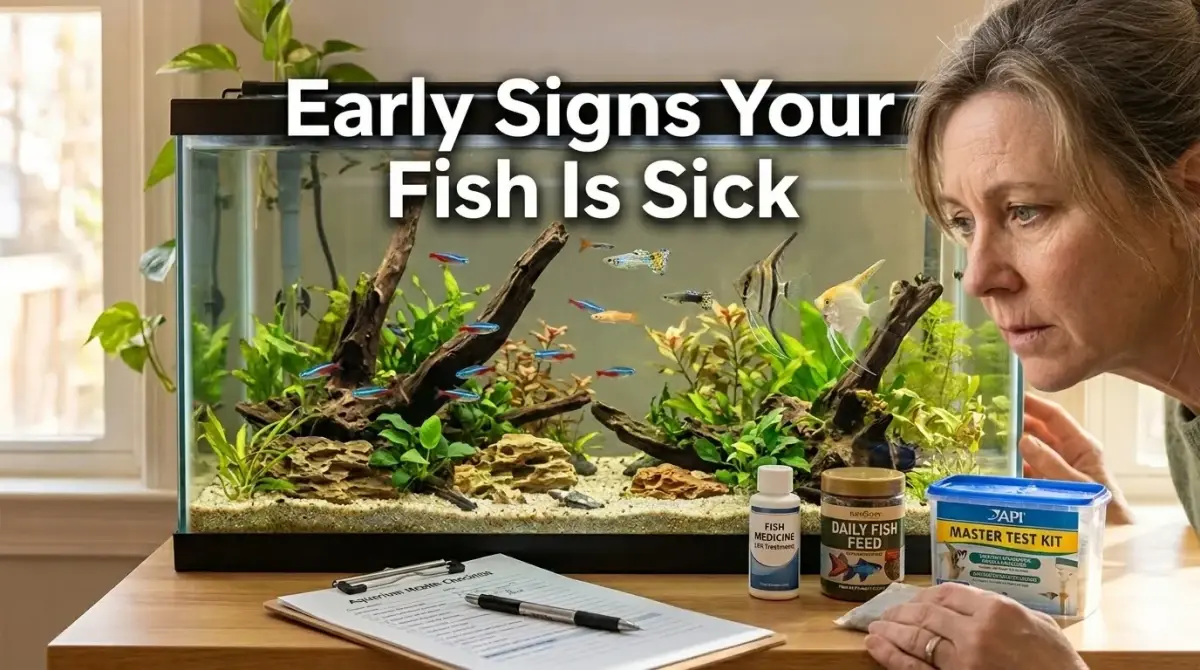
Recognizing early signs your fish is sick is one of the most critical skills every aquarium owner must develop. Fish cannot verbally communicate discomfort, pain, or illness, and they often mask symptoms until disease is advanced—a survival instinct from their wild ancestors. This makes it essential for owners to notice subtle changes that may signal health problems. Early detection of illness dramatically improves treatment outcomes, reduces veterinary costs, and can literally save your fish's life. This comprehensive guide covers the essential early warning signs of aquatic illness, from subtle behavioral changes to physical indicators that attentive owners can learn to identify. Whether you care for a vibrant tetra, elegant angelfish, or peaceful community tank in the USA, understanding these early illness symptoms empowers you to seek expert care at the optimal time for the best possible outcome.
Why Early Detection of Fish Illness Matters
Understanding why early symptom recognition is crucial helps motivate vigilant observation of your fish's health.
The Fish's Instinct to Hide Illness
In the wild, showing weakness makes animals vulnerable to predators. Aquarium fish retain this powerful survival instinct, often masking symptoms until illness becomes severe. A fish may continue swimming, eating, and appearing relatively normal even while experiencing significant internal disease or pain. This evolutionary trait means owners must be proactive in monitoring health indicators rather than waiting for obvious signs of sickness.
Benefits of Early Illness Detection
Recognizing early symptoms provides multiple advantages:
- Improved treatment outcomes: Many conditions are easier and less expensive to treat when caught early
- Reduced treatment costs: Early intervention often requires less intensive medication and shorter treatment duration
- Less suffering: Early treatment minimizes pain and discomfort for your fish
- Prevention of disease spread: Early isolation prevents contagious diseases from spreading to tank mates
- Extended lifespan: Fish receiving prompt care for health issues typically live longer, healthier lives
- Peace of mind: Knowing what to watch for reduces anxiety about your aquarium's health
- 🐾 Best Vitamins for Small Pets: Expert Exotic Veterinary Guide
- 🐾 How to Boost Your Dog's Immune System: Expert Veterinary Guide
- 🐾 Preventing Overfeeding in Fish Complete Care Guide
Common Reasons Owners Miss Early Symptoms
Even attentive aquarists can overlook early illness signs:
- Gradual changes: Symptoms that develop slowly may not be noticeable day-to-day
- Normalizing behavior: Assuming changes are due to water parameters, feeding, or temporary factors
- Lack of baseline knowledge: Not knowing your fish's normal behavior makes changes harder to detect
- Visual limitations: Fish spend time behind decorations or in dim areas, reducing observation opportunities
- Subtle symptoms: Fish often show very subtle signs that are easy to miss until disease is advanced
- 🐾 Best Vitamins for Small Pets: Expert Exotic Veterinary Guide
- 🐾 How to Boost Your Dog's Immune System: Expert Veterinary Guide
- 🐾 Preventing Overfeeding in Fish Complete Care Guide
Behavioral Changes: Often the First Warning Signs
Behavioral changes are frequently the earliest indicators of illness in fish. These subtle shifts may appear before any physical symptoms become obvious.
Changes in Activity Level
Early warning signs:
- Increased lethargy: Resting more than usual, hovering in one spot, or decreased interest in swimming
- Decreased exploration: Less interest in exploring tank, interacting with tank mates, or investigating new items
- Reluctance to feed: Hesitation to approach food or taking longer to eat than usual
- Unusual restlessness: Pacing, darting erratically, or frequent position changes may indicate pain or discomfort
- Hiding more than usual: Seeking isolation behind decorations, plants, or in corners
- 🐾 Best Vitamins for Small Pets: Expert Exotic Veterinary Guide
- 🐾 How to Boost Your Dog's Immune System: Expert Veterinary Guide
- 🐾 Preventing Overfeeding in Fish Complete Care Guide
What to do: Track your fish's normal activity patterns. Note any sustained changes lasting more than 24 hours. Test water parameters immediately and contact an aquatic expert if lethargy is accompanied by other symptoms.
Changes in Social Interaction
Early warning signs:
- Withdrawal: Avoiding school groups, hiding from tank mates, or seeking isolation
- Increased aggression: Uncharacteristic chasing, nipping, or territorial behavior may indicate stress or pain
- Changes in schooling: A normally social fish staying apart from the group
- Altered response to feeding: Slower response to food or apparent confusion during feeding time
- Being bullied: A fish that was previously confident now being targeted by tank mates may be showing signs of weakness
- 🐾 Best Vitamins for Small Pets: Expert Exotic Veterinary Guide
- 🐾 How to Boost Your Dog's Immune System: Expert Veterinary Guide
- 🐾 Preventing Overfeeding in Fish Complete Care Guide
What to do: Know your fish's personality baseline. Document changes in social behavior and discuss with an aquatic veterinarian or experienced aquarist if they persist.
Changes in Swimming Patterns
Early warning signs:
- Erratic swimming: Spinning, darting, or swimming in circles may indicate neurological issues or parasites
- Difficulty maintaining position: Floating upside down, sinking to bottom, or struggling to stay upright
- Swimming at surface: Gasping or hovering at surface may indicate respiratory distress or poor water quality
- Swimming at bottom: Resting on substrate more than usual may indicate weakness or illness
- Clamped fins: Holding fins close to body instead of fanned out indicates stress or illness
- 🐾 Best Vitamins for Small Pets: Expert Exotic Veterinary Guide
- 🐾 How to Boost Your Dog's Immune System: Expert Veterinary Guide
- 🐾 Preventing Overfeeding in Fish Complete Care Guide
What to do: Note changes in swimming patterns. If swimming changes are accompanied by other symptoms, seek expert evaluation immediately.
Changes in Feeding Behavior
Early warning signs:
- Decreased appetite: Eating less than usual, taking longer to eat, or leaving food
- Complete refusal to eat: Skipping meals is a serious warning sign in fish
- Dropping food: Taking food then spitting it out may indicate oral pain or digestive issues
- Changes in food preference: Suddenly refusing previously enjoyed foods
- Difficulty catching food: Missing food items or appearing uncoordinated during feeding
- 🐾 Best Vitamins for Small Pets: Expert Exotic Veterinary Guide
- 🐾 How to Boost Your Dog's Immune System: Expert Veterinary Guide
- 🐾 Preventing Overfeeding in Fish Complete Care Guide
What to do: Monitor food intake daily. A fish that skips more than one feeding or shows sustained appetite changes should be evaluated. Test water parameters immediately.
Physical Changes to Monitor

Physical indicators often provide visible evidence of developing health issues.
Color and Appearance Changes
Early warning signs:
- Fading coloration: Loss of vibrant colors may indicate stress, poor nutrition, or systemic illness
- Darkening: Unusual darkening may indicate stress, poor water quality, or illness
- White spots: Small salt-like spots may indicate ich (white spot disease)
- Gold or rust dust: Fine golden coating may indicate velvet disease
- Cloudy eyes: Hazy appearance may indicate infection, injury, or poor water quality
- Bulging eyes: Protruding eyes (exophthalmia) may indicate infection or organ issues
- 🐾 Best Vitamins for Small Pets: Expert Exotic Veterinary Guide
- 🐾 How to Boost Your Dog's Immune System: Expert Veterinary Guide
- 🐾 Preventing Overfeeding in Fish Complete Care Guide
What to do: Regular observation during feeding provides opportunity to check coloration. Document changes with photos and discuss with an aquatic expert.
Fin and Scale Changes
Early warning signs:
- Frayed fins: Ragged, torn, or deteriorating fin edges may indicate fin rot or physical injury
- Clamped fins: Holding fins close to body instead of fanned indicates stress or illness
- Red streaks: Blood vessels visible in fins may indicate bacterial infection or poor water quality
- Missing scales: Patches of missing scales may indicate injury, parasites, or infection
- Raised scales: Scales protruding outward (pinecone appearance) may indicate dropsy
- White patches: Cotton-like growths may indicate fungal infection
- 🐾 Best Vitamins for Small Pets: Expert Exotic Veterinary Guide
- 🐾 How to Boost Your Dog's Immune System: Expert Veterinary Guide
- 🐾 Preventing Overfeeding in Fish Complete Care Guide
What to do: Check fins and scales during regular observation. Any persistent changes warrant expert evaluation.
Respiratory Changes
Early warning signs:
- Rapid gill movement: Faster than normal gill beating indicates respiratory distress
- Gasping at surface: Fish breathing at water surface indicates oxygen deficiency or gill damage
- One gill moving: Asymmetric gill movement may indicate infection or injury
- Mucus on gills: Excessive slime on gills may indicate parasite infection or irritation
- Red or inflamed gills: May indicate ammonia burn, infection, or poor water quality
- 🐾 Best Vitamins for Small Pets: Expert Exotic Veterinary Guide
- 🐾 How to Boost Your Dog's Immune System: Expert Veterinary Guide
- 🐾 Preventing Overfeeding in Fish Complete Care Guide
What to do: Monitor respiratory patterns closely. Contact an aquatic expert immediately for any breathing difficulties. Test ammonia and nitrite immediately.
Body Condition Changes
Early warning signs:
- Swollen abdomen: Bloating may indicate constipation, dropsy, or internal infection
- Sunken belly: Emaciation may indicate parasites, chronic illness, or inadequate nutrition
- Lumps or bumps: New growths under skin may indicate tumors, parasites, or abscesses
- Ulcers or sores: Open wounds may indicate bacterial infection or physical injury
- Curved spine: Abnormal spinal curvature may indicate nutritional deficiency or congenital issue
- 🐾 Best Vitamins for Small Pets: Expert Exotic Veterinary Guide
- 🐾 How to Boost Your Dog's Immune System: Expert Veterinary Guide
- 🐾 Preventing Overfeeding in Fish Complete Care Guide
What to do: Perform regular visual inspections. Document any new lumps, swelling, or body changes and discuss with an aquatic veterinarian.
Droppings and Waste: A Critical Health Indicator

Fish droppings provide valuable information about health. Learning to read them helps detect illness early.
Normal Fish Droppings
Healthy fish droppings are typically:
- Firm and cohesive, not stringy or disintegrating immediately
- Dark brown, green, or matching food color
- Produced regularly with normal frequency
- Sink to bottom or float briefly depending on species
- 🐾 Best Vitamins for Small Pets: Expert Exotic Veterinary Guide
- 🐾 How to Boost Your Dog's Immune System: Expert Veterinary Guide
- 🐾 Preventing Overfeeding in Fish Complete Care Guide
Warning Signs in Droppings
Color changes:
- White or clear: May indicate internal parasites or digestive issues
- Red or bloody: Indicates internal bleeding or severe infection
- Yellow or green: May indicate liver issues or bacterial infection
- 🐾 Best Vitamins for Small Pets: Expert Exotic Veterinary Guide
- 🐾 How to Boost Your Dog's Immune System: Expert Veterinary Guide
- 🐾 Preventing Overfeeding in Fish Complete Care Guide
Consistency changes:
- Stringy or mucous: Long, stringy droppings may indicate internal parasites
- Watery or disintegrating: May indicate digestive infection or poor nutrition
- Hard or absent: May indicate constipation or not eating
- 🐾 Best Vitamins for Small Pets: Expert Exotic Veterinary Guide
- 🐾 How to Boost Your Dog's Immune System: Expert Veterinary Guide
- 🐾 Preventing Overfeeding in Fish Complete Care Guide
Volume and frequency changes:
- Increased frequency: May indicate infection, stress, or dietary change
- Decreased frequency: May indicate not eating, constipation, or illness
- No droppings: May indicate not eating, blockage, or serious illness
- 🐾 Best Vitamins for Small Pets: Expert Exotic Veterinary Guide
- 🐾 How to Boost Your Dog's Immune System: Expert Veterinary Guide
- 🐾 Preventing Overfeeding in Fish Complete Care Guide
What to do: Monitor droppings during regular observation. Take photos of abnormal droppings to show experts. Contact an aquatic veterinarian for persistent changes or any blood.
Water Quality Indicators of Fish Health

Water quality directly impacts fish health. Changes in water parameters often precede visible illness signs.
Testing Parameters Regularly
Essential tests:
- Ammonia: Should be 0 ppm; any detectable level is toxic
- Nitrite: Should be 0 ppm; any detectable level is toxic
- Nitrate: Should be below 40 ppm for most freshwater fish
- pH: Should be stable within species-appropriate range
- Temperature: Should be stable within species-appropriate range
- 🐾 Best Vitamins for Small Pets: Expert Exotic Veterinary Guide
- 🐾 How to Boost Your Dog's Immune System: Expert Veterinary Guide
- 🐾 Preventing Overfeeding in Fish Complete Care Guide
Water Quality Warning Signs
Visual indicators:
- Cloudy water: May indicate bacterial bloom, poor filtration, or overfeeding
- Yellow or brown tint: May indicate tannins, waste buildup, or poor filtration
- Film on surface: Protein scum indicates poor surface agitation or overfeeding
- Excessive algae: May indicate nutrient imbalance or lighting issues
- 🐾 Best Vitamins for Small Pets: Expert Exotic Veterinary Guide
- 🐾 How to Boost Your Dog's Immune System: Expert Veterinary Guide
- 🐾 Preventing Overfeeding in Fish Complete Care Guide
Olfactory indicators:
- Foul odor: Rotten smell indicates anaerobic conditions or waste buildup
- Ammonia smell: Indicates dangerous ammonia levels
- 🐾 Best Vitamins for Small Pets: Expert Exotic Veterinary Guide
- 🐾 How to Boost Your Dog's Immune System: Expert Veterinary Guide
- 🐾 Preventing Overfeeding in Fish Complete Care Guide
What to do: Test water parameters weekly. Address any parameter issues immediately before fish show symptoms. Keep a log of test results to track trends.
People Also Ask: Quick Answers

What are the first signs of illness in fish?
The first signs of illness in fish often include subtle behavioral changes like decreased activity, reduced appetite, hiding more, or changes in swimming patterns. Physical signs may include faded coloration, clamped fins, or changes in droppings. Early detection requires knowing your fish's normal behavior and monitoring for sustained changes lasting more than 24 hours.
How do I know if my fish is sick or just stressed?
Distinguish between stress and illness by observing duration and accompanying symptoms. Stress-related changes often improve when the stressor is removed; illness-related symptoms persist and are often accompanied by physical changes like color loss, fin deterioration, or abnormal droppings. If symptoms persist more than 24-48 hours or you're unsure, consult an aquatic expert.
When should I take my fish to a vet for symptoms?
Take your fish to an aquatic veterinarian if symptoms persist more than 24 hours, worsen over time, or are accompanied by multiple symptoms. Seek immediate care for gasping at surface, rapid gill movement, bleeding, or multiple fish showing symptoms. When in doubt, consult an expert—early intervention often prevents complications.
Can water quality cause symptoms that look like illness in fish?
Yes, poor water quality can cause symptoms that mimic illness, including lethargy, loss of appetite, flashing, or respiratory distress. Always test water parameters first when fish show symptoms. If parameters are good and symptoms persist, illness is more likely.
How can I monitor my fish's health at home?
Monitor your fish's health by: tracking normal behavior, appetite, and swimming patterns; observing coloration and fin condition; monitoring droppings; testing water parameters weekly; and noting any changes. Keep a health journal to track trends and share observations with aquatic experts.
Creating a Health Monitoring Routine

Establishing consistent health monitoring habits makes early detection easier and less stressful.
Daily Observation Checklist
- Behavior: Observe activity level, swimming patterns, and social interaction
- Appetite: Note food consumption and feeding response
- Appearance: Quick visual check of coloration, fins, and body condition
- Water check: Note clarity, odor, and equipment function
- 🐾 Best Vitamins for Small Pets: Expert Exotic Veterinary Guide
- 🐾 How to Boost Your Dog's Immune System: Expert Veterinary Guide
- 🐾 Preventing Overfeeding in Fish Complete Care Guide
Weekly Health Assessment
- Water testing: Test ammonia, nitrite, nitrate, pH, and temperature
- Detailed observation: Examine each fish closely for physical changes
- Dropping check: Monitor droppings color, consistency, and frequency
- Equipment check: Verify filter, heater, and lights functioning properly
- Record observations: Document any changes or concerns
- 🐾 Best Vitamins for Small Pets: Expert Exotic Veterinary Guide
- 🐾 How to Boost Your Dog's Immune System: Expert Veterinary Guide
- 🐾 Preventing Overfeeding in Fish Complete Care Guide
Monthly Records
- Review health journal: Look for patterns or trends in observations
- Water parameter trends: Track parameter changes over time
- Preventive care planning: Schedule water changes, filter maintenance, or expert consultations
- Stocking review: Assess if tank is appropriately stocked for fish health
- 🐾 Best Vitamins for Small Pets: Expert Exotic Veterinary Guide
- 🐾 How to Boost Your Dog's Immune System: Expert Veterinary Guide
- 🐾 Preventing Overfeeding in Fish Complete Care Guide
Common Mistakes Owners Make When Monitoring Fish Health

Even well-meaning aquarists can overlook important health indicators. Avoid these frequent errors:
- Assuming no symptoms means no problems: Fish hide illness effectively. Regular observation and water testing detect issues before symptoms appear.
- Ignoring subtle behavior changes: Small shifts in activity or appetite often signal health issues before physical signs develop. Document and investigate changes.
- Waiting for obvious symptoms: By the time fish show clear illness signs, conditions may be advanced. Proactive monitoring catches problems earlier.
- Not tracking baseline: Without knowing your fish's normal behavior and appearance, detecting changes is difficult. Keep simple records.
- Self-diagnosing from internet searches: While research is valuable, only aquatic veterinarians can accurately diagnose and treat fish health issues.
- Overlooking water quality: Many "illness" symptoms are actually water quality issues. Always test parameters first.
- Dismissing "minor" symptoms: Multiple minor symptoms together may indicate serious illness. Report all changes to an expert.
- Treating without diagnosis: Using medications without confirming the problem can worsen conditions or harm beneficial bacteria.
- 🐾 Best Vitamins for Small Pets: Expert Exotic Veterinary Guide
- 🐾 How to Boost Your Dog's Immune System: Expert Veterinary Guide
- 🐾 Preventing Overfeeding in Fish Complete Care Guide
When to Seek Immediate Expert Care

While knowing early symptoms is crucial, recognizing emergency signs is equally important. Contact an aquatic veterinarian or experienced aquarist immediately if you observe:
- Gasping at surface: Indicates severe respiratory distress or oxygen deficiency
- Rapid gill movement: Indicates respiratory distress requiring immediate attention
- Multiple fish showing symptoms: Indicates contagious disease or water quality crisis
- Bloody lesions or severe swelling: Indicates serious infection or organ failure
- Complete loss of appetite in multiple fish: May indicate systemic water quality issue
- Sudden death: Requires immediate water testing and evaluation of remaining fish
- Visible parasites: Large external parasites require prompt treatment
- 🐾 Best Vitamins for Small Pets: Expert Exotic Veterinary Guide
- 🐾 How to Boost Your Dog's Immune System: Expert Veterinary Guide
- 🐾 Preventing Overfeeding in Fish Complete Care Guide
Special Considerations for Different Fish Types

Different fish species have unique health indicators and prevention needs.
Tropical Community Fish (Tetras, Guppies, Platies)
Common concerns: Ich, fin rot, velvet, stress-related illnesses from incompatible tank mates.
Monitoring focus: Watch for schooling behavior changes, color fading, and fin condition. Test water parameters frequently as small fish are sensitive to parameter changes.
Cichlids (African, South American)
Common concerns: Hole-in-the-head disease, bacterial infections from aggression, water quality sensitivity.
Monitoring focus: Watch for head lesions, aggression changes, and appetite. Monitor water quality closely as cichlids produce significant waste.
Betta Fish
Common concerns: Fin rot from poor water quality, swim bladder disorder from overfeeding, temperature sensitivity.
Monitoring focus: Watch fin condition, swimming ability, and appetite. Monitor temperature closely as bettas are sensitive to fluctuations.
Goldfish
Common concerns: Swim bladder disorder, ich, fungal infections from poor water quality, ammonia sensitivity.
Monitoring focus: Watch swimming patterns, appetite, and droppings. Monitor water quality closely as goldfish produce significant waste.
Frequently Asked Questions

How do I know if my fish's symptoms are serious?
Symptoms are more likely serious if they: persist more than 24 hours, worsen over time, occur in combination, or are accompanied by lethargy, appetite loss, or water parameter issues. When in doubt, consult an aquatic expert—early evaluation is always safer than waiting.
Can I treat my fish's symptoms at home?
For minor issues like mild ich or stress, home treatment with aquarium salt, temperature adjustment, and water changes may help. However, never medicate without confirming diagnosis. Many medications harm beneficial bacteria or invertebrates. When in doubt, consult an aquatic veterinarian.
How often should I test my aquarium water?
Test water parameters weekly for established tanks: ammonia, nitrite, nitrate, pH, and temperature. Test daily during tank cycling or after adding new fish. Immediate testing is needed if fish show signs of illness or behavior changes.
What health records should I keep for my fish?
Maintain records of: water parameter test results, observed symptoms or changes, treatment history, and any expert consultations. Digital apps or simple notebooks work well. Share records with new experts or during emergencies.
Can diet affect my fish's health symptoms?
Yes, diet significantly impacts fish health. Poor nutrition can cause color fading, weakened immunity, and digestive issues. Always provide species-appropriate, high-quality food and avoid overfeeding. Consult an aquatic expert about dietary concerns.
Why do fish hide when they're sick?
Fish hide when sick due to an evolutionary survival instinct—showing weakness makes them vulnerable to predators in the wild. This instinct persists in aquarium fish, making early detection challenging. Regular observation and knowing your fish's normal behavior are essential for catching illness early.
Conclusion: Empowering Aquarium Owners Through Knowledge

Recognizing early signs your fish is sick transforms you from a passive caretaker into an active partner in your aquatic companions' wellbeing. By learning what normal looks like for your individual fish—physically and behaviorally—you gain the power to detect problems early when intervention is most effective and least invasive.
Remember that health monitoring isn't about perfection or constant worry. It's about establishing simple, sustainable habits that fit into your routine: a quick observation during feeding time, noting activity levels during tank maintenance, checking water parameters weekly. These small moments of attention accumulate into powerful preventive care.
Partner with aquatic experts for professional guidance, but trust your instincts as the person who knows your aquarium best. You notice the subtle changes that even professionals might miss during brief consultations. Your observations, combined with expert knowledge, create the strongest foundation for your fish's lifelong health.
Every fish deserves an owner who understands their health signals and advocates for their wellbeing. By mastering the early signs of illness in fish, you're not just preventing illness—you're creating a thriving aquarium ecosystem, reducing stress for your fish, and ensuring your aquatic companions enjoy the highest quality of life possible. Start today with one simple observation, and build your confidence as a knowledgeable, attentive aquarium guardian.
🐱 আরও পড়ুন: Fish Health

0 Comments