.png)
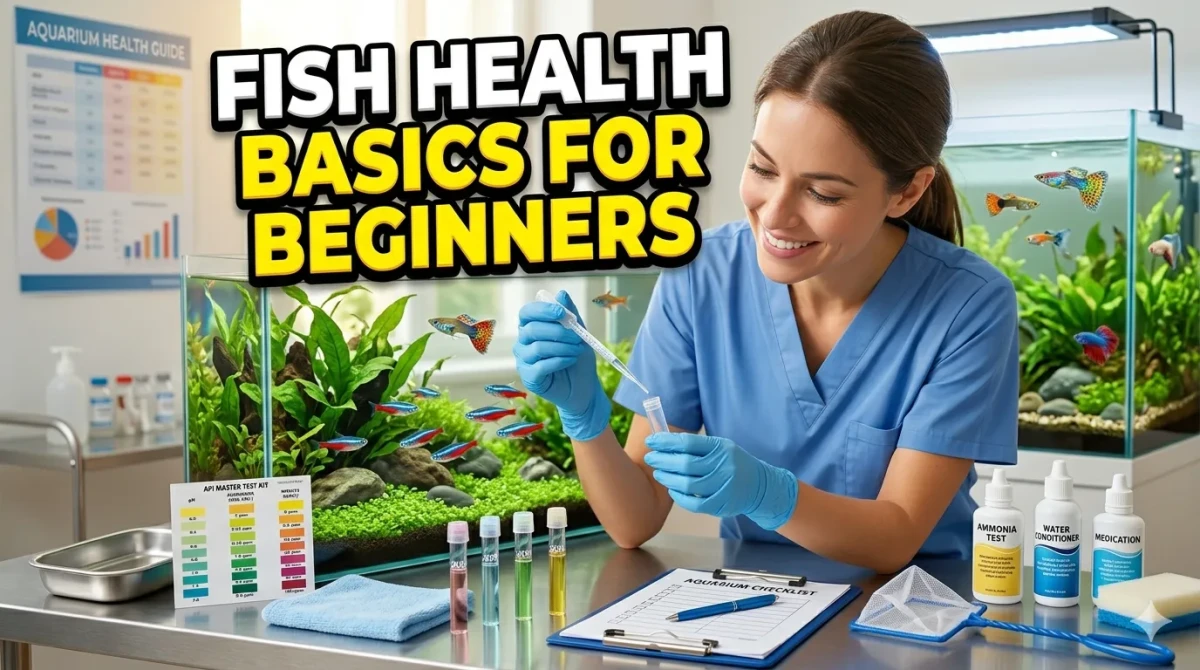
Fish Health Basics for Beginners: Essential Guide
Why Understanding Fish Health Basics Is Critical for New Aquarium Owners
Starting an aquarium is an exciting journey, but maintaining fish health requires knowledge that many beginners don't have upfront. Fish are sensitive creatures that depend entirely on their water environment for survival. Unlike dogs or cats that can communicate discomfort, fish show illness through subtle behavioral and physical changes that are easy to miss without proper guidance.
Featured Snippet Answer: Fish health basics for beginners include maintaining stable water parameters through regular testing, performing weekly water changes, avoiding overfeeding, quarantining new fish, and observing daily behavior changes. Early detection of illness and prompt intervention significantly improve recovery outcomes.
The good news: most fish health problems are preventable with consistent, informed care. By understanding the fundamentals of water quality, nutrition, stress reduction, and disease recognition, beginner aquarists can create thriving environments where fish flourish rather than simply survive.
This comprehensive guide covers everything new fish keepers need to know about fish health: from setting up a healthy aquarium foundation to recognizing early warning signs, preventing common diseases, treating minor issues safely, and knowing when to seek professional help. Whether you're keeping a single betta, a community tank, or exploring saltwater aquariums, you'll find practical, evidence-based strategies to support your fish's wellbeing.
The Foundation of Fish Health: Water Quality Fundamentals
Water quality is the single most important factor determining fish health. Fish live immersed in their environment 24/7—every breath, every meal, and every waste product interacts directly with the water. Poor water quality doesn't just cause stress; it leads to disease, suppressed immunity, and premature death.
Understanding the Nitrogen Cycle:
- Ammonia: Produced by fish waste and decaying matter; toxic even at low levels (0.25+ ppm causes stress)
- Nitrite: Converted from ammonia by beneficial bacteria; still toxic to fish, interferes with oxygen transport
- Nitrate: Final conversion product; less toxic but harmful at high levels (>40 ppm freshwater, >20 ppm saltwater)
- Removal: Regular water changes, live plants, and proper filtration keep nitrates in check
- 🐾 Cat Digestive Health Guide for Beginners Complete Care
- 🐾 How to Boost a Bird's Immune System Naturally: Expert Avian Veterinary Guide
- 🐾 Annual Health Check for Small Pets: Complete Guide
Essential Water Parameters to Monitor:
- Temperature: Species-specific ranges; stability matters more than exact value (fluctuations >2°F/day stress fish)
- pH: Most tropical fish prefer 6.5-7.5; sudden swings are more harmful than slightly "wrong" stable pH
- Hardness (GH/KH): Affects osmoregulation and pH stability; match to species requirements
- Dissolved oxygen: Critical for respiration; ensured through surface agitation and proper filtration
- 🐾 Cat Digestive Health Guide for Beginners Complete Care
- 🐾 How to Boost a Bird's Immune System Naturally: Expert Avian Veterinary Guide
- 🐾 Annual Health Check for Small Pets: Complete Guide
Testing Protocol for Beginners:
- Use liquid test kits (more accurate than strips) for ammonia, nitrite, nitrate, and pH
- Test new tanks daily during cycling; established tanks weekly
- Record results to track trends and catch problems early
- Test immediately if fish show unusual behavior or appearance
- 🐾 Cat Digestive Health Guide for Beginners Complete Care
- 🐾 How to Boost a Bird's Immune System Naturally: Expert Avian Veterinary Guide
- 🐾 Annual Health Check for Small Pets: Complete Guide
Featured Snippet Answer: Maintain fish health by testing water weekly for ammonia (0 ppm), nitrite (0 ppm), nitrate (
🐱 আরও পড়ুন: Fish Health

0 Comments