.png)
Best Bird Toys for Parrots in USA: Complete 2026 Guide
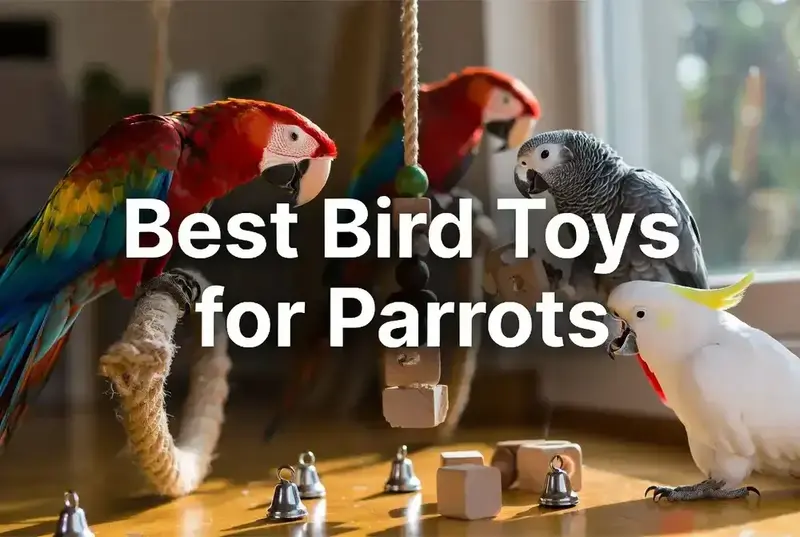
Finding the best bird toys for parrots in USA is essential for keeping your feathered companion physically fit, mentally stimulated, and emotionally satisfied. Parrots are highly intelligent, social creatures with complex needs that extend far beyond basic food and shelter. In their natural habitat, wild parrots spend most of their waking hours foraging, exploring, socializing, and solving problems. Domestic parrots require similar mental and physical challenges to prevent boredom, behavioral problems, and psychological distress. The right toys provide crucial outlets for natural instincts like chewing, foraging, climbing, and problem-solving while preventing destructive behaviors like feather plucking, excessive screaming, or aggression. This comprehensive guide explores the best parrot toys available in the American market, from destructible wood toys to complex puzzle feeders, helping you create an enriching environment that keeps your parrot happy, healthy, and engaged for years to come.
Why Parrots Need Toys for Mental and Physical Health
Understanding why toys are essential rather than optional helps owners prioritize enrichment in their parrot's daily life. Parrots are not decorative pets—they are intelligent, active birds with cognitive abilities comparable to young human children in some species.
The Intelligence Factor
Parrots rank among the most intelligent birds, with some species demonstrating problem-solving abilities, tool use, and complex social cognition. African Greys, for example, can understand concepts like shape, color, and number. Macaws, Cockatoos, and Amazons also display remarkable intelligence. Without adequate mental stimulation, these brilliant birds become bored, frustrated, and depressed.
Boredom in parrots isn't just inconvenient—it's dangerous. A bored parrot will create its own entertainment, often through undesirable behaviors like:
- Feather destructive behavior: Plucking, chewing, or destroying their own feathers
- Excessive vocalization: Screaming, often at ear-splitting volumes
- Aggression: Biting, lunging, or territorial behavior
- Stereotypic behaviors: Pacing, head bobbing, or other repetitive actions
- Destruction: Chewing furniture, walls, or household items
- 🐾 Best Aquarium Filters for Freshwater Fish: 2026 Guide
- 🐾 Best Cat Toys for Indoor Cats: Complete 2026 Guide
- 🐾 Best Gerbil Cages: Expert Guide to Habitat Selection & Setup
Physical Health Benefits
Toys aren't just about mental stimulation—they're crucial for physical health:
- Beak maintenance: Chewing toys helps wear down the continuously growing beak
- Foot health: Climbing and manipulating toys exercises feet and prevents arthritis
- Wing exercise: Reaching for toys promotes wing movement and muscle tone
- Preventing obesity: Active play burns calories and maintains healthy weight
- Digestive health: Foraging toys encourage natural eating patterns
- 🐾 Best Aquarium Filters for Freshwater Fish: 2026 Guide
- 🐾 Best Cat Toys for Indoor Cats: Complete 2026 Guide
- 🐾 Best Gerbil Cages: Expert Guide to Habitat Selection & Setup
Natural Instincts Require Expression
Wild parrots spend 60-80% of their day foraging for food. Domestic parrots fed from bowls complete meals in minutes, leaving hours of unoccupied time. Foraging toys simulate the work of finding food, providing mental challenge and extending mealtime.
Parrots also have strong chewing instincts. In the wild, they destroy branches, bark, and wood to access food, create nests, and maintain beaks. Destructible toys satisfy this natural drive safely.
Essential Categories of Parrot Toys
Understanding different toy categories helps you create a balanced enrichment program that addresses all your parrot's needs.
Destructible Toys: The Chewing Imperative
Destructible toys are non-negotiable for parrot health. These toys allow birds to satisfy their powerful chewing instinct while providing entertainment and beak maintenance.
Wood toys: Made from bird-safe woods like pine, balsa, poplar, or manzanita. Parrots shred, chew, and destroy these toys, which is exactly the point. Replace when destroyed.
Cardboard and paper toys: Toilet paper rolls, paper bags, and cardboard boxes provide hours of shredding entertainment. These are inexpensive and easily replaced.
Natural fiber toys: Made from sisal, seagrass, or other natural materials. These provide different textures and chewing experiences.
Leather toys: Untanned, vegetable-tanned leather strips and pieces offer durability and different texture. Ensure leather is untreated and safe for birds.
Foraging Toys: Mental Challenge Through Food
Foraging toys make parrots work for their food, simulating natural feeding behaviors and providing mental exercise.
Puzzle feeders: Toys with compartments, doors, or mechanisms that birds must manipulate to access treats. Complexity ranges from simple to highly challenging.
Shreddable foragers: Toys where food is hidden inside shreddable materials like paper, cardboard, or natural fibers. Birds must destroy the toy to reach the food.
Foraging wheels: Rotating devices with multiple compartments that dispense food as birds manipulate them.
Box foragers: Simple cardboard boxes with treats hidden inside, requiring problem-solving to access food.
Manipulative Toys: Problem-Solving and Dexterity
These toys require birds to use their beaks and feet to manipulate objects, developing coordination and problem-solving skills.
Bead toys: Wooden or acrylic beads on safe string or wire that birds can move, chew, and manipulate.
Block toys: Wooden blocks of various sizes and shapes that can be chewed, moved, or destroyed.
Rings and links: Plastic or wooden rings that birds can chew, spin, and manipulate.
Swings and ladders: Provide movement and climbing opportunities while offering entertainment.
Noise-Making Toys: Auditory Stimulation
Many parrots enjoy toys that make sound, providing auditory enrichment and entertainment.
Bell toys: Bells of various sizes that ring when manipulated. Ensure bells are bird-safe (no lead, zinc, or cadmium).
Rattles: Toys with safe materials inside that rattle when shaken.
Crinkle toys: Made from safe materials that make crinkling sounds when chewed or manipulated.
Preening and Comfort Toys
Some toys provide comfort and satisfy preening instincts, particularly important for single birds without flock mates.
Soft toys: Fleece or fabric toys that birds can cuddle, preen, or sleep with. Monitor for fabric ingestion.
Mirrors: Controversial—some parrots enjoy them while others become obsessed. Use sparingly and monitor behavior.
Shaker toys: Soft toys with safe filling that make noise when shaken.
Top-Rated Parrot Toys in USA for 2026

Based on avian behaviorist recommendations, safety standards, durability, and feedback from thousands of USA parrot owners, these toys consistently deliver engagement and value.
Super Bird Creations Chewy Cubes
These destructible wood block toys are perennial favorites among parrot owners and birds alike.
Key features:
- Made from bird-safe pine and other softwoods
- Variety of sizes for different parrot species
- Pre-drilled holes for easy hanging
- Untreated, natural wood
- Affordable and replaceable
- Can be stuffed with treats for foraging
- 🐾 Best Aquarium Filters for Freshwater Fish: 2026 Guide
- 🐾 Best Cat Toys for Indoor Cats: Complete 2026 Guide
- 🐾 Best Gerbil Cages: Expert Guide to Habitat Selection & Setup
Best for: All parrot species, destructive chewers, beak maintenance
Price range: $8-$20 depending on size and quantity
Real-world performance: Most parrots destroy these within days to weeks, which is exactly the goal. Excellent value for providing hours of entertainment.
Planet Pleasures Parrot Puzzle Toy
This foraging puzzle challenges parrots to solve problems for food rewards.
Key features:
- Multiple compartments with sliding doors
- Made from bird-safe acrylic and stainless steel
- Adjustable difficulty levels
- Easy to clean and refill
- Encourages problem-solving
- Durable construction
- 🐾 Best Aquarium Filters for Freshwater Fish: 2026 Guide
- 🐾 Best Cat Toys for Indoor Cats: Complete 2026 Guide
- 🐾 Best Gerbil Cages: Expert Guide to Habitat Selection & Setup
Best for: Intelligent species (African Greys, Macaws, Amazons), food-motivated birds
Price range: $25-$40
Real-world performance: Provides 15-30 minutes of focused engagement. Birds typically master basic level within days, requiring increased difficulty for continued challenge.
Bonka Bird Toys Giant Shredder
Large destructible toy designed for powerful chewers and big parrots.
Key features:
- Made from natural palm leaves and seagrass
- Extra-large size for Macaws, Cockatoos, large Amazons
- Completely shreddable
- No toxic glues or dyes
- Provides hours of destruction
- Safe natural materials
- 🐾 Best Aquarium Filters for Freshwater Fish: 2026 Guide
- 🐾 Best Cat Toys for Indoor Cats: Complete 2026 Guide
- 🐾 Best Gerbil Cages: Expert Guide to Habitat Selection & Setup
Best for: Large parrots, aggressive chewers, birds who love to shred
Price range: $15-$30
Real-world performance: Even powerful chewers take days to completely destroy, providing extended entertainment. Excellent value.
Caitec Perch Ladder with Bells
Combines climbing exercise with auditory stimulation.
Key features:
- Natural wood rungs
- Bird-safe metal bells
- Flexible design for various cage configurations
- Encourages climbing and exercise
- Makes noise when manipulated
- Easy to attach to cage
- 🐾 Best Aquarium Filters for Freshwater Fish: 2026 Guide
- 🐾 Best Cat Toys for Indoor Cats: Complete 2026 Guide
- 🐾 Best Gerbil Cages: Expert Guide to Habitat Selection & Setup
Best for: All parrot sizes (multiple sizes available), active birds, foot exercise
Price range: $12-$25
Real-world performance: Provides both physical exercise and entertainment. Bells appeal to many parrots' love of noise.
Prevue Pet Products Parrot Foraging Box
Simple yet effective foraging toy that encourages natural food-finding behaviors.
Key features:
- Cardboard construction
- Multiple compartments for hiding treats
- Completely shreddable
- Inexpensive and replaceable
- Encourages problem-solving
- Safe, non-toxic materials
- 🐾 Best Aquarium Filters for Freshwater Fish: 2026 Guide
- 🐾 Best Cat Toys for Indoor Cats: Complete 2026 Guide
- 🐾 Best Gerbil Cages: Expert Guide to Habitat Selection & Setup
Best for: All parrot species, introducing foraging concepts, budget-friendly enrichment
Price range: $8-$15
Real-world performance: Provides 10-20 minutes of engagement. Birds enjoy destroying the box to find hidden treats.
Happy Hoots Natural Wood Bead Garland
Manipulative toy that encourages beak and foot coordination.
Key features:
- Natural, untreated wood beads
- Variety of bead sizes and shapes
- Safe stainless steel chain
- Can be chewed, moved, and manipulated
- Makes noise when beads move
- Durable construction
- 🐾 Best Aquarium Filters for Freshwater Fish: 2026 Guide
- 🐾 Best Cat Toys for Indoor Cats: Complete 2026 Guide
- 🐾 Best Gerbil Cages: Expert Guide to Habitat Selection & Setup
Best for: Medium to large parrots, birds who enjoy manipulating objects
Price range: $15-$30
Real-world performance: Provides ongoing entertainment as birds move beads and chew wood. Lasts weeks to months depending on bird's destructiveness.
Joe's Flight Cage Toy Set
Complete toy variety pack for comprehensive enrichment.
Key features:
- Includes 5-10 different toys
- Mix of destructible, foraging, and manipulative toys
- Species-specific options
- Good value compared to buying individually
- Introduces variety immediately
- Quality construction
- 🐾 Best Aquarium Filters for Freshwater Fish: 2026 Guide
- 🐾 Best Cat Toys for Indoor Cats: Complete 2026 Guide
- 🐾 Best Gerbil Cages: Expert Guide to Habitat Selection & Setup
Best for: New parrot owners, toy rotation systems, budget-conscious owners
Price range: $30-$60
Real-world performance: Provides immediate enrichment variety. Good way to discover which toy types your parrot prefers.
Choosing Toys Based on Parrot Species
Different parrot species have varying toy needs based on size, intelligence, chewing strength, and natural behaviors.
Small Parrots (Budgies, Lovebirds, Parrotlets)
Toy needs:
- Small-sized toys appropriate for tiny beaks
- Lightweight toys they can manipulate
- Bells and noise-making toys (many small parrots love sound)
- Swings and ladders for climbing
- Shreddable toys made from balsa or soft wood
- Foraging toys with small openings
- 🐾 Best Aquarium Filters for Freshwater Fish: 2026 Guide
- 🐾 Best Cat Toys for Indoor Cats: Complete 2026 Guide
- 🐾 Best Gerbil Cages: Expert Guide to Habitat Selection & Setup
Avoid: Large, heavy toys; toys with small parts that could be swallowed; overly complex puzzles
Medium Parrots (Cockatiels, Conures, Quakers)
Toy needs:
- Moderate-sized destructible toys
- Foraging puzzles of medium complexity
- Bead and block toys for manipulation
- Rope and leather toys
- Swings and climbing toys
- Variety of textures
- 🐾 Best Aquarium Filters for Freshwater Fish: 2026 Guide
- 🐾 Best Cat Toys for Indoor Cats: Complete 2026 Guide
- 🐾 Best Gerbil Cages: Expert Guide to Habitat Selection & Setup
Avoid: Toys too small (choking hazard) or too large (intimidating); toxic materials
Large Parrots (African Greys, Amazons, Large Conures)
Toy needs:
- Complex foraging puzzles (high intelligence)
- Large, durable destructible toys
- Manipulative toys with multiple components
- Problem-solving challenges
- Variety of textures and materials
- Regular toy rotation (prevent boredom)
- 🐾 Best Aquarium Filters for Freshwater Fish: 2026 Guide
- 🐾 Best Cat Toys for Indoor Cats: Complete 2026 Guide
- 🐾 Best Gerbil Cages: Expert Guide to Habitat Selection & Setup
Avoid: Overly simple toys (boring quickly); flimsy construction; inadequate mental challenge
Very Large Parrots (Macaws, Cockatoos)
Toy needs:
- Extra-large, heavy-duty toys
- Palm leaf and seagrass shredders
- Thick rope toys
- Large wooden blocks and branches
- Complex foraging systems
- Toys that can withstand powerful beaks
- 🐾 Best Aquarium Filters for Freshwater Fish: 2026 Guide
- 🐾 Best Cat Toys for Indoor Cats: Complete 2026 Guide
- 🐾 Best Gerbil Cages: Expert Guide to Habitat Selection & Setup
Avoid: Small toys (choking hazard); flimsy construction; toys with small metal parts; inadequate size
Safety Considerations for Parrot Toys
Toy safety is paramount. Parrots explore with their beaks and can ingest materials, making safety non-negotiable.
Safe Materials
Wood: Pine, poplar, balsa, manzanita, maple, oak, apple, ash. Ensure wood is untreated and pesticide-free.
Metals: Stainless steel is safest. Nickel-plated is acceptable. Avoid zinc, lead, cadmium, and copper.
Plastics: Acrylic is generally safe. Avoid plastics that can splinter or break into sharp pieces.
Natural fibers: Sisal, seagrass, cotton rope (untreated), palm leaves, paper, cardboard.
Leather: Untanned or vegetable-tanned leather only. Avoid chrome-tanned leather.
Materials to Avoid
- Zinc and lead: Highly toxic to birds, found in cheap bells and chains
- Cadmium: Toxic metal sometimes found in cheap toys
- Galvanized metal: Coated with zinc, toxic when chewed
- Treated wood: Pressure-treated or painted wood contains toxic chemicals
- Small parts: Beads, bells, or components small enough to swallow
- String and yarn: Can cause crop impaction or strangulation
- Mirrors with unsafe backing: May contain toxic materials
- Glue: Many glues are toxic; ensure toys use bird-safe adhesives
- 🐾 Best Aquarium Filters for Freshwater Fish: 2026 Guide
- 🐾 Best Cat Toys for Indoor Cats: Complete 2026 Guide
- 🐾 Best Gerbil Cages: Expert Guide to Habitat Selection & Setup
Size Appropriateness
Toys must be appropriately sized for your parrot:
- Too small: Choking hazard, can be swallowed whole
- Too large: Intimidating, won't be used
- Parts should be too large to swallow but small enough to manipulate
- Check manufacturer's size recommendations
- 🐾 Best Aquarium Filters for Freshwater Fish: 2026 Guide
- 🐾 Best Cat Toys for Indoor Cats: Complete 2026 Guide
- 🐾 Best Gerbil Cages: Expert Guide to Habitat Selection & Setup
Regular Inspection
Inspect toys daily for:
- Wear and tear
- Loose parts or hardware
- Sharp edges or points
- Broken components
- Frayed rope or string
- Rust or corrosion on metal parts
- 🐾 Best Aquarium Filters for Freshwater Fish: 2026 Guide
- 🐾 Best Cat Toys for Indoor Cats: Complete 2026 Guide
- 🐾 Best Gerbil Cages: Expert Guide to Habitat Selection & Setup
Remove and replace damaged toys immediately. A toy safe when new can become hazardous as it wears.
Supervision Guidelines
Supervise your parrot with:
- New toys (until you know how they interact)
- Toys with rope or string
- Toys with small parts
- Foraging toys with food (monitor for spoilage)
- Any toy showing wear
- 🐾 Best Aquarium Filters for Freshwater Fish: 2026 Guide
- 🐾 Best Cat Toys for Indoor Cats: Complete 2026 Guide
- 🐾 Best Gerbil Cages: Expert Guide to Habitat Selection & Setup
DIY Parrot Toys on a Budget
You don't need to spend a fortune to keep your parrot entertained. Many effective toys can be made at home with safe, inexpensive materials.
Cardboard Box Forager
Materials: Small cardboard box, treats, non-toxic paper
Instructions: Fill box with crumpled paper and hide treats throughout. Close box or leave open depending on difficulty desired. Parrot must shred paper to find food.
Cost: Free (recycled materials)
Toilet Paper Roll Garland
Materials: Empty toilet paper rolls, bird-safe string or stainless steel chain
Instructions: Cut rolls into 1-inch rings. String rings together on safe chain or cord. Hang in cage.
Cost: Free (recycled materials plus chain)
Paper Bag Shredder
Materials: Brown paper bag, treats
Instructions: Crumple paper bag, hide treats inside, twist top closed. Hang or place in cage.
Cost: Free
Natural Branch Perch/Toy
Materials: Untreated tree branches (apple, manzanita, ash), drill
Instructions: Collect branches from safe trees (not from roadsides or treated areas). Wash thoroughly, bake at 200°F for 30 minutes to sterilize. Attach to cage.
Cost: Free (if you have access to safe trees)
Egg Carton Forager
Materials: Cardboard egg carton, treats, non-toxic paper
Instructions: Place treats in egg carton cups, cover with crumpled paper. Parrot must remove paper to access food.
Cost: Free (recycled materials)
Wooden Block Stack
Materials: Untreated wood blocks, stainless steel washers and nuts, safe chain
Instructions: Drill holes in wood blocks. String blocks on chain with washers between. Secure with nuts.
Cost: $5-$10
Creating a Toy Rotation System
Having too many toys available simultaneously can overwhelm parrots and reduce interest. A rotation system maintains novelty and engagement.
How to Rotate Toys
Step 1: Sort toys into 3-4 groups
Step 2: Keep one group available at a time (3-5 toys in cage)
Step 3: Rotate groups every 3-7 days
Step 4: Store unused toys out of sight (closet, cabinet)
Step 5: Observe which toys generate most interest
Step 6: Adjust rotation based on preferences
Benefits of Rotation
- Maintains novelty without constant purchasing
- Prevents toy fatigue and boredom
- Allows you to identify favorite toys
- Reduces cage clutter
- Makes old toys feel new again
- Extends toy lifespan
- 🐾 Best Aquarium Filters for Freshwater Fish: 2026 Guide
- 🐾 Best Cat Toys for Indoor Cats: Complete 2026 Guide
- 🐾 Best Gerbil Cages: Expert Guide to Habitat Selection & Setup
Essential vs. Optional Toys
Always keep available:
- At least 2-3 destructible toys
- One foraging toy
- One manipulative toy
- Variety of perch types
- 🐾 Best Aquarium Filters for Freshwater Fish: 2026 Guide
- 🐾 Best Cat Toys for Indoor Cats: Complete 2026 Guide
- 🐾 Best Gerbil Cages: Expert Guide to Habitat Selection & Setup
Rotate:
- Puzzle feeders
- Noise-making toys
- Soft toys
- Specialty toys
- 🐾 Best Aquarium Filters for Freshwater Fish: 2026 Guide
- 🐾 Best Cat Toys for Indoor Cats: Complete 2026 Guide
- 🐾 Best Gerbil Cages: Expert Guide to Habitat Selection & Setup
People Also Ask: Quick Answers
How many toys should a parrot have?
Most parrots benefit from having 3-5 toys available at a time, with additional toys in rotation. A good mix includes destructible toys, foraging toys, and manipulative toys. Total toy collection might be 10-15 toys rotated regularly.
Do parrots get bored with the same toys?
Yes, parrots can become bored with toys left out constantly. This is why rotation systems work so well. By keeping only a few toys available and rotating them weekly, toys maintain novelty and engagement without constant purchasing.
What is the best toy for a parrot?
The "best" toy varies by individual parrot, but destructible wood toys are essential for all parrots. Foraging puzzles are excellent for mental stimulation, especially for intelligent species like African Greys. Observe your parrot's preferences and provide variety.
How often should I replace parrot toys?
Destructible toys should be replaced when destroyed (days to weeks). Durable toys can last months but should be inspected regularly for wear. Replace any toy showing damage, loose parts, or safety concerns immediately.
Are rope toys safe for parrots?
Rope toys made from natural, untreated fibers (sisal, cotton, seagrass) are generally safe when supervised. However, monitor for fraying and trim loose ends. Never leave parrots unsupervised with rope toys that could cause entanglement or ingestion.
Common Mistakes When Buying Parrot Toys
Avoid these frequent errors that waste money and fail to engage parrots:
- Buying toys too large or small: Size matters. Toys must match your parrot's size and strength.
- Ignoring safety: Cheap toys often contain toxic metals or materials. Never compromise on safety.
- Buying only one type of toy: Parrots need variety—destructible, foraging, manipulative, and noise-making toys.
- Not rotating toys: Leaving all toys out constantly leads to boredom. Rotate regularly.
- Expecting toys to replace interaction: Toys supplement but don't replace human interaction and out-of-cage time.
- Ignoring individual preferences: Not all parrots like the same toys. Observe and adjust.
- Not inspecting toys regularly: Worn toys become hazardous. Inspect daily.
- Buying based on appearance: Flashy doesn't mean engaging. Focus on functionality and safety.
- 🐾 Best Aquarium Filters for Freshwater Fish: 2026 Guide
- 🐾 Best Cat Toys for Indoor Cats: Complete 2026 Guide
- 🐾 Best Gerbil Cages: Expert Guide to Habitat Selection & Setup
Budget Considerations and Value
Quality parrot toys don't have to break the bank, but investing in safe, durable options provides better long-term value.
Price Ranges
- Budget ($5-$15): Simple wood toys, cardboard foragers, DIY options
- Mid-range ($15-$35): Quality destructible toys, basic puzzle feeders, rope toys
- Premium ($35-$75+): Complex puzzle toys, large foraging systems, heavy-duty toys for big parrots
- 🐾 Best Aquarium Filters for Freshwater Fish: 2026 Guide
- 🐾 Best Cat Toys for Indoor Cats: Complete 2026 Guide
- 🐾 Best Gerbil Cages: Expert Guide to Habitat Selection & Setup
Where to Buy Parrot Toys in USA
- Pet specialty stores: Petco, Petsmart, independent bird shops offer variety and staff expertise
- Online retailers: Chewy.com, Amazon, manufacturer websites provide convenience and reviews
- Bird expos and shows: Often feature unique, handcrafted toys
- Direct from manufacturers: Brands like Bonka Bird Toys, Super Bird Creations, Planet Pleasures
- 🐾 Best Aquarium Filters for Freshwater Fish: 2026 Guide
- 🐾 Best Cat Toys for Indoor Cats: Complete 2026 Guide
- 🐾 Best Gerbil Cages: Expert Guide to Habitat Selection & Setup
Cost-Per-Use Analysis
A $5 toy your parrot destroys in one day costs $5/day. A $30 toy providing weeks of engagement costs pennies per day. Focus on engagement and safety, not just price.
Frequently Asked Questions
My parrot ignores toys. What should I do?
Try different toy types, introduce toys gradually, place toys near favorite perches, make toys more interesting by adding treats, demonstrate toy use, and be patient. Some parrots take weeks to accept new toys. Never force interaction.
Can I leave toys in the cage all the time?
Safe, durable toys can remain available, but rotating toys maintains interest. Remove destructible toys when destroyed and inspect all toys regularly for safety. Never leave toys with rope, string, or small parts unsupervised.
Do expensive toys work better than cheap ones?
Not necessarily. Price doesn't guarantee engagement. Some parrots prefer simple cardboard to expensive puzzles. However, expensive toys often offer better safety, durability, and complexity. Focus on your individual parrot's preferences and safety standards.
How do I know if a toy is safe for my parrot?
Safe toys are: appropriately sized, made from non-toxic materials (stainless steel, untreated wood, natural fibers), well-constructed without small detachable parts, from reputable brands, and supervised during initial use. When in doubt, consult your avian veterinarian.
Can I make my own parrot toys?
Yes! DIY toys can be safe, effective, and inexpensive. Use only bird-safe materials (untreated wood, cardboard, paper, natural fibers). Avoid toxic glues, metals, or treated materials. Research thoroughly before making toys.
Conclusion: Enriching Your Parrot's Life
Providing the best bird toys for parrots in USA isn't about filling your home with gadgets—it's about understanding your parrot's natural instincts and providing appropriate outlets for chewing, foraging, problem-solving, and playing. The right toy selection prevents behavioral problems, maintains physical and mental health, and strengthens your bond with your feathered companion.
Remember that variety is essential. No single toy type meets all your parrot's needs. Provide a mix of destructible toys for chewing, foraging toys for mental challenge, manipulative toys for dexterity, and noise-making toys for auditory stimulation. Rotate toys regularly to maintain interest and engagement.
Safety must always come first. Never compromise on toy quality or materials. Inspect toys daily, replace damaged toys immediately, and supervise play with new or potentially hazardous toys. Your parrot's health and safety are worth the investment in quality, bird-safe toys.
Observe your parrot's preferences, adjust selections based on individual personality, and be willing to experiment with different toy types. What works for one parrot may not work for another. Start today by evaluating your current toy collection, identifying gaps, and introducing one new element—whether it's a quality destructible toy, a foraging puzzle, or simply a toy rotation system.
Your parrot's physical health, mental wellbeing, and behavioral stability will reward your investment in quality enrichment many times over. A stimulated, engaged parrot is a happy, healthy parrot who will thrive in your care for years to come.

0 Comments