.png)
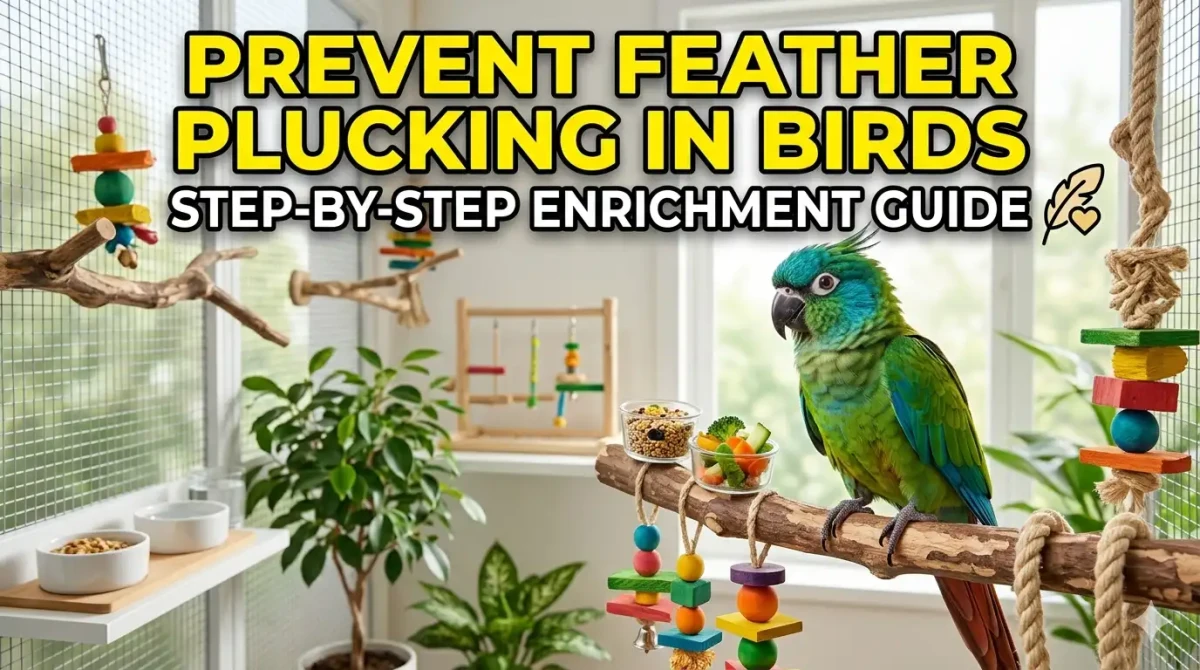
Understanding Feather Plucking: Why Birds Self-Destruct and How to Help
Feather plucking—also called feather destructive behavior or pterotillomania—is one of the most challenging and heartbreaking issues bird owners face. Watching a beloved parrot, cockatiel, or other companion bird systematically destroy their own plumage is distressing, but understanding the root causes is the first step toward healing. Feather plucking is rarely "just a habit"—it's typically a symptom of underlying medical, environmental, behavioral, or psychological distress.
Featured Snippet Answer: To prevent feather plucking, first rule out medical causes with an avian veterinarian. Then address environmental factors: provide adequate cage size, daily out-of-cage time, mental enrichment through foraging toys, consistent routines, and appropriate social interaction. Never punish plucking; instead, redirect behavior and reward healthy activities.
This comprehensive guide provides evidence-based, veterinarian-aligned strategies to identify triggers, address root causes, and implement effective prevention protocols for feather plucking. You'll learn how to distinguish medical from behavioral causes, create an enriching environment, optimize nutrition for feather health, use positive reinforcement training, and know when to seek specialized help. Whether you care for an African Grey, cockatoo, conure, or other feathered companion, you'll find practical, compassionate guidance to support your bird's recovery and long-term wellbeing.
Medical Causes: Rule These Out First
Before addressing feather plucking as a behavioral issue, medical causes must be thoroughly investigated. Up to 50% of feather plucking cases have underlying medical components.
Common Medical Triggers:
- Skin infections: Bacterial, fungal (yeast), or viral infections cause itching and discomfort
- Parasites: Mites (scabies, feather mites), lice, or external parasites irritate skin
- Allergies: Environmental allergens (dust, pollen, mold) or food sensitivities trigger itching
- Pain referral: Internal pain (arthritis, organ disease, egg binding) may cause birds to pluck over painful areas
- Hormonal imbalances: Thyroid disorders, reproductive issues, or adrenal problems affect skin and behavior
- Nutritional deficiencies: Vitamin A, E, or essential fatty acid deficiencies compromise skin and feather health
- Toxin exposure: Heavy metals (zinc, lead), smoke, or chemical fumes cause systemic irritation
- Feather cysts or trauma: Localized pain from ingrown feathers or injuries triggers focused plucking
- 🐾 How to Clean Bird Beak Safely: Expert Avian Veterinary Guide
- 🐾 Best Filters for Small Aquariums: Expert Guide & Reviews
- 🐾 Best Bedding for Small Pets: Expert Safety & Comfort Guide
Essential Veterinary Workup:
- Physical examination: Avian vet assesses skin, feathers, weight, and overall condition
- Diagnostic testing: Skin scrapings, fecal tests, blood work (CBC, chemistry), and cultures as indicated
- Imaging: Radiographs or ultrasound to evaluate internal organs if pain is suspected
- Allergy testing: In select cases, intradermal or blood testing for environmental allergens
- Nutritional assessment: Review of diet to identify deficiencies or imbalances
- 🐾 How to Clean Bird Beak Safely: Expert Avian Veterinary Guide
- 🐾 Best Filters for Small Aquariums: Expert Guide & Reviews
- 🐾 Best Bedding for Small Pets: Expert Safety & Comfort Guide
Featured Snippet Answer: Always consult an avian veterinarian first to rule out medical causes of feather plucking: skin infections, parasites, allergies, pain, hormonal issues, or nutritional deficiencies. Diagnostic testing may include skin scrapings, blood work, or imaging. Treating underlying medical conditions is essential before addressing behavioral factors.
How do I know if feather plucking is medical or behavioral?
Medical plucking often targets specific body areas (vent, chest, under wings), may show skin redness or lesions, and can occur suddenly. Behavioral plucking is often symmetrical, focuses on accessible areas (chest, legs), and correlates with environmental changes or stressors. However, overlap is common—only an avian veterinarian can definitively distinguish causes through examination and testing.
Environmental and Behavioral Triggers: Creating a Supportive Habitat

Once medical causes are addressed or ruled out, environmental and behavioral factors become the focus. Birds are intelligent, social, and active creatures whose wellbeing depends on meeting complex physical and psychological needs.
Inadequate Cage Size and Setup:
- Minimum dimensions: Cage must allow full wing extension, climbing, and movement; larger is always better
- Bar spacing: Must prevent head or limb entrapment while allowing climbing
- Perch variety: Multiple diameters and textures (natural wood, rope, cement) support foot health and reduce boredom
- Safe materials: Avoid toxic woods (cherry, cedar), zinc/lead hardware, or easily chewed plastics
- 🐾 How to Clean Bird Beak Safely: Expert Avian Veterinary Guide
- 🐾 Best Filters for Small Aquariums: Expert Guide & Reviews
- 🐾 Best Bedding for Small Pets: Expert Safety & Comfort Guide
Insufficient Out-of-Cage Time:
- Daily flight/exercise: Minimum 2-4 hours of supervised out-of-cage time for physical and mental health
- Safe exploration: Bird-proofed rooms with opportunities for climbing, foraging, and social interaction
- Supervision essential: Prevent access to hazards (ceiling fans, toxic plants, open water)
- 🐾 How to Clean Bird Beak Safely: Expert Avian Veterinary Guide
- 🐾 Best Filters for Small Aquariums: Expert Guide & Reviews
- 🐾 Best Bedding for Small Pets: Expert Safety & Comfort Guide
Lack of Mental Stimulation:
- Foraging opportunities: Hide food in puzzle toys, paper rolls, or cardboard boxes to mimic natural food-seeking
- Toy rotation: Offer 4-6 toys representing different categories (shredding, foraging, climbing, foot toys); rotate weekly to maintain novelty
- Species-appropriate challenges: Large parrots need destructible wood toys; smaller birds benefit from manipulable foot toys
- Training sessions: Short (5-10 minute) positive reinforcement training builds confidence and mental engagement
- 🐾 How to Clean Bird Beak Safely: Expert Avian Veterinary Guide
- 🐾 Best Filters for Small Aquariums: Expert Guide & Reviews
- 🐾 Best Bedding for Small Pets: Expert Safety & Comfort Guide
Social Isolation or Inappropriate Interaction:
- Flock dynamics: Birds are social; isolation causes stress, while overwhelming interaction can also trigger anxiety
- Quality time: Daily interactive time (training, gentle handling, shared activities) strengthens bonds
- Respect boundaries: Learn your bird's body language; forcing interaction increases stress
- Multi-bird households: Ensure compatible species, adequate resources, and monitoring for aggression
- 🐾 How to Clean Bird Beak Safely: Expert Avian Veterinary Guide
- 🐾 Best Filters for Small Aquariums: Expert Guide & Reviews
- 🐾 Best Bedding for Small Pets: Expert Safety & Comfort Guide
Featured Snippet Answer: Prevent behavioral feather plucking by providing adequate cage size, 2-4 hours daily out-of-cage time, mental enrichment through foraging toys and training, and appropriate social interaction. Rotate toys weekly, respect your bird's boundaries, and ensure species-appropriate challenges to reduce boredom and stress.
Nutrition and Feather Health: Building Resilience from Within

Nutrition profoundly impacts feather quality, skin health, and behavioral stability. A balanced diet supports both physical recovery and emotional wellbeing.
Essential Nutrients for Feather Health:
- Protein: Feathers are 90% keratin protein; adequate high-quality protein (12-16% for most parrots) supports regrowth
- Vitamin A: Critical for skin and mucous membrane health; deficiency causes dry, flaky skin and poor feather quality
- Omega-3 fatty acids: Reduce inflammation, support skin barrier function, and may improve behavioral outcomes
- Vitamin E and selenium: Antioxidants that protect skin cells and support immune function
- B-complex vitamins: Support nervous system health and stress resilience
- Calcium and phosphorus: Proper ratio (2:1) supports overall health; imbalance affects behavior
- 🐾 How to Clean Bird Beak Safely: Expert Avian Veterinary Guide
- 🐾 Best Filters for Small Aquariums: Expert Guide & Reviews
- 🐾 Best Bedding for Small Pets: Expert Safety & Comfort Guide
Dietary Foundations:
- High-quality pellets: Formulated to provide balanced nutrition; should comprise 60-80% of diet for most parrots
- Fresh vegetables: Dark leafy greens, orange vegetables, and bell peppers provide vitamins and phytonutrients
- Limited fruits: Offer sparingly due to sugar content; choose low-sugar options like berries
- Healthy fats: Small amounts of nuts, seeds, or flax provide essential fatty acids
- Clean water: Fresh daily; hydration supports skin elasticity and toxin elimination
- 🐾 How to Clean Bird Beak Safely: Expert Avian Veterinary Guide
- 🐾 Best Filters for Small Aquariums: Expert Guide & Reviews
- 🐾 Best Bedding for Small Pets: Expert Safety & Comfort Guide
Foods to Avoid:
- Seed-heavy diets: High in fat, low in essential nutrients; promote selective eating and deficiencies
- Avocado, chocolate, caffeine, alcohol: Toxic to birds
- Salty, sugary, or processed human foods: Disrupt nutrition and behavior
- Onion, garlic, fruit pits: Can cause toxicity or digestive issues
- 🐾 How to Clean Bird Beak Safely: Expert Avian Veterinary Guide
- 🐾 Best Filters for Small Aquariums: Expert Guide & Reviews
- 🐾 Best Bedding for Small Pets: Expert Safety & Comfort Guide
Supplementation Considerations:
- Only under veterinary guidance: Over-supplementation can cause toxicity
- Targeted support: Omega-3 supplements, vitamin A, or probiotics may benefit specific cases
- Avoid "miracle cures": No supplement replaces balanced nutrition and environmental enrichment
- 🐾 How to Clean Bird Beak Safely: Expert Avian Veterinary Guide
- 🐾 Best Filters for Small Aquariums: Expert Guide & Reviews
- 🐾 Best Bedding for Small Pets: Expert Safety & Comfort Guide
Featured Snippet Answer: Support feather regrowth with a diet of 60-80% high-quality pellets, daily fresh vegetables, and limited fruits. Ensure adequate protein, vitamin A, and omega-3 fatty acids. Avoid seed-heavy diets and toxic foods. Consult an avian veterinarian before adding supplements.
Stress Reduction and Routine: Creating Predictability

Birds thrive on predictability. Sudden changes, chaos, or inconsistent routines can trigger or worsen feather plucking.
Establish Consistent Daily Routines:
- Feeding schedule: Offer meals at consistent times; birds feel secure with predictable resource availability
- Sleep schedule: Provide 10-12 hours of uninterrupted darkness/quiet nightly; use cage covers if needed
- Light cycle: Mimic natural photoperiods; avoid prolonged artificial light that disrupts hormonal cycles
- Interaction patterns: Regular, predictable social time reduces anxiety about attention
- 🐾 How to Clean Bird Beak Safely: Expert Avian Veterinary Guide
- 🐾 Best Filters for Small Aquariums: Expert Guide & Reviews
- 🐾 Best Bedding for Small Pets: Expert Safety & Comfort Guide
Manage Environmental Stressors:
- Noise control: Minimize loud appliances, shouting, or chaotic households near the cage
- Visual barriers: Provide covered areas or retreat spaces where your bird can feel secure
- Air quality: Avoid smoke, strong fragrances, aerosols, or non-stick cookware fumes (Teflon toxicity)
- Temperature stability: Maintain species-appropriate ranges; avoid drafts or extreme fluctuations
- 🐾 How to Clean Bird Beak Safely: Expert Avian Veterinary Guide
- 🐾 Best Filters for Small Aquariums: Expert Guide & Reviews
- 🐾 Best Bedding for Small Pets: Expert Safety & Comfort Guide
Gradual Introduction of Changes:
- New people, pets, or furniture: Introduce slowly; allow your bird to observe from a safe distance first
- Cage modifications: Add new perches or toys one at a time; monitor your bird's response
- Travel or boarding: Prepare with familiar items; maintain routines as much as possible
- 🐾 How to Clean Bird Beak Safely: Expert Avian Veterinary Guide
- 🐾 Best Filters for Small Aquariums: Expert Guide & Reviews
- 🐾 Best Bedding for Small Pets: Expert Safety & Comfort Guide
Featured Snippet Answer: Reduce stress by maintaining consistent feeding, sleep, and interaction routines. Provide 10-12 hours of quiet darkness nightly, minimize loud noises and environmental toxins, and introduce changes gradually. Predictability helps birds feel secure and reduces anxiety-driven plucking.
Positive Reinforcement Training: Redirecting Behavior

Training isn't just for tricks—it's a powerful tool for building confidence, strengthening bonds, and redirecting destructive behaviors.
Core Principles of Positive Reinforcement:
- Reward desired behaviors: Immediately offer treats, praise, or attention when your bird engages in healthy activities
- Ignore or redirect unwanted behaviors: Never punish plucking; instead, gently redirect to an appropriate activity
- Keep sessions short: 5-10 minutes maximum to maintain engagement and prevent frustration
- End on success: Always finish training with a behavior your bird can perform, followed by a reward
- 🐾 How to Clean Bird Beak Safely: Expert Avian Veterinary Guide
- 🐾 Best Filters for Small Aquariums: Expert Guide & Reviews
- 🐾 Best Bedding for Small Pets: Expert Safety & Comfort Guide
Practical Training Strategies for Plucking Prevention:
- Target training: Teach your bird to touch a stick with their beak; use this to redirect attention away from plucking
- Station training: Train your bird to perch on a specific spot; useful for managing location-based plucking
- Foraging training: Gradually increase puzzle difficulty to keep your bird mentally engaged
- Desensitization: If plucking is triggered by specific stimuli (visitors, noises), gradually expose your bird at low intensity while rewarding calm behavior
- 🐾 How to Clean Bird Beak Safely: Expert Avian Veterinary Guide
- 🐾 Best Filters for Small Aquariums: Expert Guide & Reviews
- 🐾 Best Bedding for Small Pets: Expert Safety & Comfort Guide
Redirecting Plucking Episodes:
- Interrupt gently: Use a calm verbal cue or soft sound to gain attention without startling
- Offer an alternative: Present a favorite toy, foraging opportunity, or training cue
- Reward engagement: Immediately reinforce when your bird interacts with the alternative
- Avoid attention for plucking: Even negative attention (saying "no," moving toward the bird) can reinforce the behavior
- 🐾 How to Clean Bird Beak Safely: Expert Avian Veterinary Guide
- 🐾 Best Filters for Small Aquariums: Expert Guide & Reviews
- 🐾 Best Bedding for Small Pets: Expert Safety & Comfort Guide
Featured Snippet Answer: Use positive reinforcement to prevent feather plucking: reward healthy behaviors immediately, redirect plucking to appropriate activities like foraging or training, and never punish. Keep training sessions short (5-10 minutes) and end on success. Target training and foraging puzzles are especially effective redirection tools.
Can I stop my bird from plucking by using a collar?
Protective collars (Elizabethan collars) should only be used under veterinary guidance and as a last resort. They prevent further feather damage but don't address underlying causes and can increase stress. Collars are temporary tools for severe cases while medical/behavioral treatment takes effect—not a standalone solution.
Species-Specific Considerations: Tailoring Prevention to Your Bird

Different bird species have unique behavioral tendencies, social needs, and plucking triggers. Prevention strategies must be adapted accordingly.
African Grey Parrots:
- High intelligence: Require extensive mental stimulation; boredom is a major plucking trigger
- Sensitivity: Prone to anxiety; benefit from predictable routines and calm environments
- Social needs: Thrive with consistent, gentle interaction; isolation often triggers plucking
- Prevention focus: Complex foraging puzzles, daily training, and stable social bonds
- 🐾 How to Clean Bird Beak Safely: Expert Avian Veterinary Guide
- 🐾 Best Filters for Small Aquariums: Expert Guide & Reviews
- 🐾 Best Bedding for Small Pets: Expert Safety & Comfort Guide
Cockatoos:
- Intense social needs: Require significant daily interaction; neglect often leads to plucking
- Hormonal sensitivity: Breeding season can trigger aggression or self-destructive behavior
- Destructive tendencies: Need abundant destructible toys to channel chewing instincts
- Prevention focus: Ample social time, hormonal management (limit petting below neck), and heavy-duty toys
- 🐾 How to Clean Bird Beak Safely: Expert Avian Veterinary Guide
- 🐾 Best Filters for Small Aquariums: Expert Guide & Reviews
- 🐾 Best Bedding for Small Pets: Expert Safety & Comfort Guide
Amazon Parrots:
- Seasonal hormonal shifts: Spring breeding season may increase agitation or plucking
- Strong personalities: Benefit from clear boundaries and consistent training
- Prevention focus: Manage hormonal triggers (adjust light cycle, limit high-fat foods), provide structured interaction
- 🐾 How to Clean Bird Beak Safely: Expert Avian Veterinary Guide
- 🐾 Best Filters for Small Aquariums: Expert Guide & Reviews
- 🐾 Best Bedding for Small Pets: Expert Safety & Comfort Guide
Conures and Small Parrots:
- High energy: Need ample flight time and active play to prevent boredom
- Social flocking: Often do best with companion birds or very dedicated human interaction
- Prevention focus: Daily out-of-cage exercise, interactive toys, and social engagement
- 🐾 How to Clean Bird Beak Safely: Expert Avian Veterinary Guide
- 🐾 Best Filters for Small Aquariums: Expert Guide & Reviews
- 🐾 Best Bedding for Small Pets: Expert Safety & Comfort Guide
Cockatiels and Lovebirds:
- Less intense but still complex: Require mental stimulation and social interaction
- Prevention focus: Foraging opportunities, consistent routines, and gentle handling
- 🐾 How to Clean Bird Beak Safely: Expert Avian Veterinary Guide
- 🐾 Best Filters for Small Aquariums: Expert Guide & Reviews
- 🐾 Best Bedding for Small Pets: Expert Safety & Comfort Guide
Featured Snippet Answer: Tailor prevention to species: African Greys need complex mental challenges; Cockatoos require intense social interaction; Amazons benefit from hormonal management; Conures need ample exercise. Research your bird's natural history and behavioral tendencies to address species-specific plucking triggers.
When Home Care Isn't Enough: Seeking Specialized Help

Some cases of feather plucking require professional intervention beyond owner-implemented strategies.
Signs You Need Professional Help:
- No improvement after 4-6 weeks of consistent environmental, nutritional, and behavioral interventions
- Self-mutilation: Bird causes bleeding, open wounds, or severe skin damage
- Progressive worsening: Plucking spreads to new areas or intensifies despite interventions
- Behavioral escalation: Development of screaming, aggression, or other concerning behaviors
- Owner overwhelm: Caregiver stress or uncertainty about next steps
- 🐾 How to Clean Bird Beak Safely: Expert Avian Veterinary Guide
- 🐾 Best Filters for Small Aquariums: Expert Guide & Reviews
- 🐾 Best Bedding for Small Pets: Expert Safety & Comfort Guide
Types of Professional Support:
- Avian veterinarian: Re-evaluate for medical causes; adjust treatment plans; prescribe medications if needed
- Board-certified veterinary behaviorist: Develop comprehensive behavioral modification plans; prescribe behavior-modifying medications
- Certified parrot behavior consultant: Provide in-home or remote training support; implement enrichment protocols
- Avian rehabilitation specialists: For severe cases requiring intensive, structured intervention
- 🐾 How to Clean Bird Beak Safely: Expert Avian Veterinary Guide
- 🐾 Best Filters for Small Aquariums: Expert Guide & Reviews
- 🐾 Best Bedding for Small Pets: Expert Safety & Comfort Guide
Medical Interventions That May Help:
- Antidepressants or anti-anxiety medications: SSRIs or other medications can reduce compulsive behaviors when combined with behavioral therapy
- Pain management: If underlying pain contributes to plucking
- Hormonal therapy: For plucking linked to reproductive behaviors
- Topical treatments: Soothing sprays or barriers to protect skin during healing (used cautiously)
- 🐾 How to Clean Bird Beak Safely: Expert Avian Veterinary Guide
- 🐾 Best Filters for Small Aquariums: Expert Guide & Reviews
- 🐾 Best Bedding for Small Pets: Expert Safety & Comfort Guide
Featured Snippet Answer: Seek professional help if plucking persists after 4-6 weeks of consistent care, causes self-injury, worsens progressively, or is accompanied by other behavioral issues. Avian veterinarians, veterinary behaviorists, and certified parrot consultants can provide specialized medical and behavioral interventions.
Preventing Relapse: Long-Term Management Strategies

Recovery from feather plucking is often a journey, not a destination. Preventing relapse requires ongoing commitment.
Maintain Environmental Enrichment:
- Continue toy rotation: Even after plucking stops, novelty prevents boredom-driven relapse
- Sustain out-of-cage time: Don't reduce exercise or social time once improvement occurs
- Monitor for triggers: Note any environmental changes that precede plucking episodes
- 🐾 How to Clean Bird Beak Safely: Expert Avian Veterinary Guide
- 🐾 Best Filters for Small Aquariums: Expert Guide & Reviews
- 🐾 Best Bedding for Small Pets: Expert Safety & Comfort Guide
Regular Health Monitoring:
- Annual veterinary exams: Catch medical issues before they trigger behavioral problems
- Weight tracking: Sudden changes may signal stress or illness
- Feather and skin checks: Monitor for early signs of renewed plucking or skin issues
- 🐾 How to Clean Bird Beak Safely: Expert Avian Veterinary Guide
- 🐾 Best Filters for Small Aquariums: Expert Guide & Reviews
- 🐾 Best Bedding for Small Pets: Expert Safety & Comfort Guide
Adapt to Life Changes:
- Anticipate stressors: Prepare your bird for moves, new family members, or schedule changes
- Adjust enrichment: Increase mental stimulation during high-stress periods
- Maintain routines: Keep feeding, sleep, and interaction schedules as consistent as possible during transitions
- 🐾 How to Clean Bird Beak Safely: Expert Avian Veterinary Guide
- 🐾 Best Filters for Small Aquariums: Expert Guide & Reviews
- 🐾 Best Bedding for Small Pets: Expert Safety & Comfort Guide
Owner Self-Care:
- Manage your stress: Birds sense human anxiety; your calm supports their calm
- Seek support: Connect with bird owner communities or professionals when feeling overwhelmed
- Celebrate progress: Acknowledge small improvements to stay motivated through the journey
- 🐾 How to Clean Bird Beak Safely: Expert Avian Veterinary Guide
- 🐾 Best Filters for Small Aquariums: Expert Guide & Reviews
- 🐾 Best Bedding for Small Pets: Expert Safety & Comfort Guide
Featured Snippet Answer: Prevent relapse by maintaining enrichment, regular veterinary care, and consistent routines even after plucking stops. Monitor for triggers, adapt to life changes proactively, and prioritize your own wellbeing—your calm presence supports your bird's recovery.
Common Mistakes to Avoid in Feather Plucking Prevention

Even well-intentioned owners can inadvertently worsen plucking. Avoid these pitfalls:
Mistake 1: Assuming It's "Just Behavioral"
- Problem: Skipping veterinary evaluation misses treatable medical causes
- Solution: Always start with a thorough avian veterinary exam before implementing behavioral strategies
- 🐾 How to Clean Bird Beak Safely: Expert Avian Veterinary Guide
- 🐾 Best Filters for Small Aquariums: Expert Guide & Reviews
- 🐾 Best Bedding for Small Pets: Expert Safety & Comfort Guide
Mistake 2: Punishing or Yelling at the Bird
- Problem: Increases stress and anxiety, potentially worsening plucking
- Solution: Use positive reinforcement; redirect unwanted behavior without punishment
- 🐾 How to Clean Bird Beak Safely: Expert Avian Veterinary Guide
- 🐾 Best Filters for Small Aquariums: Expert Guide & Reviews
- 🐾 Best Bedding for Small Pets: Expert Safety & Comfort Guide
Mistake 3: Overlooking Environmental Factors
- Problem: Focusing only on the bird without addressing cage setup, routine, or social needs
- Solution: Conduct a comprehensive environmental audit; address all potential stressors
- 🐾 How to Clean Bird Beak Safely: Expert Avian Veterinary Guide
- 🐾 Best Filters for Small Aquariums: Expert Guide & Reviews
- 🐾 Best Bedding for Small Pets: Expert Safety & Comfort Guide
Mistake 4: Expecting Quick Fixes
- Problem: Feather regrowth takes months; impatience leads to abandoning effective strategies
- Solution: Commit to long-term management; celebrate small improvements along the way
- 🐾 How to Clean Bird Beak Safely: Expert Avian Veterinary Guide
- 🐾 Best Filters for Small Aquariums: Expert Guide & Reviews
- 🐾 Best Bedding for Small Pets: Expert Safety & Comfort Guide
Mistake 5: Using Collars as First-Line Treatment
- Problem: Collars address symptoms, not causes, and can increase stress
- Solution: Reserve collars for severe cases under veterinary guidance while addressing root causes
- 🐾 How to Clean Bird Beak Safely: Expert Avian Veterinary Guide
- 🐾 Best Filters for Small Aquariums: Expert Guide & Reviews
- 🐾 Best Bedding for Small Pets: Expert Safety & Comfort Guide
Featured Snippet Answer: Avoid assuming plucking is purely behavioral, punishing your bird, ignoring environmental factors, expecting quick fixes, or using collars prematurely. Start with veterinary evaluation, use positive reinforcement, address all potential triggers, commit to long-term care, and reserve collars for severe cases under professional guidance.
Quick Recap: Key Takeaways for Preventing Feather Plucking

- Always rule out medical causes first with an avian veterinarian before addressing behavioral factors
- Provide adequate cage size, daily out-of-cage time, and species-appropriate mental enrichment
- Feed a balanced diet: 60-80% high-quality pellets, fresh vegetables, limited fruits; avoid seed-heavy diets
- Maintain consistent routines for feeding, sleep (10-12 hours darkness), and social interaction
- Use positive reinforcement training to redirect plucking to healthy behaviors like foraging or target training
- Reduce environmental stressors: minimize noise, toxins, and sudden changes; introduce new elements gradually
- Tailor strategies to your bird's species: African Greys need mental challenges; Cockatoos need intense social time
- Seek professional help if plucking persists, worsens, or causes self-injury despite consistent care
- Prevent relapse by maintaining enrichment, monitoring health, and adapting to life changes proactively
- Never punish plucking; focus on rewarding desired behaviors and addressing root causes
- 🐾 How to Clean Bird Beak Safely: Expert Avian Veterinary Guide
- 🐾 Best Filters for Small Aquariums: Expert Guide & Reviews
- 🐾 Best Bedding for Small Pets: Expert Safety & Comfort Guide
Final Thoughts: Compassion, Patience, and Partnership

Feather plucking is a complex challenge that tests the bond between bird and caregiver. It's easy to feel frustrated, helpless, or discouraged when progress is slow. But remember: your bird isn't plucking to defy you—they're communicating distress in the only way they can.
Recovery is possible. With thorough medical evaluation, environmental optimization, nutritional support, behavioral training, and professional guidance when needed, many birds significantly reduce or stop plucking. Feather regrowth may take months, but each new pin feather is a testament to your commitment.
Stay observant: your bird's behavior, feather condition, and overall demeanor provide valuable feedback. Stay adaptable: what works today may need adjustment tomorrow. Stay compassionate: toward your bird and toward yourself. This journey requires patience, but the reward—a healthy, thriving companion—is worth every effort.
You are not alone. Connect with avian veterinarians, behavior specialists, and fellow bird owners who understand this challenge. Share your experiences, learn from others, and celebrate the small victories. With knowledge, persistence, and heart, you can help your feathered friend heal and flourish.

0 Comments