.png)
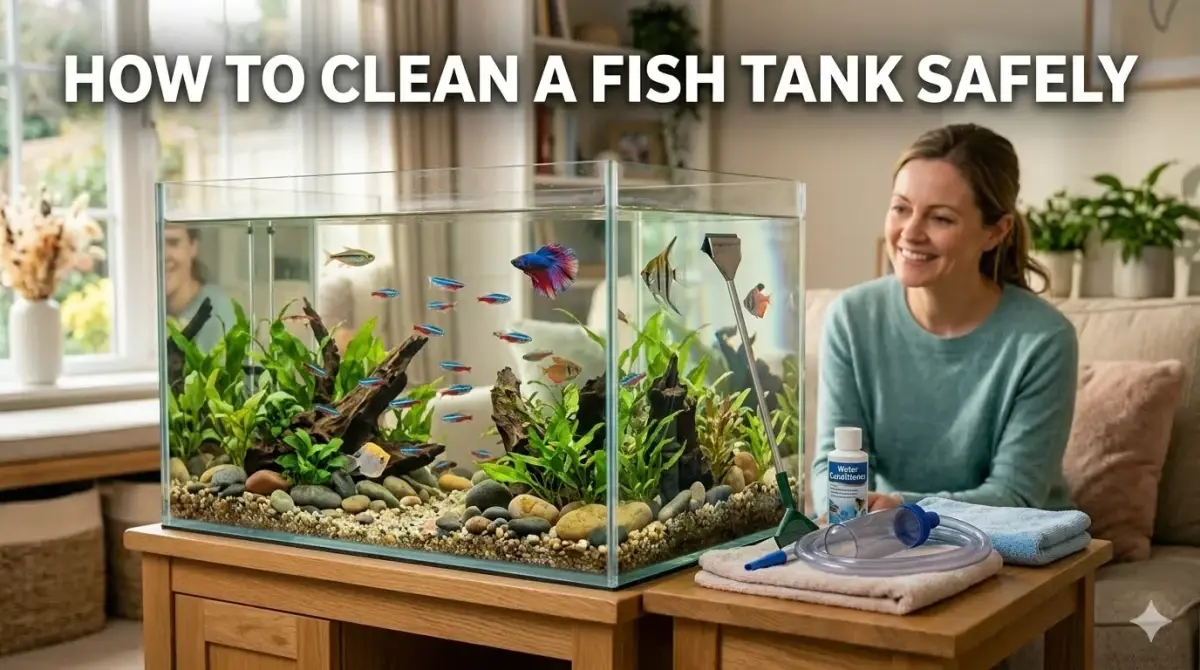
Learning how to clean a fish tank safely is one of the most critical skills every aquarium owner must master. A clean tank is essential for your fish's health, preventing disease, reducing stress, and promoting longevity. However, improper cleaning methods or harsh chemicals can harm or even kill your aquatic pets. This comprehensive guide walks you through safe, effective fish tank cleaning techniques, from routine maintenance to deep cleaning, using fish-safe products and proven methods. Whether you have a small betta tank, a community tropical aquarium, or a large cichlid setup, you'll discover step-by-step instructions, recommended cleaning schedules, and expert tips to maintain a pristine environment that keeps your fish healthy and thriving.
Why Safe Tank Cleaning Is Critical for Fish Health
Fish live in a delicate ecosystem where water quality directly impacts their health and survival. Unlike terrestrial pets, fish cannot escape poor water conditions, making proper tank maintenance essential.
Health Risks of Improper Cleaning
Using wrong cleaning methods or products can cause:
- Chemical poisoning: Harsh cleaners, soaps, or residues can be toxic to fish, causing organ damage or death
- Beneficial bacteria loss: Over-cleaning or using chlorinated water destroys the biological filter, causing ammonia spikes
- pH shock: Sudden changes in water chemistry stress fish and weaken immune systems
- Temperature shock: Water that's too hot or cold during cleaning causes stress and potential death
- Physical injury: Rough handling or sharp tools can injure fish during cleaning
- 🐾 Maintain Aquarium Water Quality: Complete Guide
- 🐾 How to Prevent Matting in Long Haired Cats Complete Guide
- 🐾 How to Prevent Matting in Long Haired Dogs Complete Grooming Guide
Benefits of Proper Cleaning
Safe, regular tank maintenance provides:
- Clear, healthy water with stable parameters
- Reduced disease risk and stronger immune systems
- Less stress and more natural behavior
- Longer lifespan for your fish
- Beautiful, algae-free viewing
- Stable biological filtration
- 🐾 Maintain Aquarium Water Quality: Complete Guide
- 🐾 How to Prevent Matting in Long Haired Cats Complete Guide
- 🐾 How to Prevent Matting in Long Haired Dogs Complete Grooming Guide
How Often Should You Clean a Fish Tank?
Establishing a cleaning schedule prevents overwhelming buildup and maintains optimal water quality.
Weekly Maintenance (30-60 minutes)
- Partial water change (10-25% depending on tank size and bioload)
- Gravel vacuuming to remove debris
- Algae scraping from glass
- Check and clean filter if needed
- Test water parameters (ammonia, nitrite, nitrate, pH)
- 🐾 Maintain Aquarium Water Quality: Complete Guide
- 🐾 How to Prevent Matting in Long Haired Cats Complete Guide
- 🐾 How to Prevent Matting in Long Haired Dogs Complete Grooming Guide
Bi-Weekly or Monthly Tasks
- Clean filter media in removed tank water (never tap water)
- Wipe down tank exterior and hood
- Clean decorations if algae buildup is heavy
- Check equipment (heater, filter, lights) function
- Prune live plants if applicable
- 🐾 Maintain Aquarium Water Quality: Complete Guide
- 🐾 How to Prevent Matting in Long Haired Cats Complete Guide
- 🐾 How to Prevent Matting in Long Haired Dogs Complete Grooming Guide
Quarterly Deep Cleaning (Every 3-4 Months)
- More thorough cleaning of all surfaces
- Deep clean decorations and rocks
- Inspect and clean all equipment thoroughly
- Replace filter media if needed (not all at once)
- Check for leaks or wear
- 🐾 Maintain Aquarium Water Quality: Complete Guide
- 🐾 How to Prevent Matting in Long Haired Cats Complete Guide
- 🐾 How to Prevent Matting in Long Haired Dogs Complete Grooming Guide
Essential Supplies for Safe Fish Tank Cleaning

Using the right tools and products ensures effective cleaning without harming your fish.
Safe Cleaning Tools
- Gravel vacuum/siphon: Essential for removing debris during water changes without disturbing beneficial bacteria
- Algae scraper or magnetic cleaner: For cleaning glass without scratching
- Bucket (dedicated for aquarium use only): Never use buckets that have held chemicals or cleaners
- Soft brush or toothbrush: For cleaning decorations and hard-to-reach areas
- Water conditioner/dechlorinator: Removes chlorine, chloramine, and heavy metals from tap water
- Thermometer: Ensures new water matches tank temperature
- Test kits: Monitor ammonia, nitrite, nitrate, and pH levels
- Clean towels or paper towels: For wiping exterior and spills
- 🐾 Maintain Aquarium Water Quality: Complete Guide
- 🐾 How to Prevent Matting in Long Haired Cats Complete Guide
- 🐾 How to Prevent Matting in Long Haired Dogs Complete Grooming Guide
Safe Cleaning Solutions
For routine cleaning:
- White vinegar (diluted 1:1 with water): Safe for cleaning tank exterior, equipment, and decorations (rinse thoroughly)
- Hot water: Often sufficient for cleaning most items
- Algae pad/scraper: Physical removal is safest for glass
- 🐾 Maintain Aquarium Water Quality: Complete Guide
- 🐾 How to Prevent Matting in Long Haired Cats Complete Guide
- 🐾 How to Prevent Matting in Long Haired Dogs Complete Grooming Guide
For stubborn algae on decorations:
- Bleach solution (use with extreme caution): 1 part bleach to 19 parts water, soak for 10-15 minutes, then rinse EXTREMELY thoroughly and dechlorinate
- Hydrogen peroxide (3%): Safer alternative to bleach for spot-treating algae
- 🐾 Maintain Aquarium Water Quality: Complete Guide
- 🐾 How to Prevent Matting in Long Haired Cats Complete Guide
- 🐾 How to Prevent Matting in Long Haired Dogs Complete Grooming Guide
NEVER use these in or around your aquarium:
- Soap or detergent (leaves toxic residue)
- Window cleaners (ammonia-based, toxic to fish)
- Household cleaners (contain chemicals harmful to fish)
- Windex or similar glass cleaners
- Any product with fragrances or dyes
- 🐾 Maintain Aquarium Water Quality: Complete Guide
- 🐾 How to Prevent Matting in Long Haired Cats Complete Guide
- 🐾 How to Prevent Matting in Long Haired Dogs Complete Grooming Guide
Step-by-Step Guide to Weekly Tank Cleaning

Follow this systematic approach for safe, effective weekly maintenance.
Step 1: Prepare Your Supplies
- Fill clean bucket with water to be removed
- Have gravel vacuum ready
- Prepare replacement water in separate clean bucket
- Treat new water with dechlorinator
- Match new water temperature to tank temperature (within 1-2°F)
- Have algae scraper ready
- 🐾 Maintain Aquarium Water Quality: Complete Guide
- 🐾 How to Prevent Matting in Long Haired Cats Complete Guide
- 🐾 How to Prevent Matting in Long Haired Dogs Complete Grooming Guide
Step 2: Unplug Equipment
- Turn off and unplug heater, filter, and other electrical equipment
- This prevents damage and ensures safety during cleaning
- Keep equipment unplugged until tank is refilled
- 🐾 Maintain Aquarium Water Quality: Complete Guide
- 🐾 How to Prevent Matting in Long Haired Cats Complete Guide
- 🐾 How to Prevent Matting in Long Haired Dogs Complete Grooming Guide
Step 3: Clean the Glass
- Use algae scraper or magnetic cleaner on inside glass
- Start at top and work down
- For stubborn algae, use algae pad (not abrasive scrubbers that scratch)
- Clean front and side glass; back glass is less critical
- Wipe exterior glass with damp cloth (water only or diluted vinegar)
- 🐾 Maintain Aquarium Water Quality: Complete Guide
- 🐾 How to Prevent Matting in Long Haired Cats Complete Guide
- 🐾 How to Prevent Matting in Long Haired Dogs Complete Grooming Guide
Step 4: Vacuum the Gravel
- Insert gravel vacuum into substrate
- Siphon debris while avoiding deep disturbance of beneficial bacteria
- Work in sections, covering 1/3 to 1/2 of tank bottom
- Don't vacuum all gravel at once—preserve beneficial bacteria
- Remove 10-25% of tank water during vacuuming
- Avoid vacuuming around plant roots if you have live plants
- 🐾 Maintain Aquarium Water Quality: Complete Guide
- 🐾 How to Prevent Matting in Long Haired Cats Complete Guide
- 🐾 How to Prevent Matting in Long Haired Dogs Complete Grooming Guide
Step 5: Clean Decorations (If Needed)
- Remove decorations only if heavily algae-covered
- Rinse in removed tank water (never tap water)
- Use soft brush to remove algae
- For stubborn algae, soak in diluted vinegar or bleach solution (rinse EXTREMELY thoroughly)
- Return decorations to tank
- 🐾 Maintain Aquarium Water Quality: Complete Guide
- 🐾 How to Prevent Matting in Long Haired Cats Complete Guide
- 🐾 How to Prevent Matting in Long Haired Dogs Complete Grooming Guide
Step 6: Add Treated Water
- Slowly add treated, temperature-matched water
- Pour gently onto a plate or saucer to avoid disturbing substrate
- Add water slowly to avoid temperature and parameter shock
- Fill to original water level
- 🐾 Maintain Aquarium Water Quality: Complete Guide
- 🐾 How to Prevent Matting in Long Haired Cats Complete Guide
- 🐾 How to Prevent Matting in Long Haired Dogs Complete Grooming Guide
Step 7: Restart Equipment
- Plug filter back in and ensure it's running properly
- Plug heater back in and verify temperature setting
- Check that all equipment is functioning
- Turn lights back on
- 🐾 Maintain Aquarium Water Quality: Complete Guide
- 🐾 How to Prevent Matting in Long Haired Cats Complete Guide
- 🐾 How to Prevent Matting in Long Haired Dogs Complete Grooming Guide
Step 8: Test Water Parameters
- Test ammonia, nitrite, nitrate, and pH
- Ensure parameters are stable and safe
- Record results to track trends
- 🐾 Maintain Aquarium Water Quality: Complete Guide
- 🐾 How to Prevent Matting in Long Haired Cats Complete Guide
- 🐾 How to Prevent Matting in Long Haired Dogs Complete Grooming Guide
Monthly Deep Cleaning Guide

Monthly maintenance goes beyond weekly tasks to keep your tank in optimal condition.
Cleaning Filter Media Safely
CRITICAL: Never clean filter media with tap water!
- Remove filter media during water change
- Rinse gently in removed tank water (not tap water)
- Tank water is dechlorinated and won't kill beneficial bacteria
- Tap water contains chlorine that destroys biological filtration
- Gently squeeze or swish—don't scrub aggressively
- Only clean mechanical media; biological media needs minimal cleaning
- Never replace all filter media at once
- Replace only 1/3 of media at a time, spaced 4-6 weeks apart
- 🐾 Maintain Aquarium Water Quality: Complete Guide
- 🐾 How to Prevent Matting in Long Haired Cats Complete Guide
- 🐾 How to Prevent Matting in Long Haired Dogs Complete Grooming Guide
Cleaning Equipment
- Heater: Wipe with damp cloth; check for cracks or damage
- Filter housing: Rinse with tank water; remove debris from impeller area
- Air stones: Soak in diluted vinegar to clear clogs, rinse thoroughly
- Lights: Wipe exterior with damp cloth; replace bulbs as needed
- 🐾 Maintain Aquarium Water Quality: Complete Guide
- 🐾 How to Prevent Matting in Long Haired Cats Complete Guide
- 🐾 How to Prevent Matting in Long Haired Dogs Complete Grooming Guide
Deep Cleaning Decorations
- Remove decorations one at a time to preserve beneficial bacteria
- Scrub with algae pad or soft brush in tank water
- For heavy algae, soak in bleach solution (1:19 ratio) for 10-15 minutes
- Rinse EXTREMELY thoroughly with dechlorinated water
- Soak in dechlorinator solution for 15 minutes before returning to tank
- Never clean all decorations at once
- 🐾 Maintain Aquarium Water Quality: Complete Guide
- 🐾 How to Prevent Matting in Long Haired Cats Complete Guide
- 🐾 How to Prevent Matting in Long Haired Dogs Complete Grooming Guide
Safe Water Change Procedures

Water changes are the most important maintenance task. Doing them safely prevents shock and stress.
How Much Water to Change
- Small tanks (under 20 gallons): 10-15% weekly
- Medium tanks (20-55 gallons): 15-25% weekly
- Large tanks (55+ gallons): 20-25% weekly
- Heavily stocked tanks: May need 25-30% weekly
- Lightly stocked with live plants: 10-15% may suffice
- 🐾 Maintain Aquarium Water Quality: Complete Guide
- 🐾 How to Prevent Matting in Long Haired Cats Complete Guide
- 🐾 How to Prevent Matting in Long Haired Dogs Complete Grooming Guide
Temperature Matching
Critical for fish safety:
- New water should be within 1-2°F of tank temperature
- Use a thermometer to check both waters
- Too cold: causes stress, weakens immune system
- Too hot: can kill fish instantly
- Let water sit to reach room temperature, or use a heater to warm it
- 🐾 Maintain Aquarium Water Quality: Complete Guide
- 🐾 How to Prevent Matting in Long Haired Cats Complete Guide
- 🐾 How to Prevent Matting in Long Haired Dogs Complete Grooming Guide
Water Conditioning
Never add untreated tap water to your tank!
- Tap water contains chlorine/chloramine toxic to fish
- May contain heavy metals harmful to fish
- Use a quality water conditioner/dechlorinator
- Add conditioner to new water before adding to tank
- Follow product directions for proper dosage
- Conditioner neutralizes chlorine instantly but wait 15 minutes for chloramine
- 🐾 Maintain Aquarium Water Quality: Complete Guide
- 🐾 How to Prevent Matting in Long Haired Cats Complete Guide
- 🐾 How to Prevent Matting in Long Haired Dogs Complete Grooming Guide
Adding Water Safely
- Add new water slowly over 15-30 minutes
- Pour onto a plate or saucer to avoid disturbing substrate
- Use a clean cup or pitcher
- Never dump water directly—causes parameter shock
- For sensitive fish, use a drip method
- 🐾 Maintain Aquarium Water Quality: Complete Guide
- 🐾 How to Prevent Matting in Long Haired Cats Complete Guide
- 🐾 How to Prevent Matting in Long Haired Dogs Complete Grooming Guide
Special Considerations for Different Tank Types

Different aquarium setups require specific cleaning approaches.
Freshwater Tanks
- Follow standard cleaning procedures outlined above
- Monitor pH carefully during water changes
- Live plants need gentle cleaning around roots
- Gravel substrate benefits from regular vacuuming
- 🐾 Maintain Aquarium Water Quality: Complete Guide
- 🐾 How to Prevent Matting in Long Haired Cats Complete Guide
- 🐾 How to Prevent Matting in Long Haired Dogs Complete Grooming Guide
Saltwater/Marine Tanks
- Use only aquarium-safe salt mix for water changes
- Match salinity precisely (use hydrometer or refractometer)
- Clean protein skimmer regularly
- Test additional parameters: salinity, alkalinity, calcium, magnesium
- Be extra cautious with chemicals—marine life is more sensitive
- Clean live rock gently to preserve beneficial organisms
- 🐾 Maintain Aquarium Water Quality: Complete Guide
- 🐾 How to Prevent Matting in Long Haired Cats Complete Guide
- 🐾 How to Prevent Matting in Long Haired Dogs Complete Grooming Guide
Planted Tanks
- Avoid deep vacuuming around plant roots
- Use gentle water flow to avoid uprooting plants
- Clean glass carefully to avoid damaging delicate plants
- Prune plants during cleaning
- Test for additional nutrients (iron, CO2 if applicable)
- 🐾 Maintain Aquarium Water Quality: Complete Guide
- 🐾 How to Prevent Matting in Long Haired Cats Complete Guide
- 🐾 How to Prevent Matting in Long Haired Dogs Complete Grooming Guide
Betta Tanks (Small Tanks Under 10 Gallons)
- Smaller tanks need more frequent water changes (25-50% weekly)
- Be extra gentle—betta fish are sensitive to water parameter changes
- Match temperature precisely
- Avoid strong water flow during water changes
- 🐾 Maintain Aquarium Water Quality: Complete Guide
- 🐾 How to Prevent Matting in Long Haired Cats Complete Guide
- 🐾 How to Prevent Matting in Long Haired Dogs Complete Grooming Guide
Common Cleaning Mistakes to Avoid

Even well-meaning aquarists can make errors that harm fish.
- Using soap or household cleaners: Leaves toxic residue that kills fish. Never use anything but water, vinegar, or aquarium-safe products.
- Cleaning filter media with tap water: Chlorine kills beneficial bacteria, causing ammonia spikes. Always use tank water.
- Changing all water at once: Destroys biological filtration and shocks fish. Never do 100% water changes unless absolutely necessary.
- Adding untreated tap water: Chlorine/chloramine kills fish instantly. Always use water conditioner.
- Temperature mismatch: Adding water that's too hot or cold causes stress or death. Always match temperature.
- Over-cleaning: Cleaning too thoroughly destroys beneficial bacteria. Don't scrub everything at once.
- Cleaning all filter media at once: Destroys biological filtration. Clean only 1/3 at a time.
- Using abrasive scrubbers: Scratches acrylic tanks and can injure fish. Use algae pads designed for aquariums.
- Ignoring water parameters: Not testing after cleaning can miss dangerous spikes. Always test ammonia and nitrite.
- Rushing the process: Adding water too quickly causes parameter shock. Add slowly over 15-30 minutes.
- 🐾 Maintain Aquarium Water Quality: Complete Guide
- 🐾 How to Prevent Matting in Long Haired Cats Complete Guide
- 🐾 How to Prevent Matting in Long Haired Dogs Complete Grooming Guide
People Also Ask: Quick Answers

How do I clean my fish tank without killing the fish?
Never remove fish during routine cleaning. Use only aquarium-safe products (water, vinegar, algae scrapers), match new water temperature to tank temperature, treat tap water with dechlorinator, and add new water slowly. Never use soap, bleach (unless properly rinsed), or household cleaners.
Can I use vinegar to clean my fish tank?
Yes, diluted white vinegar (1:1 with water) is safe for cleaning tank exterior, equipment, and decorations. Rinse thoroughly with dechlorinated water before returning items to tank. Never use vinegar directly in the tank with fish present.
How often should I completely clean my fish tank?
You should never completely clean a fish tank. Complete cleaning destroys beneficial bacteria and crashes the nitrogen cycle. Instead, do regular partial water changes (10-25% weekly) and clean sections gradually. Only do major cleaning if treating disease or resetting the tank.
What is the safest way to clean aquarium glass?
Use an algae scraper or magnetic cleaner designed for aquariums. For inside glass, use only physical removal (scraper/pad). For outside glass, use water-only or diluted vinegar on a cloth. Never use window cleaners or chemicals.
Can I clean my fish tank with bleach?
Bleach should only be used for deep cleaning decorations or equipment when the tank is empty and fish are removed. Use extreme dilution (1:19), soak for 10-15 minutes, then rinse EXTREMELY thoroughly and dechlorinate. Never use bleach in a tank with fish present.
Emergency Cleaning Situations

Sometimes you need to clean more thoroughly due to disease or severe problems.
After Fish Disease Outbreak
- Remove and quarantine sick fish
- Do larger water change (50%)
- Clean all equipment thoroughly
- Replace filter media if disease was severe
- Disinfect decorations with bleach solution (rinse thoroughly)
- Monitor water parameters closely
- 🐾 Maintain Aquarium Water Quality: Complete Guide
- 🐾 How to Prevent Matting in Long Haired Cats Complete Guide
- 🐾 How to Prevent Matting in Long Haired Dogs Complete Grooming Guide
Severe Algae Bloom
- Reduce light duration to 6-8 hours daily
- Do larger water change (30-50%)
- Scrub all glass thoroughly
- Clean decorations
- Vacuum gravel thoroughly
- Check for overfeeding or excess nutrients
- Consider adding algae-eating fish or shrimp
- 🐾 Maintain Aquarium Water Quality: Complete Guide
- 🐾 How to Prevent Matting in Long Haired Cats Complete Guide
- 🐾 How to Prevent Matting in Long Haired Dogs Complete Grooming Guide
Ammonia or Nitrite Spike
- Do immediate 50% water change
- Test water immediately after
- Repeat water changes daily until parameters stabilize
- Check for overfeeding, overstocking, or filter problems
- Add water conditioner that detoxifies ammonia
- Don't clean filter—preserve beneficial bacteria
- 🐾 Maintain Aquarium Water Quality: Complete Guide
- 🐾 How to Prevent Matting in Long Haired Cats Complete Guide
- 🐾 How to Prevent Matting in Long Haired Dogs Complete Grooming Guide
Maintaining Cleanliness Between Cleanings

Good habits prevent overwhelming buildup.
Daily Tasks
- Check fish health and behavior
- Remove uneaten food after 5 minutes
- Check equipment is running
- Top off evaporated water with dechlorinated water (not a water change)
- 🐾 Maintain Aquarium Water Quality: Complete Guide
- 🐾 How to Prevent Matting in Long Haired Cats Complete Guide
- 🐾 How to Prevent Matting in Long Haired Dogs Complete Grooming Guide
Weekly Habits
- Schedule specific day for water change
- Test water parameters
- Observe algae growth and address early
- 🐾 Maintain Aquarium Water Quality: Complete Guide
- 🐾 How to Prevent Matting in Long Haired Cats Complete Guide
- 🐾 How to Prevent Matting in Long Haired Dogs Complete Grooming Guide
Preventive Measures
- Don't overfeed (biggest cause of dirty tanks)
- Don't overstock (follow 1 inch of fish per gallon guideline)
- Use appropriate filtration for tank size
- Add live plants to absorb nitrates
- Control light duration (8-10 hours max)
- Use algae-eating fish or invertebrates
- 🐾 Maintain Aquarium Water Quality: Complete Guide
- 🐾 How to Prevent Matting in Long Haired Cats Complete Guide
- 🐾 How to Prevent Matting in Long Haired Dogs Complete Grooming Guide
Frequently Asked Questions

Do I need to remove fish when cleaning the tank?
No, never remove fish during routine cleaning. Fish are stressed by removal and re-introduction. Only remove fish for emergency deep cleaning, disease treatment, or tank relocation. Routine cleaning should be done with fish in the tank.
How do I clean my fish tank filter without killing beneficial bacteria?
Rinse filter media ONLY in removed tank water, never tap water. Tap water contains chlorine that kills beneficial bacteria. Gently swish or squeeze media in tank water to remove debris. Never clean all filter media at once—clean only 1/3 at a time.
Can I use a vacuum cleaner to clean my fish tank?
Never use a household vacuum cleaner. Use a gravel vacuum/siphon specifically designed for aquariums. These remove debris while preserving beneficial bacteria and are safe for fish.
How long should I wait to add fish after cleaning?
If you did routine cleaning, fish can remain in the tank. If you did a major cleaning or used any chemicals, wait until water parameters are stable (ammonia and nitrite at 0 ppm) and temperature is stable—usually 24-48 hours.
Why is my tank still dirty after cleaning?
Common causes: overfeeding, overstocking, inadequate filtration, insufficient water changes, or too much light causing algae. Address the root cause rather than just cleaning more frequently.
Conclusion: Clean Tank, Healthy Fish

Maintaining a clean fish tank safely is one of the most important responsibilities of aquarium ownership. Regular cleaning prevents disease, reduces stress, and extends your fish's lifespan. By using fish-safe products like vinegar, following proper water change procedures, and avoiding harsh chemicals, you create a healthy environment where your fish can thrive.
Remember that prevention is easier than cure—regular weekly maintenance prevents overwhelming buildup, and proper cleaning techniques preserve the beneficial bacteria that keep your tank healthy. Never compromise on safety: always use dechlorinator, match water temperature, and never use household cleaners.
Start today by establishing a cleaning routine that works for your schedule. Your fish will reward you with vibrant health, active behavior, and years of enjoyment. A clean tank isn't just about appearance—it's about love, respect, and commitment to your aquatic pets' wellbeing.

0 Comments