.png)
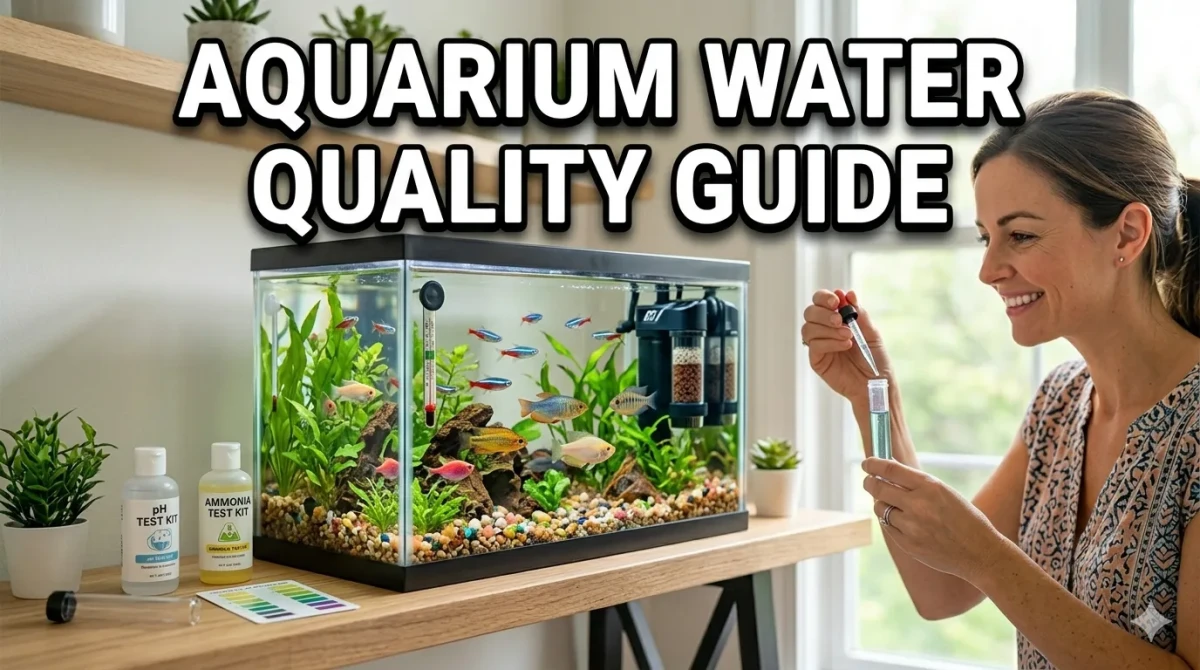
Why Maintaining Aquarium Water Quality Is Critical for Fish Health
Water quality is the single most important factor determining the health, longevity, and vitality of aquarium fish. Unlike terrestrial pets, fish live immersed in their environment 24/7—every breath they take, every meal they eat, and every waste product they produce interacts directly with the water. Poor water quality doesn't just cause stress; it leads to disease, stunted growth, behavioral problems, and premature death.
Featured Snippet Answer: To maintain aquarium water quality, test water parameters weekly, perform 25-30% water changes every 1-2 weeks, clean filter media in tank water (not tap), avoid overfeeding, and ensure proper filtration. Monitor ammonia, nitrite, nitrate, pH, and temperature consistently to keep fish healthy.
Many new aquarium owners focus primarily on fish selection, decoration, and feeding while underestimating the complexity of water chemistry. But even the hardiest fish species cannot thrive in unstable or toxic water conditions. Understanding and maintaining proper water quality isn't optional—it's the foundation of successful aquarium keeping.
This comprehensive guide provides evidence-based, practical strategies for maintaining pristine aquarium water. You'll learn about the nitrogen cycle, essential water parameters, testing protocols, filtration systems, maintenance routines, troubleshooting common problems, and species-specific considerations. Whether you manage a small betta bowl, a community freshwater tank, or a complex reef aquarium, these expert techniques will help you create a stable, healthy environment where your aquatic pets can flourish.
Understanding the Nitrogen Cycle: The Foundation of Water Quality
The nitrogen cycle is the biological process that converts toxic fish waste into less harmful compounds. Mastering this cycle is essential for maintaining safe water conditions.
How the Nitrogen Cycle Works:
- Ammonia (NH₃/NH₄⁺): Produced by fish waste, decaying food, and plant matter. Highly toxic to fish even at low levels (0.25 ppm can cause stress; 1.0+ ppm can be fatal).
- Nitrite (NO₂⁻): Beneficial bacteria (Nitrosomonas) convert ammonia into nitrite. Still toxic to fish, interfering with oxygen transport in blood.
- Nitrate (NO₃⁻): A second group of bacteria (Nitrobacter) converts nitrite into nitrate. Less toxic but harmful at high levels (>40 ppm for freshwater, >20 ppm for saltwater).
- Removal: Nitrates are removed through regular water changes, live plant uptake, or specialized filtration (denitrators, protein skimmers).
- 🐾 Grooming Hacks for Shedding Dogs: Expert Tips to Reduce Fur & Manage Shedding
- 🐾 Cat Nail Trimming Guide for Beginners: 2026
- 🐾 How to Trim Small Pet Nails Safely: Expert Guide
Cycling Your Aquarium: Before adding fish, establish beneficial bacteria through "cycling":
- Fishless cycling: Add ammonia source (pure ammonia or fish food) to feed bacteria without risking fish health
- Monitor parameters: Test daily until ammonia and nitrite read 0 ppm with measurable nitrates
- Timeline: Typically takes 4-8 weeks; bacterial supplements may accelerate but don't replace patience
- 🐾 Grooming Hacks for Shedding Dogs: Expert Tips to Reduce Fur & Manage Shedding
- 🐾 Cat Nail Trimming Guide for Beginners: 2026
- 🐾 How to Trim Small Pet Nails Safely: Expert Guide
Featured Snippet Answer: The nitrogen cycle converts toxic ammonia from fish waste into nitrite, then into less harmful nitrate via beneficial bacteria. Cycle new tanks for 4-8 weeks before adding fish, and maintain the cycle through regular testing, partial water changes, and avoiding overcleaning filter media.
Essential Water Parameters to Monitor Regularly

Consistent monitoring of key water parameters allows you to detect problems before they harm your fish. Test at least weekly for established tanks, and daily during cycling or when issues arise.
Ammonia:
- Ideal level: 0 ppm (any detectable ammonia indicates a problem)
- Toxic threshold: >0.25 ppm causes stress; >1.0 ppm can be lethal
- Causes of spikes: Overfeeding, overstocking, filter failure, new tank syndrome, decaying matter
- Solutions: Immediate partial water change, reduce feeding, check filtration, add beneficial bacteria supplement
- 🐾 Grooming Hacks for Shedding Dogs: Expert Tips to Reduce Fur & Manage Shedding
- 🐾 Cat Nail Trimming Guide for Beginners: 2026
- 🐾 How to Trim Small Pet Nails Safely: Expert Guide
Nitrite:
- Ideal level: 0 ppm
- Toxic threshold: >0.5 ppm interferes with oxygen uptake
- Causes: Incomplete cycling, filter disruption, ammonia spike overwhelming bacteria
- Solutions: Water changes, add salt (for freshwater) to reduce nitrite toxicity, ensure adequate biological filtration
- 🐾 Grooming Hacks for Shedding Dogs: Expert Tips to Reduce Fur & Manage Shedding
- 🐾 Cat Nail Trimming Guide for Beginners: 2026
- 🐾 How to Trim Small Pet Nails Safely: Expert Guide
Nitrate:
- Ideal level:

0 Comments