.png)
Why Managing Dog Shedding Matters for Health and Home
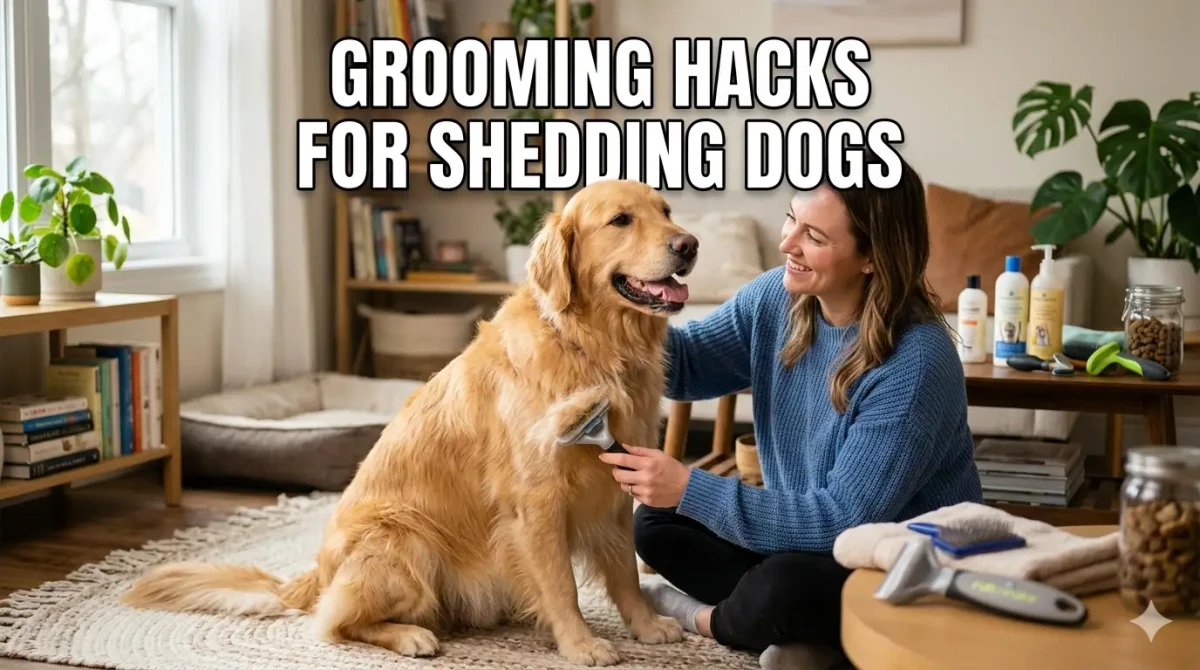
Shedding is a natural, healthy process for dogs—but when loose fur covers your furniture, clothing, and air, it becomes a household challenge. Beyond aesthetics, excessive shedding can signal underlying health issues, contribute to skin problems, and cause discomfort for your dog. Mastering effective grooming hacks for shedding dogs isn't just about a cleaner home; it's about supporting your dog's skin health, preventing matting, and strengthening your bond through positive handling.
Featured Snippet Answer: To manage shedding dogs, brush 2-3 times weekly with the right tool for your dog's coat type (slicker brush for short coats, undercoat rake for double coats), use grooming gloves for dogs who resist brushes, add omega-3 supplements to support coat health, and maintain consistent grooming sessions with treats and praise. Regular grooming reduces shedding by up to 90% and prevents skin issues.
Dogs shed year-round with peak seasons in spring and fall. Understanding your dog's coat type, shedding patterns, and grooming preferences allows you to implement targeted strategies that work. This comprehensive guide provides veterinarian-aligned, expert-tested grooming hacks to reduce shedding, minimize loose fur around your home, and make grooming a stress-free experience for both you and your canine companion.
Understanding Dog Shedding: Patterns, Causes, and Coat Types
Before implementing grooming hacks, it's essential to understand why dogs shed and what influences shedding intensity.
Normal Shedding Patterns:
- Year-round baseline: All dogs shed some fur daily as part of natural hair renewal
- Seasonal peaks: Spring (losing winter coat) and fall (growing winter coat) trigger heavier shedding
- Indoor dogs: Artificial lighting and climate control can blur seasonal patterns, causing more consistent year-round shedding
- Life stage factors: Puppies shed baby fur; seniors may shed more due to reduced grooming ability or health changes
- 🐾 Bathe Your Dog at Home: Step-by-Step Guide
- 🐾 Cat Nail Trimming Guide for Beginners: 2026
- 🐾 Daily Care Routine for Rabbits: Complete 2026 Guide
Coat Types and Shedding Characteristics:
- Short-haired dogs (Labrador, Beagle, Boxer): Less visible shedding but still produce significant loose fur; benefit from weekly brushing with rubber grooming tools
- Double-coated dogs (Husky, German Shepherd, Golden Retriever): Heavy seasonal shedding with dense undercoat; require undercoat rakes and frequent grooming during blowout seasons
- Long-haired dogs (Collie, Afghan Hound, Shih Tzu): Continuous shedding with prone-to-matting topcoat; require daily brushing to prevent tangles and remove loose fur
- Wire-haired dogs (Terriers, Schnauzers): Minimal shedding but require hand-stripping or clipping to maintain coat health
- Hairless/low-shedding breeds (Poodle, Bichon, Portuguese Water Dog): Minimal shedding but still benefit from regular grooming to prevent matting and skin issues
- 🐾 Bathe Your Dog at Home: Step-by-Step Guide
- 🐾 Cat Nail Trimming Guide for Beginners: 2026
- 🐾 Daily Care Routine for Rabbits: Complete 2026 Guide
Factors That Increase Shedding:
- Poor nutrition: Low-quality diets lacking omega-3s, protein, or essential fatty acids compromise coat health
- Stress or anxiety: Environmental changes, new pets, or loud noises can trigger excessive shedding
- Medical conditions: Allergies, parasites, thyroid issues, or skin infections cause abnormal shedding
- Inadequate grooming: Infrequent brushing allows loose fur to accumulate and mat
- Dehydration: Insufficient water intake leads to dry, brittle fur that sheds more easily
- Hormonal changes: Pregnancy, aging, or endocrine disorders can alter shedding patterns
- 🐾 Bathe Your Dog at Home: Step-by-Step Guide
- 🐾 Cat Nail Trimming Guide for Beginners: 2026
- 🐾 Daily Care Routine for Rabbits: Complete 2026 Guide
Featured Snippet Answer: Dogs shed year-round with peaks in spring/fall. Coat type influences shedding intensity: double-coated and long-haired dogs shed more heavily. Factors like poor nutrition, stress, medical issues, or inadequate grooming can increase shedding. Understanding your dog's coat type and shedding patterns helps target effective grooming strategies.
When should I worry about my dog's shedding?
Consult your veterinarian if shedding is accompanied by: bald patches, red/inflamed skin, excessive scratching, scabs, or behavioral changes. Sudden, dramatic increases in shedding without seasonal explanation may signal allergies, parasites, thyroid issues, or stress. Normal shedding leaves loose fur but doesn't cause skin irritation, hair loss, or changes in your dog's comfort level.
Essential Grooming Tools: Choosing the Right Brush for Your Dog's Coat

The right tool makes grooming effective and enjoyable. Match brushes to your dog's coat type for optimal results.
For Short-Haired and Smooth-Coated Dogs:
- Rubber grooming gloves: Textured palm mimics petting; collects loose fur while bonding; perfect for dogs who resist brushes
- Slicker brush: Fine, short wires close together; removes loose topcoat fur gently; ideal for weekly maintenance
- Bristle brush: Natural bristles distribute skin oils for shine; use after slicker brush for finishing
- Shedding blade (use cautiously): Metal comb with fine teeth; effective for heavy shedders but can irritate sensitive skin
- 🐾 Bathe Your Dog at Home: Step-by-Step Guide
- 🐾 Cat Nail Trimming Guide for Beginners: 2026
- 🐾 Daily Care Routine for Rabbits: Complete 2026 Guide
For Double-Coated Dogs (Huskies, Shepherds, Retrievers):
- Undercoat rake: Long, widely spaced teeth reach dense undercoat without damaging topcoat; essential for seasonal shedding
- Deshedding tool (e.g., Furminator-style): Removes up to 90% of loose undercoat; limit to 10-15 minutes per session to avoid skin irritation
- Slicker brush: Follow undercoat rake to smooth topcoat and remove remaining loose fur
- Wide-tooth comb: Prevents and removes mats in longer topcoat areas
- 🐾 Bathe Your Dog at Home: Step-by-Step Guide
- 🐾 Cat Nail Trimming Guide for Beginners: 2026
- 🐾 Daily Care Routine for Rabbits: Complete 2026 Guide
For Long-Haired Dogs:
- Pin brush: Long, flexible pins glide through long fur without pulling; ideal for daily maintenance
- Slicker brush: Removes tangles and loose fur from topcoat
- Wide-tooth comb: Essential for preventing and removing mats; use gently to avoid pulling skin
- Detangling spray: Helps brushes glide through long fur; choose dog-specific, alcohol-free formulas
- 🐾 Bathe Your Dog at Home: Step-by-Step Guide
- 🐾 Cat Nail Trimming Guide for Beginners: 2026
- 🐾 Daily Care Routine for Rabbits: Complete 2026 Guide
Universal Tools for All Coat Types:
- Grooming wipes: Quick cleanup between brushing sessions; remove loose fur and refresh coat
- Nail clippers: Trim nails before grooming to prevent accidental scratches
- Treats and praise: High-value rewards create positive associations with grooming
- Grooming table or non-slip mat: Provides stability and comfort during sessions
- 🐾 Bathe Your Dog at Home: Step-by-Step Guide
- 🐾 Cat Nail Trimming Guide for Beginners: 2026
- 🐾 Daily Care Routine for Rabbits: Complete 2026 Guide
Tools to Avoid:
- Human hairbrushes: Bristles too harsh for dog skin; can cause irritation
- Overly aggressive deshedding tools: Can damage skin if used too frequently or with excessive pressure
- Sharp-edged combs: Risk of nicking delicate skin, especially on seniors or anxious dogs
- Tools not designed for dogs: May cause discomfort or injury
- 🐾 Bathe Your Dog at Home: Step-by-Step Guide
- 🐾 Cat Nail Trimming Guide for Beginners: 2026
- 🐾 Daily Care Routine for Rabbits: Complete 2026 Guide
Featured Snippet Answer: Choose grooming tools by coat type: rubber gloves or slicker brushes for short-haired dogs; undercoat rakes and deshedding tools for double-coated dogs; pin brushes and wide-tooth combs for long-haired dogs. Avoid human brushes or overly aggressive tools. Always pair tools with treats and gentle handling to build positive associations.
Proven Grooming Hacks to Reduce Shedding

These expert-tested techniques maximize fur removal while keeping your dog comfortable and cooperative.
Hack #1: The "Pre-Grooming" Warm-Up
Why it works: Dogs are more receptive to grooming when relaxed. A brief warm-up reduces resistance and makes brushing more effective.
How to do it:
- Start with 2-3 minutes of gentle petting in your dog's favorite spots (chin, cheeks, base of tail)
- Speak in a calm, soothing voice to lower stress hormones
- Offer a small treat before introducing the brush
- Only proceed to brushing when your dog is relaxed, tail wagging, or leaning into you
- 🐾 Bathe Your Dog at Home: Step-by-Step Guide
- 🐾 Cat Nail Trimming Guide for Beginners: 2026
- 🐾 Daily Care Routine for Rabbits: Complete 2026 Guide
Pro tip: Groom after meals or play sessions when dogs are naturally calm and satisfied.
Hack #2: The Damp Cloth Trick
Why it works: Slightly damp fur clumps together, making loose hair easier to remove without static or flyaways.
How to do it:
- Lightly mist a microfiber cloth with water (never spray directly on dog)
- Wipe in the direction of hair growth before brushing
- Follow immediately with your chosen brush to collect loosened fur
- Especially effective for dogs with static-prone coats in dry climates
- 🐾 Bathe Your Dog at Home: Step-by-Step Guide
- 🐾 Cat Nail Trimming Guide for Beginners: 2026
- 🐾 Daily Care Routine for Rabbits: Complete 2026 Guide
Caution: Ensure cloth is only damp, not wet; dry your dog thoroughly afterward to prevent chilling.
Hack #3: The "Two-Brush" Method for Heavy Shedders
Why it works: Layering tools targets different coat layers for comprehensive fur removal.
How to do it:
- Start with an undercoat rake or deshedding tool to remove loose undercoat (focus on back, sides, hindquarters)
- Follow with a slicker brush or bristle brush to smooth the topcoat and catch remaining loose fur
- Finish with a rubber grooming glove for a final pass and bonding time
Best for: Double-coated breeds, long-haired dogs, or during seasonal shedding peaks.
Hack #4: The "Treat Trail" Distraction Technique
Why it works: Redirects focus from grooming to rewards, reducing anxiety and resistance.
How to do it:
- Place small treats along a grooming surface (table, mat) to encourage your dog to stay positioned
- Brush one section, then reward with a treat before moving to the next area
- Gradually increase brushing duration between treats as your dog becomes more comfortable
- End each session with a "jackpot" reward (extra treat or favorite toy)
- 🐾 Bathe Your Dog at Home: Step-by-Step Guide
- 🐾 Cat Nail Trimming Guide for Beginners: 2026
- 🐾 Daily Care Routine for Rabbits: Complete 2026 Guide
Pro tip: Use high-value, soft treats that can be eaten quickly to maintain grooming momentum.
Hack #5: The "Grooming Glove" for Brush-Averse Dogs
Why it works: Mimics natural petting while collecting fur, bypassing brush resistance.
How to do it:
- Put on a rubber grooming glove with textured palm
- Pet your dog in their preferred direction and pressure
- Loose fur sticks to the glove; peel it off in sheets for easy disposal
- Use daily for maintenance or as a bridge to introduce traditional brushes
- 🐾 Bathe Your Dog at Home: Step-by-Step Guide
- 🐾 Cat Nail Trimming Guide for Beginners: 2026
- 🐾 Daily Care Routine for Rabbits: Complete 2026 Guide
Best for: Dogs who flee from brushes, seniors with sensitive skin, or quick daily touch-ups.
Hack #6: The "Bath Prep" Dry Brush
Why it works: Removing loose fur before bathing prevents matting and makes bathing more efficient.
How to do it:
- Thoroughly brush your dog 24-48 hours before a scheduled bath
- Focus on removing loose undercoat and detangling any mats
- This reduces the amount of fur that sheds during bathing and drying
- Post-bath, use a slicker brush on damp fur to catch any remaining loose hairs
- 🐾 Bathe Your Dog at Home: Step-by-Step Guide
- 🐾 Cat Nail Trimming Guide for Beginners: 2026
- 🐾 Daily Care Routine for Rabbits: Complete 2026 Guide
Caution: Only bathe dogs when necessary; most dogs self-groom effectively. Consult your vet before bathing dogs with skin conditions.
Featured Snippet Answer:
Top grooming hacks for shedding dogs: warm up with petting before brushing, use a damp cloth to reduce static, layer tools (undercoat rake + slicker brush) for heavy shedders, distract with treat trails, use grooming gloves for brush-averse dogs, and dry-brush before baths. Always pair grooming with treats and gentle handling to build positive associations.
Step-by-Step Grooming Routine for Maximum Shedding Control

A consistent routine yields the best results. Follow this expert protocol for effective, stress-free grooming.
Pre-Grooming Preparation:
- Choose a quiet time when your dog is relaxed (after meals or play)
- Gather all tools, treats, and a towel for containment if needed
- Trim your dog's nails 24 hours before grooming to prevent scratches
- Set up in a familiar, non-slip location (your lap, a mat, or grooming table)
- 🐾 Bathe Your Dog at Home: Step-by-Step Guide
- 🐾 Cat Nail Trimming Guide for Beginners: 2026
- 🐾 Daily Care Routine for Rabbits: Complete 2026 Guide
The Grooming Session (10-20 Minutes Max):
- Start with petting: 1-2 minutes of gentle stroking to relax your dog
- Introduce the tool: Let your dog sniff the brush; reward curiosity with a treat
- Begin with easy areas: Brush the back and sides first—areas most dogs tolerate well
- Use proper technique: Brush in the direction of hair growth with light pressure; lift brush at the end of each stroke to avoid pulling
- Focus on high-shed zones: Back, hindquarters, and belly shed most heavily; spend extra time here
- Check for mats: Gently work through tangles with fingers or a wide-tooth comb before brushing
- End positively: Finish with a favorite treat, praise, or brief play session
Post-Grooming Care:
- Clean brushes immediately to prevent fur buildup and bacterial growth
- Dispose of collected fur in a sealed bag to reduce airborne allergens
- Wash your hands to remove dander and allergens
- Monitor your dog for any signs of skin irritation post-grooming
- 🐾 Bathe Your Dog at Home: Step-by-Step Guide
- 🐾 Cat Nail Trimming Guide for Beginners: 2026
- 🐾 Daily Care Routine for Rabbits: Complete 2026 Guide
Frequency Guidelines:
- Short-haired dogs: Brush 2-3 times weekly; daily during seasonal peaks
- Double-coated dogs: Brush 3-4 times weekly; daily during shedding seasons
- Long-haired dogs: Brush daily or every other day to prevent mats
- Senior or anxious dogs: Shorter, more frequent sessions (5-10 minutes daily)
- 🐾 Bathe Your Dog at Home: Step-by-Step Guide
- 🐾 Cat Nail Trimming Guide for Beginners: 2026
- 🐾 Daily Care Routine for Rabbits: Complete 2026 Guide
Featured Snippet Answer: Groom shedding dogs 2-3x weekly (short-haired) or daily (long-haired/double-coated). Start with petting to relax, brush in hair-growth direction with light pressure, focus on high-shed zones, and end with rewards. Keep sessions under 20 minutes to maintain cooperation.
Breed-Specific Grooming Strategies

Tailor your approach to your dog's breed for optimal shedding control.
Double-Coated Breeds (Huskies, German Shepherds, Golden Retrievers):
- Priority: Remove dense undercoat during seasonal "blowouts"
- Tools: Undercoat rake + deshedding tool + slicker brush
- Technique: Work in sections; focus on back, sides, and hindquarters where undercoat is thickest
- Frequency: Daily during shedding seasons; 3-4 times weekly otherwise
- Caution: Never shave double-coated dogs; it disrupts temperature regulation and coat regrowth
- 🐾 Bathe Your Dog at Home: Step-by-Step Guide
- 🐾 Cat Nail Trimming Guide for Beginners: 2026
- 🐾 Daily Care Routine for Rabbits: Complete 2026 Guide
Long-Haired Breeds (Collies, Afghan Hounds, Shih Tzus):
- Priority: Prevent matting while removing loose fur
- Tools: Pin brush + wide-tooth comb + detangling spray
- Technique: Brush from tips to roots to avoid pulling; work in small sections
- Frequency: Daily brushing essential to prevent painful mats
- Special care: Pay attention to ears, legs, and tail where mats commonly form
- 🐾 Bathe Your Dog at Home: Step-by-Step Guide
- 🐾 Cat Nail Trimming Guide for Beginners: 2026
- 🐾 Daily Care Routine for Rabbits: Complete 2026 Guide
Short-Haired Breeds (Labradors, Beagles, Boxers):
- Priority: Remove loose topcoat fur and distribute skin oils
- Tools: Rubber grooming glove or slicker brush; bristle brush for shine
- Technique: Light, quick strokes in hair-growth direction; focus on back and sides
- Frequency: 2-3x weekly; daily during spring/fall shedding peaks
- 🐾 Bathe Your Dog at Home: Step-by-Step Guide
- 🐾 Cat Nail Trimming Guide for Beginners: 2026
- 🐾 Daily Care Routine for Rabbits: Complete 2026 Guide
Wire-Haired Breeds (Terriers, Schnauzers):
- Priority: Maintain coat texture and remove dead hair
- Tools: Stripping knife (for hand-stripping) or slicker brush + comb for pet trimming
- Technique: Hand-stripping preserves coat texture; consult professional groomer if unsure
- Frequency: Weekly brushing; professional grooming every 6-8 weeks
- 🐾 Bathe Your Dog at Home: Step-by-Step Guide
- 🐾 Cat Nail Trimming Guide for Beginners: 2026
- 🐾 Daily Care Routine for Rabbits: Complete 2026 Guide
Featured Snippet Answer: Tailor grooming to coat type: double-coated dogs need undercoat rakes and frequent brushing during shedding seasons; long-haired dogs need daily brushing to prevent mats; short-haired dogs benefit from rubber gloves 2-3x weekly; wire-haired dogs need specialized stripping or professional grooming. Always use tools designed for your dog's specific coat texture.
Reducing Shedding Through Nutrition and Supplements

External grooming works best when paired with internal nutrition that supports healthy skin and coat.
Key Nutrients for Reduced Shedding:
- Omega-3 fatty acids (EPA/DHA): Reduce inflammation, support skin barrier function, and improve coat shine; found in fish oil supplements or high-quality dog foods
- High-quality protein: Fur is primarily keratin protein; adequate animal-based protein supports healthy regrowth
- Biotin and B-vitamins: Support skin cell turnover and coat strength
- Zinc and vitamin E: Antioxidants that protect skin cells and reduce excessive shedding
- Hydration: Adequate water intake supports skin hydration and reduces dry, brittle fur
- 🐾 Bathe Your Dog at Home: Step-by-Step Guide
- 🐾 Cat Nail Trimming Guide for Beginners: 2026
- 🐾 Daily Care Routine for Rabbits: Complete 2026 Guide
Supplement Guidelines:
- Consult your veterinarian first: Especially for dogs with health conditions or on medications
- Choose dog-specific supplements: Human supplements may contain unsafe ingredients or incorrect dosages
- Start low, go slow: Introduce supplements gradually to monitor tolerance
- Be patient: Nutritional improvements take 4-8 weeks to show visible results in coat quality
- 🐾 Bathe Your Dog at Home: Step-by-Step Guide
- 🐾 Cat Nail Trimming Guide for Beginners: 2026
- 🐾 Daily Care Routine for Rabbits: Complete 2026 Guide
Hydration for Coat Health:
- Encourage water intake: Use dog fountains, add water to kibble, or offer ice cubes made from low-sodium broth
- Wet food benefits: Higher moisture content supports skin hydration and reduces dry, brittle fur
- Monitor water consumption: Sudden increases or decreases can signal health issues affecting coat quality
- 🐾 Bathe Your Dog at Home: Step-by-Step Guide
- 🐾 Cat Nail Trimming Guide for Beginners: 2026
- 🐾 Daily Care Routine for Rabbits: Complete 2026 Guide
Featured Snippet Answer: Support coat health with omega-3 supplements (fish oil), high-quality protein, and adequate hydration. Consult your vet before adding supplements. Nutritional improvements take 4-8 weeks to reduce shedding visibly. Wet food and dog fountains encourage hydration for healthier skin and coat.
Minimizing Dog Hair Around Your Home: Grooming + Environmental Hacks

Combine grooming with smart home strategies to reduce fur accumulation.
During Grooming:
- Groom in a contained area: Use a bathroom or small room with easy-to-clean floors
- Place a damp towel under your dog: Captures falling fur for easy disposal
- Use a grooming vacuum attachment: Some tools connect to vacuums to suction fur as you brush
- 🐾 Bathe Your Dog at Home: Step-by-Step Guide
- 🐾 Cat Nail Trimming Guide for Beginners: 2026
- 🐾 Daily Care Routine for Rabbits: Complete 2026 Guide
Post-Grooming Cleanup:
- Wipe surfaces with a damp microfiber cloth: Attracts and traps fur better than dry dusting
- Use a rubber squeegee on upholstery: Rolls fur into easy-to-collect balls
- Run an air purifier with HEPA filter: Captures airborne dander and fine fur particles
- Wash bedding weekly: Use hot water to break down fur and dander
- 🐾 Bathe Your Dog at Home: Step-by-Step Guide
- 🐾 Cat Nail Trimming Guide for Beginners: 2026
- 🐾 Daily Care Routine for Rabbits: Complete 2026 Guide
Preventive Home Strategies:
- Designate dog-free zones: Keep bedrooms or specific furniture fur-free with consistent boundaries
- Use washable throws: Cover favorite dog spots with easily laundered blankets
- Invest in a robot vacuum: Daily automated cleaning captures shed fur before it spreads
- Choose fur-resistant fabrics: Leather, microfiber, or tight-weave fabrics shed less fur than velvet or chenille
- 🐾 Bathe Your Dog at Home: Step-by-Step Guide
- 🐾 Cat Nail Trimming Guide for Beginners: 2026
- 🐾 Daily Care Routine for Rabbits: Complete 2026 Guide
Featured Snippet Answer: Minimize dog hair at home by grooming in contained areas with damp towels underneath, using rubber squeegees on upholstery, running HEPA air purifiers, and washing bedding weekly. Designate dog-free zones and use washable throws on furniture to simplify cleanup.
Making Grooming a Positive Experience: Behavior Hacks

Even the best tools fail if your dog associates grooming with stress. These behavior-focused hacks build cooperation.
Desensitization Protocol for Grooming-Averse Dogs:
- Week 1: Place grooming tools near your dog's resting area; reward calm investigation with treats
- Week 2: Gently touch your dog with the tool (no brushing) for 1-2 seconds; reward immediately
- Week 3: Add one gentle brush stroke; reward heavily; keep sessions under 1 minute
- Week 4+: Gradually increase duration and coverage as your dog remains relaxed
Positive Reinforcement Techniques:
- High-value rewards: Reserve special treats (chicken, cheese, commercial dog treats) exclusively for grooming sessions
- Clicker training: Mark desired behaviors (staying still, tolerating brush) with a click followed by a treat
- End on success: Always finish grooming while your dog is still cooperative, not when they're struggling
- Keep sessions short: 5-10 minutes maximum for anxious dogs; multiple short sessions beat one long, stressful one
- 🐾 Bathe Your Dog at Home: Step-by-Step Guide
- 🐾 Cat Nail Trimming Guide for Beginners: 2026
- 🐾 Daily Care Routine for Rabbits: Complete 2026 Guide
Environmental Setup for Success:
- Choose the right location: Familiar, quiet spaces reduce anxiety; avoid bathrooms if your dog fears them
- Use non-slip surfaces: Yoga mats or rubber mats prevent slipping and increase security
- Minimize distractions: Turn off TVs, close doors to other pets, and reduce household noise during grooming
- Time it right: Groom when your dog is naturally calm (after meals, before naps)
- 🐾 Bathe Your Dog at Home: Step-by-Step Guide
- 🐾 Cat Nail Trimming Guide for Beginners: 2026
- 🐾 Daily Care Routine for Rabbits: Complete 2026 Guide
When to Seek Professional Help:
- If your dog shows extreme fear, aggression, or stress during grooming attempts
- If mats are severe or your dog has skin conditions requiring specialized care
- Professional groomers experienced with dogs can provide stress-reduced grooming and teach you techniques
- 🐾 Bathe Your Dog at Home: Step-by-Step Guide
- 🐾 Cat Nail Trimming Guide for Beginners: 2026
- 🐾 Daily Care Routine for Rabbits: Complete 2026 Guide
Featured Snippet Answer: Make grooming positive by desensitizing gradually: reward tool investigation, then brief touches, then gentle brushing. Use high-value treats, keep sessions short (5-10 minutes), and end on success. Groom in quiet, familiar spaces when your dog is naturally calm.
Seasonal Shedding Management: Adapting Your Routine

Adjust grooming strategies to match your dog's natural shedding cycles.
Spring Shedding (Losing Winter Coat):
- Increase frequency: Brush daily or every other day during peak shedding (typically March-May)
- Focus on undercoat: Use undercoat rakes to remove dense winter fur efficiently
- Monitor for mats: Wet spring weather can cause fur to clump; check high-risk areas daily
- Support skin health: Ensure adequate hydration and omega-3s as skin adjusts to warmer weather
- 🐾 Bathe Your Dog at Home: Step-by-Step Guide
- 🐾 Cat Nail Trimming Guide for Beginners: 2026
- 🐾 Daily Care Routine for Rabbits: Complete 2026 Guide
Fall Shedding (Growing Winter Coat):
- Prepare for increased shedding: Begin daily brushing in late summer as new undercoat grows in
- Remove summer fur: Clear out loose summer topcoat to make room for denser winter fur
- Boost nutrition: Slightly increase calorie intake and omega-3s to support new coat growth
- Check for parasites: Fall is peak flea season; ensure prevention is up to date
- 🐾 Bathe Your Dog at Home: Step-by-Step Guide
- 🐾 Cat Nail Trimming Guide for Beginners: 2026
- 🐾 Daily Care Routine for Rabbits: Complete 2026 Guide
Year-Round Maintenance:
- Stick to baseline routine: Even outside peak seasons, maintain 2-3x weekly brushing for short-haired dogs, daily for long-haired
- Monitor coat condition: Dull, brittle, or patchy fur may signal nutritional or health issues
- Adjust for indoor climate: Heated/cooled homes can blur seasonal patterns; groom based on your dog's actual shedding, not the calendar
- 🐾 Bathe Your Dog at Home: Step-by-Step Guide
- 🐾 Cat Nail Trimming Guide for Beginners: 2026
- 🐾 Daily Care Routine for Rabbits: Complete 2026 Guide
Featured Snippet Answer: Manage seasonal shedding by increasing brushing frequency during spring (losing winter coat) and fall (growing winter coat). Use undercoat rakes for heavy shedding periods, maintain baseline grooming year-round, and adjust for indoor climate effects on shedding patterns.
Common Grooming Mistakes That Worsen Shedding

Avoid these pitfalls that can increase shedding or cause discomfort.
Mistake 1: Over-Bathing
- Problem: Frequent baths strip natural skin oils, leading to dry, itchy skin and increased shedding
- Solution: Bathe dogs only when necessary (every 4-8 weeks max); rely on brushing for routine fur management
- 🐾 Bathe Your Dog at Home: Step-by-Step Guide
- 🐾 Cat Nail Trimming Guide for Beginners: 2026
- 🐾 Daily Care Routine for Rabbits: Complete 2026 Guide
Mistake 2: Using the Wrong Brush
- Problem: Aggressive tools or wrong brush types can irritate skin or fail to remove undercoat
- Solution: Match tools to coat type; test new brushes on a small area first
- 🐾 Bathe Your Dog at Home: Step-by-Step Guide
- 🐾 Cat Nail Trimming Guide for Beginners: 2026
- 🐾 Daily Care Routine for Rabbits: Complete 2026 Guide
Mistake 3: Brushing Against the Grain
- Problem: Brushing opposite hair growth pulls fur painfully and can damage hair follicles
- Solution: Always brush in the direction of hair growth; use light pressure
- 🐾 Bathe Your Dog at Home: Step-by-Step Guide
- 🐾 Cat Nail Trimming Guide for Beginners: 2026
- 🐾 Daily Care Routine for Rabbits: Complete 2026 Guide
Mistake 4: Skipping Regular Sessions
- Problem: Infrequent grooming allows fur to mat and shed in clumps, increasing cleanup burden
- Solution: Establish a consistent schedule; even 5 minutes daily beats one long weekly session
- 🐾 Bathe Your Dog at Home: Step-by-Step Guide
- 🐾 Cat Nail Trimming Guide for Beginners: 2026
- 🐾 Daily Care Routine for Rabbits: Complete 2026 Guide
Mistake 5: Ignoring Stress Signals
- Problem: Forcing grooming on a stressed dog creates negative associations and worsens resistance
- Solution: Watch for pinned ears, tail tucking, or attempts to escape; pause and try again later
- 🐾 Bathe Your Dog at Home: Step-by-Step Guide
- 🐾 Cat Nail Trimming Guide for Beginners: 2026
- 🐾 Daily Care Routine for Rabbits: Complete 2026 Guide
Featured Snippet Answer: Avoid grooming mistakes: don't over-bathe (strips skin oils), use coat-appropriate brushes, always brush with hair growth, maintain consistent sessions, and respect stress signals. These practices reduce shedding and build positive grooming experiences.
When to Consult a Veterinarian About Shedding

While shedding is normal, certain signs warrant professional evaluation.
Warning Signs Requiring Veterinary Attention:
- Bald patches or thinning fur: May indicate alopecia, parasites, or autoimmune conditions
- Red, inflamed, or scabby skin: Signals infection, allergies, or dermatitis
- Excessive scratching, licking, or biting: May indicate allergies, parasites, or pain
- Sudden, dramatic increase in shedding: Without seasonal explanation may signal thyroid issues, stress, or illness
- Changes in coat texture: Dull, brittle, or oily fur may indicate nutritional deficiencies or health problems
- Behavioral changes: Lethargy, appetite changes, or discomfort alongside shedding
- 🐾 Bathe Your Dog at Home: Step-by-Step Guide
- 🐾 Cat Nail Trimming Guide for Beginners: 2026
- 🐾 Daily Care Routine for Rabbits: Complete 2026 Guide
What to Expect at the Vet:
- Physical examination: Assessment of skin, coat, and overall health
- Diagnostic tests: Skin scrapings, blood work, or allergy testing to identify underlying causes
- Treatment plan: May include medications, dietary changes, or specialized grooming recommendations
- Follow-up care: Monitoring progress and adjusting treatment as needed
- 🐾 Bathe Your Dog at Home: Step-by-Step Guide
- 🐾 Cat Nail Trimming Guide for Beginners: 2026
- 🐾 Daily Care Routine for Rabbits: Complete 2026 Guide
Featured Snippet Answer: Consult your veterinarian if shedding is accompanied by bald patches, red/inflamed skin, excessive scratching, sudden increases, or behavioral changes. These may signal allergies, parasites, thyroid issues, or other health conditions requiring professional diagnosis and treatment.
Quick Recap: Key Takeaways for Grooming Shedding Dogs
- Match grooming tools to coat type: slicker brushes for short coats, undercoat rakes for double coats, pin brushes for long coats
- Brush 2-3x weekly (short-haired) or daily (long-haired/double-coated); increase frequency during seasonal peaks
- Use proven hacks: damp cloth pre-brush, treat trails for distraction, grooming gloves for resistant dogs
- Keep sessions short (10-20 minutes) and end positively with treats and praise
- Reduce home fur with damp microfiber cleanup, rubber squeegees, and HEPA air purifiers
- Support coat health internally with omega-3s, high-quality protein, and adequate hydration
- Avoid common mistakes: over-bathing, wrong brushes, brushing against grain, skipping sessions, ignoring stress
- Adapt routines seasonally: daily brushing during spring/fall shedding peaks
- Consult your veterinarian for excessive shedding, skin changes, or grooming resistance
- Remember: shedding is natural; focus on management, not elimination
- 🐾 Bathe Your Dog at Home: Step-by-Step Guide
- 🐾 Cat Nail Trimming Guide for Beginners: 2026
- 🐾 Daily Care Routine for Rabbits: Complete 2026 Guide
Final Thoughts: Consistency, Compassion, and Partnership
Managing shedding in dogs isn't about eliminating a natural process—it's about working with your dog's biology to keep them comfortable, healthy, and your home manageable. The most effective grooming hacks combine the right tools, consistent routines, and positive reinforcement to transform a potential chore into a bonding opportunity.
Remember that every dog is unique. What works for a relaxed Golden Retriever may need adjustment for a nervous Terrier. Stay observant: your dog's body language, coat condition, and behavior provide constant feedback. Stay flexible: be willing to adapt tools, timing, or techniques based on what you learn. Stay compassionate: grooming should never be a struggle; if your dog consistently resists, seek professional guidance.
With patience, the right strategies, and partnership with your veterinary team, you can help your shedding dog thrive—maintaining a healthy coat, reducing hairballs (analogy), and keeping your home fur-manageable. Every gentle brush stroke is an investment in your dog's comfort and your shared quality of life. Start small, celebrate progress, and enjoy the journey of caring for your canine companion.

0 Comments