.png)
Why Brushing Your Dog's Teeth Is Essential for Long-Term Health
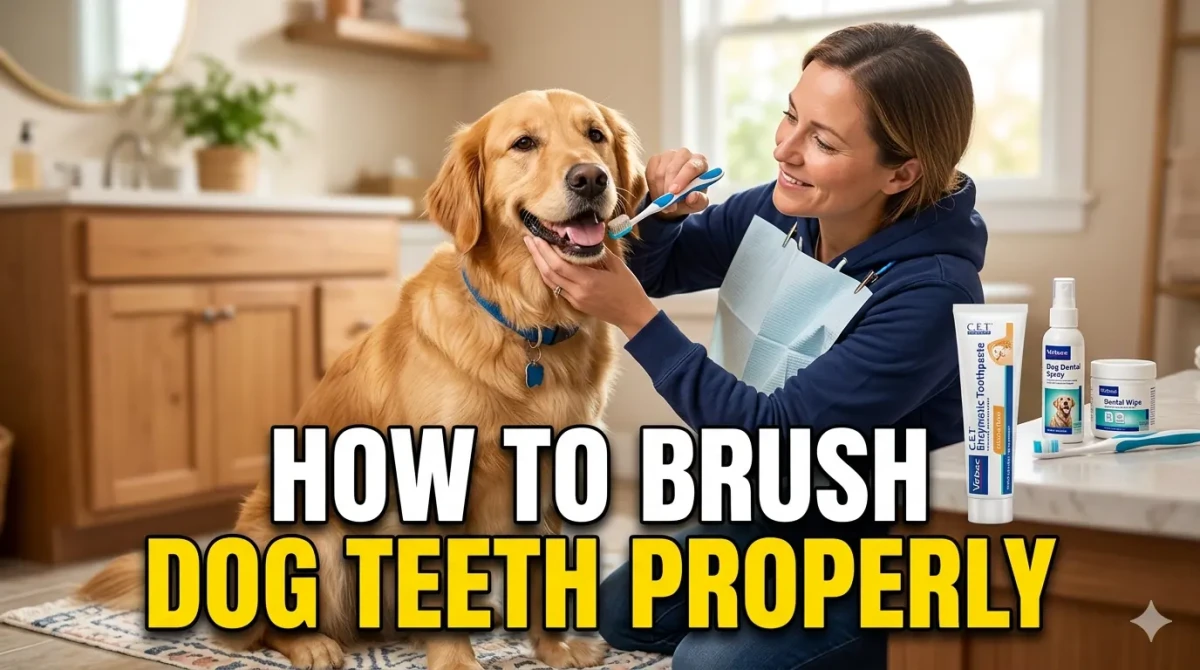
Brushing your dog's teeth is one of the most impactful things you can do for their long-term health and quality of life. Dental disease affects over 80% of dogs by age three, leading to pain, tooth loss, bad breath, and even systemic health issues affecting the heart, kidneys, and liver. Regular tooth brushing prevents plaque buildup, reduces tartar formation, and helps your dog avoid painful—and expensive—veterinary dental procedures.
Featured Snippet Answer: To brush dog teeth properly, use a pet-specific enzymatic toothpaste and a soft dog toothbrush or finger brush. Start by letting your dog taste the toothpaste, then gently lift the lip to brush outer tooth surfaces in small circular motions at a 45-degree angle to the gumline. Aim for daily brushing, but even 3-4 times weekly provides significant benefits. Never use human toothpaste, which contains ingredients toxic to dogs.
Many dog owners assume dental care isn't necessary for their canine companions, or they believe brushing is too difficult. The truth is: with patience, positive reinforcement, and the right technique, most dogs can learn to tolerate—and some even enjoy—teeth brushing. This comprehensive guide walks you through every step of proper canine dental care: from selecting the right tools and introducing the routine gradually, to mastering brushing technique, troubleshooting common challenges, and knowing when to seek professional veterinary dental care.
Whether you have a curious puppy just learning about the world or a senior dog with established habits, you'll find practical, veterinarian-aligned strategies to make dental care a positive, stress-free experience for both of you.
Understanding Canine Dental Health: Why Prevention Matters
Before learning how to brush, it's essential to understand why feline dental health matters and what problems you're working to prevent.
Common Canine Dental Issues:
- Plaque and tartar: Plaque is a sticky film of bacteria that forms on teeth within hours; if not removed, it hardens into tartar (calculus) within 24-72 hours
- Gingivitis: Inflammation of the gums caused by bacterial buildup; reversible with proper care
- Periodontal disease: Advanced gum disease that destroys the structures supporting teeth; irreversible and painful
- Tooth resorption: A painful condition where the tooth structure breaks down; affects many senior dogs
- Stomatitis: Severe, painful inflammation of the entire mouth; often requires extensive treatment
- 🐾 Dog Nail Trimming Guide for Beginners: 2026
- 🐾 Essential Fish Tank Cleaning Tools Complete Guide
- 🐾 Best Shampoo for Sensitive Cat Skin: Expert Guide
Systemic Health Connections:
Dental disease doesn't stay confined to the mouth. Bacteria from infected gums can enter the bloodstream and affect:
- Heart: Bacterial endocarditis risk increases with chronic oral infection
- Kidneys: Chronic kidney disease may be exacerbated by oral bacteria
- Liver: Oral bacteria can contribute to hepatic inflammation
- Overall immunity: Chronic inflammation from dental disease stresses the immune system
- 🐾 Dog Nail Trimming Guide for Beginners: 2026
- 🐾 Essential Fish Tank Cleaning Tools Complete Guide
- 🐾 Best Shampoo for Sensitive Cat Skin: Expert Guide
Why Home Brushing Matters:
- Prevention is easier than treatment: Professional dental cleanings require anesthesia, which carries risks and costs $300-800+
- Daily care reduces professional needs: Dogs with consistent home care may need cleanings every 2-3 years instead of annually
- Early detection: Regular mouth handling helps you notice problems (bad breath, red gums, loose teeth) sooner
- Pain prevention: Dogs hide pain well; preventing dental disease avoids silent suffering
- 🐾 Dog Nail Trimming Guide for Beginners: 2026
- 🐾 Essential Fish Tank Cleaning Tools Complete Guide
- 🐾 Best Shampoo for Sensitive Cat Skin: Expert Guide
Featured Snippet Answer: Dental disease affects over 80% of dogs by age three, causing pain and potentially affecting heart, kidney, and liver health. Regular brushing prevents plaque buildup, reduces tartar formation, and helps avoid expensive veterinary procedures. Starting dental care early makes the routine easier to establish.
Can I skip brushing if my dog eats dental diet food?
Dental diets and treats can help reduce plaque but cannot replace brushing. These products work mechanically as the dog chews, but they only contact certain tooth surfaces. Brushing reaches all outer tooth surfaces and the gumline where disease begins. For optimal dental health, combine brushing with dental diets, treats, and regular veterinary checkups.
Gathering the Right Tools: Essential Supplies for Dog Dental Care

Using the right tools makes brushing easier, safer, and more effective for both you and your dog.
Toothbrush Options:
- Finger brushes: Soft silicone brushes that slip over your fingertip; offer good control and gentle contact; ideal for beginners and dogs new to brushing
- Dog toothbrushes: Small-headed brushes with soft bristles and long handles; provide better reach for back teeth; choose brushes designed specifically for dogs
- Double-ended brushes: Feature two brush heads at different angles; useful for reaching various tooth surfaces
- Electric dog toothbrushes: Some dogs tolerate gentle vibration; introduce gradually if using
- Gauze or cloth: As a last resort, wrap clean gauze around your finger; less effective than brushes but better than nothing
- 🐾 Dog Nail Trimming Guide for Beginners: 2026
- 🐾 Essential Fish Tank Cleaning Tools Complete Guide
- 🐾 Best Shampoo for Sensitive Cat Skin: Expert Guide
Toothpaste: Non-Negotiable Requirements
- Must be enzymatic: Enzymes (like glucose oxidase) break down plaque bacteria; look for VOHC (Veterinary Oral Health Council) approval
- Must be pet-specific: Human toothpaste contains fluoride, xylitol, and detergents toxic to dogs
- Flavor matters: Poultry, beef, or peanut butter flavors encourage acceptance; avoid mint or strong flavors dogs dislike
- No rinsing needed: Pet toothpastes are formulated to be swallowed safely
- 🐾 Dog Nail Trimming Guide for Beginners: 2026
- 🐾 Essential Fish Tank Cleaning Tools Complete Guide
- 🐾 Best Shampoo for Sensitive Cat Skin: Expert Guide
Top Recommended Dog Toothpastes:
- Virbac C.E.T. Enzymatic Toothpaste: VOHC-approved, multiple flavors, widely recommended by veterinarians
- PetzLife Oral Care Gel: Natural ingredients, no brushing required (though brushing enhances effectiveness)
- TropiClean Fresh Breath Oral Care Gel: VOHC-approved, helps reduce plaque and tartar
- 🐾 Dog Nail Trimming Guide for Beginners: 2026
- 🐾 Essential Fish Tank Cleaning Tools Complete Guide
- 🐾 Best Shampoo for Sensitive Cat Skin: Expert Guide
Additional Helpful Supplies:
- Treats: High-value rewards to reinforce positive associations
- Towel: For gentle restraint if needed (use minimally and never as punishment)
- Good lighting: A headlamp or bright room helps you see tooth surfaces clearly
- Patience: The most important "tool"—rushing creates stress and setbacks
- 🐾 Dog Nail Trimming Guide for Beginners: 2026
- 🐾 Essential Fish Tank Cleaning Tools Complete Guide
- 🐾 Best Shampoo for Sensitive Cat Skin: Expert Guide
Featured Snippet Answer: Use a soft finger brush or small dog toothbrush with enzymatic, pet-specific toothpaste flavored for dogs (poultry, beef, or peanut butter). Never use human toothpaste—it contains ingredients toxic to dogs. VOHC-approved products like Virbac C.E.T. offer proven effectiveness for plaque control.
Step-by-Step: Introducing Tooth Brushing to Your Dog

Rushing into brushing guarantees resistance. A gradual, positive introduction builds trust and makes the routine sustainable.
Phase 1: Acclimation to Mouth Handling (Days 1-7)
Goal: Help your dog become comfortable with having their mouth touched.
- Start with chin scratches: Gently rub your dog's chin and cheeks during relaxed moments
- Progress to lip lifting: Very gently lift the upper lip for 1-2 seconds, then immediately reward with a treat
- Keep sessions brief: 1-2 minutes maximum, 1-2 times daily
- End on success: Always finish with a treat and praise, even if you only lifted the lip briefly
- Watch for stress signals: If your dog shows pinned ears, tail tucking, or attempts to escape, pause and try again later
- 🐾 Dog Nail Trimming Guide for Beginners: 2026
- 🐾 Essential Fish Tank Cleaning Tools Complete Guide
- 🐾 Best Shampoo for Sensitive Cat Skin: Expert Guide
Featured Snippet Answer: Start dental care by gently lifting your dog's lip for 1-2 seconds during calm moments, immediately rewarding with treats. Keep sessions under 2 minutes and always end positively. Progress only when your dog is relaxed—rushing creates resistance and delays training success.
Phase 2: Introducing Toothpaste Flavor (Days 8-14)
Goal: Create a positive association with the taste of pet toothpaste.
- Let your dog taste: Put a tiny dab of toothpaste on your finger and let your dog lick it off
- Use as a treat: Offer toothpaste as a special reward, separate from brushing at first
- Observe preferences: If your dog rejects one flavor, try another (poultry, beef, peanut butter)
- Never force: If your dog walks away, don't chase or restrain—try again later
- 🐾 Dog Nail Trimming Guide for Beginners: 2026
- 🐾 Essential Fish Tank Cleaning Tools Complete Guide
- 🐾 Best Shampoo for Sensitive Cat Skin: Expert Guide
Phase 3: Introducing the Brush (Days 15-21)
Goal: Familiarize your dog with the sensation of a brush in their mouth.
- Let them investigate: Show the brush, let your dog sniff it, then reward
- Add toothpaste to brush: Put a pea-sized amount on the brush and let your dog lick it
- Touch teeth gently: With toothpaste on the brush, gently touch the outer surface of one or two front teeth for 1-2 seconds, then reward
- Build gradually: Increase to 3-4 teeth over several sessions before attempting a full brushing
- 🐾 Dog Nail Trimming Guide for Beginners: 2026
- 🐾 Essential Fish Tank Cleaning Tools Complete Guide
- 🐾 Best Shampoo for Sensitive Cat Skin: Expert Guide
Phase 4: Full Brushing Technique (Days 22+)
Goal: Establish a complete, effective brushing routine.
- Position comfortably: Place your dog on a stable surface or have them stand naturally; never restrain forcefully
- Lift the lip: Gently lift the upper lip to expose the outer tooth surfaces
- Focus on outer surfaces: Brush only the outside of teeth (the side facing the cheek); the tongue cleans inner surfaces naturally
- Use small circles: Apply gentle pressure and use small circular motions at a 45-degree angle to the gumline
- Target the gumline: Plaque accumulates where tooth meets gum; focus brush strokes here
- Work systematically: Start with front teeth, gradually working to back teeth as your dog tolerates
- Keep it brief: Aim for 30-60 seconds total initially; build duration as your dog accepts the routine
- Reward generously: Immediately follow brushing with praise and a high-value treat
- 🐾 Dog Nail Trimming Guide for Beginners: 2026
- 🐾 Essential Fish Tank Cleaning Tools Complete Guide
- 🐾 Best Shampoo for Sensitive Cat Skin: Expert Guide
Featured Snippet Answer: Brush only the outer tooth surfaces using gentle circular motions at a 45-degree angle to the gumline. Focus on the gumline where plaque accumulates. Start with front teeth and build to back teeth as your dog tolerates. Keep sessions to 30-60 seconds initially, always ending with rewards.
Mastering Proper Brushing Technique: The Details That Matter

Correct technique ensures effectiveness while keeping your dog comfortable.
Brushing Angle and Motion:
- 45-degree angle: Hold the brush at a 45-degree angle to the tooth surface to reach under the gumline
- Small circles: Use gentle, small circular motions—not back-and-forth scrubbing—to avoid gum irritation
- Light pressure: Let the bristles do the work; pressing too hard can damage gums
- 🐾 Dog Nail Trimming Guide for Beginners: 2026
- 🐾 Essential Fish Tank Cleaning Tools Complete Guide
- 🐾 Best Shampoo for Sensitive Cat Skin: Expert Guide
Which Teeth to Brush:
- Focus on outer surfaces: The cheek-side of teeth accumulates the most plaque; the tongue cleans inner surfaces naturally
- Prioritize premolars and molars: These back teeth are most prone to tartar buildup and periodontal disease
- Don't neglect canines: Long canine teeth collect plaque at the gumline
- Front teeth matter too: Incisors can develop gingivitis; include them as your dog tolerates
- 🐾 Dog Nail Trimming Guide for Beginners: 2026
- 🐾 Essential Fish Tank Cleaning Tools Complete Guide
- 🐾 Best Shampoo for Sensitive Cat Skin: Expert Guide
How Long to Brush:
- Start small: 15-30 seconds total for beginners
- Build gradually: Work up to 30-60 seconds as your dog accepts the routine
- Quality over quantity: Proper technique on a few teeth is better than rushed brushing of all teeth
- Consistency beats duration: Brushing 3-4 times weekly for 30 seconds is more valuable than one long weekly session
- 🐾 Dog Nail Trimming Guide for Beginners: 2026
- 🐾 Essential Fish Tank Cleaning Tools Complete Guide
- 🐾 Best Shampoo for Sensitive Cat Skin: Expert Guide
Managing Common Challenges:
- If your dog resists: Stop immediately, reward any cooperation, and try again later with shorter sessions
- If gums bleed: Use even lighter pressure; minor bleeding may occur initially with inflamed gums but should resolve with consistent care
- If your dog bites the brush: Use a finger brush for better control, or try brushing when your dog is relaxed or sleepy
- If progress stalls: Return to an earlier phase (e.g., just tasting toothpaste) and rebuild confidence
- 🐾 Dog Nail Trimming Guide for Beginners: 2026
- 🐾 Essential Fish Tank Cleaning Tools Complete Guide
- 🐾 Best Shampoo for Sensitive Cat Skin: Expert Guide
Featured Snippet Answer: Hold the brush at a 45-degree angle to teeth, use gentle circular motions focused on the gumline, and brush only outer tooth surfaces. Start with 15-30 seconds, building to 30-60 seconds as your dog tolerates. Consistency (3-4 times weekly) matters more than session length.
What if my dog won't let me brush their back teeth?
It's normal for dogs to resist brushing back teeth initially. Focus on front teeth first, rewarding heavily for cooperation. Gradually work backward over weeks as your dog builds trust. Even brushing just the front teeth provides benefits. If your dog consistently resists, consult your veterinarian about alternatives like dental gels, water additives, or professional cleaning options.
How Often Should You Brush Your Dog's Teeth?

Frequency impacts effectiveness, but realistic expectations prevent frustration.
Ideal Frequency:
- Daily brushing: Provides optimal plaque control; ideal but not always achievable
- Minimum effective frequency: 3-4 times weekly still provides significant benefits
- Consistency matters most: Regular brushing on a predictable schedule is more important than occasional long sessions
- 🐾 Dog Nail Trimming Guide for Beginners: 2026
- 🐾 Essential Fish Tank Cleaning Tools Complete Guide
- 🐾 Best Shampoo for Sensitive Cat Skin: Expert Guide
Factors Influencing Frequency:
- Age: Puppies adapt more easily; start early for lifelong habits. Senior dogs may need gentler, shorter sessions
- Dental health status: Dogs with existing gingivitis may benefit from daily brushing; healthy dogs maintain well with 3-4 times weekly
- Temperament: Anxious or resistant dogs may do better with shorter, less frequent sessions that build trust
- Owner consistency: Choose a frequency you can maintain long-term
- 🐾 Dog Nail Trimming Guide for Beginners: 2026
- 🐾 Essential Fish Tank Cleaning Tools Complete Guide
- 🐾 Best Shampoo for Sensitive Cat Skin: Expert Guide
Signs You're Brushing Often Enough:
- Fresh breath (mild dog breath is normal; foul odor suggests inadequate care)
- Pink, firm gums without redness or swelling
- Minimal visible tartar (yellow/brown buildup) on teeth
- Regular veterinary dental checkups confirm good oral health
- 🐾 Dog Nail Trimming Guide for Beginners: 2026
- 🐾 Essential Fish Tank Cleaning Tools Complete Guide
- 🐾 Best Shampoo for Sensitive Cat Skin: Expert Guide
When to Increase Frequency:
- Veterinary diagnosis of early gingivitis
- Visible plaque buildup between brushings
- Bad breath returning quickly after brushing
- Upcoming professional dental cleaning (pre-brushing enhances results)
- 🐾 Dog Nail Trimming Guide for Beginners: 2026
- 🐾 Essential Fish Tank Cleaning Tools Complete Guide
- 🐾 Best Shampoo for Sensitive Cat Skin: Expert Guide
Featured Snippet Answer: Brush your dog's teeth daily for optimal plaque control, but 3-4 times weekly still provides significant benefits. Consistency matters more than perfect frequency. Start with short sessions and build gradually; even partial brushing is better than none. Consult your vet for personalized frequency recommendations.
Troubleshooting Common Brushing Challenges

Even with careful introduction, challenges arise. Here's how to address them humanely and effectively.
My Dog Hates Having Their Mouth Touched
Understand the cause: Fear, past negative experiences, or pain can cause mouth sensitivity.
Solutions:
- Rule out pain: Schedule a veterinary dental exam to check for tooth issues, gingivitis, or other painful conditions
- Go back to basics: Return to Phase 1 (chin scratches, brief lip lifts) and rebuild trust slowly
- Use high-value rewards: Reserve special treats (chicken, cheese) exclusively for dental care sessions
- Try alternative timing: Brush when your dog is relaxed—after meals, during sleepy periods
- Consider professional help: A veterinary behaviorist can provide tailored desensitization protocols
- 🐾 Dog Nail Trimming Guide for Beginners: 2026
- 🐾 Essential Fish Tank Cleaning Tools Complete Guide
- 🐾 Best Shampoo for Sensitive Cat Skin: Expert Guide
My Dog Bites the Brush or My Finger
Understand the cause: Playfulness, fear, or discomfort with the sensation.
Solutions:
- Use a finger brush: Provides better control and feels less intrusive than a handled brush
- Keep sessions very short: 5-10 seconds initially, gradually building duration
- Never punish: Yelling or jerking away reinforces fear; stay calm and redirect
- Try brushing during sleep: Some dogs tolerate gentle brushing when drowsy
- Consult your vet: Persistent biting may indicate oral pain requiring treatment
- 🐾 Dog Nail Trimming Guide for Beginners: 2026
- 🐾 Essential Fish Tank Cleaning Tools Complete Guide
- 🐾 Best Shampoo for Sensitive Cat Skin: Expert Guide
My Dog Only Accepts Toothpaste, Not the Brush
Understand the cause: The brush sensation may be unfamiliar or uncomfortable.
Solutions:
- Try different brush types: Switch between finger brush, small dog toothbrush, or gauze
- Desensitize to brush sensation: Let your dog lick toothpaste off the brush without attempting to brush teeth
- Use dental gels as bridge: VOHC-approved gels can be applied without brushing while you continue brush training
- Be patient: Some dogs take weeks or months to accept the brush; consistency pays off
- 🐾 Dog Nail Trimming Guide for Beginners: 2026
- 🐾 Essential Fish Tank Cleaning Tools Complete Guide
- 🐾 Best Shampoo for Sensitive Cat Skin: Expert Guide
My Dog's Gums Bleed When I Brush
Understand the cause: Inflamed gums (gingivitis) bleed easily; this is common when starting dental care.
Solutions:
- Use lighter pressure: Let bristles gently contact the gumline; don't scrub
- Continue consistent care: Bleeding should decrease within 1-2 weeks as inflammation reduces
- Monitor closely: If bleeding persists beyond 2 weeks or is heavy, consult your veterinarian
- Rule out advanced disease: Severe periodontal disease may require professional cleaning before home care can be effective
- 🐾 Dog Nail Trimming Guide for Beginners: 2026
- 🐾 Essential Fish Tank Cleaning Tools Complete Guide
- 🐾 Best Shampoo for Sensitive Cat Skin: Expert Guide
Featured Snippet Answer: If your dog resists brushing, rule out pain with a veterinary exam, return to earlier training phases, and use high-value rewards. For bleeding gums, use lighter pressure and continue consistent care; bleeding should decrease within 1-2 weeks. Persistent issues warrant veterinary consultation.
Complementary Dental Care: Beyond Brushing

Brushing is the gold standard, but other strategies can enhance your dog's dental health.
Dental Diets:
- How they work: Specially formulated kibble with larger size, fibrous texture, or added enzymes to reduce plaque mechanically and chemically
- VOHC-approved options: Hill's Prescription Diet t/d, Royal Canin Dental, Purina DH
- Limitations: Only contact certain tooth surfaces; cannot replace brushing but can supplement it
- Best for: Dogs who won't tolerate brushing; use alongside other dental care methods
- 🐾 Dog Nail Trimming Guide for Beginners: 2026
- 🐾 Essential Fish Tank Cleaning Tools Complete Guide
- 🐾 Best Shampoo for Sensitive Cat Skin: Expert Guide
Dental Treats and Chews:
- VOHC-approved treats: Look for the VOHC seal indicating proven plaque/tartar reduction
- Mechanical action: Chewing texture helps scrape plaque from teeth
- Calorie awareness: Dental treats still contain calories; adjust meals to prevent weight gain
- Supervise use: Some dogs gulp treats without chewing; choose appropriate sizes to prevent choking
- 🐾 Dog Nail Trimming Guide for Beginners: 2026
- 🐾 Essential Fish Tank Cleaning Tools Complete Guide
- 🐾 Best Shampoo for Sensitive Cat Skin: Expert Guide
Water Additives and Oral Gels:
- How they work: Enzymes or antimicrobial agents in water or applied directly to teeth/gums
- VOHC-approved options: PetzLife Oral Care, TropiClean Fresh Breath, HealthyMouth
- Application: Gels can be rubbed on teeth with finger; additives go in drinking water
- Limitations: Less effective than brushing but valuable for dogs who won't tolerate brushing
- 🐾 Dog Nail Trimming Guide for Beginners: 2026
- 🐾 Essential Fish Tank Cleaning Tools Complete Guide
- 🐾 Best Shampoo for Sensitive Cat Skin: Expert Guide
Regular Veterinary Dental Checkups:
- Annual exams: Veterinarians can detect early dental disease before it causes pain
- Professional cleanings: Required to remove tartar below the gumline; performed under anesthesia
- Pre-anesthetic screening: Blood work ensures your dog is healthy enough for anesthesia
- Home care enhances professional care: Dogs with consistent brushing need cleanings less frequently
- 🐾 Dog Nail Trimming Guide for Beginners: 2026
- 🐾 Essential Fish Tank Cleaning Tools Complete Guide
- 🐾 Best Shampoo for Sensitive Cat Skin: Expert Guide
Featured Snippet Answer: Supplement brushing with VOHC-approved dental diets, treats, or water additives for enhanced plaque control. Schedule annual veterinary dental exams to catch problems early. Professional cleanings under anesthesia remove tartar brushing can't reach; home care reduces how often these are needed.
Age-Specific Dental Care Considerations

Dental needs change throughout your dog's life. Tailor your approach to your dog's age.
Puppies (Under 1 Year):
- Start early: Introduce mouth handling and toothpaste tasting during puppyhood for easiest training
- Focus on acclimation: Priority is building positive associations, not perfect brushing technique
- Monitor tooth development: Baby teeth fall out around 3-4 months; adult teeth fully erupt by 6-7 months
- Prevent future issues: Early dental care sets the foundation for lifelong oral health
- 🐾 Dog Nail Trimming Guide for Beginners: 2026
- 🐾 Essential Fish Tank Cleaning Tools Complete Guide
- 🐾 Best Shampoo for Sensitive Cat Skin: Expert Guide
Adult Dogs (1-7 Years):
- Establish routine: Consistent brushing prevents plaque buildup before it becomes tartar
- Monitor for early signs: Watch for bad breath, red gums, or reluctance to eat hard food
- Annual vet checks: Professional exams catch problems before they cause pain
- Adjust for temperament: Some adult dogs need slower training; patience yields results
- 🐾 Dog Nail Trimming Guide for Beginners: 2026
- 🐾 Essential Fish Tank Cleaning Tools Complete Guide
- 🐾 Best Shampoo for Sensitive Cat Skin: Expert Guide
Senior Dogs (7+ Years):
- Gentle technique: Older dogs may have sensitive gums or arthritis; use extra-light pressure
- Shorter sessions: 15-30 seconds may be sufficient; consistency matters more than duration
- Monitor for age-related issues: Tooth resorption, stomatitis, and gum recession are more common in seniors
- Veterinary partnership: Senior dogs benefit from biannual dental checkups and tailored care plans
- 🐾 Dog Nail Trimming Guide for Beginners: 2026
- 🐾 Essential Fish Tank Cleaning Tools Complete Guide
- 🐾 Best Shampoo for Sensitive Cat Skin: Expert Guide
Featured Snippet Answer: Start dental care early in puppyhood for easiest training. Adult dogs benefit from consistent brushing to prevent plaque buildup. Senior dogs need gentler technique and shorter sessions due to potential gum sensitivity. Adjust frequency and technique to your dog's age, health, and temperament.
When to Seek Professional Veterinary Dental Care

Home care prevents many problems, but some situations require professional intervention.
Signs Your Dog Needs a Veterinary Dental Exam:
- Bad breath: Persistent foul odor suggests bacterial overgrowth or infection
- Red, swollen, or bleeding gums: Indicates gingivitis or periodontal disease
- Tartar buildup: Yellow/brown hard deposits on teeth, especially near gumline
- Drooling or pawing at mouth: May signal oral pain or foreign object
- Difficulty eating: Dropping food, chewing on one side, or avoiding hard kibble
- Loose or missing teeth: Indicates advanced periodontal disease
- Facial swelling or nasal discharge: May indicate tooth root abscess
- 🐾 Dog Nail Trimming Guide for Beginners: 2026
- 🐾 Essential Fish Tank Cleaning Tools Complete Guide
- 🐾 Best Shampoo for Sensitive Cat Skin: Expert Guide
What to Expect During a Professional Dental Cleaning:
- Pre-anesthetic exam: Physical exam and blood work to ensure anesthesia safety
- Anesthesia: Required for thorough cleaning, especially below the gumline; modern protocols are very safe
- Scaling: Ultrasonic and hand instruments remove tartar above and below gumline
- Polishing: Smooths tooth surfaces to slow future plaque accumulation
- Fluoride treatment: Strengthens enamel and reduces sensitivity (optional)
- Oral examination: Veterinarian checks each tooth for resorption, fractures, or other issues
- Dental radiographs: X-rays reveal problems below the gumline (root abscesses, bone loss)
- Extractions if needed: Severely diseased teeth may require removal to eliminate pain
- 🐾 Dog Nail Trimming Guide for Beginners: 2026
- 🐾 Essential Fish Tank Cleaning Tools Complete Guide
- 🐾 Best Shampoo for Sensitive Cat Skin: Expert Guide
Post-Cleaning Home Care:
- Resume brushing: Start gentle brushing 24-48 hours after cleaning (as directed by your vet)
- Monitor healing: Watch for excessive bleeding, swelling, or reluctance to eat
- Follow medication instructions: Pain relief or antibiotics may be prescribed
- Prevent future buildup: Consistent home care extends time between professional cleanings
- 🐾 Dog Nail Trimming Guide for Beginners: 2026
- 🐾 Essential Fish Tank Cleaning Tools Complete Guide
- 🐾 Best Shampoo for Sensitive Cat Skin: Expert Guide
Featured Snippet Answer: See a veterinarian if your dog has bad breath, red/swollen gums, tartar buildup, drooling, difficulty eating, or loose teeth. Professional dental cleanings under anesthesia remove tartar below the gumline and allow thorough oral examination. Home brushing after cleaning helps maintain results.
Common Mistakes to Avoid in Dog Dental Care

Even well-intentioned owners make errors that undermine dental care efforts.
Mistake 1: Using Human Toothpaste
- Problem: Contains fluoride, xylitol, and detergents toxic to dogs; can cause vomiting, seizures, or organ damage
- Solution: Always use enzymatic, pet-specific toothpaste formulated for dogs
- 🐾 Dog Nail Trimming Guide for Beginners: 2026
- 🐾 Essential Fish Tank Cleaning Tools Complete Guide
- 🐾 Best Shampoo for Sensitive Cat Skin: Expert Guide
Mistake 2: Brushing Too Aggressively
- Problem: Scrubbing hard damages gums, causes pain, and creates negative associations
- Solution: Use gentle circular motions with light pressure; let bristles do the work
- 🐾 Dog Nail Trimming Guide for Beginners: 2026
- 🐾 Essential Fish Tank Cleaning Tools Complete Guide
- 🐾 Best Shampoo for Sensitive Cat Skin: Expert Guide
Mistake 3: Expecting Immediate Success
- Problem: Rushing the training process creates fear and resistance
- Solution: Allow weeks or months for gradual acclimation; celebrate small progress
- 🐾 Dog Nail Trimming Guide for Beginners: 2026
- 🐾 Essential Fish Tank Cleaning Tools Complete Guide
- 🐾 Best Shampoo for Sensitive Cat Skin: Expert Guide
Mistake 4: Skipping Veterinary Checkups
- Problem: Home care can't detect or treat problems below the gumline
- Solution: Schedule annual dental exams; professional cleanings as recommended
- 🐾 Dog Nail Trimming Guide for Beginners: 2026
- 🐾 Essential Fish Tank Cleaning Tools Complete Guide
- 🐾 Best Shampoo for Sensitive Cat Skin: Expert Guide
Mistake 5: Giving Up After Setbacks
- Problem: One bad session doesn't mean your dog can't learn dental care
- Solution: Return to earlier training phases, adjust technique, and try again with patience
- 🐾 Dog Nail Trimming Guide for Beginners: 2026
- 🐾 Essential Fish Tank Cleaning Tools Complete Guide
- 🐾 Best Shampoo for Sensitive Cat Skin: Expert Guide
Featured Snippet Answer: Avoid using human toothpaste (toxic to dogs), brushing too aggressively, expecting immediate success, skipping veterinary checkups, or giving up after setbacks. Use pet-specific products, gentle technique, gradual training, regular vet exams, and patience for successful dental care.
Quick Recap: Key Takeaways for Proper Dog Tooth Brushing

- Use enzymatic, pet-specific toothpaste and a soft finger brush or small dog toothbrush
- Introduce brushing gradually: mouth handling → toothpaste tasting → brush introduction → full brushing
- Brush only outer tooth surfaces using gentle circular motions at a 45-degree angle to the gumline
- Aim for daily brushing, but 3-4 times weekly still provides significant benefits
- Keep sessions short (30-60 seconds) and always end with rewards
- Never use human toothpaste—it contains ingredients toxic to dogs
- Supplement brushing with VOHC-approved dental diets, treats, or water additives
- Schedule annual veterinary dental exams to catch problems early
- Watch for warning signs: bad breath, red gums, tartar, or eating difficulties
- Be patient—most dogs learn to tolerate brushing with consistent, positive training
- 🐾 Dog Nail Trimming Guide for Beginners: 2026
- 🐾 Essential Fish Tank Cleaning Tools Complete Guide
- 🐾 Best Shampoo for Sensitive Cat Skin: Expert Guide
Final Thoughts: Patience and Consistency Build Lifelong Dental Health

Brushing your dog's teeth isn't about perfection—it's about progress. Every small step toward accepting dental care reduces your dog's risk of painful, costly dental disease. Some dogs learn to enjoy brushing within weeks; others may take months of patient, positive training. What matters most is your commitment to trying, adapting, and celebrating small victories.
Remember that dental health is part of whole-dog wellness. Regular veterinary care, appropriate nutrition, environmental enrichment, and loving attention all contribute to your dog's quality of life. Dental brushing is one powerful tool in that comprehensive approach.
Stay observant: your dog's mouth can reveal early signs of systemic illness. Stay proactive: preventing dental disease is far easier and less expensive than treating advanced problems. Stay compassionate: if brushing remains stressful despite your best efforts, work with your veterinarian to find alternative dental care strategies that work for your unique dog.
With knowledge, patience, and partnership with your veterinary team, you can help your dog maintain a healthy, comfortable mouth for years to come. Every gentle brush stroke is an investment in your dog's comfort, health, and happiness. Start today—even one tooth brushed is better than none—and build from there.

0 Comments