.png)
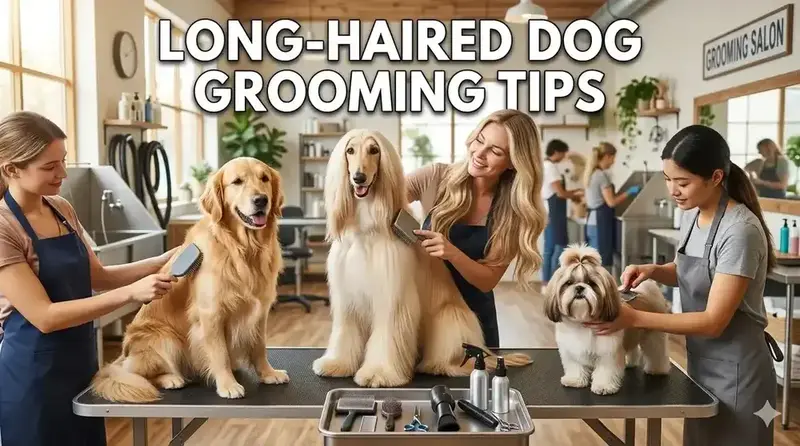
Mastering grooming tips for long-haired dogs is essential for maintaining your pet's health, comfort, and beautiful appearance. Long-haired breeds like Golden Retrievers, Afghan Hounds, Shih Tzus, and Collies require dedicated grooming routines to prevent matting, reduce shedding, and keep their coats healthy and lustrous. Without proper care, long coats can quickly become tangled, matted, and uncomfortable for your dog, potentially leading to skin infections and other health issues. This comprehensive guide provides expert grooming tips, tool recommendations, step-by-step techniques, and professional advice to help you maintain your long-haired dog's coat whether you groom at home or visit professional groomers. From daily brushing routines to bath techniques and de-matting strategies, you'll learn everything needed to keep your long-haired companion looking and feeling their best year-round.
Why Long-Haired Dogs Need Special Grooming Attention
Long-haired dogs have unique grooming requirements that differ significantly from short-coated breeds. Understanding these differences helps you provide appropriate care that maintains coat health and prevents problems.
Coat Structure and Growth Patterns
Long-haired dogs typically have double coats consisting of:
- Topcoat (guard hairs): Longer, coarser outer hairs that protect against weather and debris
- Undercoat: Soft, dense layer that provides insulation and sheds seasonally
- Continuous growth: Unlike short coats, long hair grows continuously and requires regular trimming
- 🐾 Best Bedding for Small Pets: Expert Safety & Comfort Guide
- 🐾 Grooming Hacks for Shedding Dogs: Expert Tips to Reduce Fur & Manage Shedding
- 🐾 Best Water Conditioners for Fish: 2026 Guide
This structure makes long-haired dogs prone to matting, especially in areas of friction like behind ears, under legs, and around the collar.
Health Benefits of Regular Grooming
Beyond aesthetics, regular grooming provides critical health benefits:
- Prevents matting: Mats pull on skin, causing pain, restricted blood flow, and skin infections
- Reduces shedding: Regular brushing removes loose hair before it sheds around your home
- Distributes natural oils: Brushing spreads skin oils throughout the coat for natural shine and moisture
- Early problem detection: Regular grooming sessions help you spot lumps, parasites, skin issues, or injuries early
- Improves circulation: Brushing stimulates blood flow to skin and hair follicles
- Prevents hot spots: Removing mats and tangles prevents moisture-trapping that causes bacterial infections
- 🐾 Best Bedding for Small Pets: Expert Safety & Comfort Guide
- 🐾 Grooming Hacks for Shedding Dogs: Expert Tips to Reduce Fur & Manage Shedding
- 🐾 Best Water Conditioners for Fish: 2026 Guide
Common Long-Haired Dog Grooming Challenges
Long-haired breeds face specific grooming challenges:
- Matting and tangling: The most common issue, especially in high-friction areas
- Seasonal shedding: Heavy shedding periods (blowing coat) require intensive grooming
- Debris accumulation: Long coats trap dirt, burrs, and foreign objects
- Time commitment: Long-haired dogs require significantly more grooming time than short-coated breeds
- Professional grooming costs: Regular professional grooming adds up financially
- 🐾 Best Bedding for Small Pets: Expert Safety & Comfort Guide
- 🐾 Grooming Hacks for Shedding Dogs: Expert Tips to Reduce Fur & Manage Shedding
- 🐾 Best Water Conditioners for Fish: 2026 Guide
Essential Grooming Tools for Long-Haired Dogs
Having the right tools makes grooming easier, more effective, and more comfortable for your dog. Invest in quality tools designed specifically for long coats.
Brushes and Combs
Slicker brush: Essential for removing tangles and mats. Features fine, short wires close together. Use gently to avoid irritating skin. Best for daily brushing and detangling.
Pin brush: Has rounded tips on metal or plastic pins. Gentle on skin, ideal for finishing touches and removing loose hair after slicker brushing.
Undercoat rake: Removes loose undercoat without damaging topcoat. Essential during shedding seasons. Use gently to avoid pulling live hair.
Steel comb: Fine-toothed comb for checking for remaining tangles after brushing. Essential for finishing work and detecting small mats.
Dematting tool: Specialized tool with blades that cut through mats. Use with caution to avoid cutting skin. Best for severe matting that can't be brushed out.
Bathing and Drying Supplies
High-quality dog shampoo: Choose formulas designed for long coats or specific coat types (moisturizing, whitening, etc.). Avoid human shampoos which can strip natural oils.
Conditioner: Essential for long-haired dogs. Conditions hair, reduces static, makes brushing easier, and adds shine. Leave-in conditioners provide ongoing protection.
Detangling spray: Helps loosen tangles before brushing. Contains lubricants that make brushing easier and less painful.
High-velocity dryer: Professional-grade dryer that blows water out of coat quickly. Reduces drying time and helps blow out loose undercoat.
Stand dryer: Hands-free dryer that allows you to brush while drying. Ideal for long coats that need brushing during drying.
Trimming and Finishing Tools
Grooming scissors: Sharp, high-quality scissors for trimming around feet, ears, and sanitary areas. Blunt-tipped scissors are safer for beginners.
Thinning shears: Remove bulk without creating harsh lines. Ideal for blending and natural-looking trims.
Electric clippers: For sanitary trims, paw pads, and overall coat maintenance. Choose quiet, low-vibration models to reduce stress.
Nail clippers or grinder: Essential for regular nail maintenance. Long nails affect gait and can cause joint problems.
Daily and Weekly Grooming Routines

Consistent grooming routines prevent matting and keep coats healthy. Establish a schedule that works for your lifestyle and your dog's coat type.
Daily Grooming Tasks (5-15 minutes)
Quick brush-through: Even a 5-minute daily brush prevents tangles from forming. Focus on high-risk areas:
- Behind ears
- Under legs (armpits and groin)
- Under collar area
- Belly and chest
- Tail and hindquarters
- 🐾 Best Bedding for Small Pets: Expert Safety & Comfort Guide
- 🐾 Grooming Hacks for Shedding Dogs: Expert Tips to Reduce Fur & Manage Shedding
- 🐾 Best Water Conditioners for Fish: 2026 Guide
Check for debris: After outdoor activities, check for burrs, sticks, or other debris caught in the coat.
Wipe paws and face: Remove dirt and prevent staining around eyes and mouth.
Weekly Grooming Tasks (30-60 minutes)
Thorough brushing session: Complete brush-out of entire coat:
- Start with detangling spray on problem areas
- Use slicker brush section by section
- Follow with pin brush for finishing
- Check with steel comb for remaining tangles
- Pay extra attention to matting-prone areas
Ear cleaning: Check and clean ears with dog-safe ear cleaner. Long-haired breeds are prone to ear infections due to hair blocking air circulation.
Teeth brushing: Brush teeth 2-3 times weekly to prevent dental disease.
Nail check: Check nail length and trim if needed (usually every 2-4 weeks).
Bi-Weekly or Monthly Tasks
Bathing: Bathe every 4-6 weeks for most long-haired breeds. Over-bathing strips natural oils.
Sanitary trim: Trim hair around rear end and genitals for hygiene.
Paw pad trimming: Trim hair between paw pads to prevent matting and improve traction.
Professional grooming: Schedule professional grooming every 6-8 weeks for full groom including haircut if desired.
Step-by-Step Brushing Technique

Proper brushing technique prevents pain, removes tangles effectively, and makes grooming more pleasant for your dog.
Preparation
Gather supplies: Have all tools ready before starting: slicker brush, pin brush, comb, detangling spray, treats.
Choose the right time: Groom when your dog is calm and tired, not hyper or anxious. After exercise is ideal.
Create a comfortable space: Use a non-slip surface at a comfortable height. Grooming tables are ideal but not required.
Brushing Process
Step 1: Apply detangling spray
- Spray lightly on coat, focusing on tangle-prone areas
- Let sit for 2-3 minutes to loosen tangles
- Don't oversaturate—lightly mist is sufficient
- 🐾 Best Bedding for Small Pets: Expert Safety & Comfort Guide
- 🐾 Grooming Hacks for Shedding Dogs: Expert Tips to Reduce Fur & Manage Shedding
- 🐾 Best Water Conditioners for Fish: 2026 Guide
Step 2: Line brushing technique
- Part coat horizontally and work in sections
- Brush from skin outward, not just surface
- Use one hand to hold hair above brushing area to prevent pulling skin
- Work systematically from head to tail
- 🐾 Best Bedding for Small Pets: Expert Safety & Comfort Guide
- 🐾 Grooming Hacks for Shedding Dogs: Expert Tips to Reduce Fur & Manage Shedding
- 🐾 Best Water Conditioners for Fish: 2026 Guide
Step 3: Address tangles carefully
- For small tangles, use fingers to gently separate
- For larger mats, use dematting tool carefully
- Never yank or pull—work slowly and patiently
- If mat is severe, consider professional help
- 🐾 Best Bedding for Small Pets: Expert Safety & Comfort Guide
- 🐾 Grooming Hacks for Shedding Dogs: Expert Tips to Reduce Fur & Manage Shedding
- 🐾 Best Water Conditioners for Fish: 2026 Guide
Step 4: Finish with comb
- Run steel comb through entire coat
- Comb should glide through easily
- Any resistance indicates remaining tangles
- 🐾 Best Bedding for Small Pets: Expert Safety & Comfort Guide
- 🐾 Grooming Hacks for Shedding Dogs: Expert Tips to Reduce Fur & Manage Shedding
- 🐾 Best Water Conditioners for Fish: 2026 Guide
Positive Reinforcement
Make grooming a positive experience:
- Offer treats throughout the process
- Use calm, reassuring voice
- Take breaks if dog becomes stressed
- End on a positive note with praise and treats
- Keep early sessions short and gradually increase duration
- 🐾 Best Bedding for Small Pets: Expert Safety & Comfort Guide
- 🐾 Grooming Hacks for Shedding Dogs: Expert Tips to Reduce Fur & Manage Shedding
- 🐾 Best Water Conditioners for Fish: 2026 Guide
Bathing Long-Haired Dogs Properly

Proper bathing technique prevents matting, maintains coat health, and makes drying easier.
Pre-Bath Preparation
Brush thoroughly: Always brush before bathing. Mats tighten when wet and become nearly impossible to remove.
Gather supplies: Dog shampoo, conditioner, towels, cotton balls for ears, non-slip mat, spray hose or pitcher.
Protect ears: Place cotton balls in ears to prevent water entry.
Bathing Process
Step 1: Wet coat thoroughly
- Use lukewarm water—never hot
- Wet coat completely to skin
- Long coats require significant water to saturate
- 🐾 Best Bedding for Small Pets: Expert Safety & Comfort Guide
- 🐾 Grooming Hacks for Shedding Dogs: Expert Tips to Reduce Fur & Manage Shedding
- 🐾 Best Water Conditioners for Fish: 2026 Guide
Step 2: Apply shampoo
- Dilute shampoo with water (1 part shampoo to 5 parts water)
- Apply from neck down, massaging into coat
- Work in sections to ensure complete coverage
- Avoid face—use damp cloth for face cleaning
- Rinse thoroughly—residue causes itching and dullness
- 🐾 Best Bedding for Small Pets: Expert Safety & Comfort Guide
- 🐾 Grooming Hacks for Shedding Dogs: Expert Tips to Reduce Fur & Manage Shedding
- 🐾 Best Water Conditioners for Fish: 2026 Guide
Step 3: Apply conditioner
- Apply generously to entire coat
- Leave on for 3-5 minutes as directed
- Comb through to distribute evenly
- Rinse thoroughly unless using leave-in conditioner
- 🐾 Best Bedding for Small Pets: Expert Safety & Comfort Guide
- 🐾 Grooming Hacks for Shedding Dogs: Expert Tips to Reduce Fur & Manage Shedding
- 🐾 Best Water Conditioners for Fish: 2026 Guide
Drying Technique
Towel dry: Blot (don't rub) with absorbent towels to remove excess water.
Blow dry:
- Use high-velocity dryer on low heat setting
- Brush while drying to prevent tangles
- Direct airflow in direction of hair growth
- Ensure coat is completely dry to prevent hot spots
- Pay special attention to dense areas like chest and hindquarters
- 🐾 Best Bedding for Small Pets: Expert Safety & Comfort Guide
- 🐾 Grooming Hacks for Shedding Dogs: Expert Tips to Reduce Fur & Manage Shedding
- 🐾 Best Water Conditioners for Fish: 2026 Guide
Final brush: Once completely dry, give final brush-out for smooth finish.
Preventing and Removing Mats

Mats are painful and can cause serious skin problems. Prevention is easier than removal.
Prevention Strategies
Daily brushing: The single most effective prevention method.
Regular professional grooming: Even with home care, professional groomers can catch early matting.
Proper drying: Never let long coats air dry completely—always brush while drying.
Use detangling products: Leave-in conditioners and detangling sprays reduce friction.
Trim problem areas: Regular trims around ears, armpits, and rear prevent matting.
Removing Small Mats
Finger separation: For small mats, use fingers to gently pull apart.
Dematting tool: Use specialized tool to cut through mat carefully.
Work from edges: Start at mat edges and work inward, not from center outward.
Use detangling spray: Apply liberally to lubricate and loosen mat.
When to Seek Professional Help
Seek professional grooming if:
- Mats are large or tightly packed against skin
- Dog shows signs of pain during dematting
- Multiple mats throughout coat
- Matting has caused skin irritation or infection
- You're uncomfortable using dematting tools
- 🐾 Best Bedding for Small Pets: Expert Safety & Comfort Guide
- 🐾 Grooming Hacks for Shedding Dogs: Expert Tips to Reduce Fur & Manage Shedding
- 🐾 Best Water Conditioners for Fish: 2026 Guide
Severe matting may require shaving, which is best done by professionals to avoid injury.
Breed-Specific Grooming Considerations

Different long-haired breeds have unique grooming needs based on coat type and texture.
Double-Coated Breeds (Golden Retrievers, Collies, Huskies)
Special considerations:
- Heavy seasonal shedding requires intensive grooming during coat-blowing periods
- Never shave double coats—they don't grow back properly and lose insulation properties
- Undercoat rake is essential tool
- Focus on removing loose undercoat, not cutting topcoat
- 🐾 Best Bedding for Small Pets: Expert Safety & Comfort Guide
- 🐾 Grooming Hacks for Shedding Dogs: Expert Tips to Reduce Fur & Manage Shedding
- 🐾 Best Water Conditioners for Fish: 2026 Guide
Silky-Coated Breeds (Afghan Hounds, Yorkshire Terriers, Maltese)
Special considerations:
- Fine, silky hair tangles easily
- Require daily brushing to prevent mats
- Benefit from leave-in conditioners
- Often kept in puppy cuts or show coats
- Regular trimming around feet and sanitary areas essential
- 🐾 Best Bedding for Small Pets: Expert Safety & Comfort Guide
- 🐾 Grooming Hacks for Shedding Dogs: Expert Tips to Reduce Fur & Manage Shedding
- 🐾 Best Water Conditioners for Fish: 2026 Guide
Curly-Coated Breeds (Poodles, Bichon Frise, Portuguese Water Dogs)
Special considerations:
- Curly coats mat easily if not maintained
- Require professional grooming every 4-6 weeks
- Regular clipping maintains manageable length
- Dense coats require thorough drying to prevent skin issues
- 🐾 Best Bedding for Small Pets: Expert Safety & Comfort Guide
- 🐾 Grooming Hacks for Shedding Dogs: Expert Tips to Reduce Fur & Manage Shedding
- 🐾 Best Water Conditioners for Fish: 2026 Guide
Wire-Coated Breeds (Wire Fox Terriers, Wirehaired Pointing Griffons)
Special considerations:
- Require hand-stripping or clipping
- Coarse texture requires different brushing technique
- Regular trimming maintains breed-specific appearance
- 🐾 Best Bedding for Small Pets: Expert Safety & Comfort Guide
- 🐾 Grooming Hacks for Shedding Dogs: Expert Tips to Reduce Fur & Manage Shedding
- 🐾 Best Water Conditioners for Fish: 2026 Guide
Professional Grooming vs. Home Grooming

Deciding between professional and home grooming depends on your skills, time, budget, and dog's needs.
Advantages of Professional Grooming
- Expertise: Professional groomers have training and experience with all coat types
- Proper equipment: Access to professional-grade tools and dryers
- Time-saving: Grooming completed efficiently while you do other tasks
- Full service: Includes bath, haircut, nail trim, ear cleaning, and anal gland expression
- Health checks: Groomers often spot health issues owners miss
- 🐾 Best Bedding for Small Pets: Expert Safety & Comfort Guide
- 🐾 Grooming Hacks for Shedding Dogs: Expert Tips to Reduce Fur & Manage Shedding
- 🐾 Best Water Conditioners for Fish: 2026 Guide
Advantages of Home Grooming
- Cost-effective: Saves money on regular grooming appointments
- Bonding: Grooming sessions strengthen your relationship
- Convenience: Groom on your schedule
- Less stress: Some dogs are less stressed at home than in grooming salons
- Control: You control products used and grooming style
- 🐾 Best Bedding for Small Pets: Expert Safety & Comfort Guide
- 🐾 Grooming Hacks for Shedding Dogs: Expert Tips to Reduce Fur & Manage Shedding
- 🐾 Best Water Conditioners for Fish: 2026 Guide
Hybrid Approach
Many owners use a combination approach:
- Home maintenance: Daily brushing, weekly baths, nail trims
- Professional grooming: Every 6-8 weeks for full groom and haircut
- This balances cost, convenience, and professional expertise
- 🐾 Best Bedding for Small Pets: Expert Safety & Comfort Guide
- 🐾 Grooming Hacks for Shedding Dogs: Expert Tips to Reduce Fur & Manage Shedding
- 🐾 Best Water Conditioners for Fish: 2026 Guide
Common Grooming Mistakes to Avoid

Even well-meaning owners can make grooming errors that harm their dog's coat or cause discomfort.
- Not brushing before bathing: Mats tighten when wet and become nearly impossible to remove. Always brush thoroughly before bathing.
- Using human shampoo: Human products have different pH levels and can strip natural oils, causing dry, itchy skin.
- Rushing the process: Grooming takes time. Rushing causes mistakes, discomfort, and can injure your dog.
- Pulling on mats: Yanking mats causes pain and can tear skin. Work patiently or seek professional help.
- Not drying thoroughly: Damp coats lead to hot spots, fungal infections, and matting. Ensure complete drying.
- Using dull tools: Dull brushes and scissors pull hair and cause discomfort. Keep tools sharp and clean.
- Ignoring problem areas: Don't skip difficult areas like behind ears or under legs. These mat most easily.
- Bathing too frequently: Over-bathing strips natural oils. Most dogs need baths every 4-6 weeks unless dirty.
- Not using conditioner: Conditioner is essential for long coats. It prevents tangles and adds moisture.
- Skipping nail trims: Long nails affect gait and can cause joint problems. Trim regularly.
- 🐾 Best Bedding for Small Pets: Expert Safety & Comfort Guide
- 🐾 Grooming Hacks for Shedding Dogs: Expert Tips to Reduce Fur & Manage Shedding
- 🐾 Best Water Conditioners for Fish: 2026 Guide
People Also Ask: Quick Answers

How often should I groom my long-haired dog?
Long-haired dogs need daily brushing (5-15 minutes), weekly thorough grooming sessions (30-60 minutes), bathing every 4-6 weeks, and professional grooming every 6-8 weeks. During heavy shedding seasons, increase brushing frequency to twice daily.
What is the best brush for long-haired dogs?
The best brush combination includes a slicker brush for daily detangling, a pin brush for finishing, an undercoat rake for shedding seasons, and a steel comb for checking work. Quality matters—invest in professional-grade tools that last.
How do I prevent my long-haired dog's coat from matting?
Prevent matting by: brushing daily, using detangling spray, bathing and drying properly (never air dry), regular professional grooming, trimming problem areas, and using leave-in conditioner. Daily brushing is the most effective prevention.
Should I shave my long-haired dog in summer?
Generally no, especially for double-coated breeds. Their coat provides insulation that keeps them cool in summer and warm in winter. Shaving can cause permanent coat damage. Instead, regular brushing, proper grooming, and providing shade/water keep dogs comfortable.
How much does professional grooming cost for long-haired dogs?
Professional grooming for long-haired dogs typically costs $60-$100+ depending on size, coat condition, and location. Large breeds or severely matted coats cost more. Regular maintenance reduces costs by preventing severe matting.
Grooming Schedule Template

Use this template to establish a consistent grooming routine:
Daily (5-15 minutes)
- Quick brush-through focusing on problem areas
- Check for debris after outdoor activities
- Wipe paws and face
- Visual health check
- 🐾 Best Bedding for Small Pets: Expert Safety & Comfort Guide
- 🐾 Grooming Hacks for Shedding Dogs: Expert Tips to Reduce Fur & Manage Shedding
- 🐾 Best Water Conditioners for Fish: 2026 Guide
Weekly (30-60 minutes)
- Complete brush-out with slicker and pin brush
- Check with steel comb
- Clean ears
- Brush teeth
- Check nail length
- 🐾 Best Bedding for Small Pets: Expert Safety & Comfort Guide
- 🐾 Grooming Hacks for Shedding Dogs: Expert Tips to Reduce Fur & Manage Shedding
- 🐾 Best Water Conditioners for Fish: 2026 Guide
Monthly
- Bath with shampoo and conditioner
- Complete dry with brushing
- Nail trim
- Sanitary trim
- Paw pad trim
- 🐾 Best Bedding for Small Pets: Expert Safety & Comfort Guide
- 🐾 Grooming Hacks for Shedding Dogs: Expert Tips to Reduce Fur & Manage Shedding
- 🐾 Best Water Conditioners for Fish: 2026 Guide
Every 6-8 Weeks
- Professional grooming appointment
- Full haircut if desired
- Professional health check
- 🐾 Best Bedding for Small Pets: Expert Safety & Comfort Guide
- 🐾 Grooming Hacks for Shedding Dogs: Expert Tips to Reduce Fur & Manage Shedding
- 🐾 Best Water Conditioners for Fish: 2026 Guide
Frequently Asked Questions

Can I use human conditioner on my dog?
No, never use human conditioner on dogs. Human products have different pH levels and can cause skin irritation. Always use dog-specific conditioners formulated for canine skin and coat.
How do I get my dog comfortable with grooming?
Start grooming early, use positive reinforcement with treats and praise, keep sessions short initially, go slowly, and never force or punish. Make grooming a positive, stress-free experience. Consider professional help if your dog is extremely anxious.
What if my dog hates being brushed?
If your dog hates brushing: ensure you're not causing pain, use softer brushes, apply detangling spray, offer high-value treats, keep sessions very short, and gradually increase duration. Consult a professional groomer or trainer if resistance continues.
How long does it take to groom a long-haired dog?
Daily brushing takes 5-15 minutes. Weekly thorough grooming takes 30-60 minutes. Bathing and drying takes 1-2 hours depending on coat length and thickness. Professional grooming appointments typically take 2-4 hours.
What's the best way to remove burrs and debris?
For burrs: apply detangling spray or conditioner, work burr apart gently with fingers or comb, never pull. For stubborn burrs, carefully cut them out with blunt-tipped scissors. Prevention through regular brushing is best.
Conclusion: Commitment to Coat Care

Mastering grooming tips for long-haired dogs requires patience, consistency, and the right tools, but the rewards are immeasurable. A well-groomed long-haired dog is healthier, more comfortable, and absolutely beautiful. Regular grooming prevents painful matting, reduces shedding, strengthens your bond, and allows you to monitor your dog's health closely.
Remember that grooming is a skill that improves with practice. Start with short, positive sessions and gradually build your dog's tolerance and your expertise. Don't hesitate to seek professional help for severe matting, complex haircuts, or if your dog is extremely anxious about grooming.
Invest in quality tools, establish a consistent routine, and always prioritize your dog's comfort. With dedication and proper technique, you'll maintain your long-haired companion's coat in gorgeous condition while creating positive grooming experiences you both enjoy. Your dog's beautiful, healthy coat is a testament to your love and care.

0 Comments