.png)
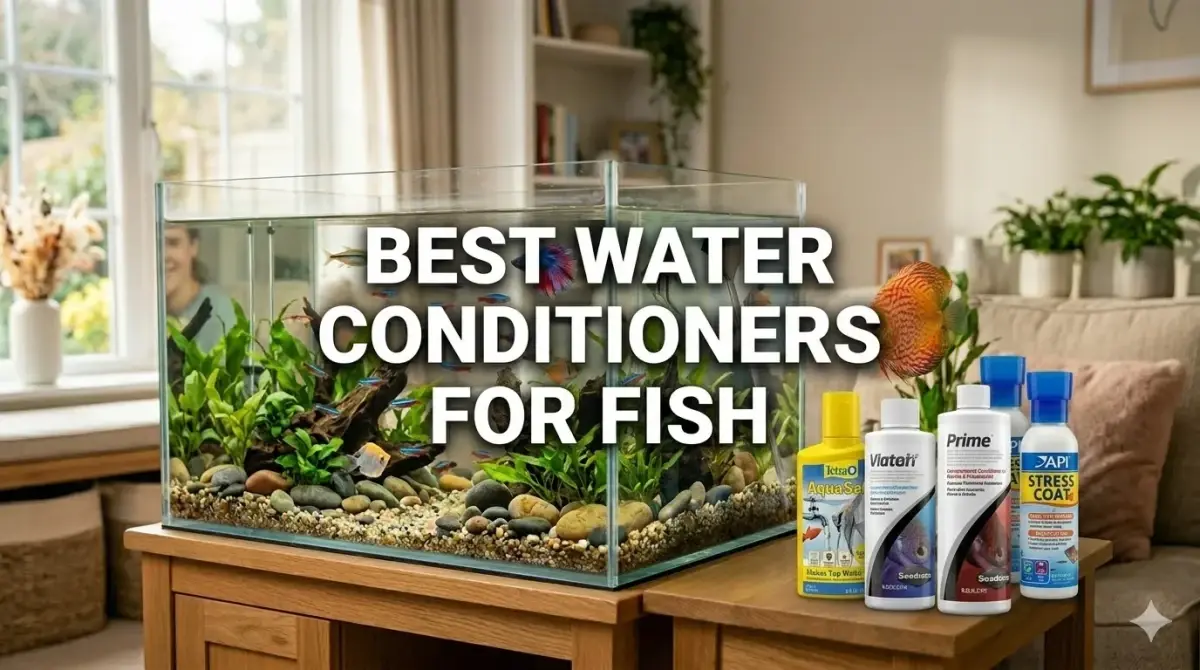
Choosing the best water conditioner for fish is one of the most critical decisions every aquarium owner must make. Tap water contains chlorine, chloramine, and heavy metals that are toxic to fish, making water conditioners essential for creating a safe aquatic environment. Whether you're setting up a new tank, performing routine water changes, or treating emergency situations, the right water conditioner protects your fish from harmful chemicals while promoting a healthy ecosystem. This comprehensive guide explores the top-rated water conditioners available in the USA, examining effectiveness, ingredients, value, and expert recommendations to help you make informed decisions that keep your fish safe and thriving. From instant dechlorinators to comprehensive water treatments, you'll discover everything needed to provide clean, safe water for your aquatic pets.
Why Water Conditioners Are Essential for Fish Health
Tap water is treated with chemicals that are safe for humans but deadly to fish. Understanding why water conditioners are necessary helps you appreciate their critical role in aquarium care.
Toxic Chemicals in Tap Water
Municipal water supplies contain several harmful substances:
- Chlorine: Added to kill bacteria in drinking water, but destroys fish gills and beneficial tank bacteria
- Chloramine: A combination of chlorine and ammonia that's more stable than chlorine alone; extremely toxic to fish
- Heavy metals: Copper, lead, zinc, and other metals can accumulate and poison fish over time
- Fluoride: Added to drinking water; effects on fish are debated but best removed
- 🐾 Daily Care Routine for Pet Birds: Complete 2026 Guide
- 🐾 Daily Care Routine for Cats: Complete 2026 Guide
- 🐾 Hamster Cage Cleaning Schedule: Complete 2026 Guide
What Happens Without Water Conditioner
Adding untreated tap water to your aquarium causes:
- Immediate fish death: Chlorine and chloramine can kill fish within minutes to hours
- Gill damage: Chemicals burn delicate gill tissue, causing breathing difficulties
- Beneficial bacteria loss: Destroys biological filtration, causing ammonia spikes
- Stress and disease: Even sub-lethal exposure weakens immune systems
- Long-term health issues: Heavy metal accumulation causes organ damage
- 🐾 Daily Care Routine for Pet Birds: Complete 2026 Guide
- 🐾 Daily Care Routine for Cats: Complete 2026 Guide
- 🐾 Hamster Cage Cleaning Schedule: Complete 2026 Guide
How Water Conditioners Work
Understanding the science behind water conditioners helps you choose the right product for your needs.
Chemical Neutralization Process
Water conditioners use chemical reactions to neutralize toxins:
- Sodium thiosulfate: The most common ingredient; instantly neutralizes chlorine by converting it to harmless chloride ions
- Sodium hydroxymethanesulfonate: Breaks down chloramine into chlorine and ammonia, then neutralizes both
- Chelating agents: Bind to heavy metals, rendering them harmless and preventing toxicity
- Ammonia neutralizers: Convert toxic ammonia (NH3) to non-toxic ammonium (NH4+)
- 🐾 Daily Care Routine for Pet Birds: Complete 2026 Guide
- 🐾 Daily Care Routine for Cats: Complete 2026 Guide
- 🐾 Hamster Cage Cleaning Schedule: Complete 2026 Guide
Types of Water Conditioners
Basic dechlorinators:
- Remove chlorine and chloramine only
- Fast-acting and affordable
- Best for routine water changes
- Examples: API Tap Water Conditioner, Seachem Prime (basic use)
- 🐾 Daily Care Routine for Pet Birds: Complete 2026 Guide
- 🐾 Daily Care Routine for Cats: Complete 2026 Guide
- 🐾 Hamster Cage Cleaning Schedule: Complete 2026 Guide
Comprehensive water conditioners:
- Remove chlorine, chloramine, AND heavy metals
- Often include slime coat protectants
- May detoxify ammonia and nitrite
- Best for new tanks and sensitive fish
- Examples: Seachem Prime, API Stress Coat+
- 🐾 Daily Care Routine for Pet Birds: Complete 2026 Guide
- 🐾 Daily Care Routine for Cats: Complete 2026 Guide
- 🐾 Hamster Cage Cleaning Schedule: Complete 2026 Guide
Slime coat enhancers:
- Contain aloe vera or similar compounds
- Help rebuild fish's protective slime layer
- Reduce stress during transport or tank changes
- Examples: API Stress Coat, Kordon Stress Shield
- 🐾 Daily Care Routine for Pet Birds: Complete 2026 Guide
- 🐾 Daily Care Routine for Cats: Complete 2026 Guide
- 🐾 Hamster Cage Cleaning Schedule: Complete 2026 Guide
Top Water Conditioners for Fish in 2026

Based on effectiveness, ingredient quality, value, and aquarist reviews, these water conditioners consistently deliver exceptional results.
Seachem Prime
Professional-grade comprehensive water conditioner:
Key features:
- Removes chlorine, chloramine, and heavy metals
- Detoxifies ammonia, nitrite, and nitrate for 48 hours
- Extremely concentrated (1 drop treats 10 gallons)
- Works instantly
- Safe for all freshwater and marine fish
- Also promotes beneficial bacteria growth
- 🐾 Daily Care Routine for Pet Birds: Complete 2026 Guide
- 🐾 Daily Care Routine for Cats: Complete 2026 Guide
- 🐾 Hamster Cage Cleaning Schedule: Complete 2026 Guide
Best for: All aquarium types, sensitive fish, emergency ammonia situations, professional aquarists
Price range: $8-$25 for 50ml-4L bottles
Real-world performance: Industry gold standard. Extremely cost-effective due to high concentration. Reliable ammonia detoxification saves fish during cycling and emergencies.
API Tap Water Conditioner
Trusted basic dechlorinator for routine use:
Key features:
- Removes chlorine and chloramine instantly
- Neutralizes heavy metals
- Easy to use (5ml per 10 gallons)
- Affordable and widely available
- Safe for all fish species
- 🐾 Daily Care Routine for Pet Birds: Complete 2026 Guide
- 🐾 Daily Care Routine for Cats: Complete 2026 Guide
- 🐾 Hamster Cage Cleaning Schedule: Complete 2026 Guide
Best for: Routine water changes, budget-conscious aquarists, beginner fish keepers
Price range: $5-$15 for 473ml-3.78L bottles
Real-world performance: Reliable and effective for basic dechlorination. Excellent value for money. Doesn't detoxify ammonia like Prime, but perfect for regular maintenance.
API Stress Coat+
Dechlorinator with slime coat protection:
Key features:
- Removes chlorine, chloramine, and heavy metals
- Contains aloe vera to restore protective slime coat
- Reduces fish stress during transport or tank changes
- Promotes healing of damaged tissue
- Easy dosing (5ml per 10 gallons)
- 🐾 Daily Care Routine for Pet Birds: Complete 2026 Guide
- 🐾 Daily Care Routine for Cats: Complete 2026 Guide
- 🐾 Hamster Cage Cleaning Schedule: Complete 2026 Guide
Best for: New fish introduction, post-transport recovery, fish with damaged slime coat, stressed fish
Price range: $6-$18 for 473ml-3.78L bottles
Real-world performance: Excellent for reducing stress. The aloe vera formula visibly helps fish recover from transport. Slightly more expensive than basic dechlorinators but worth it for sensitive situations.
Tetra AquaSafe Plus
Fast-acting comprehensive conditioner:
Key features:
- Removes chlorine, chloramine, and heavy metals
- Works in seconds
- Contains vitamins and trace elements
- Protects fish slime coat
- Easy dosing (5ml per 10 gallons)
- 🐾 Daily Care Routine for Pet Birds: Complete 2026 Guide
- 🐾 Daily Care Routine for Cats: Complete 2026 Guide
- 🐾 Hamster Cage Cleaning Schedule: Complete 2026 Guide
Best for: Quick water changes, community tanks, general aquarium maintenance
Price range: $5-$15 for 500ml-3.78L bottles
Real-world performance: Fast and effective. The added vitamins are a nice bonus. Good middle-ground option between basic and premium conditioners.
Seachem Safe
Powdered water conditioner for large volumes:
Key features:
- Removes chlorine, chloramine, and heavy metals
- Powdered form (more concentrated than liquids)
- Extremely cost-effective for large tanks
- Detoxifies ammonia and nitrite
- 1 scoop treats 100 gallons
- 🐾 Daily Care Routine for Pet Birds: Complete 2026 Guide
- 🐾 Daily Care Routine for Cats: Complete 2026 Guide
- 🐾 Hamster Cage Cleaning Schedule: Complete 2026 Guide
Best for: Large aquariums, ponds, fish stores, aquaculture operations
Price range: $10-$30 for 300g-5kg containers
Real-world performance: Incredibly economical for large volumes. Powder form requires mixing but lasts forever. Professional-grade quality.
Kordon Stress Shield
Advanced slime coat protection:
Key features:
- Removes chlorine and chloramine
- Advanced slime coat replacement formula
- Reduces stress during transport
- Helps prevent disease
- Contains electrolytes
- 🐾 Daily Care Routine for Pet Birds: Complete 2026 Guide
- 🐾 Daily Care Routine for Cats: Complete 2026 Guide
- 🐾 Hamster Cage Cleaning Schedule: Complete 2026 Guide
Best for: Fish transport, quarantine tanks, stressed or sick fish
Price range: $8-$20 for 473ml-3.78L bottles
Real-world performance: Excellent for high-stress situations. The electrolyte formula helps fish recover quickly. Slightly more expensive but very effective.
Choosing the Right Water Conditioner for Your Needs

Different situations require different types of water conditioners. Match the product to your specific needs.
For Routine Water Changes
Best choice: API Tap Water Conditioner or Tetra AquaSafe Plus
Why: Affordable, effective, and fast-acting for regular maintenance. You don't need ammonia detoxification for routine changes if your tank is cycled.
For New Tank Setup
Best choice: Seachem Prime
Why: The ammonia detoxification is crucial during the nitrogen cycle. Protects fish while beneficial bacteria establish.
For Sensitive or Stressed Fish
Best choice: API Stress Coat+ or Kordon Stress Shield
Why: Slime coat protection reduces stress and helps fish recover from transport or illness.
For Large Aquariums or Ponds
Best choice: Seachem Safe (powdered)
Why: Extremely cost-effective for large volumes. One container lasts for years.
For Emergency Ammonia Spikes
Best choice: Seachem Prime
Why: Only Prime detoxifies ammonia and nitrite for 48 hours, giving you time to address the root cause.
How to Use Water Conditioner Properly

Correct usage ensures maximum effectiveness and fish safety.
Step-by-Step Application
- Prepare new water: Fill clean bucket with tap water
- Add conditioner: Add water conditioner to new water BEFORE adding to tank
- Wait: Allow 1-2 minutes for conditioner to work (instant for most products)
- Match temperature: Ensure new water is within 1-2°F of tank temperature
- Add to tank: Pour slowly into aquarium
Dosage Guidelines
Standard dosing:
- API Tap Water Conditioner: 5ml per 10 gallons
- Seachem Prime: 1 drop per 10 gallons (or 5ml per 50 gallons)
- API Stress Coat+: 5ml per 10 gallons
- Tetra AquaSafe Plus: 5ml per 10 gallons
- 🐾 Daily Care Routine for Pet Birds: Complete 2026 Guide
- 🐾 Daily Care Routine for Cats: Complete 2026 Guide
- 🐾 Hamster Cage Cleaning Schedule: Complete 2026 Guide
For high chlorine/chloramine:
- Double the dose if your water has high chlorine levels
- Check your municipal water report for chlorine/chloramine levels
- 🐾 Daily Care Routine for Pet Birds: Complete 2026 Guide
- 🐾 Daily Care Routine for Cats: Complete 2026 Guide
- 🐾 Hamster Cage Cleaning Schedule: Complete 2026 Guide
For ammonia detoxification (Prime only):
- Use 5x normal dose (5ml per 10 gallons instead of 1 drop)
- Repeat every 24-48 hours until ammonia is under control
- 🐾 Daily Care Routine for Pet Birds: Complete 2026 Guide
- 🐾 Daily Care Routine for Cats: Complete 2026 Guide
- 🐾 Hamster Cage Cleaning Schedule: Complete 2026 Guide
Common Mistakes to Avoid
- Adding conditioner after water is in tank: Fish are exposed to toxins during the time it takes to mix. Always treat new water before adding to tank.
- Underdosing: Using less than recommended doesn't fully neutralize toxins. Always follow dosage instructions.
- Overdosing (except Prime for ammonia): While most conditioners are safe if slightly overdosed, excessive amounts can affect water chemistry.
- Not waiting for conditioner to work: Most work instantly, but give it at least 1-2 minutes before adding fish.
- Using expired conditioner: Effectiveness decreases over time. Check expiration dates.
- 🐾 Daily Care Routine for Pet Birds: Complete 2026 Guide
- 🐾 Daily Care Routine for Cats: Complete 2026 Guide
- 🐾 Hamster Cage Cleaning Schedule: Complete 2026 Guide
Water Conditioner vs. Dechlorinator: What's the Difference?

These terms are often used interchangeably, but there are differences.
Dechlorinator
- Removes chlorine only
- Basic, affordable option
- Best for water with chlorine (not chloramine)
- Examples: Basic dechlorinators
- 🐾 Daily Care Routine for Pet Birds: Complete 2026 Guide
- 🐾 Daily Care Routine for Cats: Complete 2026 Guide
- 🐾 Hamster Cage Cleaning Schedule: Complete 2026 Guide
Water Conditioner
- Removes chlorine AND chloramine
- Often includes heavy metal removal
- May include additional benefits (slime coat, ammonia detox)
- More comprehensive protection
- Examples: Seachem Prime, API Stress Coat+
- 🐾 Daily Care Routine for Pet Birds: Complete 2026 Guide
- 🐾 Daily Care Routine for Cats: Complete 2026 Guide
- 🐾 Hamster Cage Cleaning Schedule: Complete 2026 Guide
Which Should You Use?
Use water conditioner if:
- Your water contains chloramine (most US cities use this)
- You want heavy metal removal
- You have sensitive fish
- You're setting up a new tank
- 🐾 Daily Care Routine for Pet Birds: Complete 2026 Guide
- 🐾 Daily Care Routine for Cats: Complete 2026 Guide
- 🐾 Hamster Cage Cleaning Schedule: Complete 2026 Guide
Basic dechlorinator is sufficient if:
- Your water contains only chlorine (not chloramine)
- You're doing routine maintenance on an established tank
- You're on a tight budget
- 🐾 Daily Care Routine for Pet Birds: Complete 2026 Guide
- 🐾 Daily Care Routine for Cats: Complete 2026 Guide
- 🐾 Hamster Cage Cleaning Schedule: Complete 2026 Guide
Special Situations Requiring Water Conditioner

Certain scenarios demand specific water conditioner features.
New Tank Cycling
Challenge: Ammonia and nitrite spikes during nitrogen cycle
Solution: Seachem Prime detoxifies ammonia and nitrite for 48 hours, protecting fish while beneficial bacteria establish.
Dosage: Use 5x normal dose during cycling
Transporting Fish
Challenge: Stress damages slime coat, making fish vulnerable to disease
Solution: API Stress Coat+ or Kordon Stress Shield with slime coat protection
Application: Add to transport bag water and new tank water
Emergency Water Changes
Challenge: Need to do large water change quickly due to ammonia/nitrite spike
Solution: Seachem Prime (detoxifies ammonia/nitrite) + fast water change
Dosage: Treat all new water with 5x dose of Prime
Quarantine Tanks
Challenge: Stressed, possibly sick fish need optimal water quality
Solution: Comprehensive conditioner with slime coat protection
Recommendation: API Stress Coat+ or Kordon Stress Shield
People Also Ask: Quick Answers

How long does water conditioner take to work?
Most water conditioners work instantly or within 1-2 minutes. Seachem Prime, API Tap Water Conditioner, and other quality products neutralize chlorine and chloramine immediately upon contact. However, wait at least 1-2 minutes before adding fish to ensure complete neutralization.
Can you add too much water conditioner?
Most water conditioners are safe if slightly overdosed, but excessive amounts can affect water chemistry. Seachem Prime is safe up to 10x normal dose. However, always follow manufacturer instructions. Overdosing won't harm fish but is wasteful and unnecessary.
Do I need water conditioner if I use RO water?
Reverse osmosis (RO) water is already free of chlorine, chloramine, and heavy metals. However, RO water lacks minerals and has unstable pH. You'll need to remineralize RO water with products like Seachem Replenish or API RO Right before adding to your tank.
Can water conditioner expire?
Yes, water conditioners have expiration dates (typically 2-3 years from manufacture). Expired conditioner may lose effectiveness. Store in a cool, dark place and check expiration dates. If expired, replace with fresh product to ensure fish safety.
How much water conditioner per gallon?
Dosage varies by product: Seachem Prime uses 1 drop per 10 gallons (or 5ml per 50 gallons), API Tap Water Conditioner uses 5ml per 10 gallons, API Stress Coat+ uses 5ml per 10 gallons. Always check product label for exact dosage.
Water Conditioner Safety and Storage

Proper storage ensures effectiveness and safety.
Storage Guidelines
- Temperature: Store at room temperature (60-80°F)
- Light: Keep in dark place; light degrades active ingredients
- Closure: Keep bottle tightly sealed to prevent contamination
- Location: Store away from children and pets
- Shelf life: Most conditioners last 2-3 years unopened, 1-2 years after opening
- 🐾 Daily Care Routine for Pet Birds: Complete 2026 Guide
- 🐾 Daily Care Routine for Cats: Complete 2026 Guide
- 🐾 Hamster Cage Cleaning Schedule: Complete 2026 Guide
Safety Precautions
- Non-toxic to humans but avoid contact with eyes
- Wash hands after handling
- Don't mix different conditioners unless directed
- Keep away from extreme heat or freezing temperatures
- 🐾 Daily Care Routine for Pet Birds: Complete 2026 Guide
- 🐾 Daily Care Routine for Cats: Complete 2026 Guide
- 🐾 Hamster Cage Cleaning Schedule: Complete 2026 Guide
Common Water Conditioner Myths Debunked

Separating fact from fiction helps you make informed decisions.
Myth: "Letting water sit overnight removes chlorine"
Truth: This only works for chlorine, NOT chloramine. Most US cities use chloramine, which doesn't evaporate. Always use water conditioner regardless of whether you let water sit.
Myth: "All water conditioners are the same"
Truth: Products vary significantly. Some only remove chlorine, others remove chloramine and heavy metals, and some detoxify ammonia. Choose based on your specific needs.
Myth: "You can skip conditioner for small water changes"
Truth: Even small amounts of chlorine/chloramine harm fish and beneficial bacteria. Always condition ALL new water, regardless of volume.
Myth: "More conditioner is always better"
Truth: While most conditioners are safe if slightly overdosed, excessive amounts can affect water chemistry and are wasteful. Follow manufacturer dosing instructions.
Frequently Asked Questions

Can I use water conditioner with saltwater tanks?
Yes, most water conditioners work for both freshwater and saltwater. Seachem Prime, API Tap Water Conditioner, and Tetra AquaSafe Plus are all safe for marine aquariums. Always check product label to confirm.
Does water conditioner remove ammonia?
Most basic conditioners don't remove ammonia. However, Seachem Prime detoxifies ammonia (converts it to non-toxic ammonium) for 48 hours. This is crucial for new tanks and emergency situations.
Can I add water conditioner directly to the tank?
It's best to add conditioner to new water BEFORE adding to tank. This ensures toxins are neutralized before fish are exposed. In emergencies, you can add to tank, but treat new water first whenever possible.
Will water conditioner affect my filter?
No, water conditioners don't harm beneficial bacteria in your filter. In fact, Seachem Prime actually promotes beneficial bacteria growth. Conditioners only neutralize harmful chemicals, not beneficial organisms.
How do I know if my water has chlorine or chloramine?
Check your municipal water quality report (available online or from your water company). Most US cities now use chloramine. You can also test with a chlorine/chloramine test kit. When in doubt, use a conditioner that handles both.
Conclusion: Clean Water, Healthy Fish

Choosing the best water conditioner for fish is one of the most important decisions you'll make for your aquarium. Quality water conditioners protect your fish from deadly toxins, reduce stress, and create a stable environment where aquatic life can thrive.
For most aquarists, Seachem Prime offers the best combination of effectiveness, versatility, and value. Its ability to detoxify ammonia and nitrite sets it apart from basic dechlorinators. However, for routine water changes in established tanks, API Tap Water Conditioner provides reliable, affordable protection.
Remember that water conditioner is not optional—it's essential. Never add untreated tap water to your aquarium. Always match water temperature, dose correctly, and choose a conditioner that meets your specific needs.
Start today by evaluating your current water conditioner against the guidelines in this article. If you're not using a quality conditioner, make the switch immediately. Your fish depend on clean, safe water, and the right water conditioner is your first line of defense against harmful chemicals.
Invest in quality water treatment, follow proper procedures, and enjoy a thriving, healthy aquarium where your fish can live long, vibrant lives.
🐱 আরও পড়ুন: Fish Care

0 Comments