.png)
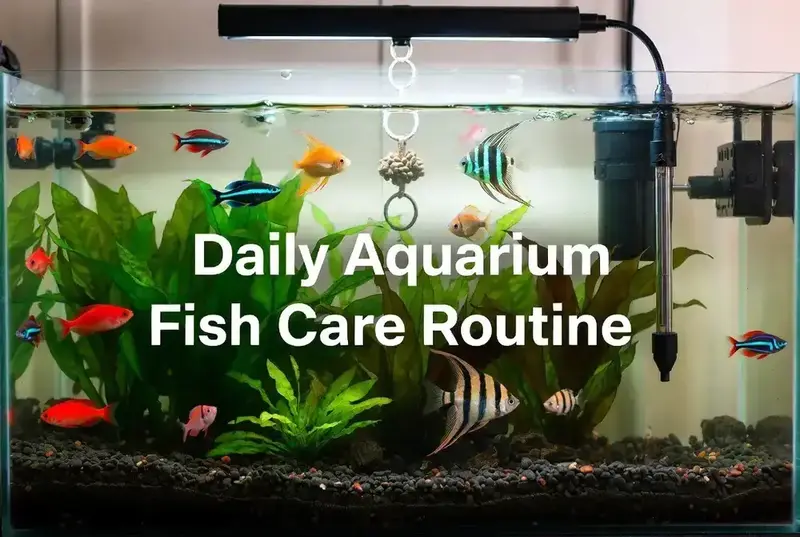
Establishing a consistent daily care routine for aquarium fish is essential for maintaining a thriving, healthy aquatic environment. Whether you're caring for colorful tetras, elegant angelfish, peaceful community fish, or vibrant cichlids in the United States, understanding the fundamentals of daily aquarium care helps create a stable ecosystem where your fish can flourish. Aquarium fish depend entirely on their human caretakers for food, water quality, and environmental stability. This comprehensive guide covers everything from morning feeding rituals to evening equipment checks, providing expert advice tailored for American aquarium owners to ensure your fish live happy, healthy, and vibrant lives.
Why Daily Routines Matter for Aquarium Fish
Fish are sensitive creatures that thrive on environmental stability. Unlike terrestrial pets, aquarium fish cannot escape poor water conditions or inconsistent care. A well-maintained daily routine prevents stress, disease, and premature death while promoting natural behaviors, vibrant coloration, and successful breeding.
Benefits of Structured Daily Care
A consistent routine provides numerous advantages for both you and your fish. Regular feeding at scheduled times prevents overfeeding and maintains healthy weight. Daily water quality checks catch problems before they become emergencies. Consistent observation allows early detection of illness when treatment is most effective. Predictable routines reduce fish stress, which strengthens immune function and extends lifespan.
From a practical perspective, daily care tasks take only 10-20 minutes but prevent hours of emergency maintenance. Establishing habits early makes aquarium keeping enjoyable rather than burdensome.
Understanding Fish Stress and Stability
Fish experience stress from environmental fluctuations more acutely than land animals. Sudden changes in temperature, pH, ammonia, or feeding schedules trigger stress responses that suppress immune function. Chronic stress leads to:
- Increased susceptibility to disease (ich, fin rot, fungal infections)
- Poor coloration and dull appearance
- Reduced appetite and weight loss
- Aggressive or withdrawn behavior
- Shortened lifespan
- 🐾 How to Prevent Matting in Long Haired Dogs Complete Grooming Guide
- 🐾 Prevent Feather Plucking: Expert Bird Care Guide
- 🐾 Fish Tank Cleaning Schedule: Complete Maintenance Guide
Daily routines maintain the stability fish need to thrive.
Morning Routine: Starting the Day Right
The morning sets the foundation for your aquarium's daily health. A proper morning routine ensures your fish receive proper nutrition and that equipment is functioning correctly.
First Thing: Visual Health Check
Before feeding, take 2-3 minutes to observe your fish:
- Activity level: Fish should be alert and swimming normally. Lethargy or hiding may indicate illness
- Appearance: Check for clamped fins, white spots, redness, or unusual markings
- Breathing: Gills should move steadily. Rapid gilling or gasping at surface signals oxygen or water quality problems
- Appetite anticipation: Healthy fish become active when they see you approach
- Social behavior: Note any aggression, isolation, or unusual interactions
- 🐾 How to Prevent Matting in Long Haired Dogs Complete Grooming Guide
- 🐾 Prevent Feather Plucking: Expert Bird Care Guide
- 🐾 Fish Tank Cleaning Schedule: Complete Maintenance Guide
Document any concerns immediately. Early detection of illness dramatically improves treatment outcomes.
Equipment Check
Verify that essential equipment is functioning:
- Filter: Should produce steady water flow with no unusual noises. Check that intake isn't clogged
- Heater: Verify temperature matches your target (typically 75-80°F for tropical fish). Use a separate thermometer to confirm accuracy
- Lighting: Ensure timer is working and lights turn on/off as scheduled. Consistent photoperiod reduces stress
- Aeration: Air stones or filter output should create surface agitation for gas exchange
- 🐾 How to Prevent Matting in Long Haired Dogs Complete Grooming Guide
- 🐾 Prevent Feather Plucking: Expert Bird Care Guide
- 🐾 Fish Tank Cleaning Schedule: Complete Maintenance Guide
Address equipment issues immediately. A failed heater or filter can become life-threatening within hours.
Feeding Time
Morning feeding is typically the main meal for most aquarium fish:
Portion control: Feed only what fish can consume within 2-3 minutes. Overfeeding is the most common beginner mistake and leads to water quality problems.
Food selection: Offer high-quality flakes or pellets appropriate for your fish species. Carnivores need protein-rich foods; herbivores need plant-based options; omnivores benefit from balanced formulations.
Feeding technique: Sprinkle food evenly across the water surface to reduce competition. For bottom feeders, use sinking pellets or target-feed after surface feeders are satisfied.
Remove uneaten food: After 3 minutes, net out any remaining food to prevent decomposition and ammonia spikes.
Water Parameter Spot Check
Quick daily water checks prevent crises:
- Temperature: Verify with independent thermometer
- Clarity: Water should be clear, not cloudy or discolored
- Surface film: Check for protein scum indicating poor surface agitation
- Odor: Healthy aquariums have minimal smell; foul odors signal problems
- 🐾 How to Prevent Matting in Long Haired Dogs Complete Grooming Guide
- 🐾 Prevent Feather Plucking: Expert Bird Care Guide
- 🐾 Fish Tank Cleaning Schedule: Complete Maintenance Guide
Test ammonia, nitrite, and nitrate weekly rather than daily, but watch for visual warning signs.
Midday Maintenance: Maintaining Stability

Brief midday checks ensure your aquarium remains stable throughout the day.
Quick Observation
Take 1-2 minutes to observe fish behavior during midday:
- Are fish active and interacting normally?
- Any signs of distress, aggression, or illness?
- Is equipment still functioning properly?
- 🐾 How to Prevent Matting in Long Haired Dogs Complete Grooming Guide
- 🐾 Prevent Feather Plucking: Expert Bird Care Guide
- 🐾 Fish Tank Cleaning Schedule: Complete Maintenance Guide
This quick check catches problems that develop after morning routines.
Evaporation Top-Off
Water evaporates daily, especially in warm rooms or with strong filtration:
- Top off with dechlorinated water to maintain proper water level
- Use room-temperature water to avoid temperature shock
- Never add untreated tap water directly to the aquarium
- Track evaporation rate; sudden increases may indicate leaks or equipment issues
- 🐾 How to Prevent Matting in Long Haired Dogs Complete Grooming Guide
- 🐾 Prevent Feather Plucking: Expert Bird Care Guide
- 🐾 Fish Tank Cleaning Schedule: Complete Maintenance Guide
For saltwater tanks, top off with fresh water only—never add salt to replace evaporation, as salts don't evaporate.
Algae Monitoring
Check glass and decorations for algae growth:
- Light algae is normal and easily managed
- Excessive algae may indicate nutrient imbalance or too much light
- Spot-clean visible algae with aquarium-safe algae scraper or magnetic cleaner
- Never use household cleaners or soap near aquariums
- 🐾 How to Prevent Matting in Long Haired Dogs Complete Grooming Guide
- 🐾 Prevent Feather Plucking: Expert Bird Care Guide
- 🐾 Fish Tank Cleaning Schedule: Complete Maintenance Guide
Evening Routine: Preparing for Night

Evening care ensures your aquarium remains stable during nighttime hours when you're not actively monitoring.
Second Feeding (If Applicable)
Many fish benefit from two small feedings daily:
- Offer a smaller portion than morning feeding
- Feed 4-6 hours before lights-out to allow digestion
- Remove uneaten food after 2-3 minutes
- Some species (nocturnal catfish, loaches) prefer evening feeding
- 🐾 How to Prevent Matting in Long Haired Dogs Complete Grooming Guide
- 🐾 Prevent Feather Plucking: Expert Bird Care Guide
- 🐾 Fish Tank Cleaning Schedule: Complete Maintenance Guide
Adjust feeding frequency based on species: active fish like tetras do well with twice-daily feeding; larger carnivores may need only once daily.
Final Equipment Verification
Before bedtime, confirm all systems are operational:
- Filter running smoothly with no unusual sounds
- Heater maintaining target temperature
- Lights turning off on schedule (fish need 8-12 hours darkness)
- Air pump functioning if used
- 🐾 How to Prevent Matting in Long Haired Dogs Complete Grooming Guide
- 🐾 Prevent Feather Plucking: Expert Bird Care Guide
- 🐾 Fish Tank Cleaning Schedule: Complete Maintenance Guide
Consider a battery backup or alarm system for critical equipment in areas with unreliable power.
Security Check
Ensure the aquarium is secure for nighttime:
- Lid or hood properly closed to prevent fish jumping
- No gaps where fish could escape
- Cords and equipment safely positioned away from water
- Room temperature stable (avoid drafts or direct heat sources)
- 🐾 How to Prevent Matting in Long Haired Dogs Complete Grooming Guide
- 🐾 Prevent Feather Plucking: Expert Bird Care Guide
- 🐾 Fish Tank Cleaning Schedule: Complete Maintenance Guide
Weekly Tasks Integrated into Daily Awareness

While not performed daily, these tasks require daily preparation and monitoring.
Water Change Preparation
Weekly water changes (25-50% depending on tank size and bioload) are essential:
Daily preparation:
- Keep dechlorinator accessible and stocked
- Ensure siphon and buckets are clean and ready
- Monitor water parameters to determine optimal change volume
- Prepare replacement water to match tank temperature
- 🐾 How to Prevent Matting in Long Haired Dogs Complete Grooming Guide
- 🐾 Prevent Feather Plucking: Expert Bird Care Guide
- 🐾 Fish Tank Cleaning Schedule: Complete Maintenance Guide
Consistent weekly changes prevent nitrate buildup and replenish essential minerals.
Filter Maintenance Awareness
Filters require regular maintenance but shouldn't be cleaned daily:
- Monitor flow rate daily; reduced flow indicates clogging
- Never clean all filter media at once—preserve beneficial bacteria
- Rinse mechanical media in removed tank water (not tap water) during weekly maintenance
- Replace chemical media (carbon, resin) per manufacturer schedule
- 🐾 How to Prevent Matting in Long Haired Dogs Complete Grooming Guide
- 🐾 Prevent Feather Plucking: Expert Bird Care Guide
- 🐾 Fish Tank Cleaning Schedule: Complete Maintenance Guide
Test Kit Monitoring
While comprehensive testing is weekly, daily observation complements chemical testing:
- Cloudy water may indicate bacterial blooms or high ammonia
- Fish gasping suggests low oxygen or high ammonia/nitrite
- Algae explosions signal nutrient imbalances
- Unusual fish behavior often precedes detectable parameter changes
- 🐾 How to Prevent Matting in Long Haired Dogs Complete Grooming Guide
- 🐾 Prevent Feather Plucking: Expert Bird Care Guide
- 🐾 Fish Tank Cleaning Schedule: Complete Maintenance Guide
Species-Specific Daily Care Considerations

Different fish species have unique requirements that affect daily routines.
Community Tropical Fish (Tetras, Guppies, Platies)
Daily priorities:
- Feed small portions 2x daily
- Monitor for aggression or bullying
- Ensure adequate swimming space and hiding spots
- Maintain stable temperature (75-80°F)
- 🐾 How to Prevent Matting in Long Haired Dogs Complete Grooming Guide
- 🐾 Prevent Feather Plucking: Expert Bird Care Guide
- 🐾 Fish Tank Cleaning Schedule: Complete Maintenance Guide
Cichlids (African, South American)
Daily priorities:
- Feed high-protein foods once or twice daily
- Monitor territorial behavior and separate aggressors if needed
- Check water parameters closely (cichlids are sensitive to ammonia)
- Ensure adequate rockwork for territory establishment
- 🐾 How to Prevent Matting in Long Haired Dogs Complete Grooming Guide
- 🐾 Prevent Feather Plucking: Expert Bird Care Guide
- 🐾 Fish Tank Cleaning Schedule: Complete Maintenance Guide
Betta Fish
Daily priorities:
- Feed small portions of betta-specific food once or twice daily
- Monitor water temperature closely (require 78-80°F)
- Ensure gentle filtration (bettas dislike strong currents)
- Check for fin clamping or color loss indicating stress
- 🐾 How to Prevent Matting in Long Haired Dogs Complete Grooming Guide
- 🐾 Prevent Feather Plucking: Expert Bird Care Guide
- 🐾 Fish Tank Cleaning Schedule: Complete Maintenance Guide
Bottom Dwellers (Corydoras, Plecos, Loaches)
Daily priorities:
- Feed sinking foods after surface feeders are satisfied
- Ensure substrate is clean and free of debris
- Monitor for adequate hiding places
- Check that bottom-dwelling fish are getting food (they're often outcompeted)
- 🐾 How to Prevent Matting in Long Haired Dogs Complete Grooming Guide
- 🐾 Prevent Feather Plucking: Expert Bird Care Guide
- 🐾 Fish Tank Cleaning Schedule: Complete Maintenance Guide
Discus and Sensitive Species
Daily priorities:
- Feed high-quality foods 3-5x daily in small portions
- Monitor water parameters closely (discus require pristine water)
- Maintain stable temperature (82-86°F for discus)
- Minimize stressors: sudden movements, loud noises, tank mates
- 🐾 How to Prevent Matting in Long Haired Dogs Complete Grooming Guide
- 🐾 Prevent Feather Plucking: Expert Bird Care Guide
- 🐾 Fish Tank Cleaning Schedule: Complete Maintenance Guide
Water Quality: The Foundation of Fish Health

Water quality is the single most important factor in aquarium fish health. Daily routines support the stable water conditions fish require.
The Nitrogen Cycle and Daily Impact
Understanding the nitrogen cycle helps you appreciate why daily care matters:
- Ammonia: Produced by fish waste and decomposing food. Toxic even at low levels. Beneficial bacteria convert it to nitrite
- Nitrite: Also toxic. Beneficial bacteria convert it to nitrate
- Nitrate: Less toxic but harmful at high levels. Removed through water changes
- 🐾 How to Prevent Matting in Long Haired Dogs Complete Grooming Guide
- 🐾 Prevent Feather Plucking: Expert Bird Care Guide
- 🐾 Fish Tank Cleaning Schedule: Complete Maintenance Guide
Daily feeding and waste production continuously add ammonia to the system. Consistent care maintains the bacterial balance that processes these compounds.
Daily Water Quality Indicators
Visual and behavioral cues signal water quality status:
Clear indicators of good water:
- Crystal-clear water with no cloudiness
- Fish active, colorful, and eating well
- No unusual odors
- Stable temperature
- Minimal algae growth
- 🐾 How to Prevent Matting in Long Haired Dogs Complete Grooming Guide
- 🐾 Prevent Feather Plucking: Expert Bird Care Guide
- 🐾 Fish Tank Cleaning Schedule: Complete Maintenance Guide
Warning signs requiring immediate attention:
- Cloudy or discolored water
- Fish gasping at surface or showing rapid gilling
- Lethargy, hiding, or loss of appetite
- Foul odor from tank
- Sudden algae blooms
- 🐾 How to Prevent Matting in Long Haired Dogs Complete Grooming Guide
- 🐾 Prevent Feather Plucking: Expert Bird Care Guide
- 🐾 Fish Tank Cleaning Schedule: Complete Maintenance Guide
Preventing Common Water Quality Issues
Ammonia spikes: Caused by overfeeding, overstocking, or filter failure. Prevent by feeding appropriately, avoiding overcrowding, and maintaining equipment.
Nitrate buildup: Results from insufficient water changes. Prevent with consistent 25-50% weekly changes.
pH fluctuations: Caused by inconsistent maintenance or inappropriate substrates. Prevent by using stable substrates and avoiding sudden large water changes.
Temperature swings: Result from heater failure or room temperature changes. Prevent with reliable heaters and stable room conditions.
Feeding Best Practices for Optimal Health

Proper feeding is crucial for fish health, growth, and water quality.
Portion Control Guidelines
The 2-3 minute rule: Only feed what fish can consume within 2-3 minutes. Uneaten food decomposes, producing ammonia and polluting water.
Visual portion guide: Food amount should roughly equal the size of your fish's eye per fish.
Adjust for species:
- Small fish (tetras, rasboras): Pinch of flakes or 3-5 micro pellets
- Medium fish (angelfish, gouramis): 5-10 flakes or 10-15 pellets
- Large fish (oscars, large cichlids): 1-2 tablespoons of pellets
- 🐾 How to Prevent Matting in Long Haired Dogs Complete Grooming Guide
- 🐾 Prevent Feather Plucking: Expert Bird Care Guide
- 🐾 Fish Tank Cleaning Schedule: Complete Maintenance Guide
Food Variety and Rotation
Rotating food types provides complete nutrition and prevents deficiencies:
- Staple diet (70-80%): High-quality flakes or pellets formulated for your fish type
- Supplemental foods (20-30%): Frozen bloodworms, brine shrimp, or daphnia
- Vegetable matter: Blanched zucchini, peas, or spinach for herbivores and omnivores
- Treats: Live foods occasionally for enrichment and conditioning
- 🐾 How to Prevent Matting in Long Haired Dogs Complete Grooming Guide
- 🐾 Prevent Feather Plucking: Expert Bird Care Guide
- 🐾 Fish Tank Cleaning Schedule: Complete Maintenance Guide
Special Feeding Considerations
Fasting days: Implement one fasting day per week to allow digestive rest and reduce waste production.
Vacation feeding: For absences under 7 days, healthy adult fish don't need feeding. For longer trips, use automatic feeders or have someone feed sparingly every 2-3 days.
Quarantine tank feeding: Feed new fish separately to monitor appetite and prevent disease transmission.
Health Monitoring and Early Disease Detection

Daily observation is your best tool for catching illness early when treatment is most effective.
Daily Health Checklist
Observe these indicators every day:
Physical appearance:
- Fins should be fully extended, not clamped or frayed
- Body should be free of spots, patches, or unusual growths
- Eyes should be clear, not cloudy or bulging
- Scales should lie flat, not protruding (pineconing indicates dropsy)
- 🐾 How to Prevent Matting in Long Haired Dogs Complete Grooming Guide
- 🐾 Prevent Feather Plucking: Expert Bird Care Guide
- 🐾 Fish Tank Cleaning Schedule: Complete Maintenance Guide
Behavior:
- Normal swimming patterns without listing or spinning
- Regular appetite and feeding response
- Social interaction appropriate for species
- No excessive scratching against objects (indicates parasites)
- 🐾 How to Prevent Matting in Long Haired Dogs Complete Grooming Guide
- 🐾 Prevent Feather Plucking: Expert Bird Care Guide
- 🐾 Fish Tank Cleaning Schedule: Complete Maintenance Guide
Breathing:
- Steady, regular gill movement
- No gasping at surface or rapid gilling
- 🐾 How to Prevent Matting in Long Haired Dogs Complete Grooming Guide
- 🐾 Prevent Feather Plucking: Expert Bird Care Guide
- 🐾 Fish Tank Cleaning Schedule: Complete Maintenance Guide
Common Illness Warning Signs
Contact an aquatic veterinarian or experienced aquarist if you notice:
- White spots resembling salt grains (ich/white spot disease)
- White fuzzy growths (fungal infection)
- Red streaks or inflamed areas (bacterial infection)
- Rapid breathing or gasping (oxygen deficiency or gill disease)
- Loss of appetite lasting more than 2 days
- Lethargy or hiding more than usual
- Clamped fins or dull coloration
- Swimming abnormalities (listing, spinning, difficulty maintaining position)
- 🐾 How to Prevent Matting in Long Haired Dogs Complete Grooming Guide
- 🐾 Prevent Feather Plucking: Expert Bird Care Guide
- 🐾 Fish Tank Cleaning Schedule: Complete Maintenance Guide
Quarantine Protocol Awareness
Always quarantine new fish for 2-4 weeks before adding to main tank:
- Observe for signs of illness during quarantine
- Treat preventatively if recommended for your region
- Never skip quarantine—even healthy-looking fish can carry disease
- 🐾 How to Prevent Matting in Long Haired Dogs Complete Grooming Guide
- 🐾 Prevent Feather Plucking: Expert Bird Care Guide
- 🐾 Fish Tank Cleaning Schedule: Complete Maintenance Guide
Equipment Maintenance and Monitoring

Reliable equipment is essential for aquarium stability. Daily checks prevent catastrophic failures.
Filter Maintenance
Daily: Verify water flow and listen for unusual noises.
Weekly: Rinse mechanical media in removed tank water (not tap water, which kills beneficial bacteria).
Monthly: Check impeller for debris and clean if needed.
Never: Replace all filter media at once or clean with tap water.
Heater Monitoring
Daily: Verify temperature with independent thermometer. Heaters can fail in "on" or "off" positions.
Weekly: Check for mineral buildup and clean if needed.
Seasonal: Test heater function before seasonal temperature changes.
Lighting Management
Daily: Ensure lights turn on/off on schedule. Consistent photoperiod (8-12 hours light) reduces stress.
Monthly: Replace bulbs per manufacturer schedule (typically 6-12 months) as light output diminishes even if bulb still lights.
Seasonal Considerations for USA Aquariums

Climate variations across the United States affect aquarium care.
Summer Care (June-August)
- Monitor temperature closely; aquariums can overheat in warm rooms
- Ensure adequate surface agitation for oxygen exchange (warm water holds less oxygen)
- Reduce feeding slightly if temperature exceeds 82°F (fish metabolism increases)
- Watch for algae blooms fueled by increased light and warmth
- 🐾 How to Prevent Matting in Long Haired Dogs Complete Grooming Guide
- 🐾 Prevent Feather Plucking: Expert Bird Care Guide
- 🐾 Fish Tank Cleaning Schedule: Complete Maintenance Guide
Winter Care (December-February)
- Verify heater function as room temperatures drop
- Protect aquariums from cold drafts near windows or doors
- Consider aquarium hood insulation in very cold climates
- Monitor for reduced fish activity due to cooler temperatures
- 🐾 How to Prevent Matting in Long Haired Dogs Complete Grooming Guide
- 🐾 Prevent Feather Plucking: Expert Bird Care Guide
- 🐾 Fish Tank Cleaning Schedule: Complete Maintenance Guide
Year-Round Considerations
- Keep aquarium away from direct sunlight to prevent temperature swings and algae
- Avoid placing near heating/cooling vents that cause fluctuations
- Maintain consistent room temperature when possible
- 🐾 How to Prevent Matting in Long Haired Dogs Complete Grooming Guide
- 🐾 Prevent Feather Plucking: Expert Bird Care Guide
- 🐾 Fish Tank Cleaning Schedule: Complete Maintenance Guide
People Also Ask: Quick Answers

How much time does daily aquarium care take?
Daily care typically takes 10-20 minutes: 5 minutes for feeding and observation, 5 minutes for equipment checks, and 5-10 minutes for minor maintenance. Weekly water changes add 30-60 minutes once per week. Consistent daily care prevents time-consuming emergency fixes.
Do I need to test water parameters daily?
Comprehensive testing (ammonia, nitrite, nitrate, pH) is needed weekly for new tanks and monthly for established tanks. However, daily visual observation of water clarity, fish behavior, and equipment function provides early warning of problems between formal tests.
Can I leave my aquarium alone for a weekend?
Yes, healthy established aquariums can safely go 2-3 days without feeding or intervention. Ensure equipment is functioning properly before leaving. For longer absences, use automatic feeders or arrange for someone to check the tank every 2-3 days.
How often should I clean my aquarium?
Daily: Feed, observe fish, check equipment. Weekly: 25-50% water change, clean glass, vacuum substrate. Monthly: Clean filter media (in tank water), check equipment function. Avoid over-cleaning, which disrupts beneficial bacteria.
What's the most important daily task for aquarium fish?
Observation is the most critical daily task. Watching your fish for 2-3 minutes each day allows early detection of illness, equipment failure, or water quality issues. Combined with proper feeding, observation prevents most aquarium problems.
Common Mistakes to Avoid

Even experienced aquarists can make errors that impact fish health.
- Overfeeding: The most common mistake. Leads to water pollution, obesity, and disease. Feed only what fish consume in 2-3 minutes.
- Ignoring daily observation: Missing early illness signs allows problems to worsen. Spend 2-3 minutes watching fish daily.
- Skipping water changes: Nitrate buildup stresses fish and promotes algae. Maintain consistent weekly changes.
- Over-cleaning filter: Destroying beneficial bacteria causes ammonia spikes. Clean filter media gently in tank water only.
- Adding fish too quickly: Overstocking overwhelms biological filtration. Add fish gradually and monitor parameters.
- Using tap water untreated: Chlorine/chloramine kills fish and beneficial bacteria. Always use dechlorinator.
- Neglecting equipment checks: Failed heaters or filters become emergencies quickly. Verify function daily.
- Changing too much water at once: Large changes shock fish and disrupt parameters. Limit changes to 25-50% weekly.
- 🐾 How to Prevent Matting in Long Haired Dogs Complete Grooming Guide
- 🐾 Prevent Feather Plucking: Expert Bird Care Guide
- 🐾 Fish Tank Cleaning Schedule: Complete Maintenance Guide
Creating a Sustainable Daily Routine

The key to successful aquarium keeping is creating habits you can maintain consistently.
Time Management
Morning (5-10 minutes): Observe fish, check equipment, feed, remove uneaten food.
Midday (1-2 minutes): Quick visual check if possible.
Evening (5 minutes): Final observation, verify equipment, second feeding if applicable.
Weekly (30-60 minutes): Water change, substrate vacuum, filter maintenance.
Making Care Enjoyable
- Integrate aquarium time into your daily routine (morning coffee, evening wind-down)
- Keep supplies organized and accessible near the tank
- Use a checklist until habits become automatic
- Celebrate small victories: healthy fish, clear water, successful breeding
- Join aquarium communities for support and knowledge sharing
- 🐾 How to Prevent Matting in Long Haired Dogs Complete Grooming Guide
- 🐾 Prevent Feather Plucking: Expert Bird Care Guide
- 🐾 Fish Tank Cleaning Schedule: Complete Maintenance Guide
When Life Gets Busy
On particularly busy days, prioritize these essentials:
- Feed appropriate portion (or skip if fish are healthy and tank is established)
- Quick visual check of fish and equipment
- Verify temperature and filter flow
Don't skip these basics even when time is limited. Missing one day occasionally won't harm a healthy tank, but consistent neglect causes problems.
Frequently Asked Questions

What's the most important part of daily fish care?
Observation combined with proper feeding. Watching your fish for 2-3 minutes daily allows early detection of problems, while appropriate feeding maintains health and water quality. These two simple habits prevent most aquarium issues.
How can I make aquarium care more efficient?
Keep supplies organized near the tank, use a checklist until routines become habit, prepare water change water in advance, and integrate care into existing daily routines. Automation (timers, auto-feeders) can help but doesn't replace observation.
Do fish need attention every single day?
Yes. Fish require daily feeding and benefit from daily observation. However, the time commitment is minimal—10-20 minutes total. Consistent daily care prevents time-consuming emergencies.
Can I automate aquarium care tasks?
Yes, to a degree. Timers control lights and can trigger auto-feeders. Automatic top-off systems maintain water level. However, human observation remains irreplaceable for detecting illness, equipment issues, and subtle changes. Automation supplements but doesn't replace daily care.
How do I balance work and aquarium care?
Establish morning and evening routines that fit your schedule. Most care tasks take only minutes. For longer work hours, ensure equipment is reliable and consider a trusted person to check the tank if you'll be gone more than 3 days.
Conclusion: Consistency Creates Thriving Aquariums

Establishing a comprehensive daily care routine for aquarium fish is one of the most important commitments you'll make as an aquarist. The time, attention, and consistency you invest directly impact your fish's health, coloration, behavior, and lifespan. Aquarium fish are not low-maintenance pets—they require dedicated daily care, but the reward is a beautiful, thriving aquatic ecosystem that brings years of enjoyment.
Remember that every aquarium is unique. Use this guide as a foundation, but observe your specific tank and adjust routines based on your fish's responses. What works for one setup may need modification for another.
Start today by evaluating your current routine against the guidelines in this article. Identify areas for improvement and implement changes gradually. Consistency matters more than perfection. Even small improvements in daily care compound over time to create significant positive impacts on your aquarium's health.
Partner with experienced aquarists, join local fish clubs, and stay informed about best practices. Your fish depend on you for everything—food, water quality, and environmental stability. By committing to excellent daily care, you're ensuring your aquatic companions live long, healthy, and vibrant lives.

0 Comments