.png)
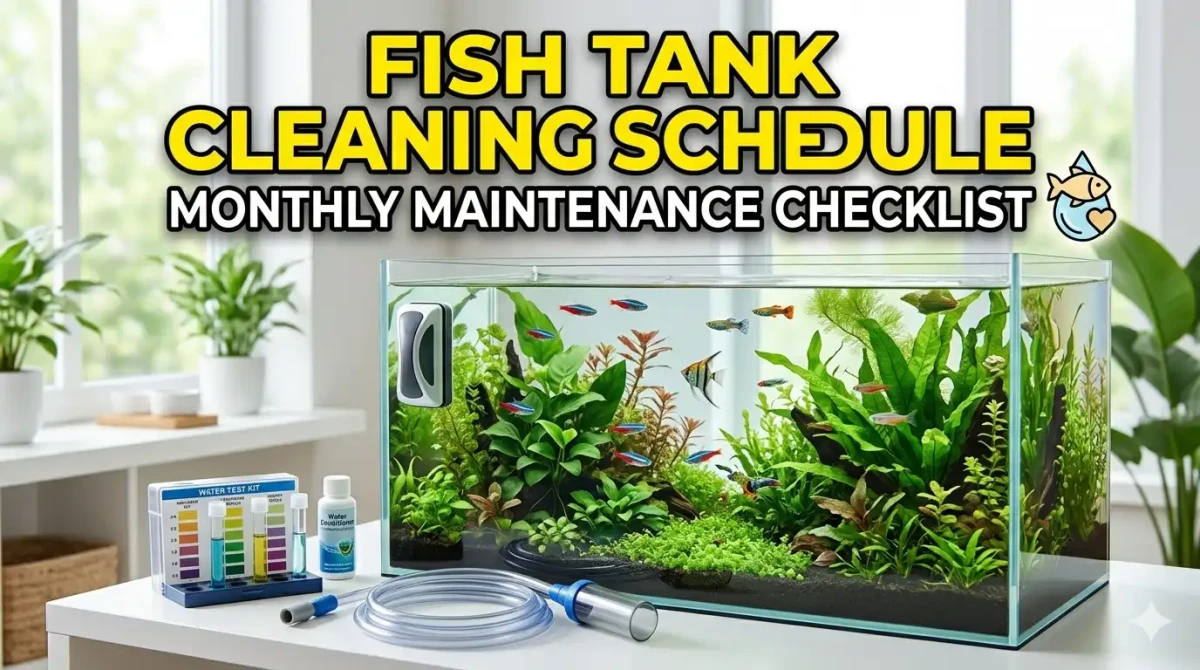
Why a Consistent Fish Tank Cleaning Schedule Is Essential for Aquarium Health
Maintaining a clean, healthy aquarium isn't just about aesthetics—it's fundamental to your fish's survival and wellbeing. Unlike terrestrial pets, fish live immersed in their environment 24/7, where waste products, uneaten food, and decaying matter accumulate continuously. Without a consistent fish tank cleaning schedule, water quality deteriorates rapidly, leading to stress, disease, and potentially fatal conditions for your aquatic inhabitants.
Featured Snippet Answer: A proper fish tank cleaning schedule includes daily tasks (checking equipment, feeding observation), weekly water changes (25-30%), gravel vacuuming, and filter maintenance, plus monthly deep cleaning of decorations and equipment. Freshwater tanks typically need weekly maintenance; saltwater/reef tanks may require more frequent attention. Always test water parameters before and after cleaning.
Many new aquarium owners underestimate the importance of routine maintenance, assuming that "clear water equals healthy water." This dangerous misconception can lead to invisible threats like ammonia spikes, nitrite accumulation, or pH instability that harm fish long before visible problems appear. A structured cleaning schedule prevents these issues by addressing waste removal, water parameter stability, and equipment function proactively.
This comprehensive guide provides evidence-based, veterinarian-aligned strategies for establishing and maintaining an effective fish tank cleaning schedule. You'll learn about daily, weekly, monthly, and quarterly tasks; differences between freshwater and saltwater maintenance; tank size considerations; proper techniques for water changes and filter cleaning; and how to avoid common mistakes that compromise water quality. Whether you keep a small betta bowl, a community freshwater tank, or a complex reef aquarium, you'll find practical guidance to keep your aquatic ecosystem thriving.
Understanding Aquarium Water Quality: The Foundation of Cleaning
Before establishing a cleaning routine, it's essential to understand what you're maintaining and why each task matters for water quality.
The Nitrogen Cycle and Maintenance:
- Ammonia: Produced by fish waste and decaying matter; toxic even at low levels (0.25+ ppm causes stress)
- Nitrite: Converted from ammonia by beneficial bacteria; still toxic, interferes with oxygen transport
- Nitrate: Final conversion product; less toxic but harmful at high levels (>40 ppm freshwater, >20 ppm saltwater)
- Removal: Regular water changes, live plants, and proper filtration keep nitrates in check
- 🐾 How to Clean Bird Beak Safely: Expert Avian Veterinary Guide
- 🐾 Cat Coat Care in Winter: Expert Guide to Healthy, Comfortable Fur
- 🐾 Maintain Aquarium Water Quality: Complete Guide
Key Water Parameters to Monitor:
- pH: Most tropical fish prefer 6.5-7.5; stability matters more than exact value
- Temperature: Species-specific ranges; fluctuations >2°F/day stress fish
- Hardness (GH/KH): Affects osmoregulation and pH stability; match to species requirements
- Dissolved oxygen: Critical for respiration; ensured through surface agitation and proper filtration
- 🐾 How to Clean Bird Beak Safely: Expert Avian Veterinary Guide
- 🐾 Cat Coat Care in Winter: Expert Guide to Healthy, Comfortable Fur
- 🐾 Maintain Aquarium Water Quality: Complete Guide
Why Regular Cleaning Matters:
- Waste removal: Fish waste, uneaten food, and decaying plant matter produce ammonia
- Parameter stability: Regular maintenance prevents dangerous swings in pH, temperature, or chemistry
- Disease prevention: Clean water supports immune function; dirty water stresses fish and promotes pathogens
- Equipment longevity: Regular cleaning extends filter, heater, and light fixture lifespan
- Aesthetic appeal: Clear water and algae-free glass enhance the viewing experience
- 🐾 How to Clean Bird Beak Safely: Expert Avian Veterinary Guide
- 🐾 Cat Coat Care in Winter: Expert Guide to Healthy, Comfortable Fur
- 🐾 Maintain Aquarium Water Quality: Complete Guide
Featured Snippet Answer: Aquarium water quality depends on the nitrogen cycle: beneficial bacteria convert toxic ammonia to nitrite to nitrate. Regular cleaning removes waste, stabilizes parameters, and prevents disease. Test ammonia, nitrite, nitrate, and pH weekly to catch problems before they harm fish.
How often should I test my aquarium water?
Test aquarium water weekly for ammonia, nitrite, nitrate, and pH using liquid test kits. Test daily during tank cycling or after adding new fish. Test immediately if fish show unusual behavior, as water parameter changes are the most common cause of fish illness. Keep a log to track trends and catch problems early.
Daily Fish Tank Maintenance: Small Tasks with Big Impact

Daily maintenance takes just minutes but prevents major problems. These quick checks keep your aquarium running smoothly between larger cleaning sessions.
Essential Daily Tasks:
- Observe fish behavior: Watch for signs of stress, illness, or aggression during feeding; note changes in appetite or activity
- Check equipment function: Verify filter flow, heater temperature, and air pump operation; listen for unusual noises
- Feed appropriately: Offer only what fish consume in 2-3 minutes; remove uneaten food promptly to prevent decay
- Top off evaporated water: Use dechlorinated water to maintain water level; never add saltwater to freshwater tanks or vice versa
- Quick visual inspection: Scan for algae buildup, cloudiness, or debris that needs attention
- 🐾 How to Clean Bird Beak Safely: Expert Avian Veterinary Guide
- 🐾 Cat Coat Care in Winter: Expert Guide to Healthy, Comfortable Fur
- 🐾 Maintain Aquarium Water Quality: Complete Guide
Why Daily Checks Matter:
- Early problem detection: Catching equipment failure or fish illness early prevents emergencies
- Consistent feeding: Prevents overfeeding, a leading cause of poor water quality
- Water level stability: Evaporation concentrates pollutants; topping off maintains parameter stability
- Behavioral monitoring: Fish often show stress through behavior changes before physical symptoms appear
- 🐾 How to Clean Bird Beak Safely: Expert Avian Veterinary Guide
- 🐾 Cat Coat Care in Winter: Expert Guide to Healthy, Comfortable Fur
- 🐾 Maintain Aquarium Water Quality: Complete Guide
Time-Saving Tips:
- Keep a small notebook or app log to track observations and feeding amounts
- Place a thermometer on the tank for instant temperature checks
- Use an automatic feeder for consistent portions when you're away
- Set phone reminders for daily tasks until they become habit
- 🐾 How to Clean Bird Beak Safely: Expert Avian Veterinary Guide
- 🐾 Cat Coat Care in Winter: Expert Guide to Healthy, Comfortable Fur
- 🐾 Maintain Aquarium Water Quality: Complete Guide
Featured Snippet Answer: Daily aquarium maintenance includes observing fish behavior, checking equipment function, feeding appropriate portions, topping off evaporated water, and quick visual inspections. These 5-minute tasks prevent major problems by catching issues early and maintaining consistent conditions.
Weekly Fish Tank Cleaning: The Core Maintenance Routine

Weekly cleaning is the cornerstone of aquarium maintenance. This routine addresses waste accumulation, water quality, and equipment function before problems develop.
Step-by-Step Weekly Cleaning Protocol:
- Test water parameters first: Check ammonia, nitrite, nitrate, and pH before starting; this identifies issues needing immediate attention
- Prepare replacement water: Fill clean containers with tap water; treat with dechlorinator; match temperature to tank (±2°F)
- Turn off equipment: Switch off heater and filter to prevent damage or dry-running during water removal
- Vacuum substrate: Insert gravel vacuum into substrate, siphon debris and 25-30% of tank water; focus on high-waste areas
- Clean glass and decorations: Use algae scraper or magnetic cleaner on glass; gently wipe decor with aquarium-safe brush
- Rinse filter media: Gently rinse mechanical media (sponges, floss) in removed tank water; never use tap water on biological media
- Add new water: Slowly pour treated, temperature-matched water back into tank to avoid disturbing fish or substrate
- Restart equipment: Turn heater and filter back on; verify proper operation and flow
- Retest parameters: Check ammonia, nitrite, pH after changes during initial weeks to ensure stability
Water Change Guidelines by Tank Type:
- Freshwater community tanks: 25-30% weekly water change
- Heavily stocked or cichlid tanks: 30-40% weekly due to higher bioload
- Planted tanks: 20-25% weekly; plants absorb nitrates, reducing change frequency
- Saltwater/reef tanks: 10-20% twice weekly or 20-30% weekly; more frequent changes support sensitive invertebrates
- Betta or small tanks (
- 👉 Best Aquarium Filters for Freshwater Fish: 2026 Guide

0 Comments