.png)
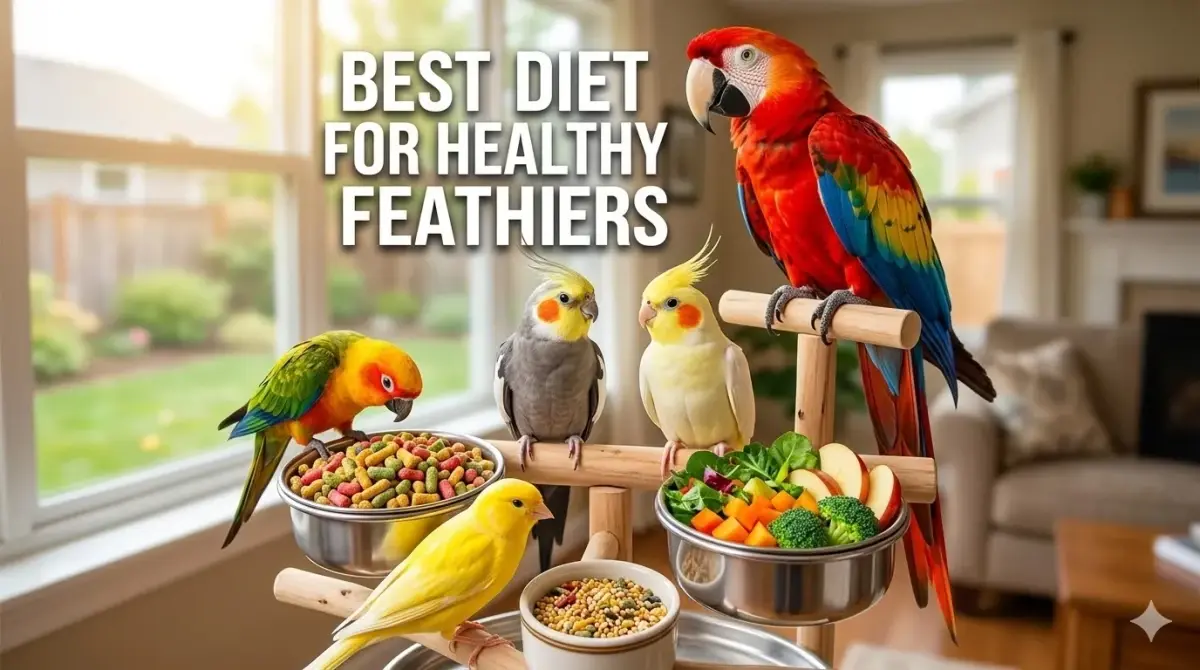
Providing the best diet for healthy feathers is essential for maintaining your bird's vibrant appearance, overall health, and wellbeing. Feathers are one of the most visible indicators of a bird's nutritional status—dull, brittle, or poorly maintained feathers often signal dietary deficiencies, while lustrous, colorful, and well-preened feathers reflect optimal nutrition. Whether you care for a vibrant parrot, melodious canary, or social cockatiel in the United States, understanding the nutritional foundations of feather health helps you create a diet that supports brilliant plumage, strong feather structure, and successful molting. This comprehensive guide explores the essential nutrients, food sources, and feeding strategies that promote exceptional feather health in pet birds, helping you make informed decisions that keep your feathered companion looking and feeling their best year-round.
Why Nutrition Matters for Feather Health
Feathers are complex structures composed primarily of keratin, a protein that requires specific nutrients for proper development and maintenance. Understanding how diet affects feather quality helps you provide targeted nutrition that supports your bird's appearance and health.
Feather Composition and Nutritional Needs
Feathers consist of approximately 85-90% protein (primarily keratin), making protein quality and quantity fundamental to feather development. However, feathers also require:
- Amino acids: Methionine, lysine, and cysteine are critical for keratin synthesis and feather strength
- Vitamins: A, D3, E, and B-complex vitamins support feather growth, pigmentation, and skin health
- Minerals: Calcium, zinc, selenium, and manganese contribute to feather structure and follicle health
- Fatty acids: Omega-3 and omega-6 fatty acids create feather sheen, flexibility, and waterproofing
- Pigments: Carotenoids and other compounds create vibrant red, orange, and yellow colors in many species
- 🐾 How to Prevent Matting in Long Haired Dogs Complete Grooming Guide
- 🐾 Cat Ear Cleaning Tips Complete Care Guide
- 🐾 Hamster Cage Cleaning Schedule: Complete 2026 Guide
Signs of Poor Feather Nutrition
Inadequate nutrition manifests in visible feather problems:
- Dull or faded coloration: Loss of vibrancy often indicates carotenoid or vitamin A deficiency
- Brittle or breaking feathers: Suggests protein or amino acid deficiency
- Stress bars: Horizontal lines across feathers indicate growth interruption from nutritional stress
- Delayed or incomplete molting: Poor nutrition slows feather replacement cycles
- Excessive preening or feather picking: May signal nutritional deficiencies or skin irritation
- Poor feather alignment: Ruffled or disorganized feathers can indicate protein or fatty acid deficiencies
- 🐾 How to Prevent Matting in Long Haired Dogs Complete Grooming Guide
- 🐾 Cat Ear Cleaning Tips Complete Care Guide
- 🐾 Hamster Cage Cleaning Schedule: Complete 2026 Guide
Essential Nutrients for Vibrant, Strong Feathers
Understanding which nutrients specifically support feather health helps you evaluate bird foods and supplements effectively.
High-Quality Proteins and Amino Acids
Protein forms the structural foundation of feathers. Birds require complete proteins containing all essential amino acids:
Methionine: A sulfur-containing amino acid essential for feather keratin production. Deficiency causes poor feather growth, dull plumage, and weak feather shafts. Found in eggs, fish meal, soy, and legumes.
Lysine: Supports protein synthesis and feather development. Often limited in seed-based diets. Found in legumes, fish meal, and quality pellets.
Cysteine: Another sulfur amino acid critical for strong feather shafts and barbs. Found in eggs, poultry, and legumes.
Protein sources for birds:
- Animal-based: Eggs, cooked chicken, fish meal, insect larvae (mealworms, crickets)
- Plant-based: Legumes (beans, lentils), soy products, quinoa, spirulina
- Pelleted diets: Formulated to provide balanced amino acid profiles
- 🐾 How to Prevent Matting in Long Haired Dogs Complete Grooming Guide
- 🐾 Cat Ear Cleaning Tips Complete Care Guide
- 🐾 Hamster Cage Cleaning Schedule: Complete 2026 Guide
Vitamins Critical for Feather Health
Vitamin A: Perhaps the most critical vitamin for feather quality. Maintains healthy skin and mucous membranes where feathers emerge. Deficiency causes dry, flaky skin, poor feather condition, and reduced color intensity. Found in orange and dark green vegetables (carrots, sweet potatoes, kale), fortified pellets, and supplements.
Vitamin D3: Essential for calcium absorption, which affects feather follicle health. Birds synthesize D3 from sunlight exposure, but indoor birds often need dietary sources. Deficiency leads to poor feather quality and excessive preening.
Vitamin E: A powerful antioxidant that protects feather cells from oxidative damage. Works with selenium to maintain feather integrity and prevent degradation. Supports skin health underlying feathers. Found in seeds, nuts, leafy greens, and fortified foods.
B-Complex Vitamins: Biotin (B7), riboflavin (B2), and other B vitamins support keratin production and feather pigmentation. Deficiencies cause brittle feathers and color fading. Found in whole grains, legumes, eggs, and fortified pellets.
Essential Fatty Acids for Feather Sheen
Omega-3 fatty acids: Found in flaxseed, chia seeds, walnuts, and fish oil. Reduce inflammation, support skin health, and create feather sheen and flexibility. Also support immune function and cognitive health.
Omega-6 fatty acids: Present in many seeds and vegetable oils. Necessary for feather structure but should be balanced with omega-3s. Excessive omega-6 without adequate omega-3 can cause inflammatory skin conditions.
Ideal ratio: The omega-6 to omega-3 ratio for birds should be approximately 4:1 to 10:1, though exact requirements vary by species.
Minerals for Strong Feather Structure
Calcium: Critical for feather follicle function and overall bone health. Works with vitamin D3. Deficiency causes poor feather quality and excessive preening. Found in cuttlebone, mineral blocks, leafy greens, and fortified foods.
Zinc: Essential for protein synthesis and feather development. Deficiency causes feather abnormalities, delayed molting, and poor feather quality. Found in seeds, legumes, and fortified pellets.
Selenium: Works with vitamin E as an antioxidant. Protects feather cells from damage. Deficiency rare but causes feather problems. Found in Brazil nuts (in tiny amounts), seeds, and fortified foods.
Manganese: Supports keratin formation and feather structure. Found in whole grains, nuts, and leafy greens.
Carotenoids and Pigments for Color
Many bird species, particularly those with red, orange, and yellow plumage (like Macaws, Cockatiels, Canaries, and some Conures), require dietary carotenoids to maintain vibrant colors. These pigments cannot be synthesized and must come from food sources:
- Beta-carotene: Converts to vitamin A; found in carrots, sweet potatoes, dark leafy greens
- Lutein and zeaxanthin: Support yellow and orange coloration; found in corn, marigold petals, dark greens
- Canthaxanthin: Enhances red coloration; found in certain algae and fortified foods
- Astaxanthin: Powerful antioxidant that supports red pigmentation; found in krill and algae
- 🐾 How to Prevent Matting in Long Haired Dogs Complete Grooming Guide
- 🐾 Cat Ear Cleaning Tips Complete Care Guide
- 🐾 Hamster Cage Cleaning Schedule: Complete 2026 Guide
Inadequate carotenoid intake causes color fading, particularly noticeable in red and yellow feathers.
Best Food Sources for Feather Health

Incorporating these nutrient-dense foods into your bird's diet supports exceptional feather quality.
Foundation Foods: Pellets and Seeds
High-quality pellets: Should comprise 60-80% of most pet birds' diets. Look for:
- Named protein sources as first ingredients
- Fortified with vitamins A, D3, E, and B-complex
- Added omega-3 fatty acids
- Appropriate protein levels (14-20% depending on species)
- No artificial colors or preservatives
- 🐾 How to Prevent Matting in Long Haired Dogs Complete Grooming Guide
- 🐾 Cat Ear Cleaning Tips Complete Care Guide
- 🐾 Hamster Cage Cleaning Schedule: Complete 2026 Guide
Quality seed mixes: Should supplement, not replace, pellets. Choose mixes with:
- Variety of seeds (millet, canary seed, oats, flax)
- Added vitamins and minerals
- Limited high-fat seeds (sunflower, safflower) to prevent obesity
- No artificial additives
- 🐾 How to Prevent Matting in Long Haired Dogs Complete Grooming Guide
- 🐾 Cat Ear Cleaning Tips Complete Care Guide
- 🐾 Hamster Cage Cleaning Schedule: Complete 2026 Guide
Fresh Vegetables for Feather Nutrition
Orange and dark green vegetables (vitamin A and carotenoids):
- Sweet potatoes (cooked)
- Carrots (grated or cooked)
- Kale and collard greens
- Butternut squash
- Red and orange bell peppers
- Spinach (in moderation due to oxalates)
- 🐾 How to Prevent Matting in Long Haired Dogs Complete Grooming Guide
- 🐾 Cat Ear Cleaning Tips Complete Care Guide
- 🐾 Hamster Cage Cleaning Schedule: Complete 2026 Guide
Leafy greens (vitamins and minerals):
- Romaine lettuce
- Dandelion greens
- Swiss chard
- Bok choy
- Broccoli leaves and stems
- 🐾 How to Prevent Matting in Long Haired Dogs Complete Grooming Guide
- 🐾 Cat Ear Cleaning Tips Complete Care Guide
- 🐾 Hamster Cage Cleaning Schedule: Complete 2026 Guide
Other beneficial vegetables:
- Bell peppers (all colors)
- Zucchini and summer squash
- Cucumber
- Sprouted seeds and legumes
- 🐾 How to Prevent Matting in Long Haired Dogs Complete Grooming Guide
- 🐾 Cat Ear Cleaning Tips Complete Care Guide
- 🐾 Hamster Cage Cleaning Schedule: Complete 2026 Guide
Fruits for Antioxidants and Variety
Offer fruits in moderation due to sugar content:
- Berries (blueberries, strawberries, raspberries) - high in antioxidants
- Papaya and mango - rich in vitamin A and enzymes
- Apples (seeds removed) - good fiber and vitamins
- Melon varieties - hydrating and nutrient-rich
- 🐾 How to Prevent Matting in Long Haired Dogs Complete Grooming Guide
- 🐾 Cat Ear Cleaning Tips Complete Care Guide
- 🐾 Hamster Cage Cleaning Schedule: Complete 2026 Guide
Protein-Rich Foods for Feather Development
Egg food: Hard-boiled egg (with crushed shell for calcium) is excellent during molting and breeding. Mash with a little breadcrumb for easy feeding.
Cooked legumes: Beans, lentils, and chickpeas provide plant-based protein and amino acids.
Sprouted seeds: Sprouting increases protein bioavailability and provides enzymes aiding nutrient absorption.
Insect protein: Mealworms, crickets, or commercial insect-based foods provide high-quality animal protein (especially beneficial for insectivorous species).
Healthy Fats for Feather Sheen
Flaxseed and chia seeds: Rich in omega-3 fatty acids; add small amounts to seed mixes.
Walnuts and almonds: Offer sparingly due to high fat content; excellent omega-3 sources.
Fish oil supplements: Specifically formulated for birds; add to food per manufacturer directions.
Feeding Strategies for Optimal Feather Health

How you feed is as important as what you feed. These strategies maximize nutritional benefits for feather health.
Balanced Diet Composition
For most pet birds, aim for this approximate breakdown:
- 60-80% high-quality pellets: Provides complete, balanced nutrition
- 15-25% fresh vegetables and fruits: Adds variety, moisture, and phytonutrients
- 5-10% seeds and nuts as treats: Provides enrichment and essential fatty acids without excess
- Occasional protein supplements: Egg food or legumes during molting or breeding
- 🐾 How to Prevent Matting in Long Haired Dogs Complete Grooming Guide
- 🐾 Cat Ear Cleaning Tips Complete Care Guide
- 🐾 Hamster Cage Cleaning Schedule: Complete 2026 Guide
Special Considerations During Molting
Molting (feather replacement) significantly increases nutritional demands:
Increase protein: Offer egg food, cooked legumes, or high-protein pellets to support new feather growth.
Boost vitamins and minerals: Ensure adequate vitamin A, E, and B-complex intake through fresh vegetables and fortified foods.
Add fatty acids: Omega-3s support new feather development and reduce inflammation during molting.
Maintain hydration: Fresh vegetables and clean water support metabolic processes involved in feather growth.
Reduce stress: Provide quiet, consistent environment; avoid major changes during molting periods.
Species-Specific Dietary Needs
Parrots (African Grey, Amazon, Macaw): Require varied diet with emphasis on vegetables. Need higher fat content than smaller birds. Benefit from cooked legumes and grains.
Cockatiels and Budgies: Smaller portions, can be picky eaters. Need calcium-rich foods especially if laying eggs. Pellets should be appropriately sized.
Canaries and Finches: Primarily seed eaters but benefit from fresh greens, egg food during molting/breeding. Require cuttlebone for calcium.
Red factor birds (Canaries, Cockatiels): Require dietary carotenoids (beta-carotene, canthaxanthin) to maintain vibrant red/orange coloration.
Top Foods and Supplements for Feather Health

These specific products consistently deliver results for feather quality based on avian nutritionist recommendations and owner feedback.
Harrison's High Potency Formula
Premium organic pellets ideal for molting and feather development:
Key features:
- 100% organic ingredients with no artificial additives
- High protein content (18-20%) from quality sources
- Enhanced vitamin and mineral levels for molting birds
- Optimal omega-3 to omega-6 fatty acid ratio
- USDA certified organic
- Available in multiple textures
- 🐾 How to Prevent Matting in Long Haired Dogs Complete Grooming Guide
- 🐾 Cat Ear Cleaning Tips Complete Care Guide
- 🐾 Hamster Cage Cleaning Schedule: Complete 2026 Guide
Best for: Molting birds, birds with poor feather quality, breeding birds
Price range: $25-$45 for 2-4 lb bags
Roudybush Daily Maintenance
Scientifically-formulated pellets with excellent amino acid profiles:
Key features:
- Complete and balanced nutrition
- High bioavailability ingredients
- No artificial colors or flavors
- Appropriate protein levels for feather development
- Enhanced with vitamins and minerals
- 🐾 How to Prevent Matting in Long Haired Dogs Complete Grooming Guide
- 🐾 Cat Ear Cleaning Tips Complete Care Guide
- 🐾 Hamster Cage Cleaning Schedule: Complete 2026 Guide
Best for: Daily maintenance, feather quality improvement, long-term health
Price range: $20-$40 for 2.25-4.4 lb bags
Versele-Laga Oropharma Canaries Color
Specialized formula for enhancing red and yellow coloration:
Key features:
- Fortified with beta-carotene and canthaxanthin
- High-quality seed base with added nutrients
- Supports vibrant coloration in red factor birds
- Includes vitamins and minerals for overall health
- 🐾 How to Prevent Matting in Long Haired Dogs Complete Grooming Guide
- 🐾 Cat Ear Cleaning Tips Complete Care Guide
- 🐾 Hamster Cage Cleaning Schedule: Complete 2026 Guide
Best for: Red factor canaries, cockatiels, and other birds needing color enhancement
Price range: $12-$25 for 1-5 lb bags
Hagen Elite Gourmet Seed Mix
Fortified seed blend with added nutrition for feather support:
Key features:
- Fortified with vitamins and minerals
- Added omega-3 fatty acids
- No artificial colors or preservatives
- Includes dried fruits and vegetables
- High-quality seed varieties
- 🐾 How to Prevent Matting in Long Haired Dogs Complete Grooming Guide
- 🐾 Cat Ear Cleaning Tips Complete Care Guide
- 🐾 Hamster Cage Cleaning Schedule: Complete 2026 Guide
Best for: Birds who prefer seeds, owners wanting enhanced nutrition, improving feather condition
Price range: $10-$22 for 2-5 lb bags
Nekton-S Bio Supplement
Liquid vitamin and amino acid supplement for feather support:
Key features:
- Contains essential amino acids (methionine, lysine)
- Fortified with vitamins A, D3, E, and B-complex
- Easy to add to drinking water or food
- Ideal for molting, stress, or recovery periods
- 🐾 How to Prevent Matting in Long Haired Dogs Complete Grooming Guide
- 🐾 Cat Ear Cleaning Tips Complete Care Guide
- 🐾 Hamster Cage Cleaning Schedule: Complete 2026 Guide
Best for: Supplementing during molting, stress recovery, or nutritional support
Price range: $15-$30 per bottle
Common Dietary Mistakes That Harm Feather Health

Even well-meaning bird owners can make errors that compromise feather quality.
- Seed-only diets: Seeds are high in fat but deficient in vitamins A, D, calcium, and essential amino acids. This leads to dull, brittle feathers, poor coloration, and delayed molting.
- Excessive high-fat seeds: Sunflower and safflower seeds are calorie-dense. Overfeeding causes obesity, which stresses feather follicles and impairs feather quality.
- Lack of fresh vegetables: Fresh produce provides essential vitamins, minerals, and carotenoids missing from dry foods. Without them, coloration fades and feather quality declines.
- Inadequate protein during molting: Molting dramatically increases protein needs. Failing to boost protein intake results in weak, slow-growing feathers.
- Ignoring carotenoids for colored birds: Red, orange, and yellow birds require dietary carotenoids. Without them, colors fade regardless of genetics.
- Over-supplementing: Adding multiple supplements to already-fortified foods can cause imbalances. More isn't always better.
- Using artificial color enhancers: Some products use artificial dyes to enhance color. These don't improve actual feather health and may cause sensitivities.
- 🐾 How to Prevent Matting in Long Haired Dogs Complete Grooming Guide
- 🐾 Cat Ear Cleaning Tips Complete Care Guide
- 🐾 Hamster Cage Cleaning Schedule: Complete 2026 Guide
People Also Ask: Quick Answers

What food makes bird feathers shiny?
Foods rich in omega-3 fatty acids (flaxseed, chia seeds, fish oil) and vitamin E (leafy greens, seeds, fortified pellets) create feather sheen and flexibility. Quality protein sources support strong feather structure that reflects light beautifully.
How long does it take to see feather improvement with better diet?
You'll typically see initial improvements in feather sheen and condition within 4-6 weeks of dietary changes. However, complete feather quality improvement requires a full molt cycle, which takes 2-3 months for most birds. Patience is essential—feathers can only improve as new ones grow in.
Can seeds alone provide adequate nutrition for bird feathers?
No, seed-only diets cannot provide adequate nutrition for healthy feathers. Seeds are deficient in vitamins A, D, calcium, and essential amino acids while being excessively high in fat. This leads to dull, brittle feathers, poor coloration, and health problems. Pellets should comprise 60-80% of diet for optimal feather health.
What vitamins are most important for bird feathers?
Vitamin A is most critical for feather quality, followed by vitamins D3, E, and B-complex (especially biotin). Vitamin A maintains healthy skin and feather follicles, D3 supports calcium absorption, E protects feather cells from damage, and B vitamins support keratin production and pigmentation.
Should I give my bird supplements for feather health?
If feeding a high-quality pelleted diet with fresh vegetables, supplements are usually unnecessary. However, during molting, stress, or transition from seeds, supplements like Nekton-S can help. Always consult an avian veterinarian before adding supplements, as over-supplementation can cause toxicity.
Creating a Feather-Healthy Feeding Routine

Consistency and variety maximize nutritional benefits for feather health.
Daily Feeding Schedule
Morning:
- Offer fresh pellets as the dietary foundation
- Add fresh vegetables (focus on vitamin A-rich options)
- Provide fresh, clean water
- Remove uneaten fresh food after 2-4 hours
- 🐾 How to Prevent Matting in Long Haired Dogs Complete Grooming Guide
- 🐾 Cat Ear Cleaning Tips Complete Care Guide
- 🐾 Hamster Cage Cleaning Schedule: Complete 2026 Guide
Evening:
- Top up pellets if needed
- Offer small portion of fresh vegetables or fruit
- Ensure water is fresh for overnight
- 🐾 How to Prevent Matting in Long Haired Dogs Complete Grooming Guide
- 🐾 Cat Ear Cleaning Tips Complete Care Guide
- 🐾 Hamster Cage Cleaning Schedule: Complete 2026 Guide
Weekly Variety Strategy
Rotate vegetables and protein sources to provide comprehensive nutrition:
- Monday/Wednesday/Friday: Orange vegetables (carrots, sweet potato) for vitamin A
- Tuesday/Thursday: Dark leafy greens (kale, collards) for minerals and vitamins
- Weekend: Protein boost (egg food or cooked legumes) especially during molting
- Throughout week: Small amounts of omega-3 rich seeds (flax, chia)
- 🐾 How to Prevent Matting in Long Haired Dogs Complete Grooming Guide
- 🐾 Cat Ear Cleaning Tips Complete Care Guide
- 🐾 Hamster Cage Cleaning Schedule: Complete 2026 Guide
Monitoring Feather Health Progress
Track improvements to ensure your diet is working:
- Photograph feathers: Take monthly photos in consistent lighting to track color and condition changes
- Observe molting: Note if new feathers grow in stronger and more vibrant
- Check preening behavior: Healthy birds spend time grooming; excessive preening may indicate issues
- Monitor overall health: Energy levels, appetite, and droppings reflect nutritional status
- 🐾 How to Prevent Matting in Long Haired Dogs Complete Grooming Guide
- 🐾 Cat Ear Cleaning Tips Complete Care Guide
- 🐾 Hamster Cage Cleaning Schedule: Complete 2026 Guide
Special Considerations for Different Bird Types

Tailor feather-healthy nutrition to your bird's specific needs.
Red Factor Birds (Canaries, Cockatiels, Finches)
Priority nutrients: Carotenoids (beta-carotene, canthaxanthin), vitamin A, quality protein
Best foods: Red/orange vegetables, marigold petals, specialized color-enhancing foods, egg food during molting
Avoid: Artificial color enhancers; focus on natural carotenoid sources
Large Parrots (Macaws, Amazons, African Greys)
Priority nutrients: High-quality protein, omega-3 fatty acids, vitamins A and E
Best foods: Varied vegetables, quality pellets, occasional nuts for healthy fats, legumes for protein
Special note: Large parrots have longer molting cycles; maintain consistent nutrition year-round
Small Birds (Budgies, Finches, Lovebirds)
Priority nutrients: Balanced protein, calcium, vitamin A
Best foods: Appropriately-sized pellets, small seed mixes with fortification, cuttlebone for calcium
Special note: Small birds have fast metabolisms; ensure constant access to fresh food and water
People Also Ask: Advanced Questions

Can diet fix damaged feathers?
Diet cannot repair already-damaged feathers, but it supports healthy growth of new feathers during molting. Focus on preventing further damage through optimal nutrition while allowing natural molting to replace damaged feathers.
Do feather supplements really work?
Quality supplements containing amino acids, vitamins, and fatty acids can support feather health when used appropriately. However, they work best as supplements to a balanced diet, not replacements for poor nutrition. Consult an avian veterinarian before adding supplements.
How does stress affect feather health?
Stress significantly impacts feather quality by disrupting nutrient absorption, increasing preening behavior, and potentially causing feather plucking. Reduce stress through consistent routines, adequate sleep, environmental enrichment, and proper social interaction.
Can I improve my bird's feather color naturally?
Yes, for birds with carotenoid-based coloration (red, orange, yellow), providing dietary carotenoids through vegetables like carrots, sweet potatoes, and red peppers can enhance natural coloration. Genetics set the potential, but nutrition determines expression.
Frequently Asked Questions

How do I know if my bird's diet is supporting feather health?
Look for: vibrant, consistent coloration; smooth, aligned feathers; minimal breakage; successful molting with strong new growth; and normal preening behavior. Regular veterinary checkups can also assess nutritional status through physical examination.
What if my bird won't eat vegetables?
Try offering vegetables in different forms (chopped, grated, whole), mixing with favored foods, offering at peak hunger times, and being patient. It may take weeks for birds to accept new foods. Never force-feed.
Can overfeeding cause feather problems?
Yes, overfeeding—especially high-fat seeds—can cause obesity, which stresses feather follicles and impairs feather quality. It can also lead to fatty liver disease, which affects overall health including feather condition.
How much fresh food should I offer daily?
Offer 1-2 tablespoons of fresh vegetables per 100g of bird body weight daily. Adjust based on your bird's size, species, and acceptance. Remove uneaten fresh food after 2-4 hours to prevent spoilage.
Should I change my bird's diet during molting?
Yes, increase protein intake during molting through egg food, cooked legumes, or high-protein pellets. Ensure adequate vitamins and minerals, and maintain hydration. Consider adding a supplement like Nekton-S during this demanding period.
Conclusion: Nutrition Is the Foundation of Feather Health

Providing the best diet for healthy feathers is one of the most impactful investments you can make in your bird's appearance and overall wellbeing. Quality nutrition directly supports feather structure, coloration, and resilience while preventing common problems like dullness, brittleness, and poor molting.
Remember that feather health reflects overall nutritional status. A diet rich in quality protein, essential vitamins and minerals, balanced fatty acids, and species-appropriate carotenoids creates the foundation for vibrant, strong feathers. Combine this foundation with fresh vegetables, appropriate supplements when needed, and consistent feeding practices.
Start today by evaluating your bird's current diet against the guidelines in this article. Identify gaps in nutrition and introduce improvements gradually. Your bird will reward your commitment to excellent nutrition with brilliant plumage, successful molting, and the vibrant health that comes from optimal feather care.
Remember, healthy feathers aren't just about appearance—they're indicators of your bird's overall health and happiness. By prioritizing feather-healthy nutrition, you're supporting your feathered companion's longevity, vitality, and joy.
🐱 আরও পড়ুন: Bird Care

0 Comments