.png)
How to Trim Small Pet Nails Safely: Expert Guide
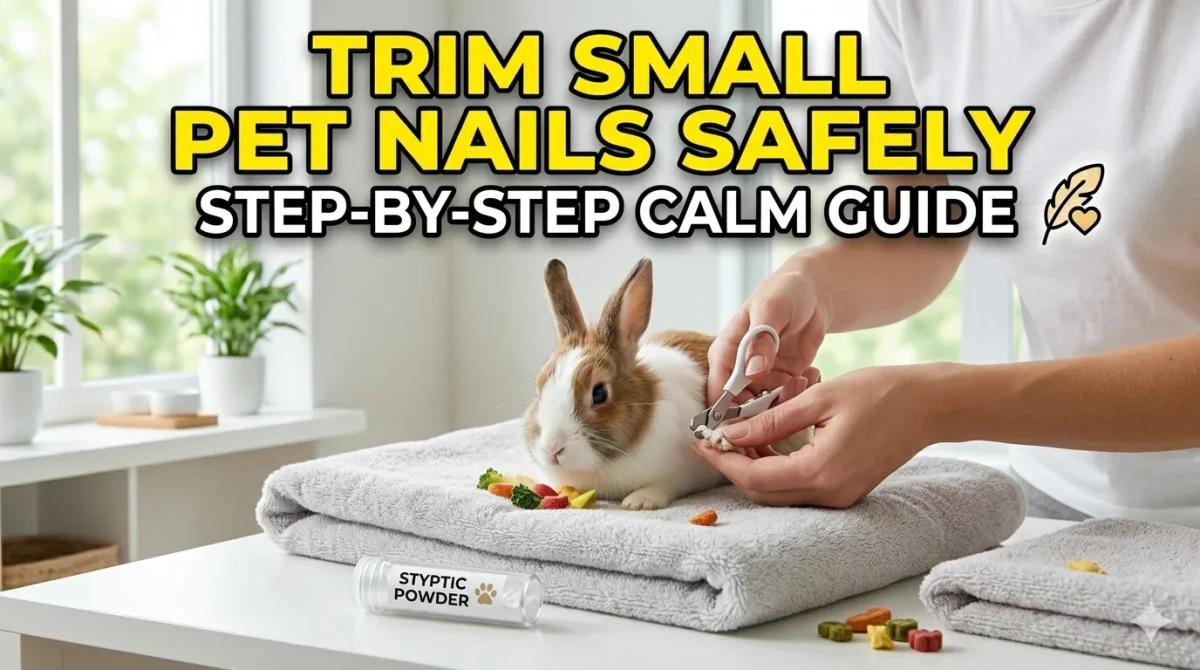
Why Safe Nail Trimming Is Essential for Small Pet Health
Trimming your small pet's nails is one of the most important aspects of routine care that many owners find intimidating. Overgrown nails can cause pain, mobility issues, foot deformities, and even serious infections in rabbits, guinea pigs, hamsters, ferrets, and other small mammals. Learning to trim small pet nails safely isn't just about aesthetics—it's about preventing suffering and maintaining your pet's quality of life.
Featured Snippet Answer: To trim small pet nails safely, use sharp, species-appropriate clippers; identify the quick (pink blood vessel) in light nails or trim tiny amounts in dark nails; have styptic powder ready for bleeding; restrain gently with a towel if needed; and reward generously. Trim only the sharp tip, never cut into the quick, and seek veterinary help if unsure or if your pet is extremely stressed.
Many small pet owners avoid nail trimming due to fear of hurting their pet, uncertainty about technique, or their pet's resistance. However, with proper preparation, the right tools, patience, and positive reinforcement, most small pets can learn to tolerate—and some even accept—nail trimming as part of their care routine.
This comprehensive guide provides evidence-based, veterinarian-aligned strategies for trimming small pet nails safely and stress-free. You'll learn about nail anatomy, tool selection, step-by-step techniques for different species, how to handle accidents, species-specific considerations, and when to seek professional help. Whether you care for a rabbit, guinea pig, hamster, ferret, or chinchilla, you'll find practical guidance to keep your small companion comfortable and healthy.
Understanding Small Pet Nail Anatomy: The Foundation of Safe Trimming
Before picking up clippers, understanding nail structure helps you trim safely and avoid injury.
Nail Structure Basics:
- The quick: The living, vascular portion containing blood vessels and nerves; appears pink in light nails, invisible in dark nails
- The keratin sheath: The hard, outer portion that grows continuously; this is what you trim
- The dewclaw: A vestigial nail on the inner side of some pets' legs (common in rabbits, guinea pigs); often overlooked but requires trimming
- 🐾 Prevent Feather Plucking: Expert Bird Care Guide
- 🐾 How to Brush Cat Teeth Properly: Step-by-Step Guide
- 🐾 Fish Tank Cleaning Schedule: Complete Maintenance Guide
Species-Specific Nail Characteristics:
- Rabbits: Fast-growing nails; dewclaws on front feet; light nails show pink quick, dark nails require caution
- Guinea pigs: Nails grow continuously; dewclaws on hind feet; often have curved nails requiring careful trimming
- Hamsters/gerbils: Very small, delicate nails; require tiny clippers or nail files; quick is hard to see
- Ferrets: Semi-retractable nails; quick visible in light nails; may need sedation for difficult individuals
- Chinchillas/rats: Active, agile pets; nails grow moderately; stress reduction is critical during handling
- 🐾 Prevent Feather Plucking: Expert Bird Care Guide
- 🐾 How to Brush Cat Teeth Properly: Step-by-Step Guide
- 🐾 Fish Tank Cleaning Schedule: Complete Maintenance Guide
Why Nails Grow Continuously:
Unlike human nails, small mammal nails grow throughout life because their wild ancestors wore them down through digging, climbing, and foraging. Captive pets on soft bedding with limited abrasive surfaces need regular trimming to prevent overgrowth.
Featured Snippet Answer: Small pet nails have a living "quick" containing blood vessels and nerves. In light nails, the quick appears pink; in dark nails, it's invisible. Trim only the keratin tip beyond the quick. Dewclaws (vestigial nails) also need trimming and are often overlooked.
How do I find the quick in dark nails?
In dark nails where the quick isn't visible, trim tiny amounts (1mm or less) at a time and examine the cut surface. A grayish or pinkish dot in the center indicates you're approaching the quick—stop trimming. When in doubt, trim less; it's safer to trim more frequently than to cut too deep once.
Gathering the Right Tools: Essential Supplies for Safe Nail Trimming

Using appropriate tools makes trimming safer, easier, and less stressful for both you and your pet.
Nail Trimmers: Choosing the Right Type
- Small animal nail clippers: Scissor-style or guillotine-style designed for rabbits/guinea pigs; sharp blades prevent crushing
- Cat nail trimmers: Suitable for larger small pets like rabbits; avoid dog clippers (too large)
- Human baby nail clippers: Work well for hamsters, gerbils, and small rodents; offer precision for tiny nails
- Nail files/grinders: Electric or manual files smooth rough edges; useful for pets who fear clippers
- Important: Keep blades sharp; dull clippers crush nails causing pain and splintering
- 🐾 Prevent Feather Plucking: Expert Bird Care Guide
- 🐾 How to Brush Cat Teeth Properly: Step-by-Step Guide
- 🐾 Fish Tank Cleaning Schedule: Complete Maintenance Guide
Essential Safety Supplies:
- Styptic powder or cornstarch: Stops bleeding instantly if you cut the quick; keep within arm's reach
- Small towel or cloth: For gentle restraint ("bunny burrito" technique) if your pet struggles
- High-value treats: Small pieces of favorite food for immediate positive reinforcement
- Good lighting: Headlamp or bright lamp to see nail structure clearly
- Magnifying glass: Helpful for tiny nails on hamsters or gerbils
- 🐾 Prevent Feather Plucking: Expert Bird Care Guide
- 🐾 How to Brush Cat Teeth Properly: Step-by-Step Guide
- 🐾 Fish Tank Cleaning Schedule: Complete Maintenance Guide
Optional but Helpful:
- Helper: A second person to hold and reassure while you trim
- Non-slip surface: Towel or mat to prevent slipping during trimming
- Record log: Track trimming dates and any issues for future reference
- 🐾 Prevent Feather Plucking: Expert Bird Care Guide
- 🐾 How to Brush Cat Teeth Properly: Step-by-Step Guide
- 🐾 Fish Tank Cleaning Schedule: Complete Maintenance Guide
Tools to Avoid:
- Dull clippers: Crush rather than cut, causing pain and nail damage
- Human adult clippers: Too large for small pet nails; risk of cutting too much
- Scissors: Can slip and cause injury; use only if specifically designed for pet nails
- 🐾 Prevent Feather Plucking: Expert Bird Care Guide
- 🐾 How to Brush Cat Teeth Properly: Step-by-Step Guide
- 🐾 Fish Tank Cleaning Schedule: Complete Maintenance Guide
Featured Snippet Answer: Use sharp, species-appropriate clippers (small animal or baby nail clippers), have styptic powder ready for bleeding, use a towel for gentle restraint if needed, and work in good lighting. Keep treats handy for positive reinforcement. Avoid dull clippers or tools too large for your pet's nails.
Step-by-Step: Preparing Your Small Pet for Nail Trimming

Preparation reduces stress and increases success. Rushing into trimming guarantees resistance.
Phase 1: Desensitization to Handling (Days 1-7)
Goal: Help your pet become comfortable with having their feet touched.
- Start with gentle petting: During calm moments, gently stroke your pet's body, gradually working toward feet
- Touch feet briefly: Lightly touch one foot for 1-2 seconds, then immediately reward with a treat
- Progress to holding: Gently hold one foot for 2-3 seconds, reward, release
- Keep sessions brief: 1-2 minutes maximum, 1-2 times daily
- End on success: Always finish with a treat and praise, even if you only touched the foot briefly
- Watch for stress signals: If your pet shows pinned ears, rapid breathing, or attempts to escape, pause and try again later
- 🐾 Prevent Feather Plucking: Expert Bird Care Guide
- 🐾 How to Brush Cat Teeth Properly: Step-by-Step Guide
- 🐾 Fish Tank Cleaning Schedule: Complete Maintenance Guide
Phase 2: Introducing Tools (Days 8-14)
Goal: Create positive associations with nail trimmers and styptic powder.
- Let them investigate: Show clippers, let your pet sniff, then reward
- Click or snap near feet: Make the sound clippers make near (not on) feet, then reward calm behavior
- Touch with clippers: Gently touch the clipper to a nail without cutting, then reward
- Introduce styptic powder: Let your pet sniff the container; associate with treats, not just emergencies
- 🐾 Prevent Feather Plucking: Expert Bird Care Guide
- 🐾 How to Brush Cat Teeth Properly: Step-by-Step Guide
- 🐾 Fish Tank Cleaning Schedule: Complete Maintenance Guide
Phase 3: First Trim Attempt (Days 15+)
Goal: Successfully trim one or two nails to build confidence.
- Choose optimal timing: Trim when your pet is relaxed—after a meal, during sleepy periods
- Position comfortably: Place your pet on a non-slip surface or hold gently on your lap; never restrain forcefully
- Start with easiest nails: Begin with front feet or nails where the quick is clearly visible
- Trim one nail: Cut only the sharp tip (1-2mm), then immediately reward generously
- Stop while ahead: End the session after 1-2 successful trims; build duration over multiple sessions
- 🐾 Prevent Feather Plucking: Expert Bird Care Guide
- 🐾 How to Brush Cat Teeth Properly: Step-by-Step Guide
- 🐾 Fish Tank Cleaning Schedule: Complete Maintenance Guide
Featured Snippet Answer: Prepare for nail trimming by desensitizing your pet to foot handling over 1-2 weeks: gently touch feet, reward calm behavior, and introduce clippers gradually. Start with one nail per session, reward generously, and stop while your pet is still calm. Rushing creates fear and setbacks.
Mastering the Trimming Technique: Species-Specific Methods

Proper technique ensures effectiveness while keeping your pet comfortable. Methods vary slightly by species.
Universal Trimming Principles:
- Identify the quick: In light nails, trim 2-3mm beyond the pink area; in dark nails, trim tiny amounts (1mm) and check the cut surface
- Angle correctly: Cut at a 45-degree angle following the nail's natural curve to avoid splintering
- One nail at a time: Trim, reward, then move to the next; don't rush through all nails in one session
- Stay calm: Your pet senses your anxiety; speak softly and move deliberately
- 🐾 Prevent Feather Plucking: Expert Bird Care Guide
- 🐾 How to Brush Cat Teeth Properly: Step-by-Step Guide
- 🐾 Fish Tank Cleaning Schedule: Complete Maintenance Guide
Rabbit Nail Trimming:
- Positioning: Wrap in a towel ("bunny burrito") exposing one foot at a time; or have a helper hold while you trim
- Front feet: Four nails plus dewclaw on inner side; dewclaws often curl and need regular attention
- Hind feet: Four nails; often longer due to less wear
- Technique: Hold foot firmly but gently; trim only the curved tip; avoid cutting parallel to the toe
- Frequency: Every 4-6 weeks; monitor for overgrowth between trims
- 🐾 Prevent Feather Plucking: Expert Bird Care Guide
- 🐾 How to Brush Cat Teeth Properly: Step-by-Step Guide
- 🐾 Fish Tank Cleaning Schedule: Complete Maintenance Guide
Guinea Pig Nail Trimming:
- Positioning: Hold securely on your lap or a towel; guinea pigs rarely struggle but may freeze
- All four feet: Four nails per foot; dewclaws on hind feet are small but need trimming
- Curved nails: Guinea pig nails often curve; trim the tip following the curve to avoid quick
- Dark nails: Trim tiny amounts and look for grayish center indicating approaching quick
- Frequency: Every 3-4 weeks; guinea pig nails grow rapidly
- 🐾 Prevent Feather Plucking: Expert Bird Care Guide
- 🐾 How to Brush Cat Teeth Properly: Step-by-Step Guide
- 🐾 Fish Tank Cleaning Schedule: Complete Maintenance Guide
Hamster/Gerbil Nail Trimming:
- Positioning: Hold gently in palm or use a small towel; these tiny pets are fragile
- Tiny nails: Use baby nail clippers or nail file; trim only the very tip (less than 1mm)
- Patience essential: May only trim 1-2 nails per session; build tolerance over weeks
- Alternative: If trimming is too stressful, provide abrasive surfaces (stone, ceramic) for natural wear
- Frequency: Every 6-8 weeks; monitor for overgrowth
- 🐾 Prevent Feather Plucking: Expert Bird Care Guide
- 🐾 How to Brush Cat Teeth Properly: Step-by-Step Guide
- 🐾 Fish Tank Cleaning Schedule: Complete Maintenance Guide
Ferret Nail Trimming:
- Positioning: Hold securely but gently; ferrets may wiggle but rarely bite during nail trims
- Semi-retractable nails: Gently extend nail by pressing pad; trim the sharp hook
- Quick visibility: Usually visible in light nails; use caution with dark nails
- Distraction technique: Offer a small treat or lick of ferret paste during trimming
- Frequency: Every 3-4 weeks; ferret nails grow moderately fast
- 🐾 Prevent Feather Plucking: Expert Bird Care Guide
- 🐾 How to Brush Cat Teeth Properly: Step-by-Step Guide
- 🐾 Fish Tank Cleaning Schedule: Complete Maintenance Guide
Chinchilla/Rat Nail Trimming:
- Positioning: Gentle restraint with towel; these active pets benefit from calm, confident handling
- Active pets: Work quickly but carefully; have treats ready for immediate reward
- Nail structure: Similar to rabbits; identify quick in light nails, trim conservatively in dark
- Frequency: Every 4-6 weeks; monitor for overgrowth
- 🐾 Prevent Feather Plucking: Expert Bird Care Guide
- 🐾 How to Brush Cat Teeth Properly: Step-by-Step Guide
- 🐾 Fish Tank Cleaning Schedule: Complete Maintenance Guide
Featured Snippet Answer: Trim small pet nails by identifying the quick (pink in light nails), cutting at a 45-degree angle only the sharp tip, and rewarding after each nail. Rabbits need dewclaw attention; guinea pigs have curved nails; hamsters need tiny clippers. Trim 1-2 nails per session initially, building tolerance over time.
What if my small pet struggles during nail trimming?
If your pet struggles, stop immediately to avoid injury. Return to desensitization exercises, use gentle towel restraint only if necessary, and keep sessions extremely short (1-2 nails). Consider trimming when your pet is sleepy or after a meal. If resistance persists, consult your veterinarian about professional trimming or anxiety-reduction strategies.
What to Do If You Cut the Quick: Emergency Care

Even experienced trimmers occasionally cut the quick. Knowing how to respond minimizes pain and prevents complications.
Signs You Cut the Quick:
- Immediate bleeding from the nail
- Your pet vocalizes, pulls away, or shows signs of pain
- Visible pink or red tissue at the cut site
- 🐾 Prevent Feather Plucking: Expert Bird Care Guide
- 🐾 How to Brush Cat Teeth Properly: Step-by-Step Guide
- 🐾 Fish Tank Cleaning Schedule: Complete Maintenance Guide
Immediate First Aid:
- Stay calm: Your pet senses your reaction; speak softly to reassure them
- Apply styptic powder: Dip the bleeding nail directly into styptic powder or cornstarch; hold gentle pressure for 30-60 seconds
- Alternative if no styptic: Use flour, cornstarch, or a damp tea bag (tannins help clotting)
- Monitor bleeding: Should stop within 1-2 minutes; if bleeding persists >5 minutes, contact your veterinarian
- Comfort your pet: Offer gentle petting and a high-value treat once bleeding stops
Aftercare:
- Keep the area clean: Avoid dirty bedding for 24 hours to prevent infection
- Monitor for infection: Watch for swelling, redness, discharge, or continued pain; contact vet if these occur
- Resume trimming cautiously: Wait 1-2 weeks before trimming that nail again; trim more conservatively next time
- Don't skip future trims: One accident shouldn't stop nail care; adjust technique and proceed with extra caution
- 🐾 Prevent Feather Plucking: Expert Bird Care Guide
- 🐾 How to Brush Cat Teeth Properly: Step-by-Step Guide
- 🐾 Fish Tank Cleaning Schedule: Complete Maintenance Guide
When to Seek Veterinary Help:
- Bleeding doesn't stop after 5-10 minutes of pressure
- Your pet shows signs of severe pain, lethargy, or won't use the foot
- Signs of infection develop (swelling, pus, warmth)
- You're unsure if the quick was cut or how to manage the injury
- 🐾 Prevent Feather Plucking: Expert Bird Care Guide
- 🐾 How to Brush Cat Teeth Properly: Step-by-Step Guide
- 🐾 Fish Tank Cleaning Schedule: Complete Maintenance Guide
Featured Snippet Answer: If you cut the quick, stay calm, apply styptic powder or cornstarch with gentle pressure for 30-60 seconds, and comfort your pet. Bleeding should stop within 1-2 minutes. Monitor for infection and contact your veterinarian if bleeding persists, your pet shows severe pain, or signs of infection develop.
Frequency Guidelines: How Often to Trim Small Pet Nails

Trimming frequency depends on species, age, activity level, and environment.
General Frequency Guidelines:
- Rabbits: Every 4-6 weeks; monitor dewclaws which often curl and need more frequent attention
- Guinea pigs: Every 3-4 weeks; nails grow rapidly, especially in older or less active pigs
- Hamsters/gerbils: Every 6-8 weeks; tiny nails grow slower; provide abrasive surfaces for natural wear
- Ferrets: Every 3-4 weeks; semi-retractable nails need regular maintenance
- Chinchillas/rats: Every 4-6 weeks; active pets may wear nails naturally but still need monitoring
- 🐾 Prevent Feather Plucking: Expert Bird Care Guide
- 🐾 How to Brush Cat Teeth Properly: Step-by-Step Guide
- 🐾 Fish Tank Cleaning Schedule: Complete Maintenance Guide
Factors That Increase Trimming Frequency:
- Age: Senior pets often have slower nail wear and may need more frequent trims
- Activity level: Less active pets don't wear nails naturally; trim more often
- Bedding type: Soft bedding (fleece, paper) provides less abrasion than hardwood or stone
- Nail color: Dark nails require more conservative trimming; may need more frequent small trims
- Health conditions: Arthritis or mobility issues may reduce natural nail wear
- 🐾 Prevent Feather Plucking: Expert Bird Care Guide
- 🐾 How to Brush Cat Teeth Properly: Step-by-Step Guide
- 🐾 Fish Tank Cleaning Schedule: Complete Maintenance Guide
Signs Nails Need Trimming:
- Nails touch the ground when pet stands normally
- Nails curl or grow sideways
- You hear clicking on hard floors
- Pet seems reluctant to walk or shows foot discomfort
- Nails catch on fabric or bedding
- 🐾 Prevent Feather Plucking: Expert Bird Care Guide
- 🐾 How to Brush Cat Teeth Properly: Step-by-Step Guide
- 🐾 Fish Tank Cleaning Schedule: Complete Maintenance Guide
Featured Snippet Answer: Trim rabbit and guinea pig nails every 3-6 weeks; hamsters and gerbils every 6-8 weeks; ferrets every 3-4 weeks. Trim when nails touch the ground, curl, or click on floors. Senior, less active, or dark-nailed pets may need more frequent conservative trims.
Species-Specific Considerations and Special Cases

Different small pets have unique needs that influence nail trimming approach.
Rabbits:
- Dewclaw attention: Front dewclaws don't touch ground and often curl into paw pads; check and trim monthly
- Powerful hind legs: Hold securely but gently to prevent kicking injuries
- Stress sensitivity: Rabbits can injure themselves struggling; use towel restraint and work calmly
- Dark nail challenge: Many rabbits have dark nails; trim tiny amounts and use good lighting
- 🐾 Prevent Feather Plucking: Expert Bird Care Guide
- 🐾 How to Brush Cat Teeth Properly: Step-by-Step Guide
- 🐾 Fish Tank Cleaning Schedule: Complete Maintenance Guide
Guinea Pigs:
- Curved nails: Often grow in a curve; trim following the curve to avoid quick
- Hind dewclaws: Small but need trimming; easy to miss
- Generally calm: Most guinea pigs tolerate trimming well with gentle handling
- Arthritis considerations: Senior pigs may have painful feet; trim conservatively and consult vet if unsure
- 🐾 Prevent Feather Plucking: Expert Bird Care Guide
- 🐾 How to Brush Cat Teeth Properly: Step-by-Step Guide
- 🐾 Fish Tank Cleaning Schedule: Complete Maintenance Guide
Hamsters and Gerbils:
- Tiny, delicate nails: Use baby clippers or nail file; trim less than 1mm at a time
- Stress management: These small pets stress easily; keep sessions under 2 minutes
- Natural wear alternatives: Provide stone, ceramic, or rough wood surfaces for natural filing
- Frequency: Less frequent trimming needed due to slower growth and natural wear
- 🐾 Prevent Feather Plucking: Expert Bird Care Guide
- 🐾 How to Brush Cat Teeth Properly: Step-by-Step Guide
- 🐾 Fish Tank Cleaning Schedule: Complete Maintenance Guide
Ferrets:
- Semi-retractable nails: Gently press pad to extend nail before trimming
- Wiggly but cooperative: Most ferrets tolerate trimming with distraction (treats, play)
- Quick visibility: Usually visible; easier to trim than dark-nailed species
- Sedation option: For extremely difficult ferrets, discuss safe sedation options with your vet
- 🐾 Prevent Feather Plucking: Expert Bird Care Guide
- 🐾 How to Brush Cat Teeth Properly: Step-by-Step Guide
- 🐾 Fish Tank Cleaning Schedule: Complete Maintenance Guide
Chinchillas and Rats:
- Active, agile pets: May need towel restraint; work quickly but carefully
- Sensitive to stress: Chinchillas especially can overheat or become ill from stress; keep sessions brief
- Nail structure: Similar to rabbits; identify quick in light nails, trim conservatively in dark
- 🐾 Prevent Feather Plucking: Expert Bird Care Guide
- 🐾 How to Brush Cat Teeth Properly: Step-by-Step Guide
- 🐾 Fish Tank Cleaning Schedule: Complete Maintenance Guide
Senior or Medically Compromised Pets:
- Arthritis considerations: Handle feet gently; trim only what's necessary to prevent pain
- Shorter sessions: Trim 1-2 nails per session over multiple days if needed
- Veterinary assistance: Consider professional trimming for pets with pain or mobility issues
- Pain management: Discuss pain relief options with your vet if trimming causes discomfort
- 🐾 Prevent Feather Plucking: Expert Bird Care Guide
- 🐾 How to Brush Cat Teeth Properly: Step-by-Step Guide
- 🐾 Fish Tank Cleaning Schedule: Complete Maintenance Guide
Featured Snippet Answer: Tailor nail trimming to species: rabbits need dewclaw attention; guinea pigs have curved nails; hamsters need tiny clippers; ferrets have retractable nails. Senior or medically compromised pets need gentler handling and shorter sessions. Consult your veterinarian for pets with pain, arthritis, or extreme stress.
Reducing Stress: Making Nail Trimming a Positive Experience

Stress reduction isn't just kinder—it makes trimming safer and more successful.
Environmental Setup:
- Quiet space: Choose a calm, familiar location away from loud noises or other pets
- Non-slip surface: Use a towel or mat to prevent slipping and increase security
- Good lighting: Ensure you can see nail structure clearly to avoid accidents
- Comfortable temperature: Avoid trimming when your pet is too hot or cold
- 🐾 Prevent Feather Plucking: Expert Bird Care Guide
- 🐾 How to Brush Cat Teeth Properly: Step-by-Step Guide
- 🐾 Fish Tank Cleaning Schedule: Complete Maintenance Guide
Handling Techniques:
- Gentle restraint: Use minimal pressure; the "bunny burrito" towel wrap secures without force
- Support the body: Never hold by limbs alone; support chest and hindquarters
- Work at their level: Sit or kneel to avoid looming over your pet
- Speak softly: Calm, reassuring tones help reduce anxiety
- 🐾 Prevent Feather Plucking: Expert Bird Care Guide
- 🐾 How to Brush Cat Teeth Properly: Step-by-Step Guide
- 🐾 Fish Tank Cleaning Schedule: Complete Maintenance Guide
Positive Reinforcement Strategies:
- Immediate rewards: Offer a tiny treat immediately after each successful nail trim
- High-value treats: Reserve special treats (small fruit piece, herb, commercial treat) exclusively for nail trimming
- Praise and petting: Combine treats with gentle praise and petting if your pet enjoys it
- End on success: Always finish with a behavior your pet can perform, followed by reward
- 🐾 Prevent Feather Plucking: Expert Bird Care Guide
- 🐾 How to Brush Cat Teeth Properly: Step-by-Step Guide
- 🐾 Fish Tank Cleaning Schedule: Complete Maintenance Guide
Desensitization and Counter-Conditioning:
- Gradual exposure: Practice handling feet and introducing clippers without trimming for days or weeks
- Pair with positives: Always pair nail handling with treats, never with punishment
- Short sessions: Keep practice sessions under 2 minutes to prevent overwhelm
- Consistency: Practice regularly, even when nails don't need trimming, to maintain comfort
- 🐾 Prevent Feather Plucking: Expert Bird Care Guide
- 🐾 How to Brush Cat Teeth Properly: Step-by-Step Guide
- 🐾 Fish Tank Cleaning Schedule: Complete Maintenance Guide
When to Take Breaks:
- If your pet shows stress signals (rapid breathing, freezing, struggling), pause and comfort
- It's better to trim one nail per day over four days than to force all nails in one stressful session
- Never punish resistance; this creates fear and makes future trimming harder
- 🐾 Prevent Feather Plucking: Expert Bird Care Guide
- 🐾 How to Brush Cat Teeth Properly: Step-by-Step Guide
- 🐾 Fish Tank Cleaning Schedule: Complete Maintenance Guide
Featured Snippet Answer: Reduce nail trimming stress by working in a quiet space with good lighting, using gentle towel restraint if needed, and rewarding generously after each nail. Practice foot handling without trimming to build trust. Keep sessions short (under 2 minutes) and end on a positive note. Never punish resistance.
When to Seek Professional Help: Veterinary Nail Trimming

Some situations warrant professional assistance rather than home trimming.
Signs You Should See a Veterinarian:
- Extreme resistance or fear: If your pet becomes panicked, aggressive, or injured during attempts
- Overgrown or ingrown nails: Nails that have curled into paw pads require professional removal and possible treatment
- Dark nails with no quick visibility: If you're uncomfortable trimming dark nails, let a professional handle it
- Medical conditions: Arthritis, pain, bleeding disorders, or other health issues that complicate trimming
- First-time trimming: Having a vet or technician demonstrate proper technique builds your confidence
- Repeated accidents: If you frequently cut the quick, professional trimming prevents pain and fear
- 🐾 Prevent Feather Plucking: Expert Bird Care Guide
- 🐾 How to Brush Cat Teeth Properly: Step-by-Step Guide
- 🐾 Fish Tank Cleaning Schedule: Complete Maintenance Guide
What to Expect at a Veterinary Nail Trim:
- Examination: Vet checks nail health, looks for signs of infection or overgrowth
- Gentle restraint: Staff trained in small pet handling minimize stress
- Professional tools: Veterinary-grade clippers and styptic products
- Pain management: If nails are ingrown or infected, vet may provide pain relief or antibiotics
- Education: Many vets will demonstrate technique so you can continue care at home
- 🐾 Prevent Feather Plucking: Expert Bird Care Guide
- 🐾 How to Brush Cat Teeth Properly: Step-by-Step Guide
- 🐾 Fish Tank Cleaning Schedule: Complete Maintenance Guide
Professional Trimming Options:
- Exotic pet veterinarians: Specialists in small mammal care; best for complex cases
- General practice vets: Many offer nail trims as a wellness service
- Groomers experienced with small pets: Some groomers trim small pet nails; verify experience first
- Cost considerations: Nail trims typically cost $10-30; worth the investment for safety and peace of mind
- 🐾 Prevent Feather Plucking: Expert Bird Care Guide
- 🐾 How to Brush Cat Teeth Properly: Step-by-Step Guide
- 🐾 Fish Tank Cleaning Schedule: Complete Maintenance Guide
Featured Snippet Answer: Seek veterinary nail trimming if your pet is extremely fearful, has overgrown/ingrown nails, has dark nails you can't trim safely, or has medical conditions complicating care. Vets can also demonstrate proper technique. Professional trims typically cost $10-30 and prevent injury or stress.
Common Mistakes to Avoid in Small Pet Nail Trimming

Even well-intentioned owners make errors that can cause pain or fear. Avoid these pitfalls:
Mistake 1: Cutting Too Much at Once
- Problem: Trimming too close to the quick causes pain, bleeding, and fear
- Solution: Trim tiny amounts (1-2mm) at a time; in dark nails, trim less than 1mm and check frequently
- 🐾 Prevent Feather Plucking: Expert Bird Care Guide
- 🐾 How to Brush Cat Teeth Properly: Step-by-Step Guide
- 🐾 Fish Tank Cleaning Schedule: Complete Maintenance Guide
Mistake 2: Using Dull or Inappropriate Clippers
- Problem: Dull clippers crush nails instead of cutting cleanly, causing pain and splintering
- Solution: Use sharp, species-appropriate clippers; replace or sharpen blades regularly
- 🐾 Prevent Feather Plucking: Expert Bird Care Guide
- 🐾 How to Brush Cat Teeth Properly: Step-by-Step Guide
- 🐾 Fish Tank Cleaning Schedule: Complete Maintenance Guide
Mistake 3: Forcing or Punishing Resistance
- Problem: Punishment creates fear, making future trimming harder and damaging trust
- Solution: Use positive reinforcement; stop if your pet struggles and try again later with shorter sessions
- 🐾 Prevent Feather Plucking: Expert Bird Care Guide
- 🐾 How to Brush Cat Teeth Properly: Step-by-Step Guide
- 🐾 Fish Tank Cleaning Schedule: Complete Maintenance Guide
Mistake 4: Skipping Dewclaws
- Problem: Dewclaws don't touch ground and often curl into paw pads, causing pain and infection
- Solution: Check and trim dewclaws every time you trim other nails; they're easy to miss
- 🐾 Prevent Feather Plucking: Expert Bird Care Guide
- 🐾 How to Brush Cat Teeth Properly: Step-by-Step Guide
- 🐾 Fish Tank Cleaning Schedule: Complete Maintenance Guide
Mistake 5: Not Having Styptic Powder Ready
- Problem: Cutting the quick without styptic powder leads to prolonged bleeding and stress
- Solution: Always have styptic powder or cornstarch within arm's reach before starting
- 🐾 Prevent Feather Plucking: Expert Bird Care Guide
- 🐾 How to Brush Cat Teeth Properly: Step-by-Step Guide
- 🐾 Fish Tank Cleaning Schedule: Complete Maintenance Guide
Mistake 6: Trimming Too Infrequently
- Problem: Overgrown nails are harder to trim, more likely to have extended quicks, and cause pain
- Solution: Establish a regular schedule (every 3-6 weeks depending on species) to maintain manageable nail length
- 🐾 Prevent Feather Plucking: Expert Bird Care Guide
- 🐾 How to Brush Cat Teeth Properly: Step-by-Step Guide
- 🐾 Fish Tank Cleaning Schedule: Complete Maintenance Guide
Featured Snippet Answer: Avoid nail trimming mistakes: don't cut too much at once, use sharp appropriate clippers, never punish resistance, always trim dewclaws, keep styptic powder ready, and trim regularly. These practices prevent pain, bleeding, and fear while maintaining healthy nails.
Alternative Nail Care Methods: When Clipping Isn't Possible

For pets who absolutely cannot tolerate clipping, these alternatives help manage nail length.
Natural Wear Surfaces:
- Stone or ceramic tiles: Place in cage or play area; rough surface files nails naturally
- Concrete pavers: Small sections in secure play areas provide abrasion
- Rough wood branches: Natural wood with bark offers climbing and filing opportunities
- Limitation: Natural wear rarely eliminates need for trimming but can extend time between trims
- 🐾 Prevent Feather Plucking: Expert Bird Care Guide
- 🐾 How to Brush Cat Teeth Properly: Step-by-Step Guide
- 🐾 Fish Tank Cleaning Schedule: Complete Maintenance Guide
Nail Filing:
- Manual nail files: Gentle filing smooths sharp tips; less intimidating than clippers for some pets
- Electric nail grinders: Low-speed pet grinders can file nails; introduce gradually with treats
- Technique: File in one direction only; avoid heat buildup from electric grinders
- Best for: Pets who fear clippers but tolerate filing; maintenance between clippings
- 🐾 Prevent Feather Plucking: Expert Bird Care Guide
- 🐾 How to Brush Cat Teeth Properly: Step-by-Step Guide
- 🐾 Fish Tank Cleaning Schedule: Complete Maintenance Guide
Professional Maintenance:
- Regular vet visits: Schedule nail trims with wellness exams to maintain routine
- Grooming services: Some small pet groomers offer nail trimming
- Benefit: Professionals handle difficult pets safely; you avoid stress of home attempts
- 🐾 Prevent Feather Plucking: Expert Bird Care Guide
- 🐾 How to Brush Cat Teeth Properly: Step-by-Step Guide
- 🐾 Fish Tank Cleaning Schedule: Complete Maintenance Guide
Important Note: Alternatives supplement but don't replace trimming for most pets. Overgrown nails cause pain and mobility issues regardless of method. Work with your veterinarian to find the best approach for your individual pet.
Featured Snippet Answer: If clipping isn't possible, provide natural wear surfaces (stone, ceramic, rough wood), try gentle nail filing, or schedule professional trims. These alternatives can extend time between clippings but rarely eliminate the need for trimming entirely. Consult your vet for the best approach for your pet.
Monitoring Nail Health: Signs of Problems to Watch For

Regular nail care includes monitoring for issues that need veterinary attention.
Healthy Nail Indicators:
- Smooth, intact nail surface without cracks or splits
- Nails don't touch the ground when pet stands normally
- No redness, swelling, or discharge around nail beds
- Pet walks normally without limping or favoring feet
- 🐾 Prevent Feather Plucking: Expert Bird Care Guide
- 🐾 How to Brush Cat Teeth Properly: Step-by-Step Guide
- 🐾 Fish Tank Cleaning Schedule: Complete Maintenance Guide
Warning Signs Requiring Veterinary Attention:
- Ingrown nails: Nails that have curled into paw pads; cause pain, swelling, infection
- Split or broken nails: May expose quick or cause bleeding; risk of infection
- Redness or swelling: Around nail beds indicates infection or inflammation
- Discharge or odor: Suggests infection requiring antibiotics
- Limping or foot favoring: May indicate nail pain, injury, or underlying joint issues
- Excessive licking/chewing: Of feet may signal nail or foot pain
- 🐾 Prevent Feather Plucking: Expert Bird Care Guide
- 🐾 How to Brush Cat Teeth Properly: Step-by-Step Guide
- 🐾 Fish Tank Cleaning Schedule: Complete Maintenance Guide
Preventive Monitoring:
- Weekly foot checks: During handling, examine nails for length, cracks, or debris
- Observe movement: Watch your pet walk for signs of discomfort or abnormal gait
- Record keeping: Note trimming dates, any issues, and your pet's response to track patterns
- 🐾 Prevent Feather Plucking: Expert Bird Care Guide
- 🐾 How to Brush Cat Teeth Properly: Step-by-Step Guide
- 🐾 Fish Tank Cleaning Schedule: Complete Maintenance Guide
Featured Snippet Answer: Monitor small pet nails weekly for healthy indicators: smooth surface, no ground contact when standing, no redness or swelling. Seek veterinary care for ingrown nails, splits, redness, discharge, limping, or excessive foot licking. Early intervention prevents pain and infection.
Quick Recap: Key Takeaways for Safe Small Pet Nail Trimming

- Use sharp, species-appropriate clippers and have styptic powder ready before starting
- Identify the quick in light nails; trim tiny amounts (1mm) in dark nails, checking frequently
- Trim only the sharp tip at a 45-degree angle; never cut into the pink quick
- Desensitize your pet gradually: handle feet, introduce tools, reward calm behavior before attempting trims
- Keep sessions short (1-2 nails initially); reward generously after each successful trim
- Trim frequency: rabbits/guinea pigs every 3-6 weeks; hamsters/gerbils every 6-8 weeks; ferrets every 3-4 weeks
- Don't forget dewclaws—they often curl and cause pain if neglected
- If you cut the quick, apply styptic powder with gentle pressure; bleeding should stop in 1-2 minutes
- Reduce stress with gentle handling, quiet environment, and positive reinforcement
- Seek veterinary help for extreme fear, ingrown nails, dark nails you can't trim safely, or medical complications
- 🐾 Prevent Feather Plucking: Expert Bird Care Guide
- 🐾 How to Brush Cat Teeth Properly: Step-by-Step Guide
- 🐾 Fish Tank Cleaning Schedule: Complete Maintenance Guide
Final Thoughts: Patience and Partnership Build Success

Trimming your small pet's nails is a skill that improves with practice, patience, and partnership. It's normal to feel nervous at first—many owners do. What matters most is your commitment to your pet's comfort and health.
Remember that progress isn't linear. Some days your pet may cooperate fully; other days they may resist. That's okay. Celebrate small victories: one nail trimmed, one calm handling session, one successful reward. These build the foundation for long-term success.
Stay observant: your pet's body language tells you when to proceed and when to pause. Stay adaptable: if one technique doesn't work, try another. Stay compassionate: toward your pet and toward yourself. Learning to trim nails safely is a journey, not a destination.
When in doubt, consult your veterinarian. Exotic pet veterinarians are invaluable partners in small pet care, offering guidance, demonstration, and professional trimming when needed. There's no shame in seeking help—your pet's comfort and safety are what matter most.
With knowledge, gentle handling, and consistent positive reinforcement, you can make nail trimming a manageable, even positive, part of your small pet's care routine. Every successfully trimmed nail is a step toward preventing pain, maintaining mobility, and ensuring your small companion enjoys a comfortable, healthy life by your side.

0 Comments