.png)
Daily Care Routine for Rabbits: Complete 2026 Guide
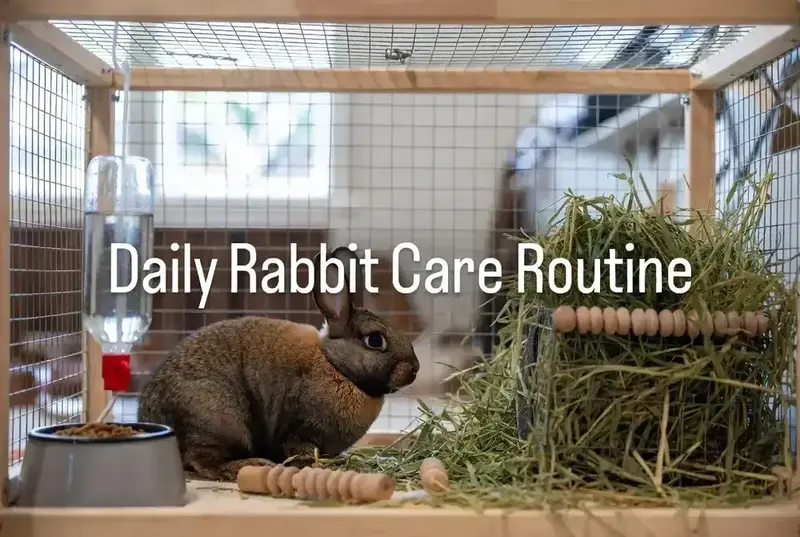
Establishing a consistent daily care routine for rabbits is essential for maintaining your bunny's health, happiness, and longevity. Rabbits are delicate creatures with specific needs that must be met consistently each day to prevent serious health issues. From proper feeding and fresh water to cage cleaning, exercise, and health monitoring, understanding the fundamentals of daily rabbit care helps create a structured environment where your rabbit can thrive. This comprehensive guide covers everything from morning feeding rituals to evening health checks, providing expert advice tailored for American rabbit owners to ensure your bunny lives a happy, healthy, and fulfilling life. Whether you're a first-time rabbit owner or looking to optimize your current routine, mastering daily care practices is fundamental to successful rabbit ownership.
Why Daily Routines Matter for Rabbit Health
Rabbits are creatures of habit that thrive on consistency and predictability. A well-structured daily routine isn't just convenient—it's critical for preventing life-threatening health issues that commonly affect pet rabbits.
The Connection Between Routine and Health
Rabbits have sensitive digestive systems that require constant fiber intake and regular feeding schedules. Disruptions to their routine can trigger gastrointestinal stasis (GI stasis), a potentially fatal condition where the digestive system slows or stops. Consistent daily care helps prevent this and other common rabbit health issues:
- Digestive health: Regular feeding times and constant hay access maintain proper gut motility
- Dental health: Daily hay consumption wears down continuously growing teeth
- Mental wellbeing: Predictable routines reduce stress and anxiety in prey animals
- Early disease detection: Daily observation catches health problems before they become emergencies
- Weight management: Consistent feeding portions prevent obesity
- 🐾 Daily Care Routine for Dogs: Complete 2026 Guide
- 🐾 How to Prevent Matting in Long Haired Cats Complete Guide
- 🐾 How to Clean Bird Beak Safely: Expert Avian Veterinary Guide
Time Commitment for Rabbit Care
Proper rabbit care requires daily time investment:
- Minimum daily care: 30-60 minutes spread throughout the day
- Exercise time: 3-4 hours of supervised out-of-cage time daily
- Weekly deep cleaning: 1-2 hours once per week
- Monthly tasks: Nail trimming, health assessments
- 🐾 Daily Care Routine for Dogs: Complete 2026 Guide
- 🐾 How to Prevent Matting in Long Haired Cats Complete Guide
- 🐾 How to Clean Bird Beak Safely: Expert Avian Veterinary Guide
Rabbits are not low-maintenance pets. They require significant daily attention and care to stay healthy.
Morning Care Routine: Starting the Day Right
The morning sets the foundation for your rabbit's entire day. A thorough morning routine ensures your bunny starts the day healthy, fed, and comfortable.
First Thing: Health Check and Observation
Before feeding, spend 5-10 minutes observing your rabbit:
Check appetite and behavior:
- Is your rabbit alert and responsive?
- Did they eat their overnight hay?
- Are they moving normally without limping?
- Is their breathing normal (not labored or rapid)?
- Are eyes bright and clear, not discharge-filled?
- 🐾 Daily Care Routine for Dogs: Complete 2026 Guide
- 🐾 How to Prevent Matting in Long Haired Cats Complete Guide
- 🐾 How to Clean Bird Beak Safely: Expert Avian Veterinary Guide
Examine droppings:
- Check for normal round, dry fecal pellets
- Look for cecotropes (soft, nutrient-rich droppings that rabbits re-ingest)
- Note any changes in size, shape, or quantity
- Absence of droppings for 8-12 hours is an emergency
- 🐾 Daily Care Routine for Dogs: Complete 2026 Guide
- 🐾 How to Prevent Matting in Long Haired Cats Complete Guide
- 🐾 How to Clean Bird Beak Safely: Expert Avian Veterinary Guide
Physical examination:
- Feel body condition—should be well-covered but not obese
- Check fur for mats, bald spots, or parasites
- Examine ears for redness, discharge, or mites
- Look at nose for discharge or crusting
- Check bottom for soiling (indicates digestive issues)
- 🐾 Daily Care Routine for Dogs: Complete 2026 Guide
- 🐾 How to Prevent Matting in Long Haired Cats Complete Guide
- 🐾 How to Clean Bird Beak Safely: Expert Avian Veterinary Guide
Fresh Water
Provide fresh, clean water every morning:
- Empty and rinse water bottle or bowl thoroughly
- Fill with fresh, cool water
- Check bottle nozzle flows properly (not clogged)
- If using a bowl, ensure it's heavy enough not to tip
- Monitor water consumption—decreased drinking signals illness
- 🐾 Daily Care Routine for Dogs: Complete 2026 Guide
- 🐾 How to Prevent Matting in Long Haired Cats Complete Guide
- 🐾 How to Clean Bird Beak Safely: Expert Avian Veterinary Guide
Rabbits need constant access to fresh water. An average rabbit drinks 50-150ml per kg of body weight daily.
Morning Feeding
Provide fresh food in this order:
1. Hay (most important):
- Refresh hay supply with fresh timothy or orchard grass
- Remove soiled or wet hay from overnight
- Provide unlimited amount—hay should always be available
- Use hay rack or pile in corner for easy access
- 🐾 Daily Care Routine for Dogs: Complete 2026 Guide
- 🐾 How to Prevent Matting in Long Haired Cats Complete Guide
- 🐾 How to Clean Bird Beak Safely: Expert Avian Veterinary Guide
2. Fresh vegetables:
- Offer 1-2 cups of leafy greens per 5 lbs body weight
- Wash vegetables thoroughly to remove pesticides
- Vary greens daily for nutritional diversity
- Remove uneaten vegetables after 2-3 hours
- 🐾 Daily Care Routine for Dogs: Complete 2026 Guide
- 🐾 How to Prevent Matting in Long Haired Cats Complete Guide
- 🐾 How to Clean Bird Beak Safely: Expert Avian Veterinary Guide
3. Pellets:
- Measure appropriate portion (1/4 cup per 5 lbs body weight)
- Use timothy-based pellets for adult rabbits
- Feed at consistent time daily
- Don't free-feed pellets
- 🐾 Daily Care Routine for Dogs: Complete 2026 Guide
- 🐾 How to Prevent Matting in Long Haired Cats Complete Guide
- 🐾 How to Clean Bird Beak Safely: Expert Avian Veterinary Guide
Cage Spot Cleaning
Quick morning cleaning maintains hygiene:
- Remove wet bedding and soiled areas
- Scoop out obvious droppings
- Replace soiled litter in litter box
- Wipe up any urine spots immediately
- Check for and remove any chewed cage materials
- 🐾 Daily Care Routine for Dogs: Complete 2026 Guide
- 🐾 How to Prevent Matting in Long Haired Cats Complete Guide
- 🐾 How to Clean Bird Beak Safely: Expert Avian Veterinary Guide
Midday Care and Monitoring

Midday check-ins ensure your rabbit remains healthy and comfortable throughout the day.
Quick Health Check
If you're home during the day, take 2-3 minutes to:
- Verify your rabbit is active and alert
- Check that hay supply is adequate
- Ensure water bottle is flowing properly
- Look for normal droppings in litter area
- Monitor for any signs of distress or illness
- 🐾 Daily Care Routine for Dogs: Complete 2026 Guide
- 🐾 How to Prevent Matting in Long Haired Cats Complete Guide
- 🐾 How to Clean Bird Beak Safely: Expert Avian Veterinary Guide
Refresh Food and Water
Depending on your schedule:
- Top up hay if supply is low
- Remove any uneaten morning vegetables
- Check water level and refill if needed
- Offer small afternoon vegetable portion if desired
- 🐾 Daily Care Routine for Dogs: Complete 2026 Guide
- 🐾 How to Prevent Matting in Long Haired Cats Complete Guide
- 🐾 How to Clean Bird Beak Safely: Expert Avian Veterinary Guide
Exercise and Social Time
If you're home, provide supervised out-of-cage time:
- Allow rabbit to explore rabbit-proofed area
- Provide toys and enrichment activities
- Interact through gentle petting (if rabbit enjoys it)
- Encourage exercise through play and exploration
- 🐾 Daily Care Routine for Dogs: Complete 2026 Guide
- 🐾 How to Prevent Matting in Long Haired Cats Complete Guide
- 🐾 How to Clean Bird Beak Safely: Expert Avian Veterinary Guide
Evening Care Routine: Preparing for Night

Evening care ensures your rabbit is comfortable, fed, and safe overnight.
Evening Feeding
Rabbits are crepuscular (most active at dawn and dusk), so evening feeding is crucial:
Fresh hay:
- Provide fresh hay supply for overnight
- Rabbits eat most actively in evening/night
- Ensure plenty available for constant grazing
- 🐾 Daily Care Routine for Dogs: Complete 2026 Guide
- 🐾 How to Prevent Matting in Long Haired Cats Complete Guide
- 🐾 How to Clean Bird Beak Safely: Expert Avian Veterinary Guide
Second vegetable feeding:
- Offer remaining daily vegetable portion
- 1-2 cups leafy greens per 5 lbs body weight
- Remove uneaten portions after 2-3 hours
- 🐾 Daily Care Routine for Dogs: Complete 2026 Guide
- 🐾 How to Prevent Matting in Long Haired Cats Complete Guide
- 🐾 How to Clean Bird Beak Safely: Expert Avian Veterinary Guide
Pellet portion:
- If splitting pellet feeding, offer second portion
- Or provide full daily portion in evening
- Measure carefully to prevent overfeeding
- 🐾 Daily Care Routine for Dogs: Complete 2026 Guide
- 🐾 How to Prevent Matting in Long Haired Cats Complete Guide
- 🐾 How to Clean Bird Beak Safely: Expert Avian Veterinary Guide
Exercise and Enrichment Time
Evening is prime time for rabbit activity:
Supervised out-of-cage time (essential):
- Minimum 3-4 hours daily outside enclosure
- Rabbit-proof the area thoroughly
- Remove electrical cords, toxic plants, small objects
- Provide hiding spots and safe chew toys
- Supervise constantly to prevent accidents
- 🐾 Daily Care Routine for Dogs: Complete 2026 Guide
- 🐾 How to Prevent Matting in Long Haired Cats Complete Guide
- 🐾 How to Clean Bird Beak Safely: Expert Avian Veterinary Guide
Enrichment activities:
- Provide cardboard boxes for exploration
- Offer puzzle feeders or treat balls
- Set up tunnels and obstacle courses
- Rotate toys to maintain interest
- Include digging boxes with safe materials
- 🐾 Daily Care Routine for Dogs: Complete 2026 Guide
- 🐾 How to Prevent Matting in Long Haired Cats Complete Guide
- 🐾 How to Clean Bird Beak Safely: Expert Avian Veterinary Guide
Evening Health Check
Before settling for the night:
- Observe eating behavior during evening meal
- Check that rabbit is producing normal droppings
- Verify water supply is adequate overnight
- Ensure hay supply is plentiful
- Note any behavioral changes or concerns
- 🐾 Daily Care Routine for Dogs: Complete 2026 Guide
- 🐾 How to Prevent Matting in Long Haired Cats Complete Guide
- 🐾 How to Clean Bird Beak Safely: Expert Avian Veterinary Guide
Secure Housing
Prepare safe overnight environment:
- Ensure cage/pen is secure and predator-proof
- Check that door latches properly
- Provide comfortable bedding area
- Ensure adequate ventilation but no drafts
- Maintain comfortable temperature (60-70°F)
- Place in quiet area away from household noise
- 🐾 Daily Care Routine for Dogs: Complete 2026 Guide
- 🐾 How to Prevent Matting in Long Haired Cats Complete Guide
- 🐾 How to Clean Bird Beak Safely: Expert Avian Veterinary Guide
Daily Feeding Schedule and Nutrition

Proper nutrition is the cornerstone of rabbit health. Daily feeding must provide balanced nutrition while supporting digestive health.
The 80-10-10 Rule
A healthy rabbit diet consists of:
- 80% Hay: Unlimited timothy or orchard grass hay
- 10% Fresh vegetables: Leafy greens and limited other veggies
- 10% Pellets: High-quality timothy-based pellets
- 🐾 Daily Care Routine for Dogs: Complete 2026 Guide
- 🐾 How to Prevent Matting in Long Haired Cats Complete Guide
- 🐾 How to Clean Bird Beak Safely: Expert Avian Veterinary Guide
Treats should be minimal (fruits only occasionally).
Hay: The Foundation
Hay must be available 24/7:
- Adult rabbits: Timothy, orchard grass, or oat hay
- Young rabbits (under 6 months): Alfalfa hay for extra protein/calcium
- Provide at least rabbit-sized pile daily
- Refresh at least twice daily
- Quality matters: green, fresh-smelling, low dust
- 🐾 Daily Care Routine for Dogs: Complete 2026 Guide
- 🐾 How to Prevent Matting in Long Haired Cats Complete Guide
- 🐾 How to Clean Bird Beak Safely: Expert Avian Veterinary Guide
Fresh Vegetables Daily
Provide variety in leafy greens:
Daily greens (rotate):
- Romaine lettuce
- Green leaf and red leaf lettuce
- Cilantro
- Parsley
- Basil
- Carrot tops
- Kale (in moderation)
- 🐾 Daily Care Routine for Dogs: Complete 2026 Guide
- 🐾 How to Prevent Matting in Long Haired Cats Complete Guide
- 🐾 How to Clean Bird Beak Safely: Expert Avian Veterinary Guide
2-3 times weekly:
- Bell peppers
- Broccoli leaves
- Carrots (limited—high sugar)
- Zucchini
- Cucumber
- 🐾 Daily Care Routine for Dogs: Complete 2026 Guide
- 🐾 How to Prevent Matting in Long Haired Cats Complete Guide
- 🐾 How to Clean Bird Beak Safely: Expert Avian Veterinary Guide
Pellets: Supplemental Nutrition
Feed measured amounts daily:
- Adult rabbits: 1/4 cup per 5 lbs body weight
- Young rabbits: Unlimited until 6 months
- Choose timothy-based for adults
- Avoid muesli-style mixes
- Feed at consistent times
- 🐾 Daily Care Routine for Dogs: Complete 2026 Guide
- 🐾 How to Prevent Matting in Long Haired Cats Complete Guide
- 🐾 How to Clean Bird Beak Safely: Expert Avian Veterinary Guide
Cage and Habitat Maintenance

Daily cage maintenance prevents disease and keeps your rabbit comfortable.
Daily Cleaning Tasks
Spot cleaning (twice daily):
- Remove wet bedding immediately
- Scoop out soiled litter
- Remove uneaten fresh vegetables
- Wipe up urine accidents
- Check for and remove chewed materials
- 🐾 Daily Care Routine for Dogs: Complete 2026 Guide
- 🐾 How to Prevent Matting in Long Haired Cats Complete Guide
- 🐾 How to Clean Bird Beak Safely: Expert Avian Veterinary Guide
Water maintenance:
- Rinse and refill water bottle/bowl daily
- Check bottle nozzle for proper flow
- Ensure water is cool and fresh
- 🐾 Daily Care Routine for Dogs: Complete 2026 Guide
- 🐾 How to Prevent Matting in Long Haired Cats Complete Guide
- 🐾 How to Clean Bird Beak Safely: Expert Avian Veterinary Guide
Food area maintenance:
- Remove soiled hay
- Clean food bowls if contaminated
- Refresh hay supply
- 🐾 Daily Care Routine for Dogs: Complete 2026 Guide
- 🐾 How to Prevent Matting in Long Haired Cats Complete Guide
- 🐾 How to Clean Bird Beak Safely: Expert Avian Veterinary Guide
Litter Box Care
Proper litter management is essential:
- Scoop soiled litter 1-2 times daily
- Use rabbit-safe litter (paper-based, aspen shavings)
- Avoid clay or clumping cat litter (toxic)
- Place hay near or in litter box (rabbits eat while eliminating)
- Change completely and wash weekly
- 🐾 Daily Care Routine for Dogs: Complete 2026 Guide
- 🐾 How to Prevent Matting in Long Haired Cats Complete Guide
- 🐾 How to Clean Bird Beak Safely: Expert Avian Veterinary Guide
Weekly Deep Cleaning
Once weekly, perform thorough cleaning:
- Remove rabbit to safe area
- Remove all bedding and litter
- Wash cage/pen with rabbit-safe disinfectant
- Rinse thoroughly and dry completely
- Wash food and water bowls
- Clean toys and accessories
- Replace with fresh bedding and litter
- 🐾 Daily Care Routine for Dogs: Complete 2026 Guide
- 🐾 How to Prevent Matting in Long Haired Cats Complete Guide
- 🐾 How to Clean Bird Beak Safely: Expert Avian Veterinary Guide
Health Monitoring and Observation

Daily health monitoring catches problems early when they're most treatable.
Daily Health Checklist
Observe these indicators every day:
Appetite and eating:
- Eating hay consistently
- Finishing vegetable portions
- Normal pellet consumption
- Drinking adequate water
- 🐾 Daily Care Routine for Dogs: Complete 2026 Guide
- 🐾 How to Prevent Matting in Long Haired Cats Complete Guide
- 🐾 How to Clean Bird Beak Safely: Expert Avian Veterinary Guide
Droppings:
- Producing round, dry fecal pellets
- Normal cecotropes (re-ingested)
- Consistent quantity and size
- No diarrhea or soft stools
- 🐾 Daily Care Routine for Dogs: Complete 2026 Guide
- 🐾 How to Prevent Matting in Long Haired Cats Complete Guide
- 🐾 How to Clean Bird Beak Safely: Expert Avian Veterinary Guide
Behavior:
- Alert and responsive
- Normal activity level
- Grooming regularly
- Interested in surroundings
- 🐾 Daily Care Routine for Dogs: Complete 2026 Guide
- 🐾 How to Prevent Matting in Long Haired Cats Complete Guide
- 🐾 How to Clean Bird Beak Safely: Expert Avian Veterinary Guide
Physical signs:
- Clear eyes and nose
- Clean, dry bottom
- Normal breathing (not labored)
- Healthy coat condition
- 🐾 Daily Care Routine for Dogs: Complete 2026 Guide
- 🐾 How to Prevent Matting in Long Haired Cats Complete Guide
- 🐾 How to Clean Bird Beak Safely: Expert Avian Veterinary Guide
Warning Signs Requiring Immediate Attention
Contact a rabbit-savvy veterinarian immediately if you notice:
- Not eating for 8-12 hours: GI stasis emergency
- No droppings for 8-12 hours: Digestive blockage
- Labored breathing: Respiratory distress
- Lethargy or weakness: Serious illness
- Head tilt or loss of balance: Neurological issue
- Bloody urine or droppings: Internal bleeding
- Obvious pain (hunched posture, teeth grinding): Medical emergency
- Diarrhea: Can be fatal in rabbits
- 🐾 Daily Care Routine for Dogs: Complete 2026 Guide
- 🐾 How to Prevent Matting in Long Haired Cats Complete Guide
- 🐾 How to Clean Bird Beak Safely: Expert Avian Veterinary Guide
Weekly Health Assessment
Once weekly, perform more thorough examination:
- Weigh your rabbit (track for weight changes)
- Check teeth alignment (front teeth visible)
- Examine feet for sores or overgrown nails
- Check ears for mites or infection
- Feel body for lumps or abnormalities
- Examine fur for parasites or skin issues
- 🐾 Daily Care Routine for Dogs: Complete 2026 Guide
- 🐾 How to Prevent Matting in Long Haired Cats Complete Guide
- 🐾 How to Clean Bird Beak Safely: Expert Avian Veterinary Guide
Exercise and Enrichment

Daily exercise and mental stimulation are essential for rabbit physical and mental health.
Daily Exercise Requirements
Rabbits need significant daily exercise:
- Minimum 3-4 hours: Supervised out-of-cage time daily
- Space requirements: Large, rabbit-proofed area to explore
- Active play: Running, jumping, binkying (happy jumps)
- Exploration: New areas and environments stimulate mentally
- 🐾 Daily Care Routine for Dogs: Complete 2026 Guide
- 🐾 How to Prevent Matting in Long Haired Cats Complete Guide
- 🐾 How to Clean Bird Beak Safely: Expert Avian Veterinary Guide
Rabbit-Proofing Your Home
Before allowing out-of-cage time, ensure safety:
- Remove or cover electrical cords
- Block access to small spaces
- Remove toxic plants
- Secure furniture that could tip
- Remove small objects that could be swallowed
- Close off unsafe rooms
- Protect baseboards and furniture from chewing
- 🐾 Daily Care Routine for Dogs: Complete 2026 Guide
- 🐾 How to Prevent Matting in Long Haired Cats Complete Guide
- 🐾 How to Clean Bird Beak Safely: Expert Avian Veterinary Guide
Enrichment Activities
Provide mental stimulation daily:
Toys and activities:
- Cardboard boxes for hiding and chewing
- Paper bags (handles removed) for exploration
- Untreated wood toys for chewing
- Tunnels made from cardboard tubes
- Puzzle feeders with treats
- Digging boxes with safe materials (shredded paper, hay)
- 🐾 Daily Care Routine for Dogs: Complete 2026 Guide
- 🐾 How to Prevent Matting in Long Haired Cats Complete Guide
- 🐾 How to Clean Bird Beak Safely: Expert Avian Veterinary Guide
Rotate toys weekly:
- Keep 3-5 toys available at once
- Store extras and rotate weekly
- Maintains novelty and interest
- 🐾 Daily Care Routine for Dogs: Complete 2026 Guide
- 🐾 How to Prevent Matting in Long Haired Cats Complete Guide
- 🐾 How to Clean Bird Beak Safely: Expert Avian Veterinary Guide
Grooming and Hygiene

Regular grooming maintains your rabbit's health and strengthens your bond.
Daily Grooming Tasks
Quick brush (2-5 minutes):
- Remove loose fur, especially during shedding seasons
- Check for mats or tangles
- Inspect skin for parasites or sores
- Bonding time with your rabbit
- 🐾 Daily Care Routine for Dogs: Complete 2026 Guide
- 🐾 How to Prevent Matting in Long Haired Cats Complete Guide
- 🐾 How to Clean Bird Beak Safely: Expert Avian Veterinary Guide
Nail check:
- Visually inspect nail length daily
- Trim when nails touch ground (every 4-6 weeks)
- Use rabbit-specific nail clippers
- Have styptic powder ready for accidents
- 🐾 Daily Care Routine for Dogs: Complete 2026 Guide
- 🐾 How to Prevent Matting in Long Haired Cats Complete Guide
- 🐾 How to Clean Bird Beak Safely: Expert Avian Veterinary Guide
Weekly Grooming
Thorough brushing:
- 10-15 minutes of detailed brushing
- Remove all loose fur to prevent ingestion
- Pay attention to hard-to-reach areas
- Check entire body for abnormalities
- 🐾 Daily Care Routine for Dogs: Complete 2026 Guide
- 🐾 How to Prevent Matting in Long Haired Cats Complete Guide
- 🐾 How to Clean Bird Beak Safely: Expert Avian Veterinary Guide
Bum check:
- Examine bottom for soiling
- Clean if necessary with damp cloth
- Soiling indicates digestive issues
- 🐾 Daily Care Routine for Dogs: Complete 2026 Guide
- 🐾 How to Prevent Matting in Long Haired Cats Complete Guide
- 🐾 How to Clean Bird Beak Safely: Expert Avian Veterinary Guide
Bathing
Rabbits rarely need baths:
- Only bathe if medically necessary
- Spot clean soiled areas instead
- Full baths can cause shock or hypothermia
- Consult veterinarian if bathing is necessary
- 🐾 Daily Care Routine for Dogs: Complete 2026 Guide
- 🐾 How to Prevent Matting in Long Haired Cats Complete Guide
- 🐾 How to Clean Bird Beak Safely: Expert Avian Veterinary Guide
People Also Ask: Quick Answers

How much time do rabbits need daily?
Rabbits require 30-60 minutes of direct care daily (feeding, cleaning, health checks) plus 3-4 hours of supervised exercise and social time. Total daily commitment is 4-5 hours. Rabbits are not low-maintenance pets and require significant daily attention.
How often should I clean my rabbit's cage?
Spot clean daily (remove soiled bedding, uneaten food, waste). Do a complete deep clean once weekly: wash entire cage, replace all bedding, and sanitize food/water bowls. More frequent cleaning may be needed for multiple rabbits or small enclosures.
What do rabbits need every day?
Daily needs include: unlimited fresh hay (80% of diet), fresh water (changed daily), 1-2 cups leafy greens per 5 lbs body weight, measured pellets, 3-4 hours exercise time, social interaction, clean living space, and health monitoring.
Can I leave my rabbit alone during work hours?
Yes, rabbits can be alone for 8 hours while you work, provided they have adequate space, fresh water, unlimited hay, and safe enrichment. However, they need attention before and after work, plus weekend time. Consider a pet sitter for longer absences.
How often do rabbits need to see a vet?
Healthy adult rabbits need annual wellness exams with a rabbit-savvy veterinarian. Young rabbits need more frequent visits for vaccinations (if applicable) and health checks. Senior rabbits (5+ years) benefit from biannual exams. Seek immediate care for any health concerns.
Common Mistakes to Avoid

Even well-meaning rabbit owners can make errors that impact their bunny's health.
- Insufficient hay: The most critical mistake. Without unlimited hay, rabbits develop life-threatening digestive and dental issues.
- Inadequate exercise: Less than 3-4 hours daily out-of-cage time leads to obesity, muscle atrophy, and behavioral problems.
- Poor diet: Too many pellets, insufficient vegetables, or feeding inappropriate foods causes obesity and nutritional deficiencies.
- Ignoring health changes: Rabbits hide illness. Not noticing decreased appetite or droppings delays critical treatment.
- Inadequate space: Small cages prevent exercise and cause stress. Minimum 12 square feet plus exercise area.
- Skipping daily observation: Missing early illness signs allows problems to become emergencies.
- Improper handling: Rabbits are prey animals. Improper handling causes stress and injury. Support hind legs always.
- Using wrong litter: Clay or clumping cat litter is toxic. Use only rabbit-safe litter (paper-based, aspen).
- Neglecting dental health: Not providing enough hay leads to dental overgrowth requiring veterinary intervention.
- Isolation: Rabbits are social. Lack of interaction causes depression and behavioral issues.
- 🐾 Daily Care Routine for Dogs: Complete 2026 Guide
- 🐾 How to Prevent Matting in Long Haired Cats Complete Guide
- 🐾 How to Clean Bird Beak Safely: Expert Avian Veterinary Guide
Creating a Sustainable Daily Routine

The key to successful rabbit care is creating habits you can maintain consistently.
Time Management
Morning (15-20 minutes): Health check, fresh water, hay refresh, vegetables, spot cleaning.
Midday (5-10 minutes if home): Quick check, water top-up, brief interaction.
Evening (30-45 minutes): Exercise time, evening feeding, health observation, bonding.
Weekly (1-2 hours): Deep cage cleaning, thorough grooming, health assessment.
Making Care Enjoyable
- Integrate rabbit care into your existing routine
- Use exercise time for bonding and interaction
- Keep supplies organized and accessible
- Create a checklist until habits become automatic
- Celebrate small victories: healthy appetite, playful behavior
- Join rabbit communities for support and knowledge
- 🐾 Daily Care Routine for Dogs: Complete 2026 Guide
- 🐾 How to Prevent Matting in Long Haired Cats Complete Guide
- 🐾 How to Clean Bird Beak Safely: Expert Avian Veterinary Guide
When Life Gets Busy
On particularly busy days, prioritize these essentials:
- Fresh water (changed)
- Unlimited hay access
- Quick health observation
- Basic spot cleaning
- Minimum exercise time (even 1-2 hours helps)
Never skip water, hay, or health checks. These are non-negotiable for rabbit survival.
Frequently Asked Questions

What's the most important part of daily rabbit care?
Unlimited fresh hay and daily health observation are most critical. Hay prevents life-threatening digestive and dental issues. Daily observation catches illness early when treatment is most effective. These two practices prevent most rabbit health emergencies.
How can I make rabbit care more efficient?
Keep supplies organized near the cage, use a checklist until routines become habit, buy hay in bulk, prep vegetables in advance, and integrate care into existing daily routines. Automation like automatic waterers can help but don't replace daily monitoring.
Do rabbits need attention every single day?
Yes. Rabbits require daily feeding, fresh water, exercise, and health monitoring. They're social animals that need interaction. Missing one day occasionally won't harm a healthy rabbit, but consistent neglect causes serious health and behavioral problems.
Can I automate rabbit care tasks?
Partially. Automatic waterers and hay feeders exist but require daily monitoring. You cannot automate health observation, exercise time, or social interaction. Automation supplements but doesn't replace daily hands-on care.
How do I balance work and rabbit care?
Establish morning and evening routines that fit your schedule. Ensure rabbit has adequate space, hay, and water while you're gone. Provide 3-4 hours of exercise and attention outside work hours. Consider a pet sitter for long work days or travel.
Conclusion: Consistency Creates Healthy, Happy Rabbits

Establishing a comprehensive daily care routine for rabbits is one of the most important commitments you'll make as a rabbit owner. The time, attention, and consistency you invest directly impact your bunny's health, happiness, and lifespan. Rabbits are not low-maintenance pets—they require dedicated daily care, but the reward is a deep bond with a gentle, intelligent companion.
Remember that every rabbit is unique. Use this guide as a foundation, but observe your individual rabbit and adjust routines based on their responses. What works for one rabbit may need modification for another.
Start today by evaluating your current routine against the guidelines in this article. Identify areas for improvement and implement changes gradually. Consistency matters more than perfection. Even small improvements in daily care compound over time to create significant positive impacts on your rabbit's health and wellbeing.
Partner with a rabbit-savvy veterinarian for professional guidance, join rabbit communities for support, and never stop learning. Your rabbit depends on you for everything—food, safety, health, and happiness. By committing to excellent daily care, you're ensuring your bunny lives a long, healthy, and joyful life by your side.

0 Comments