.png)
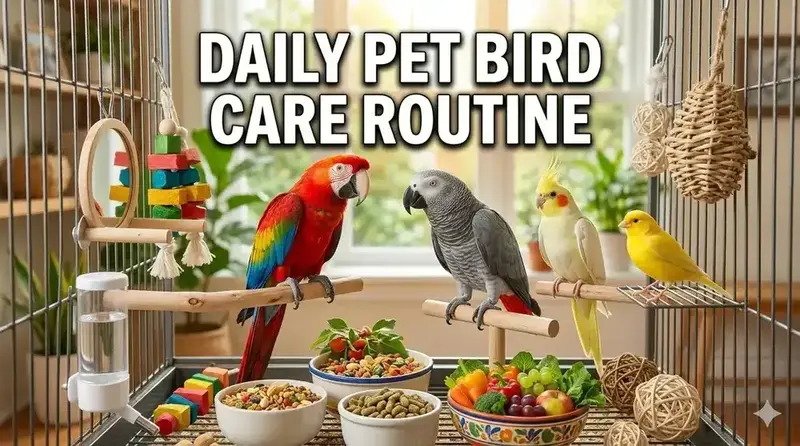
Establishing a consistent daily care routine for pet birds is essential for their physical health, mental wellbeing, and longevity. Whether you're caring for a vibrant parrot, melodious canary, or social cockatiel in the United States, understanding the fundamentals of daily bird care helps create a structured, enriching environment where your feathered companion can thrive. Birds are highly intelligent, social creatures with specific needs that must be met consistently each day. This comprehensive guide covers everything from morning feeding rituals to evening security checks, providing expert advice tailored for American bird owners to ensure your pet bird lives a happy, healthy, and fulfilling life.
Why Daily Routines Matter for Pet Birds
Birds are creatures of habit who thrive on predictability and structure. In the wild, birds follow natural rhythms dictated by sunrise and sunset, feeding patterns, and social interactions. Domesticated birds retain these instincts, making consistent daily routines crucial for their physical and emotional wellbeing.
Benefits of Structured Daily Care
A well-planned routine provides numerous advantages for both you and your bird. Regular feeding times prevent nutritional deficiencies and maintain healthy weight. Scheduled cage cleaning promotes hygiene and prevents disease. Consistent social interaction prevents behavioral problems like feather plucking, excessive screaming, or aggression. Predictable routines reduce stress and anxiety, particularly important for sensitive species like African Greys and Cockatoos.
From a health perspective, daily routines make it easier to spot changes in appetite, droppings, behavior, or appearance that might indicate illness. Birds are masters at hiding illness until it's advanced, so daily observation during routine care is your best defense against serious health problems.
Understanding Bird Circadian Rhythms
Birds are diurnal (active during daylight) and require 10-12 hours of uninterrupted sleep in a dark, quiet environment. Disrupting this natural cycle through inconsistent routines, late-night activity, or inadequate darkness can lead to:
- Hormonal imbalances and behavioral problems
- Weakened immune system
- Excessive screaming or irritability
- Feather destructive behaviors
- Reduced lifespan
- 🐾 Essential Fish Tank Cleaning Tools Complete Guide
- 🐾 Best Perches for Grooming Complete Buyer's Guide
- 🐾 Daily Care Routine for Rabbits: Complete 2026 Guide
Respecting your bird's natural sleep-wake cycle is fundamental to proper care.
Morning Routine: Starting the Day Right
The morning sets the tone for your bird's entire day. A proper morning routine ensures your bird is physically comfortable, mentally stimulated, and ready for social interaction.
First Thing: Health Check and Observation
Before even uncovering the cage, take a moment to observe your bird from a distance. This is when birds are most likely to show signs of illness since they haven't had time to "mask" symptoms:
- Breathing: Should be quiet and regular, no tail bobbing or wheezing
- Posture: Alert and upright, not fluffed up or hunched
- Eyes: Bright, clear, and fully open
- Droppings: Check overnight droppings for consistency, color, and volume changes
- Activity level: Should be alert and responsive to your presence
- 🐾 Essential Fish Tank Cleaning Tools Complete Guide
- 🐾 Best Perches for Grooming Complete Buyer's Guide
- 🐾 Daily Care Routine for Rabbits: Complete 2026 Guide
Any deviations from normal warrant closer monitoring and possibly a veterinary visit.
Uncovering the Cage
Remove the cage cover gently and speak to your bird in a calm, cheerful voice. Sudden movements or loud noises can startle birds, causing stress. Allow a few minutes for your bird to adjust to the light and orient themselves.
In the USA, consider seasonal light changes. During winter months in northern states, you may need to use natural light simulation or ensure your bird receives adequate daylight exposure. In summer, ensure the cage isn't in direct sunlight that could cause overheating.
Fresh Food and Water
Immediately provide fresh food and water. Birds are most hungry after a night of fasting and need immediate access to nutrition.
Water: Replace all water dishes with fresh, clean water. Wash dishes daily with hot, soapy water to prevent bacterial biofilm. Consider using filtered or bottled water if your tap water has high chlorine or mineral content.
Food: Offer fresh pellets as the dietary foundation (75-80% of diet for most parrots). Add fresh vegetables and fruits (15-20% of diet). Remove any uneaten fresh food from the previous day to prevent spoilage.
Treats: Offer seeds and nuts sparingly as training rewards or enrichment (5-10% of diet).
Cage Spot Cleaning
Remove obvious droppings from perches, toys, and cage bars. Replace soiled cage liners or newspaper. This quick cleaning maintains hygiene and allows you to monitor droppings for health issues.
Feeding and Nutrition Management

Proper nutrition is the foundation of bird health. Daily feeding routines must provide complete, balanced nutrition while preventing obesity and nutritional deficiencies.
Daily Nutritional Requirements
Most pet birds need:
- High-quality pellets: Species-appropriate formulated diet providing complete nutrition
- Fresh vegetables: Dark leafy greens, carrots, broccoli, peppers, sweet potato
- Limited fruits: Berries, apple, melon, papaya (high sugar content means moderation)
- Clean water: Available at all times, changed minimum twice daily
- Calcium source: Cuttlebone or mineral block
- 🐾 Essential Fish Tank Cleaning Tools Complete Guide
- 🐾 Best Perches for Grooming Complete Buyer's Guide
- 🐾 Daily Care Routine for Rabbits: Complete 2026 Guide
Feeding Schedule
Morning (7-9 AM): Fresh pellets, vegetables, and fruits. This is when birds are hungriest and most likely to try new foods.
Midday (12-2 PM): Check food levels, refresh water, remove spoiled fresh foods. Add small portion of fresh vegetables if desired.
Evening (5-7 PM): Top up pellets if needed, offer small evening vegetable portion. Remove perishable foods 2-3 hours before bedtime to prevent spoilage overnight.
Species-Specific Dietary Needs
Parrots (African Grey, Amazon, Macaw): Require varied diet with emphasis on vegetables. Need higher fat content than smaller birds. Benefit from cooked legumes and grains.
Cockatiels and Budgies: Smaller portions, can be picky eaters. Need calcium-rich foods especially if laying eggs. Pellets should be appropriately sized.
Canaries and Finches: Primarily seed eaters but benefit from fresh greens, egg food during molting/breeding. Require cuttlebone for calcium.
Preventing Selective Feeding
Many birds will pick out favorite items and leave nutritionally important foods. To prevent this:
- Mix fresh vegetables with pellets
- Chop foods finely so birds can't selectively eat
- Limit high-fat seeds and nuts
- Offer fresh foods when bird is hungriest (morning)
- Be persistent—birds may take weeks to accept new foods
- 🐾 Essential Fish Tank Cleaning Tools Complete Guide
- 🐾 Best Perches for Grooming Complete Buyer's Guide
- 🐾 Daily Care Routine for Rabbits: Complete 2026 Guide
Cage Cleaning and Maintenance

Maintaining a clean environment is crucial for preventing disease and ensuring your bird's comfort. Daily cleaning tasks prevent the buildup of harmful bacteria, fungi, and parasites.
Daily Cleaning Tasks
Food and water dishes: Wash with hot, soapy water daily. Rinse thoroughly to remove all soap residue. Sanitize every 2-3 days with bird-safe disinfectant or dilute bleach solution (1 part bleach to 32 parts water), then rinse thoroughly.
Cage liner: Replace cage bottom liner (newspaper, paper towels, or cage liners) daily. This allows you to monitor droppings and prevents ammonia buildup from urine.
Perches and toys: Wipe down heavily soiled perches and toys. Remove obvious droppings and food debris.
Cage bars: Spot clean bars where droppings accumulate, particularly around perches and food areas.
Weekly Deep Cleaning
Once weekly, perform a thorough cage cleaning:
- Remove bird to safe, secure location (play gym or travel cage)
- Remove all toys, perches, and dishes
- Scrub entire cage with bird-safe disinfectant
- Rinse thoroughly and dry completely
- Scrub perches and toys, rinse well
- Replace cage liner
- Return clean items to cage
- 🐾 Essential Fish Tank Cleaning Tools Complete Guide
- 🐾 Best Perches for Grooming Complete Buyer's Guide
- 🐾 Daily Care Routine for Rabbits: Complete 2026 Guide
Never use harsh chemicals, ammonia-based cleaners, or products with strong fragrances around birds. Their respiratory systems are extremely sensitive.
Monthly Maintenance
- Inspect cage for rust, sharp edges, or broken welds
- Check bar spacing to ensure it's appropriate for your bird's size
- Replace worn or damaged perches and toys
- Deep clean cage stands and surrounding area
- Sanitize or replace heavily soiled toys
- 🐾 Essential Fish Tank Cleaning Tools Complete Guide
- 🐾 Best Perches for Grooming Complete Buyer's Guide
- 🐾 Daily Care Routine for Rabbits: Complete 2026 Guide
Social Interaction and Mental Enrichment

Birds are highly social, intelligent creatures requiring daily mental stimulation and social interaction. Neglecting these needs leads to behavioral problems, depression, and feather destructive behaviors.
Daily Social Time
Most pet birds need 2-4 hours of social interaction daily. This doesn't mean constant attention, but rather quality engagement:
Interactive play: 15-30 minutes of hands-on interaction including training, games, or gentle petting (if your bird enjoys it).
Talking and singing: Talk to your bird throughout the day. Many species enjoy singing, whistling, or conversation.
Training sessions: Short 5-10 minute training sessions using positive reinforcement teach tricks, build trust, and provide mental exercise.
Out-of-cage time: Supervised time outside the cage for exercise and exploration. Most birds benefit from 2-4 hours daily.
Environmental Enrichment
Provide variety to prevent boredom:
Toy rotation: Keep 3-5 toys in the cage and rotate weekly. Store unused toys out of sight to maintain novelty.
Foraging opportunities: Hide treats in paper, foraging toys, or cardboard tubes. This simulates natural food-finding behaviors.
Different textures: Offer perches and toys with varying textures (rope, wood, natural branches, cement for nail filing).
Music and sounds: Many birds enjoy music, nature sounds, or having the TV/radio on for background noise when alone.
Species-Specific Enrichment
Parrots: Need destructible toys (wood, cardboard, leather), puzzle toys, and training challenges. Highly intelligent species like African Greys and Macaws need more mental stimulation.
Cockatiels: Enjoy shredding toys, mirrors (in moderation), and interactive play. Love to sing and whistle.
Budgies: Benefit from swings, ladders, and flock interaction (consider pairs if you can't provide several hours daily).
Canaries: Less hands-on but need flight space, varied perches, and singing opportunities.
Exercise and Flight Time

Physical exercise is essential for maintaining muscle tone, cardiovascular health, and preventing obesity. Most pet birds are capable of and benefit from regular flight.
Daily Exercise Requirements
Flight time: Allow supervised out-of-cage flight time in a bird-proofed room. Aim for 1-2 hours daily for most species. Flight exercises chest muscles and provides mental stimulation.
Cage size: The cage should be large enough for your bird to fully extend wings and fly short distances. Minimum cage size varies by species:
- Budgies/Cockatiels: Minimum 18"x18"x24"
- parrots (Conures, Quakers): Minimum 24"x24"x30"
- Medium parrots (African Grey, Amazon): Minimum 30"x30"x36"
- Large parrots (Macaws, Cockatoos): Minimum 36"x48"x60" or larger
- 🐾 Essential Fish Tank Cleaning Tools Complete Guide
- 🐾 Best Perches for Grooming Complete Buyer's Guide
- 🐾 Daily Care Routine for Rabbits: Complete 2026 Guide
Bird-Proofing for Flight Time
Before allowing out-of-cage time, ensure the area is safe:
- Close windows and doors
- Cover or remove ceiling fans
- Remove toxic plants
- Close toilet lids
- Remove or cover open water sources
- Turn off or cover aquariums
- Remove electrical cords or cover with protective tubing
- Close off unsafe rooms
- Remove other pets from the area
- Check for small spaces where bird could get stuck
- 🐾 Essential Fish Tank Cleaning Tools Complete Guide
- 🐾 Best Perches for Grooming Complete Buyer's Guide
- 🐾 Daily Care Routine for Rabbits: Complete 2026 Guide
Exercise Alternatives
If flight isn't possible (wing-clipped birds or space limitations):
- Provide large play gyms with climbing opportunities
- Encourage walking and climbing
- Use ladder toys
- Interactive play that encourages movement
- Consider flight recapture training for safe out-of-cage time
- 🐾 Essential Fish Tank Cleaning Tools Complete Guide
- 🐾 Best Perches for Grooming Complete Buyer's Guide
- 🐾 Daily Care Routine for Rabbits: Complete 2026 Guide
Health Monitoring and Observation

Daily health monitoring is your best tool for catching illness early. Birds hide illness until it's advanced, making daily observation critical.
Daily Health Checks
Observe these indicators every day:
Droppings: Should be consistent in color, volume, and consistency. Normal droppings have three components:
- Feces: Solid portion, varies in color based on diet (green to brown)
- Urates: White or cream-colored portion
- Urine: Clear liquid portion
- 🐾 Essential Fish Tank Cleaning Tools Complete Guide
- 🐾 Best Perches for Grooming Complete Buyer's Guide
- 🐾 Daily Care Routine for Rabbits: Complete 2026 Guide
Changes to watch for: color changes, increased urine, blood, undigested food, foul odor, or complete absence of droppings.
Appetite: Should eat consistently. Sudden decrease or increase can indicate illness.
Activity level: Should be alert and active during waking hours. Lethargy or excessive sleeping signals problems.
Breathing: Should be quiet and effortless. Watch for tail bobbing, wheezing, clicking sounds, or open-mouth breathing.
Feather condition: Should be smooth, clean, and well-preened. Fluffed feathers, bare patches, or damaged feathers indicate issues.
Weight: Weigh your bird 2-3 times weekly using a gram scale. Sudden weight loss (even 10%) is a serious warning sign.
Weekly Health Assessment
Once weekly, perform a more thorough check:
- Examine eyes for discharge or swelling
- Check nostrils for blockage or discharge
- Inspect beak for overgrowth, cracks, or discoloration
- Examine feet and nails for swelling, sores, or overgrowth
- Check vent area for soiling or swelling
- Feel breast muscle (should be firm, not bony or flabby)
- Examine skin under feathers for parasites, lumps, or irritation
- 🐾 Essential Fish Tank Cleaning Tools Complete Guide
- 🐾 Best Perches for Grooming Complete Buyer's Guide
- 🐾 Daily Care Routine for Rabbits: Complete 2026 Guide
When to Call the Veterinarian
Contact an avian veterinarian immediately if you notice:
- Sitting fluffed up for extended periods
- Tail bobbing with each breath
- Wheezing or breathing difficulty
- Blood in droppings or from any orifice
- Vomiting or regurgitation (different from normal food sharing)
- Complete loss of appetite for more than 12 hours
- Sudden weight loss
- Seizures or loss of balance
- Trauma or injury
- Any sudden behavioral change
- 🐾 Essential Fish Tank Cleaning Tools Complete Guide
- 🐾 Best Perches for Grooming Complete Buyer's Guide
- 🐾 Daily Care Routine for Rabbits: Complete 2026 Guide
Birds can deteriorate rapidly—don't wait to see if symptoms improve.
Grooming and Hygiene

Regular grooming maintains your bird's physical health and allows you to monitor their condition closely.
Bathing and Showering
Most birds benefit from bathing 2-3 times weekly:
Bath options:
- Shallow dish: Provide a shallow dish of lukewarm water for splashing
- Misting: Use a clean spray bottle with lukewarm water
- Sink shower: Allow bird to perch in sink with gentle water flow
- Cage shower: Special shower perches that attach to shower wall
- 🐾 Essential Fish Tank Cleaning Tools Complete Guide
- 🐾 Best Perches for Grooming Complete Buyer's Guide
- 🐾 Daily Care Routine for Rabbits: Complete 2026 Guide
Bathing guidelines:
- Use only lukewarm water—never hot or cold
- Never use soap, shampoo, or chemicals
- Bathe in morning so bird can dry completely before bedtime
- Ensure room is warm and draft-free during and after bathing
- Never force a bird to bathe—offer and let them choose
- 🐾 Essential Fish Tank Cleaning Tools Complete Guide
- 🐾 Best Perches for Grooming Complete Buyer's Guide
- 🐾 Daily Care Routine for Rabbits: Complete 2026 Guide
Nail Trimming
Nails should be trimmed when they become too long (typically every 4-8 weeks):
- Have an avian veterinarian or experienced professional demonstrate proper technique
- Use bird-specific nail clippers or grinding tool
- Only trim the tip—avoid the quick (blood vessel)
- Have styptic powder on hand in case of bleeding
- Provide varied perch textures to naturally wear nails
- 🐾 Essential Fish Tank Cleaning Tools Complete Guide
- 🐾 Best Perches for Grooming Complete Buyer's Guide
- 🐾 Daily Care Routine for Rabbits: Complete 2026 Guide
Wing Trimming
Wing trimming is controversial and should be carefully considered:
- Consult with avian veterinarian about whether trimming is appropriate
- If done, should allow controlled descent but not flight
- Never trim both wings unevenly (causes balance problems)
- Should be performed by experienced professional
- Reconsider as bird matures and learns recall
- 🐾 Essential Fish Tank Cleaning Tools Complete Guide
- 🐾 Best Perches for Grooming Complete Buyer's Guide
- 🐾 Daily Care Routine for Rabbits: Complete 2026 Guide
Beak Care
Healthy beaks generally don't need trimming if proper perches and toys are provided:
- Provide cuttlebone and mineral blocks
- Offer varied perch textures and diameters
- Provide destructible toys for beak exercise
- Beak overgrowth indicates underlying health issues—see veterinarian
- 🐾 Essential Fish Tank Cleaning Tools Complete Guide
- 🐾 Best Perches for Grooming Complete Buyer's Guide
- 🐾 Daily Care Routine for Rabbits: Complete 2026 Guide
Evening Routine: Preparing for Rest

A consistent evening routine signals that the day is ending and helps your bird settle down for necessary sleep.
Pre-Bedtime Activities
Final feeding check: Ensure food and water dishes are full for the night. Remove fresh foods that could spoil overnight.
Last out-of-cage time: Allow final opportunity for exercise and social interaction 1-2 hours before bedtime.
Cage security check: Ensure cage doors are securely latched, no toys or perches are loose, and water dishes are stable.
Final droppings check: Note the last droppings of the day for health monitoring.
Creating Optimal Sleep Environment
Birds need 10-12 hours of uninterrupted sleep in a dark, quiet environment:
Covering the cage: Use a breathable, light-blocking cage cover. Ensure adequate ventilation. Some birds prefer partial covering or no cover—observe your bird's preference.
Location: Place cage in quiet area away from:
- TV or computer screens
- High-traffic areas
- Noisy appliances
- Direct drafts
- 🐾 Essential Fish Tank Cleaning Tools Complete Guide
- 🐾 Best Perches for Grooming Complete Buyer's Guide
- 🐾 Daily Care Routine for Rabbits: Complete 2026 Guide
Temperature: Maintain comfortable temperature (65-80°F for most species). Avoid sudden temperature changes.
Darkness: Ensure complete darkness or use a small nightlight if your bird has night frights.
Bedtime Schedule
Establish consistent bedtime based on natural light cycles:
- Winter: Earlier bedtime (6-7 PM) due to earlier sunset
- Summer: Later bedtime (8-9 PM) but ensure 10-12 hours sleep
- Year-round: Consistency matters more than exact time
- 🐾 Essential Fish Tank Cleaning Tools Complete Guide
- 🐾 Best Perches for Grooming Complete Buyer's Guide
- 🐾 Daily Care Routine for Rabbits: Complete 2026 Guide
Use blackout curtains or cover cage to ensure adequate darkness regardless of season.
Special Considerations by Species

Different bird species have unique care requirements. Adjust your daily routine accordingly.
Parrots (African Grey, Amazon, Macaw, Cockatoo)
Social needs: Require 3-4 hours daily interaction minimum. Highly intelligent and social.
Enrichment: Need complex toys, training challenges, and foraging opportunities.
Noise: Can be loud—consider neighbors and household tolerance.
Diet: Require varied, complex diet with emphasis on vegetables and pellets.
Lifespan: 40-80+ years—consider long-term commitment.
Cockatiels
Social needs: Benefit from 2-3 hours daily interaction. Can be kept in pairs if owner unavailable.
Enrichment: Enjoy toys, mirrors (limited), and singing.
Special concerns: Prone to egg-laying in females—monitor closely.
Diet: Pellets, fresh vegetables, limited seeds.
Budgies (Parakeets)
Social needs: Highly social—consider pairs or provide 2+ hours daily interaction.
Space: Need flight space despite small size.
Enrichment: Toys, swings, ladders, and flock interaction.
Diet: Pellets, fresh greens, limited seeds.
Canaries and Finches
Social needs: Less hands-on interaction but benefit from visual and auditory contact.
Housing: Prefer flight cages over tall cages.
Enrichment: Varied perches, flight space, singing opportunities.
Diet: Quality seed mix, fresh greens, egg food during molt/breeding.
Weekly and Monthly Care Tasks

Beyond daily care, certain tasks require weekly or monthly attention.
Weekly Tasks
- Deep clean entire cage
- Wash all toys and perches
- Sanitize food and water dishes
- Thorough health examination
- Weigh bird and record
- Clean cage stand and surrounding area
- Inspect and rotate toys
- Deep clean play gym or stand
- 🐾 Essential Fish Tank Cleaning Tools Complete Guide
- 🐾 Best Perches for Grooming Complete Buyer's Guide
- 🐾 Daily Care Routine for Rabbits: Complete 2026 Guide
Monthly Tasks
- Inspect cage for wear, rust, or damage
- Replace worn perches and toys
- Trim nails if needed (or schedule vet appointment)
- Deep clean room where cage is located
- Review and adjust diet as needed
- Check and update first aid supplies
- Schedule veterinary wellness exam (at least annually)
- 🐾 Essential Fish Tank Cleaning Tools Complete Guide
- 🐾 Best Perches for Grooming Complete Buyer's Guide
- 🐾 Daily Care Routine for Rabbits: Complete 2026 Guide
Common Mistakes to Avoid

Even well-meaning bird owners can make mistakes that impact their bird's health and happiness.
- Inconsistent sleep schedule: Less than 10 hours sleep causes hormonal and behavioral problems.
- Seed-only diet: Leads to malnutrition, obesity, and shortened lifespan. Pellets should be 75-80% of diet.
- Inadequate social interaction: Causes depression, feather plucking, and screaming.

0 Comments