.png)
Quick Summary and Direct Answer
Cleaning fish food residues requires timely removal of uneaten portions, regular substrate vacuuming, and proper feeding practices that prevent waste accumulation. Experts commonly recommend siphoning debris within thirty minutes of feeding and performing partial water changes weekly to maintain optimal water quality.
Most home aquariums benefit from removing visible food particles within fifteen to thirty minutes after feeding sessions. You should select cleaning tools based on your tank size and substrate type. Fine sand tanks require gentle siphon techniques to avoid substrate loss. Gravel beds handle standard gravel vacuums with deeper cleaning cycles. Always monitor water parameters before and after cleaning to ensure fish safety.
Investing in a mix of budget and premium cleaning tools ensures effective maintenance without overspending. Start with a basic siphon tube and algae scraper before considering automated cleaning systems. Consult an aquatic specialist if your fish show signs of stress, discoloration, or unusual behavior following cleaning activities.
Key Data and Quick Reference Tables
The table below outlines cleaning methods, recommended frequency, and average cost ranges. This data helps you plan a sustainable maintenance routine without guesswork.
| Cleaning Method | Best For Tank Type | Time Required | Average Cost USD |
|---|---|---|---|
| Manual Food Removal | All tanks with visible debris | 2 to 5 minutes | 0 to 5 USD for net |
| Gravel Vacuum Siphoning | Gravel substrate tanks | 10 to 20 minutes | 15 to 45 USD |
| Sand Safe Siphoning | Fine sand substrate tanks | 12 to 25 minutes | 20 to 55 USD |
| Algae Scraper Cleaning | Glass or acrylic tanks | 5 to 10 minutes | 8 to 30 USD |
| Partial Water Change | All aquarium systems | 20 to 40 minutes | 10 to 35 USD for supplies |
| Tank Size Category | Recommended Cleaning Frequency | Water Change Volume | Food Removal Timing |
|---|---|---|---|
| Small under 10 gallons | Spot clean daily, full clean weekly | 25 to 30 percent weekly | Within 15 minutes of feeding |
| Medium 10 to 40 gallons | Spot clean every other day, full clean weekly | 20 to 25 percent weekly | Within 20 to 30 minutes of feeding |
| Large over 40 gallons | Spot clean 2 to 3 times weekly, full clean bi weekly | 15 to 20 percent weekly | Within 30 minutes of feeding |
Understanding Food Residue Impact on Aquarium Health

Uneaten fish food decomposes rapidly in aquarium environments, releasing ammonia and nitrites that stress aquatic life. Widely accepted aquatic care standards emphasize that food waste management directly influences water quality, fish immunity, and long term tank stability.
Decomposing organic matter fuels algae blooms and bacterial imbalances that cloud water and reduce oxygen levels. You should observe your tank daily for floating particles, substrate discoloration, or unusual odors that indicate excess food accumulation.
Early intervention prevents crisis situations. A consistent routine with timely removal keeps water parameters stable. You do not need expensive equipment to start. Simple net scooping combined with proper feeding portions creates a balanced maintenance environment that satisfies hygiene needs while respecting fish welfare.
Safe Cleaning Tools and Product Guidelines

Tool selection significantly impacts cleaning effectiveness and fish safety. Widely accepted aquatic care standards recommend avoiding products containing harsh chemicals, abrasive materials, or unverified additives that may harm beneficial bacteria or fish health. Food grade siphon tubes, aquarium safe algae scrapers, and non toxic water conditioners are commonly recommended for home aquarium maintenance.
Siphon design should match your substrate type to prevent accidental loss of sand or gravel. You must inspect cleaning equipment before each use for cracks, loose fittings, or residue buildup. Ingestion of plastic fragments or chemical exposure commonly leads to fish stress that requires veterinary intervention.
Look for products tested by independent aquatic safety organizations. Many reputable brands publish material certifications on their official websites. When in doubt, consult an aquatic specialist about specific brand recommendations for your tank setup, especially for sensitive species or planted aquariums.
Step by Step Food Residue Removal Protocol

Effective food residue cleaning follows a progressive sequence that prioritizes fish safety while removing waste. You should master each step before advancing to maintain water stability and reduce stress throughout the process.
Step one involves preparation and timing. Wait fifteen to thirty minutes after feeding to allow fish to consume offered food. Gather cleaning tools within reach to minimize disturbance during sessions. Turn off filters temporarily to prevent debris circulation during removal.
Step two focuses on visible debris removal. Use a fine mesh net or turkey baster to gently collect floating food particles. Work slowly from the water surface downward to avoid startling fish. Discard collected waste in a dedicated container, never down household drains.
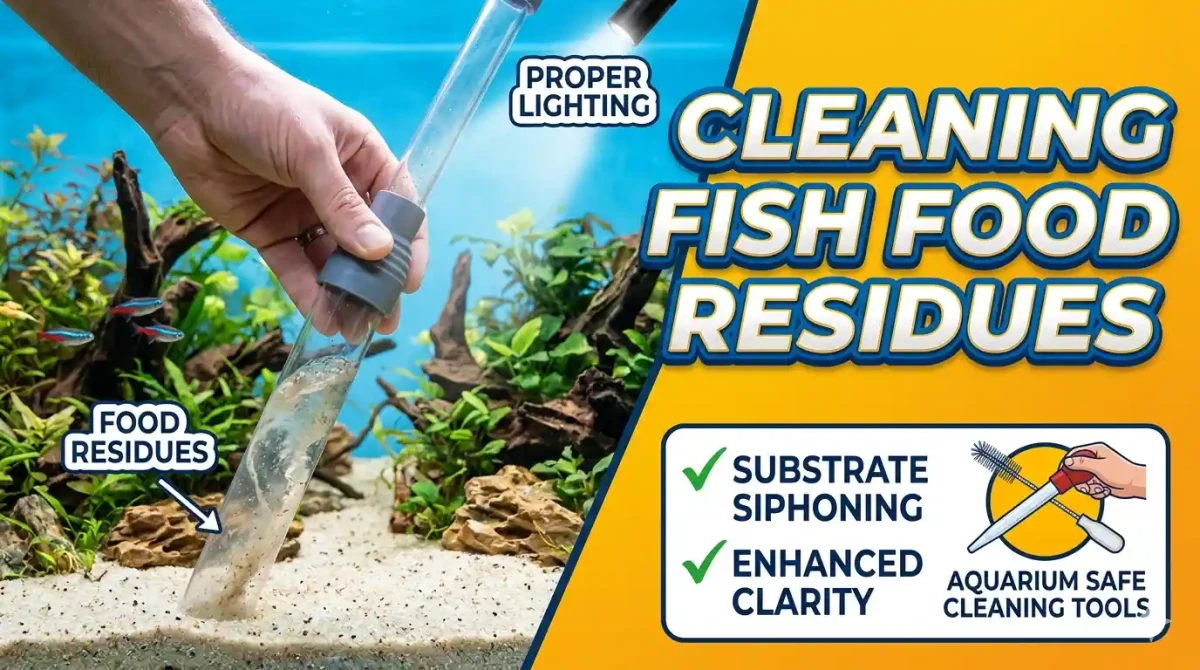
Step three addresses substrate cleaning. For gravel tanks, insert gravel vacuum tube two to three inches into substrate and use gentle up and down motion to lift debris. For sand tanks, hover siphon one inch above surface to remove waste without disturbing substrate. Limit cleaning to one third of tank area per session to preserve beneficial bacteria.
Step four completes with water parameter verification. Test ammonia, nitrite, and pH levels after cleaning to ensure stability. Document results in a maintenance log to identify trends. This systematic approach commonly reduces water quality emergencies and supports long term fish health.
Feeding Practices That Minimize Food Waste

Preventing excess food residue begins with proper feeding techniques. Widely accepted aquatic nutrition standards emphasize that overfeeding is the leading cause of water quality issues in home aquariums.
Recommended feeding guidelines include offering portions fish can consume within two to three minutes. Adult fish typically require feeding once or twice daily. Juvenile fish may benefit from three smaller meals. You should adjust portions based on fish activity levels, water temperature, and observed consumption patterns.
Food type selection influences waste production. Flake foods disperse quickly and may require more frequent cleanup. Pellet and gel foods maintain structure longer, reducing immediate residue. You should test two to three food types to identify options that balance nutrition with manageable waste for your specific tank setup.
Water Quality Monitoring and Preventive Care

Regular water testing provides valuable insights into cleaning effectiveness and fish health. Gentle parameter monitoring allows early detection of ammonia spikes, nitrite accumulation, or pH shifts that may require intervention. You should document test results in a simple journal to share with aquatic specialists.
Beneficial bacteria support biological filtration that processes waste products. Avoid over cleaning filter media or using chlorinated water during maintenance. You should rinse mechanical filter components in tank water only to preserve bacterial colonies essential for water quality.
Monitor fish behavior for signs of water stress including gasping at surface, lethargy, or loss of appetite. Cloudy water or unusual odors after cleaning warrants immediate parameter testing. Contact a licensed aquatic specialist if you notice persistent water quality issues or behavioral changes related to maintenance activities.
Species Specific Considerations for Food Residue Management

Different fish species carry distinct feeding behaviors and waste sensitivity levels. Bottom dwelling species like corydoras and plecos benefit from targeted substrate cleaning that removes debris without disturbing resting areas. You should schedule cleaning during active periods to minimize stress for nocturnal species.
Sensitive species like discus and cardinal tetras require pristine water conditions with minimal cleaning disruption. Preventive focus should include precise feeding portions and frequent small water changes. You should monitor these species closely during maintenance to detect subtle stress indicators.
Active schooling fish like tetras and rasboras benefit from consistent cleaning schedules that maintain water clarity without startling group dynamics. Ensure cleaning tools move predictably to avoid triggering escape responses. You should observe school behavior before and after cleaning to assess comfort levels.
Managing Algae Growth Linked to Food Residues

Excess food nutrients commonly fuel unwanted algae proliferation in home aquariums. Widely accepted aquatic husbandry standards emphasize that controlling food waste directly reduces algae maintenance requirements.
Preventive strategies include removing visible debris within thirty minutes of feeding, maintaining appropriate lighting duration of eight to ten hours daily, and ensuring adequate water circulation. You should combine residue management with regular glass cleaning to address early algae formation before it becomes established.
Know when additional intervention is needed. Discontinue home cleaning adjustments and consult an aquatic specialist if algae persists despite proper waste management. Early professional guidance commonly improves outcomes for persistent algae challenges.
Budget versus Premium Cleaning Tool Comparison

Entry level cleaning supplies priced under fifteen USD provide effective starting options for basic aquarium maintenance. These items commonly include manual siphon tubes, basic algae scrapers, and simple water test strips. They suit low bioload tanks or owners with prior aquarium experience.
Mid range products between twenty and fifty USD offer enhanced convenience and specialized features. These selections balance cost and quality for average household aquariums. Many include ergonomic handles, substrate specific attachments, and digital test kits that simplify preventive routines.
Premium cleaning resources exceeding fifty five USD utilize commercial grade materials and advanced monitoring features. Tanks with sensitive species or complex ecosystems commonly benefit from this support tier. While initial costs remain higher, premium options often improve cleaning efficiency and reduce emergency maintenance expenses long term.
Common Mistakes Aquarium Owners Make During Cleaning

Many owners clean entire tank substrate during single sessions. Removing all debris at once commonly disrupts beneficial bacteria colonies and destabilizes water parameters. You should limit substrate cleaning to one third of tank area per session and rotate zones weekly.
Another frequent error involves using tap water directly during maintenance. Chlorine and chloramines in municipal water may harm fish and beneficial bacteria. You should always treat replacement water with appropriate conditioner before adding to aquarium.
Purchasing based solely on convenience leads to inconsistent maintenance outcomes. Multi purpose products do not guarantee suitability for specific tank needs. Read verified customer feedback and consult aquatic specialist directories before finalizing purchases. Prioritize substrate compatibility and safety certifications over general availability.
Expert Tips from Aquatic Veterinary and Husbandry Standards

Based on common aquatic veterinary practices, you should conduct weekly detailed inspections during cleaning sessions. Check for substrate discoloration, filter performance, and fish behavior changes that indicate developing conditions. Early detection of subtle issues allows timely intervention that may help preserve water quality and fish health.
Combine preventive cleaning with comprehensive wellness routines for optimal results. A stable aquarium maintains better biological balance and tolerates minor fluctuations more effectively. Aim for consistent feeding schedules, appropriate stocking levels, and regular parameter testing alongside timely residue removal. This sequence aligns with natural aquatic cycles and preventive health principles.
Document maintenance observations in a simple wellness journal. Note cleaning frequency, tools used, and fish responses. Over time, this data reveals patterns that improve care efficiency. Share findings with your aquatic specialist during routine consultations for personalized optimization insights.
Frequently Asked Questions

How soon should I remove uneaten fish food from tank
Remove visible uneaten food within fifteen to thirty minutes after feeding sessions. Floating debris should be collected promptly using fine mesh net or turkey baster. Substrate particles may be addressed during scheduled gravel vacuuming. Prompt removal commonly prevents ammonia spikes and algae proliferation.
What causes cloudy water after cleaning food residues
Cloudiness may result from disturbed substrate, bacterial bloom, or incomplete water conditioning. Widely accepted aquatic standards emphasize that gentle cleaning techniques and proper water treatment prevent most post cleaning cloudiness. You should contact an aquatic specialist if cloudiness persists beyond forty eight hours or if fish show stress signs.
Can food residues harm beneficial filter bacteria
Excess food decomposition produces ammonia that beneficial bacteria process, but extreme accumulation may overwhelm biological filtration. You should maintain regular cleaning schedules and avoid overfeeding to support bacterial balance. Combine residue management with appropriate filter maintenance for optimal biological function.
When should I seek professional help for tank cleaning
Consult an aquatic specialist for persistent water quality issues, unexplained fish stress, or complex tank setups with sensitive species. You should seek immediate guidance if cleaning activities trigger ammonia spikes, fish illness, or equipment malfunction. Early professional intervention commonly improves outcomes for challenging maintenance situations.

0 Comments