.png)
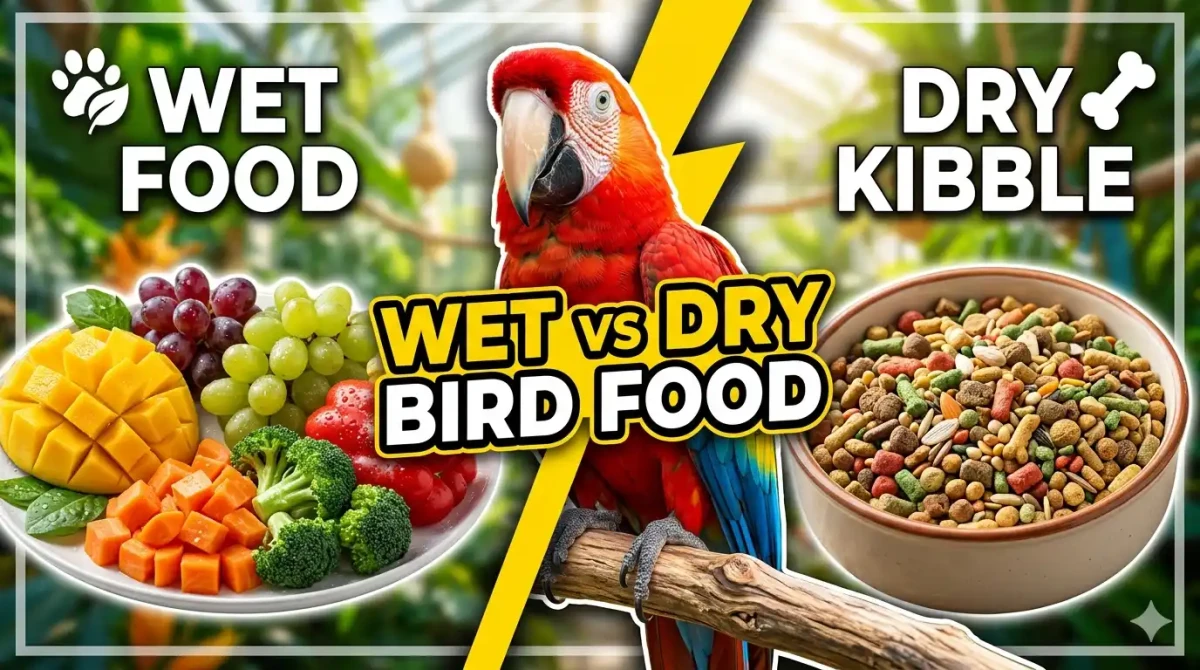
Understanding Wet vs Dry Bird Food: What Avian Owners Need to Know
Choosing between wet (fresh) and dry (pellets/seeds) food is one of the most common questions bird owners face. Unlike mammals, birds have unique digestive systems, high metabolic rates, and species-specific nutritional needs that make this decision particularly important. Both fresh foods and dry formulated diets can support avian health when offered appropriately—but they differ significantly in nutritional profile, safety considerations, convenience, and species suitability. Understanding these differences helps you make an informed choice that supports your bird's long-term health, feather quality, and overall wellbeing.
Featured Snippet Answer: Fresh (wet) bird foods like fruits, vegetables, and cooked grains provide essential vitamins, hydration, and enrichment but spoil quickly and require careful preparation. Dry foods like pellets and seed mixes offer convenience, consistent nutrition, and longer shelf life but may lack variety and moisture. For most pet birds, a balanced diet combining 60-80% high-quality pellets with 20-40% fresh foods optimizes nutrition while addressing practical considerations.
This comprehensive guide examines evidence-based pros and cons of fresh versus dry bird food across critical categories: avian nutrition fundamentals, digestive health, safety and spoilage risks, cost and convenience, and species-specific considerations. You'll learn how to evaluate quality regardless of format, when to prioritize one option, and how combining both can create an optimal diet. Whether you care for a parrot, finch, canary, or other companion bird, you'll find practical, avian-veterinarian-aligned guidance to make the right choice.
Avian Nutrition Fundamentals: Why Format Matters for Birds
Birds are not small mammals—their digestive systems, metabolic rates, and nutritional requirements differ significantly. Understanding these fundamentals shapes how we evaluate fresh versus dry food options.
Unique Avian Nutritional Needs:
- High metabolic rate: Small birds burn energy rapidly; consistent nutrient intake is critical
- Efficient digestion: Birds process food quickly; nutrient density matters more than volume
- Species variation: Parrots (psittacines) need varied diets; finches and canaries thrive on seed-based diets with supplementation
- Essential nutrients: Vitamin A, calcium, amino acids, and trace minerals must be provided in bioavailable forms
- Hydration: Birds obtain moisture from food and water; fresh foods contribute significantly to hydration
- 🐾 Best Pellet Food for Parrots Complete Nutrition Guide
- 🐾 Healthy Guinea Pig Food Brands: 2026 Guide
- 🐾 Homemade Cat Food Recipes and Complete Nutrition Guide
How Format Affects Nutrient Delivery:
- Fresh foods: Provide natural vitamins, enzymes, and moisture; nutrient content varies by freshness and preparation
- Pellets: Formulated to provide consistent, complete nutrition; nutrients are stabilized for shelf life
- Seed mixes: High in fat, low in many essential vitamins; birds often select favorite seeds, creating nutritional imbalances
- 🐾 Best Pellet Food for Parrots Complete Nutrition Guide
- 🐾 Healthy Guinea Pig Food Brands: 2026 Guide
- 🐾 Homemade Cat Food Recipes and Complete Nutrition Guide
The Role of Pellets in Modern Avian Care:
High-quality pellets are formulated to meet Association of Avian Veterinarians (AAV) and veterinary nutritionist standards for specific bird groups. Unlike seed mixes, pellets prevent selective eating and ensure consistent intake of essential nutrients. However, pellets alone may lack the enrichment, variety, and phytonutrients found in fresh foods.
Featured Snippet Answer: Birds have high metabolic rates and species-specific nutritional needs. Pellets provide consistent, complete nutrition; fresh foods offer vitamins, moisture, and enrichment. For most companion birds, a diet of 60-80% quality pellets plus 20-40% fresh foods balances nutritional completeness with variety and enrichment.
Do birds need fresh food to stay healthy?
Birds can survive on nutritionally complete pellets alone, but fresh foods provide essential phytonutrients, enzymes, and variety that support optimal health, feather quality, and behavioral enrichment. Most avian veterinarians recommend offering fresh vegetables and limited fruits daily alongside a quality pellet base. Never offer only seed mixes, which lack essential nutrients and promote selective eating.
Fresh (Wet) Bird Food: Benefits and Considerations

"Wet" bird food refers to fresh fruits, vegetables, cooked grains, legumes, and sprouted seeds—not commercial moist foods, which are rare in avian care.
Nutritional Benefits of Fresh Foods:
- Vitamin diversity: Fresh produce provides natural vitamins A, C, E, and K in bioavailable forms
- Phytonutrients: Plant compounds like carotenoids support immune function and feather pigmentation
- Hydration: Fresh foods contain 70-95% water, contributing significantly to daily hydration needs
- Enzymes and fiber: Natural enzymes aid digestion; fiber supports gastrointestinal health
- Behavioral enrichment: Chopping, foraging, and manipulating fresh foods provides mental stimulation
- 🐾 Best Pellet Food for Parrots Complete Nutrition Guide
- 🐾 Healthy Guinea Pig Food Brands: 2026 Guide
- 🐾 Homemade Cat Food Recipes and Complete Nutrition Guide
Best Fresh Foods for Birds:
- Vegetables: Dark leafy greens (kale, collards), carrots, sweet potato, broccoli, bell peppers, zucchini
- Fruits (limited): Berries, apple (no seeds), melon, papaya, mango—offer sparingly due to sugar content
- Cooked grains/legumes: Quinoa, brown rice, lentils, chickpeas (cooked without salt or seasoning)
- Sprouted seeds: Sprouting increases nutrient bioavailability and reduces fat content
- 🐾 Best Pellet Food for Parrots Complete Nutrition Guide
- 🐾 Healthy Guinea Pig Food Brands: 2026 Guide
- 🐾 Homemade Cat Food Recipes and Complete Nutrition Guide
Safety and Spoilage Risks:
- Rapid spoilage: Fresh foods can harbor bacteria (Salmonella, E. coli) if left at room temperature >2-4 hours
- Toxic foods: Never offer avocado, chocolate, caffeine, alcohol, onion, garlic, fruit pits, or salty/sugary human foods
- Pesticide risk: Wash all produce thoroughly; choose organic when possible for high-pesticide items
- Preparation hygiene: Use clean cutting boards, knives, and hands; avoid cross-contamination with raw meats
- 🐾 Best Pellet Food for Parrots Complete Nutrition Guide
- 🐾 Healthy Guinea Pig Food Brands: 2026 Guide
- 🐾 Homemade Cat Food Recipes and Complete Nutrition Guide
Practical Considerations:
- Time commitment: Fresh foods require daily preparation, washing, and removal of uneaten portions
- Cost variability: Seasonal produce pricing affects budget; frozen vegetables can be cost-effective alternatives
- Waste management: Uneaten fresh food must be discarded promptly to prevent bacterial growth
- 🐾 Best Pellet Food for Parrots Complete Nutrition Guide
- 🐾 Healthy Guinea Pig Food Brands: 2026 Guide
- 🐾 Homemade Cat Food Recipes and Complete Nutrition Guide
Featured Snippet Answer: Fresh bird foods provide essential vitamins, hydration, and enrichment but spoil quickly and require careful preparation. Offer vegetables daily, limit fruits due to sugar content, and always remove uneaten portions within 2-4 hours to prevent bacterial growth. Wash produce thoroughly and avoid toxic items like avocado and chocolate.
Dry Bird Food: Pellets and Seed Mixes Compared

"Dry" bird food includes commercially formulated pellets and traditional seed mixes. These options differ significantly in nutritional quality and should not be considered equivalent.
High-Quality Pellets: The Nutritional Standard
- Complete nutrition: Formulated to meet avian nutritional standards with balanced proteins, vitamins, and minerals
- Prevent selective eating: Uniform composition ensures birds consume all essential nutrients
- Consistent quality: Reputable brands undergo rigorous testing for nutrient content and safety
- Long shelf life: Properly stored pellets maintain nutrient stability for months
- Convenience: Easy to measure, store, and serve with minimal preparation
- 🐾 Best Pellet Food for Parrots Complete Nutrition Guide
- 🐾 Healthy Guinea Pig Food Brands: 2026 Guide
- 🐾 Homemade Cat Food Recipes and Complete Nutrition Guide
Top Pellet Brands for Companion Birds:
- Harrison's Bird Foods: Organic, no artificial additives; available in multiple formulations
- Roudybush: Scientifically formulated, no artificial colors or flavors
- Zupreem Natural: Palatable options with fruit flavors; choose natural versions over artificially colored
- Mazuri: Affordable, widely available, nutritionally sound formulations
- 🐾 Best Pellet Food for Parrots Complete Nutrition Guide
- 🐾 Healthy Guinea Pig Food Brands: 2026 Guide
- 🐾 Homemade Cat Food Recipes and Complete Nutrition Guide
Seed Mixes: Limitations and Risks
- Nutritional imbalance: High in fat, low in calcium, vitamin A, and other essential nutrients
- Selective eating: Birds pick favorite high-fat seeds, discarding fortified components
- Health consequences: Seed-only diets contribute to obesity, fatty liver disease, and vitamin deficiencies
- When seeds are appropriate: As limited treats (
🐱 আরও পড়ুন: Bird Food

0 Comments