.png)
How to Teach a Cat to High Five and Complete Training Guide
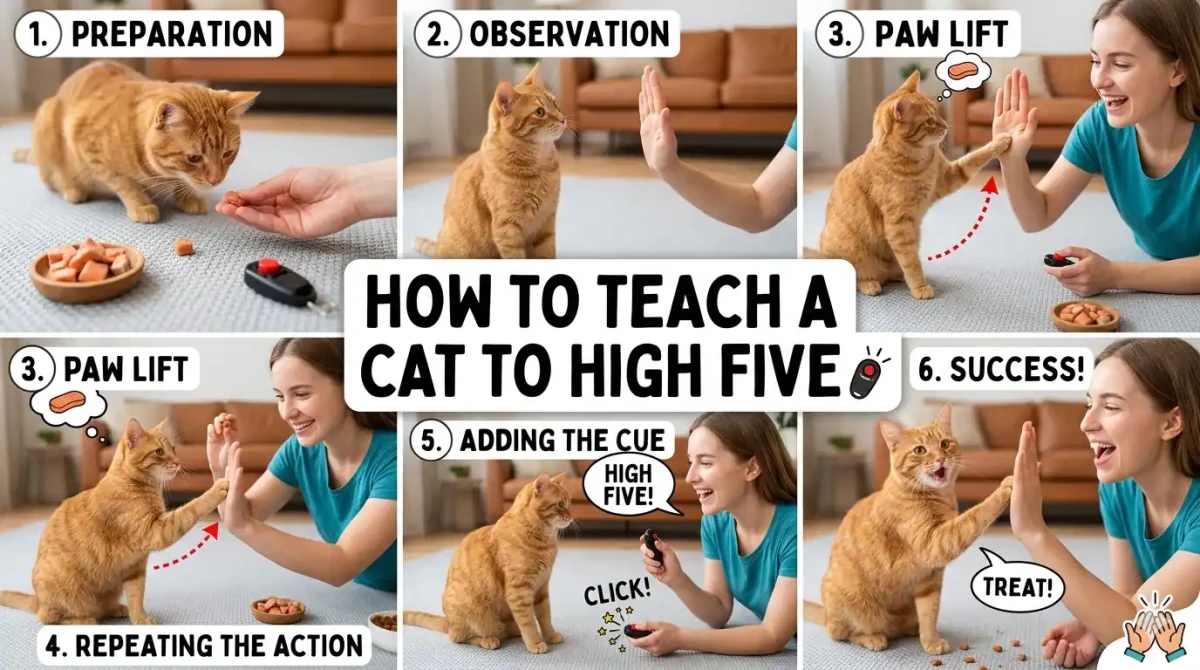
Introduction to Teaching Cats to High Five
Learning how to teach a cat to high five opens a delightful doorway into the world of feline training, demonstrating that cats are capable learners who enjoy mental stimulation and positive interaction with their human companions. While dogs often receive credit for trainability, cats respond remarkably well to reward-based training methods when approached with patience, consistency, and understanding of their unique motivations. Teaching your cat to high five not only creates an impressive party trick but also strengthens your bond, provides mental enrichment, and builds confidence in your feline friend.
Cat training differs from dog training in important ways that require adapted techniques and expectations. Cats are independent thinkers motivated by different rewards, with shorter attention spans and distinct communication styles. Understanding these differences helps owners approach training with realistic goals and effective methods that respect feline nature while achieving impressive results. The high five trick serves as an excellent foundation behavior that builds skills transferable to other training goals like coming when called, entering carriers willingly, or accepting grooming.
This comprehensive guide explores everything you need to know about how to teach a cat to high five, from understanding feline learning principles and selecting appropriate rewards to implementing step-by-step training protocols and troubleshooting common challenges. Whether you have a playful kitten eager to learn or a senior cat ready for new mental stimulation, this guide provides the knowledge and techniques to successfully teach your cat this engaging trick while deepening your relationship through positive, enjoyable training sessions.
Why Train Your Cat to High Five
Teaching cats tricks like the high five offers benefits that extend far beyond entertainment value, contributing to feline wellbeing, behavioral health, and the human-animal bond in meaningful ways.
What are the benefits of teaching cats to high five?
Mental stimulation and enrichment represent primary benefits of trick training for cats. Indoor cats especially benefit from activities that engage their intelligence and problem-solving abilities, preventing boredom-related behaviors like excessive grooming, destructive scratching, or vocalization. Training sessions provide focused mental exercise that tires cats in healthy ways, similar to how physical play exhausts them physically.
Strengthened human-cat bonds develop naturally through positive training interactions. When cats associate their owners with rewarding experiences, trust and affection deepen. Training creates dedicated one-on-one time that many cats crave but may not actively seek, providing structured attention that satisfies social needs without overwhelming independent feline personalities.
Behavioral flexibility and confidence building occur as cats learn to offer behaviors and receive positive feedback. Cats who successfully learn tricks often become more willing to try new experiences, handle handling better, and display reduced anxiety in novel situations. The confidence gained from mastering the high five can transfer to other areas of your cat life, creating a more adaptable and resilient companion.
Understanding Feline Learning Principles

Successful cat training requires understanding how cats learn, what motivates them, and how to structure sessions that align with feline cognition and behavior patterns.
How do cats learn new behaviors?
Cats learn primarily through operant conditioning, associating their own actions with consequences that are either rewarding or unpleasant. When a behavior produces a desirable outcome like food, praise, or play, cats are more likely to repeat that behavior. This principle forms the foundation of positive reinforcement training, where desired behaviors are rewarded to increase their frequency.
Timing is critical in cat training because cats connect consequences with actions that occur within seconds. Rewards must follow desired behaviors immediately for cats to make the association. Delayed rewards confuse cats and reduce training effectiveness. Using a clicker or marker word helps bridge the gap between behavior and reward by marking the exact moment the desired action occurs.
Cats learn best through shaping, a process of rewarding successive approximations toward a final behavior. Rather than expecting a perfect high five immediately, trainers reward small steps like looking at your hand, lifting a paw slightly, or touching your hand briefly. Gradually raising criteria builds the complete behavior while maintaining motivation and reducing frustration for both cat and trainer.
Essential Training Supplies and Setup

Having appropriate tools and creating an optimal training environment sets the stage for successful cat training sessions that maximize learning and minimize distractions.
What supplies do you need to teach a cat to high five?
High-value treats form the cornerstone of effective cat training. Select small, soft, aromatic treats that your cat finds irresistible and can consume quickly without interrupting training flow. Options include freeze-dried chicken, commercial cat treats, small pieces of cooked fish, or specialized training treats. Avoid large or hard treats that require extended chewing, as these break training momentum and reduce the number of repetitions possible in a session.
A clicker or marker word provides precise communication about which behavior earns rewards. Clickers produce a consistent, distinct sound that cats quickly learn to associate with impending rewards. If you prefer not to use a clicker, choose a short, unique marker word like yes or good that you can deliver consistently. The marker bridges the time between desired behavior and treat delivery, improving learning speed and accuracy.
A quiet, low-distraction training area helps cats focus on learning new skills. Choose a familiar room with minimal foot traffic, background noise, or competing stimuli like other pets or interesting window views. As your cat masters the high five in calm environments, gradually introduce mild distractions to build reliability across different contexts.
Optional but helpful tools include a target stick for guiding paw movements, a mat or designated training spot to establish location cues, and a treat pouch for convenient reward access during sessions. These items streamline training but are not essential for teaching the high five trick.
Step by Step Training Process

Teaching a cat to high five follows a systematic progression that builds the behavior through small, achievable steps while maintaining motivation and preventing frustration.
How do you teach a cat to high five step by step?
Begin by ensuring your cat is motivated and ready to learn. Schedule training sessions when your cat is alert but not hyperactive, typically before meals when food motivation is highest. Keep sessions brief, lasting three to five minutes for beginners, to match feline attention spans and end while your cat remains engaged.
Step one: Capture paw lifting behavior. Sit comfortably with your cat nearby and watch for any spontaneous paw movement. The moment your cat lifts a paw for any reason, immediately mark the behavior with your clicker or marker word and deliver a treat. Repeat this process, rewarding any paw lift, until your cat begins offering paw lifts more frequently in anticipation of rewards.
Step two: Add a hand cue. Once your cat reliably lifts a paw when you are present, present your open palm at a comfortable height near your cat shoulder level. When your cat lifts a paw and makes contact with your hand, mark and reward immediately. If your cat does not touch your hand initially, reward any paw movement in the direction of your hand, gradually requiring closer approximation before marking.
Step three: Shape the high five motion. Begin raising your criteria by only marking and rewarding when your cat lifts their paw higher or makes firmer contact with your hand. Gradually shape the behavior toward the classic high five motion by rewarding progressively more complete versions of the trick. Be patient with this shaping process, as cats learn at individual paces.
Step four: Add the verbal cue. Once your cat reliably touches your raised hand with their paw, introduce a verbal cue like high five or up just before presenting your hand. Say the cue clearly, present your hand, mark the successful touch, and reward. With repetition, your cat will associate the verbal cue with the behavior, eventually responding to the word alone.
Step five: Practice and generalize. Practice the high five in different locations, at different times of day, and with mild distractions to help your cat generalize the behavior across contexts. Gradually fade the frequency of treats by switching to intermittent reinforcement, rewarding every other success, then randomly, while maintaining occasional praise and petting as secondary rewards.
Using Clicker Training Effectively

Clicker training provides precise communication that accelerates learning and reduces confusion during cat training sessions. Understanding proper clicker use maximizes its benefits.
How do you use a clicker for cat training?
Charge the clicker before beginning trick training by creating a positive association between the click sound and rewards. Click the device and immediately deliver a treat, repeating this process ten to fifteen times in a single session. Your cat will quickly learn that the click predicts a coming reward, making the clicker an effective marker for desired behaviors.
Click at the exact moment the desired behavior occurs, not after. For the high five, click the instant your cat paw contacts your hand. Precise timing helps cats understand exactly which action earned the reward. If you click too early or too late, cats may associate the reward with the wrong behavior, slowing learning progress.
Always follow clicks with rewards during initial training phases. The clicker has no inherent value to cats; its power comes from consistent pairing with treats. Never click without delivering a reward, as this breaks the association and reduces the clicker effectiveness. Once behaviors are well-established, you can occasionally click without treating to maintain the behavior while reducing treat dependency.
Troubleshooting Common Training Challenges

Even with proper techniques, cat training encounters obstacles that require problem-solving and adaptation. Recognizing and addressing common challenges keeps training progress on track.
What should you do if your cat loses interest during training?
Shorten session duration to match your cat attention span. Cats typically focus best for three to five minute sessions, especially when learning new skills. End sessions while your cat remains engaged rather than pushing until they become bored or frustrated. Multiple brief sessions throughout the day often prove more effective than fewer lengthy ones.
Upgrade treat value to increase motivation. If your cat seems uninterested in training, try higher-value rewards like small pieces of cooked chicken, tuna, or commercial treats specifically designed for training. Reserve these premium rewards exclusively for training sessions to maintain their special appeal.
Change training location or timing to reduce competing motivations. If your cat is distracted by household activity, move to a quieter room. If training after playtime when your cat is tired, try scheduling sessions before meals when food motivation peaks. Adjusting environmental factors often restores focus and enthusiasm.
How do you handle a cat that swats instead of high fives?
Withhold rewards for swatting behaviors to avoid reinforcing unwanted actions. If your cat bats at your hand with claws extended or excessive force, simply withdraw your hand without marking or treating. Wait for a gentler paw lift before resuming training. Consistency teaches cats that only appropriate high five motions earn rewards.
Shape gentler contact by initially rewarding any paw movement toward your hand, then gradually requiring softer touches before marking. Hold your hand steady and relaxed to encourage gentle contact rather than defensive swatting. If your cat has a history of aggressive play, consult a feline behaviorist to address underlying issues before continuing trick training.
Consider using a target stick as an intermediate step. Some cats respond better to touching a distinct object like a target stick before transitioning to hand contact. This approach provides clearer guidance and may reduce confusion about appropriate contact intensity.
Adapting Training for Different Cat Personalities

Cats display diverse temperaments that influence training approaches and pacing. Customizing techniques to individual personalities optimizes learning outcomes and maintains enjoyment for both cat and trainer.
How do you train cats with different temperaments?
Bold, confident cats often progress quickly through training steps but may benefit from added challenges to maintain engagement. These cats typically tolerate mild distractions earlier in the learning process and may enjoy incorporating the high five into more complex trick sequences. Keep sessions dynamic and varied to prevent boredom in quick-learning felines.
Shy or cautious cats require slower pacing and extra patience during training. Begin sessions at greater distances from novel stimuli, use higher-value rewards to build motivation, and progress through shaping steps more gradually. Allow these cats to approach training materials at their own pace rather than encouraging or forcing interaction. Celebrate small improvements to build confidence alongside skills.
Independent or aloof cats may seem less interested in training but often respond well to brief, high-reward sessions. Respect their autonomy by ending sessions when they choose to disengage rather than attempting to prolong interaction. These cats often excel at training when it occurs on their terms, so watch for moments when they seek interaction and capitalize on those opportunities.
Maintaining and Generalizing the High Five Behavior

Once your cat reliably performs the high five in training sessions, maintaining the behavior and expanding its reliability across contexts ensures long-term success.
How do you maintain the high five behavior long term?
Transition to intermittent reinforcement to maintain the behavior while reducing treat dependency. Once your cat reliably high fives on cue, begin rewarding only some successful responses rather than every instance. Randomize which attempts earn treats to create a slot machine effect that maintains motivation. Continue offering verbal praise and petting for all successful responses to maintain the behavior through secondary rewards.
Practice in varied contexts to generalize the behavior. Train the high five in different rooms, at different times of day, with different family members offering the cue, and with mild background distractions. This variation helps your cat understand that the high five cue applies universally rather than only in specific training scenarios.
Incorporate the high five into daily routines to maintain relevance. Ask for a high five before meals, during greeting rituals, or as part of play sessions. Integrating the trick into natural interactions prevents the behavior from becoming a isolated party trick and maintains your cat engagement with training.
Common Mistakes to Avoid

Even experienced cat owners can make training errors that slow progress or create frustration. Recognizing and avoiding these pitfalls accelerates learning and maintains positive training experiences.
What mistakes should you avoid when teaching cats to high five?
Rushing the shaping process creates confusion and frustration. Expecting a perfect high five immediately rather than rewarding small approximations overwhelms cats and reduces motivation. Progress through shaping steps gradually, celebrating incremental improvements and allowing your cat time to master each criterion before raising expectations.
Inconsistent marking and rewarding confuses cats about which behaviors earn rewards. Using different marker words, clicking at inconsistent times, or occasionally rewarding unwanted behaviors creates mixed signals that slow learning. Maintain consistency in your marking timing, reward delivery, and criteria for earning rewards throughout training.
Training when cats are unmotivated wastes time and creates negative associations. Attempting training sessions when your cat is sleepy, full, or distracted by more interesting activities reduces learning efficiency. Schedule sessions when your cat is alert and food-motivated, typically before meals, to maximize engagement and progress.
Punishing mistakes or showing frustration damages trust and reduces training effectiveness. Cats do not respond well to correction-based training methods and may become fearful or avoidant if training sessions include negative experiences. Keep sessions positive, end on successful notes, and take breaks when either you or your cat becomes frustrated.
Expanding Training Beyond the High Five

Mastering the high five builds foundational skills that facilitate teaching additional tricks and behaviors, creating opportunities for ongoing mental enrichment and bonding.
What tricks can you teach after mastering the high five?
Sit and stay behaviors build on paw-lifting skills by adding impulse control and duration. Once your cat reliably high fives, you can shape sitting by rewarding when their rear end touches the ground, then gradually requiring longer durations before marking. This behavior proves useful for mealtime routines and general manners.
Target training expands your cat ability to follow hand signals to specific locations. Teaching your cat to touch their nose to your finger or a target stick creates a versatile foundation for guiding movement, entering carriers, or learning complex trick sequences. Target training leverages the same shaping principles used for the high five.
Come when called builds reliable recall using positive reinforcement techniques similar to high five training. Start by marking and rewarding your cat for approaching you, then add a verbal cue, and gradually increase distance and distractions. This behavior enhances safety and strengthens your bond through positive interactions.
Training Sessions Structure and Timing

Optimizing session structure and timing maximizes learning efficiency while respecting feline attention spans and motivation patterns.
How long and how often should you train your cat?
Keep training sessions brief, lasting three to five minutes for beginners and up to ten minutes for experienced training cats. Cats have shorter attention spans than dogs and become frustrated or bored with extended sessions. Multiple short sessions throughout the day prove more effective than fewer lengthy ones, allowing repeated practice without mental fatigue.
Schedule sessions when your cat is most motivated, typically before meals when food drive peaks. Avoid training immediately after play sessions when your cat may be tired or after feeding when food motivation decreases. Observe your cat energy patterns and align training with natural motivation cycles for optimal results.
End every session on a positive note with a successful behavior and reward. If your cat struggles with a particular step, return to an easier criterion they can master, mark and reward that success, then conclude the session. Ending with achievement maintains motivation and enthusiasm for future training.
Frequently Asked Questions

How long does it take to teach a cat to high five?
Training timelines vary significantly based on individual cat temperament, prior training experience, session consistency, and trainer skill. Some cats master the high five in just a few sessions over several days, while others may require weeks of consistent practice. Shy or inexperienced cats often progress more slowly than bold, previously trained felines. Focus on steady progress rather than speed, celebrating small improvements along the journey. Most cats show noticeable progress within one to two weeks of daily short sessions.
Can older cats learn to high five?
Yes, cats of any age can learn new behaviors including the high five trick. While kittens and young cats may learn slightly faster due to heightened curiosity and neuroplasticity, senior cats remain capable learners when training respects their physical limitations and pacing preferences. Older cats may require shorter sessions, higher-value rewards, and more patience, but the mental stimulation of learning new tricks provides valuable enrichment that supports cognitive health throughout life.
What if my cat never lifts their paw naturally?
If your cat does not spontaneously lift their paw, you can encourage the behavior through luring or gentle physical guidance. Hold a treat near your cat nose and slowly move it upward and slightly toward their chest, encouraging them to lift a paw to follow. Mark and reward any upward paw movement, even slight lifts. Alternatively, gently touch the back of your cat lower leg to encourage a reflexive paw lift, marking and rewarding immediately. With patience and consistent shaping, most cats learn to offer paw lifts even if they do not do so naturally.
Should I use both paws for high five training?
Training both paws provides mental variety and physical balance but is not necessary for a successful high five trick. Most cats have a dominant paw they prefer using, and training typically progresses faster when focusing on this natural preference. Once your cat reliably high fives with their preferred paw, you can optionally teach the behavior with the other paw using the same shaping process. Use distinct verbal cues like left high five and right high five to differentiate the behaviors if teaching both paws.
Can I teach the high five without treats?
While treats provide the most efficient motivation for initial learning, some cats respond well to alternative rewards like favorite toys, petting, or verbal praise. However, food rewards typically accelerate learning because they provide immediate, consistent reinforcement that cats highly value. If you prefer to minimize treat use, begin training with food rewards to establish the behavior quickly, then gradually transition to intermittent treats combined with secondary rewards like praise or play. Completely eliminating food rewards may slow learning significantly for most cats.
What if my cat gets aggressive during training?
Aggressive responses during training warrant immediate pause and evaluation. Stop the session if your cat shows signs of aggression like hissing, swatting with claws, or biting. Assess whether training is occurring when your cat is overstimulated, whether criteria are too challenging, or whether underlying behavioral issues require professional attention. Consult a certified feline behaviorist if aggression persists, as forcing training with an aggressive cat can worsen behavioral problems and damage your relationship. Always prioritize your cat emotional state and welfare over training goals.
Conclusion

Learning how to teach a cat to high five represents a rewarding journey that strengthens your bond with your feline companion while providing valuable mental stimulation and behavioral enrichment. By understanding feline learning principles, using positive reinforcement techniques, and progressing through systematic shaping steps, you can successfully teach this engaging trick to cats of various ages, temperaments, and backgrounds.
Remember that training should always remain a positive, enjoyable experience for both you and your cat. Respect your cat individual pace, celebrate small successes, and maintain patience when progress seems slow. The high five trick is not merely an impressive party skill but a foundation for ongoing communication, trust-building, and mutual enjoyment that enhances your relationship throughout your cat life.
By following the guidelines in this comprehensive guide, you can confidently teach your cat to high five using evidence-based methods that prioritize feline welfare, respect individual differences, and build lasting skills. Your commitment to positive, patient training demonstrates the love and responsibility that defines exceptional cat ownership, ensuring your feline friend enjoys many years of engaging interaction and mental enrichment by your side.
🐱 আরও পড়ুন: Cat Training and Behavior
- 🐾 How to Train Cats to Sit on Command Complete Guide
- 🐾 How to Stop Cats from Biting: Expert Behavior Guide
- 🐾 How to Train Cats to Come When Called: Expert Step-by-Step Guide
- 🐾 How to Train a Cat to Use Litter Consistently: Complete 2026 Guide
- 🐾 How to Stop Cats from Aggressive Behavior: Expert Behavior Guide

0 Comments