.png)
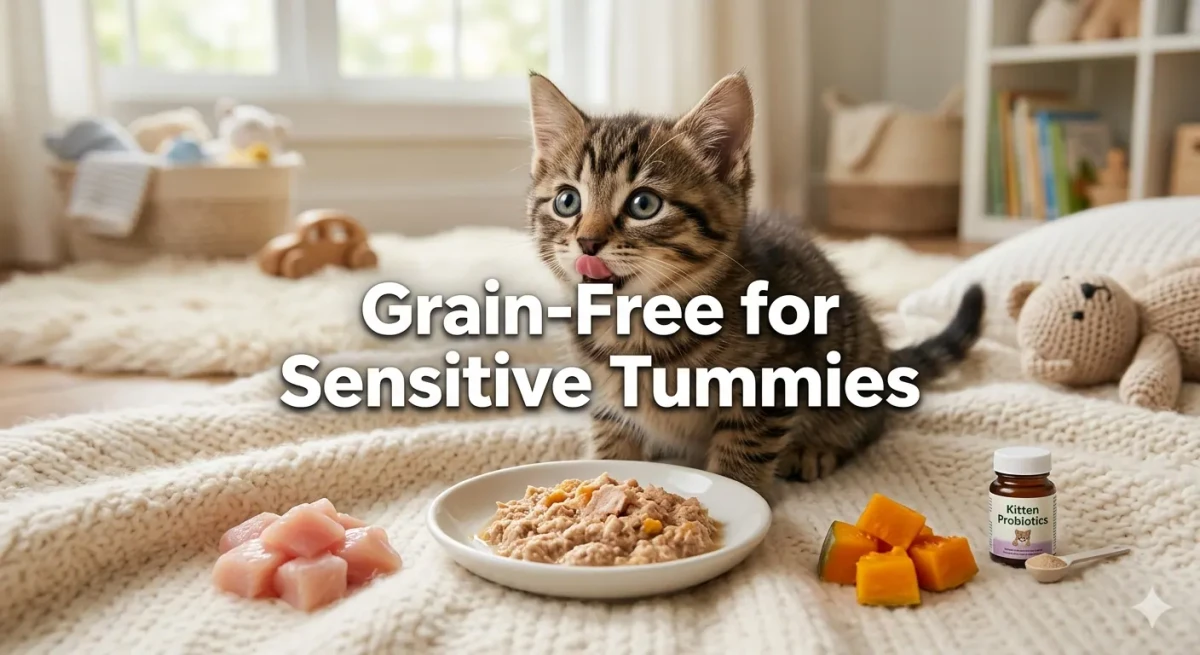
Understanding Sensitive Stomachs and Diarrhea in Kittens
Diarrhea and digestive sensitivity are among the most common concerns kitten owners face, affecting up to 30% of young felines during their first year. Kittens have delicate, developing digestive systems that are particularly vulnerable to dietary changes, food sensitivities, and environmental stressors. When a kitten experiences frequent loose stools, vomiting, or digestive discomfort, it can impact their growth, immune development, and overall wellbeing.
Grain-free kitten foods have emerged as a valuable option for managing sensitive stomachs and diarrhea in young cats. By eliminating common grain-based fillers like corn, wheat, and soy—which can trigger digestive upset in sensitive kittens—these formulas focus on highly digestible animal proteins, prebiotic fibers, and gut-supporting nutrients that promote healthy digestion and firm stools.
According to veterinary gastroenterologists and feline nutritionists, kittens with sensitive stomachs benefit significantly from grain-free diets containing single-source animal proteins, prebiotics like FOS and MOS, probiotics for gut flora balance, and easily digestible carbohydrate alternatives like sweet potato or peas. Best Cat Food for Sensitive Stomachs: Expert Nutrition Guide provides essential insights into selecting appropriate nutrition for cats with digestive sensitivities.
Common Causes of Diarrhea in Kittens
Understanding what triggers diarrhea helps owners implement appropriate preventive measures and select suitable nutrition:
- Food Sensitivities: Grains, dairy, or certain proteins can trigger immune responses leading to digestive upset
- Dietary Changes: Sudden switches in food without gradual transition disrupt gut flora
- Parasites: Roundworms, giardia, and coccidia commonly cause diarrhea in young kittens
- Stress: New environments, separation from littermates, or changes in routine impact digestion
- Infections: Viral or bacterial infections can cause acute digestive issues
- Overfeeding: Too much food too quickly overwhelms immature digestive systems
Recognizing early warning signs is crucial for timely intervention. Learn more about Early Warning Signs Your Cat Is Sick: Complete Guide to help identify potential digestive issues before they become severe.
How Grain-Free Nutrition Supports Digestive Health
Grain-free kitten foods address sensitive stomachs through multiple mechanisms:
Elimination of Common Triggers: Removing corn, wheat, soy, and other grains reduces exposure to ingredients that commonly cause sensitivities and inflammatory responses in young cats.
Highly Digestible Proteins: Grain-free formulas typically feature single-source animal proteins like chicken, turkey, or fish that are easier for sensitive digestive systems to process.
Prebiotic Fiber Support: Ingredients like chicory root, pumpkin, or beet pulp feed beneficial gut bacteria, promoting a balanced microbiome that supports firm stools and reduced diarrhea.
Reduced Carbohydrate Load: Cats are obligate carnivores with limited ability to digest complex carbohydrates; grain-free formulas align better with their natural digestive physiology.
Understanding Cat Digestive Health Guide for Beginners Complete Care helps you appreciate how proper nutrition affects overall digestive function and wellbeing in growing kittens.
Key Nutrients for Sensitive Stomach and Diarrhea Relief
Selecting appropriate grain-free kitten food requires understanding specific nutrients that promote digestive health and reduce diarrhea episodes.
Single-Source Animal Protein
Protein quality and simplicity are fundamental for sensitive kittens:
- Single Protein Source: Chicken, turkey, duck, or fish listed as the sole animal protein reduces sensitivity risk
- High Digestibility: Proteins that are efficiently absorbed reduce digestive stress and waste
- Taurine: Essential amino acid critical for heart, vision, and overall health; minimum 0.1% in dry food, 0.2% in wet food
- Avoid By-Products: Named meat sources are preferable to unnamed by-products for sensitive systems
Prebiotics and Probiotics
Gut flora balance is essential for preventing and managing diarrhea:
- Prebiotics (FOS, MOS, Inulin): Fibers that feed beneficial bacteria, promoting a healthy gut microbiome
- Probiotics (Lactobacillus, Bifidobacterium): Live beneficial bacteria that colonize the gut and support digestive balance
- Synergistic Effects: Combined prebiotics and probiotics (synbiotics) provide enhanced digestive benefits
Easily Digestible Carbohydrate Alternatives
While cats require minimal carbohydrates, grain-free alternatives support digestive health:
- Sweet Potato: Gentle, fiber-rich carbohydrate that supports stool formation
- Pumpkin: Natural source of soluble fiber that helps firm loose stools
- Peas: Provide fiber and plant protein without common grain allergens
- Limited Quantities: Carbohydrates should remain a minor component of kitten diets
Omega-3 Fatty Acids
Anti-inflammatory nutrients support gut lining health:
- EPA and DHA: From fish oil, reduce intestinal inflammation that can contribute to diarrhea
- Gut Barrier Support: Help maintain healthy intestinal lining integrity
- Immune Modulation: Support balanced immune responses in the digestive tract
Moisture Content Considerations
The format of kitten food impacts hydration and digestion:
- Wet Food Benefits: Higher moisture content (70-80%) supports hydration, which is critical during diarrhea episodes
- Dry Food Convenience: Easier for free-feeding growing kittens; look for easily digestible grain-free formulas
- Combination Approach: Many owners successfully feed both wet and dry food to balance hydration and convenience
Understanding the Wet vs Dry Cat Food: Which Is Better? debate helps you choose the format that best supports your sensitive kitten's digestive and hydration needs.
Top 10 Best Grain-Free Kitten Foods for Sensitive Stomachs in 2026

After extensive research, veterinary consultation, and analysis of ingredient quality, nutritional composition, and real-world results, here are the top grain-free kitten foods for sensitive stomachs and diarrhea relief available in the USA for 2026.
1. Blue Buffalo Healthy Growth Grain-Free Kitten Food
Best Overall for Sensitive Stomach Relief
Blue Buffalo's Healthy Growth grain-free formula combines natural ingredients with digestive-supporting nutrients specifically designed for kittens with sensitive systems.
Key Features:
- Single-source chicken protein for reduced sensitivity risk
- Grain-free formula with sweet potato and peas
- Prebiotic fiber from chicory root for gut health
- Probiotics for digestive balance
- DHA from fish oil for brain development
- No artificial preservatives, colors, or flavors
Pros: Natural ingredients, widely available, good palatability, effective prebiotic support, proven results for sensitive kittens
Cons: Contains some plant proteins, higher price point, some kittens may need transition time
Best For: Kittens with sensitive stomachs needing natural grain-free nutrition with digestive support
2. Wellness CORE Grain-Free Kitten Formula
Best Premium Grain-Free Option
Wellness CORE combines high protein with grain-free nutrition and comprehensive digestive support for sensitive growing kittens.
Key Features:
- High protein (42%) from turkey and chicken
- Grain-free with sweet potato and peas
- Probiotics for gut flora balance
- Prebiotic fiber from chicory root
- Omega fatty acids from salmon oil
- No meat by-products, fillers, or artificial additives
Pros: High-quality ingredients, excellent protein content, probiotic and prebiotic support, natural ingredients, effective for sensitive digestion
Cons: Premium price, may be too rich for some kittens, limited availability in some areas
Best For: Owners seeking premium grain-free nutrition with comprehensive digestive support for sensitive kittens
3. Instinct Kitten Grain-Free with Probiotics
Best Raw-Inspired Formula for Sensitive Digestion
Instinct's Kitten formula combines high-quality grain-free kibble with freeze-dried raw pieces and probiotics for enhanced digestive health.
Key Features:
- Cage-free chicken as primary protein
- Grain-free formula with minimal carbohydrates
- Probiotics for gut health and diarrhea relief
- Freeze-dried raw coating for enhanced nutrition
- Omega fatty acids for anti-inflammatory support
- No grains, gluten, corn, wheat, soy, or artificial ingredients
Pros: Raw nutrition benefits, high protein, excellent palatability, probiotic support, grain-free, effective for sensitive systems
Cons: Premium price, strong smell, may be too rich for sedentary kittens
Best For: Active kittens with sensitive stomachs needing high protein with probiotic digestive support
4. Merrick Purrfect Bistro Grain-Free Kitten
Best Whole-Food Grain-Free Formula
Merrick's Purrfect Bistro Kitten emphasizes real, whole-food ingredients with grain-free nutrition for optimal digestive health.
Key Features:
- Deboned chicken as first ingredient
- Grain-free with sweet potato and peas
- Prebiotic fiber for gut health
- Omega fatty acids for anti-inflammatory support
- Whole fruits and vegetables for natural antioxidants
- No artificial additives or fillers
Pros: Whole-food ingredients, excellent palatability, effective prebiotic support, natural nutrition, grain-free
Cons: Premium price, limited availability, moderate probiotic levels
Best For: Owners prioritizing whole-food, natural grain-free nutrition for sensitive kitten digestion
5. Natural Balance L.I.D. Grain-Free Kitten
Best Limited Ingredient Option for Sensitive Kittens
Natural Balance's Limited Ingredient Diet grain-free formula provides simplified nutrition with single protein sources for kittens with multiple sensitivities.
Key Features:
- Single protein source options (chicken, duck, or salmon)
- Grain-free with limited carbohydrate sources
- Prebiotic fiber for digestive support
- No artificial colors, flavors, or preservatives
- Simple ingredient list reduces sensitivity risk
- Multiple protein choices for rotation
Pros: Minimal ingredients reduce allergy risk, grain-free, effective for sensitive kittens, multiple protein options, widely available
Cons: Higher price, limited availability of some varieties, some kittens may need transition time
Best For: Kittens with multiple food sensitivities needing simplified grain-free nutrition
If your kitten has particularly challenging dietary needs, reviewing Best Cat Food for Picky Eaters and Finicky Felines may provide additional suitable options.
6. Tiki Cat Kitten Luau Grain-Free
Best High-Moisture Grain-Free Option
Tiki Cat's Kitten Luau provides exceptional protein content with grain-free ingredients and high moisture, supporting both digestion and hydration for sensitive kittens.
Key Features:
- Human-grade protein sources
- Very high moisture content (80%+) for hydration during diarrhea
- Grain-free and low carbohydrate
- Natural taurine from meat sources
- No artificial additives or fillers
- Multiple protein options for rotation
Pros: Premium quality ingredients, excellent hydration support, high protein, grain-free, natural nutrition ideal for sensitive tummies
Cons: Very expensive, may need supplementation for complete nutrition, strong smell
Best For: Sensitive kittens needing high-moisture grain-free nutrition with hydration benefits during diarrhea episodes
7. Rachael Ray Nutrish Peak Grain-Free Kitten
Best Accessible Grain-Free Value Option
Rachael Ray Nutrish Peak offers quality grain-free ingredients at accessible prices, making sensitive-stomach nutrition available to more kitten owners.
Key Features:
- Real protein as first ingredient
- Grain-free formula with sweet potato
- Prebiotic fiber for digestive support
- No artificial colors or flavors
- Omega fatty acids for overall health
- Affordable pricing with frequent promotions
Pros: Widely available, affordable, good quality, grain-free, natural ingredients, frequent discounts
Cons: Moderate protein content, limited protein variety, some formulas contain peas
Best For: Budget-conscious owners seeking accessible grain-free nutrition for sensitive kittens
8. Castor and Pollux Organix Grain-Free Kitten
Best Organic Grain-Free Option
Castor and Pollux Organix offers USDA organic certified grain-free nutrition with natural digestive-supporting ingredients.
Key Features:
- USDA organic certified ingredients
- Organic free-range chicken
- Grain-free with organic sweet potato
- Prebiotic fiber from organic sources
- No artificial additives or GMOs
- Sustainable sourcing practices
Pros: Certified organic, high-quality ingredients, no GMOs, sustainable, effective grain-free nutrition for sensitive systems
Cons: Premium price, limited availability, chicken may not suit all sensitive kittens
Best For: Owners prioritizing organic grain-free nutrition for sensitive kitten digestion
9. Solid Gold Indigo Moon Grain-Free Kitten
Best with Superfoods for Digestive Support
Solid Gold combines grain-free nutrition with superfoods and probiotics for comprehensive digestive support in sensitive kittens.
Key Features:
- High-quality protein from chicken
- Grain-free formula
- Probiotics for gut health
- Superfoods for natural nutrition
- Omega fatty acids for anti-inflammatory support
- No corn, wheat, or soy
Pros: Superfood ingredients, probiotic support, gentle on digestion, quality ingredients, good palatability
Cons: Higher price, moderate protein content, limited protein variety
Best For: Kittens needing grain-free nutrition with superfood and probiotic digestive support
10. Amazon Brand Wag Grain-Free Kitten
Best Online-Exclusive Grain-Free Value
Amazon's Wag brand kitten food delivers grain-free nutrition with digestive-supporting ingredients at exceptional online-exclusive pricing.
Key Features:
- Grain-free formula with real chicken or salmon
- Prebiotic fiber for digestive health
- No artificial colors, flavors, or preservatives
- Subscription savings of 5-15% with auto-delivery
- Convenient home delivery
- AAFCO compliant for growth
Pros: Exceptional value with subscription, good quality, convenient delivery, no artificial additives, effective grain-free nutrition
Cons: Online-only availability, limited in-store presence, moderate protein content
Best For: Online shoppers seeking grain-free sensitive-stomach nutrition at exceptional value with subscription convenience
For comprehensive health monitoring during dietary transitions, Signs of a Healthy Cat Every Owner Should Know helps you assess your kitten's overall wellbeing.
Comparison Table: Top Grain-Free Kitten Foods for Sensitive Stomachs

| Brand | Protein Source | Prebiotics | Probiotics | Grain Free | Price Range | Best For |
|---|---|---|---|---|---|---|
| Blue Buffalo Healthy Growth | Chicken | Yes | Yes | Yes | $$$ | Overall value |
| Wellness CORE Kitten | Turkey/Chicken | Yes | Yes | Yes | $$$$ | Premium support |
| Instinct Kitten | Cage-free chicken | No | Yes | Yes | $$$$ | Raw-inspired |
| Merrick Purrfect Bistro | Deboned chicken | Yes | No | Yes | $$$$ | Whole foods |
| Natural Balance LID | Single protein | Yes | No | Yes | $$$ | Limited ingredients |
| Tiki Cat Kitten Luau | Human-grade meat | No | No | Yes | $$$$ | High moisture |
| Rachael Ray Nutrish | Real protein | Yes | No | Yes | $$ | Accessible value |
| Castor and Pollux Organix | Organic chicken | Yes | No | Yes | $$$$ | Organic |
| Solid Gold Indigo Moon | Chicken | Yes | Yes | Yes | $$$ | Superfoods |
| Amazon Wag Kitten | Chicken/Salmon | Yes | No | Yes | $ | Online value |
How to Transition Your Sensitive Kitten to Grain-Free Food

Switching a sensitive kitten to a new grain-free diet requires a gradual, patient transition to avoid worsening digestive upset.
10-14 Day Extended Transition Schedule
Days 1-4: Mix 20% new grain-free food with 80% current food
Days 5-7: Mix 40% new grain-free food with 60% current food
Days 8-10: Mix 60% new grain-free food with 40% current food
Days 11-13: Mix 80% new grain-free food with 20% current food
Day 14: 100% new grain-free food
Monitor your kitten closely during this extended transition. Sensitive kittens may need slower transitions; if digestive upset occurs, pause at the current ratio for 2-3 additional days before advancing.
Featured Snippet: Transition sensitive kittens to grain-free food over 10-14 days, starting with 20% new food mixed with 80% current food. Gradually increase the new food ratio every 2-3 days while monitoring stool quality and appetite. Pause transition if diarrhea worsens.
For kittens needing additional support with daily care routines during dietary transitions, Daily Care Routine for Cats: Complete 2026 Guide offers helpful strategies.
Tips for Successful Grain-Free Transition
- Warm wet food slightly: Warming to body temperature enhances aroma and palatability for sensitive kittens
- Offer small, frequent meals: 4-6 small meals daily reduce digestive load compared to fewer large meals
- Remove uneaten food promptly: Discard wet food after 20-30 minutes to prevent bacterial growth
- Maintain consistent feeding times: Predictable schedules support digestive rhythm
- Ensure fresh water always available: Critical for hydration during diarrhea episodes
- Be patient and observant: Some sensitive kittens take 3-4 weeks to fully adjust to new food
Feeding Guidelines and Monitoring Digestive Health

Age-Based Feeding Amounts for Sensitive Kittens
| Age | Food Type | Amount Per Meal | Meals Per Day | Total Daily Amount |
|---|---|---|---|---|
| 8-12 weeks | Moistened grain-free kibble or wet food | 2-3 tablespoons | 4-5 | 8-15 tablespoons |
| 12-16 weeks | Soft grain-free kibble or wet food | 3-4 tablespoons | 4 | 12-16 tablespoons |
| 16-24 weeks | Dry grain-free kibble or wet food | 1/4 to 1/3 cup dry | 3-4 | 3/4 to 1 1/3 cups dry |
| 24-52 weeks | Dry grain-free kibble or wet food | 1/3 to 1/2 cup dry | 2-3 | 2/3 to 1.5 cups dry |
Monitoring Your Kitten's Digestive Response
After transitioning to grain-free food, monitor for positive digestive indicators:
- Stool consistency: Firm, formed stools indicate good digestion; loose stools may require slower transition
- Frequency: 1-2 bowel movements daily is typical; significant increases may indicate ongoing issues
- Appetite: Consistent interest in meals without vomiting or refusal
- Energy levels: Playful, alert behavior indicates adequate nutrition absorption
- Coat condition: Soft, shiny fur reflects good nutrient utilization
- Weight gain: Steady growth following expected curves (10-15g daily for young kittens)
Improvements in stool consistency typically appear within 3-7 days of consistent grain-free intake. Complete digestive stabilization may take 2-4 weeks as the gut microbiome adjusts.
For comprehensive health monitoring guidance, Common Cat Health Problems and Prevention Tips helps you recognize potential issues during dietary transitions.
Additional Strategies for Managing Sensitive Stomachs

While grain-free nutrition is fundamental, comprehensive digestive support requires multiple approaches.
Hydration Management During Diarrhea
Diarrhea increases dehydration risk in kittens:
- Provide multiple fresh water stations throughout your home
- Use cat water fountains to encourage drinking
- Incorporate wet grain-free food into meals for additional moisture
- Monitor for dehydration signs: dry gums, decreased skin elasticity, lethargy
- Consult your veterinarian about electrolyte solutions if diarrhea persists
Stress Reduction for Digestive Health
Stress significantly impacts feline digestion:
- Consistent routines: Maintain regular feeding, play, and sleep schedules
- Safe spaces: Provide quiet retreat areas for your kitten
- Gradual introductions: Introduce new people, pets, or environments slowly
- Pheromone support: Consider Feliway diffusers for anxious kittens
Parasite Prevention and Veterinary Care
Parasites commonly cause diarrhea in kittens:
- Fecal testing: Have your veterinarian test for parasites if diarrhea persists
- Preventive deworming: Follow veterinarian-recommended deworming schedule
- Regular checkups: Monitor growth and digestive health with veterinary guidance
For comprehensive preventive care guidance, Complete Kitten Vaccination Schedule: Expert Guide provides essential recommendations for protecting growing kittens.
When to Seek Veterinary Assistance

While grain-free nutrition helps many kittens with sensitive stomachs, certain situations require immediate veterinary attention:
- Diarrhea lasting more than 48 hours despite dietary changes
- Blood or mucus in stool
- Vomiting accompanying diarrhea
- Complete loss of appetite for more than 12 hours in young kittens
- Lethargy, weakness, or inability to stand
- Signs of dehydration: dry gums, sunken eyes, decreased skin elasticity
- Weight loss or failure to gain weight
- Fever or abnormal body temperature
These signs may indicate parasitic infections, viral illnesses, or other conditions requiring medical intervention beyond nutritional management.
Recognizing Warning Signs Your Cat Needs a Vet Visit Guide helps you know when professional care is needed.
Frequently Asked Questions

How long does it take for grain-free food to improve diarrhea?
Most kittens show improved stool consistency within 3-7 days of switching to appropriate grain-free nutrition. However, complete digestive stabilization may take 2-4 weeks as the gut microbiome adjusts to the new diet.
Can I give my kitten probiotic supplements with grain-free food?
Quality grain-free kitten foods often include probiotics, but additional supplementation may benefit some kittens. Always consult your veterinarian before adding supplements, as excessive probiotics can sometimes worsen digestive upset in sensitive systems.
Should I feed wet or dry grain-free food for diarrhea relief?
Wet grain-free food is generally preferred during active diarrhea episodes because it provides better hydration, which is critical for recovery. Once stools normalize, many owners successfully transition to a combination of wet and dry grain-free food for convenience and dental health.
Can grain-free food cause digestive issues in some kittens?
While grain-free diets help many sensitive kittens, some may react to alternative carbohydrates like peas or lentils. If diarrhea persists or worsens on grain-free food, consult your veterinarian about alternative protein sources or limited-ingredient options.
When should I switch my kitten from grain-free to regular kitten food?
Many kittens thrive on grain-free nutrition long-term. If your kitten's digestive issues resolve and you wish to transition to a grain-inclusive formula, do so gradually over 10-14 days while monitoring stool quality. However, if your kitten has confirmed grain sensitivities, continuing grain-free nutrition is recommended.
Conclusion

Choosing grain-free kitten food for sensitive stomachs and diarrhea relief is one of the most important steps you can take to support your kitten's digestive health, growth, and overall wellbeing. By eliminating common grain-based triggers and focusing on highly digestible proteins, prebiotics, and gut-supporting nutrients, you can help your sensitive kitten achieve firm stools, comfortable digestion, and optimal development.
From our comprehensive review, Blue Buffalo Healthy Growth Grain-Free Kitten Food stands out as the best overall choice for most sensitive kittens, offering natural ingredients, effective prebiotic and probiotic support, and proven results at an accessible price point. However, the best food for your kitten depends on their specific sensitivities, preferences, and health considerations.
Remember that nutrition is just one component of digestive health. Stress reduction, parasite prevention, proper hydration, and veterinary care all play crucial roles in managing sensitive stomachs and preventing diarrhea episodes.
By investing in quality grain-free kitten nutrition and implementing comprehensive digestive support strategies, you can help your sensitive kitten build a strong foundation for lifelong digestive health, comfortable growth, and vibrant wellbeing. Your kitten deserves the best start in life, and with the information in this guide, you're well-equipped to make informed decisions that will benefit them for years to come.
For ongoing support and additional kitten care resources, explore our comprehensive guides on Kitten Food for Growth and Immunity Complete Guide and maintain regular veterinary partnerships through Annual Health Check Routine for Cats: Complete Guide to ensure your sensitive kitten receives holistic, expert-level care throughout their growth journey.

0 Comments