.png)
Train Cats to Use Scratching Posts: Expert Guide
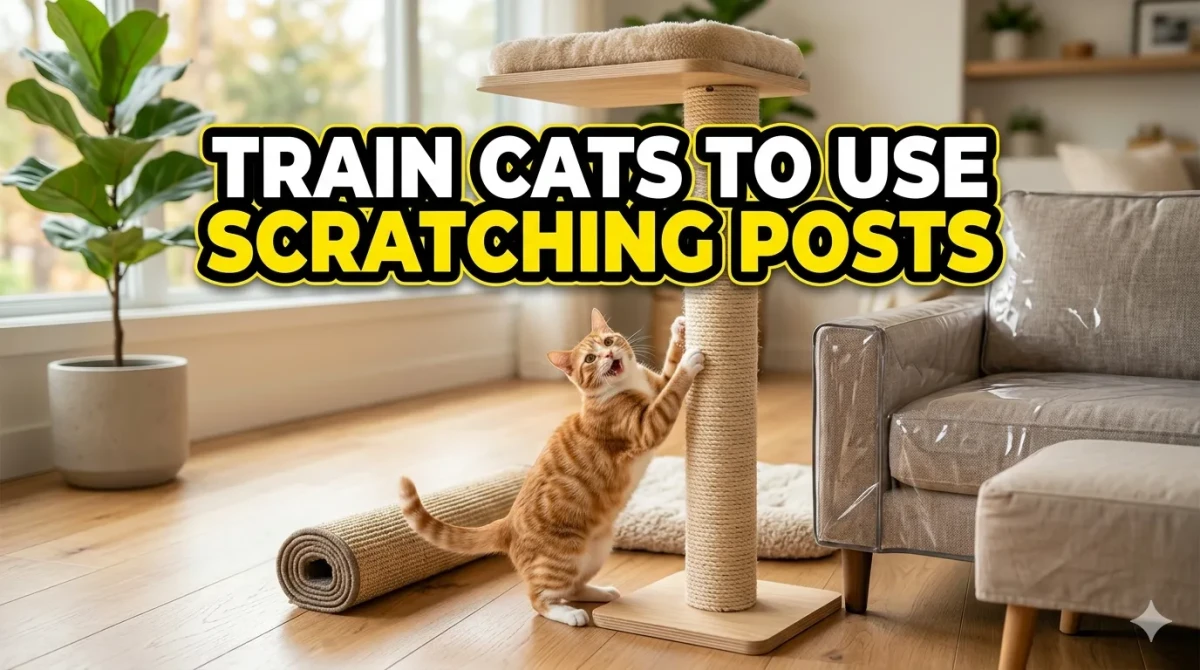
Why Training Cats to Use Scratching Posts Is Essential for Harmony
Scratching is an innate, irresistible behavior for cats—it's not mischief or revenge, but a biological necessity. Cats scratch to mark territory, stretch muscles, maintain claw health, and relieve stress. However, when cats choose your expensive sofa over their scratching post, frustration mounts. The solution isn't to stop scratching (impossible and unhealthy) but to redirect it to appropriate surfaces through patient, positive training.
Featured Snippet Answer: To train cats to use scratching posts, place posts near furniture they currently scratch, choose tall sturdy posts covered in sisal rope, use catnip or treats to attract them, and reward immediately when they scratch appropriately. Never punish furniture scratching; instead, make furniture less appealing with double-sided tape or citrus spray while making posts irresistible.
Training cats to use scratching posts requires understanding feline psychology, selecting the right equipment, strategic placement, and consistent positive reinforcement. This comprehensive guide provides evidence-based strategies to protect your furniture while honoring your cat's natural instincts, creating a harmonious home where both you and your cat thrive.
Understanding Why Cats Scratch: Working With Instincts
Before training begins, understand that scratching serves multiple vital functions for cats. Recognizing these needs helps you work with—not against—your cat's nature.
Primary Reasons Cats Scratch:
- Claw maintenance: Scratching removes dead outer claw layers, keeping claws sharp and healthy
- Stretching: Full-body stretching exercises back, shoulder, and leg muscles
- Territory marking: Paw pads contain scent glands; scratching leaves both visual marks and scent signals
- Stress relief: Scratching releases tension and provides emotional regulation
- Communication: Visual scratch marks signal presence to other cats
- 🐾 Train Cockatiel to Step Up: Easy Step-by-Step
- 🐾 How to Stop Puppy Jumping Complete Training Guide
- 🐾 How to Train Cats to Stay on Command Complete Guide
- 🐾 How to Train a Rabbit to Use Litter Box: 2026 Guide
Why Cats Choose Furniture Over Posts:
- Texture preference: Upholstered furniture often feels better than cheap carpet-covered posts
- Stability: Couches don't wobble; flimsy posts do
- Location: Furniture is in social areas; posts are often hidden in corners
- Height: Cats need to fully stretch; short posts don't satisfy this need
- Familiarity: Cats return to previously scratched surfaces due to scent marking
- 🐾 Train Cockatiel to Step Up: Easy Step-by-Step
- 🐾 How to Stop Puppy Jumping Complete Training Guide
- 🐾 How to Train Cats to Stay on Command Complete Guide
- 🐾 How to Train a Rabbit to Use Litter Box: 2026 Guide
Featured Snippet Answer: Cats scratch for claw maintenance, stretching, territory marking, and stress relief. They prefer furniture because it's stable, well-located, and has appealing texture. Successful training addresses these preferences by providing equally attractive scratching posts in prime locations.
Can I stop my cat from scratching furniture completely?
No, and you shouldn't try. Scratching is essential for cat health and wellbeing. Instead, redirect scratching to appropriate surfaces by making furniture less appealing and scratching posts more attractive. With consistent training, most cats learn to prefer posts over furniture, though occasional furniture scratching may still occur.
Choosing the Right Scratching Post: Critical Success Factors

The wrong scratching post guarantees training failure. Selecting the right type, material, and size is fundamental to success.
Essential Scratching Post Features:
- Height: Minimum 30-32 inches tall; cats must fully stretch without hitting the top
- Stability: Heavy, wide base that won't wobble or tip during vigorous scratching
- Material: Sisal rope or fabric (not carpet, which resembles carpeted stairs/furniture)
- Orientation: Both vertical and horizontal options; observe your cat's preference
- Texture: Rough enough to satisfy claw-sharpening needs
- 🐾 Train Cockatiel to Step Up: Easy Step-by-Step
- 🐾 How to Stop Puppy Jumping Complete Training Guide
- 🐾 How to Train Cats to Stay on Command Complete Guide
- 🐾 How to Train a Rabbit to Use Litter Box: 2026 Guide
Types of Scratching Surfaces:
Vertical Posts:
- Best for full-body stretching
- Preferred by most cats for territory marking
- Choose sisal rope-wrapped posts for durability
- Ensure base is weighted or can be secured to wall
- 🐾 Train Cockatiel to Step Up: Easy Step-by-Step
- 🐾 How to Stop Puppy Jumping Complete Training Guide
- 🐾 How to Train Cats to Stay on Command Complete Guide
- 🐾 How to Train a Rabbit to Use Litter Box: 2026 Guide
Horizontal Scratchers:
- Ideal for cats who scratch carpets or rugs
- Cardboard scratchers are affordable and replaceable
- Can be placed flat or at slight angle
- Often combined with vertical posts for variety
- 🐾 Train Cockatiel to Step Up: Easy Step-by-Step
- 🐾 How to Stop Puppy Jumping Complete Training Guide
- 🐾 How to Train Cats to Stay on Command Complete Guide
- 🐾 How to Train a Rabbit to Use Litter Box: 2026 Guide
Angled/Inclined Scratchers:
- Combine vertical and horizontal benefits
- Good transition for cats switching from furniture
- Often more stable than vertical-only posts
- 🐾 Train Cockatiel to Step Up: Easy Step-by-Step
- 🐾 How to Stop Puppy Jumping Complete Training Guide
- 🐾 How to Train Cats to Stay on Command Complete Guide
- 🐾 How to Train a Rabbit to Use Litter Box: 2026 Guide
Wall-Mounted Scratchers:
- Save floor space
- Can be placed at ideal height
- Very stable when properly mounted
- Good for multi-cat households (multiple heights)
- 🐾 Train Cockatiel to Step Up: Easy Step-by-Step
- 🐾 How to Stop Puppy Jumping Complete Training Guide
- 🐾 How to Train Cats to Stay on Command Complete Guide
- 🐾 How to Train a Rabbit to Use Litter Box: 2026 Guide
Materials to Choose:
- Sisal rope: Most durable, satisfying texture, long-lasting
- Sisal fabric: Softer on paws, still durable
- Cardboard: Affordable, replaceable, many cats love it
- Wood: Natural texture, very durable
- 🐾 Train Cockatiel to Step Up: Easy Step-by-Step
- 🐾 How to Stop Puppy Jumping Complete Training Guide
- 🐾 How to Train Cats to Stay on Command Complete Guide
- 🐾 How to Train a Rabbit to Use Litter Box: 2026 Guide
Materials to Avoid:
- Carpet: Confuses cats; resembles carpeted stairs/furniture
- Fabric-covered: Too similar to upholstery
- Flimsy construction: Wobbly posts create fear and avoidance
- 🐾 Train Cockatiel to Step Up: Easy Step-by-Step
- 🐾 How to Stop Puppy Jumping Complete Training Guide
- 🐾 How to Train Cats to Stay on Command Complete Guide
- 🐾 How to Train a Rabbit to Use Litter Box: 2026 Guide
Featured Snippet Answer: The best scratching posts are at least 30 inches tall, extremely stable with weighted bases, covered in sisal rope (not carpet), and match your cat's orientation preference (vertical, horizontal, or angled). Avoid carpet-covered posts that resemble furniture.
Strategic Placement: Location Is Everything

Even the perfect scratching post fails if placed incorrectly. Strategic placement is crucial for training success.
Prime Placement Locations:
- Near currently-scratched furniture: Place post directly next to furniture your cat currently scratches
- In social areas: Living rooms, family rooms where family gathers
- Near sleeping areas: Cats often scratch after waking
- At room entrances: Cats mark territory at boundaries
- Visible locations: Out in the open, not hidden in corners
- 🐾 Train Cockatiel to Step Up: Easy Step-by-Step
- 🐾 How to Stop Puppy Jumping Complete Training Guide
- 🐾 How to Train Cats to Stay on Command Complete Guide
- 🐾 How to Train a Rabbit to Use Litter Box: 2026 Guide
Placement Strategy by Situation:
If Cat Scratches Couch:
- Place tall vertical post directly next to couch arm
- Ensure post is as tall or taller than couch back
- Once cat uses post consistently, gradually move it 2-3 inches per day to desired location
- 🐾 Train Cockatiel to Step Up: Easy Step-by-Step
- 🐾 How to Stop Puppy Jumping Complete Training Guide
- 🐾 How to Train Cats to Stay on Command Complete Guide
- 🐾 How to Train a Rabbit to Use Litter Box: 2026 Guide
If Cat Scratches Carpet:
- Place horizontal cardboard scratcher directly on problem carpet area
- Try angled scratcher if horizontal doesn't work
- Once using consistently, gradually relocate to acceptable area
- 🐾 Train Cockatiel to Step Up: Easy Step-by-Step
- 🐾 How to Stop Puppy Jumping Complete Training Guide
- 🐾 How to Train Cats to Stay on Command Complete Guide
- 🐾 How to Train a Rabbit to Use Litter Box: 2026 Guide
Multi-Cat Households:
- Provide one scratching post per cat, plus one extra
- Place posts in different locations to prevent resource guarding
- Ensure posts are in territories each cat frequents
- Consider different types (vertical, horizontal, wall-mounted) for variety
- 🐾 Train Cockatiel to Step Up: Easy Step-by-Step
- 🐾 How to Stop Puppy Jumping Complete Training Guide
- 🐾 How to Train Cats to Stay on Command Complete Guide
- 🐾 How to Train a Rabbit to Use Litter Box: 2026 Guide
Common Placement Mistakes:
- Hiding posts in unused corners or closets
- Placing only one post in a multi-level home
- Putting posts in high-traffic areas where cats feel vulnerable
- Moving posts too quickly before habits are established
- 🐾 Train Cockatiel to Step Up: Easy Step-by-Step
- 🐾 How to Stop Puppy Jumping Complete Training Guide
- 🐾 How to Train Cats to Stay on Command Complete Guide
- 🐾 How to Train a Rabbit to Use Litter Box: 2026 Guide
Featured Snippet Answer: Place scratching posts directly next to furniture your cat currently scratches, in social areas where family gathers, and near sleeping spots. Never hide posts in corners. Once your cat uses the post consistently, gradually move it 2-3 inches daily to your preferred location.
Step-by-Step Training Protocol: Building the Habit

Systematic training with positive reinforcement creates lasting behavior change. Follow this progressive protocol.
Phase 1: Introduction and Attraction (Days 1-7)
Make the Post Irresistible:
- Use catnip: Rub dried catnip or spray catnip spray generously on the post
- Add treats: Place high-value treats on and around the post
- Use pheromones: Apply Feliway or similar synthetic pheromone spray
- Hang toys: Dangle interactive toys from the post to encourage investigation
- Make it social: Spend time near the post; cats scratch where their people are
- 🐾 Train Cockatiel to Step Up: Easy Step-by-Step
- 🐾 How to Stop Puppy Jumping Complete Training Guide
- 🐾 How to Train Cats to Stay on Command Complete Guide
- 🐾 How to Train a Rabbit to Use Litter Box: 2026 Guide
Encourage Investigation:
- Gently place your cat near (not on) the post
- Use toys to lure them close to the post
- Never force your cat onto the post
- Praise calmly when they investigate voluntarily
- 🐾 Train Cockatiel to Step Up: Easy Step-by-Step
- 🐾 How to Stop Puppy Jumping Complete Training Guide
- 🐾 How to Train Cats to Stay on Command Complete Guide
- 🐾 How to Train a Rabbit to Use Litter Box: 2026 Guide
Phase 2: Creating Positive Associations (Days 8-14)
Reward Any Interaction:
- Immediately reward with treats when your cat touches the post
- Click and treat for sniffing, pawing, or approaching the post
- Feed meals near the post to build positive associations
- Use the post during play sessions; drag toys across it
- 🐾 Train Cockatiel to Step Up: Easy Step-by-Step
- 🐾 How to Stop Puppy Jumping Complete Training Guide
- 🐾 How to Train Cats to Stay on Command Complete Guide
- 🐾 How to Train a Rabbit to Use Litter Box: 2026 Guide
Demonstrate Scratching:
- Gently scratch the post yourself with your fingernails
- The sound attracts cats and demonstrates appropriate use
- Praise enthusiastically when your cat investigates
- 🐾 Train Cockatiel to Step Up: Easy Step-by-Step
- 🐾 How to Stop Puppy Jumping Complete Training Guide
- 🐾 How to Train Cats to Stay on Command Complete Guide
- 🐾 How to Train a Rabbit to Use Litter Box: 2026 Guide
Phase 3: Capturing and Shaping the Behavior (Days 15-30)
Capture Natural Scratching:
- Watch for moments when your cat naturally stretches or shows interest in scratching
- Gently guide them to the post when you see pre-scratching behavior (stretching, paw extension)
- Immediately reward with high-value treats when they scratch the post
- Use a consistent verbal cue like "scratch" or "post" as they scratch
- 🐾 Train Cockatiel to Step Up: Easy Step-by-Step
- 🐾 How to Stop Puppy Jumping Complete Training Guide
- 🐾 How to Train Cats to Stay on Command Complete Guide
- 🐾 How to Train a Rabbit to Use Litter Box: 2026 Guide
Shape the Behavior:
- Reward any paw contact with the post initially
- Gradually require more complete scratching motions before rewarding
- Increase criteria slowly: one scratch, then two, then sustained scratching
- Always end training sessions on a success
- 🐾 Train Cockatiel to Step Up: Easy Step-by-Step
- 🐾 How to Stop Puppy Jumping Complete Training Guide
- 🐾 How to Train Cats to Stay on Command Complete Guide
- 🐾 How to Train a Rabbit to Use Litter Box: 2026 Guide
Phase 4: Reinforcement and Maintenance (Ongoing)
Intermittent Reinforcement:
- Once scratching is consistent, switch to variable reinforcement
- Reward randomly rather than every time to strengthen the habit
- Continue occasional treats, praise, and petting for post use
- Maintain the post's appeal with occasional catnip refreshers
- 🐾 Train Cockatiel to Step Up: Easy Step-by-Step
- 🐾 How to Stop Puppy Jumping Complete Training Guide
- 🐾 How to Train Cats to Stay on Command Complete Guide
- 🐾 How to Train a Rabbit to Use Litter Box: 2026 Guide
Featured Snippet Answer: Train cats to use scratching posts by: 1) Making posts irresistible with catnip and treats, 2) Rewarding any interaction immediately, 3) Capturing natural scratching moments and rewarding heavily, 4) Using consistent verbal cues, and 5) Switching to intermittent reinforcement once the habit is established. Never punish furniture scratching.
Making Furniture Unappealing: Humane Deterrents

While making posts attractive, simultaneously make furniture less appealing using safe, humane deterrents.
Effective Furniture Deterrents:
Double-Sided Tape:
- Apply sticky tape (Sticky Paws or similar) to furniture corners and arms
- Cats dislike the sticky sensation on paws
- Leave in place for 2-4 weeks until scratching habit transfers to post
- Remove once cat consistently uses scratching post
- 🐾 Train Cockatiel to Step Up: Easy Step-by-Step
- 🐾 How to Stop Puppy Jumping Complete Training Guide
- 🐾 How to Train Cats to Stay on Command Complete Guide
- 🐾 How to Train a Rabbit to Use Litter Box: 2026 Guide
Aluminum Foil:
- Cover furniture arms and corners with aluminum foil
- Cats dislike the texture and sound
- Effective temporary deterrent
- Remove after 2-3 weeks
- 🐾 Train Cockatiel to Step Up: Easy Step-by-Step
- 🐾 How to Stop Puppy Jumping Complete Training Guide
- 🐾 How to Train Cats to Stay on Command Complete Guide
- 🐾 How to Train a Rabbit to Use Litter Box: 2026 Guide
Plastic Carpet Runners:
- Place upside-down (nub side up) on furniture
- Uncomfortable texture deters scratching
- Good for flat surfaces like couch arms
- 🐾 Train Cockatiel to Step Up: Easy Step-by-Step
- 🐾 How to Stop Puppy Jumping Complete Training Guide
- 🐾 How to Train Cats to Stay on Command Complete Guide
- 🐾 How to Train a Rabbit to Use Litter Box: 2026 Guide
Citrus Sprays:
- Cats generally dislike citrus scents
- Use pet-safe citrus spray on furniture (test for fabric safety first)
- Reapply every few days as scent fades
- Never spray directly on cat
- 🐾 Train Cockatiel to Step Up: Easy Step-by-Step
- 🐾 How to Stop Puppy Jumping Complete Training Guide
- 🐾 How to Train Cats to Stay on Command Complete Guide
- 🐾 How to Train a Rabbit to Use Litter Box: 2026 Guide
Commercial Deterrent Sprays:
- Products like PetSafe SSSCAT use motion-activated air spray
- Startles cat without harm when they approach furniture
- Effective for persistent scratchers
- Combine with attractive scratching post nearby
- 🐾 Train Cockatiel to Step Up: Easy Step-by-Step
- 🐾 How to Stop Puppy Jumping Complete Training Guide
- 🐾 How to Train Cats to Stay on Command Complete Guide
- 🐾 How to Train a Rabbit to Use Litter Box: 2026 Guide
Important Guidelines:
- Never use punishment (yelling, spraying water, physical correction)
- Deterrents work best when combined with attractive scratching alternatives
- Always provide an appropriate scratching option near protected furniture
- Remove deterrents gradually once scratching post habit is established
- 🐾 Train Cockatiel to Step Up: Easy Step-by-Step
- 🐾 How to Stop Puppy Jumping Complete Training Guide
- 🐾 How to Train Cats to Stay on Command Complete Guide
- 🐾 How to Train a Rabbit to Use Litter Box: 2026 Guide
Featured Snippet Answer: Make furniture unappealing using double-sided tape, aluminum foil, plastic carpet runners, or citrus sprays. Apply deterrents to furniture corners and arms for 2-4 weeks while simultaneously making scratching posts irresistible. Never punish scratching; always provide appropriate alternatives nearby.
What if my cat ignores the scratching post completely?
If your cat ignores the post, reassess: Is it tall enough (30+ inches)? Is it stable (no wobbling)? Is the material appealing (sisal, not carpet)? Is it in a good location (near furniture they scratch, in social areas)? Try different types (vertical, horizontal, angled), add catnip or treats, and demonstrate scratching yourself. Patience and experimentation are key.
Addressing Specific Scratching Problems

Different scratching scenarios require tailored solutions.
Problem: Cat Scratches Couch Arms
Solution:
- Place tall vertical sisal post directly next to couch arm
- Apply double-sided tape to couch arm
- Rub catnip on post; reward heavily for post use
- Once consistent, gradually move post to desired location
- Consider couch covers or slipcovers as temporary protection
- 🐾 Train Cockatiel to Step Up: Easy Step-by-Step
- 🐾 How to Stop Puppy Jumping Complete Training Guide
- 🐾 How to Train Cats to Stay on Command Complete Guide
- 🐾 How to Train a Rabbit to Use Litter Box: 2026 Guide
Problem: Cat Scratches Carpet or Rugs
Solution:
- Place horizontal cardboard scratcher directly on problem area
- Try angled scratcher if horizontal doesn't work
- Use furniture or carpet runner as temporary barrier
- Reward heavily for using horizontal scratcher
- Provide multiple horizontal options in different locations
- 🐾 Train Cockatiel to Step Up: Easy Step-by-Step
- 🐾 How to Stop Puppy Jumping Complete Training Guide
- 🐾 How to Train Cats to Stay on Command Complete Guide
- 🐾 How to Train a Rabbit to Use Litter Box: 2026 Guide
Problem: Cat Scratches Door Frames or Walls
Solution:
- Place tall vertical post directly next to problem area
- Wall-mounted scratchers work well for this scenario
- Apply double-sided tape to door frame
- Ensure post is tall enough for full stretch
- Consider your cat may be marking territory; address underlying stress
- 🐾 Train Cockatiel to Step Up: Easy Step-by-Step
- 🐾 How to Stop Puppy Jumping Complete Training Guide
- 🐾 How to Train Cats to Stay on Command Complete Guide
- 🐾 How to Train a Rabbit to Use Litter Box: 2026 Guide
Problem: Cat Scratches Bedroom Furniture
Solution:
- Place scratching post near bed (cats scratch after waking)
- Provide both vertical and horizontal options in bedroom
- Use furniture covers temporarily
- Apply deterrents to furniture while making post attractive
- Ensure bedroom has adequate enrichment and play
- 🐾 Train Cockatiel to Step Up: Easy Step-by-Step
- 🐾 How to Stop Puppy Jumping Complete Training Guide
- 🐾 How to Train Cats to Stay on Command Complete Guide
- 🐾 How to Train a Rabbit to Use Litter Box: 2026 Guide
Problem: Multiple Cats, One Scratches, One Doesn't
Solution:
- Provide multiple scratching posts in different locations
- Ensure posts are in each cat's preferred territory
- Try different types (vertical, horizontal, wall-mounted)
- Train each cat individually with separate rewards
- Watch for resource guarding; separate if needed
- 🐾 Train Cockatiel to Step Up: Easy Step-by-Step
- 🐾 How to Stop Puppy Jumping Complete Training Guide
- 🐾 How to Train Cats to Stay on Command Complete Guide
- 🐾 How to Train a Rabbit to Use Litter Box: 2026 Guide
Special Considerations for Kittens vs. Adult Cats

Training approaches vary based on your cat's age and history.
Training Kittens (8 weeks - 6 months):
- Easier to train: Habits aren't firmly established yet
- Start immediately: Introduce scratching post as soon as kitten arrives home
- Multiple posts: Kittens are small; place posts in multiple locations
- Shorter posts okay: Can start with 20-24 inch posts, upgrade as they grow
- Play-based training: Use toys to lure kittens to posts
- Consistency critical: Establish good habits early
- 🐾 Train Cockatiel to Step Up: Easy Step-by-Step
- 🐾 How to Stop Puppy Jumping Complete Training Guide
- 🐾 How to Train Cats to Stay on Command Complete Guide
- 🐾 How to Train a Rabbit to Use Litter Box: 2026 Guide
Training Adult Cats (1+ years):
- May have established habits: Requires more patience and consistency
- Full-size posts: Must be 30+ inches for full stretch
- Stronger deterrents: May need more persistent furniture protection
- Higher-value rewards: Use extra-special treats to compete with established habits
- Longer timeline: Allow 4-8 weeks for habit change
- Address underlying issues: Stress, boredom, or medical problems may drive scratching
- 🐾 Train Cockatiel to Step Up: Easy Step-by-Step
- 🐾 How to Stop Puppy Jumping Complete Training Guide
- 🐾 How to Train Cats to Stay on Command Complete Guide
- 🐾 How to Train a Rabbit to Use Litter Box: 2026 Guide
Training Senior Cats (10+ years):
- Consider arthritis: May prefer horizontal or angled scratchers
- Easier access: Place posts where cat already spends time
- Gentler materials: Softer sisal fabric may be more comfortable
- Patience: Older cats can learn but may take longer
- Veterinary check: Sudden scratching changes may indicate pain
- 🐾 Train Cockatiel to Step Up: Easy Step-by-Step
- 🐾 How to Stop Puppy Jumping Complete Training Guide
- 🐾 How to Train Cats to Stay on Command Complete Guide
- 🐾 How to Train a Rabbit to Use Litter Box: 2026 Guide
Advanced Training Techniques for Persistent Scratchers

For cats who continue scratching furniture despite basic training, try these advanced strategies.
Clicker Training:
- Use a clicker to mark the exact moment cat touches or scratches post
- Immediately follow click with high-value treat
- Clicker provides precise timing that accelerates learning
- Train in short 5-minute sessions 2-3 times daily
- 🐾 Train Cockatiel to Step Up: Easy Step-by-Step
- 🐾 How to Stop Puppy Jumping Complete Training Guide
- 🐾 How to Train Cats to Stay on Command Complete Guide
- 🐾 How to Train a Rabbit to Use Litter Box: 2026 Guide
Target Training:
- Teach cat to touch a target stick
- Gradually move target to scratching post
- Reward for touching post with target
- Eventually fade target; cat scratches post for treats
- 🐾 Train Cockatiel to Step Up: Easy Step-by-Step
- 🐾 How to Stop Puppy Jumping Complete Training Guide
- 🐾 How to Train Cats to Stay on Command Complete Guide
- 🐾 How to Train a Rabbit to Use Litter Box: 2026 Guide
Environmental Enrichment:
- Increase play sessions (15 minutes, 2-3 times daily)
- Provide puzzle feeders and food toys
- Add cat trees and vertical territory
- Rotate toys weekly to prevent boredom
- Enriched cats are less likely to scratch from stress or boredom
- 🐾 Train Cockatiel to Step Up: Easy Step-by-Step
- 🐾 How to Stop Puppy Jumping Complete Training Guide
- 🐾 How to Train Cats to Stay on Command Complete Guide
- 🐾 How to Train a Rabbit to Use Litter Box: 2026 Guide
Pheromone Therapy:
- Use Feliway diffusers or sprays near scratching areas
- Synthetic pheromones create calming effect
- Reduces stress-related scratching
- Combine with training for best results
- 🐾 Train Cockatiel to Step Up: Easy Step-by-Step
- 🐾 How to Stop Puppy Jumping Complete Training Guide
- 🐾 How to Train Cats to Stay on Command Complete Guide
- 🐾 How to Train a Rabbit to Use Litter Box: 2026 Guide
Nail Maintenance:
- Regular nail trimming reduces damage from scratching
- Trim every 1-2 weeks
- Softer nails cause less furniture damage
- Combine with training, not as replacement
- 🐾 Train Cockatiel to Step Up: Easy Step-by-Step
- 🐾 How to Stop Puppy Jumping Complete Training Guide
- 🐾 How to Train Cats to Stay on Command Complete Guide
- 🐾 How to Train a Rabbit to Use Litter Box: 2026 Guide
Soft Paws (Nail Caps):
- Vinyl caps glued over claws prevent damage
- Temporary solution while training
- Must be replaced every 4-6 weeks
- Doesn't stop scratching behavior, just damage
- Use alongside training, not instead of
- 🐾 Train Cockatiel to Step Up: Easy Step-by-Step
- 🐾 How to Stop Puppy Jumping Complete Training Guide
- 🐾 How to Train Cats to Stay on Command Complete Guide
- 🐾 How to Train a Rabbit to Use Litter Box: 2026 Guide
Troubleshooting Common Training Challenges

Even with proper technique, challenges arise. Here's how to address them.
Challenge: Cat Scratches Post Sometimes, Furniture Other Times
Cause: Inconsistent reinforcement or post not always available/appealing
Solutions:
- Increase reward frequency for post scratching
- Ensure post is always accessible (not blocked)
- Refresh catnip on post regularly
- Keep furniture deterrents in place consistently
- Provide multiple posts in different locations
- 🐾 Train Cockatiel to Step Up: Easy Step-by-Step
- 🐾 How to Stop Puppy Jumping Complete Training Guide
- 🐾 How to Train Cats to Stay on Command Complete Guide
- 🐾 How to Train a Rabbit to Use Litter Box: 2026 Guide
Challenge: Cat Uses Post Only When Catnip Is Present
Cause: Cat has become dependent on catnip stimulation
Solutions:
- Gradually reduce catnip frequency
- Switch to intermittent catnip use (every other day, then less)
- Increase treat rewards as catnip decreases
- Use play and praise as alternative rewards
- Eventually cat will use post without catnip
- 🐾 Train Cockatiel to Step Up: Easy Step-by-Step
- 🐾 How to Stop Puppy Jumping Complete Training Guide
- 🐾 How to Train Cats to Stay on Command Complete Guide
- 🐾 How to Train a Rabbit to Use Litter Box: 2026 Guide
Challenge: Cat Scratches Post But Also Continues Furniture Scratching
Cause: Furniture scratching is habitual or post doesn't fully satisfy needs
Solutions:
- Strengthen furniture deterrents
- Add more scratching options (different types/textures)
- Increase reward value for post scratching
- Ensure post is tall enough and stable enough
- Address underlying stress or boredom
- Be patient; habit change takes time
- 🐾 Train Cockatiel to Step Up: Easy Step-by-Step
- 🐾 How to Stop Puppy Jumping Complete Training Guide
- 🐾 How to Train Cats to Stay on Command Complete Guide
- 🐾 How to Train a Rabbit to Use Litter Box: 2026 Guide
Challenge: Cat Scratches New Furniture Immediately
Cause: Novel furniture is attractive for marking
Solutions:
- Apply deterrents to new furniture BEFORE cat scratches it
- Place scratching post next to new furniture immediately
- Rub cat's scent on post (gently rub cheeks on post)
- Supervise closely when new furniture arrives
- Prevention is easier than breaking established habit
- 🐾 Train Cockatiel to Step Up: Easy Step-by-Step
- 🐾 How to Stop Puppy Jumping Complete Training Guide
- 🐾 How to Train Cats to Stay on Command Complete Guide
- 🐾 How to Train a Rabbit to Use Litter Box: 2026 Guide
Challenge: Cat Scratches When I'm Not Home
Cause: Separation anxiety or boredom when alone
Solutions:
- Increase play and enrichment before leaving
- Provide puzzle feeders for mental stimulation
- Leave radio or TV on for background noise
- Use Feliway diffuser to reduce anxiety
- Consider cat sitter or doggy daycare for social cats
- Address separation anxiety with behavior modification
- 🐾 Train Cockatiel to Step Up: Easy Step-by-Step
- 🐾 How to Stop Puppy Jumping Complete Training Guide
- 🐾 How to Train Cats to Stay on Command Complete Guide
- 🐾 How to Train a Rabbit to Use Litter Box: 2026 Guide
Preventing Scratching Problems Before They Start

Proactive prevention is easier than fixing established problems.
For New Cat Owners:
- Set up scratching posts BEFORE bringing cat home
- Place posts in multiple locations from day one
- Introduce posts with catnip and treats immediately
- Establish routine of rewarding post use from the start
- Don't wait for furniture scratching to begin
- 🐾 Train Cockatiel to Step Up: Easy Step-by-Step
- 🐾 How to Stop Puppy Jumping Complete Training Guide
- 🐾 How to Train Cats to Stay on Command Complete Guide
- 🐾 How to Train a Rabbit to Use Litter Box: 2026 Guide
When Moving to New Home:
- Set up scratching posts in new home before move
- Place posts in same relative locations as old home if possible
- Rub cat's scent on posts (cheek rubbing)
- Maintain consistent routine during move
- Use Feliway to reduce move-related stress
- 🐾 Train Cockatiel to Step Up: Easy Step-by-Step
- 🐾 How to Stop Puppy Jumping Complete Training Guide
- 🐾 How to Train Cats to Stay on Command Complete Guide
- 🐾 How to Train a Rabbit to Use Litter Box: 2026 Guide
When Adding New Furniture:
- Apply deterrents to new furniture immediately
- Place scratching post next to new furniture
- Supervise cat's interaction with new furniture
- Reward post use heavily during transition
- 🐾 Train Cockatiel to Step Up: Easy Step-by-Step
- 🐾 How to Stop Puppy Jumping Complete Training Guide
- 🐾 How to Train Cats to Stay on Command Complete Guide
- 🐾 How to Train a Rabbit to Use Litter Box: 2026 Guide
Featured Snippet Answer: Prevent scratching problems by setting up scratching posts before bringing cat home, placing posts in multiple locations from day one, applying furniture deterrents before scratching starts, and establishing consistent reward routines immediately. Prevention is far easier than breaking established furniture-scratching habits.
Quick Recap: Key Takeaways for Scratching Post Success

- Choose tall (30+ inch), stable posts covered in sisal rope (not carpet)
- Place posts directly next to furniture currently being scratched
- Make posts irresistible with catnip, treats, and toys
- Reward immediately and enthusiastically when cat uses post
- Make furniture unappealing with double-sided tape, foil, or citrus spray
- Never punish scratching; always redirect to appropriate surfaces
- Provide multiple posts in multi-cat households (one per cat plus one extra)
- Be patient; habit change takes 2-8 weeks of consistency
- Maintain posts by refreshing catnip and replacing when worn
- Trim nails regularly to minimize damage
- Address underlying stress or boredom with enrichment
- Consult veterinarian if scratching suddenly increases (may indicate medical issues)
- 🐾 Train Cockatiel to Step Up: Easy Step-by-Step
- 🐾 How to Stop Puppy Jumping Complete Training Guide
- 🐾 How to Train Cats to Stay on Command Complete Guide
- 🐾 How to Train a Rabbit to Use Litter Box: 2026 Guide
Final Thoughts: Patience and Consistency Create Success

Training cats to use scratching posts isn't about domination or forcing compliance—it's about understanding feline nature and working with it. Scratching is essential for your cat's physical and emotional health. Your job isn't to stop scratching but to guide it toward appropriate surfaces.
Success requires patience, consistency, and empathy. Some cats learn in days; others need weeks or months. What matters is your commitment to making scratching posts more attractive than furniture while humanely discouraging inappropriate scratching.
Remember that setbacks are normal. If your cat reverts to furniture scratching, don't get frustrated. Reassess your approach: Is the post still appealing? Are deterrents still in place? Has something changed in your cat's environment or routine? Adjust as needed and continue with patience.
Celebrate small victories: the first post scratch, the first day without furniture damage, the first week of consistent post use. These milestones build toward lasting success.
With the right scratching posts, strategic placement, positive reinforcement, and humane deterrents, you can protect your furniture while honoring your cat's natural needs. The result is a harmonious home where both you and your cat thrive—a home with intact furniture and a happy, healthy cat who scratches with gusto... on the right surfaces.

0 Comments