.png)
How to Train Cats to Stay on Command Complete Guide
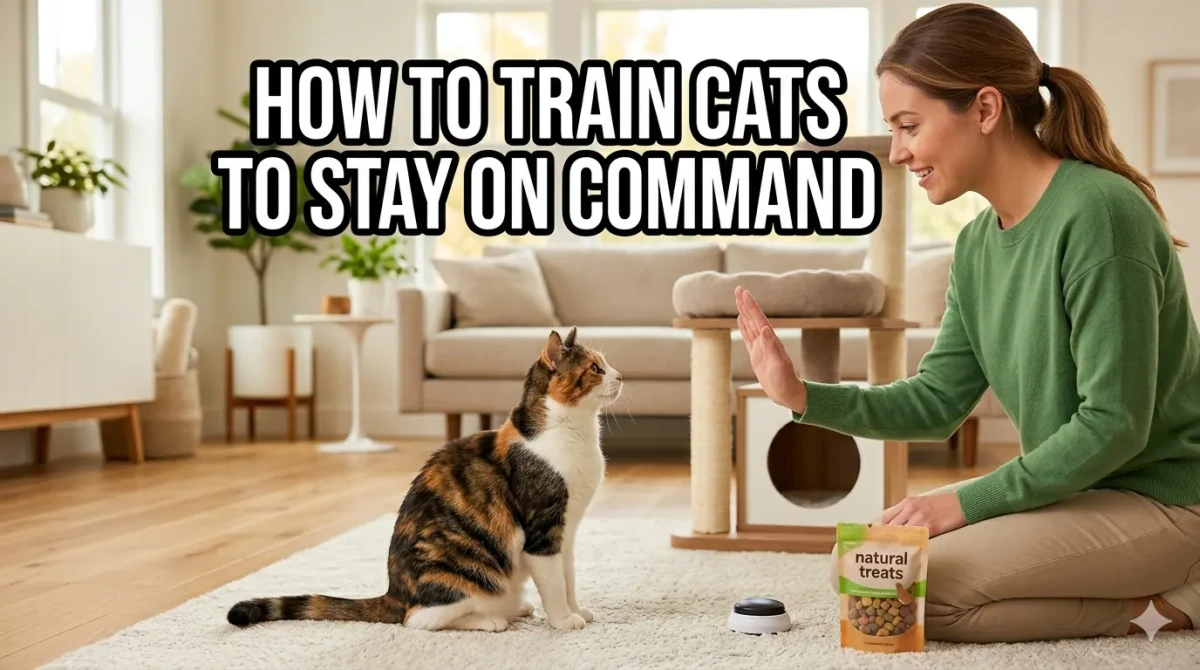
Understanding Cat Training and the Stay Command
How to train cats to stay on command represents a valuable skill for cat parents seeking to enhance communication, safety, and cooperation with their feline companions. While cats have a reputation for independence, they are highly intelligent animals capable of learning complex behaviors when trained using appropriate methods. The stay command, which teaches cats to remain in a specific position until released, offers numerous practical benefits including improved safety during veterinary visits, controlled door exits, calm behavior during grooming, and enhanced bonding through positive interaction.
Training cats differs fundamentally from training dogs due to species specific motivations, learning styles, and communication methods. Cats respond best to positive reinforcement, short engaging sessions, and training that respects their autonomy. Unlike dogs who often work to please their handlers, cats typically participate in training because it benefits them directly through treats, praise, or enjoyable activities. Understanding these feline characteristics helps you approach stay training with realistic expectations and effective techniques.
This comprehensive guide covers everything you need to know about teaching your cat to stay on command, from foundational training principles and step by step instructions to troubleshooting common challenges and advancing to complex scenarios. Whether you have a playful kitten eager to learn or an adult cat needing behavioral refinement, these expert strategies will help you build reliable stay behavior that enhances your cat's safety, your peace of mind, and the quality of your relationship.
Why Teaching Stay Benefits Cats and Their Owners
Teaching cats to stay on command provides practical advantages that extend far beyond simple obedience. The stay command serves as a foundation for numerous safety and management scenarios, making it one of the most valuable behaviors you can teach your feline companion.
Safety represents the primary benefit of stay training. Cats who reliably stay when commanded are less likely to dart through open doors, approach dangerous areas, or interfere with household activities. During veterinary examinations, a cat who can stay calmly on command experiences less stress and enables more thorough care. In multi pet households, stay commands help manage interactions and prevent conflicts between animals.
Beyond safety, stay training strengthens the bond between you and your cat through positive, cooperative interaction. Training sessions provide mental stimulation that prevents boredom, reduce problem behaviors by channeling energy constructively, and build your cat's confidence through successful learning experiences. Cats who participate in training often show increased engagement with their owners and greater overall satisfaction in their home environment.
What Makes Cat Training Different from Dog Training?
Understanding fundamental differences between cat and dog training approaches is essential for success when teaching stay commands. Cats are independent hunters who evolved to make autonomous decisions, while dogs are pack animals selected for cooperation with humans. These evolutionary histories shape how each species responds to training methods.
Cats typically require shorter training sessions of 3 to 5 minutes, as their attention spans for focused tasks are briefer than dogs. They respond best to high value rewards like favorite treats, play sessions, or affection rather than praise alone. Cats also benefit from training that occurs on their terms, allowing them to initiate or end sessions rather than feeling forced to participate.
Timing and consistency matter greatly in cat training. Cats learn through immediate consequences, so rewards must follow desired behaviors within seconds to create clear associations. Inconsistent responses confuse cats and slow learning, making it essential that all family members use identical cues and reinforcement strategies.
Foundational Skills Before Teaching Stay

Successfully teaching cats to stay requires establishing foundational skills that support learning and communication. These prerequisites create the framework for effective stay training and prevent frustration for both cat and owner.
Clicker training or marker word training provides precise communication that accelerates learning. A clicker or consistent marker word like "yes" marks the exact moment your cat performs the desired behavior, bridging the gap between action and reward. This precise feedback helps cats understand exactly what behavior earns reinforcement, making complex behaviors like stay easier to teach.
Target training teaches cats to touch a specific object with their nose or paw, building focus and willingness to follow guidance. Target training develops the attention and cooperation skills necessary for stay commands while providing a foundation for teaching additional behaviors. Cats who understand targeting typically learn stay commands more quickly and reliably.
Basic recall training, teaching cats to come when called, establishes the release component of stay commands. Since stay training requires a clear release cue that tells cats when the behavior is complete, having a reliable recall or release word simplifies the training process and prevents confusion.
Which Rewards Work Best for Cat Training?
Selecting appropriate rewards significantly impacts training success, as cats must find reinforcement valuable enough to motivate participation in stay exercises. Understanding reward preferences helps you choose incentives that maintain your cat's engagement throughout training.
High value food treats typically prove most effective for initial stay training. Small, soft treats like freeze dried chicken, commercial cat treats, or tiny pieces of cooked fish provide quick consumption and strong motivation. Choose treats your cat loves but receives only during training to maintain their special value.
Play rewards work well for cats motivated by interaction rather than food. Brief sessions with favorite toys like wand toys, laser pointers, or puzzle feeders can reinforce stay behavior for play driven cats. Play rewards also provide mental and physical enrichment alongside training benefits.
Affection and praise may reinforce stay behavior for cats who enjoy physical contact, though these typically work best combined with food or play rewards rather than alone. Observe your cat's preferences and adjust rewards accordingly, as individual cats vary significantly in what they find motivating.
How Do You Prepare Your Cat for Training Sessions?
Proper preparation sets the stage for productive training sessions that build stay behavior without overwhelming your cat. Thoughtful preparation respects feline preferences while maximizing learning efficiency.
Choose quiet, low distraction environments for initial stay training. Cats learn best when they can focus on you and the task without competing stimuli. Select a familiar room with minimal foot traffic, noise, or other pets that might interrupt concentration.
Time training sessions when your cat is alert but not overexcited. Many cats respond well to training before meals when they are motivated by food rewards, or during their naturally active periods. Avoid training when your cat is sleepy, stressed, or focused on other activities.
Gather all necessary supplies before beginning sessions, including treats, clicker or marker word, and any training props. Interruptions to retrieve items break your cat's focus and reduce training effectiveness. Keep sessions short, typically 3 to 5 minutes, ending on a positive note before your cat loses interest.
Step by Step Guide to Teaching the Stay Command

Teaching cats to stay on command requires systematic progression through clearly defined steps that build complexity gradually. This methodical approach prevents overwhelming your cat while establishing reliable behavior that generalizes to various situations.
Begin by asking your cat to sit or lie down in a comfortable position. Once your cat assumes the position, immediately mark the behavior with a clicker or marker word and reward. Repeat this step until your cat reliably sits or lies down on cue, as stay training builds upon these foundation positions.
Introduce the stay concept by asking your cat to sit, then taking one small step backward while saying "stay" in a calm, clear voice. Immediately return to your cat, mark the behavior, and reward before your cat moves. This initial step teaches that staying in place while you move earns rewards, establishing the core stay behavior.
Gradually increase duration by delaying your return to your cat by one second, then two seconds, then five seconds, always returning to mark and reward before your cat breaks position. If your cat moves before you return, simply reset and try a shorter duration. Progress at your cat's pace, never advancing faster than they can succeed.
How Do You Add Distance to the Stay Command?
Once your cat reliably stays for several seconds with you nearby, begin adding distance to build a more useful stay behavior. Distance training requires careful progression to maintain success while expanding your cat's understanding of the command.
Increase distance incrementally by taking one additional step backward each session, always returning to mark and reward before your cat moves. If your cat breaks stay when you increase distance, return to the previous successful distance and practice more before advancing. Consistency at each level builds confidence for the next challenge.
Vary your movement patterns once your cat stays reliably with you stepping directly backward. Practice stepping to the side, moving in small circles, or changing your body orientation while maintaining the stay. These variations teach your cat that stay means remaining in position regardless of your movement, not just when you step backward.
Combine duration and distance gradually as your cat progresses. Ask for longer stays while standing farther away, always returning to reward before your cat breaks position. This combination builds the reliable stay behavior useful in real world situations where you may need your cat to remain stationary while you attend to other tasks.
What Is the Best Release Cue for Stay Training?
A clear release cue tells your cat when the stay command ends, preventing confusion and building reliable behavior. The release cue is as important as the stay cue itself, as it defines the boundaries of the requested behavior.
Choose a distinct release word like "okay," "free," or "release" that differs clearly from your stay cue and other commands. Use this word consistently every time you end a stay exercise, always following it with a reward or permission to move. Consistency helps your cat understand that the release word signals the end of the stay requirement.
Always return to your cat before giving the release cue during early training. This prevents your cat from learning that they can break stay whenever they choose, reinforcing that stay continues until you explicitly release them. As reliability improves, you can begin releasing from a distance, but always ensure your cat understands the release cue before expecting compliance from afar.
Never use your cat's name as a release cue, as this creates confusion when you call your cat for other purposes. Keep release cues distinct and reserved exclusively for ending stay behaviors to maintain clear communication.
Troubleshooting Common Stay Training Challenges

Even with careful training, cats may encounter challenges when learning stay commands. Understanding common obstacles and their solutions helps you maintain progress without frustration for you or your cat.
If your cat breaks stay frequently, reduce criteria by shortening duration, decreasing distance, or returning to a simpler version of the behavior. Success builds confidence and learning, while repeated failure creates frustration and resistance. Always set your cat up to succeed by adjusting difficulty to their current ability level.
If your cat seems uninterested in stay training, evaluate reward value and session timing. Increase treat value, shorten sessions, or train when your cat is more motivated. Cats who do not find training rewarding will not engage willingly, so ensuring adequate motivation is essential for progress.
If your cat stays in some situations but not others, practice generalization by training in different locations, with varying distractions, and at different times of day. Cats often learn behaviors contextually, so stay trained in one room may not transfer automatically to other environments. Systematic generalization builds reliable behavior across situations.
How Do You Handle Distractions During Stay Training?
Distractions challenge stay behavior by competing for your cat's attention, but systematic exposure builds reliability in real world conditions. Teaching cats to maintain stay despite distractions requires gradual progression and strategic management.
Introduce distractions at low intensity initially, such as quiet background noise or mild movement at a distance. Ask for stay behaviors your cat can already perform reliably, then add the mild distraction. Reward successful stays generously to build positive associations with maintaining position despite competing stimuli.
Increase distraction intensity gradually as your cat succeeds. Progress from quiet environments to rooms with moderate activity, then to more challenging scenarios with other pets, visitors, or interesting sounds. Always advance at your cat's pace, returning to easier levels if distractions prove overwhelming.
Use higher value rewards when training with distractions to maintain motivation despite competing interests. A cat who finds stay rewards more valuable than the distraction will choose to maintain position. Adjust reward value based on distraction level to ensure continued success.
What If Your Cat Refuses to Stay?
Cats who resist stay training may have underlying issues requiring attention before progress can continue. Understanding potential causes of resistance helps you address root problems rather than just symptoms.
Assess whether your cat understands the stay cue and criteria. Confusion about expectations leads to apparent refusal, as cats cannot comply with requests they do not comprehend. Return to foundational steps, ensuring your cat reliably performs each component before advancing.
Evaluate physical comfort, as pain or discomfort can prevent cats from maintaining stay positions. Older cats with arthritis, cats with injuries, or those experiencing health issues may struggle to stay due to physical limitations rather than behavioral resistance. Consult your veterinarian if you suspect physical factors affect training.
Consider emotional factors including stress, fear, or anxiety that may interfere with learning. Cats experiencing environmental stress, changes in routine, or negative associations with training may resist participation. Address underlying emotional needs through environmental management, patience, and positive experiences before expecting training progress.
Advancing Stay Behavior for Real World Applications

Once your cat reliably stays in controlled training environments, advance the behavior for practical applications that enhance safety and cooperation in daily life. Real world stay skills require additional training considerations beyond basic command response.
Practice stay commands in varied locations throughout your home to build generalization. Train in different rooms, near doors, in the kitchen, and in areas where stay behavior provides practical benefits. Each new location requires initial practice at easier criteria before advancing to previous performance levels.
Integrate stay commands into daily routines to reinforce behavior naturally. Ask your cat to stay while preparing meals, during grooming sessions, or when answering the door. These practical applications build reliability while providing immediate value that motivates continued participation.
Combine stay with other commands to build complex behaviors. Ask your cat to sit and stay before meals, stay while you put on their harness, or stay while you open doors. These combinations create useful skills that enhance safety and cooperation in everyday situations.
How Do You Teach Stay for Door Safety?
Door stay training prevents cats from darting outside unexpectedly, a critical safety skill for indoor cats. Teaching reliable door stay requires specific progression that addresses the high motivation cats often have for outdoor exploration.
Begin door stay training with the door closed, asking your cat to stay several feet from the door while you approach and touch the handle. Mark and reward successful stays before opening the door. This builds the foundation that staying near doors earns rewards regardless of door status.
Progress to opening the door slightly while maintaining stay at a distance. Ask for stay, open the door a few inches, immediately close it, then return to reward your cat for maintaining position. Gradually increase door opening width and duration as your cat succeeds, always returning to reward before your cat breaks stay.
Practice door stay with increasing distractions, including sounds of outdoor activity, visitors approaching, or other pets moving nearby. Reward generously for maintaining stay despite tempting stimuli. Never allow your cat to dash through open doors during training, as this reinforces the unwanted behavior you are working to prevent.
What If Your Cat Stays Only for Certain People?
Cats who respond to stay commands for some family members but not others require consistent training across all handlers to build reliable behavior. This common challenge reflects cats' ability to distinguish between individuals and their varying training approaches.
Ensure all family members use identical cues, rewards, and training methods for stay commands. Inconsistent handling confuses cats and creates person specific responses. Post training guidelines visibly if necessary, and practice together so everyone applies the same techniques.
Have less successful handlers train with more successful family members present initially. This allows cats to generalize the stay behavior across people while maintaining the support of familiar, successful interactions. Gradually reduce the presence of the successful handler as the cat builds reliability with others.
Adjust reward value based on handler experience, with less experienced trainers using higher value rewards to maintain motivation. As handlers gain skill and cats build reliability, reward values can normalize across family members.
Maintaining and Proofing Stay Behavior Long Term

Reliable stay behavior requires ongoing maintenance to prevent regression and ensure continued usefulness. Understanding how to maintain and proof stay commands helps you preserve training investments over your cat's lifetime.
Practice stay commands regularly even after initial training is complete. Brief weekly reviews maintain behavior without requiring extensive time investment. Incorporate stay into daily routines to provide natural reinforcement without formal training sessions.
Vary reinforcement schedules to build resistance to extinction. Once stay behavior is reliable, occasionally reward with high value treats, sometimes with lower value rewards, and sometimes with praise alone. Variable reinforcement creates behaviors that persist even when rewards are not guaranteed every time.
Continue proofing stay behavior by periodically testing in new environments, with novel distractions, or under slightly challenging conditions. These occasional challenges maintain reliability while identifying areas needing refreshers before problems develop in critical situations.
How Often Should You Practice Stay Commands?
Maintenance frequency balances behavior preservation with avoiding overtraining that might reduce your cat's enthusiasm. Understanding optimal practice schedules helps you maintain reliable stay without burdening you or your cat.
During initial learning, practice stay commands daily in short sessions of 3 to 5 minutes. Frequent brief practice builds neural pathways more effectively than infrequent long sessions, while respecting cats' attention spans and motivation levels.
Once stay behavior is reliable, reduce formal practice to 2 to 3 times weekly while incorporating stay into daily routines naturally. Ask your cat to stay before meals, during grooming, or when visitors arrive to provide practical reinforcement without dedicated training time.
For long term maintenance, practice stay commands at least weekly, varying location, duration, and distractions to maintain generalization. Occasional refresher sessions at easier criteria rebuild confidence if performance declines, preventing small issues from becoming significant problems.
What If Stay Behavior Regresses Over Time?
Behavioral regression occurs naturally and does not indicate training failure. Understanding normal fluctuations helps you respond appropriately without frustration when stay performance temporarily declines.
Identify potential causes of regression including environmental changes, health issues, or reduced practice. Address underlying factors first, as training cannot overcome physical discomfort, significant stress, or insufficient reinforcement.
Return to easier criteria temporarily when regression occurs. Practice shorter durations, closer distances, or simpler environments to rebuild success and confidence. Gradually advance criteria again as your cat regains reliability, progressing at their current pace rather than previous performance levels.
Increase reward value temporarily during regression recovery to rebuild motivation. Higher value incentives encourage participation while reestablishing the behavior, then can be reduced once reliability returns.
Frequently Asked Questions About Training Cats to Stay

How Long Does It Take to Train a Cat to Stay?
Training duration varies significantly based on individual cat factors including age, temperament, prior training experience, and consistency of practice. Most cats learn basic stay behavior within 2 to 4 weeks of daily short sessions, though reliable performance in varied situations may require 2 to 3 months of consistent practice.
Kittens often learn more quickly due to greater neuroplasticity and fewer established habits, while older cats may require more patience but can absolutely learn stay commands with appropriate methods. Cats with prior positive training experience typically progress faster than those new to structured learning.
Focus on progress rather than timelines, advancing criteria only when your cat succeeds consistently at current levels. Rushing progression creates confusion and setbacks, while patient, systematic training builds reliable behavior that lasts.
Can Older Cats Learn Stay Commands?
Absolutely, older cats can learn stay commands and often benefit significantly from mental stimulation that training provides. Age affects learning speed but not capacity, and many senior cats enjoy the engagement and positive interaction that training offers.
Adapt training methods for older cats by keeping sessions shorter, using higher value rewards, and accommodating any physical limitations. Cats with arthritis may prefer stay training from comfortable resting positions rather than requiring specific postures.
Senior cats may progress more slowly but often show excellent focus and motivation when training respects their pace and preferences. The bond strengthening and mental enrichment benefits of training make it worthwhile for cats of any age.
Should You Use Punishment If Your Cat Breaks Stay?
Never use punishment when cats break stay commands, as punishment creates fear, damages trust, and does not teach desired behavior. Cats who experience punishment for breaking stay may avoid training entirely, become anxious around handlers, or develop additional behavioral problems.
Instead of punishment, simply reset and try again at an easier criterion level when your cat breaks stay. If your cat cannot maintain stay for 10 seconds, practice 5 second stays until reliability improves. Success builds learning while failure creates frustration.
Focus on preventing errors through appropriate criteria setting rather than correcting mistakes after they occur. Setting your cat up to succeed through thoughtful progression proves far more effective than attempting to punish unwanted behavior.
Conclusion

Training cats to stay on command represents a valuable investment in your feline companion's safety, your peace of mind, and the quality of your relationship. While cats present unique training challenges compared to dogs, their intelligence, capacity for learning, and responsiveness to positive reinforcement make stay training entirely achievable with patience and appropriate methods.
Remember that successful cat training respects feline autonomy, uses high value rewards, maintains short engaging sessions, and progresses at your cat's individual pace. Setbacks and variations in performance are normal parts of the learning process, not indications of failure. Consistency, patience, and positive reinforcement build reliable stay behavior that enhances your cat's life and your ability to care for them.
Your commitment to humane, effective training demonstrates your dedication to providing the best possible care for your cat. With the strategies and knowledge provided in this guide, you can confidently teach your cat to stay on command, creating a safer, more cooperative, and more enjoyable companionship that benefits both of you for years to come.
🐱 আরও পড়ুন: Cat Training and Behavior

0 Comments